


3,68 €
Mehr erfahren.
- Herausgeber: Wildside Press
- Kategorie: Fantasy und Science-Fiction
- Serie: Cronyn and Justice
- Sprache: Englisch
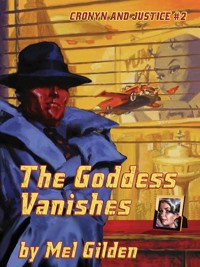
When a Greek goddess and a fairy hob disappear, detective Turner Cronyn is on the case. He soon discovers a connection to long-forgotten TV star Patrick Raden of Solar Patrol, whose spaceship model mysteriously decays overnight.
Teaming up with a stunning goddess, a merry pixie, a protective minotaur, and more fantastical allies, Turner pursues clues leading unexpectedly to the shadowy realm of Olympus—and to a sinister tower occupied by the murderous goblin, Redcap. But Turner and his friends aren’t the only ones seeking the missing immortals, and a dangerous conspiracy threatens them at every twist.
To succeed, Turner must navigate both mortal L.A. and the perilous lands of myths and magic before an ancient debt comes due. Failure could spell doom for all involved in this thrilling fantasy quest.
Das E-Book können Sie in Legimi-Apps oder einer beliebigen App lesen, die das folgende Format unterstützen:
Seitenzahl: 270
Veröffentlichungsjahr: 2024
Ähnliche




















Table of Contents
THE GODDESS VANISHES
ALSO BY MEL GILDEN
COPYRIGHT INFORMATION
CHAPTER 1
CHAPTER 2
CHAPTER 3
CHAPTER 4
CHAPTER 5
CHAPTER 6
CHAPTER 7
CHAPTER 8
CHAPTER 9
CHAPTER 10
CHAPTER 11
CHAPTER 12
CHAPTER 13
CHAPTER 14
CHAPTER 15
CHAPTER 16
CHAPTER 17
CHAPTER 18
CHAPTER 19
CHAPTER 20
CHAPTER 21
CHAPTER 22
CHAPTER 23
CHAPTER 24
CHAPTER 25
CHAPTER 26
CHAPTER 27
THE GODDESS VANISHES
Mel Gilden
Cronyn & Justice, Vol. 2
ALSO BY MEL GILDEN
The Accidental Time Cadet
Britney Spears Is a Three-Headed Alien
The Coincidence Couch
Harry Newberry and the Raiders of the Red Drink
The Jabberwock Came Whiffling
Outer Space and All That Junk
The Planetoid of Amazement
The Pumpkins of Time
The Return of Captain Conquer
Cronyn & Justice
Dangerous Hardboiled Magicians
Zoot Marlowe
Surfing Samurai Robots
Hawaiian U.F.O. Aliens
Tubular Android Superheroes
Star Trek
The Starship Trap
Star Trek: The Next Generation: Boogeymen
Star Trek: Deep Space Nine: The Pet (with Ted Pedersen)
Star Trek: Deep Space Nine: Cardassian Imps
Cybersurfers
Pirates on the Internet (with Ted Pedersen)
Cyberspace Cowboy (with Ted Pedersen)
Ghost on the Net (with Ted Pedersen)
Cybercops & Flame Wars (with Ted Pedersen)
COPYRIGHT INFORMATION
Copyright © 2024 by Mel Gilden.
Cover art by Glen Orbik.
All rights Reserved.
Published by Wildside Press LLC.
wildsidepress.com | bcmystery.com
CHAPTER 1
Spec-Fic Chicks and Sci-Fi Guys
Members of the Solar Patrol convention came in a variety of shapes and sizes, and many of them hadn’t had a haircut in a while. Uniforms from many times, places, and universes were randomly in evidence. Because I was something of a sci-fi guy myself, I recognized almost everything I saw. My brown double-breasted pin-striped suit and fedora earned me some curious glances of my own.
Having been hired to help with security, I tried to spot troublemakers: pickpockets, thieves, angry young men and women—any small-time grifters who worked large crowds, but I couldn’t pick them out. The long wide hallway was full of dorks, geeks, and nerds, all more interested in being right about important TV questions than in doing crimes.
Volunteers attempting to sell memberships in conventions to come were seated at tables along one side of the hallway. They attracted attention with video clips of real events such as the blast-off of various rockets, or of invented events from famous science-fiction movies; models of familiar spaceships shot through the air as if on a wire, each with its own distinctive engine noise, each disappearing at the far end of the hall through a black hole opened by a warp drive, hyper drive, infinite improbability drive, light speed engine, or star quantum thruster. A moment later each ship reappeared where it started and did the whole performance over again. It was difficult not to be impressed. The grumble of crowd noise competed with the powerful thunder of the flying ships.
Bowls of individually wrapped “fun size” chocolate bars also attracted some attention.
I followed handwritten signs to the Green Room where theoretically I could check in. A semi-pudgy teen-aged girl—a spec-fic chick if I ever saw one—sat behind a scrying ball giving me a shy smile. I told her I was on the convention security detail, which did not seem to impress her one way or another.
“That’s usually a volunteer fan job,” she said.
“Talk to Harvey Figueroa about it.”
“He’s the chairman of the convention,” the girl said, a little more impressed now.
“Right the first time,” I said.
She gave me a booklet full of convention information. I shook off the excess fairy dust and now saw that the booklet was blank.
“What’s this?” I asked.
“You have to say your own private ‘open sesame’ over it.” She checked her scrying ball again. “Try ‘rocket wash’.”
I did, and the spell worked. A tiny silver bell ringing far away somehow filled the booklet with words and pictures. “Which way to the spaceship exhibit?” I asked. I could have looked up the information myself now that I was officially a member of the congregation but asking seemed easier.
The girl’s expression did not change. “Out in the parking lot,” she said. “Just follow the signs.”
“Sounds simple enough, even for me,” I said and threw a practiced smile at her.
“You don’t look like a fan,” she said.
“I’m in disguise,” I divulged and winked at her.
She didn’t know what to make of that. While she was still considering, I nodded to her and turned to walk out.
“Just a minute,” she called after me, and waved a convention identification card in my direction. It drifted over to me like an autumn leaf and took up a position hovering behind my left ear, just like everybody else’s.
Glowing arrows escorted me along a hallway to a fire door tied open with a heavy industrial spell. I was about to go outside, when a man the size and shape of a Kodiak bear blustered his way in, knocking me aside without an apology.
He was dressed like a farmer, in bib overalls and heavy work shoes; the bib overalls were spotted with drips of color. On his head he wore a red baseball cap featuring the word Redcap stitched in white to the front just in case anybody failed to identify it. Under the hat was beautifully combed gray hair with swashes of black. He glanced around through big glasses in silver frames as if he would know what he was looking for when he saw it.
“Where’s Harvey Figueroa?” he shouted. “I’m looking for Harvey Figueroa!” He shook a cardboard box about a foot square above his head, and it rattled as if it were filled with loose parts.
The man attracted a lot of unfriendly attention, but nobody seemed willing or able to help him. He sidled over to a slim young lady in a long silken sheet-like garment that was draped over and around her so that it hung in elegant folds; sunny blonde hair curled at her shoulders. She was worth a look or two but did not remind me of any TV or movie character I could name.
“What do you say, honey?” the big man asked her in a voice that matched his leer. She looked at him with such disgust that I was surprised he didn’t disintegrate into a pile of ashes.
I decided this little drama had gone far enough and hurried over to our visitor where I put a hand firmly on his arm before he began to paw at the girl. “Can I help you?” I inquired quietly.
He stayed near the girl, but glanced over his shoulder at me, angry at being interrupted at his important work. “Not unless you’re Harvey Figueroa,” he growled.
“Convention security,” I told him.
“Oh. Rent-a-cops,” he said, and shook his head.
“I’ll find Mr. Figueroa for you,” I said and touched the box lightly. When he tried to pull it away, I took a firmer hold on it and pulled it into my chest. Delivering the package was now my job.
“Let’s go,” I said, and hustled him out by the arm through the same door by which he’d entered. He started to object, but he was already outside. I threw the cardboard box into a nearby bush, hoping it would be safe there while I dealt with the big man. He’d caused enough trouble for one day.
A carriage was parked near the fire door, slightly blocking it as if he had a permit. The vehicle was designed to look like the sort of coach used to schlep eighteenth century nobility. There were no horses, but if I knew anything about magic, the coach didn’t need them.
I thought the man in the red cap might be waiting for me, but apparently, he had better things to do. I glumly watched the coach roll away as if it were rocket powered. He was now somebody else’s problem. I felt a tap on my shoulder and swung around, ready for a fight. I was confronted a very thin man wearing a lime green double knit leisure suit. Except for the dingy white gym shoes he wore, he might have been an accountant or a legal assistant. A gray brush of a mustache needed watering and fertilizer. At the moment, he was looking at me with suspicion.
“What are you doing out here?” he asked as if my business was also his.
“Convention security,” I answered brusquely.
“Then you must be Turner Cronyn,” the man said, suddenly agreeable. I shook the hand he extended while he went on. “I’m Harvey Figueroa, the convention chairman. And I’d still like to know what you’re doing out here.”
“That guy, whoever he was, was bothering your customers. I thought I was doing my job.”
“Not out here you’re not. You’d better get back inside and see if those customers are all right.”
A man impressed by his own importance. There wasn’t much more I could do here anyway, so I dug around my bush until I found the cardboard box. “This is for you,” I said as I handed it to him. He took the box, gave it an experimental shake, and a smile crept up onto his face as if it were a small furtive animal.
“I’ve been expecting this,” he said as if even the expectation had been a secret.
“Do you know the guy who delivered it?”
“I do. If it was delivered by the guy whose name is on the return address.”
“I can’t confirm the name on the return address, but the delivery man was a first-class jerk. He didn’t exactly add sparkle and charm to the convention.”
“He’s supposed to be pretty good at his business.”
“I hope his work justifies his lack of decorum.”
Figueroa’s laugh was more of a bark. “I will keep your comments in mind,” he said.
I nodded, gave him a friendly wave, and casually wandered back inside. The blonde girl who had been the big guy’s victim smiled at me as I entered and gave me a peck on the cheek. I might have stood around conversing with her for a while just to see what developed, but I already had a date for that morning.
CHAPTER 2
The Solar Patrol Ship
The Quasar was not difficult to spot. Just floating a few inches over the blacktop, it gave the impression of having slid in for a landing at one side of the hotel’s parking lot. It was a little shorter than a city bus and had the slim silhouette of a ballpoint pen. The sharp point at the bow of the ship looked as if it might be able to send and receive alien transmissions. Members of a small crowd of fans gathered along the side of the ship and took pictures of each other with their pocket scryers.
Mixing with the crowd were three aliens who had deep creases defining their faces, and ears like cats. They were Lykets. I had seen creatures like them on Solar Patrol episodes, usually up to no good. Each of them was dressed for battle in about ten tons of fantasy armor.
Soon it was my turn to cross through a gossamer curtain over the open hatch of the ship. Another Lyket watched me closely as I stepped into its sudden dimness. The only light came from a few small will o’ the wisps that bounced gently against each other and the walls like glowing soap bubbles.
Though the interior was as congested as a shopping mall on Dollar Day, most of the visitors were quiet and polite as if they were in church. A Lyket wearing glasses wandered through as if she were in charge and was a little offended by the lack of elbowroom. The fans made way for her.
Everything on the ship looked brand new—shiny, clean, and covered with blinking lights. The air even had that new ship smell. Believing the Quasar was a real spaceship was not difficult. I slipped forward through the crowd as easily as a diver swimming through a school of carp.
Soon I entered the main control cabin, where surprisingly little was going on. At the moment the only occupants were a couple of teenaged boys sitting in the twin command couches pretending they were blowing enemy aliens out of existence. I glanced out one of the cat’s eye front ports and saw nothing more interesting than the side of the hotel.
I studied my program book, looking for the next big thing. In a few minutes there would be a panel discussion about Solar Patrol in one of the main ballrooms. The panel would include a writer and a director from the old show. Burt DeWall, known as Captain Ted Packer on Space Hunter, was also promised. That ought to attract quite a crowd. A security guy should be there even if he wasn’t interested in the subject. It just so happened that I was interested. And I had nothing else to do that hour anyway. Lucky me.
CHAPTER 3
The Most Popular Space Program
The room where the panel was to be held was big enough for storing commercial aircraft. Every chair in the place was taken, and people were starting to line up along the walls. Excitement accumulated like squadrons of insects. Conversation sounded like far-away traffic noise in a tunnel.
Three men and a much younger woman sat chatting amiably at a long table on a riser in the front of the room. The young woman wore a Solar Patrol uniform; she was very thin and had spiky purple hair. According to the placard in front of her she was Ithaca New York, the panel moderator.
Next to her was a large man who had a sprinkling of gray hair on a head round as a melon, and the merest suggestion of a mustache. A folded piece of cardboard told us he was Keith Merrymount, who I recalled was one of Solar Patrol writers. Next to him was another man, this one wearing a Hawaiian shirt covered in drawings of movie cameras—Arthur Stein. I think he was a director.
At the far end of the table, with space between him and the others for four more people, sat Burt DeWall. He was a little younger than the other men, with the face of a baby, but a very angry baby. Still, he looked old enough to be Ms. New York’s father. He had dark curly hair and a chin like an open drawer. He wore a t-shirt featuring a caricature of his own face and the words Space Hunter. I remembered him too. He was the star of the second most popular space program on TV during the same era as Solar Patrol. He wasn’t sharing laughs with the other three, but only glaring out at the audience as if its members had their damned nerve just showing up.
Harvey Figueroa marched into the ballroom as if he owned the place and slid through the crowd to the table at the front where he leaned on his elbows and talked to DeWall. DeWall seemed pleased to see this guy, and their conversation was full of smiles and the occasional laugh. Figueroa shoved a copy of the program book across to DeWall. He flipped through the pages until he found one he liked and used a pen he’d been carrying in his shirt pocket to scrawl a hasty inscription in it before sliding it back. They finished by shaking hands, and Figueroa hurried away with his treasure.
Ms. New York and the two friendly men seemed to come to some sort of agreement, and she rose behind a lectern at her end of the table. When the audience took no notice of this, she made passes in the air causing the screeching cat wail of the Quasar red alert to fill the room.
Gradually the rumble made by the audience faded, as did the sound of the screeching cat. When the room was quiet, she welcomed everyone and started the show.
She asked the men questions about what it was like to work on a show like Solar Patrol, in which magical effects were limited and computer graphics were unknown. Merrymount and Stein had a good laugh over that and told a few stories one would not have expected to hear about a kiddie show. Stories about Patrick Raden, who played Commander Forthright on Solar Patrol, were frequent, and frequently hilarious. Ms. New York tried to get Burt DeWall, Space Hunter’s Captain Ted Packer, involved in the conversation, but he had little to say. “We did our best with what we had,” he informed her more than once in a level disinterested voice. His hands were flat on the table, as if he wanted to prevent it from floating away. He never stopped glaring accusingly at the fans. They should have known better than to like Solar Patrol more than Space Hunter.
When Ms. New York ran short of questions, she got help from the audience. Everything went pretty well until she called on an otherwise serious-looking gentleman wearing a pair of furry rabbit ears. “Mr. DeWall, you haven’t said much this morning. I just wonder what you really think of Solar Patrol.”
The scattered laughter died away pretty quick when DeWall’s expression hardened into something that would have been appropriate if carved as a warning on the door of a very old church. He was not a man to be kidded with, oh no. Even the air conditioning seemed to hold its breath. Ms. New York and the other two panel members looked at DeWall as if he had grown horns or might do so momentarily. He enjoyed letting the tension in the room stretch until it was tighter than a violin string. I watched the audience in case anybody fainted.
“Patrick Raden and I met occasionally at places like this,” he explained at last. “We didn’t kill each other.”
“But--,” the boy in the furry ears began.
DeWall interrupted. “I’m the guy on the second-best show. What do you care what I think of the first best?”
“We don’t,” A man somewhere in the crowd shouted. There was a lot of enthusiastic agreement and fist pumping. Burt DeWall didn’t have to be a jerk, but apparently, he enjoyed it. He would be lucky to get out of this room alive. I stood up, ready to protect him if I had to. A lot of other people were already on their feet.
That seemed to conclude Mr. DeWall’s remarks. Ms. New York thanked us all for coming and began to shuffle her notes together.
The crowd rushed the front of the room. Merrymount and Stein shrank back, though I didn’t know why. All the fans wanted from them was conversation and autographs. DeWall, seemingly frozen by fear or fascination, stood behind his chair with his knuckles white, gripping the chairback. Angry fans closed in.
I fought my way through the indignant crowd. I wasn’t wearing Saaf-Dust because being a rent-a-cop at a science fiction convention didn’t seem to require that sort of protective magic. Fortunately, I had experience avoiding getting pummeled, and I reached the front of the room relatively unscathed. I scrambled over the table and dragged DeWall away, though I had no idea where I would stash him until I noticed a side door plastered with the words Hotel Staff Only. That had possibilities.
At first, he fought me, but by the time we got through the door he was willing to follow my lead. We hurried along a short empty corridor floored with ancient linoleum tiles and walls painted high-school green. It ended in swinging doors that opened into an enormous industrial kitchen—the sort of place where you could make Thanksgiving dinner for 100 without raising a sweat.
“Do you have a room here at the hotel?” I asked. I could have taken him to my room, but then I would just have to move him again.
He nodded.
“I assume the room number is still a secret.”
“So far.”
Smiling broadly, one of the cooks showed us to the freight elevator and gave us the good ol’ Solar Patrol salute as we got aboard. I don’t think we were having as much fun as he imagined. As far as DeWall was concerned, it was the wrong salute. It caused DeWall to growl and leap for the cook’s throat. I stopped him before he did any damage. The elevator took us up to DeWall’s floor, where the hallway was empty except for a couple of maids going about their business in a lackadaisical way. Apparently, the fans from downstairs had not yet figured out where we had gone. DeWall unlocked the door with a wave of his hand and rushed in. I followed, though I hadn’t been invited. Inside, all was dark and quiet. It smelled the way hotel rooms always smell—full of a chemical odor a consultant had assured the boss that everybody would love. At least it didn’t make me sick, which some brands did. The air conditioning came on suddenly with an animal growl, making both of us jump. The machinery in the ceiling began to rattle, as if it were stirring a couple of coins in a saucepan.
DeWall threw open the heavy curtains, letting in morning sunshine, then glanced at the cabinet that contained the snacks and drinks. I could see that it was still sealed. Maybe business had not been so good for him lately. He sat down on the end of the queen-size bed and moped at the floor. He looked more like an angry baby than ever.
“Thanks for getting me out of there,” he said without looking at me.
“My job,” I said. “I’m with convention security.”
He nodded. “Lucky me,” he said. “That explains everything.” He spoke as if the explanation depressed him.
I continued to stand by the door, but I was not yet ready to leave.
“Well thanks,” he said again, hoping to get me moving.
“That’s okay.”
“Is there something I can do for you?” he asked after a long moment filled with dust and the rattle of the air conditioning.
I shook my head. “You can stop acting like a jerk.”
“That’s my business, isn’t it?”
“It is if you don’t mind being attacked by angry fans.”
“Fans,” he said with disgust and sniffed.
“Do you really hate Solar Patrol so much, or is that just part of the act?”
“You forgot to mention Patrick Raden. I hate him too.”
“All that hate must be difficult to carry after a few years,” I suggested. I don’t know why I was trying so hard to make him a better person. But it didn’t matter because I was getting nowhere. He said nothing but began to pick at his thumb.
“But you still didn’t kill each other,” I reminded him.
“Not yet. But it is possible he needs your protection. I can’t be the only person in town who doesn’t like him.”
“I guess you’re right,” I said, though I’d never known Raden to be hateable. I put my hand on the door handle. “When was the last time you saw him?”
“Saw who?”
“Raden.”
Considering what we’d already been through together, I thought that was a pretty innocent question, but he looked at me wide-eyed, his mouth gaping with surprise. He snarled like an angry lion as he leaped across the room and hustled me out into the hall. I nearly ran into a squadron of clean towels and tiny bars of soap floating down the hallway after one of the maids.
I looked back at the closed door and wondered what DeWall would be doing all by himself in his room. The maid wished me a good morning as she passed. I nodded, then walked slowly to the guest elevator that would take me back to the real world, where men had grown-up reasons for hating each other. Why had that question bothered him so much?
DeWall was a very strange guy. And the response I got from my innocent question was very strange too, even coming from him.
Back downstairs I went to the convention office and turned security over to one of the Lykets for the night.
CHAPTER 4
Astraea and the Passing Parade
The next morning, I was in the lobby early to watch the passing parade while I waited for Astraea to arrive. I noticed many of the same people I’d seen the day before, most of them in the same clothes they’d been wearing then. Some of them had been promoted into fancier uniforms. A few, more dead than alive, slept in big wing back chairs near the elevators. I guess it had been a busy night.
At the stroke of nine Astraea sauntered in, all her parts moving beautifully and in sync. I had known her for a few months, had even worked with her on a case, and had almost gotten used to her ethereal beauty. She had the face and figure of a goddess, which was not a surprise since that’s what she was—Justice herself. Her hair was long and the color of sunlight strained through gauze. She was wearing a silken toga, but whether that was in honor of the convention or because that’s what goddesses sometimes wore in the morning, I didn’t know. The toga was fairly short, and her legs were fairly long. The strappy silver pumps on her feet only added to the overall impression that she was always dancing.
She greeted me with a polite hug—which was too bad, but I’d gotten used to getting no more. As a virgin goddess, anything more personal would have been unlikely, probably impossible. I asked her if she’d had breakfast. “Coffee,” she admitted, and I escorted her to the hotel restaurant.
Soon we were sitting across from each other and surrounded by tables full of hungry fans. Many of the fans wore Solar Patrol uniforms. Being a fan myself, I noticed that they were all lieutenants or better. I wore a suit and tie, but that wasn’t a costume. It’s what detectives wore, at least when they went out detecting.
Other customers wore t-shirts featuring clever sayings, some of them not suitable for printing in a family newspaper. Eating at a table to my right was a large gentleman with the sylph-like build of Humpty-Dumpty and wildly frizzing brown hair gathered into an exploded ponytail. His t-shirt was too tight to be attractive on that body. It featured the legend, “Read science fiction. It’s a big universe.” His companion was a red-headed woman of equal size who had tiny transparent wings that fluttered on her heavy shoulders. On her t-shirt was a drawing of an angry creature with his fist raised; he seemed to be mostly snakes. “Hail Slignathi!” the caption beneath the creature shouted. Both fans seemed to be enjoying their food.
Wait-fairies zipped from customer to customer, listened with great interest to their orders, then touched the plate before them with a wand that made breakfast appear in a sparkling rain of fairy dust. My plate and Astraea’s were still clean, but I was about ready to start in on the basket of complementary breakfast rolls.
Both of us continued to glance around the restaurant, but neither of us saw our guest. “Where is he?” I asked, trying to keep the impatience out of my voice.
“I do not know. Yesterday at tea he seemed eager to meet you.”
I nodded. I was certainly eager to meet him—Patrick Raden, the actor who played Commander Forthright of the good ship Quasar back when the world was new, or at least not quite so old, and Solar Patrol was one of the hottest shows on television. I was just a kid then, and he was one of my heroes. Why had he decided to visit the convention yesterday afternoon after missing his panel that morning? I suppose it could have been the desire to meet Astraea. Other men have had similar desires. Less obvious was why Burt DeWall lost his beautiful company manners when I mentioned Raden’s name. I still had no answers to that one.
“You two didn’t spend your time talking about me, I hope.”
“No. He told me a lot about the show. Then he told me why I was the only one in the room who could see him.” She mentioned this as if the reason were obvious. But it wasn’t to me. She might as well have spilled ice water in my lap.
I tried to keep my face straight while I made my suggestion. “Is he one of your people? Or one of Oberon’s fairies?”
“He is a fairy hob who likes to keep things neat and clean. He even gets along with mortals.”
“Then I suppose he just didn’t want to be mobbed by his fans,” I said, only partly joking.
“That was what he told me. But I think something else was going on as well. While Mr. Raden and I conversed, a man was making his way through the room, stopping now and then to ask one of the customers a question and then moving on. The man was very thin, and he wore a lime green double knit leisure suit. He also wore a not very successful mustache.”
“That sounds like Harvey Figueroa, the chairman of the convention.”
“So, he said when it was my turn to be questioned. He wanted to know whether I had seen Mr. Patrick Raden. Mr. Raden, who was sitting across from me at the time, smiled shyly. Of course, Mr. Figueroa did not notice. I told him that I had not seen Mr. Raden. He thanked me and walked toward the exit. Mr. Raden apologized for abandoning me, and still invisible, followed him out. I do not know where they went.” She rested her chin charmingly on the back of one fist. “What do you think it all means?”
“It may be perfectly innocent convention business and mean nothing at all.”
She nodded, ready to accept that possibility.
But actually, I wasn’t so sure. Did Figueroa know he was being followed by an invisible man? And if he knew, would he believe he was in trouble? I was still pondering this when Mr. Figueroa, none the worse for his experience the previous day, strolled over to say hello. He smiled at Astraea, and asked casually if we were having breakfast.
I was ready to try a little experiment. “Actually, we’re waiting for Patrick Raden. I hear you were looking for him.”
Harvey Figueroa shook his head sadly. “No point either of us waiting for him here, I’m sorry to say. We invited him to the con—even offered to pay his expenses. But we never heard back.”
Figueroa may have been telling the truth. After all, Astraea was sure that she had been the only one in the room who could see Raden. She was rarely wrong about things like that.
Astraea and I glanced at each other. “Then who, please, did I have tea with yesterday?” she asked carefully.
“I have no idea,” Figueroa replied as if she’d asked him to explain relativity. “Who do you think you had tea with?” He chuckled as if he’d made a small joke.
“Patrick Raden,” she replied simply. “That’s who he said he was. He was quite charming, but he did not look like the photographs of the man Cronyn showed me in the dealer’s room. Of course, those photographs were taken many years ago. The Patrick Raden I met had very little hair on his head and a great deal of it on his chin. Heavy pillows hung under his eyes.”
Figueroa shrugged. “That could describe any one of a hundred guys at this convention, even down to claiming he was Patrick Raden.”
“I love fandom,” I remarked with amusement.
“Did you ever find Raden?” Astraea asked.
For some reason that question stopped Figueroa cold. He licked his lips and frowned as he tried to produce a comment that might impress Astraea. He eventually shrugged and shook his head. The longer Mr. Figueroa stayed with us, the more I was convinced that Astraea had been right when she supposed that Raden had wanted something besides avoiding his fans.
“Do you have Mr. Raden’s address?” I asked as if it were a new idea for me.
“I believe I do,” Figueroa said. “But why?”
“If you expected him but he never showed he might be in a bad way. I thought I would go take a look.”




