


9,59 €
Mehr erfahren.
- Herausgeber: Eye Press
- Kategorie: Gesellschafts- und Liebesromane
- Sprache: Englisch
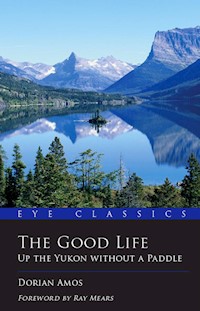
This book is about abandoning everyday life and greeting the world and adventure with open arms. With no skills, no prospects, no plans and nowhere really to go except into the wilderness of our dreams we did just that. We had an easy comfortable life in Polperro, England, a life we had worked hard for many years to make. But as we lived this life the realization that it was not what we wanted and the need for adventure grew until in 1998 we left everything behind for the untamed wilds of the Canadian Great White North Being ordinary people with no history in travel, adventure or survival we found themselves in a new world of beauty, wonder and painful discovery. A world full of bears, wolves, caribou and moose, ridiculously cold temperatures, northern lights, majestic mountains, free rivers and endless lonely wildernessThe Book follows our journey not just across Canada and into the unknown but also our journey of self discovery, accepting failure and embracing challenges as we stumble upon the Yukon River, decide to canoe to the mystical golden city of Dawson, survive the winter, build a cabin in the woods, have a child and finally find the life we have always known we have wanted.
Das E-Book können Sie in Legimi-Apps oder einer beliebigen App lesen, die das folgende Format unterstützen:
Veröffentlichungsjahr: 2004
Ähnliche



















THE GOOD LIFE
UP THE YUKON WITHOUT A PADDLE
Dorian Amos
Edited by Caroline Sylge
Published by Eye Books
Published by
Eye Books
29 Barrow Street
Much Wenlock
Shropshire
TF13 6EN
www.eye-books.com
First published in Great Britain 2004
Revised edition January 2009
First Eye Classics edition 2014
Copyright © Dorian Amos
Front cover image copyright © Johnny Caribou
All rights reserved. Apart from brief extracts for the purpose of review, no part of this publication may be reproduced, stored in a retrieval system, or transmitted in any form or by any means, electronic, mechanical, photocopying, recording or otherwise without permission of the publisher.
Dorian Amos has asserted his right under the Copyright, Designs and Patents Act 1988 to be identified as author of this work.
British Library Cataloguing in Publication Data
A catalogue record for this book is available from the British Library
Printed by CPI Group (UK) Ltd, Croydon CR0 4YY
ISBN: 978-1-903070-82-6
To big and little Jack
Acknowledgements
A fond thank you must go to Matt Lovelock whose help, friendship and dedication smoothed the waves for our immigration across the sea, for which I will be forever grateful! To Pam and Glen whose generosity, friendship and support also made a would-be harrowing time seem remarkably comfortable. I’d also like to thank Brent for his endless patience, help and his total acceptance of a dyslexic English cartoonist trying to survive a winter in his neck of the woods.
A big thank you to Carol Mac for her guidance and help. I would also like to thank my parents for somehow, somewhere instilling in me this reckless, full steam ahead approach I have to life, it makes everything so much more interesting. Most of all, I’d like to thank Bridget for her unquestioning support and love. She makes everything so worthwhile.
Contents
Foreword
Map
Part I
Part II
Part III
Bridget’s Story
Yukon Territory Miscellany
About Eye Books
Also by the Author
About the Author
Foreword
Like moths drawn to the firelight from out of the shadows, Dorian and Bridget found themselves sitting around my campfire in Southern England attending a Woodlore Wilderness Bushcraft Course. Already the seed of an adventure had taken root inside of them, but at that time I had no idea of this. As with all of the others attending the course, they were introduced to the fundamental practicalities of outdoor living. I, as the instructor, emphasised the value of knowledge over equipment, the importance of perfecting the basic skills and encouraged the class to strive to walk in pace with the rhythms of the wild, rather than trying to over write nature’s symphony with our chaotic tempo. If I had known then what Dorian and Bridget had in mind, I would certainly have advised further tuition in bushcraft, pointed them at expert canoe coaches and a host of other instructors that would have eased their journey. When I received word of their venture I was cheered, but also concerned. Any true tutor wishes nothing more than for their alumni to go out and benefit from their tuition, but naturally, by dint of the experience necessary to instruct, the teacher perhaps appreciates more keenly the risk of such an undertaking.
Dorian and Bridget’s adventures have both horrified me and made me laugh, truly ignorance is bliss. It is gratifying to read of their confidence to start a fire in bad weather, and the warmth it provided to their morale which rises from these pages as though it glows in my hands. But above all else it is their utter determination to break with convention and strike out in search of their dream that warms me the most.
In over twenty years teaching bushcraft, I have met many who have come to the campfire late in life and regret not having discovered their interest in their youth, and I have taught this many times to those who have their youth, but not the courage to follow their dreams. It is only a rare handful who dream well and live bravely, they know better than most that, ‘Only dead salmon swim with the current’.
Ray Mears England 2004
Part I
January
I was living in Polperro, one of Cornwall’s prettiest little fishing villages and friendliest communities. It took me thirty minutes to walk 10 yards in the morning to the post office, because everybody wanted to say good morning or talk about fish or the weather. I had my own little business drawing cartoons and selling them in my shop, Amosart. I worked when I wanted, did what I wanted, said what I felt and spent what I liked. There was no struggling to get up in the morning, no commuting in traffic jams or crowded trains, no stress of an over zealous boss breathing down my neck, and definitely no sexual harassment. Life wasn’t ordinary or boring. Life was pretty good.
It had taken me five years to build up my business and create the happy, easy life I had. My wife Bridget had just finished 4 years of university to qualify as a psychiatric nurse. She was now working in a job she loved and we would have an extra £12,000 a year coming in. I was 32, Bridge was 29, and for the first time in our lives money would not be a real problem.
Somehow though, I had started to develop an ache for a little more adventure.
Ignoring the ache, and keeping it to myself, I knuckled down to draw more cartoons. Every morning I’d percolate a pot of coffee, turn up the stereo and draw – until about 3:00pm every day, when my thoughts would begin to wander the world seeking adventure. Soon, I was wandering the world at noon, then 11:00am, until after several months I was fighting crocodiles on the Nile as soon as I sat at the drawing board. My enthusiasm for my work and my business was gone, lost somewhere on the plains of Africa.
May
After 4 months of battling with my dreams I decided one night to talk to Bridge. I watched her as she unwrapped the chips from their soggy paper. She was telling me about her day; jabbing backsides with syringes, and pushing the panic button because someone had decided they were an aardvark and had started to dig up the carpet with their nose. I wasn’t really listening, just watching her gesticulating with the vinegar bottle. Then I heard her sigh, “I’m sick of this shit”, and I sat up with heart pounding. “Are you?” I said, “We can make a change you know.” Bridge looked at me in a way she had only started to do after qualifying as a psychiatric nurse. I took the plunge and told her about my now overwhelming urge for adventure.
When I’d finished and slumped back into my chair, she said, “If you think about something too much, you just talk yourself out of it and never do it. We’re only here once. Let’s go get some action! Can you pass the salt please?” And that was it, the decision that would dramatically change our lives.
Bridget returned home the following evening with carrier bags full of travel guides, and over the next few days we studied atlases and skimmed through endless books. There was a whole life of adventure to live right there in those pages, but we had no idea where to go – all I knew is that I didn’t want to go to the Nile, because during my day-dreaming a crocodile had rather rudely chewed off my feet.
June
One night my brother Julian phoned. As an officer in the Royal Marines, he’s seen action in Bosnia, Somalia and Northern Ireland, and I told him my need for adventure. He listened quietly, then said, “I’m on leave next week, which coincides with the running of the bulls in Pamplona – fancy a run?” I accepted immediately and it only occurred to me after I’d put the phone down that he was a lot, lot fitter than I was.
The following Saturday I found myself in the bar on the upper deck of the six o’clock evening ferry to Spain, with a tanned, fit and excited Julian. I, on the other hand, was white, far from fit and coughing on the cigarette I nervously smoked as I contemplated being run over by ten very large and horny bulls.
My brother had been pretty busy having adventures every day, most of which involved escaping jealous lovers. When he was telling me about his bungy jump in Africa, I cut him short with a question.
“Does anybody die in the running of the bulls?”
He looked at me and laughed, “Are you nervous about this?”
“Am I hell!” I snapped in my manly voice. “I just like to know what I’m getting myself into.”
Julian, knowing I was scared and loving every minute, calmly recited everything he had read about the running of the bulls, including the average number of deaths that occur each year.
The Pamplona festival was like nothing I’d seen before. Music filled the air, and everywhere people were dressed in white and scarlet from head to foot, singing, dancing and drinking shoulder to shoulder. Feeling very welcome we joined them and partied through till 3:00am, when we decided on a short sleep in the Town Square. At 5:30am Julian woke me with a Spanish beer. The bars were still rocking, people were still singing and fire-eaters were lighting up the square. Julian jumped to his feet and ordered us to the old town hall for the start of the run.
We climbed over the eight-foot barriers and jumped into the crowded square to stand with masses of drunken men. A chap behind us, who had run yesterday, talked about his experiences, which made several people around us leave with parting words like, “My life is not worth this” and “I’d rather be playing golf.” After an hour a loud speaker crackled into life and advised us to run safely, not to hide in doorways and not to stop and help the injured runners. The laughter and singing had stopped as we began to walk up the mile long course. Ahead was a long, extremely narrow street bordered by eight-foot high, heavy wooden barriers. Spectators were piled high around us, clinging to sign posts and drainpipes, cheering from balconies and waving excitedly from windows.
A rocket exploded in the sky behind us, the signal that the first four bulls were out and charging. People started to run, but my brother shouted, “Wait till we see the bulls!” so we stood side by side in the middle of the road as hundreds of people ran around us, pushing to get in front. All I wanted to do was run with the others as fast as I could. Why did I have to be here with a hero?
Chaos erupted at the corner fifty feet from us as the bulls charged around it, bulldozing runners out of the way. People were literally being hurled into the air as the first four bulls ploughed a path through the runners. Julian turned and shouted every conceivable obscenity loosely linked to ‘run’. The crowd was ecstatic as the bulls mowed down the runners behind us. Cries of “Toro! Toro!” filled the air as I turned and fled, the ground vibrating with the force of the bull’s charge.
Before I knew it the first bulls were upon me. I dodged the first one as it pushed and ran over several people. The second bull tripped on the fallen runners and fell right on top of them. I looked for an escape as the bull clambered to its feet, turned and charged back towards me. All I could see were the long sharp horns. My legs felt like lead as I lunged through the runners in a desperate attempt to escape the bull’s path. At the last minute it changed track to follow two more bulls as they thundered past. I continued on the run, jumping and scrambling over mounds of fallen runners, before the rest of the bulls caught up with me.
Moments later the stadium was in view. As the course narrowed at the ancient gates, runners were tumbling over each other. I managed to avoid the mess and enter the arena just as the remaining bulls stormed around the corner and through the gates, flattening the fallen men without breaking stride. The crowd roared as the runners spilled into the circular arena followed by the bulls. I’d made it! Everywhere runners hugged each other and danced. The feeling was incredible.
I looked around for my brother and remembered the last time I’d seen him was in the heap of people on the ground in front, dragging a poor Spaniard on top of himself for protection. I headed back down the course to the closest bar. People were lying all over the road, unconscious, limping, being cared for by the paramedics, all of them bleeding from their battered bodies. I pushed through the crowds and ordered the largest beer I could through gesticulation. Twenty minutes later Julian entered the bar, bleeding badly from the elbow, but just as high as I was. It was 8.30 in the morning, but the night was still young and we had some celebrating to do. This was living!
July
Three days later I was back at my drawing board. It was surprising how quickly I set back into my routine, and it began to worry me. Running the bulls was exciting but short-lived, and I was again craving adventure. Bridget and I would talk long into the night about what we wanted out of life. In the words of Henry David Thoreau, we wanted to ‘live deliberately’. We also knew we didn’t want to work all our lives or have our children (when we had them) grow up thinking money was all there was to life. We wanted to do our best to be happy – and we toasted that thought with the last of our Somerset Scrumpy.
We finally decided on Northern Canada as our destination. It was one of the few untamed wildernesses left in the world, a place full of the adventure and challenges we craved and the freedom to ‘live deliberately’. Our great life-changing plan was to emigrate at the end of the summer, buy land in the middle of nowhere, build a log cabin and live as naturally and freely as we wanted. And that was it. Straightforward and simple, just the way we like it.
August
I put a ‘closing down sale’ on in the shop, and word spread quickly. Some people were happy to hear we were leaving, others not. They all told us we were really brave to do such a big thing, and how much planning it must have taken. But we didn’t feel brave, and we didn’t believe in planning. If we were going to do this, we had to do it our way or not at all.
November
I gave up trying to finish my work and just booked a ticket for as soon as I could to anywhere north of the USA. We’d decided that Bridge would join me the following March, when her contract finished. I’d just put the phone down when a client came in and wanted me to design and print 2,000 brochures for him. “I’d love to,” I said, “but I’m emigrating to the Canadian wilderness the day after tomorrow and I still haven’t packed.”
The following day I threw a sleeping bag, a couple pairs of jeans, two clean shirts, a weeks supply of underwear, my toothbrush and some money into a rucksack. I spent my last night with Bridge in the pub saying goodbye to the village, and the next day found myself high above the Canadian prairies on a plane to Edmonton with “Leaving on a Jetplane” going round and round in my thumping head.
December
I stayed in Edmonton with Bridge’s sister Pam and her husband Glenn, a true Canadian redneck who welcomed me into his house with open arms. I was to live with them for the next few months while I prepared for our big adventure. Bridge and I were going to go into the Northern Canadian wilderness to pit our wits against the harsh winters, Mother Nature and grizzly bears, but first we had to find the right area and get some gear. I bought detailed maps in Edmonton’s Map World and spent weeks studying them in detail, trying to decide whether to dog sleigh through the North West Territories, canoe up the West Coast of BC or hike through the bush in the Yukon.
When I started to tell people about our plans to go into the wilderness they just laughed, and without Bridget to back me up I started to lose confidence. Bridge and I can take on the world and win, as long as we’re united, but at this point I was alone. “What are you going to live on?” people cried. “There’s no work up north! What happens if you’re ill? People die up there regularly!”
“You don’t know our winters!”
“Things eat you in the woods!”
“There’s no toilet paper you know!”
“You’re too old to do this sort of thing.”
But a stubborn voice deep in my soul would swell and give me strength like nothing anybody else can give you, a strength that can defeat logic. It rose from my heart and yelled “Bollocks! Bollocks! Bollocks!” and from then on I decided to keep our aspirations to myself, at least until I had an ally in Bridge.
Bridget and I are just ordinary people with no background in travelling, adventure or survival. We’ve been on the breadline most of our lives, so we aren’t scared of hardship or doing without, which was hard for these affluent Canadians to understand. We knew absolutely nothing about the wilderness, but in a way that was our greatest strength, because it meant we weren’t going to underestimate it or let other people’s fears put us off. We would probably fail daily and eventually have to give up, but true failing, for us, would have been to not even try.
January
I was slowly building up a stock of camping equipment that covered the garage floor, but what we really needed was a solid waterproof tent. I found a pioneer tent at Tent World which was heavy duty, warm and weather proof, but quite how I was going to set it up without the arm and a leg I would have to pay for it, I had no idea. I went to Canvas World instead and bought twenty yards of 10-ounce canvas, and a needle that looked more like a spear for killing buffalo in the rain forests of South America.
I had a rough tent design in my head and set about transforming the roll of canvas into the desired shape. It very quickly dawned on me why the tents were so expensive. As I tried to sew the pieces together by hand, my spear pushed far more easily through the palm of my hand than through the canvas, and soon there was enough of my blood on the tent to attract all the bears in the Northwest Territories. I might as well have hung a sign on top saying ‘Bear Food World – tight fisted pommies a speciality!’ But I persevered and eventually had a tent-shaped canvas lying frozen on the garage floor. After rummaging through the woods for two days I had cut enough straight poles to erect my first Canadian home. I dragged the canvas and poles onto the front paddock, and started to put up my masterpiece. Four hours later I was back at the drawing board, and contemplating whether I could do without an arm and a leg.
February
I spent the next few weeks collecting the final equipment for our adventure. I bought an old 1983 Nissan and nicknamed her Pricey, because she kept breaking down and costing a lot of money to repair. I also bought a canoe, finally finished my tent and decided to get a dog, one that would provide companionship in hard times, protect us from wild animals and help us pioneer our New World. At a rescue centre in Edmonton, Boris Lock stood out amongst Siberian Huskies, Rottweilers, Great Danes and hundreds of cross breeds. He looked at me through the cage as if to say, “Come on, Dorian, let’s go party.” I took him home and as he ran around peeing on everything in sight, I proudly introduced him to Pam and Glenn. “What the hell is it?” Glenn asked, trying to sound calm but not succeeding.”It’s a Basset Hound cross German Shepherd, his name is Mr. Boris Lock and he’s my mate,” I said. Finally we were ready.
March
I spent the next few days washing and shaving, very nervous about meeting Bridge again after five months, even though we had spoken almost daily on the telephone. It’s funny how you can be married but still feel apprehensive about a date, I felt 16 again. When the day finally arrived to pick Bridge up from the airport, I was spraying my mouth with breath fresh, smelling strongly of “Brut” and had several clumps of bloodstained toilet paper stuck to my chin. When the arrival doors opened and the flow of passengers spewed into the terminal I watched nervously for Bridge. After what seemed like six planeloads of people she struggled through the doors under the weight of a huge rucksack and wearing a smile that said “take me to the mountains”.
It was such a relief to see her at last. We were both shaking with nerves, but after the initial clumsy hug we clicked back into place and strolled hand in hand confidently into Canada.
Now we were together, adventure called. After a teary goodbye at Pam and Glenns’ we kicked Pricey into life, threw Boris in the back and headed west into the mountains. With the long straight road in front of us stretching as far as the eye could see, we really felt we were on an adventure. We weren’t quite driving a Harley across the desert accompanied by an Eagles track, but we were driving out of the confines of our civilised world. We’d left our watches behind, having exchanged them for sheaf knives Rambo would have been proud of, and I’d ceremoniously burnt my work suit and tie. I was dressed in old jeans, big rugged boots and a shirt that said ‘Adventure West’ in gold writing on the breast pocket. I’d not had a shave for three days for the first time in my life. All I needed now was a tan and the odd firm muscle. Bridge had her shades on, her long black hair flowing free, her arm out the window and her size five Doc Martens on the dash. Her baggy lumberjack shirt clashed with the upholstery but she didn’t care, she looked happy, but above all she looked free.
Within a couple of hours we could see the Rocky Mountains, where we’d decided to camp for a night. Their white tops glimmered like a pile of rough-cut diamonds on a satin cloth. As we climbed into their shadows, sleet began to fall from the contorted clouds. A dull lonely feeling crept over us as the windscreen wipers worked hard to clear the sleet from our view of the wet road. There was no view, no warmth, and our space had shrunk to the size of Pricey’s cab.
All the adventure books I’d read never said anything about feeling like this. Both of us pretended to look for a suitable campsite, but we were really both thinking about the warmth and security of Bridget’s Dad’s house, five hours drive away on Vancouver Island. Great! Our first night and we were already failing ourselves. Eventually we both admitted we were too scared to camp in the mountains at night. We weren’t heroes, why should we have to be? No-one was watching, so with relief we made a joint decision to drive through the night to the island, and 3:00am saw us pulling into the Vancouver ferry terminal. The night was illuminated by floodlights and the noise of huge diesel engines pumped out across the bay.
The sounds and lights felt like home, but we were embarrassed. We had been too scared of the mountains to make camp and enjoy their natural beauty. Instead, we waited in the truck for five hours in the noise and bustle of the ferry port, that had no beauty and was considerably more dangerous than a good camp in the mountains. As we climbed into our sleeping bags and reclined our seats, we laughed with each other about the first night of our adventure. The ferry terminal car park wasn’t exactly the untamed Canadian wilderness we had dreamed about in Polperro.
When we arrived, the island was in the middle of spring, and quite a contrast from the winter-worn landscape of the Alberta prairie. Blossom petals floated with the bees on the warm wind. The sweet scent of hundreds of flowers filled the air, and songbirds were scuttling through the undergrowth in search of insects to feed their broods.
Whilst staying with Bridget’s father we were safe and warm and fed, exactly the right circumstances to rouse the spirit of adventure. We decided to take the opportunity to try our canoe.
“Which end is the front?” Bridge asked with a confused look creeping across her face.
“How the hell should I know?” I said, after studying the two pointy ends. We slowly worked it out by getting in and pretending to paddle, then changing positions, until we were pretty certain we knew which was the front. Then very nervously we paddled out into the sun-kissed sea.
We’d never been in a canoe before and the only knowledge we had, we’d gleaned from the film Deliverance. The bottom of the sea gradually gave way to hundreds of feet of deep water, as we found that even the slightest movements caused the canoe to rock and roll like a drunk at the opera. After a couple of miles we were doing pretty well, and the feeling of being so close to the water was magical. We watched eagles fly above us, seals bob out of the water next to us and otters play and roll in the shallows. We glided along the sprucecovered shores, only hearing the song of the paddles in the water and the lapping of the sea. Rocks covered in seaweed would well up out of the depth and then disappear back below as we glided over them. We were hooked! Canoeing was excellent.
The next morning we tried dog biscuits, praise and blaspheming to get Boris into the canoe with us, until finally we just picked him up and dumped him in. It wasn’t long before he was curled up on the floor snoozing.
Growing in confidence and singing the theme tune to Hawaii Five-O, we ventured a little further than we should have and rounded a rocky island straight into the path of a huge ferry. Panicking, we swung the canoe for shore and as the swell from the ferry began to catch us, I’m sure I heard the ship intercom say, “And on the starboard bough you can see two stupid pommies and a mutt, in a very small canoe, too close to a ferry.”
April
We were getting reports that the mysterious North was still in the grips of winter with many of the roads impassable, so in the comforts of Bridge’s fathers’ home, where whisky flowed freely and fuelled our dreams, we decided to go ‘up island’, as the locals say, at least until the mainland north was free of ice. We packed up Pricey, said our good-byes, and headed north through valleys carpeted in elegant firtrees and mountain streams bouncing their way down the rocky slopes. This time there was no turning back. This was why I’d burnt my suit, this was why I had a sheaf knife hanging from my belt, this is what my shirt said – ‘Adventure West’.




