


Erhalten Sie Zugang zu diesem und mehr als 300000 Büchern ab EUR 5,99 monatlich.
- Herausgeber: Allen & Unwin
- Kategorie: Gesellschafts- und Liebesromane
- Sprache: Englisch
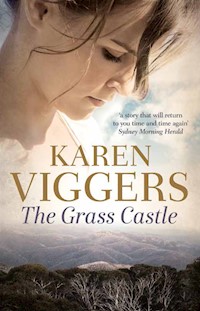
Abby is a young woman shying away from close contact with others and running from a terrible event in her early teens which has shaped her life. Then she meets Daphne, the daughter of a pastoralist, who grew up in a remote valley of the Brindabella Ranges. Daphne raised her family in the high country with her husband Doug, in a world of horses, cattle and stockmen. But the government forced them off their land, and years later, Daphne is still trying to come to terms with her departure from the mountains and the tragic impact it had on her husband. Though years and life experience separate Abby and Daphne, they understand each other, and a gentle friendship forms. While Abby's traumatic past hampers her involvement with journalist Cameron, Daphne tussles with her own family history and the shadow it may have cast over the original inhabitants of the land. Both women must help each other face the truth and release long-buried family secrets before they can be free. The Grass Castle is a sweeping rural epic that reflects the strength which resides in us all: the courage to learn and grow from the past.
Sie lesen das E-Book in den Legimi-Apps auf:
Seitenzahl: 542
Veröffentlichungsjahr: 2017
Das E-Book (TTS) können Sie hören im Abo „Legimi Premium” in Legimi-Apps auf:
Ähnliche



















The GRASS
CASTLE
KAREN VIGGERS
Published by Allen & Unwin in 2014
Copyright © Karen Viggers 2014
All rights reserved. No part of this book may be reproduced or transmitted in any form or by any means, electronic or mechanical, including photocopying, recording or by any information storage and retrieval system, without prior permission in writing from the publisher. The Australian Copyright Act 1968 (the Act) allows a maximum of one chapter or 10 per cent of this book, whichever is the greater, to be photocopied by any educational institution for its educational purposes provided that the educational institution (or body that administers it) has given a remuneration notice to Copyright Agency Limited (CAL) under the Act.
Allen & Unwin
83 Alexander Street
Crows Nest NSW 2065
Australia
Phone: (61 2) 8425 0100
Email: [email protected]
Web: www.allenandunwin.com/uk
Cataloguing-in-Publication details are available from the National Library of Australiawww.trove.nla.gov.au
ISBN 978 1 74331 772 3
E-book ISBN 978 1 92557 627 6
Internal design by Lisa White Set in 13/17 pt Adobe Garamond Pro by Bookhouse, Sydney
For my parentsJim and Diana Viggers
Here, everything moves,
Mists, weather and people move
confusedly over the mountains
only the monoliths stay
peeling their onion-skin faces back
a thumb’s width in a century.
—Where the Body Lay MARK O’CONNOR
That the clouds should change so swiftly,
you and I so slowly,
and the mountains least of all.
—Skiers MARK O’CONNOR
From
The Olive Tree: Collected Poems MARK O’CONNOR
CONTENTS
PART I
1
2
3
4
5
6
PART II
7
8
9
10
11
12
13
14
15
16
17
18
19
20
PART III
21
22
23
24
25
26
PART IV
27
28
29
30
31
32
33
34
35
36
PART V
37
38
39
40
EPILOGUE
ACKNOWLEDGEMENTS
PART I
1
Night spreads its thick blanket over the valley. There is no moon, no light. Abby is alone in the car park, staring into darkness. She sees a wink of tail-lights somewhere along the road: two red fireflies flickering briefly in the bush. She hears the distant rumble of a car engine going too fast, now slowing for a corner. Then it is quiet. The national park is all around her—she can feel it. The soft hoot of a boobook owl somewhere in the distance. The muffled coughs of kangaroos. Higher up, against the sky, invisible granite crags hunch their stony shoulders. They are watching, always watching.
At the back of the four-wheel drive, she turns on a light and loads the last of her gear: her backpack, the esky. The journalist is gone and she’s not sure what to think; whether she should think at all. Probably not, none of it means anything. He’s a reporter and he was doing his job. That is the extent of it. She must take this afternoon for what it was and surf on, skimming surfaces, landing lightly. It’s the easiest way.
She’s been in the valley since morning, following her kangaroos through their monotonous herbivore day. Early, she tracked her radio-collared animals and watched them bounce among their colleagues before settling to graze. Kangaroos don’t do much, it seems. They sleep, graze, recline, hassle each other. But their movements are points on a map which tells her what their lives are made from: how the range of each animal overlaps, and how this changes when the grass grows . . . or doesn’t grow, as in this drought. Her work doesn’t sound like much, but it forms the shape of her career. She’s a researcher in training—paid almost nothing to wander among kangaroos, taking measurements that might help explain an ecosystem.
The lack of money doesn’t matter, or so she tells herself. Hopefully she will be paid more once she’s established her career. What matters is that she is doing something she cares about, something meaningful, and that she is making a contribution to saving this beautiful, complicated world. Equally important is that she is outdoors, not cooped up in some dreary office bathed in fluorescent light and surrounded by people staring like zombies at computer screens . . . although she does her share of screen-staring too, when she’s entering data or tussling with the strange and slippery discipline of writing up her research.
Working here returns her to her childhood. It reminds her of horse-riding through the bush with her mother, when often a kangaroo would appear suddenly on the track, startling the horses. Abby was always impressed by the kangaroo’s power as it surged away. She loves the way kangaroos move, the elegant efficiency of it. Where else on this planet can you see animals bound so gracefully with a muscular tail for counterbalance? She likes to watch how they interact, the liaisons that form in the mob: bands of mothers with young at foot. Did her own mother tend to her with such vigilance? Surely she must have felt her mother’s attentive hands stroking her hair. But she can’t remember. Ten years since her mother died and she still misses her. There’s a wall in her mind she can’t look behind, places she can’t go for fear of memories.
She switches off the light and slams the back door of the vehicle, pauses and listens to the quiet of the night, the rustle of air moving in the grass. Usually she goes straight home after work, but today the journalist came for the interview, so she stayed late. They talked, and now he is gone, driving back to town in his fancy sports car. The park is empty: just her, the kangaroos, and the wind.
She clambers into the vehicle, starts the engine and puts it in gear. She’s comfortable behind the wheel. Working here day and night, her body knows the road. She can drive almost without thinking.
She comes to the corner where perhaps she saw the journalist’s tail-lights blinking several minutes ago, and she brakes reflexively—it’s a sharper curve than you might think. The four-wheel drive slows smoothly, swings the turn, wheels gripping. Then she sees lights ahead and her heart lurches. It must be him, the journalist. And something must have happened. She knows already what it is.
The WRX is angled across the road, headlights flaring. She pulls up on the roadside and drags on the handbrake. The journalist is standing in front of his car looking down, and he’s folding his hands over and over. She slides out, her boots crunching on tarmac as she walks around the car.
A kangaroo is splayed on the road: its body crumpled, head erect, nostrils wide, ears quivering. The hind legs are skewed, dark clots of blood on its furry coat, a black pool expanding around it like oil. Abby sees the exaggerated lift and fall of the kangaroo’s chest, hears the laboured suck of its breathing. She sees the soft pale underside of the animal’s exposed belly, notices the pouch. ‘Can you turn off your headlights?’ she says quietly.
The bush hisses and sighs and the journalist looks at her, not understanding.
‘Your lights,’ she says. ‘They’re too close and bright. She’s frightened.’
He jerks with delayed comprehension then strides to his car and reaches inside. The road falls to sudden darkness and Abby swallows the beat of panic in her chest. She knows how this must end.
‘Perhaps you could leave your parkers on,’ she suggests.
There’s a faint click and the dim glow of parking lights softens the curtain of night. Cameron, the journalist, is staring at her, eyes and hair wild. He expects something of her—something she knows she can’t deliver.
‘You think it’s a girl?’ he asks, voice gravelly.
Not a girl, she says to herself. A female. Aloud she states: ‘She has a pouch.’
‘I hope I haven’t killed her baby,’ he says.
Pouch-young, she wants to say. It’s called a pouch-young. Even now, with this before her, she can’t suppress her inner scientist. She gazes up and finds a faint sliver of moon edging above the ridge. Then she looks at Cameron, still watching her, his face pinched.
‘Will she be all right?’ he asks.
The loaded question. She had known it would come as surely as she’d known what had happened when she saw his headlights on the road. Placing a hand on the bonnet of his car, she tucks her emotions inside. She’ll have to explain it to him as kindly as possible.
Cameron had come to her via her PhD supervisor, Quentin Dexter—an ecologist with an international reputation for scientific excellence. Quentin had handballed Cameron’s phone call on to Abby so she could do a soft-touch kangaroo story. Thanks, she’d thought at the time. Soft-touch wasn’t a term she would use to describe her research. She’d tried to worm out of it; she’d never had direct contact with the media before and she was afraid she would say the wrong thing. But Quentin insisted this was part of being a scientist. He said she should get used to it if she wanted an academic career.
Cameron suggested they meet in Abby’s office or at a café on campus to go through a few questions. Then he would hunt down some kangaroo shots from the wildlife archives and write his article for the Wednesday environmental supplement . . . if they could just fix a time? But Abby knew the university wasn’t right. It had pretty spreading grounds, carefully cultivated and manicured. But it was a bit like a museum—especially when the students were on holidays and the grounds were empty—and it seemed unlikely anything of consequence could happen there. Even the cockatoos, screeching regularly overhead, seemed to be laughing.
No, if they had to do this interview, Cameron should come to her valley where she could explain her work more clearly and he could get a feel for the place. In the morning she’d be busy, and later in the day the kangaroos would retreat to the wooded slopes. So late afternoon would be best. The kangaroos would be grazing, and the journalist could see them doing their thing.
She waited for him in the car park, but he was late, and she passed time tidying her gear, brushing grass seeds from the back of the work vehicle, checking her notebooks, watching the weather. By the time he arrived, she had almost given up. When his blue WRX came rushing too fast across the tarmac, she knew she wasn’t going to like him. He was tardy, flashy and impatient. He would want to finish the job and get back to his office. She watched him unfold from his sports car, rising to ridiculous heights above her. Let him try to patronise her and the interview would be over before it began. He reached into his car to tug out a black leather shoulder bag, before turning to meet her.
‘I’m Abby Hunter,’ she said, extending her hand.
‘Cameron Barlow.’
‘You’re late,’ she said.
He smiled without hint of apology. ‘Yes, I know. It’s genetic. Hope you had something to do.’
‘My work truck has never been cleaner.’
He was undeniably attractive, with tousled black hair that needed a cut, and he wore a hint of arrogance—something in the tilt of his head, or maybe it was the way his lips twitched as he looked down at her. His beige trousers and light suede coat were office-smart beside her work uniform of jeans, thermals and saggy woollen jumper. She felt small beside him, and he peered around the valley with an undisguised assessing stare that annoyed her. What did he see here, she wondered. Not the beauty of it, that was certain. Even she, with her upbringing in the Victorian mountains, had taken some time to warm to the different grandeur of this place, to love its tawny colours, the scabby peaks, the harsh blue skies—absent today.
‘Dry, isn’t it?’ he said, offhand. ‘Pity we couldn’t have arranged some green grass.’
‘It’s a drought,’ she said.
‘Green would have been good for the photos, but no matter.’ He shrugged and peered about. ‘Where are the kangaroos?’
‘You didn’t see any?’ She couldn’t conceal her surprise. From the park gates the road ran alongside open meadows where grass grew in frost hollows even in the driest of seasons. Kangaroos were always there, grazing or sleeping. He must have passed dozens without noticing.
‘I was concentrating on the road,’ he said, smiling blandly. ‘I don’t get to navigate such lovely twists and curves very often.’ He glanced at his shiny blue car. ‘The beast took control, I’m afraid.’
The beast—he said it in such a tender way she wondered if he was referring to himself or to his sports car. Perhaps he hadn’t even noticed the trees and the valley—it seemed all he’d appreciated was the road. ‘You’ll see plenty of kangaroos,’ she said, pointing up the valley. ‘But we’ll have to walk. There’s not much to see in the car park.’
His eyes and nose crinkled and he looked down at his shoes—nice leather lace-ups with polished toes.
‘It’s okay,’ she said. ‘It’s too dry for mud. And there’s a track. We’ll wander along and find some kangaroos for you.’
‘Good,’ he said. ‘I want to see them move.’
She felt reluctance in him as she led him from the car park along the old four-wheel drive track that ran among tussock grass and the dug-out furrows of a rabbit warren, recently ripped. Perhaps he seriously didn’t want to be here and she’d made a mistake inviting him. It was obvious he didn’t get out of his office too often, at least not to places where his hair might get ruffled and his shoes dirty. For a moment she was tempted to lead him the long way, skirting round the edge of the valley and up the steeper, rougher hills, so she could see him puff and struggle in those inappropriate shoes. But, glancing more carefully at his physique, she noted he looked fit—no soft city belly or double chins. Maybe he was worried about the time; he kept glancing at his watch. She hadn’t any idea of his other commitments, and perhaps it was a bit much to force him to come all the way out here simply to feel the atmosphere . . . her purist values running amok. She grappled with a flash of guilt, but was over it almost immediately. He’d manage. And the fresh air would be good for him.
As they walked up the valley, the interview looming, she felt a clutch of shyness, and was suddenly tongue-tied. What should she say to impress a journalist? What would he want to know? She waited nervously while he paused to stoop over his shoulder bag. When he straightened he had a small digital recording unit in his hand.
He nodded at her encouragingly and smiled. ‘Mind if I point this at you while we talk?’
Her shyness ratcheted up a level. ‘I’m not sure,’ she said. ‘My voice sounds horrible in recordings.’
‘Don’t worry.’ He flashed a reassuring grin. ‘It’s purely for reference in case I forget things. And I find it easier than paper and pen. Plus, I like to see where I’m putting my feet.’ He grimaced at the terrain as if she was dragging him across a glacier.
‘Next time, wear your hiking boots,’ she said. And he raised his eyebrows at her.
They wandered up the valley beneath the scattered bellies of wind-shuffled clouds. As they walked he began to prod her with light conversation, slipping in questions along with self-deprecating jokes. She discovered he knew a few things about kangaroos—not much, but enough to lift him above the average level of ignorance. He was good at getting her to talk, an attentive listener, and soon her shyness faded and she found herself sprouting information, facts she thought he’d find interesting, threads unfurling spontaneously as he unknotted her with his genuine interest.
She told him about droughts, and how kangaroos were adapted for breeding. A female could have two young at the same time, she said, a young in the pouch and a fertilised embryo waiting in the uterus. When the pouch was vacated, the embryo would develop to become the next pouch-young. It was an ingenious survival mechanism. In hard times, a starving mother could ditch her young, saving energy and increasing her chances of making it through the drought. When conditions improved, she didn’t need to find a mate because she was already pregnant; the previously fertilised embryo would grow into new young, ready to take advantage of the fresh grass. When a suitable male came along, the mother could mate again, and soon another embryo would be waiting.
‘It’s lucky humans can’t do that,’ Cameron said. ‘Imagine the number of unplanned babies and custody battles.’
Abby smiled. ‘Humans aren’t so different,’ she said. ‘We have our alpha males, and devious usurpers mating on the sly.’
He arched an eyebrow at her. ‘Don’t you call that cuckolding? Having an affair?’
‘Same thing, minus the ceremony and the wedding rings.’
‘. . . as well as the divorce and legal wrangles,’ he added. ‘Thank Christ for that.’
The valley narrowed as they walked and soon they were traversing Abby’s favourite section, dotted with straggly clumps of dwarf eucalypts with trunks streaked olive-brown and gangly branches dripping bark. Beyond the grassy flats, the taller forest reached up-slope to bony ridges and great domes of grey rock. They passed a pile of boulders and the burnt remains of an old hut, then they were among the kangaroos, grey-brown lumps that merged with the landscape.
Cameron didn’t see them at first, which made Abby smile—city people often brought their urban blindness with them when they visited the valley. He’d walked to within fifty metres of a large mob before he finally noticed them. By then the kangaroos were upright, alert and watching. The big males were sitting on bunched haunches, ogling warily, while mothers with flighty young were already moving away, ears swivelling.
‘Will you look at that?’ Cameron’s voice rang in the quiet, and the big old bucks spun and bounded off. In moments the valley had cleared, distant crashes marking the passage of some of the mob as they disappeared uphill into the trees. ‘What did I do?’ he asked, turning off his recorder.
‘They don’t know you,’ Abby said.
‘How can you study them if they bolt like that?’
‘They habituate. They don’t take much notice when it’s just me.’
He looked down at her. ‘Maybe it’s my aftershave,’ he said, sniffing at his collar.
‘That’s possible.’
‘Don’t you like it?’ A smile hovered about his lips.
‘I think I’m with the kangaroos,’ she said. ‘It’s a bit sweet.’
He switched the recorder on again, and they followed the stragglers up the valley, pausing every now and then to look at a few kangaroos half-hidden among the trees. They came across one of Abby’s radio-collared animals and she described how the government vet had come to help her fit the collars, armed with his dart rifle and sedatives. It had taken five mornings to capture sixteen animals, an even mix of males and females.
There was a lull in conversation when Abby thought the interview might almost be finished, then Cameron looked at her and his lips tweaked. ‘What do you think about kangaroo culling?’ he asked.
Abby hesitated a moment before answering. Quentin had warned her about this. He’d said it was likely to come up. ‘I don’t want this to be an article on culling,’ she said slowly.
Cameron grinned knowingly. ‘It won’t be.’
‘So I can speak off the record?’
‘If that’s the way you want it.’
‘Yes please.’ Quentin had said she should request this if the discussion wandered onto controversial ground—if this was to be a soft-touch kangaroo story, they didn’t need to address emotive issues like culling. Abby noticed Cameron regarding her with heightened interest, but he’d turned off his recorder so she felt a little more comfortable.
‘I gather this is a touchy subject for you,’ he said.
‘Not really. But it’s a sensitive topic, isn’t it? It upsets people.’
‘So what’s the solution? Surely it can’t be that hard to sort out.’
Abby almost smiled. Quentin had coached her on this too. He’d said journalists always wanted simple answers to complex problems. As a country girl, she used to think managing kangaroos ought to be straightforward, but now she’s studied ecology for a few years, she knows it isn’t. ‘It’s complicated,’ she said. ‘Kangaroos are efficient breeders, and we humans have opened up grazing land and removed predators, so there’s nothing to control them anymore. There can be so many of them they damage the environment, and that affects other species.’
‘So we have to shoot them? Is that what you’re saying?’
Abby paused again. She didn’t like shooting. She hated guns. But in the absence of a suitable alternative what else was there? ‘There isn’t any other way yet,’ she said. ‘There are labs working on kangaroo contraception, but that’s years off. Shooting has its problems too. It’s a practical short-term solution, but it’s never-ending. Once you start, you have to keep doing it because the kangaroos keep breeding.’
Cameron laughed. ‘The confused biologist!’
‘Not confused,’ she said, ‘but definitely challenged.’
In a grove of twisted snow gums, Cameron paused to yank one of the springy branches, pulling off a sprig of leathery leaves which he attempted to tuck behind her ear. She ducked away, laughing, embarrassed, then jerked to a halt as a large old-man kangaroo appeared from nowhere, rearing on its hind legs, and jolting towards them in short sharp hops, snorting loudly.
‘Move!’ she yelled, thrusting hard against Cameron and shoving him backwards.
He caught her urgency and leapt back while she reversed slowly, hands raised, palms open. As she put cautious distance between them, the buck subsided to a wary crouch, still watching them. He was a big lone male with sharp hooked claws and forearm muscles like a gym junkie. Abby’s heart battered and a hot adrenalin sweat tingled on her skin. She faced the kangaroo till he lowered his head to snatch a mouthful of grass, strong jaws grinding.
‘What was that about?’ Cameron asked, shakiness deepening his voice.
‘We got too close,’ Abby said. ‘They don’t like anyone inside their personal space.’
‘Tell me about it.’ Cameron was flushed and stepping lightly now, surprisingly agile despite his height.
Abby relaxed a little. ‘You look ready to run.’
‘You bet,’ he said.
Looking up, Abby noticed that clouds had snuffed the sun and late afternoon light was leaning creamy and soft across the valley. A freshening wind was rolling among the trees and ravens cawed overhead, flapping up-valley. The old-man kangaroo was distant and harmless now, uninterested in them, a bulky grey hummock only half-visible among the trees. But he had altered the mood of the day.
Cameron glanced at his watch. ‘Perhaps we should head back,’ he said.
By the time they stepped onto the tarmac in the car park, Cameron’s recorder was buttoned away and an awkward distance had reasserted itself between them. They were strangers again. They’d met for a purpose which had now been achieved and the interview was over. Abby watched as he slung his shoulder bag onto the front seat of the WRX then politely reached out his hand.
‘Thank you,’ he said. ‘That was great. I wasn’t too keen on coming. But it was good.’
She shook his hand, feeling something like sunshine in his grip, and suddenly she didn’t want to let go. ‘Look,’ she said, diving on submerged courage. ‘You don’t have to leave immediately unless you’re in a hurry. There’s an old hut further down the valley that you might like to look at. It’s historic, an old slab building.’
Cameron seemed to hesitate and Abby’s brave moment faded.
‘I suppose you need to write this up,’ she said, assuming his silence meant no. ‘I noticed you looking at your watch.’
Cameron laughed. ‘The watch is a habit. Part of being a slave to time. The life of a journalist. But actually I’m not in a rush to get back. I’ve already done my columns for tomorrow, and I’m going to write your interview as a feature, so no pressing deadlines. I wouldn’t mind seeing the hut . . . might give me some ammunition for another story.’
‘It’ll be nice to get out of this wind,’ Abby said. ‘But it’s a bit of a walk. Do you have a warmer coat?’
Cameron shook his head.
‘I have a blanket you could toss round your shoulders,’ Abby suggested.
‘That’ll be fine.’
She opened the back of her work truck to fetch the blanket then she turned to Cameron as another idea occurred to her. ‘Are you hungry?’ she asked. ‘I was planning on staying back tonight to check my radio-collared kangaroos, so I brought along a roast chicken and a few bread rolls for supper. I’m happy to share.’
Cameron smiled. ‘Sounds great. And I have a bottle of wine in the car. Left over from dinner last night with some workmates. Do you have anything we can drink from?’
‘A couple of thermos lids,’ Abby said. ‘They’re not quite wine glasses . . .’
‘But they’ll do,’ Cameron said.
Abby shoved everything in a backpack, gave Cameron the blanket, and they set off, weaving their way among the wind-whipped tussock grass.
2
The old slab hut, huddled on the valley floor, was Abby’s hideaway where she often took shelter in bad weather. It was a wonderful old building, oozing history, and laden with fragments of the forgotten lives and faded voices of the families who had settled the region.
Usually she closed herself behind the latched wooden door and listened to the hollow moan of air scooping around the walls. The outside world seemed to dissolve and she became a presence among ghosts. Sometimes, as she sat cross-legged on the battered wooden floor, she thought she could almost hear snatches of conversation swirling in the stone fireplace and mumbling under the eaves. Beneath the peeling wallpaper that lined the hut were sheets of yellowed newsprint from another era. She pictured shadow-people snuggling against the colder wetter weather of those times. She thought of snow in winter. The smell of burning wood, sodden timber, woollen clothes drying on nails. The snort of a horse in the yards.
On calmer days, she sat outside on the grass, boiling water to make tea, and she imagined men in dirty trousers working the land, felling and ringbarking trees. There wouldn’t have been fences, and cattle would have roamed the valley and slopes, crashing through undergrowth, stripping bark from trees with their muscular tongues. She liked to think of the settlers, and she wished she knew more of their history, how they had changed the land, inadvertently paving the way for the mobs of kangaroos she was now studying.
But today she was distracted by Cameron’s presence. She was excited to have another human being sharing her valley, someone who seemed interested in her and her kangaroos. On the rattly boards of the veranda she dug into her backpack, pulling out the roast chicken, the crispy bread rolls and Cameron’s bottle of wine.
He watched her lay out the food on plastic plates. ‘Do you do this often?’ he laughed. ‘Seems I’m in the wrong job.’
She gave him a withering look and ferreted the thermos cups from her pack, plonking them unceremoniously on the deck. ‘Only the best for this scientist,’ she said. Then she held up the wine. ‘It has a cork,’ she said, dismayed. ‘And I don’t have a corkscrew. I thought corks went out with the ark.’
‘I have one.’ Cameron jingled his car keys at her, displaying a sheathed silver corkscrew. ‘Sign of a true wino,’ he said. ‘Always prepared.’ He detached the corkscrew and handed it to her.
She made a mess of the cork, embarrassing herself, until Cameron reached over with a casual arm and took the bottle from her. With fingers long and fine as a pianist’s, he eased out the broken cork remnants and poured generous portions of wine into the thermos lids, passing one to her. ‘It’s a pity to drink out of plastic, but hey,’ he bumped his cup against hers, ‘who am I to complain?’
She drank, flushed with a strange jittery sense of anticipation, while the mountains watched on.
They sat on the porch, looking across the valley towards the shadowy ridge. ‘Peaceful here, isn’t it?’ he said. ‘I didn’t know all this was so close to the city.’
Abby loved the emptiness, the ravens cruising overhead. ‘Hardly anyone comes here,’ she said, ‘just a few bushwalkers; sometimes some rock climbers up on the ridge. Mostly I have the place to myself.’
‘You don’t get lonely?’
‘No. I have things to do. Work’s busy. It’s not all about picnics and wine.’
There was a short silence during which they both sipped from their cups and reached for food; then, just as Abby was beginning to feel awkward, Cameron broke the quiet. ‘Is your family from round here?’ he asked.
This shift in topic wasn’t quite what Abby desired, but she had to go with it. ‘They’re in Victoria. Mansfield.’
‘Hey, I love Mansfield,’ he said, smiling enthusiastically. ‘We used to ski Mount Buller in my teens. Was it a good place to grow up?’
‘It’s a typical country town,’ she said. ‘It has a nice feel to it, and it is beautiful country: the mountains and the bush, the rivers. But it’s a small place—people living in each other’s pockets.’
He laughed: a musical tone that floated under the eaves. ‘Isn’t that what you call community?’
She thought of her father living on the farm with his pushy, possessive new wife. ‘Being nosey is the same wherever you are. And it’s not my definition of community.’
‘Canberra then?’ His eyebrows lifted slightly. ‘Is that your idea of community?’
She couldn’t suppress a grin. ‘Maybe if you’re a politician or a journalist.’
He smiled. ‘Why did you come here?’ he asked. ‘Why not Sydney or Melbourne?’
‘I was offered a scholarship here.’
‘Not too far from home for you?’
‘I’m twenty-three,’ she said. ‘Old enough to fly the coop. And home’s not what it used to be. Mum died when I was thirteen. Dad has a new wife.’
‘Tough losing your mum,’ Cameron said.
‘Yes,’ she said, and shivered. ‘How about you?’
She was hoping he wouldn’t notice her discomfort when it came to talking about herself. He picked up a bread roll and started gnawing on it, and she was relieved when he took hold of the conversation and carried on.
‘I’m from Melbourne,’ he said between mouthfuls. ‘Inner-suburban city boy. Man of neon lights, cappuccinos and nightclubs.’ He stopped chewing to scoff at himself. ‘Private-school educated, of course.’
‘I went to Mansfield High,’ she said. ‘No other options.’
He took a morsel of chicken and popped it in his mouth. ‘My parents are wealthy, so it’s all about options. Theirs, not mine. A government school would have been fine for me, but my parents wouldn’t have it. They wanted to stamp the renegade leftie out of me. So it was Melbourne Grammar then Melbourne University. They’re barristers, both of them. They wanted me to tread the same track they did. Journalism is all I ever wanted to do. But they slotted me into law. It didn’t last, of course. I hated it. I was going to drop out of uni altogether, and they couldn’t cope with a bum for a son, so they agreed on a compromise, a shift into literature. It was terribly humiliating for them—a son with a classic career-less Arts degree, but at least it was at the right univerity, and they supposed it might lead to something. Soon as I finished, I took the first cadetship I could sign up for. The Herald Sun. Not exactly my political line, but it was runs on the board. You need those before you can get ahead. I was born a journalist. I just had to make my parents believe it.’
‘And they believe it now?’
He tore another bread roll into pieces which he arranged in a circle on his plate. ‘I don’t have much to do with them. I’m a disappointment. When I go to Melbourne I mostly stay with friends. It’s easier that way. My parents are busy. I take them out to dinner or the opera. Then I’ve done my duty and I can do my own thing. I catch up with my journo mates, and we drink and tell stories and talk politics. It’s fun. Journalism suits me—despite what my family thinks.’ He laughed derisively. ‘I can tell you this much: my family isn’t normal.’
Abby held his gaze. ‘There’s no such thing as a normal family,’ she said quietly.
‘Hell no,’ he agreed. ‘But I bet mine’s less normal than yours.’
She said nothing. He couldn’t compete on abnormal, but she let it go.
He reached for the bottle again. ‘What about the rest of your family?’
‘I have a brother, Matt.’
‘What does he do?’
‘He skis, works on a vineyard and shoots kangaroos with his mates.’
Cameron chuckled. ‘Your brother shoots kangaroos and you study them. Ironic, isn’t it?’
‘Life’s ironic,’ she said.
They finished the wine, and chatted into the darkness, talking about politics, music, films and books. Cameron was easy company, talkative without being overbearing, up-to-date on everything. Abby supposed this was part of his job, to be able to talk to people, to make them feel comfortable.
As the chill night air sank from the ridges, she became aware of the inadequacy of his clothing, and when she saw him shiver, despite the blanket, she knew it was time to call it a day.
They made their way back to the cars by the light of her head torch. In the car park he lingered, watching her toss things into the back of her four-wheel drive. She thought perhaps he wanted to say something, that maybe the valley had worked its way under his skin like a splinter of wood picked up from the veranda of the old hut. It was possible he liked it here, that he might ask to see her again. For a moment she felt a flutter of excitement. What if he reached out and touched her? But he held his distance then thanked her and said goodbye. She masked her disappointment as he slotted into his car and took off down the road.
And now he is standing over the kangaroo he hit driving too fast in his sports car. ‘Will it be all right?’ he asks hopefully.
Abby is thrown by the expectation in his voice. He wants the kangaroo to be fixed so it can hop away into the night, but she can’t protect him from the truth. ‘No,’ she says slowly.
His stare is disbelief. ‘Why not?’
‘Legs are broken.’
‘Broken legs can mend.’
‘Not the hind legs of a kangaroo. A joey in the pouch perhaps. But not an adult.’
‘I don’t understand,’ he says. ‘We should call a vet.’
She shakes her head. ‘Nobody will come. Not at this time of night. They’ll tell you to shoot her.’
‘So what will you do?’
He hands over responsibility just like that, and now it is her problem. She steadies herself before speaking, draws a ragged breath. ‘The most humane thing is to put her down.’
His eyes widen and his body tightens, then he turns and strides to the WRX, reaches in and pulls out a packet of cigarettes. She watches him flick one out of the box. He puts it in his mouth and lights it with a lighter that has materialised from his pocket. The tip flares red in the night. She didn’t know he was a smoker—he hasn’t smoked all afternoon.
‘Emergency supply,’ he grunts. ‘It’s only moments like these I need them.’
He sucks on the cigarette, his face illuminated in the faint orange glow, deep lines etched around his mouth. He is bent in on himself. He glances blankly at her then swings away and walks down the road into darkness.
She waits by the kangaroo, watching its agonised breathing and the slick of blood on the tarmac. The animal has lowered its head, its life-preserving flight response dulled by pain. The bright eyes are glazed, eyelids drooping. With a shudder, it lays its cheek on the road. Anxiety knots tighter in Abby’s throat. She feels for the poor animal; in its agony it is almost human, she sees the suffering in its eyes.
‘Do you have a gun?’ Cameron has come silently back and is standing in the shadows beside his car, leaning against the roof, his face gaunt, eyes haggard.
‘No.’
‘Then how are you going to do it? We’ll have to find a farmer.’
‘There aren’t any farms for miles.’
‘What do you suggest then?’
She breathes deeply and tries to look strong. ‘I’ll have to do it.’
‘How?’ His voice is blunt and tight. He wants this thing over, she can feel it. He wants her to deal with it so he can disappear down the road.
‘There are two possibilities,’ she says, knowing he isn’t going to like either of them. Neither does she, but she can’t bear the animal’s distress. ‘I have an axe in the car. I can strike her on the back of the head.’ Not really. She can’t do it—her stomach contracts at the thought.
‘What’s the other option?’ He is staring at her, his face taut with a new expression: separation and distance.
‘I can drive over her head and crush her skull.’ She says it flat and quiet, trying not to grimace, her gut twisting.
He regards her coolly. ‘You biologists are hard people.’
She wraps her arms across her chest like protective wings, folding her sadness inside, toughening against him. ‘We can’t stand here watching her. It’s cruel.’
They look down at the kangaroo. Cameron is pulling away. Soon he will climb into his car and drive off, leaving her with the kangaroo and the night.
He glances at her, eyes cold. ‘What will you do?’
She swallows. ‘I’ll use the car. I can’t do it with the axe.’
He turns from her, withdrawing. ‘I don’t think I can watch. Do you mind if I go?’
She watches bleakly as he climbs into his car and rolls down the window. For the first time tonight, she feels lonely. But perhaps it’s better this way; he won’t have to see her crying.
He peers out at her. ‘What if I hit another one?’ he asks.
‘You won’t,’ she says, but he isn’t reassured. ‘Okay then,’ she suggests. ‘Drive a few hundred metres down the road and wait for me.’ Not only does she have to kill the kangaroo, she also has to guide him home. It’s almost more than she can manage.
He starts his car, the engine throbbing throatily, and snaps on the lights. The kangaroo claws at the tarmac, trying to drag itself away.
‘Turn your lights off,’ Abby yells, but he doesn’t hear. He’s backing away, taking care to dodge her work vehicle. She watches him disappear down the road and is relieved he has gone.
Shaking with apprehension, she clambers into the four-wheel drive and lines it up near the kangaroo’s head. Several times she has to pull on the brake and check the positioning with her torch, and by the time she has it right, the kangaroo is blowing bubbles of blood from its nostrils and she is already weeping. Behind the steering wheel, she clenches her teeth and prepares to finish it. The vehicle judders as she revs forward, then she jerks on the brake. Hesitantly she climbs out to look.
The The animal is dead. Its body is twisted, the head mashed, but mercifully the breathing has stopped and all is dreadfully still. Abby is taken by a horrible adrenalin sweat and she thinks she might be sick. Weakly she leans against the car. She can’t give in to it: there is more to be done.
She shifts the vehicle away then approaches the poor dead body to check inside the pouch, slipping her hand inside the warm moist fold of skin. She hadn’t expected to find anything so she’s surprised to discover a small young wriggling there. Her gut clenches as she directs her torch into the pouch—is she going to have to dispatch a joey as well?
Peering into the musky shadows of the pouch, she sees that the joey is covered by a fine layer of grey fur and that it has whiskers and its eyes are open, its mouth firmly wrapped around a long, pink teat. The reality of her next step overwhelms her. She will have to kill it. A quick blow to the head will suffice.
Sobs threaten, but she locks them inside. Grasping the kangaroo by the forelegs she drags it off the road, the crushed head dangling. She can’t bring herself to touch the hind legs, doesn’t want to feel the grinding sensation of bone against bone. The skull bumps against her knee, the warmth of fresh blood. Fighting tears, she pulls the limp heavy body into the bush.
When the kangaroo is concealed behind some shrubs, she lifts the head and gently straightens it. The skull is shattered, an eye protruding. She wishes she hadn’t seen it, thinks she might vomit, bile rising in her throat, an involuntary choking sensation. The eyes are glassy, staring into emptiness. This animal, still warm, was alive only five minutes ago. Now it has departed, its body a shell; such a fine line between life and death. Abby knows about that.
She works to compose herself, listening to her own breathing as it rasps into the night. The kangaroo’s legs remain skewed, and there’s something not dignified or respectful about leaving them that way. Despite her reticence to touch the broken bones, she forces herself to bend and gingerly, tenderly, untwist one leg then the other. Then she squats to stroke the kangaroo’s shoulder before turning away. The stickiness of blood is on her hands, the smell of death in her lungs, the taste of it in her mouth.
At the back of the four-wheel drive she rummages agitatedly for a drink bottle and flushes water over her trembling hands. It seems she will never be clean. Then finally the gush of tears comes and she sobs against the back of the car.
When the first wave of reaction passes, she digs around in her backpack and pulls out an old grey windcheater, ties off the arms. Then she goes back to the kangaroo. Reaching inside the damp cavity, she scoops the young out while it struggles and hisses and barks, jabbing with all the pointy angles of its gangly joints. She tugs the determined little mouth free of the teat and folds the joey into the windcheater. Then she walks to the car.
Within the jumper, the little body squirms wildly—Abby can feel the desperate thrust of limbs. She stills the joey’s panic with the crook of her arm, hugging it close. She can’t kill it, even though she knows she should. Instead she tucks the pouch under her clothing against the warmth of her belly and the joey seems to quieten. She will keep it safe for tonight. Tomorrow she will hand it on to a wildlife carer. That’s the best she can do.
3
Abby lives in a small bungalow in the inner north of Canberra. The rent is cheap, she doesn’t have to share with anyone, and this suits her perfectly. Her bungalow is at the back of a large old renovated house in a quiet wide street lined by oak trees. She likes the trees—especially in autumn when the brown leaves refuse to be shed and they rattle in the wind like castanets.
Five minutes away there is a scrubby hill where she often goes walking. The locals call it a mountain, but what would they know? Her home in Mansfield is overlooked by real mountains. The mountains here don’t even qualify as foothills . . . but perhaps imagination thrives when you don’t have anything to compare with.
The large old Canberra house and Abby’s rooms are embedded in a rambling garden which, in spring, sports a profusion of flowers in all the primary and secondary colours. When the owners are absent, it is Abby’s job to splash some water around when it is needed. The rest of the maintenance is left to the gardener who comes once a fortnight.
The owners leave Abby alone, which is exactly what she wants. They are married but childless. Their dog is their child—a pampered, well-groomed, over-washed golden retriever called Maxine that bounds joyfully through the garden beds crushing plants and flowers, heedless of their discouraging cries. Abby tries not to smile when she sees the damage Maxine inflicts. She likes the dog’s happy attitude—a canine could easily become suppressed and neurotic beneath the anxious eye of the wife, but fortunately Maxine is immune. When the owners are away, which is often, they take her to the home of a sympathetic relative. Abby suspects those visits are good for the dog. She is happier when she comes home because she has been treated like a dog.
Sometimes Abby takes Maxine walking, and Maxine smiles all the way, eternally delighted at escaping the yard and the house. Abby has discovered that a dog is a ticket to conversation. People remark on Maxine’s beautiful floaty combed coat and her soft brown eyes that speak of love and pleasure and hope that a human hand might reach to touch her silky head. She is easy company, and the interactions her presence initiates are suitably brief and superficial—no time for people to ask questions, which is good because Abby likes to keep to herself. It’s harder at university where, if you make friends, you are expected to confide all the details of your life—which is not something Abby does with anyone.
Her bungalow is small and untidy. The largest room is the combined kitchen–living area which has floor-to-ceiling windows looking out on the garden. Even this room is small, but it is adequate for one. There is also a bedroom, a bathroom and a tiny laundry. In the living room, piles of books and newspapers have taken possession of the coffee table. Unwashed dishes live on the kitchen sink. Dirty washing is flung in the corner of the bedroom, and her mess of shoes is a mound by the door. This is how she lives.
Disorder is normal for Abby. She grew up that way and it feels comfortable, no energy wasted on obsessive tidiness. That’s how it was with her mother, who was focused on more ethereal things or, at other times, on nothing at all. She was either loving or absent, thrilling or withdrawn, rarely anywhere in between. Abby learned to capitalise on the good times, to absorb affection when it was given, and not to take it personally when the tap was turned off.
Her father hadn’t the headspace to clean things up. He was frenetically busy with work, the vegie garden, the horses, the chook pen, kids’ homework, the cooking, his wife’s wanderings. Consequently, Abby has learned to be self-sufficient. She’s a lone wolf, doesn’t rely on anyone to hold her together like other girls do. She has friends at university, and she’s slept with a few boys over the years, but she hasn’t let herself get emotionally entangled. Anyway, her fieldwork isn’t conducive to boyfriends and in-your-pocket friendships, and night work is a real killer for partying.
She has the potential to become a social isolate, she sometimes thinks, a real hermit, except the university has thrust her into a large open-plan office along with all the other PhD students, so it’s impossible to hide. Luckily she managed to score a desk tucked away in the corner where she can hunker down and keep herself small, work on invisibility and getting things done. She has her career to think about; she’s more than two years into her studies and time is closing in. She has to set herself up for her next job by writing some good scientific papers, otherwise the path is difficult. It’s a tough gig being a female scientist, but it’s what she’s always wanted to do. She can’t think of a better way to make her mark, to do something rather than be someone—she’s not interested in fame.
It’s hard to be a reliable friend with all this on her plate, and mostly she’s out in the field alone anyway, which is what she prefers. Nobody wants to come to the valley with her—or they think they do, and then one visit is enough. They get bored hanging around while she does her work: counting kangaroos, measuring pasture and radio-tracking. It amazes her they can’t find anything to do. There are walking tracks and the historical hut and trails for mountain biking, but all her friends can do is gripe that there is no mobile phone coverage and mope as if their arms have been cut off. No phone, no life—Abby is glad she’s not as dependent on constant electronic connection as the rest of them.
It’s the day after the interview with Cameron, and Abby is sitting on the doorstep of her bungalow playing guitar. She’s had a torrid twenty-four hours, and she’s feeling traumatised, tired, disappointed and sad. No wonder, after all she’s had to deal with: the accident, killing the injured kangaroo, confronting her emotions, and then caring for the orphaned joey. Last night after she’d finished with the kangaroo, Cameron followed her from the national park to the edge of town then he’d taken off, accelerating past her in his WRX and disappearing down the road. It would have been nice if he’d called to see how she was faring. But she hasn’t heard from him, and a heavy feeling congeals in her belly every time she thinks of him.
It had been close to ten o’clock when she arrived home; too late to call for assistance with the joey, so she’d fed the little creature some warm sugary water using an old syringe she keeps in her cutlery drawer. It wasn’t an easy task with such a wriggly head and tiny mouth, but she’d managed to get a bit of liquid in, hopefully without drowning the joey’s lungs. Then she’d filled her hot water bottle and set it in a box alongside the joey tucked up in her jumper.
She’d spent a restless night, worrying whether the joey was warm enough. Several times she’d clambered from bed to check and refill the water bottle. This morning, she’d found a wildlife group on the internet, and she’d called the number then delivered the joey to a farm near Queanbeyan. The lady seemed pleased to take the joey. The way she handled it with gentle expert hands was reassuring, and Abby was happy that at least one thing had turned out well.
Cameron is another issue. She can’t muster the courage to phone him. And isn’t it his responsibility to call her after all she did for him last night?
She bends over her guitar and immerses herself in the music.
The weather is cool but clear, not a cloud, the light intense, the sky blue. Early autumn is often like this in Canberra. The temperature doesn’t look promising on the news report, but the weather is crystalline. Soon the cold starts will come, followed by still, translucent days. The garden is finishing its late flowering and the frosts will short-circuit the blooms. In the back corner, the vegie garden is starting to go to seed.
Abby strums the guitar and hums to herself; it’s like meditation, the peace it brings to her. She likes the feel of the instrument in her hands: the hard lines of the strings beneath her fingers, the vibration of the body against her chest. When she plays, it seems the music moves right through her, connecting her to larger things. Her mother Grace used to play the guitar. She had a beautiful voice which floated like a kestrel on the wind. It was her gift, and when she sang the house filled with glorious sound. Like angels, Abby used to think, when she was young enough to believe in such things.
Abby loved to listen to her, and even now she plays the songs her mother used to play, mournful lyrical pieces that suit the melancholic tone of the guitar. Songs by James Taylor, Jim Croce, John Denver. Abby knows these singers are long out of fashion, but these are the songs she grew up with.
She remembers the time after her mother’s death only in patches. Her mind has blotted things out, and perhaps parts of it are safer forgotten. But there are things she can’t erase, like the quietness that came on the skirts of her mother’s departure, time losing its shape and definition, hours when Abby lay alone in her room watching patterns of light moving like liquid across the walls. She recalls someone taking her to the window one night to look at the stars so she could find her mother. She’s up there, they told her. She’ll be watching for you, waiting for you. It seemed like rubbish even then, silly sweet fairytales when she was already well beyond star-people and the concept of heaven.
Then there was the time of humming, a period of vivid clarity and bright light in which all things presented in sharp and wonderful detail. Abby was transfixed by a persistent and monotonous sound that permeated everything: her chest, her feet, the air. At the funeral, it fused with the hymns that echoed in the church, floating up near the lofty ceiling. Then she was outside in warm daylight with the arm of a buxom woman around her shoulders, and her collar was wet with tears she didn’t know she was shedding. Poor darling, the woman said. You must stop that dreadful noise. But when she shut the humming off, the silence was overwhelming, and she was lost in it, lonely, shapeless without her mother.
After that came visceral sobs and the onslaught of unwanted hugs as women from all across town marked her as a target for sympathy. Abby was defenceless and numb, small and easy, so they captured her in their grip. Her face was crushed into the bosoms of everyone else’s mums trying to fill the hole her own mother had left.
Her memories of the angry time are more defined and full of shouting, the sound of plates breaking. Yes, she threw things. People accepted her behaviour and she played on their pity. She had a good excuse to be horrible: a girl without a mother was like a yacht without a mast. Back then Abby didn’t realise the consequences of it—the isolation that awaited her, the unexplained mysteries of puberty. Her brother Matt had their dad, Steve, to guide him through adolescence—although Steve was as useless then as he is now. Lost without Grace.
The day Abby attained womanhood was one of her worst. Blood leaked through her clothes at school, leaving a murky stain which everyone sniggered at. The teacher was sympathetic—Abby saw it in his eyes. But he was a man, and the facts of life were not his duty to impart. He sent her to sick bay, where a female teacher said Poor you and handed her a sanitary pad and gave her permission to go home to change her clothes.
It was a long walk. Abby could feel stickiness between her legs, the pad, bulky and uncomfortable. The knot inside her wasn’t embarrassment; it was fear. She needed someone to talk to. She walked the lonely stretch of road alone and looked to the purple mountains for answers, finding none, of course. At home she put on a clean dress and threw the tainted one in a bucket in the laundry for her father to find later (he washed it without a word). Then she sat on the couch feeling surreal as a cloud, detached and floaty, as if none of this was really happening.
Eventually she thought to ring Gran, who came over immediately with everything Abby needed, including compassion and explanations. Gran gave the kindly, loving help and guidance she’d always given, the help that Abby’s mother could have provided if she was still alive . . . or perhaps it would have ended up Gran’s job anyway, as it had so often before when Grace wasn’t up to mothering.
But Gran died only a few months later, and Abby was left to suffer the mood swings and uncertainty of puberty alone. Her father ducked away from it—what he didn’t acknowledge couldn’t touch him. By seventeen, when her hormones had levelled, she was already planning her future. By then she knew what she wanted. She was young to be so certain, but she’d learned how to take care of herself. She had to get out, make her own life in science, which was her passion, and outdoors, which was where she needed to be. Matt had moved into a ramshackle house on a friend’s property. He took a job at a local vineyard—anything to be independent. There was nothing to hold Abby at home. She finished school, applied for university, shifted to Melbourne, worked a night job in a bar. It wasn’t nirvana, but she had to set herself on her path, away from the past.
Now, sitting on the step of her bungalow, she hears her phone ringing inside on the coffee table, and she unhooks the guitar from around her neck and sets it gently aside. The flyscreen door bangs as she swings it wide and rushes to find the phone among the jumble of books on the table. The battery is low—after this, she will have to recharge it.
‘Hello?’ She flicks to speaker-phone and goes back outside to retrieve her guitar.
‘Hey, Abby, it’s me.’ Her brother’s rough voice scrapes down the line. He rarely rings.
‘What’s up?’ she asks.
‘Dad’s not good. Had a fight with Brenda. Anniversary of Mum’s death.’
The anniversary. Abby is surprised she has forgotten it. ‘What happened?’ she asks, suppressing a surge of guilt.
‘He got drunk. Pissed off his head. Walked round the streets shouting Mum’s name. Singing to her. Brenda had to rescue him. Serves her right. But she made him sleep in the chook shed.’
The chook shed may not sound like much to anyone else, but to her family it has special significance. Abby’s trampoline-heart knocks hard as old visions rise and she works to squash them down. ‘He didn’t have to stay there. He’s a man, isn’t he?’
‘Not when it comes to Brenda.’
Abby pauses. She knows what she needs to do. Matt wants her to fix things like she always does. She rolls in when there’s a need and finds solutions. That’s how she manages. She sees a problem, gauges its shape, sizes it up, resolves it then moves on. No looking back. ‘Do you want me to come down?’
‘Be a good idea. Soon as you can.’
‘My car’s not running well. I’ll have to catch the bus. Can you pick me up?’
‘Just let me know the time.’
4




