


Erhalten Sie Zugang zu diesem und mehr als 300000 Büchern ab EUR 5,99 monatlich.
- Herausgeber: The Lilliput Press
- Kategorie: Poesie und Drama
- Sprache: Englisch
The Great Hunger, Tom Mac Intyre's internationally celebrated play of 1983, and The Gallant John-Joe, his most recent dramatic work, show Mac Intyre to be one of the most daringly and excitingly original Irish writers working today. The Great Hunger is Mac Intyre's version of Patrick Kavanagh's long poem of the same name. It represents the life and dreams of Patrick Maguire, Monaghan small farmer and potato-gatherer, a man suffering from sexual and spiritual starvation. The play fuses image, movement and language into a classic of contemporary Irish drama.
Sie lesen das E-Book in den Legimi-Apps auf:
Seitenzahl: 1202
Veröffentlichungsjahr: 2015
Das E-Book (TTS) können Sie hören im Abo „Legimi Premium” in Legimi-Apps auf:
Ähnliche

















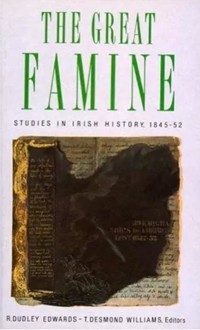
The Great Famine
STUDIES IN IRISH HISTORY 1845–52
EDITORS
R. DUDLEY EDWARDS
Professor of Modern Irish History, University College, Dublin
T. DESMOND WILLIAMS
Professor of Modern History, University College, Dublin
WITH A NEW INTRODUCTION AND BIBLIOGRAPHY BY
CORMAC Ó GRÁDA
Associate Professor of Economics, University College, Dublin
THE LILLIPUT PRESS
Acknowledgements
THE Editors wish to express their sincere gratitude to the Director and staff of the National Library of Ireland for their willing help and for the facilities they provided and to the Trustees of the Library for giving permission to publish many of the illustrations included in this volume. The Editors would also like to express their thanks to Professor J. H. Delargy, Director of the Irish Folklore Commission, who initially suggested the project of writing a history of the Great Famine, and to the staff of the Irish Folklore Commission for their willing help.
The Editors take this opportunity of thanking the Government of Ireland for the generous financial grant which has made possible the publication of this volume.
The Editors also wish to acknowledge the services of Professor T. W. Moody and the late Professor J. F. O’Doherty who, for a period, acted as editors of the work. To Dr K. H. Connell a special word of thanks is due for reading and commenting on the manuscript.
The Editors finally have pleasure in acknowledging their indebtedness to Mrs. Maureen Wall, Miss Joyce Padbury and Dr K. B. Nowlan for their constant and patient assistance in the preparation of this volume.
Foreword
IT is difficult to know how many men and women died in Ireland in the famine years between 1845 and 1852. Perhaps all that matters is the certainty that many, very many died. The Great Famine was not the first nor the last period of acute distress in Irish history. The Great Famine may be seen as but a period of greater misery in a prolonged age of suffering, but it has left an enduring mark on the folk memory because of its duration and severity. The famine is seen as the source of many woes, the symbol of the exploitation of a whole nation by its oppressors. If only because of its importance in the shaping of Irish national thought, the famine deserves examination. But it was much more than a mere symbol. The economic and social influences of the famine were considerable; many of the most persistent trends in modern Irish life emerge with the famine, while the years of distress also saw the end of a phase in the agitation for national self-government. In Irish social and political history the famine was very much of a watershed. The Ireland on the other side of those dark days is a difficult world for us to understand, the Ireland that emerged we recognise as one with problems akin to our own.
In the year 1848, Charles Gavan Duffy, the Young Irelander, full of anger and mortification could cry out that the famine was nothing less than, ‘a fearful murder committed on the mass of the people’. That indictment has come down to us alive and compelling in the writings of John Mitchel. This famine, which saw the destruction of the cottier class and forced some 3,000,000 people to live on charity in the year 1847, was something which went to the very basis of Irish society. It is easy to say, at a distance of a century, that men like Mitchel and Gavan Duffy wrote in an exaggerated way about the famine and that it was quite absurd for P. A. Sillard, the biographer of John Mitchel, to compare a respectable whig administrator, like Lord Clarendon, with the stern Elizabethan Lord Mountjoy, who destroyed the very crops of his enemies. These accusations may be exaggerated, but their influence on Irish thought and the sincerity with which they were made can hardly be doubted.
In the existing commentaries on the famine period, it is possible to detect two trends of thought related but yet distinct. On the one hand, we find that the more actively the writer was interested in political nationalism, the more determined he appeared to place full personal responsibility on the British government and its agents for what happened in Ireland. So it was with Gavan Duffy and later with Arthur Griffith, who could say that the British government deliberately used ‘the pretext of the failure of the potato crop to reduce the Celtic population by famine and exile’. In contrast to this approach, we find the heirs of Fintan Lalor less willing to see in the Great Famine a conscious conspiracy against the nation. For them the disaster has a more organic, less deliberate origin. It was the social system rather than government which was at fault. James Connolly, in his acute analysis of Irish society, could declare: ‘No man who accepts capitalist society and the laws thereof can logically find fault with the statesmen of England for their acts in that awful period’. But whether Connolly’s important reservations be accepted or not, the famine, as a social phenomenon, as a testing time for the nineteenth-century state is entitled to the closest study by the modern historian. The political commentator, the ballad singer and the unknown maker of folk-tales have all spoken about the Great Famine, but is there more to be said?
The Great Famine was a challenge to its age; an age which saw the rapid expansion of British industry and wealth and the temporary triumph of liberal concepts in economic and political affairs. The state, in the eighteen-forties, was in the curious position of having shed the trappings of the old mercantilist world without fully realising the extent of the demands which the new era with its great cities and vast populations would eventually make on the legislature. The timidity and remoteness of the administrators in the eighteen-forties may irritate the modern observer who unhesitatingly accepts the moral responsibility of the state to intervene in economic affairs in a time of crisis. But it needs patience to realise that what is obvious and uncontroversial today was dark and confused a century ago to many persons of good will. The study of the administration of relief, by Mr T. P. O’Neill, and of the medical aspects of the disaster, by Sir William P. MacArthur, show how seriously some cabinet ministers were troubled by the famine and yet, despite that anxiety, how inadequate were the measures adopted. In earlier famines men had died unnoticed by their rulers, but the new humanitarianism of the nineteenth century gradually forced upon reluctant minds a more delicate appreciation of the sufferings of others.
The tide of hunger and death burst through the forms of the science of political economy and the whig administration of Lord John Russell was compelled to depart so far from its principles as to permit the free distribution of food to the starving population in the summer of 1847. This belated emancipation, although it partly checked the course of the famine, was nevertheless not sufficiently strong to induce men to sweep away those conditions which made famine possible in Ireland. The victory was a modest one, for the laws of political economy had only been broken with the utmost reluctance. Almost as sinners against the accepted truths of political science, did the British government undertake the formidable task of supervising the distribution of food to a starving nation.
The nineteenth century throughout Europe was a time of heart searching on the subject of agrarian society. It was a heart searching that mirrored the strange conflict between enlightened romanticism and the new and harsh liberal economics. In Prussia, in the Baltic lands, in central Germany and in Russia, the agrarian issue was at the core of the social evolution of that century. In sharp contrast, however, to the Irish pattern of development, reform, in say the Baltic lands, took place within a society which had preserved to a considerable extent a sense of personal responsibility in the relations between landlord and tenant. Racial and cultural tensions did exist in many areas besides Ireland, but the extent to which tenant and landlord were separated from each other could scarcely be paralleled elsewhere in Europe. In Ireland the legal implications of land-ownership had been divorced from the moral duties of a proprietor to his dependents, while land was too often a mere investment, or an encumbered burden which yielded but a reluctant income to its owner. The divorce in culture between landlord and tenant in Ireland was probably as great as that between the Lettish peasant and his German overlord, but in Ireland there were no relics of an outmoded feudalism to shelter the people from the harsh winds of tyranny.
A reform of the Irish social system was essential, if any advance were to be made towards political or economic stability. This was quite obvious to statesmen like Peel and Russell, but what was not so clear to them was how reform could actually be accomplished without that social revolution they could never bring themselves to accept. The Irish problem was much more than one of finding the most effective means of expropriating the Irish landlords. The task of reform was one of great complexity and could only have been carried through with selflessness, great daring and imagination. Above all, it demanded a deep understanding of the needs and aspirations of a poor, hungry rural people crowded into an underdeveloped island. The spiritual atmosphere of mid-nineteenth-century England was still that of the raw childhood of the industrial revolution tinged with a little of that new security which came with the consolidation of Britain’s industrial might. The factory and health legislation testified to a broadening of outlook, but the will to reform had no great strength and the logic of English social development provided no clear or popular argument in favour of radical experiment in Ireland.
The buoyancy of the British economy was not to be found in the undercapitalised Irish rural economy, which had so developed as to ensure that a minimum amount of wealth returned to the land as productive capital investment. It is idle to speculate on the question of whether Ireland on the eve of the famine was or was not overpopulated, since no generalised picture can possibly do justice to the wide contrasts in conditions and opportunities within the country. Within the structure of the society that did exist, however, far too many people were doomed to spend their lives in very great poverty. Possibly a policy directed at giving security of tenure to the tenant farmers alone would not have sufficed, for the problem of the cottiers and landless labourers would have remained. In practice, however, no serious attempt was even made to take the initial step of protecting the tenant farmers. Throughout the famine years, the British parliament proved singularly indifferent to the issue of Irish land reform and no ministry was willing to make it a major political objective.
The legislative measures adopted, in the mid-nineteenth century, display therefore certain distinctive features. Above all they were timid and extremely limited in scope. Dr O. MacDonagh, in his study of emigration policy, shows how the British government hesitated and in the end failed to adopt a constructive emigration policy which might have protected the Irish emigrant from some of the hardships he had to endure in seeking a new life overseas. So it was too with land reform, public works schemes and even fiscal reform. The conventions of the day proved stronger than even the best intentions.
In folklore and political writings, the failure of the British government to act in a generous manner is quite understandably seen in a sinister light, but the private papers and the labours of genuinely good men tell an additional story. There was no conspiracy to destroy the Irish nation. The scale of the actual outlay to meet the famine and the expansion in the public relief system are in themselves impressive evidence that the state was by no means always indifferent to Irish needs. But the way in which Irish social problems so frequently overshadowed all else in the correspondence of statesmen, testifies in a still more striking manner to the extent to which the British government was preoccupied with the famine and distress in Ireland. In the case of a man like Sir Robert Peel, we can trace over the years preceding the Great Famine a growing awareness of the need for change in Ireland, while in the case of Lord John Russell, as Dr K. B. Nowlan points out in his study of the political background to the famine, there developed a strong conviction that only a radical reform of the land system could really restore tranquillity to the country.
Modern research on the administrative and political backgrounds to the Great Famine reveals more clearly the limitations of men in office who were unwilling to rise or incapable of rising effectively above the economic conventions of their day and struggling with no outstanding success against a disaster that had its roots deep in Irish history. The disaster originated in that ordering of human affairs which condemned so many to a life-long dependence on a single crop. The potato economy, the primitive state of Irish agriculture and the bad relations between landlord and tenant were but different expressions of the same evil, poverty. The Great Famine began when the distribution of the product of the Irish soil ceased to bear any relation to the needs of the occupier and the requirements of a healthy system of agriculture. The dire events of 1846 and 1847 do not stand in isolation and no remedies however well intentioned which treated that crisis as an isolated phenomenon could possibly in a short time solve the long-term causes of Irish distress. The actual catastrophe of famine was a short-term phenomenon, but the evictions and large-scale emigration continued long afterwards. It was only slowly, in the second half of the nineteenth century, thanks to Gladstone’s imaginative policy and the land agitation in Ireland, that the British government came to grips with the existing land system, one of the major causes of chronic distress in Ireland.
Political life in Ireland before the famine, as Dr R. B. McDowell shows in his study of the Ireland of the period, was not characterised by any noticeable concentration on agrarian issues. The demand for the repeal of the Act of Union with Great Britain encompassed all, for repeal was seen as the touchstone which would rid the land of the many evils with which it was afflicted. It is possible, therefore, to see the famine as one of the factors which forced men to look beyond the political structure to the economic realities. In Ireland, under the impact of the disaster, there developed a new interest in tenant-right. By 1847 the cry for tenant-right had become almost as loud as the demand for the repeal of the Union. The crisis and the quickening of the demand for tenant-right, however, brought with them no heroic phase in Irish political life and for a long time no leader emerged to replace Daniel O’Connell. Indeed, despite the new interest in the land question no really satisfactory balance between political and economic ends was achieved during the famine years. Mitchel and Fintan Lalor sought such a synthesis, but their efforts went unrewarded, as the history of the eighteen-fifties and sixties testifies.
No class in Irish society really succeeded in escaping from the hardships which the Great Famine brought with it. The dramatic decline in the total population between the census of 1841 and that of 1851 is one illustration of the impact of the famine. But the internal shifts in the structure of the rural population, as Dr E. R. R. Green indicates, are perhaps even more significant. The labouring class almost disappeared and the consolidation of landholdings which followed in the wake of the famine signalised too the passing of the small holder. These changes and the opportunity to emigrate which the famine helped to create gave to the population structure of Ireland a character which outlasted the nineteenth century.
British ministers, conscious of the many deficiencies in the Irish social system, were sometimes apt to blame the Irish landlords for their inactivity during the famine. The evidence all goes to show that while the administrators believed the state was doing much to help the stricken population, the landlords, with some exceptions, were prepared to do comparatively little on their own initiative. There developed consequently for a time in Britain a curiously hostile attitude towards that very class which represented traditionally the British interest in Ireland. In the years 1846 and 1847 the attack on the landlords’ position reached its greatest intensity, and there is no doubt that, in the main, the Irish and British criticisms of the landowners were well grounded. But the famine which swept away so many small farmers did little good for the landlords. Heavily encumbered estates needed only a final blow to cripple them, and many a landlord suffered much in the years of shortage and depression. It was no accident that the famine era saw the enactment of the first encumbered estates measure, for by bringing to an end those conditions which enabled the old social structure to survive for so long, the Great Famine prepared the way for those developments which in the end marked the passing of the Irish landlord.
The Great Famine begins to emerge, then, as something too monstrous and too impersonal to be the mere product of individual ill-will or the fiendish outcome of a well-planned conspiracy. Had the successive failures of the potato crop come earlier or later in the century, they might have had very different consequences, but coming as they did in the middle of the century, they were met in a way previous generations would have regarded as humane, but which we must regard as quite inadequate. The excessive tenderness of the administration where private property rights were involved may strike us as unreal, just as it struck some contemporaries, like the Catholic hierarchy in 1847, but it may be remembered that this same elaborate respect for private property was very potent in hampering reform in Britain. The famine problems were approached from the limited viewpoints here described because the state in that era had a different view of its positive responsibilities to the community; but that historical conclusion must never be allowed to obscure another equally important one, namely, that in the mid-nineteenth century the rulers of Britain lost an opportunity to carry through a programme of reform which might well have influenced the future course of Anglo-Irish relations. The Great Famine in its own cruel fashion opened the way for reform. It was not accompanied or followed by any determined effort to reconstruct Irish society on a more just and equitable basis. Instead of passing laws, the statesmen of the day deemed it wiser to confine their schemes for Ireland to the safe speculations of their private correspondence.
There had, of course, been a considerable measure of emigration from Ireland before the famine, but the half-century that followed the potato failure saw the foundation of great overseas colonies of Irish emigrants; a development which introduced a new and potent factor into Anglo-Irish relations. Dr R. J. McHugh’s picture of what the countryman thought about the famine makes it clear that there was no disharmony between the folk memory and the writings of the political commentators. These new Irish colonists, not unnaturally, remembered the ignominy of the soup-kitchen, the police-guarded barns and the futile road works. They could not know or sympathise with men who, within the limits of contemporary English opinion, tried to curb the excesses of famine. The disaster, therefore, which saw the destruction of one Ireland helped to create another Ireland which was not confined within the shores of one small island, for the North American Irish in particular were destined to make a remarkable contribution to the shaping of modern Irish history.
The traditional interpretation of the Great Famine is fundamental to an understanding of the character of Irish society in the second half of the nineteenth century and later. But if modern research cannot substantiate the traditional in all its forms, something surely more sobering emerges which is, perhaps, of greater value towards an appreciation of the problems that beset all mankind, both the governors and the governed in every generation. If man, the prisoner of time, acts in conformity with the conventions of society into which he is born, it is difficult to judge him with an irrevocable harshness. So it is with the men of the famine era. Human limitations and timidity dominate the story of the Great Famine, but of great and deliberately imposed evil in high positions of responsibility there is little evidence. The really great evil lay in the totality of that social order which made such a famine possible and which could tolerate, to the extent it did, the sufferings and hardship caused by the failure of the potato crop.
In the ultimate analysis, the picture that emerges from modern research has much in common with James Connolly’s sketch in LabourinIrishHistory. We may reject his attempt to force the picture into a doctrinaire frame, but we must recognise with him that the evil spirit of the Great Famine was the history of Anglo-Irish relations in the very widest sense over a long period.
...........
This present collection of studies is a co-operative undertaking by a group of specialists in the period. It does not claim to be a definitive history of the Great Famine but rather a contribution towards such a history. The volume has, therefore, been so arranged as to give in its introductory chapters, dealing with Ireland on the eve of the famine and the agriculture of the period, a concise general account of Irish society in the first half of the nineteenth century. In the chapter on the political background a close study is made of the developments which took place in Irish life during the famine years and of the influence of the food crisis on the relations between Great Britain and Ireland. The manner in which relief was organised and distributed is considered in detail. The beginnings of the great emigration overseas are rather fully examined while the medical problems of the famine and the famine in folklore are discussed in the concluding chapters.
The aspects of the Great Famine which are not dealt with in these pages are obvious enough. A study of the changes in the population structure during and after the famine is a task yet to be undertaken. Before such a study can be made in a satisfactory manner more preliminary research in the form of local surveys will have to be done on such fundamental questions as marriage patterns and the size of farm holdings in the century before the famine. Again, no attempt has been made to discuss at any length the long-term implications of the Great Famine. The editors would have liked to include such an assessment but were precluded from doing so through the dearth of specialised studies in Irish economic history in the late nineteenth and early twentieth centuries. To have awaited the time when such an authoritative survey could be made would have involved an even greater delay in the publication of this volume.
The editors appreciate the services done by pioneers, like the Rev. John O’Rourke, in the history of the famine. The writers of these studies hope that their work will encourage others to examine further the history of a calamity which brought with it so many unexpected consequences for Ireland, Britain and the new worlds of America and Australia.
Introduction to the New Edition
The tradition of history-writing in Ireland is an ancient one. Much of the associated output, it is true, would not pass muster for objectivity or scholarship today, but modern controversies about ‘revisionism’ have their precedents in Keating’s barbs at Stanyhurst or Madden’s defence of the United Irishmen. A century or so ago, the works of Froude and Lecky vied for readers with the more populist accounts of Barry O’Brien or Michael Davitt. Half a century later, with the foundation of the Irish Historical Society and IrishHistoricalStudies, the scene had been set for a new, professionalized Irish history. The revolution inaugurated by a group of young Irish academics had just begun, though it had yet to bear fruit in published research. A lecture delivered in May 1943 by youthful Professor Theo Moody of the Department of Modern History, Trinity College, Dublin to fellow-members of the Irish Historical Society will illustrate the point. Moody’s lecture on ‘things to be done in [nineteenth-century] Irish history’ is now available only in summary form, but reading that summary today highlights the poverty of scholarly research on that period of Irish history. Moody noted the lack of even a satisfactory general outline of modern Irish history, and referred those interested to the OxfordHistoryofEngland. For a general bibliography, he recommended appendices to the CambridgeModernHistory. The few specialist works on Irish history that Moody considered worth mentioning – George O’Brien’s EconomicHistoryofIrelandfromtheUniontotheFamine (1921), John O’Donovan’s EconomicHistoryofLiveStockinIreland (1940), Nicholas Mansergh’s IrelandintheAgeofReformandRevolution (1940), and the works on land tenure by Elizabeth Hooker (1938) and N.D. Palmer (1940) – would be considered dated by most historians today.1
Against such competition, TheGreatFamine:StudiesinIrishHistory wins by an Irish mile. Whatever about the evergreen charms of Mansergh, few refer to Hooker or O’Donovan nowadays, and hardly anybody believes O’Brien anymore; by contrast, most of the contributions to TheGreatFamine are still frequently consulted and cited in the literature. The book confronted an important if distressing subject with unprecedented academic rigour, and overall its contents have worn very well indeed. It certainly deserves to be welcomed by a new generation of readers in this inexpensive format.
This classic work of Irish history is one with an interesting history of its own. Most of its authors have since become household names in Irish history-writing. For three of them, their researches on aspects of the Great Irish Famine marked the beginning of distinguished careers as historians. And for all seven authors and both editors, TheGreatFamine was to bulk large in their lives for many years before it reached the bookshops in early 1957. Indeed, there is a link between Theo Moody’s lecture to the Irish Historical Society in 1943 and this book, because only a few months after his lecture Moody was appointed – or appointed himself – co-director of the project that would end up, much later, as TheGreatFamine.
This book has a history rich in its implications for the development of Irish historiography in the 1940s and 1950s – and since. The idea of an authoritative study of the Great Famine goes back to early in 1944, when An Taoiseach, Éamon de Valera, proposed that the centenary of the Famine be commemorated with a monograph by ‘a trained historian whose name is already favourably known’. The government, unreasonably perhaps, wanted the task completed by 1945 or 1946. In return, it promised the prospective author a fee and a subsidy towards publication. The quest for an expert led to negotiations with the recently-formed Irish Committee of Historical Sciences. Perhaps because there was no obvious candidate, perhaps because the Committee wanted to control the project itself, the ICHS quickly converted the proposal into one of the earliest exercises of cooperative history-writing in Ireland (of which the massive NewHistoryofIreland is the best-known example).2 In some respects, the experiment did not bode well for the approach. Both Professor Robert Dudley Edwards of the Department of Modern Irish History, University College, Dublin and Professor Moody, the key figures at the outset, were formidable men in their very different ways. Neither would then be deemed an expert on the Great Famine – or indeed on the nineteenth century. Yet Moody was already supervising nineteenth-century Ph.D. theses by Hugh Shearman and Rodney Green, and was about to devote himself to the history of Queen’s University, Belfast and to Michael Davitt. Both he and Edwards wrote on Thomas Davis and Young Ireland in 1945.
During 1944 Edwards and Moody attempted to capture the Famine project for their planned ‘general scheme for the production of historical works’, mainly because the government did not want to subsidize the ICHS’s non-Irish publisher (Faber & Faber). As a second-best alternative, they undertook to find a local publisher, and to set a number of graduate students to work on a selected list of topics for inclusion in a separate book. It was left to Thomas P. O’Neill, then preparing for his master’s degree in University College, Dublin, to propose appropriate topics. Dudley Edwards accordingly promised de Valera’s secretary ‘separate contributions dealing with the events, medical history, relief (including poor law amendment), emigration, population, agriculture, the people, political implications, the place of the famine in Irish history… a book of approximately 1000 pages… in print in 1946’.3Specialist chapters based on masters’ dissertations would form the core of the book, but these would be supplemented by contributions from the editors and a few others. For its part the government committed £1500, a very substantial sum of money in those days when professors were paid £700–£800 a year. The agreement between Edwards, on behalf of the ICHS, and Maurice Moynihan, de Valera’s secretary (and also Edwards’ friend and neighbour!), led to the present volume of just half the promised size and over a dozen years late. The intervening years produced instances of procrastination, wrangles between the editors and civil servants about finance, the mislaying of copy and references, the revising of plans, changes of personnel, and abortive negotations with various publishers.
Moody soon resigned from the project. His replacement, Rev. Professor John Francis O’Doherty, was given ‘full responsibilities for the final revision of the work’ by the ICHS in January 1947. Father O’Doherty, by all accounts a kind and gentle man, had recently relinquished his chair in ecclesiastical history in Maynooth in difficult circumstances to become a curate in Omagh. He was a curious choice for editor, and seems to have left no mark on the book.4 Progress on the project was interrupted in 1946–8 by the Foyle Fisheries court case (which involved Moody, Dudley Edwards and other historians as expert witnesses) and by intrigues concerning the plan to create a School of Irish History within the Dublin Institute of Advanced Studies. T.D. Williams5 replaced O’Doherty in 1949; 29 years old and held in awe by men and women much older, Williams had just been appointed to the chair of Modern History in UCD.
Both the long gestation of TheGreatFamine and its ultimate form are a curious commentary on the writing of Irish history in the 1940s and 1950s. Flawed planning and personality clashes were an important part of the story, which is told in greater detail elsewhere.6 Between 1946 and 1950 the project lay virtually dormant, but the ICHS and the editors were prodded into productive action in 1950–1 by queries from civil service officials. The core of the book was submitted to the publishers, Browne & Nolan, in December 1954. Much to the annoyance of the editors, TheGreatFamine missed the Christmas market of 1956, reaching the bookshops on 18 January 1957.
It was widely reviewed, thanks in part to Desmond Williams’s influence, and the reviews were favourable. The initial print run of two thousand copies virtually sold out within two years. De Valera, then in opposition, received a complimentary copy. He thanked the editors, though it is reported that when it was read for him – he was virtually blind by that stage – he did not much care for the book. His greater enthusiasm for ‘amateur historian’ Cecil Woodham-Smith’s TheGreatHunger (1962) tells its own tale. Still the world-wide and enduring success of that more evocative study also points to an opportunity lost by professional Irish historians. If Cecil Woodham-Smith was too melodramatic or ‘emotive’ on occasion – and Roy Foster in an unkind moment has accused her of being a ‘zealous convert’7 – one cannot occasionally escape the feeling when tackling Edwards and Williams of reading ‘a narrative as dry and as cold as a Blue Book’.8 And yet, though some of the contributors to TheGreatFamine did not share de Valera’s liking for TheGreatHunger, the two studies nicely complement each other. TheGreatFamine may lack the narrative account and descriptive ‘feel’ so usefully provided by Woodham-Smith, but it is more scholarly, more dispassionate, and more analytical. It is also worth pointing out that three of those involved in the Edwards-Williams project, R.B. McDowell, T.P. O’Neill, and Edwards himself, helped Woodham-Smith in her work, and became firm friends with her.
As its curious sub-tide indicates, TheGreatFamine:StudiesinIrishHistory never pretended to be the definitive, narrative account envisaged by de Valera in 1944. Half a century later, that account is still awaited. But the ICHS’s own early plans were frustrated in several respects. The eventual list of contributors met one of the aspirations of Moody and Edwards – an ecumenical combination of the best talents available, North and South. But the authors responsible for ‘economics’ (James Meenan), and ‘the place of the famine in Irish history’ (the editors themselves), never delivered their texts, and the draft of a contribution by Brian Osborne on English public opinion was rejected after the ‘implied condemnation’ of Moody.9 Editorial hopes that other scholars such as Kenneth Connell of Queen’s University, Belfast, and R.C. Geary of the Central Statistics Office would provide chapters never came to fruition either. Perhaps this explains the administrative-historic focus of TheGreatFamine. The core chapters – by Kevin Nowlan, Oliver MacDonagh, Thomas P. O’Neill, and William McArthur – tackle the tragedy largely from the standpoint of the bureaucrat and the legislator. Nor did Edwards and Williams, as editors, ever confront several other important aspects of the Famine’s history – the parts played by the churches and the gombeenman, the ‘low’ politics of moral economy and agrarian unrest, the working of food markets, landlord behaviour, the concept of the Famine as ‘watershed’, general economic conditions in the United Kingdom during the crisis, the short- and long-term social and economic consequences, the Famine in literature, the Famine in comparative European perspective, to name a few. Since the volume’s publication, the researches of Austin Bourke, Raymond Crotty, Mary Daly, James Donnelly, Liam Kennedy, Joel Mokyr, Peter Solar, and Peter Gray, among others – always building on TheGreatFamine – have plugged some of the gaps. But curiously, perhaps, there is very little of the work included here which has been superceded by them. The sections on the pre-famine economy have dated most, though even they can still be read with benefit. In defence of the editors and the contributors to TheGreatFamine, the raw state of Irish historiography in their heyday must again be stressed. As noted above, very few scholarly monographs had been published on the economic and social history of nineteenth-century Ireland before 1944 (or even by 1957), and on the Famine itself little worthwhile had been published since the accounts of Canon John O’Rourke (1874) and W.P. O’Brien (1896).
Inevitably, the contributions to TheGreatFamine bear some of the methodological hallmarks (and a few of the scars) of the 1940s and 1950s. Some of the authors relied mainly on official printed sources and contemporary newspapers, rather than on the ‘private’ evidence of estate records, parish registers, emigrant letters, folklore, and popular literature. But that accusation cannot be made against O’Neill, Nowlan, or MacDonagh, and the bias is partly accounted for by the more difficult research conditions the authors raced. In the 1940s the National Library’s collection of catalogued manuscripts was only a fraction of that available to scholars today; thousands of manuscripts lay in large wooden boxes with their lids screwed down. Only in the early 1950s did nineteenth-century estate records become widely accessible.10 The hundred-year rule applied to Famine documents in the State Paper Office, and Irish parishes registers had yet to be microfilmed. Research in London was virtually impossible at a time when some of the authors were at work – in 1945–6.
Another hallmark of the book was the tendency of most authors to shy away from quantitative generalizations or descriptions. The useful map by Thomas P. O’Neill describing the dependence on soup-kitchens by poor law union (p. 242) gives a hint of what might have been done in this respect. Contributors largely ignored the easily available agricultural statistics and failed to exploit quantitative information in the Poor Inquiry or Devon Commission. They emitted conflicting signals on the crucial issue of excess mortality, and offered little information on prices, wages, or agricultural yields. Yet despite such limitations, the book contains a great deal of lasting value. For example, O’Neill’s essay on public relief policy has provided a framework for several other researchers to follow. Kevin Nowlan on politics, Oliver MacDonagh on emigration, and Sir William MacArthur on medical aspects of the Famine produced excellent and enduring contributions. O’Neill and MacDonagh, young post-graduate students at University College, Dublin in the mid-1940s, based their chapters on master’s dissertations which were commissioned as part of the ICHS project. The dissertations, completed in 1946, were transformed into what would become Chapters IV and VI below in 1950–2. MacDonagh would build on insights gained during his research into the legislation to protect ocean-going passengers during the Famine for his interpretation of nineteenth-century public policy, while O’Neill would become Ireland’s acknowledged Famine expert. Kevin Nowlan (Chapter III) was recruited later than MacDonagh and O’Neill, and his able and confident contribution on the political background is largely based on a masters’ dissertation completed in 1950. These three chapters provide a foretaste of the quality of scholarship that would emanate later from these academic ‘young Turks’. Previous analyses of the Famine, notably those by Canon John O’Rourke (1875) and George O’Brien (1921), had relied largely on the printed word; MacDonagh, Nowlan, and O’Neill were the first to exploit archival material. With them, truly, Famine research came of age.
Sir William MacArthur (Chapter V) was already an established scholar when recruited by the ICHS to write on the medical history of the famine. Belfast-born MacArthur (1884–1964), an enthusiast for the Irish language and former head of the British Army Medical Services, had recently published a paper on ‘Famines in Britain and Ireland’.11 He was one of the first to produce a finished text. Some years later one of the editors, Desmond Williams, mislaid MacArthur’s footnotes, and as a result the excellent chapter on medical history appeared virtually without references (see below, p. 469). Williams allegedly attempted to plámás the aggrieved MacArthur by claiming that the words of such a fine historian might stand on their own – which turned out to be correct!12
Chapter VII by non-historian Roger McHugh on folk memories of the tragedy was largely based on replies to an ambitious questionnaire circulated by the Irish Folklore Commission in 1945. That questionnaire, largely devised by Thomas P. O’Neill, yielded almost four thousand pages of evidence from all over the island.13 McHugh’s contribution, also largely completed in the mid-1940s, is the most vivid and evocative in the book. Highly original in the methodological sense, at least by Irish standards, it prompted Dudley Edwards to note in his diary: ‘[John] Mitchel’s popularity is explainable not because he was merely defiant. It was because he correctly interpreted the feeling of the people’. My own analysis of some of the material convinces me that a critical reading of the folklore evidence would return a more equivocal verdict on popular feeling, but the comment raises the question why Irish historians since – with a few exceptions such as Ken Connell – have been so reluctant to invoke such evidence. The case for folklore and oral history as complements to conventional documentary sources finds ample support in the material presented by McHugh. R.B. McDowell’s introductory chapter on the economy on the eve of the Famine is wide-ranging and elegant, even if one of the editors privately believed its ‘effort to speak well for government and landlords… [is] a little obvious’.14 Today’s readers may judge for themselves! Chapter II on agriculture by the late Rodney Green was shorter and less thorough than the rest, possibly, as Ken Connell reportedly thought, ‘because he [Green] was not interested’.15 Like MacArthur’s and McHugh’s chapters, Green’s was finished in the first phase of the project.
The final outcome was very much a product of University College, Dublin in its Earlsfort Terrace heyday. Both editors and four of the contributors either worked or had served their time there; Browne & Nolan the publishers also had close connections with UCD. For Dudley Edwards, in whose office some of the contributions lay for many years after their arrival in 1946 or 1947, the project was a recurring preoccupation. But without the commitment and the enthusiasm of his colleagues his Kevin Nowlan, Joyce Padbury, and Maureen Wall (née McGeehin),16 the book almost certainly would never seen the light of day.
In the end, despite repeated resolutions to set aside the necessary time to write what was variously described as an historiographical introduction and an epilogue, neither editor contributed a word to the body of the book, nor did they exercise much editorial control on the individual authors. There were plans to issue a companion volume of source documents but they too were dropped. The brief but broad-ranging and thoughtful introduction that did materialize was ‘ghosted’ by Kevin Nowlan at Desmond Williams’s request.17 The bibliography owes a good deal to that produced by T.P. O’Neill for his MA thesis,18 and Joyce Padbury, then an associate of the Department of Modern History, contributed the index. That the index was limited to a list of names and places was the editors’ decision, not hers. Overall, it must be said that Edwards and Williams performed their editorial duties in a rather lackadaisical manner; Williams, in particular, had too many other fish to fry in the latter stages of the book’s gestation. Yet, despite all this, TheGreatFamine, greater than its parts, is a pioneering and an enduring work.
For an early (and friendly) reviewer, the late Professor Leland Lyons, the book proved how ‘the Great Famine was a logical consequence of a vicious system of land-holding, a pitifully backward agriculture, and a social structure which invited disaster’.19 That reading captured an important, if hidden, message of this book, viz. that populist understanding and nationalist propaganda, fed on the saevaindignatio of John Mitchel and Archbishop John MacHale of Tuam, had greatly underestimated the deep-seated social and economic reasons for the disaster. The point needed to be made. Moreover, subsequent research in Irish economic and social history has confirmed many of the findings and speculations of TheGreatFamine. Yet that research would also temper the implication of Lyons’ apologetic claim that the Famine was somehow inevitable and that all the mortality was unavoidable. Dudley Edwards agonized repeatedly over this issue in his private diaries, though his worries failed to influence the content of the book. For Edwards, the fear of sanitized, ‘dehydrated history’ was very real. TheGreatFamine largely eschewed accounts of the suffering, the cruelty, and the callousness (on all sides) that marked the late 1840s. No doubt, the contributors were reacting to the melodramatic discourse of populist-nationalist accounts. Yet now, over three decades later, the conundrum glossed over by Edwards & Williams remains: ‘though the English may not have actually caused [the famine], it was never possible to explain why the richest and most powerful empire in the world was unable to avert its worst consequences’.20
The unhappy history of TheGreatFamine’s long gestation must not spoil the pleasure and benefit to be obtained from reading the final product. The book itself achieved a great deal, and with it, nineteenth-century Irish history reached a new level of professionalism. The delays endured by TheGreatFamine reflected the shifting preoccupations and responsibilities of those involved, and it would be quite unfair to blame those delays on the sensitive nature of the topic. Yet they symbolized the reluctance of Irish historians to confront the horror of that tragic event in the 1940s and 1950s. Ironically, Moody’s previously-mentioned shopping-list of ‘things to be done in [nineteenth-century] Irish history’ included topics such as the ‘history of the agricultural labourers and of the urban working class… Ireland’s contribution to science, her place in the main political and intellectual movements of contemporary Europe, and Irish expansion overseas’, but it had failed to mention the Famine.21 And between its foundation in 1938 and 1956 IrishHistoricalStudies yielded only two articles on Famine-related topics, both by contributors to this volume. Even in the 1960s those who, like Raymond Crotty (an economist) and Austin Bourke (a meteorologist), wrote on the Great Famine, ploughed a lonely furrow.22 Professional historians rather frowned on Austin Bourke’s research at first, and his doctorate was awarded by the Department of Dairy Science in University College, Cork! Only with the blooming of Irish economic and social history and the increasing interest of outside or foreign-trained scholars in the subject in the 1970s and 1980s has the neglect begun to be made good. Now, all of a sudden, the Famine has become a popular topic for researchers. But there remains plenty to be done. I have appended a bibliography as an indication of what has been accomplished in the interim. Perhaps it will help others contemplating work on the some aspect of the Famine.
As we have seen, TheGreatFamine:StudiesinIrishHistory was a delayed reaction to the Great Famine’s centenary. The imminence of that catastrophe’s sesquicentennial can be expected to generate more overdue interest in the topic. A research network has been formed in Dublin, several interdisciplinary conferences and workshops are being discussed or planned farther afield, the Strokestown Famine Museum has opened its doors, and there is even talk of new, collaborative volumes! But in the meantime, the classic contributions that follow have provided many of the essential building blocks.
CORMAC Ó GRÁDA
NOTES
1 T.W. Moody, ‘Things to be Done in Irish History, VI: Nineteenth Century’, BulletinoftheIrishCommitteeofHistoricalSciences, No. 28 (December 1943), pp. 1–2. To be fair to the late George O’Brien, he never claimed much for his works in economic history, freely admitting that he wrote them as a passport to a position in UCD.
2 The HistoryoftheChurchofIrelandfromtheEarliestTimestothePresentDay (Oxford 1993), edited by W.A. Phillips (also of Trinity College), can claim to be the first such exercise.
3 National Archives, D/T S. 13605 (9 September 1944).
4 ‘Tenth Report of the ICHS’, IrishHistoricalStudies, 6 (1948–9), p. 67.
5 See James McGuire’s astute assessment of Williams in IHS, 26 (1988), pp. 3–7.
6 Cormac Ó Gráda, ‘Making History in Ireland in the 1940s and 1950s: The Saga of TheGreatFamine’,TheIrishReview, no. 12 (1992), pp. 87–107.
7 Roy Foster, ‘We Are All Revisionists Now’, TheIrishReview, no. 1 (1986), p. 3. Modern specialists on the Famine are by no means so dismissive of Woodham-Smith’s achievement. See, for example, Peter Gray, ‘Punch and the Famine’, HistoryIreland, vol. 1(2) (1993); James S. Donnelly, ‘The Famine and its Interpreters, Old and New’, HistoryIreland, vol. 1(3) (1993).
8TheFreeman’sJournal, 27 May 1876 (criticizing a review in TheSpectator of Canon John O’Rourke’s HistoryoftheGreatIrishFamineof1847 (Dublin 1874)).
9 R.D. Edwards’ academic diary, 23 December 1954. So far I have been unable to trace Brian Osborne. The topic suggests that Edwards may have meant the late Brian Inglis, though Inglis assured me shortly before his death that neither Williams nor Edwards had ever asked him to contribute.
10 Professor T.P. O’Neill reminds me that in those days the Irish Manuscripts Commission was not interested in nineteenth-century material, and that access to estate records in private hands was not easily obtained by graduate students from solicitors and family representatives – ‘apart altogether from the travel and maintenance costs which few postgraduate students could afford’ (T.P. O’Neill to author, 6 June 1991).
11 In the JournaloftheBritishArchaeologicalAssociation, 3rd ser., 9 (1944), pp. 66–71.
12 MacArthur’s contribution relies heavily on two works by William Wilde: his ‘Report on the Epidemic Fever in Ireland’, TheDublinQuarterlyJournalofMedicalScience, VII (1849), pp. 64–126, 340–404; VIII (1849), pp. 1–86, 270–339, and his contribution to the 1851 census report. Margaret Crawford tells me that most of the missing references would be to these sources. MacArthur, lionized by the Irish historical establishment, was given every facility in his researches in Dublin. The State Papers Office temporarily moved some files for him from Dublin Castle to the National Library.
13 The replies are now compiled in Vols 1068–75 and 1136 of the Irish Folklore Commission’s archive. McHugh’s system of references (pp. 494–8) is thereby superceded. Cathal Póirtéir of RTÉ is currently preparing a series of radio programmes and two monographs, one in Irish and one in English, containing selections of this and other Great Famine material in the archive.
14 R. Dudley Edwards’ academic diary, 22 December 1954.
15 Ibid., 29 October 1952.
16 See Tom Dunne’s tribute to Maureen Wall (née McGeehin) in G. O’Brien (ed.), CatholicIrelandintheEighteenthCentury:TheCollectedEssaysofMaureenWall (Dublin 1989).
17 J.J. Lee (Ireland1912–1985:PoliticsandSociety [Cambridge 1989], p. 590) credits Williams and Edwards with this ‘short, brilliant’ piece.
18 T.P. O’Neill, ‘The Organisation and Administration of Relief During the Great Famine’ (MA dissertation, NUI 1946), pp. 276–343.
19 F.S.L. Lyons, ‘The Great Famine: History and Tradition’, TheIrishTimes, 11 January 1957.
20 A.T.Q. Stewart, ‘The Irish Century in Perspective’, TheIrishTimes, 16 March 1991.
21 Moody, ‘Things to be Done’.
22 R.D. Crotty, IrishAgriculturalProduction (Cork 1966); A. Bourke, TheVisitationofGod?ThePotatoandtheGreatFamine (Dublin 1993); Bourke’s book is a compilation of his published and unpublished work.
Contents
Title Page
Acknowledgements
Foreword
Introduction to the New Edition
Illustrations
CHAPTER I
IRELAND ON THE EVE OF THE FAMINE
By R. B. MCDOWELL, M.A., PH.D.,
Fellow of Trinity College, Dublin
i. POPULATION AND RURAL LIFE
ii. INDUSTRIES AND COMMUNICATIONS
iii. CENTRAL AND LOCAL GOVERNMENT
iv. SICKNESS AND POVERTY
v. THE STATE AND EDUCATION
vi. THE CHURCHES
vii. THE POLITICAL SCENE
CHAPTER II
AGRICULTURE
By E. R. R. GREEN, M.A., B.LITT., D.PHIL.,
Assistant Lecturer in Economic and Social History, University of Manchester
i. INTRODUCTION
ii. TILLAGE
iii. GRAZING AND DAIRY-FARMING
iv. THE WESTERN SEABOARD
v. SUGGESTED REMEDIES
vi. THE FAMINE AND AFTER
CHAPTER III
THE POLITICAL BACKGROUND
By KEVIN B. NOWLAN, M.A., PH.D.,
Assistant Lecturer in History, University College, Dublin
i. INTRODUCTION
ii. THE COMING OF THE BLIGHT
iii. THE SEASON OF CRISIS
iv. THE IRISH PARTY
v. TENANT-RIGHT AND REPEAL
vi. KINDNESS AND COERCION
vii. THE MONTHS OF REVOLUTION
viii. CONCLUSION
CHAPTER IV
THE ORGANISATION AND ADMINISTRATION OF RELIEF, 1845–52
By THOMAS P. O’NEILL, M.A.,
Assistant Keeper of Printed Books, National Library of Ireland
i. INTRODUCTION
ii. SIR ROBERT PEEL’S RELIEF SCHEME, 1845–6
iii. RELIEF BY PUBLIC WORKS, 1846–7
iv. THE SOUP-KITCHENS, 1847
v. POOR LAW RELIEF, 1847–52
vi. CONCLUSION
CHAPTER V
MEDICAL HISTORY OF THE FAMINE
By SIR WILLIAM P. MACARTHUR, M.D., D.SC, F.R.C.P.,
Clinical Lecturer in Tropical Medicine, University of Oxford, former Director-General British Army Medical Services
i.INTRODUCTION
ii. GENERAL DESCRIPTION OF THE DISEASES WHICH BECAME WIDELY EPIDEMIC IN THE FAMINE
iii. CHARACTERS OF THE EPIDEMIC DISEASES
iv. MEDICAL ORGANISATION AND ARRANGEMENTS
v. DISEASE IN HOSPITALS, WORKHOUSES AND GAOLS
vi. FEVER ACTS, AND TEMPORARY FEVER HOSPITALS
vii. ACTIVITIES OF THE BOARD OF HEALTH AND LOCAL AUTHORITIES
viii. ATTEMPTS TO LIMIT THE SPREAD OF INFECTION
ix. OUTBREAK OF CHOLERA
x. END OF THE FAMINE EPIDEMICS
xi. THE CENSUS OF 1851
xii. CONCLUSION
CHAPTER VI
IRISH EMIGRATION TO THE UNITED STATES OF AMERICA AND THE BRITISH COLONIES DURING THE FAMINE
By OLIVER MACDONAGH, M.A., PH.D.,
Fellow of St. Catharine’s College, Cambridge
i. INTRODUCTION
ii. LANDLORD-ASSISTED EMIGRATION
iii. GOVERNMENT POLICY AND STATE AID FOR EMIGRATION
iv. ASSISTED EMIGRATION TO AUSTRALIA
v. SHIPPING AND THE VOYAGE
vi. THE IRISH IN BRITISH NORTH AMERICA
vii. THE IRISH IN THE UNITED STATES OF AMERICA
Appendix 1. THE VOLUME OF OVERSEAS EMIGRATION
CHAPTER VII
THE FAMINE IN IRISH ORAL TRADITION
By ROGER J. MCHUGH, M.A., PH.D.,
Lecturer in English, University College, Dublin
i. INTRODUCTION
ii. THE BLIGHT
iii. FOOD DURING THE FAMINE
iv. RELIEF: FOOD AND WORK
v. DISEASE
vi. DEATH AND BURIAL
vii. CHANGES IN THE IRISH COUNTRYSIDE
viii. CONCLUSION
NOTES
SELECT BIBLIOGRAPHY
BIBLIOGRAPHY TO THE NEW EDITION
Copyright
Illustrations
AT THE GATE OF A WORKHOUSE, 1846Frontispiece
‘UNION IS STRENGTH’2
‘JUSTICE TO IRELAND’20
‘HEIGHT OF IMPUDENCE’72
THE CAUSES OF EMIGRATION88
THE FAILURE OF THE POTATO CROP94
RUNDALE HOLDINGS112
‘YOUNG IRELAND IN BUSINESS FOR HIMSELF’130
‘THE KILKENNY CATS’142
THE FUNERAL OF DANIEL O’CONNELL166
SEARCHING FOR POTATOES208
CORK SOCIETY OF FRIENDS’ SOUP HOUSE236
FAMINE FUNERAL, SKIBBEREEN262
THE EMIGRANTS’ DEPARTURE318
THE PRIEST’S BLESSING330
AN EMIGRATION AGENT’S OFFICE360
A FAMINE SCENE390
FIGURE 1.Map showing the numbers receiving rations in each Poor Law Union in Ireland in July 1847 as a percentage of the population in the 1841 census.242
FIGURE 2.Map showing percentage decline in population, 1841 to 1851.260
CHAPTER I
IRELAND ON THE EVE OF THE FAMINE
By R. B. MCDOWELL.
i. POPULATION AND RURAL LIFE
ii. INDUSTRIES AND COMMUNICATIONS
iii. CENTRAL AND LOCAL GOVERNMENT
iv. SICKNESS AND POVERTY
v. THE STATE AND EDUCATION
vi. THE CHURCHES
vii. THE POLITICAL SCENE
Punch, 1846.
CHAPTER I
Ireland on the Eve of the Famine
I. POPULATION AND RURAL LIFE
IN the summer of 1798, just a fortnight before the Irish rebellion received a decisive check at the battle of Vinegar Hill, an English country clergyman completed an essay on the prospects of human improvement, the conclusions of which, he admitted, cast a melancholy hue over human life.1 More than a mere chronological coincidence connected his speculations with the savage conflict which was being fought to a finish on the other side of the Irish Sea. To Malthus one of the fundamental factors underlying the social development of any community was the inevitable pressure of population on the means of subsistence. In Ireland from the close of the eighteenth century all social and political problems had to be considered in the shadow of the fact that a high proportion of a rapidly growing population lived (or indeed in some areas occasionally sank) below a low subsistence level. Poverty provided a sombre and menacing background to Irish politics; and poverty and population were decidedly connected.
That by 1845 the population of Ireland had increased and was increasing there is no doubt whatever. But any attempt to discuss the rate of, or the reasons for this increase is seriously handicapped by deficiencies in the statistical material at our disposal. For the numbers of the Irish population in the seventeenth and eighteenth centuries all we have are estimates, which range from earnest computations based on imperfect materials to wild and biased guesses. The first official census (1811) was incomplete, those of 1821 and 1831 were carried out by methods which render them of dubious value, and it was not until 1841 (in apt accordance with an ominous Old Testament instance) that an Irish census was taken on well-planned, thorough, and accurate lines. Thus it is impossible to measure and describe with precision the steps by which the catastrophe was approached. We know that the population of Ireland in 1841 was just over 8,000,000. If we take at their face value the under-estimates of eighteenth-century Irish population experts (which would give us a population in 1780 of 2,500,000) the rate of increase between 1780 and 1841—twice that of Great Britain—is fantastic. But if we accept the corrected figures arrived at by the most recent worker in the field, which give an Irish population of 5,000,000 in 1780, the rate of increase still remains impressive.2 Even on the basis of these revised figures the Irish population was probably increasing at a rate nearly equal to that of Great Britain, which of course was enjoying a period of unprecedented industrial expansion. And it must also be taken into account that the Irish population steadily rose in spite of a continuous drain from emigration. From before the end of the eighteenth century Irish emigrants were moving eastwards to Great Britain, westwards to North America, and southwards to Australia. By the end of the eighteenth century there were substantial Irish working-class colonies in London, and Irish labour was regularly employed on the farms of eastern Scotland. The rapid industrialisation of Great Britain in the early nineteenth century provided a multitudinous and miscellaneous variety of openings for Irish labour and cheap and fast transport between the islands. By 1841 there were over 400,000 people of Irish birth resident in Great Britain, most of them being settled in London, Manchester, Liverpool and Glasgow.
At first Irish immigrants were usually employed in work of ‘the roughest, coarsest and most repulsive description’,3 and often their standard of life was on a par with or inferior to the poorest. But presumably they were usually better off than at home, and in many cases they rose in the economic scale as time went on. The early nineteenth century also saw the beginning of a great age of expansion and exploitation in the United States and the British colonies. In Canada there were considerable Irish settlements, a substantial proportion of the emigrants from the United Kingdom to Australia in the forties were Irish, and the emigration to the United States, which began to assume substantial proportions after Waterloo, averaged between 1840 and




