


Erhalten Sie Zugang zu diesem und mehr als 300000 Büchern ab EUR 5,99 monatlich.
- Herausgeber: Carcanet Poetry
- Kategorie: Poesie und Drama
- Sprache: Englisch
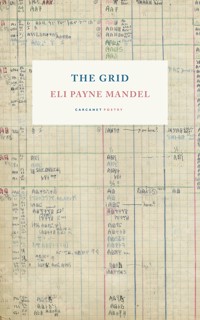
Longlisted for the Michael Murphy Memorial Poetry Prize 2025 Shortlisted for the Anglo-Hellenic League Runciman Award 2024 Shortlisted for the John Pollard Poetry Prize 2024 A The Telegraph Book of the Year The Telegraph Poetry Book of the Month August 2023 The Grid is about the end of worlds, ancient and modern. In three sequences of poems interspersed with Mandel's own translations from classical texts, figures of obsession and loneliness try to decrypt what Maurice Blanchot called 'the writing of the disaster'. Like a detective novel, the title sequence pieces together archival fragments into a lyric essay about Alice Kober, the half-forgotten scholar behind the decipherment of the ancient writing system called Linear B. Across different wartimes, Mandel adapts the typography and formatting of archived papers, their overlaps and errors and aporias, which compel readers to invest creatively in the very act of reading, learning new ways into language as they go. The leaps between past and present work in dialogue like a series of exhilarating stepping stones. This is a collection of what, though sometimes written as prose, turn out to be poems. From Ovid's bitter letters of exile to the prime minister's letters of instruction to nuclear submarine captains, The Grid tells a series of stories about four thousand years of apocalypse. Strange, humane, and deeply rooted in the ancient world, Mandel's first book surveys the ruins of the West with no nostalgia.
Sie lesen das E-Book in den Legimi-Apps auf:
Seitenzahl: 62
Veröffentlichungsjahr: 2023
Das E-Book (TTS) können Sie hören im Abo „Legimi Premium” in Legimi-Apps auf:
Ähnliche








3
THE GRID
ELI PAYNE MANDEL
CARCANET POETRY
Contents
The Grid
1. THE GRID
9
will we gain all things,
being over-fearful,
or will we lose the clue,
miss out the sense
of all the scrawled script,
being over-careful?
—H.D., “Sigil” XVIII
Classicists are people that look out with their back to the world.
—Agnes Martin, “The Untroubled Mind”
10
[1] In ancient Greek, an abacus is a sand table. The abacist draws lines and maybe moves pebbles around the lines. When done, she wipes the sand blank.
[2] A board or slab for drawing, computation, games; a cutting board. Technical term, likely to be a loanword, but conjectured origin in Hebrew “dust” remains unproven. —Pierre Chantraine, Dictionnaire etymologique de la langue greque.
[3] Because dust blows away and only the slab remains, an abacus is also the part of a column in immediate contact with what it supports. If that structure no longer survives, the abacus upholds the edifice of the sky. 11
[4] In the famous vase by Exekias, Achilles and Ajax sit at an abacus playing dice. Three, says Ajax, in small, evenly spaced letters. Four, says Achilles. The numbers run parallel to the warriors’ arms, which taper into fingers pointed like arrows at the black board.
[5] Achilles and Ajax are in two dimensions; so, too, their armor, their kaleidoscopic cloaks, and the black squares on which they sit. But the black square at the center, the abacus, has a narrow orange line running horizontally just below the top. That line is, beyond any doubt, one edge of a cube.
[6] Surely it is Exekias’ accident: the black box is drawn in perspective. From this angle, the upper face, the abacus proper, can be seen. Achilles and Ajax are not playing a game out of sight. They are pointing at what is plainly a blank board.
[7] If Achilles and Ajax ever lived, they spoke an early form of Greek called Mycenaean. Mycenaean is preserved in a script called Linear B, which originated on the island of Crete and trickled through mainland Greece. The period in question is the 14th and 13th centuries bce. Tetri, says Ajax. Qetoro, says Achilles.
[8] Linear B is similar in shape to Linear A. Linear A was used on Crete to write a language that was not Greek—the original language of the Minoans, from before Mycenaeans invaded the island in the second millennium and merged forcibly into their culture. Linear A remains undeciphered, the speech it records unknown. 12
[9] After years of labor at Linear B, Alice Kober died on May 16, 1950, at the age of forty-four. The English architect Michael Ventris deciphered the script sometime between June 7 and June 18, 1952. Four, says Achilles. Three, says Ajax. Even at dice, Achilles wins.
[10] Kober lived in Brooklyn with her mother. She taught Latin at Brooklyn College, where she was promoted to associate professor four months before her death.
[11] It would be false to claim that Kober was responsible for deciphering Linear B. It also would be untrue, at the present moment of renewed interest—a book, an article, a mystery-romance novel—to assert that she has been forgotten. Her contribution was fundamental but inconspicuous. She lives on in the limbo of the half-triumphant.
[12] Beyond Greek and Latin, Kober knew (to the extent that some of these languages could be known) Sanskrit, Tocharian, Hittite, Lydian, Lycian, Carian, Old Irish, “assorted modern languages,” Akkadian, Hebrew, Sumerian, and classical Chinese. This list, taken from one of her letters, is presented in an ordering, which, uncharacteristically, is no order at all. But characteristically, it is modest. On her résumé, she slips in Basque and Old Persian, as well. 13
[13] Kober mentions Ventris in a censorious footnote to her first major article, “The Gender of Nouns Ending in –inthos.” Such words—plinth, Corinth, hyacinth, labyrinth—contain pre-Hellenic elements, traces of the lost languages that predated the arrival of Greeks in the region. Perhaps even traces of the Minoans. Ventris proposed that these words are invariably feminine, by analogy with Etruscan. Kober dismisses him, and goes on to prove that the –inthos ending “has no gender significance.”
[14] The methodology of the –inthos article prefigures Kober’s later strategies for work on Linear B. She constructs an exhaustive table listing every Greek word ending in –inthos on one axis, with the options for grammatical gender on the other. In between, the semantic category of the nouns is triangulated.
[16] She was not one for poetry. Her dissertation, completed at Columbia when she was twenty-five, was called “The Use of Color Terms in the Greek Poets.” It argued that “Greek poets did not observe color very carefully.”
[19] Knossos on Crete is the site of an elaborate Minoan palace complex where Linear B tablets were discovered. Later visitors might have mistaken the ruined foundations for a maze. According to Ovid, it is at Knossos that King Minos had Daedalus build the labyr-inthos for the minotaur. Once constructed, the labyrinth was a prison the architect and his son could escape from only on wings.
[20]
pa-si-te-o-i
me-ri [jar] [1]
da-pu2?-ri-to-jo
po-ti-na-ja me-ri [jar] [1]
to all gods, honey: one jar
to the ?labyrinth’s mistress, honey: one jar
(Knossos Gg702) 15
[21]
& on it the renowned double-cripple made in many colors a dancing ground
like the one that once at wide Knossos
Daedalus raised for gorgeous-haired Ariadne
there young men & maidens worth their weight in bulls
danced holding one another’s hands at the wrist
the girls wore thin linen & the boys were dressed
in fine-spun cloth softly shimmering with olive oil
the girls had beautiful garlands & the boys swords
made of gold hanging down from silver straps
& now they ran in circles with knowing feet
so lightly as when a potter tests the wheel




