


17,99 €
Mehr erfahren.
- Herausgeber: John Wiley & Sons
- Kategorie: Ratgeber
- Sprache: Englisch
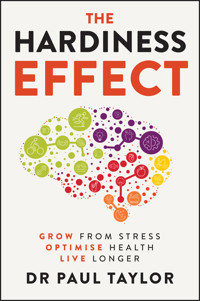
Choose the path that makes you stronger and discover resilience 2.0
Modern life offers an endless stream of comfort and convenience, but the truth is that this path is making us sicker and unhappier than ever. What if the key to optimal health isn't to avoid stress, but to harness it to make you better? Like the Greek hero Hercules at his crossroads, we face a choice: The easy path of the couch, social media, binge streaming and fast food, which leads to decline. Or the more challenging path of purposeful hardiness that builds true strength. The Hardiness Effect offers a revolutionary approach that goes beyond resilience, showing you how to harness your mind and body for a life well lived.
Dr Paul Taylor, psychophysiologist, ex-military aviator and award-winning author, reveals the practical actions that will help you move from coping to adapting. Combining ancient wisdom with cutting-edge research in exercise, nutrition, neuroscience and psychology, The Hardiness Effect will transform how you think about life. If, like Hercules, you choose to follow the harder path, you'll find you can face life's challenges with new determination, boost your physical and mental health, and even extend your longevity.
- Master the four pillars of psychological hardiness: Discover the 4 Cs (challenge, control, commitment and connection), a framework that turns adversity into growth.
- Harness hormesis to live longer and healthier: Apply the biological principle that small doses of stress make you stronger, with proven, step-by-step practices that trigger your body's repair and anti-aging systems.
- Tune your daily rhythms for peak performance: Learn how to supercharge your brain and energy through sleep hygiene, light exposure, breath work, omega-3 and Vitamin D, recovery protocols and more.
- Reclaim your human nature: Combat loneliness and digital overwhelm by building meaningful relationships and reconnecting with the natural world.
- Escape the comfort trap: Take back control from ultraprocessed foods, sedentary living and addictive technologies — and develop habits that create hardiness and boost wellbeing.
The Hardiness Effect shows you how to unlock your potential by building the psychological and physical toughness you need for lasting health and vitality. This science-backed, hands-on blueprint will show you how to transform challenge into strength and embrace a life of genuine purpose and fulfilment.
Sie lesen das E-Book in den Legimi-Apps auf:
Seitenzahl: 375
Veröffentlichungsjahr: 2025
Ähnliche
















Table of Contents
Cover
Table of Contents
Title Page
Copyright
About the author
Introduction:
The choice of Hercules
At the crossroads
Embracing our modern-day Hercules
Contemplating the lure of modern Kakia
Kakia's impact on mental health
Embracing the modern path of Aretê
Your journey to psychological and physiological hardiness
PART I: Psychological hardiness
1 The mindset that makes or breaks you
Understanding the importance of hardiness
The Stoics: Hardiness pioneers
The Stockdale paradox: Hardiness tested in the crucible of war
Hardiness in military psychology
Hardiness in business and organisational settings
Hardiness in academic settings: From playground to classroom
The physical benefits of hardiness
A fourth dimension: Connection
2 Embrace the challenge
Understanding a challenge orientation — and why it matters
The physiological underpinnings of the stress response
The challenge versus threat mindset
Focusing your attention
Flatlining on stress
Acceptance versus reappraisal: Different paths to regulation
The two faces of challenge
Building your challenge muscle
3 Focus on what you can control
What are you focused on?
Applying control orientation
The science of self-control: Marshmallows, lifelong success, and the Stoic mind
Building your self-control muscle
4 Fully commit to life
The passive consumer problem
The alchemy of gratitude, awe and curiosity
Three guides to a life of meaning and purpose
Building your commitment muscle
5 Create meaningful connections
The survival value of connection: Hardwired for togetherness
The neuroscience of social connection: Your social brain
Connection in extremis: The tap code
Beyond survival: The benefits of strong relationships
Building your connection muscle
PART II: Physiological hardiness
6 Forge the body that’s hard to break
What the hell is hormesis?
Inside the body: How hormesis builds resilience
Hormesis and ageing
7 Take your daily medicine
An astounding study on exercise, health and ageing
The 12 hallmarks of ageing — and the exercise antidote
Exercise as medicine
The effects of cardiovascular fitness and muscle strength
Myokines: The hardiness hormones of movement
Getting physical: Exercise recommendations
8 Feed your ecosystem
The great fat misconception
Nutrition rule #1: Limit ultra-processed foods
Nutrition rule #2: Eat an anti-ageing diet
Nutrition rule #3: Optimise your omega-3 fatty acids
Nutrition rule #4: Optimise your protein intake
Nutrition rule #5: Take targeted supplements
9 Harness the healing power of light
Why the ancient Egyptians were right
The vitamin with an identity crisis
Shining a light on healing (literally)
10 Master strategic recovery
Cognitive gears: Working with your brain, not against it
The science of breathing right
Micro-recovery: The power of strategic renewal
Macro-recovery: The sleep solution
11 Rewild your biology
Urbanisation: The biological mismatch
Let them eat dirt: Rewilding the biome
Grounded: Why your nervous system needs a date with the dirt
Battery kids versus free-range kids: The cost of a life indoors
How much nature is enough?
Conclusion
: The modern choice of HerculesThe modern choice of Hercules
The modern labours of hardiness
The choice is still yours
Appendix A
: The crossroads: Alternative prescriptions for mental health
Appendix B
: Sample exercise programs
Focus on cardiorespiratory fitness
Focus on strength
Appendix C
: Anti-ageing meal plans
Adaptations and tips
References
Index
End User License Agreement
List of Tables
Chapter 1
Table 1.1: Effect of being high in hardiness across different workpl...
Chapter 3
Table 3.1: The crosswords: Choosing daily between Kakia and Aretê...
Chapter 4
Table 4.1: Which values resonate with you?
Chapter 8
Table 8.1: How ultra-processed foods accelerate different hallmarks...
Chapter 9
Table 9.1: The impact of vitamin D on different hallmarks of ageing
Appendix A
Table AA.1: Comparing alternative mental health prescriptions
Appendix B
Table AB.1: Sample seven-day exercise program — focus on cardiova...
Table AB.2: Sample seven-day exercise program — focus on strength...
Table AB.3: Workout A
Table AB.4: Workout B
Table AB.5: Lower-body strength workout A
Table AB.7: Upper-body strength workout A
Table AB.8: Upper-body strength workout B
Appendix C
Table AC.1: Meal plan 1: Mediterranean-inspired
Table AC.2: Meal plan 2: Asian-inspired
Table AC.3: Meal plan 3: Low-carb focus
Table AC.4: Meal plan 4: Plant-based
List of Illustrations
Chapter 2
Figure 2.1: Viewing adversity as a challenge versus a threat
Chapter 3
Figure 3.1: Mentally healthy heatmap vs depressed/anxious heatmap
Chapter 6
Figure 6.1: The sweet spot of stress and the point of diminishing r...
Figure 6.2: The potential health benefits of mild or transient cell...
Chapter 7
Figure 7.1: The different systems in the body myokines communicate ...
Chapter 9
Figure 9.1: The electromagnetic spectrum
Chapter 10
Figure 10.1: The three types of downregulating breathwork
Guide
Cover
Title Page
Copyright
About the author
Introduction
Table of Contents
Begin Reading
Conclusion
Appendix A: The crossroads: Alternative prescriptions for mental health
Appendix B: Sample exercise programs
Appendix C: Anti-ageing meal plans
References
Index
End User License Agreement
Pages
iii
iv
vii
viii
ix
x
xi
xii
xiii
xiv
xv
xvi
xvii
xviii
xix
xx
xxi
xxii
xxiii
xxiv
xxv
1
3
4
5
6
7
8
9
10
11
12
13
14
15
16
17
19
20
21
22
23
24
25
26
27
28
29
30
31
32
33
34
35
36
37
38
39
40
41
42
43
44
45
47
48
49
50
51
52
53
54
55
56
57
58
59
60
61
62
63
64
65
66
67
68
69
70
71
72
73
74
75
76
77
78
79
80
81
82
83
84
85
86
87
88
89
90
91
92
93
94
95
96
97
98
99
100
101
102
103
104
105
106
107
109
111
112
113
114
115
116
117
118
119
120
121
123
124
125
126
127
128
129
130
131
132
133
134
135
136
137
138
139
140
141
142
143
144
145
146
147
149
150
151
152
153
154
155
156
157
158
159
160
161
162
163
164
165
166
167
168
169
170
171
172
173
174
175
176
177
178
179
180
181
183
184
185
186
187
188
189
190
191
192
193
194
195
196
197
198
199
200
201
202
203
204
205
207
208
209
210
211
212
213
214
215
216
217
218
219
220
221
222
223
224
225
226
227
228
229
230
231
232
233
234
235
236
237
238
239
240
241
242
243
244
245
246
247
249
250
251
252
253
254
255
256
257
258
259
260
261
262
263
264
265
266
267
268
269
270
271
272
273
274
275
276
277
278
279
280
281
282
283
284
285
286
287
288
289
290
291
292
293
294
295
296
297
299
300
301
302
303
304
305
306
307
308
309
310
311
First published 2026 by John Wiley & Sons Australia, Ltd
© MindBodyBrain Performance Institute Pty Ltd 2026
All rights reserved, including rights for text and data mining and training of artificial intelligence technologies or similar technologies. Except as permitted under the Australian Copyright Act 1968 (for example, a fair dealing for the purposes of study, research, criticism or review) no part of this publication may be reproduced, stored in a retrieval system, or transmitted, in any form or by any means, electronic, mechanical, photocopying, recording or otherwise. Advice on how to obtain permission to reuse material from this title is available at http://www.wiley.com/go/permissions.
The right of Paul Taylor to be identified as the author of The Hardiness Effect has been asserted in accordance with law.
ISBN: 978-1-394-34613-4
Registered OfficeJohn Wiley & Sons Australia, Ltd. Level 4, 600 Bourke Street, Melbourne, VIC 3000, Australia
For details of our global editorial offices, customer services, and more information about Wiley products visit us at www.wiley.com.
Wiley also publishes its books in a variety of electronic formats and by print-on-demand. Some content that appears in standard print versions of this book may not be available in other formats.
Trademarks: Wiley and the Wiley logo are trademarks or registered trademarks of John Wiley & Sons, Inc. and/or its affiliates in the United States and other countries and may not be used without written permission. All other trademarks are the property of their respective owners. John Wiley & Sons, Inc. is not associated with any product or vendor mentioned in this book.
Limit of Liability/Disclaimer of WarrantyWhile the publisher and author have used their best efforts in preparing this work, they make no representations or warranties with respect to the accuracy or completeness of the contents of this work and specifically disclaim all warranties, including without limitation any implied warranties of merchantability or fitness for a particular purpose. No warranty may be created or extended by sales representatives, written sales materials or promotional statements for this work. This work is sold with the understanding that the publisher is not engaged in rendering professional services. The advice and strategies contained herein may not be suitable for your situation. You should consult with a specialist where appropriate. The fact that an organisation, website, or product is referred to in this work as a citation and/or potential source of further information does not mean that the publisher and author endorse the information or services the organisation, website, or product may provide or recommendations it may make. Further, readers should be aware that websites listed in this work may have changed or disappeared between when this work was written and when it is read. Neither the publisher nor author shall be liable for any loss of profit or any other commercial damages, including but not limited to special, incidental, consequential, or other damages.
Cover images: © Hendra Su/Getty Images, © M Design/Adobe Stock, © stas111/Adobe Stock, © SkyLine/Adobe Stock, © Mehedi/Adobe StockCover design by WileyInternal icons: © Sensvector/Adobe Stock; © Himel/Adobe Stock; © Thanuja/Adobe Stock; © Rhudzhan/Adobe Stock; © Oksana/Adobe Stock; © Iryna Petrenko/Adobe Stock; © flitzrain/Adobe Stock; © inspiring.team/Adobe Stock; © Cansu/Adobe Stock; © Vikivector/Adobe Stock; © Tartila/Adobe Stock; © ssstocker/Adobe Stock; © Macrovector/Adobe Stock; © Creativa Images/Adobe Stock; © xoxolove/Adobe Stock; © maniki/Adobe Stock; © vesvocrea/Adobe Stock; © marina_ua/Adobe Stock; © designua/Adobe Stock; © Jan/Adobe Stock; © GraphicsRF/Adobe Stock; © OKAN/Adobe Stock; © LorenaPh/Adobe Stock; © Mustafa/Adobe Stock; © ケイㄧゴ·K/Adobe Stock; © Mustafa/Adobe Stock; © KeronnArt/Adobe Stock; © Nadezhda Buravleva/Adobe Stock; © Алёна Игдеева/Adobe Stock; © bella/Adobe Stock; © 川本まる/Adobe Stock; © sakurra/Adobe Stock; © graphicignite/Adobe Stock; © rob3000/Adobe Stock; © Rada Covalenco/Adobe Stock; © yzor.std/Adobe Stock; © Александр Михайлюк/Adobe Stock
About the author
Dr Paul Taylor is a Psychophysiologist, keynote speaker, podcast host and the bestselling, multiple-award-winning author of Death by Comfort.
Paul is co-director of the Hardiness Lab, which is dedicated to advancing research and real-world application of hardiness-based interventions to help people live better lives. He recently completed his PhD in Applied Psychology, with research focused on enhancing psychological and physiological hardiness and cognitive fitness.
With university qualifications in psychology, exercise physiology, neuroscience and human nutrition, Paul brings a unique, evidence-based perspective to human performance and flourishing. His work blends academia with real-world grit, grounded in his background as a former British Royal Navy Aircrew Officer, trained in anti-submarine warfare, helicopter search-and-rescue and combat survival.
As a corporate speaker and consultant, Paul delivers hardiness and performance training to many global businesses, government agencies and the Australian Military. He hosts the Hardiness Lab Podcast and created the Hardiness app, which has resources and tools to help people implement the strategies in this book.
Driven by the belief that we can grow from stress and live longer, healthier lives with the right habits, Paul helps individuals and teams unlock the power of psychophysiological hardiness to perform at their best — physically, mentally and emotionally.
When not working, Paul has previously enjoyed competitive boxing, soccer and karate and in 2021, Paul and his son Oscar became Australian Karate Kumite Champions. Now in his 50’s, and due to an increasing amount of ‘old bastard’ niggly injuries, he has reluctantly hung up the soccer boots, boxing gloves and Karate gi and taken up cross-fit, scuba-diving and soccer coaching to stay fit, healthy and engaged in life.
He lives on the Mornington Peninsula in Victoria, Australia, with his wife Carly and two kids, Ceara and Oscar.
IntroductionThe choice of Hercules
The philosophical narrative of Hercules at the crossroads has shaped much of Western thought, encapsulating the eternal struggle between a life of comfort or ease, and a life of virtue. As recounted by the great philosopher Socrates, the tale highlights a defining moment for Hercules (known as Heracles in the ancient Greek parable), a young man poised between two life paths, each represented by a mythological figure.
The choice Hercules is offered at these crossroads epitomises the human struggle with self-discipline and endurance. His story isn't just a myth but a philosophical template that examines the nature of human character and moral fibre, and it sets the scene for this book.
At the crossroads
In the myth, the young Hercules, already known to be one of the God Zeus's mightiest sons, finds himself at a literal and metaphorical fork in the road. Here he encounters two goddesses, each offering him divergent paths that symbolise life's potential trajectories. The first to approach him is Kakia, named Vice but who calls herself Happiness (‘Eudaimonia’ in ancient Greek). She is enchantingly beautiful, her allure magnified by her promise to Hercules of an easy life filled with luxury and pleasure obtained at the expense of others. She seductively suggests that following her would mean an easy and comfortable life devoid of hardships — a tempting offer that promises immediate gratification and comfort.
The second goddess, Aretê (Virtue), presents a stark contrast. Plain in appearance yet possessing a natural beauty, she offers Hercules a challenging path. She warns of a life that would be arduous and fraught with dangers and trials greater than any man might bear. Aretê outlines a journey where true happiness and fulfilment can only be achieved through continuous effort, moral integrity and the overcoming of great adversities. She emphasises that nothing genuinely worthy or admirable can be attained without significant struggle and perseverance.
Faced with these choices, Hercules chooses the path of Aretê, embracing the promise of a life filled with meaningful challenges over one of superficial ease and comfort, as offered by Kakia. This choice leads to his legendary ‘12 labours’ — tasks so daunting that they would crush any ordinary man. From slaying the multi-headed Hydra to capturing the fierce Cerberus from the depths of Hades itself, Hercules not only faces these trials, but also overcomes them with extraordinary courage and wisdom.
Hercules's journey was marked by immense struggles and suffering, culminating in his tragic death from a poisoned garment that bore the blood of the Hydra. Yet, the moral integrity and greatness of spirit he displayed throughout his trials led Zeus to bestow on him the ultimate honour — that of deification (becoming a god).
Hercules's story was so influential that it reportedly moved Zeno, the founder of Stoicism (a philosophy that I mention throughout this book), to embrace philosophy as a way of life. Zeno saw in Hercules the embodiment of psychological resilience and was inspired by his choice, which mirrored the Stoic virtues of wisdom, courage, justice and temperance (self-mastery). Zeno's philosophical journey, and that of the Stoics who followed, was likened to Hercules's, because they were all heroes of self-discipline and moral rigour. The story of Hercules at the crossroads became a metaphor for the Stoic ideal: the belief that a life well-lived requires confronting and rising above hardships with good character, thereby achieving true excellence and enriching the soul.
Hercules's choice teaches that embracing challenges and living virtuously, though often difficult, is ultimately more rewarding and fulfilling, leading to a life to be proud of. This narrative inspired Zeno's embrace of philosophy and continues to influence those seeking to understand the essence of a life well-lived. Through this ancient myth, we are reminded that true happiness, which the Stoics referred to as ‘eudaimonia’ (and modern psychologists call ‘flourishing’), is not handed to us, but must be earned through a steadfast commitment to living virtuously and embracing challenges. Hercules's choice at the crossroads was seen as being about more than the individual heroics of a demigod; it was a guiding parable for anyone seeking to lead a meaningful life.
This poses the fundamental question: what type of life do you wish to lead?
Embracing our modern-day Hercules
Today, we stand at our own crossroads, but the choice has morphed in ways the ancient Greeks couldn't have imagined. While Hercules chose between virtue and vice, we're choosing between vitality and stagnation, between biological excellence and accelerating decline. The path of Kakia has evolved, no longer promising obvious debauchery but instead seductive comfort — climate-controlled environments, convenient foods and endless entertainment that cocoon us from the very challenges that make us strong. Meanwhile, the modern embodiment of Aretê asks us to embrace not just moral virtue but also physiological wisdom — to reclaim the robust health so many of our ancestors took for granted.
The decisions we make today — whether to succumb to the siren calls of modern-day Kakia or to follow the rigorous trails blazed by Aretê — will determine our own health and vitality, and that of generations to come. This book is a call to action: to reject the deceptive ease of a life of comfort and convenience (which is unlikely to end well) and to instead dive deep into the tumultuous but ultimately rewarding waters of a fully engaged life. Choosing to deliberately cultivate psychological and physiological hardiness is what this book is all about.
By redefining your relationship with discomfort, reconnecting with the inherent wisdom of ancient philosophers and implementing the research provided by modern science, you can reclaim robust physical and mental health and enduring happiness. This book serves as your guide on the journey towards becoming your best self — a hardier person who faces life's challenges with courage, discipline and a steadfast commitment to the higher virtues exemplified by Aretê.
The choice you face is this: do you want to end up on your deathbed, reflecting on your life and thinking, That was a life of ease and comfort, or do you want to reflect, That was a life that was full of challenges, but one that I can be proud of?
If you want the former, close this book now and gift it to someone else. If you want the latter, read on — and prepare to get uncomfortable and inspired in equal measure.
Contemplating the lure of modern Kakia
Everywhere we look, Kakia's path tempts us. It's in the ultra-processed ‘comfort foods’ that crowd our supermarket shelves, nutritionally bankrupt but designed to be irresistible. Rather than nourish us, these foods are a significant driver of poor physical and mental health. It's in the endless hours we spend binge-watching streaming services or scrolling through social media. Although entertaining, this piss-poor form of engagement is far removed from the development of meaningful connections that are critical to our mental health. Our sedentary lifestyles, increasingly devoid of the physical exertion that once defined human activity, mirror this trend. Even our approach to health has become reactive rather than proactive — a sickcare system, rather than a healthcare system. Too often, we wait until diseases and conditions are diagnosed. Doctors then prescribe medications (and sometimes secondary medications to address the side effects of the first), instead of helping to address the root causes, often driven by Kakia-inspired lifestyles of ease, comfort and indulgence.
The impact of Kakia's path on our physical and mental health is truly shocking, and a quick look at four countries that are the poster-children of Kakia's way — Australia, the United States, the United Kingdom and Canada — bring this clearly into focus. These four ‘developed’ nations are the highest consumers of ultra-processed foods in the world. The United States leads the way, with an estimated 73 per cent of their grocery store food items being ultra-processed, but the others aren't far behind. The health statistics in these countries make for sobering reading — starting with those relating to being overweight and obese:
A whopping 74 per cent of Americans are overweight or obese, with 42.4 per cent specifically classified as obese in the 2017–18 period, according to the Centers for Disease Control and Prevention (CDC).
According to the Health Survey for England, 64 per cent of Brits were overweight or obese in 2022, with 29 per cent obesity.
In 2024, 66 per cent of Australians were overweight or obese, with 32 per cent obesity, based on data from the Australian Institute of Health and Welfare (AIHW).
In 2023, 65.5 per cent of Canadians were overweight or obese, with 30 per cent obesity, according to Statista.
The upshot? Being overweight or obese is the new normal.
Even more scary is the data for our kids, with research showing overweight or obesity predisposes those kids to a lifetime of health problems, with increased risks of cardiovascular disease, diabetes, mental health issues, cancer and dementia, to name but a few. Here's the breakdown for the percentage of kids overweight or obese in these four countries, according to recent national surveys:
Australia:
26 per cent of 2 to 17 year olds.
Canada:
25.7 per cent of 5 to 17 year olds.
United Kingdom:
37.7 per cent of 10 to 11 year olds.
United States:
35.4 per cent of 2 to 19 year olds.
Even more shockingly, a study published in the Journal of the American Medical Association in 2015 reported that 52.3 per cent of Americans had either diagnosed or undiagnosed diabetes in 2012, and we know the trends are getting worse.
All of this is strongly linked to Kakia-inspired lifestyles of comfort food and lack of physical activity. And what are governments doing about it? Overwhelmingly, they're treating the symptoms, not the cause.
In all of these countries, over 95 per cent of healthcare spending is focused on managing chronic conditions, with less than 5 per cent being spent on prevention. And in the United States, the weight-loss drug Saxenda has already been approved by the Food and Drug Administration (FDA) for use in 12 year olds to manage obesity, with safety and effectiveness trials already having been conducted.
It gets worse — Novo Nordisk, the maker of Saxenda, plans to use their Phase III SCALE Kids trial data to expand the Saxenda approvals label to include obese children older than six years! That's right — weight-loss drugs for seven year olds.
We need to be focusing on the causes of these issues, not using a series of ever more complex bandaids that just kick the can down the road.
Kakia's impact on mental health
The mental health picture in our Kakia-dominated countries is equally concerning. In Australia and the United States, approximately one in five adults experienced mental illness in 2020, representing 53 million Americans and over five million Australians. In England, it was one in four — around 14 million people.
More alarmingly, mental health conditions among adolescents in these countries have been steadily worsening, with mental health issues and suicide rates among the youth skyrocketing.
Mental health is a complex component of our overall wellbeing that deserves thoughtful, comprehensive care. For people with severe conditions such as major depression, bipolar disorder or schizophrenia, proper diagnosis and medication can be truly lifesaving interventions. However, our current system often defaults to a primarily pharmaceutical approach that frequently overlooks the deeper roots of mental suffering and the powerful lifestyle interventions that can both prevent and address many mental health challenges. This book advocates for a more balanced and holistic approach that recognises when medical intervention is needed, while also empowering individuals with evidence-based strategies to build robust mental health from the ground up.
The medicalisation of normal experience
Once, if a person felt sad, anxious or completely overwhelmed, a caring doctor might have dug deeper, taking the time to discuss what might be going on the person's life that was influencing these feelings. Through this discussion, the doctor and patient might have been able to acknowledge this as a normal human response to difficult circumstances — something that would pass with time and proper support.
Now, the system too often responds with a quick fix. You might be mentally ill — here's a label and a prescription.
This is the path of Kakia — offering quick relief without effort, and solutions without addressing root causes. And while this option seems appealing — tidy, clinical and perhaps covered by health insurance — the evidence suggests it's failing us on a massive scale.
The Diagnostic and Statistical Manual of Mental Disorders (DSM), published by the American Psychiatric Association, serves as a guide for diagnosing and classifying mental health disorders. This manual is now in its fifth edition (DSM-5), and has seen its definitions of psychiatric conditions quietly broaden with each revision. Psychiatrist Dr Mark Horowitz, a clinical research fellow at University College London, points out that these expanding conditions mean that by the age of 45, a staggering 86 per cent of us meet the criteria for a mental illness.
This raises a profound question: are we collectively suffering an unprecedented mental health epidemic, or is the mental health industry expanding its diagnostic categories to pathologise normal human experience — minting patients like Central Banks mint money?
Emeritus Professor Allen Frances, the psychiatrist who co-authored the DSM-IV edition in 1994, expressed concern even then about expanding diagnoses. In a recent interview, he noted, ‘There's a kind of societal push to find a medication panacea for many problems that previously would have been conceived of as within the range of the normal difficulties of everyday life.’
Again, this isn't to diminish genuine suffering or deny the benefit of medication within a holistic approach, especially for those with severe mental illness. And the temptations of a Kakia lifestyle are undoubtedly contributing to feelings of loneliness, isolation, anxiety and depression. However, we've increasingly medicalised normal responses to stress, grief and trauma. Despite all the medications and ever-expanding diagnoses, mental health outcomes continue to worsen by several metrics.
The faulty foundation: Chemistry versus experience
The cornerstone of modern psychiatric medication — particularly for depression — has been the ‘chemical imbalance’ theory, which posits that conditions such as depression result from low serotonin levels. This persuasive narrative has driven billions of dollars in pharmaceutical sales and shaped public understanding for decades.
However, a landmark umbrella review, published in 2023 in the journal Molecular Psychiatry by Professor Joanna Moncrieff, Dr Mark Horowitz and colleagues, analysed decades of research and reached a startling conclusion: no reliable evidence indicates depression is caused by low serotonin levels. This finding wasn't based on fringe science but on a comprehensive, peer-reviewed analysis. And while it sparked global debate, the serotonin theory was firmly debunked.
For decades, pharmaceutical company marketing promoted the idea that depression was a ‘chemical imbalance’ that antidepressants fixed by restoring serotonin. In the United States (one of two countries in the world to permit direct drug advertising to consumers), the image of sad cartoon characters perking up after taking the antidepressant Zoloft, for example, was brilliant, simple and reassuring — and, it turns out, scientifically unsupported. Chemicals are a part of this process, but it is not as simple as one chemical being too low.
What does the research consistently show? The profound impact of life experiences, particularly trauma and chronic stress, on mental health. As an example of this, Professor John Read, a psychologist at the University of East London, has conducted detailed research on adverse childhood experiences (ACEs) and their ongoing effects. His research demonstrates how early trauma can rewire brain function and predict mental health conditions such as psychosis, depression and suicidal tendencies. Yet, remarkably, the vast majority of mental health services often don't even ask about trauma when treating someone with psychiatric symptoms. I recently interviewed Professor Read for my podcast, and he noted that surveys show fewer than 25 per cent of psychiatric patients are ever asked about childhood trauma.
Previously mentioned psychiatrist Dr Horowitz also emphasises the importance of life experience. I also spoke with Dr Horowitz and, when examining what truly predicts depression, he pointed out,
If you take away the genes, take away the biology, and you just look at exposure to stressful life events — divorce, job loss, chronic illness — you can quite accurately predict who will be depressed within a year.
Again, chemical and hormonal imbalances do have a part to play, especially in conditions such as postnatal depression and depression during perimenopause. However, simply counting the number of stressful life events someone experiences can prove to be a better predictor of depression than any genetic marker or chemical theory.
The silenced side effects
Perhaps most concerning in the rise of medication to treat mental illness is how limited our understanding of the side effects of this medication remains. And this ignorance is not because the side effects don't exist, but because they've never been properly documented. As Professor Read explained in our interview, clinical trials typically ask about just a handful of predefined symptoms. He then told me, ‘If you don't ask, they don't exist.’
This means many commonly reported adverse effects — including emotional blunting, sexual dysfunction, cognitive impairment and even suicidal thoughts — simply may not appear in the data submitted to regulators. The result? Doctors and patients make decisions without complete information.
In a 2018 study co-authored by Professor Read involving over 1400 people taking antidepressants across 38 countries, the findings on their side effects were sobering. These findings included:
61 per cent experienced ten or more side effects
71 per cent reported emotional numbness
70 per cent reported feeling foggy or detached
66 per cent felt ‘not like themselves’
60 per cent experienced a reduction in positive feelings
59 per cent experienced withdrawal symptoms
50 per cent reported suicidal thoughts from the medication itself
40 per cent felt addicted to the drugs.
Professor Read found strikingly similar results in another study of over 1800 New Zealanders, 62 per cent of whom also experienced sexual difficulties. Perhaps the most shocking finding was that fewer than 5 per cent of the survey participants were told about any of these risks by their doctor. This represents a profound failure of informed consent — something that would surely trigger outrage in any other medical specialty.
A path forward: Reclaiming mental health
Encouragingly, the tide is beginning to turn. In 2024, the Royal Australian College of General Practitioners endorsed The Maudsley Deprescribing Guidelines for use in antidepressant deprescribing — that is, stopping or reducing the medication. These UK guidelines, co-authored by Dr Horowitz and Dr David Taylor (co-author of The Maudsley Prescribing Guidelines), estimate that a whopping 30 to 50 per cent of patients on selective serotonin reuptake inhibitors (SSRIs) do not have evidence-based reasons for being on these drugs, and that they may work for as little as 15 per cent of patients.
Think about this. That's millions of Americans, Australians and Brits who are potentially on drugs they shouldn't be on, and which are often addictive. These drugs are destroying their sex lives, making them emotionally numb and making around half have suicidal thoughts — which tend to spike when they try to get off them. These people are suffering horribly while the pharmaceutical companies rake in profits.
This certainly isn't about stigmatising anyone taking antidepressants. These medications can and do help some people, and can be lifesaving for those with severe mental illness. But we must confront the elephant in the mental health room — we've over-medicalised human emotion, underestimated our capacity for growth, and under-delivered on addressing root causes. Instead, we've too often opted for bandaids that don't work, and can do more damage.
Remember — if you're currently taking these medications and perhaps questioning your treatment plan, this isn't about shame. It's about rightful anger at a system that has perhaps failed to provide you with complete information or explore alternative approaches. It's about demanding better mental health care that addresses you as a whole person, not just your symptoms. (For more on alternative prescriptions for improving mental health, see appendix A.)
Embracing the modern path of Aretê
The path forward — the modern path of Aretê — recognises that mental health isn't just about brain chemistry and physical health is more than the absence of disease. This path acknowledges the profound impact of stress, trauma, lifestyle and environment on your physical and psychological wellbeing. Psychological and physiological hardiness — the subject of this book — offers a comprehensive approach to optimising physical and mental health by restoring your evolutionary biology, and your capacity for resilience, connection, meaning and vitality — capacities that have been undermined by modern life and the seductive comforts of Kakia's way.
This approach doesn't reject medication when truly needed, but does place equal emphasis on addressing the fundamental biological, psychological, environmental and social factors that shape your physical and mental health. This book is about building a foundation of hardiness strong enough to weather life's inevitable storms — not by avoiding challenges, but by developing the capacity to face them with courage, clarity and purpose.
So what does it actually mean to be hardy?
Psychological hardiness is the courage to grow from stress. It helps you to see change and adversity not as a threat, but as a challenge. It's the mindset that helps you respond with clarity instead of panic, and purpose instead of paralysis. It gives you the tools to bounce forward from setbacks, and face difficulty with courage and meaning.
Physiological hardiness, equally important, is the body's ability to resist, recover from and adapt to physical stressors. It means having the energy, resilience and internal systems — cardiovascular, immune, metabolic, musculoskeletal, neural — all tuned for life in a demanding world. It's the result of how you eat, move, sleep, expose yourself to light, heat and cold, and reconnect with nature.
Together, these two domains form The Hardiness Effect — a powerful, evidence-based framework for a better life. A life that's not only longer, but also richer; not just healthier, but also more meaningful.
And here's the real reason this matters.
Hardiness doesn't promise you a life without pain or setbacks. What it offers instead is a life worth being proud of. It offers a life with fewer regrets, where you don't crumble under pressure, but instead meet it with poise and purpose. It offers a life where you walk through the storms with a spine made of steel and a heart full of intent. That's what Aretê’s path looks like in the 21st century.
And this isn't just about the global health statistics, the scientific studies or even the inspiring parables. This book is for you — for the part of you that's tired of being tired, that's overwhelmed by stress, dulled by routine or stuck in habits that leave you feeling less than your best. It's for the part of you that knows something more is possible — a version of yourself you haven't fully lived yet, or crave to get back to.
This book is your guide to getting there.
Your journey to psychological and physiological hardiness
This book is divided into two complementary parts, each designed to make you more resilient, capable and alive.
Part I focuses on psychological hardiness, teaching you how to build an unshakeable mindset that transforms adversity into strength. You'll discover:
how to develop the four pillars of psychological hardiness that have been proven across military, corporate and academic settings
why reframing challenges as opportunities changes your biology at the cellular level
the ancient Stoic practices that modern neuroscience now validates
how to focus your attention on what's important, controlling what you can while releasing what you cannot
the difference between meaningless activity and deep life engagement
why connection with others isn't just nice — it's a biological imperative for health and longevity.
Part II is all about physiological hardiness, showing you how to optimise your biology for resilience and vitality. You'll learn:
how the science of hormesis —intermittent, moderate stress — can make your physiology stronger and more adaptable
why exercise is the closest thing we have to a fountain of youth, and how your muscles function as endocrine organs
how to use nutrition principles to target the fundamental mechanisms of ageing
how light and darkness work as powerful medicines for every system in your body
recovery protocols that build strength rather than just prevent breakdown
why ‘rewilding’ your biology isn't about going backwards — it's about reclaiming your genetic heritage.
This is the path of Aretê in modern form. It will challenge you. But it will also help you to fulfil your potential.
By the end of this journey, you won't just understand hardiness, but will also be equipped to embody it. You'll have practical tools to face whatever life throws at you, not by avoiding stress, but by becoming the kind of person who grows stronger through it. This isn't about becoming superhuman; it's about becoming fully human in an age that's forgotten what that means.
The question isn't whether you'll face hardship; it's who you'll become because of it.
So ask yourself again — what kind of life do you want to look back on? If you want a life of ease and comfort, this book might not be for you. But if you want a life that's difficult in the best possible way — a life of growth, grit, connection and purpose — then turn the page.
The road ahead may not be easy. But it leads somewhere worth going.
Let's begin.
PART IPsychological hardiness
1The mindset that makes or breaks you
Resilience is an outcome — it doesn't tell us how to get there. Hardiness does.
Dr Paul Bartone
Let's get something straight from the start: life can be amazing, but it isn't meant to be easy. Yet we've done a remarkable job of convincing ourselves that it should be. Our modern culture has become obsessed with comfort, convenience and quick fixes. If even a hint of challenge emerges — mentally, physically, emotionally — we often rush to eliminate it.
But here's the uncomfortable truth: comfort doesn't prepare you for the inevitable challenges of life. Hardiness does.
Understanding the importance of hardiness
Hardiness is more than just being tough or resilient. It's a specific psychological construct representing a pattern of attitudes and skills that provides the courage and strategies to turn unexpected change and stressful circumstances from potential disasters into growth opportunities. First identified by researchers Salvatore Maddi and Suzanne Kobasa through a groundbreaking 12-year study at Illinois Bell Telephone during massive industry disruption (and outlined in their 1984 book The Hardy Executive: Health Under Stress), hardiness has emerged as the key factor that distinguishes those who thrive under extreme stress from those who succumb to it.
While two-thirds of employees in Maddi and Kobasa's study experienced significant health and performance deterioration during their workplace disruption, one-third not only maintained their health and performance but also flourished. What made the difference? These resilient individuals demonstrated three interrelated attitudes that together constitute hardiness:
Challenge:
The view that change is normal and a challenge that presents opportunities for growth and learning, and the willingness to lean into challenges rather than shy away from them.
Control:
The belief that you can influence outcomes and your overall destiny through your efforts, rather than feeling powerless in the face of external forces.
Commitment:
A tendency to involve yourself deeply in whatever you're doing with a genuine sense of purpose, rather than feeling detached or alienated from your life and work.
In this chapter, I outline how the 3Cs of hardiness work together as a buffer against stress, helping you transform potential crises into opportunities for personal growth, improved performance and better health. You'll discover how, in the decades since the initial hardiness study, hundreds of studies have confirmed that hardiness is a powerful predictor of both physical and mental health. You'll learn how it also influences performance under pressure, and overall life satisfaction across diverse populations.
I also explain why I have decided to add a fourth ‘C’, connection, into the mix due to the sheer amount of compelling research behind its benefits —but more on that later.
The Stoics: Hardiness pioneers
Long before clinical psychology gave us terms such as ‘resilience’ and ‘hardiness’, the Stoics were living and breathing these principles. They didn't just write about adversity — they ran headfirst into it, wrestled it to the ground and asked for another round.
If a Hall of Fame existed for the 3 Cs — challenge, control and commitment — the Stoics would be on the podium with laurel wreaths and dusty sandals.
Challenge orientation: Seeing adversity as opportunity
The Stoics believed that adversity wasn't something to be avoided; instead, it was the forge where character was made. They didn't just expect challenges; they welcomed them.
Take the great Stoic philosopher Epictetus. Born into slavery, crippled early in life and later exiled from Rome, he didn't complain about his misfortune. Instead, he taught his students that difficulties are things that show a person who they are.
Or consider Cato the Younger. Famous for his moral integrity (and his stubbornness), Cato deliberately wore simple clothing, walked barefoot in Rome's chaotic streets and even subjected himself to public mockery — all as training to endure hardship without losing his dignity.
The Stoics understood that challenge wasn't punishment. It was an opportunity. For them, a good life wasn't about avoiding hardship, but about leaning into it with Aretê (virtue and character) and growing stronger through it.
Control orientation: Mastering what you can, letting go of what you can't
The Stoics gave us one of the most powerful psychological tools ever: the dichotomy of control. What is up to us? What is not? Knowing the difference is the first rule of sanity.
Marcus Aurelius, Roman Emperor and reluctant philosopher-warrior, put it simply: ‘You have power over your mind, not outside events. Realise this, and you will find strength.’
The Stoics understood what modern hardiness research confirms: focusing on what you can control while accepting what you cannot is the foundation of psychological resilience.
Commitment: Living according to core values, no matter what
Commitment is the glue that holds the Stoic philosophy together. It's the fierce loyalty to live according to one's highest values, even when life gets brutal — and even when nobody is watching.
Seneca, who navigated the treacherous court of the Roman Emperor Nero before ultimately being ordered by him to commit suicide, wrote: ‘It is not that we have a short time to live, but that we waste a lot of it.’




