


7,99 €
Mehr erfahren.
- Herausgeber: tredition
- Kategorie: Religion und Spiritualität
- Sprache: Englisch
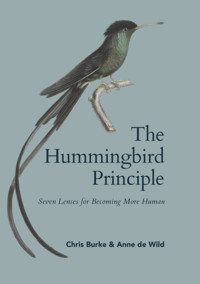
Know who you are — and do what you can. Can it really be that simple, given all the challenges we face in daily life? And yet —what if each of us, yes, including you, has a unique role to play in responding creatively to them? What if the events of your life are not random, but threads woven into the living fabric of your biography—quietly calling you toward your life’s purpose? What if a small hummingbird could inspire you to act from your own strengths, gently cutting through who you have been, who you think you should be, and what you believe you can or cannot do? 1 – Moon: What do I need to become who I am? Between selfies and inner emptiness, this chapter opens a quiet space for small, rhythmic steps in daily life. It’s about embracing your shadows, rediscovering wonder, and bringing order to your inner and outer worlds. Whether through “moon minutes” of tidying up or letting go of social expectations, this chapter lets moonlight fall on your life, inviting you to bring yourself back into alignment. 2 – Mercury: The "Just-Because" Impulse Mercury invites you to live beyond perfect planning. Imagination, failure, and creative expression need room — for children and adults alike. In the tension between structure and freedom, new ways of being together emerge, connecting individuality and community. Curiosity, humor, and flexibility open paths of discovery — sometimes pointless, but never meaningless. 3 – Venus: Who do you think I am? Venus explores youth, identity, beauty, and generational relationships. We discover that youth is not the future — it is the living past of adults. When youthful passion meets experience, genuine creative collaboration can unfold, beyond surface and function. It’s time to rethink the way forward. 4 – Sun: The Gift of Golden Nothing Love, anger, support, and self-worth take center stage. True strength shows in the courage to be vulnerable and to accept help. Anger born of compassion can become a healing force. Vitality grows in the balance between closeness and letting go, giving and receiving. Simple — but never easy! 5 – Mars: I want to break free! Mars represents inner strength and responsible action. Especially in midlife, he calls for honest self-confrontation. Inspired by superhero principles, we learn how mistakes become opportunities for growth, endurance, and collaboration. Mars embodies steady transformation and strength of character. He sparks bold new beginnings. 6 – Jupiter: Wait a Minute! Jupiter invites you to release old roles and expectations. Feeling “out of time” opens space for a new sense of self. Inner “shoulds” are questioned. “Wait a Minute” offers pauses for clarity and release — so you don’t freeze in perfectionism but grow deeper in your beautifully imperfect humanity. 7 – Saturn: The Courage to Die — and the Fear to Become At transitions, tradition and innovation meet in tension. Here, courage, fear, and enthusiasm create a dynamic balance that shapes transformation. True freedom ultimately arises when we recognize the free individual in the other. Epilogue: Back down to Earth After every inner journey, time is needed to arrive. In stillness, experiences ripen into memories that sustain us. This book has been such a journey. Trust that what truly matters remains — some things reveal themselves only when the time is right.
Das E-Book können Sie in Legimi-Apps oder einer beliebigen App lesen, die das folgende Format unterstützen:
Seitenzahl: 344
Veröffentlichungsjahr: 2026
Ähnliche


















The Hummingbird Principle
The Hummingbird Principle
Seven Lenses for Becoming More Human
Chris Burke & Anne de Wild
Copyright © 2024, Chris Burke and Anne de Wild
All rights reserved.
Edited by: Jean Stone
Cover design by: Chris Burke
Cover artwork by: William Lizars, The Naturalist's Library: Ornithology:
Hummingbirds Volume 2
Publisher label: The Hummingbird Principle LLC
Printing and distribution on behalf of the authors: tredition GmbH, Heinz-Beusen-Stieg 5, 22926 Ahrensburg, Germany
This work, including its parts, is protected by copyright. The authors are responsible for the content. Any use without their consent is prohibited. Publication and distribution are carried out on behalf of the authors, who can be reached by mail at: Anne de Wild, Fiechthagstrasse 4, 4103 Bottmingen, Switzerland, and by email at [email protected].
Contents
Cover
Half Title
Title Page
Copyright
Introduction
Anthroposophy and Human Biography
The Hummingbird Principle
Basic Concepts in Biography Work
The Planets as an Organizing Framework
How to Approach This Book
1. Moon
What Do I Need to Become Who I Am?
The Birth of Inner Space and Outer Space
The Bright Side and the Dark Side
Becoming Selfie-ish
Qualities of the Moon
Working with Moon Forces in Daily Life: Moon Minutes
Another Way to Work with Moon Forces: The Power of Puzzle and Wonder
Beyond Expectations
2. Mercury
The “Just-Because” Impulse
Tag, You’re It!
False Pretenses
All Roads Lead to Rome
Qualities of Mercury
Working with Mercury Forces in Daily Life: Riding the Wave
A Good Laugh and a Good Cry
The Just-Because Impulse
Catch Me(rcury) if You Can
3. Venus
Who Do You Think I Am?
Under Construction: Enter at Your Own Risk
The Catwalk of Life
I’M Speechless
Qualities of Venus
Mirror, Mirror on the Wall. . .
In Living Color
It’s (Not) Black and White
Working with Venus Forces in Daily Life: Dare to Rethink
Friday: One Day of Beauty
4. Sun
The Gift of the Golden Nothing
3 – 2 – 1 . . . For Real?
Keep It Simple
Righteous Anger: An Act of Love
Qualities of the Sun
Working with Sun Forces in Daily Life: The Gift of the Golden Nothing
The Gift of a Buddha—or—How to Stop Squandering Compliments
Sunday: The First Day of the Week
5. Mars
I Want to Break Free
Veni, Vidi, Vici
Westarctica or Bust!
Free Advice
Qualities of Mars
Superman and Wonder Woman
Working with Mars Forces in Daily Life: Creating a Culture of Mistakes
Getting in the Last Word
6. Jupiter
Wait a Minute
Solo Theater
A Waltz, Not a March
Suppostabees
Qualities of Jupiter
Wait a Minute—There Are a Few Rules
Working with Jupiter Forces in Daily Life: Becoming Completely Imperfect
A Snake, an Actor, and a Suppostabee Walk into a Bar . . .
7. Saturn
The Courage to Die and the Fear to Become
Sorting Out Affairs
Regrets . . . I’ve Had a Few
Qualities of Saturn
Working with Saturn Forces in Daily Life: Tradition, Innovation, and a Spark of Enthusiasm
Break Down the Wall
Epilogue
Back Down to Earth
Acknowledgments
About the Authors
Notes
The Hummingbird Principle
Cover
Title Page
Copyright
Introduction
Introduction
Epilogue
Acknowledgments
Notes
The Hummingbird Principle
Cover
I
II
III
IV
V
VI
VII
VIII
IX
X
XI
XII
XIII
XIV
XV
XVI
XVII
XVIII
XIX
XX
XXI
XXII
XXIII
XXIV
XXV
XXVI
XXVII
XXVIII
1
2
3
4
5
6
7
8
9
10
11
12
13
14
15
16
17
18
19
20
21
22
23
24
25
26
27
28
29
30
31
32
33
34
35
36
37
38
39
40
41
42
43
44
45
46
47
48
49
50
51
52
53
54
55
56
57
58
59
60
61
62
63
64
65
66
67
68
69
70
71
72
73
74
75
76
77
78
79
80
81
82
83
84
85
86
87
88
89
90
91
92
93
94
95
96
97
98
99
100
101
102
103
104
105
106
107
108
109
110
111
112
113
114
115
116
117
118
119
120
121
122
123
124
125
126
127
128
129
130
131
132
133
134
135
136
137
138
139
140
141
142
143
144
145
146
147
148
149
150
151
152
153
154
155
156
157
158
159
160
161
162
163
164
165
166
167
168
169
170
171
172
173
174
175
176
177
178
179
180
181
182
183
184
185
186
187
188
189
190
191
192
193
194
195
196
197
198
199
200
201
202
203
204
205
206
207
208
Introduction
LOOK AROUND. WHAT DO YOU SEE IN THE WORLD AROUND YOU? The chances are good that you see reasons to despair—war, poverty, fear and hatred of those who are different, a polarized and divisive political discourse, the rejection of long-held traditions and social conventions. Perhaps closer to home you feel the stress of modern life—sustaining a career, managing a family, keeping yourself and others healthy and safe. Maybe you are also dealing with unemployment, addiction, ailing elders, loneliness, marital troubles, alienation. The world seems to be on fire, with the basic foundations of social life faltering.
Now look inside yourself. What do you see? What can you see? What do you really know about yourself? Try to see yourself standing apart from the groups you belong to and the roles you play. Try to peer through the fog of defenses that you’ve built up to protect yourself from being rejected or hurt or criticized or dehumanized. Can you catch a glimpse of that tiny and vulnerable and striving and wonderfully beautiful core that you might call “I”? When was the last time you quieted down the inner and outer chatter enough to ponder such questions?
This book begins with a simple premise: The social strife we see in the world has roots in our own alienation from ourselves. As we lose hold of who we are as individuals, we connect ourselves to groups that help us feel that we are valuable and that the world is coherent and meaningful. When these groups are threatened, we dig in our heels and take on an “us vs. them” mindset, which further erodes the social fabric. For instance, individuals may dread seeing their relatives at holidays because of differences in political opinions. Or maybe a neighborhood loses its sense of community because it struggles to welcome newcomers who look or think or pray differently. When family and community break down, structures of authority—police, the military, a strong centralized government, the legal system—become more important because we’ve also lost the capacity to manage ourselves. And so we despair: “The problems are so big, what can I do?”
Anthroposophy and Human Biography
The goal of this book is to provide a framework for reconnecting with ourselves in order to reconnect in a healthy way with our loved ones and the broader world around us. It is based on an approach known as biography work, which has its roots in the spiritual philosophy known as anthroposophy, first described by Rudolf Steiner around the turn of the twentieth century. The word anthroposophy comes from the Greek words “ánthropos” (human being) and “sophía” (wisdom). Steiner describes anthroposophy as “a path of knowledge to guide the Spiritual in the human being to the Spiritual in the universe”1 and “the consciousness of one’s humanity.”2 Steiner’s work, which is comprised of twenty-eight books and over six thousand lectures, reflects his dedication to this path of knowledge and his commitment to share it with others. His works can be broadly classified as philosophical works that articulate the philosophical grounding of anthroposophy; practical works that describe the path of spiritual development and offer guidance for anyone to follow that path; and results of spiritual investigation, in which Steiner applies the knowledge he accessed to such diverse fields as education, agriculture, and social reform. These insights paved the way for Waldorf education, biodynamic agriculture, and the threefold social order—ideas that are experiencing a surge of interest a century later.
To Steiner, the human being is intimately connected to the Earth, such that nature only reaches its full potential through the interest and activity of the human being: “Human beings! Look around you at the world; the world is full of riddles, full of mystery. . . . We can say: All the riddles of the world are solved in the human being—again in the very widest sense. The human beings themselves moving as living beings through the world—they are the solution of the world-riddle!”3 To say that the human being is the solution to the mysteries of the world indicates, however, that this solution cannot be fixed—it is as dynamic as human beings are growing and developing, and as varied as human beings are from one another.4
In Steiner’s picture, the essential role of the human being necessitates that knowledge of the world, including knowledge of human beings, is inherently subjective—that is, what is observed and understood depends on the vantage point of the observer. Rather than suggesting an “anything goes” approach to truth, however, Steiner advocates for a truth that can only be seen when every vantage point is grasped:
This is how people talk: “That is my standpoint.” Everyone has a standpoint—as if the standpoint matters! The standpoint in spiritual life is just as fleeting as it is in the physical. Yesterday I stood in Dornach [Switzerland], today I am standing here [Stuttgart, Germany]. These are two different standpoints in physical life. What matters is that people should have a sound will and a sound heart so that they can look at the world from every standpoint. But people today do not want what they can glean from different standpoints; the egoistic assertion of their own particular standpoint is more important to them. But thus individuals shut themselves off in the most rigorous way from their fellow-humans. If somebody says something, the other person does not really enter into it, for they have their own standpoint. But people do not get any nearer to each other by such means. We can only come nearer to each other when we know how to place our different standpoints in a world that is common to us all. But this world is simply not there today. Only in the spirit is there a world that is common to all—and the spirit is lacking.5
To look at something from many different angles connects individuals to one another and lets them grow in their ability to understand one another and come together in the spirit.
Steiner also provided a picture of the continuous process of human development over time. Humanity as a whole is going through a series of developmental stages—a gradual process of growth, blossoming, regeneration, and decline that is reflected in the life cycle of individual human beings. In other words, just as an individual is born as an infant and grows through childhood into adulthood and old age, so too is humanity as a whole. This relationship of macro to micro means that studying how humanity has developed over the millennia can shed light on how development unfolds over the life span of an individual. It also means that we can build a picture of the richness of the human being as we form a clearer picture of our own life story—our biography.
To some extent, each person’s biography is a recapitulation of the archetypal human being. That is, we are all part of the same human story, and there can be great value in learning that a difficult experience that you think is your experience is one that is common at a particular stage of life. Building an image of this archetype can serve as a baseline against which you can judge your own experiences, or those of others. For instance, parenting books often provide the typical timing of various developmental milestones—both positive and challenging—to help parents make sense of their children’s growing capabilities.
That said, from the moment of birth—even before birth—we are also one of a kind. We are born into different families in different locations at different points in time with different family structures, proclivities, physical and psychological limitations, and predispositions. Even identical twins—born at essentially the same time and place and raised in the same environment—develop distinct stories over time.
How can we make sense of these differences? The circumstances into which individuals are born are perhaps the most obvious source of differences. The existential philosopher Martin Heidegger used the term thrown-ness6 to describe the fact that we are thrown into certain circumstances in life, and that these factors, which fall completely outside of our control, can have a big impact on our trajectory throughout life (e.g., whether we are surrounded by safety, opportunity, and abundance during childhood, or instability, poverty, and abuse). Aside from these “givens,” we inhabit different social spheres—parents, grandparents, neighbors, teachers, friends—that grow increasingly individualized over time. We also have different experiences, some of which come through our own choice or striving, and others that come to meet us whether we want them or not. Finally, there seems to be something that works through us. It’s the spark of enthusiasm for accounting or botany or customer relations that your friends don’t catch. Or the feeling of finding your soulmate and wondering how nobody else before you could have seen how totally perfect this person is. Or your quirky sense of humor. You can’t point to where these inclinations come from, but you know with certainty that they are integral to the person you are.
Of course, life also brings each of us some amount of adversity, pain, and suffering. Some of us may try to reject or deny these experiences as part of our biographies, while others may internalize them and become stunted by them. We may construct defenses to avoid thinking about them or to prevent future problems. These defenses could include a whole host of behaviors, from bullying to social withdrawal to substance abuse. While we may often want to forget about the painful experiences of our lives, from an anthroposophical perspective, all of our experiences—pleasant and unpleasant—form a coherent whole that make the biography comprehensible.
Think of the last time you read a biography of a public figure. Imagine how different the story would have been if it only included the person’s successes. For many, such a change would make the book not worth reading—like a film with no conflict or tension. In this context, we have an implicit recognition of the value of the difficulties and setbacks. Such obstacles can provide a necessary course correction, point out an error in strategy or planning, or build character traits that will be needed down the road. And we can see the necessity of these experiences for the story without blaming the person for their misfortunes and without exonerating individuals who may have caused the person’s suffering.
Applying the same detached, objective perspective to our own biographies is not so easy. Why? Well, one reason is that our stories are still in progress. We can’t see clearly where we will ultimately end up and what we will have accomplished, so it’s hard to see the difficult experiences as instrumental. Another reason has to do with those defenses just mentioned: You wanted that promotion so badly; you were sure that you were meant to be with the partner who dumped you; no good could possibly come from being displaced by a natural disaster or war.
How can you create enough distance from the events of your life to see their interdependence, their unity? Biography work is one approach. Biography work is a dedicated practice of self-discovery, in which individuals slowly construct a picture of the human being and of themselves as unique human beings. In biography work, we loosen up and gather past experiences to find the patterns and threads, the helpers and the turning points that weave together to form our life story. Biography work begins by simply bringing your attention to the events in your life without overlaying any judgments about them. As you do so, you can invite a sense of curiosity and wonder: “I wonder why that didn’t turn out how I expected”; “I wonder if those events were related in some way”; “I wonder why that memory came to mind.” The goal is not to force a particular story to fit the experiences, but rather to embrace the unknowing and allow insights to emerge when the time is right. Like the poet Rainer Maria Rilke said so eloquently, we have to learn “to be patient towards all that is unsolved in [our] heart[s] and try to love the questions themselves.”7
Our way of working stems from our training in Biography and Social Art. While many biography activities can be worked through alone, we find that the value added by working with others is immense. Not only does hearing the stories of others help to highlight your own uniqueness and what it means to be human, but there is also a kind of alchemical magic in simply being listened to. Somehow just being able to shine your story into the nonjudgmental mirror of another person allows you to see yourself with greater clarity. When working with groups in person or online, we also use creative activities to bring different kinds of memories into focus for participants. For instance, we might invite participants to create a sketch or poem related to a past experience, and then share the results of the reflection with others. To capture something of this way of working in a book, we have included prompts throughout the chapters that call your attention to moments in your biography.
We place a lot of emphasis on the quality of listening that individuals bring to this work. In everyday interactions, people often fail to really hear what others are saying. They have other things on their minds. They have something they want to say, and they are looking for a space to add their two cents. They are already planning a response to what the speaker is saying. Or they are listening while continuing to engage in some other task. This way of listening does not make a speaker feel heard, and it limits what the listener themselves might have gained from the conversation. Alternatively, we suggest practicing open and receptive listening. In this form of listening, the speaker has your warm, undivided attention, and you are simply receiving what they are offering. You are not preparing a response because you are not going to respond. Rather, you open up a space between yourself and the speaker and invite them to fill it with the story that wants to come. You simply take their words into your heart and allow them to silently reflect back to the speaker without interruption or confirmation—as if your mere presence allows them to hear an echo of their story, which can deepen their learning. And while you are not planning to respond to what is being shared with you, do not be surprised if there is a little gift waiting for you at the end—a piece of your story that the stranger in front of you has been carrying all these years, just waiting for this sacred moment to return it to you.
The Hummingbird Principle
Our work is inspired by a wonderful Indigenous story from South America, retold by Michael Nicoll Yahgulanaas in the book The Little Hummingbird. The story tells of a great forest fire that has all the animals frightened. They are disoriented, paralyzed with fear, and hopeless as the fire rages on. The one exception is a little hummingbird who is darting back and forth from the stream to the fire, each time picking up a single drop of water to quench the blaze. When the other animals finally stop the hummingbird and ask what she is doing, the hummingbird simply replies, “I’m doing everything I can,” and continues her work.8
There is so much wisdom contained in this story. First, big problems call for collective solutions. You could say that the hummingbird’s efforts were futile because of her tiny size and the trivial effect of a single drop of water. But what if all the animals did something? With their collective effort, perhaps they could contain the fire. Everyone is capable of doing something, and if everyone did something maybe these huge problems would not seem so intractable. After all, the problems got so huge in the first place because of the actions and inactions of individuals that compounded over time. And that brings us to the second piece of wisdom: fear and hopelessness can be paralyzing, and it takes courage and resoluteness to act in taxing or dangerous situations. Courage and resoluteness emerge from having a clear sense of purpose: “This is what I must do.” Once this state of clarity is reached, action can simply flow out.
Third, and perhaps most importantly for this book, the hummingbird chose to do what she is uniquely suited to do. She has speed, the ability to carry water, and the safety of the air. No other creature in the forest could do what the hummingbird could do. The hummingbird was also aware of her limits. She might have tried to carry two or three drops at a time, but that might have been too much. Stretching beyond her limits might have caused fatigue, error, or even danger. The hummingbird knew herself well enough to know exactly what she was capable of in that moment, and she could see the situation clearly enough to initiate action and persevere in the face of difficulty.
The little hummingbird’s approach represents the essence of what we will call The Hummingbird Principle. In the simplest terms, the hummingbird principle means being able to see clearly what you can do in a given situation, and then doing it. To do so, you need a realistic assessment of the situation—the issues at hand, the barriers or challenges, and the resources available—as well as a realistic assessment of what you can bring—your talents and abilities, your weaknesses, and situational constraints. Having this clear view of yourself and the situation can also help you appreciate the assets that others bring to the situation and to engage them effectively.
An important part of the hummingbird principle is letting go of preconceptions and expectations. There is no “should” or “ought to” in the hummingbird principle. Action flows from the inner impulse to act based on your assessment of the situation. In any given situation, you can be aware of both your unique talents and more general actions that are within your power, and then choose the course that best meets the demands of the situation. You need not be bound to only acting on your unique talents—that would be another “should” that constrains rather than frees you in the situation. In a different situation, the hummingbird would not continue carrying drops of water just because she is good at it—she would take a fresh look to see how best to get involved. Likewise, you may have a lovely voice, but if the house next door is on fire, it is best to call the fire department rather than to sing a song about it.
Rudolf Steiner uses the term “moral intuition” to describe the capacity for acting out of oneself:
The action is therefore neither a stereotyped one which merely follows certain rules, nor is it one which we automatically perform in response to an external impulse, but it is an action determined purely and simply by its own ideal content. Such an action presupposes the capacity for moral intuitions . . . [Philosopher Immanuel] Kant’s principle of morality—act so that the basis of your action may be valid for all human beings—is the exact opposite of ours. His principle means death to all individual impulses of action. For me, the standard can never be the way all people would act, but rather what, for me, is to be done in each individual case.9
Part of the challenge of the time we live in and the deeply entrenched “camps” on any social issue is to develop this sense of moral intuition that brings together our individual perceptions of situations that confront us with a clear view of ourselves to produce an inner impulse to action.
To make these ideas more concrete, we can take an example from the daily news, such as a racially or religiously motivated act of violence occurring in another state. Learning about such an event, you may feel compelled to drop everything, jump on an airplane, and confront the situation directly. While that may sometimes be the best course of action, it is more likely there is something you can do where you live and work that leverages your unique skills to greater effect. Who are the people around you who might be affected by the situation? How can you reach out to them to see how they are doing? Are there ways your skills and abilities can be used to reduce the likelihood that such events can happen in the future, even if only a minor decrease? Are there practical things that those who have been affected are asking for that you can contribute, such as donating blood or food?
Acting out of the hummingbird principle in a given situation requires being prepared and ready to act, and much of this preparation involves developing a realistic understanding of your own abilities and limitations. This is where biography work comes in: biography work is a set of tools for developing a realistic picture of your strengths and weaknesses and for seeing them as a unity that makes your life story comprehensible. Through biography work, you can gain an appreciation that your abilities and limitations are not fixed, but are constantly in flux. Through life experiences, you have been able to cultivate certain abilities—perhaps out of necessity—that you may need to call on in the future. You may also see abilities that are waning as you grow older; learning to accept those changes is one key to remaining effective with age. You may also see ways in which the world itself is changing that either complement or contrast with your strengths. Finally, you may come to appreciate that different stages of life are associated with different ways of orienting to the self and the world, and that those different orientations can be a real asset when trying to tackle complex problems collectively. With this clearer view of yourself, your sight can widen to see the gifts that those around you bring, and to recognize that those gifts were cultivated through life paths that held challenges and opportunities different from your own.
Basic Concepts in Biography Work
To properly set up the coming chapters, following are some basic anthroposophical ideas regarding the nature of the human being. First, the human being is comprised of more than simply material “stuff.” In fact, there are four essential components of the human being according to anthroposophy—what is referred to as the fourfold human being.10 At the first level is the physical body. The elements that comprise the physical body are not so different from those of the rocks and soil outside, and once a person dies, the physical body gradually returns to that state, following the laws of the material world. So we can say that having a physical body gives us a certain kinship with the mineral world, which we also share with plants and animals.
The fact of our “returning to dust” after death makes it clear that we need something to give us form and maintain it while we are alive. We call this body the etheric body or life-body. The etheric body operates according to laws of rhythm and time—respiration, circulation, and growth. All that lives in us as habit and repetition is anchored in the etheric body. The etheric body never gets tired—it always works effortlessly. All living things have an etheric body, but if we only were made of these two levels (physical and etheric), we would be in the realm of plants. They have a body that is in space and a living form that follows rhythm and time.
The next layer is known as the astral body. The astral body is the seat of consciousness—the awareness of one’s environment and its contingencies. Consciousness allows for sensation, instincts, passions, desires, and other impulses. The quality of the astral body is inner and outer mobility, and the presence of an astral body distinguishes animals and people from plants. That is, while plants have some sensitivity to environmental circumstances, they cannot act on their environments. We can see this in everyday language as well with the coarse label “vegetable” used to describe someone in a comatose state—an implicit acknowledgment that a person who is alive but lacking consciousness has a plant-like quality.
Finally, there is something that distinguishes the human being from other animals—the capacity for self-awareness, which arises through the presence of what is called the ego or “I” in anthroposophy. That is, we have the ability to step out of our own thoughts, feelings, intentions, and other inner states and reflect on them. We can ask, “How do I feel about this?” or “What do I think is the easiest solution to this situation?” We can enter into dialogue with ourselves and engage faculties of reasoning. Importantly, we can also self-regulate—we can hold ourselves back in the service of important goals. The ego is the core of the person, and it is what makes each person an individual. The term “ego” has developed a negative connotation in modern life. People are often accused of having an “inflated ego” or of being on an “ego trip”—terms that suggest self-centeredness or self-importance. These kinds of phrases indicate an attachment to a lower self, one that is connected to selfish and materialistic ends. The ego in anthroposophy is a higher self that is rooted in the spiritual world and is striving toward higher ends. Rudolf Steiner states:
[T]he ‘I’ is at the same time that which gives human beings their independence and their inner freedom, which in the truest sense of the word elevates them. Their dignity is founded in this ‘I,’ it is the basis of the Divine in humans. . . . [A]bove all, human beings must strive for the strength (if they understand the mission of the world) to make this ‘I’ more and more inward, more and more divine.”11
This excerpt points to another uniquely human task of the ego—personal development. Unlike plants and animals, we are responsible for developing our full potential. Human beings are able to say “I am,” and can aspire to become more fully human, whereas a dog can’t become “doggier.” Its dog-ness is given and only needs training to be contorted into the constraints of human culture. Human beings are called to be active in developing their individual talents and potentialities across the lifespan.
So how do these layers combine to create the individual human being? The physical body is the bearer of the archetypal human form. As soon as we see someone, we instantly recognize their humanity—“Aha, that’s a human!” And yet we also recognize the ways in which this individual’s physicality stands apart from the “standard model.” We might notice a long, straight nose, or a broad jaw, or deep-set eyes, and so on. If we meet the parents or grandparents of the individual, we might see some resemblance and understand that the physical body is also the bearer of heredity—the physical traits and predispositions passed down to us from our parents. It connects us to the stream of our ancestors. Some of these physical similarities may be apparent almost from birth and particularly notable during early childhood. Parents may often remark of their young children: “She has your feet” or “He has my father’s ears.” As the child grows, these features may undergo transformations, and their prominence may subside as the child’s unique personality awakens.
The etheric body holds the first seed of our personalities, known as temperament. Developmental psychologists have focused on qualities like impulse control and tendency to experience positive and negative emotions as the core dimensions of temperament, and while some of these qualities can be observed very early, they tend to remain somewhat fluid throughout early childhood.12 The anthroposophical view of temperament focuses on four types—choleric, sanguine, phlegmatic, melancholic—that have a history going back to Hippocrates (c. 460–375 BC) and his theory of humourism. It was Galen of Pergamum (129–c. 200 AD) who introduced the term “temperament,” meaning “mixture.”
The choleric types are fiery doers, with a lot of power to start things and the determination to push through any obstacles thrown in the way of their goal. They take charge and can compel people to go along with their ideas in order to get things done. Tact and other soft people skills do not come easily to them, and with their aversion to unfinished tasks, they can easily find themselves overcommitted.
The sanguine types are social butterflies—thriving on attention, fun to be around, friendly, and lighthearted. They get excited about things quickly, but they can just as quickly lose interest and move onto the next possibility. Deep contemplation and long-term planning are not their strong suits. They live more in the moment and are likely to be surrounded by unfinished projects.
The phlegmatic types are “go with the flow” kind of people. They are easy-going, agreeable, and slow to become angry or upset with others. They work well under pressure; with their slow, methodical approach, they can work through difficulties without stressing out. The slow pace of the phlegmatic types can sometimes be out of step with those around them, and they can have difficulties making decisions, taking action, and accepting change.
The melancholic types are very conscientious—organized, thoughtful, and following through with plans. Family and a few close friends are very important to them, and loyalty is a top priority. They have high standards for themselves and others, and they can have difficulty forgiving and forgetting. They can appear serious and sullen, with a heightened sensitivity to their own pain and suffering that opens them to a capacity for deep empathy with the pain and suffering of others.
Perhaps one of these descriptions resonates strongly with you. According to anthroposophy, temperament stabilizes in middle childhood and represents the individual’s default way of engaging the world. And while most people can find one of these four as a dominant temperament, nobody is a pure type. With some effort, we can begin to see how each of the others can emerge in particular situations. Thus, everyone has their own blend of the four—what we in our work have dubbed the fifth temperament—that is completely their own. Keeping this fact in mind can help individuals resist the urge to pigeonhole themselves or others or to reduce someone’s behavior to being “such a choleric” or “so phlegmatic.” Developing a sensitivity for the fifth temperament means remaining open to which facet of temperament is most prominent in a given situation. Then, through working with our own experiences with people who are good listeners or who have a real interest in us, we can gradually strengthen those aspects that show up less often.
Moving to the astral level, things become much more dynamic. The stable part of the person at this level is what we might call personality or character, but research from the field of personality shows that people’s behaviors are not as consistent with personality as one might expect. The astral quality allows the individual to respond to the changing demands of the situation. These character dynamics include moods, mindsets, and motives that are influenced by inner and outer states. As with the temperaments, there are certain prototypes at this astral level that blend together differently in different individuals and different situations. (These are the primary focus of the later chapters.)
Finally, the level of the “I” or Self is what’s completely unique to the individual. On the surface level, we can develop an appreciation for the fact that every person treads a unique path through life and has a completely distinct history of experiences that has brought them to the present moment. We might broaden this perspective further and say that, as a being who comes from the realm of spirit, this individual path extends farther back to the time before birth. That is, perhaps the “I” brings with it certain tasks and seeks out certain experiences during the lifetime to carry forward certain spiritual objectives. Going a step further to include the possibility of reincarnation and karma, we could say these tasks might be related to previous incarnations— bringing resolution or reconciliation to certain relationships or making amends for past missteps—as well as the more general task of spiritual development. Becoming open to the possibility of such influences on life’s path can bring a newfound appreciation for the little experiences of life that can be so influential or the profound impact that certain individuals have had on us.
The Planets as an Organizing Framework
As we have indicated, the focus of this book is on the dynamic qualities of the astral body—sometimes called soul qualities—that respond to the varied demands of the situations we find ourselves in. We will describe seven prototypic moods of the soul and connect them to both the mundane situations of everyday life and to broader areas of social tension or strife that we can observe in the world. These prototypes derive from the qualities attributed to the seven classical “planets”—those celestial bodies in the solar system that are visible to the naked eye. These include the Sun and Moon, as well as the planets Mercury, Venus, Mars, Jupiter, and Saturn. Throughout the ancient world, these bodies were viewed as having powerful influences on people. These qualities can perhaps most readily be seen in the dramatic myths of Greece and Rome, where gods share names with these planets. Much the way fairy tales can be seen as allegories for inner experiences, so can these myths be seen as expressing quintessential human experiences.
Ptolemy suggested that each planetary sphere influences human development during a particular period of life. Rudolf Steiner, in his modern account of stages of development, also attached the planets to particular phases of life. We include some discussion of these phases to help develop an intuition for the qualities associated with each planet. However, it is important to note that these qualities are not restricted to their corresponding phase. Some people may naturally have more Saturn qualities in their character. Certain situations may bring out your Mars qualities. Bringing awareness to these qualities and developing a sense for where each one lives in us can provide an important clue for how best to engage with the world.
We have devoted a chapter in this book to each of the seven planets that captures the essential qualities of that planet, treating each as an archetypal force that acts on and through each of us. As needed, we have included additional associations to create a full picture of these forces. For instance, the classical planets have been linked to certain metals, bodily organs, days of the week, and even fairy tales, and examining their qualities can enrich the picture of the corresponding archetype. Also, we have incorporated examples from a wide range of sources, including psychological research, work with clients, and personal anecdotes to highlight how these forces can play out in daily life. Whether or not you imagine that the planets are anything more than objects in the sky, we think that reviving the language of the planets provides a fresh way of looking at social encounters that can bring renewed interest in yourself and others, and (along with it) compassion, empathy, and social engagement.
How to Approach This Book




