


Erhalten Sie Zugang zu diesem und mehr als 300000 Büchern ab EUR 5,99 monatlich.
- Herausgeber: The Lilliput Press
- Kategorie: Poesie und Drama
- Sprache: Englisch
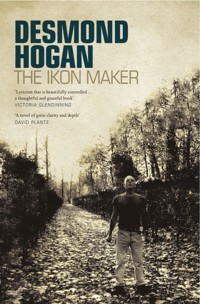
'With forty pounds he went back to England. Curlews cried in the bog next to Ballinasloe station. A taxi-man looked harassed – no work maybe. They kissed – slenderly. The train left. She walked away.' And so Diarmaid O'Hallrahan withdraws from his mother once more, as he returns to London just before his eighteenth birthday. In the quiet of her Galway home, Susan is forced to confront a ruptured relationship with her only son, and the ikons – feathers, beads, paper accumulated into shapes – marking the progress of his troubled childhood. As she pursues him across England, meeting friends and lovers left in his wake, she resigns herself to the man her son has become, and must face a new identity of her own. In this story about the dark complexities of love, the mysteries of sexuality, the anguishes of motherhood, Desmond Hogan conveys an unassailable truth about human experience: that nothing and no one can stay the same forever.
Sie lesen das E-Book in den Legimi-Apps auf:
Seitenzahl: 176
Veröffentlichungsjahr: 2013
Das E-Book (TTS) können Sie hören im Abo „Legimi Premium” in Legimi-Apps auf:
Ähnliche


















THE LILLIPUT PRESS
DUBLIN
To R.R. Zanker
The men in the forest they ask it of me
How many strawberries grow in the salt sea?
I answer them back with a tear in my eye
How many ships sail in the forest?
Song
ONE
1
When spring came she looked westward. Down the sliding road, over the hills, to where Galway city lay. The Spanish Arch, Claddagh buildings, the lovely, the decayed, horses, tinkers and memories of her husband George as a young man fresh from the peat jungle.
He worked as a builder’s labourer in Galway before the war. Making houses where now doctors lived. Then Galway was a place of mystery – cobblestone, Spanish faces, gipsy eyes. The ceaseless roar of waves and ladies, in black, crouching about the Claddagh. Ladies, dark and moronic. Pipe-smoking women.
Their eyes like arches. Holding no fear and always their trek about Galway marked by Gaelic conversation.
Not all of them wore black; there were those in scarlet with blue and green patterns.
After the Spanish Civil War Susan always associated them with Spain, those women in scarlet.
Their eyes were always blue – glass-blue – they seemed to snare some of the sea. There was one called Maire who had hair like eels and watched the sea as though for Spanish ships.
Everybody in Galway then seemed to be waiting for something; the sun in these last years of the thirties crumbled on old stone. Vegetables hung in the air like infants. Galway was an exciting place and she and her husband-to-be took a ride on an old red bus to Barna.
By the sea.
They’d watch seagulls – white – and virgins.
For everybody then was a virgin.
Girls in sandals or girls in bare feet walking the tide.
Girls walking on a shore.
The laughter returned now.
Voices hidden, seaweed sprawled like names.
Autographed silences; yes, it had been lovely come evening in Barna then. The sun swallowed in holes; orange devouring every shape, penetrating the windshield of a car.
An old Ford coupé placed along the shore.
One would have expected Norma Shearer to emerge.
For such were the days then.
You could recognize Joan Crawford in the face of a nun on Salthill.
A bony-faced nun. For the world was full of expectation. Most of all at the markets. Men speaking Irish, vigil of smoke rising from clay pipes. A gangster movie playing at the Estoria; Dillinger reincarnated in the face of a draper’s assistant.
Yes, there’d been sadness too, wrecked lives, men from Galway and Clare trekking to England, a long silent march. Faces that didn’t know how to protest.
People packing up, going towards the streets of Birmingham, Nottingham, London to earn crusts or packets of soup for families tawny, bony like themselves. The march of history.
People reversing their paths. Once they’d gone Connacht-wise. Before Cromwell’s soldiers. Now they were going back.
The midlands flying by, the peculiar sombreness hanging over midland Ireland.
Cottages, children, the beginnings of the peat industry.
Towards galless ships and the Irish Sea. Susan herself had gone on one of those ships, she and George, before being married in Kilburn, in a church dedicated to the Sacred Heart.
Galway, a few impenetrable hours had floated back.
They’d had to face life in the raw; Irish faces prone with anxiety.
Building a universe in a world where they were unwanted.
Susan had registered her own protest; as her husband worked she’d go to Kew Gardens or Haymarket.
She’d visit antique shops, go to museums, look at portraits of Queen Elizabeth or other henna-haired women of that time.
She’d escaped; she wasn’t going to be shoved downwards. She attended concerts in parks though she didn’t like the music.
In Hyde Park, cloistered by the sounds of Bach, her mind would wander back to home, a crossroads there where people once gathered at evening and danced jigs – solemnly – as though waiting for death.
Skirts rising, arms brawny. A druidic stare on the faces of passers-by.
Or a waltz. ‘Come by the Hills’. People dancing rhythmically, dancing carnivorously; waiting for dark or stillborn children.
Waiting for emigration or anxiety.
And once or twice a year a carnival touched on the village, ‘The Lakes of Killarney’ painted on the caravans. And again as the lights of bulbs died out people would dance to the music of Slievenamban, a melodeon crying like a cat in one’s sleep and someone echoing the refrain: ‘In the Valley of Slievenamban’.
Funny, it seems like yesterday, Susan thought one day, remembering concerts in Hyde Park when she’d recall her version of home. But yesterdays slip away, she thought. Youth is gone before you’d see a swan drop a feather. And what are you left with?
The memories of bulbs, bright and blue, at a crossroads in 1939.
2
These days were waiting days. Essentially. She’d buy bread and butter and Mrs Conlon would ask:
‘Have you heard from Diarmaid?’
Mrs O’Hallrahan would say ‘yes’.
‘Of course.’
And she, Susan, would go into awkward explanations as to how Diarmaid was working as a petrol-pump attendant.
‘Isn’t it something,’ she’d say, though she didn’t really believe it.
Didn’t believe petrol-pump attending was anything despite the fact that Diarmaid wasn’t working as a petrol-pump attendant.
The fact was she hadn’t heard from him for weeks now; the last time was after January.
It had been snowing then and lakes in the fields were frozen and few cars passed her doorstep.
She’d wander up to buy groceries then and wonder at the eternal loneliness of life. Here she was a widow with an only son in England. The year was 1972.
It had been over thirty years since she married. Her first child had come late. Riddled with miscarriages it had seemed she’d had no chance of a child until 1953; back in Ireland, here at home, she’d miraculously become pregnant. She grew big like a cow. Her belly had ached and she’d carried a child like a big pod of lazy flesh. She’d been very big. Almost too big. She’d sauntered through the village and made phone calls in a kiosk to Ballinasloe where her husband worked. There one day he informed her he was leaving for the States. He was fed up of Ireland. He needed rest from a country getting on its feet, feeding itself into post-war bureaucracy.
Every day then the papers bore images of Irish leaders making deals with foreign investors. Ireland was becoming just a little better off; cars ran to Galway for Sundays.
Ballinasloe had new houses. The village, though, still had its poverty and its tedium of Guinness signs and young men with holes in their trousers.
No, this village still was given over to alcohol. There had to be something else.
‘I’ll make a lot of money,’ her husband had said. ‘I’ll make a fortune.’
‘We can live happier then.’
He’d left her and she still pregnant. No, it wasn’t his fault. He loved life, needed it.
He’d been to the war.
Inside he was scarred; he’d met with Russian soldiers, American soldiers, he’d been in the British army. He’d seen Danzig after the war, been to Belsen. He needed life. He knew what it was all about. There was no time for rest, life was motion; he’d known burnt-out cities in Europe after the war and he’d drank gin with American soldiers who’d entered Berlin. Yes, his head still rang; he’d known the blisters of bombs in the sky, planes. He’d seen buildings gutted and dead soldiers affirm their shapes on soil.
He knew what it was all about. Funny, in 1954 when Diarmaid was born he was dead.
He’d died in an elevator accident in Chicago, an out-of-work salesman. ‘George,’ she’d cried. His body was brought back. It was draped in the Irish flag; apparently he’d once joined Sinn Féin.
Went to meetings in Galway with Constance Markiewizc’s picture on the wall, listened to men speak in Irish of the GPO burning on Easter Monday, 1916.
Little impressed he’d left it. But they remembered it and draped his coffin. He was buried beside a well in a graveyard.
She was sure the baby inside her would die, but he was delivered on Easter Monday, 1954. A boy. Safe. In Portiuncula Hospital, Ballinasloe, and in memory of an Irish fruit vendor in Haymarket she called him Diarmaid.
Mrs Conlon cackled now. ‘Tell him I was asking for him.’
‘I will to be sure.’
‘Something good will come his way.’
‘I’m sure it will.’ Mrs O’Hallrahan moved outwards. Yes, it was spring all right.
Sheep trod along the road; alongside them calves swayed. And lambs. Somebody’s animals gone astray. Then a farmhand appeared.
She walked nobly through the village.
In the school voices shouted their sums; a statue of the Blessed Virgin Mary stood outside it in glass. Her nose was chipped and her feet which held a snake were decayed.
Roses were made of plastic; their lives over, too. Ugly.
Like golf balls. But Mrs O’Hallrahan praised Mary. She prayed often now, Susan did.
Prayed that God would deliver her child from harm.
3
A letter arrived from him – unexpectedly. Brown the envelope was, colour of his flesh.
She tore it open. His handwriting was unchanged from the time he was sixteen. Large, dangling, the ‘a’s. Like puppets.
‘Mama,
I’m coming home,’ it read.
And more.
‘Maybe I’ve been too long here.’
She was overjoyed. She sauntered up to the grocery shop.
‘Diarmaid’s coming home.’
‘Great. When?’
‘Next week.’ Though he’d never said.
‘That’s wonderful.’
Mrs Conlon wiped her brow. ‘I’m sweating.’
A stray dog entered the shop, a big, shaggy fellow.
‘What will he do then?’
‘Maybe go to college. Maybe I’ll afford it next year.’
‘That would be marvellous. He could do agricultural science or something.’
‘Certainly. He needs a break.’
She left the shop, Susan did.
Outside a certain blueness had amassed over the fields, colours smouldered, giant shadows ran.
She was happy. She went up the road a mile and a half to tell her mother.
Her mother was eighty and lived in a cottage with Susan’s niece.
The niece was quite on in years too.
Susan had married in her teens, so had her older sister, Jennifer, who’d been born when her mother was seventeen, which meant Jennifer’s oldest was quite old herself now. Middle-aged. Jennifer had died of lung cancer and her daughter, Alice, looked after the octogenarian. Peeled carrots for her, fed her though she was able and loved the sunlight, walking laneways where lambs dazed past, sunlit.
‘Mammy, Diarmaid’s coming home.’
‘He’s not gone long.’
‘Long enough.’
Alice stood in a corner. Her face always seemed rigid. Like a goalpost.
‘Will he stay long?’
That was a good question. Susan suddenly realized maybe he wouldn’t wait, maybe he’d tire of home.
There was nothing here for him.
‘I hope he will,’ she said simply.
Alice produced a chicken.
She was a sad lady but a good cook. Long ago in Dublin a half-caste sailor had jilted her and since then she’d lived in shadow.
Here in this kitchen. Sometimes she went to dances with teenage girls and who knows but sometimes she lay in the fair green in Ballinasloe for young men.
She had a bad reputation, Alice had.
Susan wouldn’t have known but she sometimes heard people talk under her window at night.
Wild words from young men.
She looked at Alice almost bitterly now and realized that Alice knew what life was all about. People like her always did.
4
He was to return on 20 February. This she found out in a further letter.
That morning was very pale – lace curtains blew, colours lay stranded in the fields. A hen whistled – its voice shot through her, and distantly a train shot by, loudly wailing. It was far away, the train, a monster in her imagination. It used bear Diarmaid to Ballinasloe once to school, clumsy, awkward, cold, a succession of jumpers on him, red and blue, and eventually gold.
And his hair dangled, penetrated by light. But as such he’d changed. His hair had grown longer; his face lost some of its pallor. The last time she’d seen him, towards the close of summer, even that had changed. He’d lost the turnip shape, the high forehead; he’d walk in the fields in August, collecting mushrooms.
When he was three he’d done likewise.
‘This one has a face like a clown,’ he once said to her, picking out a huge, elephantine mushroom.
Long ago; he was four or five.
And last summer he’d gone back to the fields, walking where Jacobean soldiers once fled before the Williamites. After the Battle of Aughrim.
Last summer Diarmaid had collected pails of mushrooms; when it rained he didn’t fail to walk the fields. When it was fine he was still there, a scattering of poppies in the garden when he returned.
And she’d have her programmes of Irish music on.
‘Danny Boy’. Songs she didn’t want to hear anyway, but such words surrounded him.
He was fated. She knew that.
Something about Diarmaid frightened her; his eternal silence. Like a busload of autistic children she’d once seen in Dublin. On a wet day. He was so tied up within himself. Like a shoe all knotted up.
Diarmaid was like something that had long ago silenced itself; a cry.
Making dresses she reared him; she opened a little clothes shop, lilac-coloured frocks, linen dresses with roses sewn on. Gaiety had somewhat taken over the village, people wore her dresses, loved them, except those who were too snobbish to buy them and went perpetually to Cassidy’s in Dublin.
She made First Communion frocks for little girls, outfits for young boys. A successful dressmaker, she’d arrange flowers in her window.
People would pass, look in, wave. And she’d be sewing under a picture of the Sacred Heart.
With time she changed that picture. She put instead a reproduction bought in Dublin.
A little boy writing, bent silently over a desk. On the back she saw that it was painted by a French painter and the boy was the painter’s son.
Diarmaid was her son.
He was ten when she realized what that meant; she’d fed her life into him.
She’d watched him, fed him, she tended to him with a sense of dedication.
And watched him grow in a harsh environment of loss, of alcoholic farmers, of stone walls.
Diarmaid was a dreamer. As a child he looked after kittens, called them ‘Pussy’. He bought a budgie in Galway one day. When the budgie flew away he’d cried for a week. Then an uncle bought him a hamster, his grandmother bought him a rabbit, another uncle presented him with a lamb and he tended his flock like a junior Christ, watching his rabbit nibble lettuce and his hamster scoop about a cardboard castle he’d designed.
But the animals disappeared – just as the circus that came to Ballinasloe every year disappeared – and what was left was Diarmaid’s stunning sense of identity. He made shapes, put bits of cardboard together, eggshells, fluff – mattress fluff, ducks’ feathers. He constructed these ikons, was proud of them, brought them to national school, where the old teacher praised his efforts as he praised a little girl’s bunch of premature marigolds.
‘Daft,’ she once heard a woman say of him. ‘That child should have his head examined.’
Susan was hurt, angered; yet she welcomed this rebuke. She could withstand failure. Her husband George was a failure. Her whole family were failures. She could construct something from that.
She could make something of it. All her people were emigrants.
They’d landed in Britain. A brother in 1955 committed suicide by jumping from a bank in Kilburn.
Bald, small; he’d lost out. They found him broken like a frog on the pavement. They buried him in London.
It wasn’t right to bring him back her mother said. Let him be, let his spirit be.
Now Diarmaid, too, threatened failure, something over-preponderant about his forehead. Something over-exact. She raised him quietly – little was said. His jumpers knitted politely against the texture of the fields. His eyes almond-coloured.
At night they’d listen to Irish comedians on the radio. And one night, Friday night, when he was nine, President Kennedy’s death was announced and Diarmaid wept.
He wailed.
Tears soaked his cheeks.
And the next morning she’d found he’d wet his bed.
Then he went to school in Ballinasloe, Saint Ignatius’ College, some miles outside town. Took a train from Woodlawn each morning, weaned on cold weather, winter fog, going to learn maths, geography, history, wandering off there with some other boys who seldom spoke either.
The years, thirteen, fourteen; difficult years. Quiet years, sombre years. Diarmaid did his sums at night, painted little pictures.
Read books which didn’t interest him; a new kitten he’d had had grown up and he often softened by the fire with it, stroking its fur, black and white.
She’d make tea for him; they’d eat scones, floured with freshness. They’d listen to Country and Western music on the radio – ‘My Wild Irish Rose’ – feel safe with one another. ‘Are you lonesome tonight?’ Mrs O’Hallrahan’s mind would seek some image in London immediately prior to the war, a café, toasting beans in a coffee shop. A woman’s veins sticking out like rhubarb.
Nothing would pass between herself and her son. They’d say goodnight, sleep maybe, as thunder passed over, or sleet, and in the morning, cabbages frozen, Diarmaid would trek off to the station at Woodlawn, to attend school in Ballinasloe.
Sometimes she worried lest he tired of this procedure. He wasn’t very good at school; his marks were just about average. He was good maybe at biology and sometimes he scored high marks in art. But that was all. She wanted to do better for him, seek a better position for him.
She wished she had enough money to place him as a boarder at school. Then – almost by God’s volition – she won the Sweep. That’s what people said though it was only five hundred pounds she got.
But enough at the end of a dark and endless summer to send Diarmaid to school, a boarder.
A local man drove him there. Saint Ignatius’ statue looked forbidding, a jackdaw stood on his shoulders.
Ladies left their children there; all talking. Nobody spoke to her, Mrs O’Hallrahan. Nobody knew her.
Diarmaid took a last look at her before he disappeared and somehow she knew she’d betrayed him.
Her business did well that autumn; it flourished. More people were wearing neater, happier clothes.
She was busy. Yet she was lonely and in the evenings went for a drink. A thing she’d never done before. She’d sit and listen to people talk about neighbours’ wives.
Apparently there were fewer virgins in the district, more adulteries. And television too, it had its effect.
People said nothing whileIronside, a programme about an American cripple, was on. Talk only began during the news. They spoke of Mrs Broderick who was seeing a young dental student in Ballinasloe, or Mrs Kelly who was seen at night with Mr Chapman, an English gentleman come to live in a big house where he played a piano in summer on the front lawn.
And when the late news would start up – and images emerge of war, war in Vietnam, the Middle East, North of Ireland – she could only feel shame.
Somehow she knew she’d left Diarmaid to perish; a loner by nature, he could only become more alone in the nights at school.
But over the year as she visited him she saw him moving towards another boy, Derek. A little fellow from Leitrim, older than Diarmaid, moon-faced. Freckles lay on his forehead like fish. He was Diarmaid’s friend, a companion at art class. Together they knocked about. Hands in their pockets, journeys before them through the woods – they made off from teasing boys.
Susan usually found Diarmaid beside a stuffed pheasant; bread hung in the air, Holy Communion wafers, stale loaves of lunchtime.
Diarmaid was shy of her. His face held a skeleton of displeasure – he was totally enamoured of Derek.
Twice, she’d watch them shy away from her, the two of them off before she left, her bag empty, having brought Cadbury’s chocolates and glucose for her baby.
The morning, February the second, she marched past the mirror preparing for Ballinasloe, the train there.
Her bust was large and healthy.
It reminded her of bucketfuls of something. Chaotic patterns on her dress, urinal shapes.
White on black. Her hair was loud and black; a tiny bit of grey fluff there, earrings. Silver.
Her husband’s presents. They’d been on her for years. Ever since she’d seen a bomb drop on Leicester Square, 1942. She’d been walking alone away from a coffee shop where she’d been watching a Cockney who looked like Adolf Hitler. The bomb dropped, flesh screamed, a tree burned like a frantic dancer. People ran, screamed, but she froze. As though into a gesture which accomplished her life. She felt no fear. Her stance was quiet, unchaotic.
Stolid, she watched a woman run with a child’s foot in a tiny strapless shoe. It was an image she wouldn’t forget. Silently she watched. Blood marked the top of the foot and she thought of Shirley Temple singing ‘The Good Ship Lollipop’.
Paddy McCarthy called at eleven o’clock. He was going to drive her to Ballinasloe.
‘Hello.’
Sunlight caught the windshield, penetrated it. Blue.
‘Nice day.’
‘It is.’
They made off. Past a tinker encampment. A woman wandered with a child and to Susan she looked like an Apache in a film.
A dog barked morosely at them – bitten.
A horse sauntered.




