


Erhalten Sie Zugang zu diesem und mehr als 300000 Büchern ab EUR 5,99 monatlich.
- Herausgeber: Pushkin Press
- Kategorie: Gesellschafts- und Liebesromane
- Sprache: Englisch
LONGLISTED FOR THE IMPAC DUBLIN AWARD. The tale of the glamorous and pioneering woman known as 'the Garbo of the Skies'.1909. In Rotorua, New Zealand, Nellie Batten pins a picture of legendary pilot Louis Blériot above the cot of her newborn daughter, Jean.1934. Jean Batten climbs into the cockpit of her Gipsy Moth, aiming to beat Amy Johnson's solo flight record from England to Australia.Spurred on by her mother in the face of this huge challenge, Miss Batten joins the ranks of the great early aviators, thanks to her superb navigation skills, persuasive character and unerring instinct for self-promotion. But it is a life that will know both triumph and tragedy, as her glittering success and exhilarating flights cannot last forever...
Sie lesen das E-Book in den Legimi-Apps auf:
Seitenzahl: 557
Veröffentlichungsjahr: 2025
Das E-Book (TTS) können Sie hören im Abo „Legimi Premium” in Legimi-Apps auf:
Ähnliche
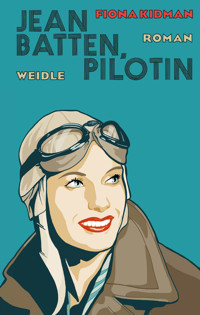

















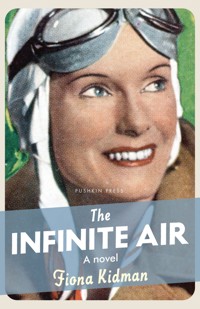
The Infinite Air
A novel about the enigmatic Jean Batten
Fiona Kidman
For Ian Kidman
aviator, adviser and dear companion
And so the sky keeps,
For the infinite air is unkind.
From ‘The Wreck of the Deutschland’
Gerard Manley Hopkins
Contents
Part One
Prelude to a Flight
1909–1934
Chapter 1
1934. The young woman, in a sleeveless white silk dress, stood at the window of a small apartment gazing out over the warm organic colours of Rome, its ancient earth and stone. It was evening, and across the roofs of buildings she saw another woman sitting at a window, level with her, looking out as she did. This other woman sat quite still most of the time, reading a book perhaps, for she glanced down at her hands now and then as if turning a page. She wore her hair in a chignon, and from the poise of her shoulders, Jean guessed that she was one of those elegant older women whom she saw making their way to the shops in Trastevere. Jean wished that she would look up, give her a wave, although perhaps that would be considered improper here in Rome. Just some acknowledgement would have satisfied her. She longed for her mother at this moment; the stranger had the same familiar imperious tilt of the head.
The apartment where Jean Batten stood was the home of Jack Reason, secretary to the air attaché in Rome. The walls were pale and sun lit up the room during the day. Otherwise, it was a plain place with little ornamentation beyond a vase or two, a pretty enough rug and some light raffia furniture, as if the owners were used to shifting house often and everything they owned could be easily transported to some other posting. It had surprised her at first that in spite of the ancient buildings beyond, and the difference of the city, she was surrounded by the odours of tobacco and talcum powder, bacon fat and disinfectant — the smells she and her mother had been accustomed to in London, in cheap, temporary lodgings.
The trouble had begun in Marseilles, on the first day of the flight. Just a year before, she had destroyed a plane in Baluchistan, a plane that had not belonged to her. That had been misfortune, she believed, pure and simple, but this time there was no avoiding it had been her fault. The Gipsy Moth had ended up squatting in a field of grass on the edge of the Tiber, its undercarriage shattered, the wings crumpled. As she had glided through the night, with only a torch to show her the way, twisting and weaving, like a firefly in the night, she had somehow avoided tall wireless masts on each side.
It had been after midnight when she was taken to the pronto soccorso, a Red Cross station of sorts. The petrol tank had been empty, but then it had been for some time, and that should not have happened. How could she have been so utterly stupid? How could she have failed her mother, whom she loved more than her life, and who had given her so much? But that didn’t bear thinking about. That was the dark bird perched on her shoulder, the haunted dream that made her cry out in her sleep some nights, the creature she had to kill. Her mother knew the bird was there, and only her mother could drive it away. But she was not here, she was in London, waiting to hear that Jean had made the next stage of her journey. What she would receive in the morning was news of a disaster, one that could have been so easily averted, had Jean but listened to the men in Marseilles. Perhaps it was the city of Marseilles itself, unpredictable and dangerous, full of seafarers and gypsies, because she had not wanted to stay in the old port town for a night. But that was not true. She was scared by very little on the ground, it was only in the immensity of the air that she sometimes understood danger. And that was what had driven her on, the need to conquer fear. She had done this to herself, succumbed to her own craziness, a strange light-headed madness that leapt out of control. She should have known.
Behind her, Molly Reason entered the room. She was a plump woman in her late forties or thereabouts, with frizzy hair parted in the centre and anxious eyes, as if her guest made her nervous. She wore a floral frock, pleated over her bosom in a way that made it look heavy. Her husband had been called directly after the crash, and now he had taken charge and installed Jean in their apartment.
‘Excuse me, Miss Batten,’ Molly said. ‘The doctor is here to see you.’
Jean turned from the window, trying to conceal her regret at having her thoughts interrupted. ‘The doctor? What doctor?’
‘The one who attended you last night. He’s come to check that you’re in better health.’
As if Jean had already agreed to see him, the doctor followed Molly in.
‘Doctor.’ Jean extended her hand. ‘It’s very kind of you, but as you’ll see, I’m perfectly well. Certainly much better than I was last night. Or was it early morning? I’m very sorry you were woken up so late to attend to a foolish girl like myself.’ She forced a small laugh.
When they had met, her left eye was as swollen as a Black Doris plum, while her lip hung loose over her chin. The doctor had been summoned to the aid station, where she had been taken by a group of men who had found her, sodden from stumbling in the rain through marshland. As he stitched her lip together the pain was intense, but she would not cry, would not scream. This was her night of folly and whatever she might feel, she did not wish to reveal it. She knew her mother would say, ‘Chin up, dear. Grin and bear.’ Nellie had no time for complaints. She had, she said, suffered in her time and now that was behind her, and she and Jean could conquer the world together.
‘She’ll be as good as new in no time, won’t she?’ Molly Reason said to the doctor, in better Italian than Jean expected.
He looked at his patient with an appraising eye and spoke rapidly. The older woman lifted one shoulder in acknowledgement and seemed at a loss.
‘What did he say, Mrs Reason?’ Jean asked. She knew she owed it to the doctor to at least listen to his advice, for he had stayed up all night holding cold compresses to her eye, helping the swelling to go down.
Molly Reason hesitated. ‘He says the signorina is immensely beautiful, and if she looks after herself, her appearance will soon be restored. He says her hair is the colour of falling night, her skin like almond petals. He recommends, Miss Batten, that you spend a few weeks resting, and hopes that you’ll remain in Rome while you recover.’
‘A few weeks. That’s ridiculous. I have to fix my plane and fly to Australia.’
‘Well, the world is full of good intentions.’ Mrs Reason seemed to assert herself. ‘But it’s hardly the first time you’ve set out for Australia, is it? I suggest that you climb into bed and get some rest. The doctor says you’re still in shock.’
With that she turned to leave the room.
‘Mrs Reason,’ Jean said, ‘have you not spoken with your husband today?’ She chose her words with care, knowing that the other woman was not happy about her unexpected guest. Quite early in the morning she had left the apartment for Matins, and had not returned until much later.
Molly paused. ‘He didn’t go to church this morning,’ she said, with starch in her voice.
‘That’s because we’ve been hard at work. The Italian Air Force transported my plane to the aerodrome this afternoon. They’re already making a list of the parts needed to repair my machine. Mr Reason has been very kind.’
‘My husband telephoned me after lunch. I understand there are no wings available for your plane anywhere in Rome. You won’t get far without wings.’
Jean glanced down at her pretty dress, swirling around her knees, and laughed again, this time with real humour. ‘Don’t you believe it. I know where there are wings. I’ve seen some in the hangar.’
‘You haven’t got them yet,’ Molly said.
On reflection, The trouble had really begun the week earlier. It had been an inauspicious beginning. She and her mother had risen and breakfasted at the small inn in Kent where they were staying in readiness for Jean’s flight from Lympne aerodrome. Nellie sat opposite her, encouraging her to eat well because, as she said, she didn’t know where she would get her next decent meal and she must keep up her strength. Her mother, the most handsome of women, was tall and strong boned. She ate what she liked and always looked as if she exactly fitted her skin. When they walked along the street together, Jean, small and neatly put together, barely came up to her mother’s shoulder. Heads turned to look at the pair, alike yet so different. Nellie Batten had regular features that her daughter had inherited, a big sensual mouth, heavy-lidded eyes, a strong chin that she held at an angle as she strode along, her back very straight. To look at her, one would think she had the capacity to laugh but she seldom did. There was a time when she had walked the boards of theatres — very small theatres, she said with a hint of wistfulness that was outside her usual demeanour. New Zealand theatres. As if that said everything. Little theatres in little towns.
‘Darling,’ Jean had said, ‘you know my next meal will be in Rome. I’m sure I’ll eat fabulously well.’
At that point they had been joined, rather later than he was expected, by Jean’s fiancé Edward Walter, who had come from London to say goodbye, and to try once again to persuade her not to go. He was still rubbing his eyes, apologising for sleeping through his alarm. Jean watched him across the table while he ate his way through fried kidneys and three eggs, stopping long enough to remind her that he had bought her the axe, so that if she came down in the sea she could hack the wings off her plane to make a raft.
‘I’ve packed it, Ted,’ she said.
‘Well, thank goodness for that. You know I wanted you to take a life raft.’
‘Much good that will do me if I’m truly lost at sea. You know how little room there is in the cockpit — goodness knows, you’ve flown often enough yourself. I’ve got all the essentials.’ She hesitated, on the point of reminding him that he was a weekend flyer, an enthusiast rather than a real pilot, and that although he, too, owned a Gipsy Moth he had never flown further than the next town, or even over the English Channel. Nor did she itemise what she did consider the essentials, although her mother had given a small conspiratorial smile as Jean mentioned them. She had helped her daughter buy face cream and talcum powder, several changes of underwear, a white silk dress for the evenings when she landed. In her breast pocket she carried powder and lipstick and a small bottle of perfume, along with her comb. ‘Make sure your hair is always neatly parted when you land,’ Nellie had advised her. ‘Make sure you look as if it’s effortless.’
‘I’d like you to take the revolver I offered you,’ Edward said. ‘It’s in the car.’
‘Ted, no. I managed without a gun in Baluchistan. If I start shooting people they’ll shoot back, rather than help me. You’re being dramatic.’
‘That’s not what I had in mind. If you go down in the water, and there are sharks, what then?’
Jean studied him, noting from the angle of his head the bald patch that had begun to spread, the pink gleam of his scalp. He was good-looking enough, with that air of a refined Englishman about him that had attracted her at first, but although his face was lean his chin was collecting soft folds that made him look older than his thirty-three years. ‘You mean I should commit suicide?’ she said.
He pushed his plate aside with an angry gesture. ‘Now you’re the theatrical one.’
Jean got to her feet. Not for the first time, it crossed her mind that this man she had promised to marry might become someone with whom she could share too many breakfasts. His first wife seemed to have tired of him very quickly. An ageing stockbroker who might expect what? A wife who gave dinner parties and talked about shares and bonds? She twisted the ring on her finger, a half-circle of very good diamonds.
‘We should get going, it’s nearly dawn already,’ she said.
Nellie nodded. ‘Yes, come on, darling. You’re off to Australia today. If you’re going to get there faster than Mrs Mollison.’
Jean sensed that, at any moment, her mother might launch into another recital of Amy Johnson’s achievement in flying from England to Australia in nineteen and a half days. Nellie always referred to the other aviator by her married name, as if to indicate that a domestication had taken place since her marriage, even though Jean’s rival continued to set records. The record for a woman’s solo flight from one side of the world, and the only such flight at that, had stood since 1930, four years earlier. Nellie’s eyes blazed as if in anticipation of the triumph to come. How long is it going to take you, she was in the habit of asking Jean, although the question was always rhetorical. To which her daughter would reply that she hoped, all going well, it would be ten or twelve days.
And now, instead of breaking records, here she was in Rome, alone to all intents and purposes, with Molly Reason needling her about her plight.
‘My husband says that Signor Savelli, who owns the Gipsy Moth, is not keen on parting with the wings of his plane.’
Jean looked across the rooftops, rose coloured in the deepening day. For an instant she thought the woman sitting at the window inclined her head ever so slightly towards her. ‘I assure you,’ she said, tilting her chin, ‘that before today is done, I’ll have wings.’
Chapter 2
1909. When Jean was born her mother, Ellen Batten, who was known as Nellie, pinned a newspaper picture of Louis Blériot and his monoplane above her cot. Just eight months before, the Frenchman had flown across the English Channel, the first person to achieve this feat, in the time of thirty-six minutes and thirty seconds in a two-seater monoplane. A year to remember, the family said — Blériot’s triumph, and the birth of Jean.
The story of the aviator was often told in the Batten household, when they all lived together in Rotorua. It would come up in conversation each time there was some new and amazing exploit by an aviator. ‘It struck me very forcibly,’ Nellie would say. ‘Perhaps because of my condition, I was very impressionable at the time. But you know, when I read about that man, launching himself across the sea, right on the moment of sunrise, and what he had to say about the loneliness of it all, it struck my heart. As he told it, he was alone, isolated, lost in the midst of the immense ocean, not able to see anything on the horizon or a single ship. Such courage. Just imagine, his wife was on a following ship, and she couldn’t see him either. What must she have thought?’ She would pause then, and marvel. ‘Yet he did it,’ she always said, completing the story. ‘He made it across the water and survived.’ When her daughter was older, she would add: ‘How I wish I could do that.’
During that time in Rotorua, they believed they were happy: Fred the dentist, with a flourishing practice, and his exuberant wife, Nellie, two little boys, and Jean, the baby. True, there had been a loss along the way, a boy who had died, and, sometimes, later on, Jean wondered if that might have been when the family’s problems began, the first hint that sorrow might besiege them. But when she was born, tiny and frail, her parents rejoiced in a girl, swaddling her with care and constant attention, lest this one be lost. Jean imagined, later, that she must have been born prematurely, for just two nights before the birth her mother had danced at a ball. Nobody knew my secret, she boasted. They couldn’t tell that I was having a baby. On the night of her birth her father played the flute in the room next door to where her mother laboured. They called their daughter Jane Gardner Batten, in honour of Fred’s mother, but somewhere along the way her name eased itself into Jean, and it stuck. It was the name she called herself when she began to talk.
Rotorua resembled a frontier town, with long unpaved streets, hitching posts for horses, small houses made of wood and roofed with iron. What made it different from other central North Island settlements were the thermal pools, volcanic steam rising in unexpected places from the turbulent earth. Geysers erupted, spewing hot water into the air, and mud bubbled on the corners of the streets. The air was suffused with the pungent smell of hydrogen sulphide. Although visitors to the town spoke of the stench of rotten eggs, those who came to live there soon stopped noticing it. Because of the curative properties of the water, a spa resort had been built at the eastern end of the town, a sprawling mock-Tudor bath house with its back to a lake, and also a number of large hotels to accommodate those seeking cures. Beneath the charming entrance to the bath house, with its grand sweeping staircase, and an orchestra playing soothingly on a balcony, lay a complex subterranean basement where patients underwent therapies intended to remedy all manner of ailments. The lights were dim, and the powerful reek of sulphuric gases caught one in the back of the throat.
Amohia Street, where the Battens lived, ran close to the large public gardens where the bath house stood and was just around the corner from the Prince’s Gate Hotel where prime ministers and royalty had stayed. Fred and fellow musicians sometimes entertained guests in the reception hall, just for the hell of it, not for money. The Prince of Wales and his wife, Mary, who were soon to be king and queen, had stayed there and, in their honour, large steel archways were placed at the entrance to the gardens. In spring these arches foamed with purple wisteria, the vines turning into green canopies in the summer. Just think, Nellie murmured to Jean, we are walking in the same footsteps as their majesties.
The house in Amohia Street was rented, but Nellie had furnished the front room in what was already dubbed the Edwardian style: bamboo and wicker furniture with delicate legs and curved backs, except for one solid, dark green easy chair with a comfortable back so that Fred could rest at the end of a day’s work. The chintz-covered cushions were colourfully patterned, the walls papered a dark gold colour, with deep red floral friezes, not flowers all over like most people had — so very modern, Nellie enthused, and look how large this made the house look. The tall vases that had come from Fred’s mother were always spilling with flowers. In the corner of the front room stood a piano which both she and Fred played. Fred, a swarthy man, with eyes the colour of licorice, had discovered Debussy, whose music he described as sensuous, although Nellie found it discordant. ‘Besides,’ she said, ‘that man leads a wicked life in Paris, if the newspapers are anything to go by.’ ‘You’re one to talk,’ Fred had said with a laugh, for Nellie was known as high-spirited. Her musical repertoire was varied, some of it classical, but she liked playing old tunes that people sang around pianos and, for the children, she had picked up tunes like ‘The Teddy Bears’ Picnic’, which was all the rage. She held Jean in her lap and helped her finger chords on the piano.
The nearby lake, known to Maori as Rotorua-nui-a-Kahumatamomoe, though Europeans called it Rotorua, was an expanse of water so large that it was difficult to see the far shore from the town, dark blue in summer, purple and chill in the winter, with an island lying at its centre. On Sundays the Battens walked along its shore, dodging eddying bursts of sulphur gases. They never entered the pa, home to local Te Arawa, who wove feather cloaks and cooked their meals in the hot pools. An Anglican church crouched on the side of the lake, and from it billowed exquisite renditions of familiar hymns, sung in a different language. Jean listened longingly to this distant music, but her mother said that although they meant well in their Christian endeavours, the Maoris still had a long way to go to escape their heathen ways. ‘My father fought them during the wars,’ she said, her voice cool.
Some Saturday nights in wintertime, the family went on expeditions to the bath house and hired a family hot tub. Nellie was a strong believer in natural remedies. ‘Off we go,’ she commanded them, in a loud, cheerful voice. ‘Let’s all get healthy.’
The tub was so deep it was up to Jean’s chin. There were seats around the edge so they could all sit with their feet floating in the middle. Only Jean did not wear a suit that covered her completely, being considered too small for it to matter whether the little flat buttons of her nipples showed or not. When they had soaked, they went off to the changing rooms, and exchanged swimming trunks for their pyjamas and dressing gowns. Afterwards, with much laughter and whispering, they all scampered up the street back to the house, and leapt into their beds.
Fred was in constant demand in his dental practice, a man with presence. He was a captain in the Taranaki Territorial Army, which he had joined some years earlier, and could lift a cannon ball aloft in each hand. Nellie massaged his broad shoulders when he sat in the green chair in the evenings, pipe in his mouth. His chest muscles rippled beneath his shirt; his dark hair, swept back in regular waves, met in a widow’s peak above the high plane of his forehead. ‘You have your father’s cheekbones,’ Nellie would say to Jean, admiring father and daughter as her caresses lingered on her husband. Jean would sit at Fred’s feet on a low stool engraved with poker-work. His hand would fall on her head while he dozed, fingers entwined in her hair, twitching awake with sudden little spasms of his grip on her skull, like an eggshell about to break open. ‘She is so delicate, our little Mit,’ he commented more than once to Nellie. Mit. It was his name for her then. She used the word when she wanted her mittens on cold winter mornings. There were many of those: it was hard frost country.
‘You’ve had Mrs Hardcastle in again,’ Nellie said one evening.
‘Now why would you say that?’ Fred asked.
‘I’d recognise that freesia perfume anywhere.’
‘Oh that,’ Fred said. ‘I don’t notice things like that. It’s all disinfectant and soap when I have someone in the chair.’
‘She bought it in Grasse, on her grand tour of Europe last year. It’s very distinctive. She wears it to meetings. Her teeth must be in a terrible way, the number of times she visits you. Not that you’d think it to look at her. She’s not a bad-looking woman.’
‘I’ll take a note of it next time, pay her a compliment if I think of it,’ Fred said easily.
While her husband was at work, Nellie was busy about the town. She rode a tall white mare from one committee meeting to another, seated side-saddle and dressed in a green jacket, a plaid riding habit and a hat with a brave red feather tucked in its band. The committees were mostly for theatrical societies, but also for the rowing club. She and Fred both rowed on the lake. Then there was the organising committee for the annual military ball, and for the flower show. Her blooms won the sweet pea division every year. She grew vegetables, too, lettuce and spinach in abundance, believing as she did in healthy nutritional diets. But, really, the theatre was Nellie’s first passion, begun when she was a girl in Invercargill. She was a regular feature at the Theatre Royal, the Fairy Queen in The Sleeping Princess when she was just fourteen, and then there were musicals at the Opera House in Wanganui where she kicked up her heels, and showed a little ankle, and met her husband in the process. And now here she was in Rotorua, at the Lyric, playing the lead role in Lady Frederick, a widow with a past, and she loved the way the part made the audience laugh. People could think what they liked of her, say she was wanton and abandoned, because of the way she threw herself into every activity, but she knew the truth, that nothing would happen if someone didn’t lead with a bit of spirit.
Louis Blériot’s exploits stood for everything she had ever imagined, the power to propel oneself through the air. In her dreams, she would confide to Jean, she sometimes found herself walking around a room, a library perhaps, with very high walls lined with books, and she would be reading the volumes on the top shelves, her feet just walking along the air beneath her. After Blériot’s flight, she told astonished members of the gardening circle committee that she saw herself as he did, alone in space. Only the other side remained unattainable, the far shore.
The horse she rode was lent to her by an American called John Hoffman, a big man with a crest of hair already turning white, although he was of an age with Nellie. He had emigrated at the turn of the century and ‘gone native’, as it was said, marrying a Maori woman, and already there was a child every year. Nellie found it most peculiar, but she needed a horse and liked Hoffman. He kept two or three and raced them from time to time. He needed his horses to be ridden, he said. The white mare had nice shoulders and a good steady eye, nice for a lady to ride, especially as she took her little girl with her more often than not. Sometimes he would wink, and whisper in Nellie’s ear as she dismounted at his stable. ‘A bit of a flutter?’ he would ask, and laughing she would hand over some coins. The next time he saw her, he would press the palm of her hand. ‘You’ve got a good eye for a horse,’ he often said in his soft drawl.
‘And you’re leading me astray,’ she invariably responded. Once she said, ‘Now don’t you dare tell my husband. He thinks I’m cleverer with money than I really am.’
‘Oh, but I think you are. I think you study form more than you’re letting on.’
By the time Jean was four she had grown strong, with wild unruly curls that reached to her shoulders. She and her second brother, John, bore a close resemblance to each other, small-boned and dark-featured, with the same alabaster complexion that came more from their mother than Fred. Harold, the older of the two brothers, was taller and, in a way that was hard to define, more awkward in his skin, as if something were slightly broken in him already. Sometimes Jean noticed displeasure in her mother’s voice when she spoke to Harold that was never apparent when she talked to her and John. It was years and years later, after flights that circled the globe, after fame, and loss, and despair, when Jean came to bury her mother in a foreign country, that the marriage and birth certificates she carried revealed that Harold’s birth had occurred a few short months after her marriage. This had happened in a town down south, before Fred and Nellie’s move to Rotorua. Not that this could have accounted for the way Harold was, except perhaps for an inner core of desolation Jean sensed, which might have stemmed from this beginning, the embarrassment he would have caused his mother.
Still, it was Harold who wanted an atlas, to study maps of the world. He wanted to become an explorer, like Dr Livingstone. His father sent away for a Times Atlas and, when it arrived, Harold invited John and Jean to join him in poring over more than a hundred coloured maps of the world. He traced his finger over country after country, noting where there was still not enough information for the cartographers to fill the gaps. Africa, thanks to Livingstone, looked well coloured in. ‘There’s Russia. And Asia. Look, I could go to China, there’s lots to discover there,’ he said, full of longing. His voice had just broken, and his limbs gangled across the floor.
‘There’s a hole in the middle of Australia,’ John said.
‘Oh, that’s not far away, someone will find it soon I expect.’ It was Harold’s habit to contradict nearly everything his brother said. He never ‘played’ with John, the way his mother hoped. The distance in their years had opened up, so that John and Jean seemed more of an age than the two brothers. Harold let Jean trace her finger across the Nile. ‘You couldn’t go there,’ he said, ‘too many crocodiles, and besides, girls can’t be explorers.’ After a while he got bored with the younger children’s company and went to his room, taking the atlas with him. He was a boy who often got tired, or that was what Nellie said, although there was something worried in her tone.
One day, Jean managed to open the front gate, and escape down the road on her own. It was Harold who found her, amid the panic that ensued in the household when her disappearance was discovered.
‘I was going off to explore,’ she said. ‘It sounded really interesting.’ Harold grabbed her fiercely by the arm and dragged her back along the street, Jean yowling like a stray cat.
‘Trust you to get me in trouble,’ he said, as he handed Jean back to their mother.
Nellie looked the situation over, dismissing Harold with a wave of her hand, barely a thank you. ‘Now stop that noise, Jean,’ she said. ‘We’re British. British people don’t cry.’
Jean and John created their own diversions. Nellie had a tin cabin trunk that she had used to transport her belongings from the South Island before she met Fred. It had come all the way from Scotland when her mother was a new bride, just seventeen years of age. Her name was Mary Anne Shaw and she married a military man called John Blackmore. Nellie spoke of her parents and her eight brothers and sisters with pride, although the family had dispersed since she was a girl, and she had lost track of most of them by then. But Mary Anne’s cabin trunk had been given to her, and now she filled it with an assortment of her and Fred’s old clothes, his raincoats and worn-out dentist smocks, a baggy pair of trousers, a tie on which he had spilled tomato soup that his wife had failed to remove, a shapeless trilby that had sailed off his head and landed in the lake when he was trout fishing; old petticoats and some dresses Nellie had discarded after a season or two of wear because the fashion had changed, a pair of green velvet dancing shoes with one broken heel, a rope of beads.
These were the children’s dress-up clothes. ‘Don’t be shy,’ Nellie cried. ‘I was never shy about what I wore when I was a girl. Do you know, for a dare, I once rode a man’s bicycle down the main street of Invercargill, wearing a pair of serge bloomers? My brothers were horrified but people laughed and cheered. They thought it was hilarious.’
John was nine when Jean turned four, but he still loved the game. He dressed his sister up in his mother’s cast-off finery, even though the skirts trailed along behind her, and she tripped on their hems. John put on his father’s clothes, playing the part of a young man taking a girl to a dance, bowing low to her, and offering his arm, and they would skip along together. One day John said that, just for a change, she could put on their father’s clothes and he would wear a dress. He put on the old ball gown, gathering up the skirts as far as he could, telling Jean to play the father’s role, while he was the mother. It was while John was swinging the rope of Nellie’s beads in one hand that Harold entered the room. He stood there with an odd smirk on his face. That evening at dinner, he told his parents what he had seen.
There was an uneasy silence in the room. Fred said, ‘Nellie, don’t you think John is a little old for dressing up?’ Nellie hesitated for a moment. ‘I think the children should be allowed to express their personalities however they wish really. Men play all sorts of roles on the stage. Imagine Gilbert and Sullivan if the men could not wear frills at their wrists.’
‘Trust you not to listen to Father,’ Harold said, full of vehemence.
‘I played the fool a little myself when I was a girl,’ Nellie said.
‘No wonder they shipped you out,’ said Fred, not amused.
‘Oh Fred, where’s your sense of humour?’
Fred had merely shrugged and changed the subject. Later that evening he stood up and put his hat on. He was, he said, going for a walk by the lake.
Did Jean imagine it, or did her mother mutter the name Mrs Hardcastle under her breath? Harold, who was angry, said so, but his mother turned away as if she hadn’t heard him.
All the same, when summer came, the children were sent outside more often. Nellie insisted that Harold accompany John and Jean on picnics, even though he had turned thirteen and he resisted the company of the children as much as he could. His parents didn’t always know where he was, and in the evenings, if he were late home, they would exchange anxious looks. It was after one of these late nights that he had agreed with reluctance to a picnic at the lake. Nellie was tired, she had said. Or was she? Jean was too small to know what was really wrong with her mother that day, just that she needed to lie down in a darkened room.
There was a suffocating quality about the air as Harold and John set off with Jean, accompanied by strict instructions from Nellie for the boys to look after their sister. They went to the lake carrying a picnic basket containing sandwiches and crusts of bread in a separate paper bag to feed to the ducks and swans gathered at the water’s edge. When they had eaten, Harold suggested that they walk on along the shore to the place they called Sulphur Point, which lay behind the bath house. People came down here to do secret things, he said. When John asked what things these might be, Harold was mysterious and elusive. ‘Things,’ he said. They might see things going on. They walked along to where a scrubby plantation jutted out into the lake, and bands of rough yellow mineral encroached on pools of water in the rocks. This was further than they had ever been, but Harold was intent on leading them on.
John said, ‘I think we should go back.’ He was ten, and beginning to act in a more grown-up fashion.
Earlier, they had fed all their crusts to the birds. Now a group of swans emerged from the water and began to circle the trio.
‘They’ve followed us,’ John said in a small frightened voice. ‘They want more bread.’
One of the swans arched its neck and raised its wings, beating them fiercely as it approached Jean. The bird’s hard beak was extended, as if aiming straight for her eyes.
She screamed, putting her hands up to defend herself, while John ran towards her, waving his arms up and down. Harold stood still, shaking in an odd way as if he were helpless, unable to move. Then Jean pulled herself together, shouted for the swan to go away and put her fingers straight out in front of her. The creature stopped in its tracks, wings hovering in the air for some seconds, before folding them away and drawing its long neck back into the cushion of its breast.
A moment or two later it was gone. Now that the danger had passed, Jean gave one or two shocked sobs, John’s arm around her shoulder. Harold seemed to recover himself and stuck his hands in his pockets.
‘So what do you want to do now, cry baby?’ Harold demanded.
‘Home,’ Jean said. She didn’t know where her bravado had come from, but she was still afraid, whether of the bird, or her brother, she couldn’t be sure.
‘Play mothers and fathers?’ Harold said, a strange smile playing at the edge of his mouth.
John said no, that wasn’t what they wanted to do, his voice low and urgent.
‘I could be father today,’ Harold said, laughing now.
John and Jean had fallen silent. She saw the shadow of the swan’s wing again, lifted against the heavy clouded light, like a dark cape. When they got to the house, John ran in, calling out to their mother that Jean had been brave. But the house was quiet, and Nellie wasn’t there. The two younger children sat in silence in the front room until she returned, though neither could have explained the sense of dread they felt. Nothing more had happened, except that they had walked home and then Harold had left, and somehow this felt as if it were their fault. He stayed away until nearly midnight. Nellie came home but she and Fred were not speaking to each other. In the morning, their father took his strap to his eldest son, his strong arms coming down with thwacks that could be heard all over the house. Whether Harold’s misdemeanours were related to Nellie’s malaise was impossible to tell. The explosive word ‘frigging’ hovered in the air, but Jean didn’t know what it meant.
Frigging. That was Harold’s problem. He’d been trying to frig around with housemaids at the Prince’s Gate Hotel. And him only thirteen, the manager said when he returned the Battens’ son to them. He didn’t know what the girls saw in the kid, the way they egged him on. Too cocky for his own good.
Fred frigged around, too. Like father, like son, Nellie shouted. She had caught Fred frigging with a patient on the floor of his surgery on a Friday afternoon.
‘More services rendered?’ she said when they got home, her voice as bitter as aloe.
Frigging was what got people into trouble, what broke families up. In time this is what would happen to them, in yet another town, Fred and Nellie living in different houses, Harold gone, disappeared abroad, taking his atlas with him. But by then, John would have gone, too. At least Jean and Nellie would be together.
That is how it would be. Jean and Nellie.
Chapter 3
At first, the family lived in Auckland, Rotorua firmly behind them. If Nellie missed the old life of horse riding and theatre, she didn’t say so. The Battens had stepped up in the world as Fred moved into the London Dental Institute to become a dental surgeon rather than just a plain dentist. They rented a house in Parnell, with a garden that had a large pepper tree at its centre. After they left Rotorua, for that brief time when Fred and Nellie still believed they could forgive and forget, Jean thought of herself as content. Nellie and Fred joined a rowing club again; the boys went to school. Her father made a swing for Jean, attaching it to the pepper tree. They were happy, they said. Happy. This is what families are. The past is just that, a place where we lived when we were young and foolish.
Harold was enrolled at Auckland Grammar School, a great opportunity for him, his parents said. It was next best thing to a private school. Parents fought to have their sons enrolled there. It had a grand brand-new Spanish-mission-style reception area, and the school motto ‘Per Angusta ad Augusta’, which meant ‘Through Difficulties to Greatness’, appealed to Nellie in particular. Harold didn’t find school easy. Here, he would be understood, she was sure.
Jean started school at Melmerley College, a private school for up-and-coming young ladies, housed in an enormous building in Parnell. She wore a navy blue gym-slip, black stockings and a wide straw boater hat kept on by an elastic band under her chin. She learns very quickly, her teachers told Nellie, noting in her first report how well organised Jean was, always having her pencils sharpened, and her desk neat as a pin. John, who was going to a state school, but would be enrolled at King’s College as soon as a place came up, was a Boy Scout now, and in the evenings when it got dark he would take Jean outside and show her how to signal Morse code with his torch. Short long, that’s A, three shorts, that’s an S and so through the alphabet; then he would flick a message out that might say, ‘Batten calling from Parnell’, his fingers flying so fast on the button that she couldn’t keep up with what he was doing. Over the weeks that followed, whenever John was out, she crept into his room and found his semaphore book, then studied it in her room. One night she asked John to lend her the torch. ‘Jean Batten here, Jean Batten calling from Auckland.’
‘How did you do that?’ he asked in wonder. When she didn’t reply, he grabbed the torch from her. ‘You monster, you’ve been in my room, haven’t you?’ And Jean, laughing and exultant, rolled away in the grass, crying, ‘Beat you.’
John jumped up and ran into the house to tell his mother that Jean had been sneaking around, looking at his things. But when the crime was described to her, Nellie seemed pleased with Jean, not angry at all.
Fred worried about the swing he had improvised in the back yard, suspended from the branch of the pepper tree. Jean swung higher and higher, becoming increasingly reckless. He implored her to let him replace the swing with something stronger, but she told him, ‘I’d rather use this one. It’s lighter, don’t you see, and the angle is just right.’
When he appealed to Nellie, she said that Jean was a tomboy right now, and she thought she would continue whatever they said. Fred threatened to remove the swing, but Jean took little notice. The sensation of soaring towards the sky was so exhilarating that she couldn’t stop, even when she glanced down and the earth seemed a long way away. She simply waited until Fred was out of sight and resumed her aerial games.
Still, in spite of her dismissive tone to Fred, Nellie kept an anxious eye out the kitchen window.
There was talk of war in the air, but nobody believed it would happen.
Fred still took part in army manoeuvres, on stints of duty for his Taranaki regiment, but what was happening in Europe was so far away from New Zealand, it was impossible to think that anything could make a difference in Auckland. Then the Austrian ruler, Archduke Ferdinand, and his wife were assassinated, and all of a sudden the torch was lit, the proclamation made. Britain was at war, and so was New Zealand. ‘There’s nothing for it,’ Nellie cried, her eyes blazing. ‘Of course we should follow the mother country.’ Fred was standing very tall by the breakfast table, his fists clenching and unclenching.
Harold looked gleeful, as if he could already see himself on his way to fight, no matter that he was still a school boy. He and Auckland Grammar didn’t agree on much; in fact the school would be more than ready to see the back of him. Nothing they could put their finger on, just that he was a disruptive influence in every class, and he had a menacing tongue. Some of the boys were afraid of him, and the ones who weren’t came off worse when they did resort to fists.
‘Thank God,’ Nellie said suddenly, ‘none of you will have to go.’
‘What sort of talk is that?’ Fred said, shaking his head vigorously.
‘I mean …’ Nellie’s voice trailed away. ‘It’s all very well, war, isn’t it? But I couldn’t bear to think of you going away.’
‘I’ll have to,’ Fred said. ‘It’s duty, Nellie. One does one’s duty.’
‘You’re too old, Fred. Don’t you see?’
Fred didn’t say a word, just turned and walked out the door.
The city began to empty of young men. Troops dressed in khaki marched through the streets, hemmed in on either side by cheering crowds. Fred was thirty-five, and nobody expected him to join up. Don’t be ridiculous, Fred, Nellie repeated whenever the subject was mentioned. Fighting was for the young and fit. Still, Nellie watched him anxiously for any sign of a sudden move.
For a while there was a run of young men getting their teeth fixed before they went overseas, paid for by their parents, or, more often than not, having all their teeth pulled and replaced with artificial ones so that they wouldn’t have trouble while they were away. Sometimes Jean was allowed into her father’s surgery when he was working in the evenings making dentures. The porcelain teeth sat in rows in small flat containers, gleaming like polished fingernails. Fred would pick them out delicately between tweezers, fixing them one after another into the gum that would fit inside someone’s mouth. Jean liked to touch them, imagining the smile that they would make. Or the bite. ‘Can you make them sharp?’ she asked once, making both her parents laugh. After a while this work began to run out, as people gave their money to the war effort instead. There was a restlessness about her father, as if he would rather be anywhere but at the London Dental Institute in Queen Street. The first waves of men who had gone away were coming back now, arriving on hospital ships bearing the wounded and maimed, unrecognisable as the laughing boys who had left. Fred turned his face away, unable to look at them.
‘The Medical Corps are crying out for more hands,’ Fred said to Nellie, on one of these evenings when she had brought his dinner to the surgery, because he had had a sudden urgent order to fill, a rich woman who wanted new teeth before her daughter got married. It was 1916 and the war had already been in full swing for more than two years. ‘Fred, you can’t,’ Nellie said with exasperated patience. ‘Perhaps at the beginning of the war it might have been different.’
‘You told me then I was too old,’ Fred reminded her. ‘Everyone is getting older. I’m in good health.’
‘What would we do without you here?’
‘You’d manage,’ Fred said. ‘That’s what you’d do. You always have.’
‘Are you sure it isn’t that you just want to get away from us?’
Jean stayed very still, waiting to hear the words she dreaded. Finally, Fred said, ‘Nellie, you know you want the children to have good educations. We can’t afford that. They’ll have to go to ordinary schools like everyone else. At least the army means regular pay.’
‘You’ve enlisted, haven’t you?’ Nellie said, her voice dull.
When he agreed that, yes, this was so, she told him how much she loved him, that she didn’t know how her life would carry on if he didn’t come home. They seemed to have forgotten Jean standing there, as they folded their arms around each other, and Nellie wept. ‘Buck up, old girl,’ he muttered, bent over her shoulder. ‘You’ll be all right, you’ll be splendid.’ Then he put down the teeth he had been creating, little neat teeth. ‘Someone else can finish those,’ he said. He gathered Jean and Nellie together, locking the door of the surgery behind them. They walked down Queen Street, along the wharves, rank with the smell of fishing boats and noisy with sailors on leave, and home. In the morning, he packed his kit and left for camp. He was being seconded for duty with the 3rd Auckland Regiment, retaining his Territorial captain’s rank.
Before he left New Zealand, Fred made arrangements for Harold to go to a boarding school in Wellington. It was for the best, they agreed, as they all saw Harold off on the night train that would bear him hundreds of miles away. A fresh start. John gripped Jean’s hand tightly, holding her back from the edge of the platform.
When Harold was on board, Jean heard Nellie murmur, ‘A relief,’ but there was something shaky about her voice. Steam billowed in their faces as the train snorted, heaving into life. The whistle blew and the guard said, ‘Stand back, please.’ If Harold minded, he wasn’t showing it. ‘It’ll be a lark,’ he’d said. He didn’t wave back to them standing there on the platform, just stared straight ahead. In his shiny new Wellington College blazer, he looked young and vulnerable, his hair cut very short back and sides, like a plucked chicken. For a moment, Jean had an odd feeling of remorse, as if it were she who had sent her brother away. The family had begun on their separate ways.
Next it was Fred leaving, only this time there were streamers to hold onto as the ship pulled out from the shore, and a brass band played, while the men on the decks of the ship tossed their lemon squeezers in the air. Nellie, who wore a particularly large navy hat, adorned with ostrich feathers, pulled the veil over her eyes.
Mail arrived from the other side of the world, two letters from London, the other from ‘Somewhere in France’. Nellie had bought them some maps of their own, and John and Jean traced lines across the world, working out the location of the cities from where the letters were written. ‘All the way across the sea to Australia, and across the equator, right away up there,’ John said.
Harold came home for the May school holidays, and joined in these searches, just as he had when they were small, his yearning to be far away as strong as ever. In his first months at his new school Harold had been writing home saying he hoped the war would last forever because soon he would be old enough to join up and he could put this b_____ school behind him.
‘I’m going to London some day,’ Jean said. Her brothers thought this funny.
‘I’m not going back to Wellington,’ Harold said to his mother one morning, when the time for him to leave drew close. ‘I told you I was going to join up.’
‘Stop that nonsense,’ Nellie said. ‘You’re too young.’
‘Too old, too young, that’s all you ever think about,’ Harold said, venom in his voice. ‘There’re kids in the trenches who are fifteen I know, I’ve heard about it. One of the boys in my house has a cousin in England and he ran away to the war.’
‘Yes, and they would have caught him and sent him home,’ Nellie said.
‘Oh no they didn’t.’
‘I knew I’d have this trouble with you when your father went away,’ Nellie said, her face red with exasperation. ‘He’s hardly gone and you’re trouble. I don’t know how he ever expected me to keep control of you.’ She was standing at the kitchen bench, peeling potatoes. Her hand lifted, holding the knife, as if she were about to strike her son.
‘You wouldn’t dare,’ he said. There was something about his face that reminded Jean of the day by the lake, when she had been challenged by the swan. She was eight now, and had forgotten about it until then, but the memory bubbled up unbidden.
‘Listen,’ Nellie said, as if exhausted with anger, even though they had been quarrelling for only a minute or so, ‘let’s all go down to the harbour this afternoon. We can look at the flying boats at the training school. They’re training pilots to serve with the Royal Flying Corps, you know. They’ll go to France, just like your father.’
This seemed, temporarily, to appease Harold. The seaplanes and their pilots were a fast-growing Auckland legend. A youth called Malcolm MacGregor had made a name for himself doing crazy stunts and aerobatics, swooping low over the city’s buses and trains, as well as trying to knock the tops of church spires. He was known as ‘Mad Mac’. When interviewed, he said he was just letting off a bit of steam because he hadn’t been allowed to go to war on account of his age. Harold’s eyes lit up when he heard of these exploits.
A dozen young men lived in rough huts and tents, between the bush and the water, flying from morning until night. Mac had gone off to war, of age now. The trainees, handpicked by the Walsh brothers who ran the school, dazzled and burned with risk and daring. When the Battens reached the water’s edge, they saw small seaplanes skimming across the water, showering spray behind them before rising into the sky. Like seagulls, Jean thought. The spindly flying boats flew back, circling the bay, sun gleaming on their wings.
Jean stood on the tips of her toes. ‘I want to do that. Mother, I want to fly aeroplanes.’
‘Oh yes, darling, yes,’ Nellie cried. ‘You know how I’d like to do that, too.’ Her face was shining with excitement, the upset of the morning forgotten.
‘We can go flying together, you and me. I can drive the plane,’ Jean said.
On the shoreline, a pilot was beckoning the two boys over to look inside his machine. They ran across the grass to where it was anchored.
As Harold and John climbed into the cockpit Jean stamped her foot. The pilot saw her and called out, asking if the little girl wanted to look as well. When she ran forward he swung her up easily above his shoulder to join her brothers. She saw the shadowy recesses of the plane’s interior, noting the deep metal seat and the rudder bar, the control column and the instrument panel.
‘Is it hard to fly a plane?’ Jean asked.
‘Easy as riding a bike,’ he said, laughing.
That night she dreamed of flying, and though often given to nightmares, rested easily, lifted in sleep into the blue blaze of a summer sky.
Another letter came from Fred, this time just for Jean, bulkier than the ones that had come before. On opening it she found a bunch of wild blue violets pressed between its pages. ‘Do they really grow wild in the woods?’ she asked Nellie. She remembered the violets her mother had tended with care when they still had a garden. There was a garden of sorts where they lived now, a two-bedroom house at the rough end of St Georges Bay Road. It wasn’t big enough to contain all their furniture and some of it had to be sold. Nellie wept the day the piano went, not consoled by the good price it fetched at auction. At night, soldiers lurched down the road singing beery songs in ragged off-key bursts. There were houses where dim lights shone at night, even though they were supposed to be blacked out. When a drunken man banged on the Battens’ door one evening, lurching against the verandah post, Nellie said in a blistering tone that though women did have the right to choose what they did with their bodies she wasn’t one of them, thank you, and if the man wanted a disgusting illness, that was his business and may all his bits rot off. She slammed the door hard, and leaned against it. Then she saw Jean’s frightened face, heavy with startled sleep, in the passageway.
‘Get back to bed this instant,’ she cried, as if she were scolding. ‘Jean, go back to bed.’
‘I want Dad to come home,’ Jean said.
In the morning this seemed like one of the bad dreams, the sight of her mother shaking from head to toe, collapsed against the wall. She caressed the violets her father had sent her, their slender stems dried out already and brittle, but when she held them to her face she was sure she detected some wild woody scent.
Harold ran away from school. In Wellington, he caught the north-bound night train, but somewhere along the way he had got off it. Nellie had gone straight to the police station with the constable who delivered the news. The police there had their hands full, they said. All these soldiers coming home and there was trouble of one sort or another everywhere. Did she think her son might have tried to join up? Of course, that was the first thing that had crossed her mind. She had to confess that. But, could they not, at least, ask the people at the railways if anyone had seen him? What if he had fallen from the train between the carriages, somewhere on the high central plateau, his body lying on the side of the tracks? By this time, at least a week had passed since his disappearance.




