


7,00 €
Mehr erfahren.
- Herausgeber: Garnet Publishing
- Kategorie: Gesellschafts- und Liebesromane
- Sprache: Englisch
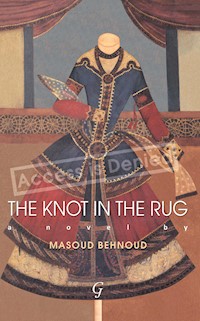
The Knot in the Rug encapsulates the massive upheavals of the first half of twentieth century from a point of view that the English-speaking readership rarely glimpses. The book's heroine, Khanoum, is born in the courts of Persia's Qajar dynasty. The twists and turns in Khanoum's life make for a gripping read, whilst at the same time shedding light on traditional Persian customs of birth, marriage and death, still followed in modern-day Iran. Forced to flee Persia during the Constitutional Revolution of 1906, Khanoum is brought up by her uncle and his immediate family. Her teenage years are marked by her struggles: family tragedy, her horrendous journey through Persia, and her uncertain future. Once in Russia her aunt, a woman of great strength and wisdom, manages to bring some sense of order to their exiled gathering by creating a home akin to what they were accustomed to. However, some years later, the Bolshevik revolution brings another upheaval and they are forced to flee once more; this time to Istanbul. In the fairy tale palaces of the Ottoman Empire Khanoum marries a member of the Ottoman Court. But the newlyweds hardly have time to make plans for their future when they face yet more turmoil; learning of the downfall of the ruling family, they hurriedly escape to France. In Paris with her husband Khanoum at last finds a resting place, but it does not take long before her eventful and tragic destiny once again beckons and she finds herself alone and destitute.
Das E-Book können Sie in Legimi-Apps oder einer beliebigen App lesen, die das folgende Format unterstützen:
Veröffentlichungsjahr: 2012
Ähnliche




















THE KNOT IN THE RUG
Masoud Behnoud
Translated by Sara Phillips
The Knot in the Rug
Published by Garnet Publishing Limited 8 Southern Court South Street Reading RG1 4QS UK
www.garnetpublishing.co.uk
www.twitter.com/Garnetpub
www.facebook.com/Garnetpub
garnetpub.wordpress.com
Copyright © Masoud Behnoud, 2012
Translation copyright © Sara Phillips, 2012
All rights reserved.
No part of this book may be reproduced in any form or by any electronic or mechanical means, including information storage and retrieval systems, without permission in writing from the publisher, except by a reviewer who may quote brief passages in a review.
First Edition
ISBN: 9781859642900
British Library Cataloguing-in-Publication Data A catalogue record for this book is available from the British Library
Typeset by PHi Business Solution Ltd., IndiaJacket design by Haleh Darabi
Printed in Lebanon by International Press: [email protected]
TABLE OF CONTENTS
CHAPTER 1
CHAPTER 2
CHAPTER 3
CHAPTER 4
CHAPTER 5
CHAPTER 6
CHAPTER 7
CHAPTER 8
CHAPTER 9
CHAPTER 10
CHAPTER 11
CHAPTER 12
CHAPTER 13
CHAPTER 14
CHAPTER 15
CHAPTER 16
CHAPTER 17
CHAPTER 18
CHAPTER 19
CHAPTER 20
CHAPTER 21
CHAPTER 22
CHAPTER 23
CHAPTER 24
CHAPTER 25
CHAPTER 26
CHAPTER 27
CHAPTER 28
CHAPTER 29
CHAPTER 30
CHAPTER 31
CHAPTER 32
CHAPTER 33
CHAPTER 34
CHAPTER 35
CHAPTER 36
CHAPTER 37
CHAPTER 38
CHAPTER 39
CHAPTER 40
CHAPTER 41
CHAPTER 42
CHAPTER 43
CHAPTER 44
CHAPTER 45
CHAPTER 46
CHAPTER 47
CHAPTER 48
CHAPTER 49
CHAPTER 50
CHAPTER 51
CHAPTER 52
CHAPTER 53
CHAPTER 54
CHAPTER 55
CHAPTER 56
CHAPTER 57
CHAPTER 58
CHAPTER 59
CHAPTER 60
CHAPTER 61
CHAPTER 62
CHAPTER 63
CHAPTER 64
CHAPTER 65
To Aty, my wife and my best friend
CHAPTER 1
When she opened her eyes under the blanket it was midnight and, as she had for the past four years, she momentarily forgot where she was. As always, the first thing she thought of was Khanoum. Then, as though someone had switched the light on, she asked herself, ‘What’s Nanaz doing now?’ When Nanaz had last come to see her she had wondered why she was so happy.
‘Nanaz, are you looking after Mother?’ she had asked.
Nanaz had burst out laughing.
‘On the contrary, Khanoum’s looking after me!’
She wanted to open her eyes and talk to Narguess, as they always did whenever one of them was feeling low. The thought of tomorrow, however, had made her restless. This had nothing to do with Narguess so she’d better let her sleep.
‘Close your eyes,’ she told herself. She could think better with her eyes shut and she always felt better when lost in thought. It was Mrs Sediqi, actually, who had taught her that one felt liberated when one had one’s eyes closed; she could then take a trip with whomever she liked and to wherever she fancied.
Narguess said, ‘You have an educated and well-mannered soul but mine is unruly. I can’t keep hold of its hand!’
Narguess is truly a slave to her unruly spirit which never ceases to get her into trouble.
‘Are you awake, Narguess?’
She felt Narguess was awake and so wanted to spend this one last night chatting to her.
‘How can you say that? How could I possibly forget you? You, too, will be released one of these days. I hope you haven’t forgotten what Akram said? Well, if you can’t rely on what she says, then I am not to walk free tomorrow either! But, for now, come and rest your head next to mine so that we don’t wake Mrs Izadi up. Let me tame your soul and you can tell me why you have difficulty sleeping. But let’s not talk about those nights, let’s talk about the future. Do you recall the book that said, “Tomorrow’s beautiful because it’s neither like the past nor like anything else that is old”?
‘What? I didn’t hear what you said; I just felt your breath on my ear. Are you crying? Come on, this is my last night and tomorrow I’ll be free to leave and go to Khanoum, and to Nanaz, who can’t wait to see me. Have you already forgotten what you said to me; that you’d even be happy to stay here in my place so that I could go back to Khanoum? So why did you knit that scarf for her? You’ve never seen her before! Didn’t you promise you’d come and stay with us when you walk free? With us, Khanoum, Nanaz and me? Perhaps Akram wasn’t right after all and I shan’t be released tomorrow. Are you listening to me or are you asleep?
‘Listen to me, you ninny! You can give me your restless mind to take with me. I’ll set your diary free as well, but I shan’t take my books and notes. Take them with you when you leave this place. So now, please sing for me …
O little sparrow,
You’ll be a ball when it snows;
You’ll be wet when it rains …
‘When you come we’ll shut ourselves in your room and then we’ll sing freely and out loud, like the other night when you were ranting for no reason. I want Khanoum and Nanaz to hear your voice. Will you promise to read something by Forough1 to them?
… I’ll plant my hands and they’ll grow …
‘Narguess, are you sleeping? Lucky you …’
When she got up the next day, she was busy folding the blanket when she saw Narguess’s face, but it was difficult to tell whether she had heard her the previous night. Everyone began to wake up to Aqdas Khanoum’s loud voice. Akram was also there and, as usual, she was calling them to go to the washrooms. They both looked to see whether they could read anything in her expression that hinted at the release of prisoner number 820. Her eyes met Maryam’s and she beamed. As soon as Maryam had finished washing her face she said, ‘I hope you’re not suddenly going to pounce on Khanoum!’ – something she had repeated over and over again.
She kept to herself for the next half-hour while the other twelve inhabitants of prison cell number 99 were chatting away. Akram nodded, and when Maryam had finished kissing everyone goodbye she took her bag and quickened her pace as she followed Akram to the guard’s room. Akram answered a couple of questions for her. She then signed a bundle of papers and heard a young man’s voice asking her not to ‘remember him for the bad times behind bars’. She then heard Akram’s last words reminding her to help Narguess out of prison as soon as she could.
‘Will you go to Faramarz?’
No, she hadn’t forgotten; Maryam was aware that Faramarz was Akram’s only son who was buried in the martyrs’ corner in the public cemetery.
When they passed through the last exit Akram patted her on the back. They were both tearful. They had not been referring to one another as prisoner and guard for some time now. She managed the remaining formalities without Akram’s help and an hour later the large gates finally opened and Maryam swung one leg over the iron bar surreptitiously separating her from the outside. As she lifted her other foot she was seized with fear; there was daylight and noise on the other side. She was relieved that no one had come to pick her up. She felt so lonely, loneliness far more profound than anything she had ever experienced.
For a moment, she felt that everyone around her was also a fellow prisoner. The cars driving past and the woman carrying a plastic bag took no notice of her as she stepped into their world. Maryam began to walk uphill when she caught sight of the familiar figure of the young man in the tower. Her shoes felt loose but they made her feel good. A man brought his Paykaan to a halt; the most popular car assembled in Iran, the old Hillman Hunter; and she heard the military anthem blaring from its radio, which was duly interrupted by the narrator, who gave a passionate monologue about the ‘Godless’ army under siege by brave Islamic forces. The driver said something Maryam couldn’t hear. She caught sight of a telephone booth and went to the corner shop across the road. After obtaining a coin from the shopkeeper, she started to dial …
She closed her eyes and let ‘Allo, Allo’ travel through her ears. She could vaguely hear a young man talking to the shopkeeper about a couple of air strikes somewhere in mid-town. She was about to pass on the news when her eyes suddenly encountered those of a man who was smiling broadly at her. She put the receiver down and began to walk briskly uphill until she reached the market. There was a memorial ornamental kiosk right outside the mosque, still in Evin, near the notorious prison. The loudspeakers began transmitting the chanting of the verses of the Holy Qur’an when she sensed the smiling man was still following her, but by now she had reached the mosque. She sat on the carpeted floor watching a group of women busy wrapping packs of dates intended for the war front. She was soon so absorbed in helping the women that she didn’t even notice noon arrive. After a while the women stood up to get ready for prayers, but she didn’t move. When lunch was laid out on a cloth over the carpets, someone offered her a bowl of broth. An hour later she was resting her head against a pillar, and soon she was unrecognisable, completely covered in her chador. In the quiet of her cover, she was once again on her own, and her memory could lead her back to New Jersey. There she was, in her graduation gown sitting in the front row, on the lawn. Her mother, Khanoum, looking elegant and distinguished, was chatting to an American gentleman, one of the many parents. She was delighted her mother had managed to come all the way from Iran to attend her graduation despite the complications. Clad in a blue silk dress and a hat, she was a princess who had captivated Nader, her beau, and everyone else. She found herself encountering her mother’s adoring gaze. With a rolled diploma in her hand she was now standing between Khanoum and Nader.
As she leaned against the pillar in the mosque, Maryam suddenly remembered the mosque in New Jersey: she was marrying Nader, and her mother was giving him a pocketwatch, an antique on a gold chain. Then came the necklace; she knew this was her mother’s own wedding memento that she had been keeping safe for such a day. She had seen the same necklace in a picture of a young woman dressed in early nineteenth-century fashion, wearing a hat and holding an umbrella. Soon she remembered Nanaz’s first screams in a New Jersey hospital, the sound of life, and … she fell asleep. They were standing inside the airport, Nanaz and her. She found herself explaining to the little girl.
‘Nana, we’re going to Iran; to Khanoum my love, and to Tehran, city of Revolution, city of “Down with the Shah” and “God is Great, Allah Akbar” shouted from the rooftops.’
There she was, Khanoum, sitting on the veranda listening to her radio, beaming with happiness; those were the days of flowers and tears.
And now she was pleading with her husband.
‘Please come with us Nader! We’ll never see such days again. I know what you’re thinking but it’s not as though I’m mad or vengeful even. We’re not going over just to see the fall; this is not just a fall, Nader, this is history in the making, please come! We shan’t be alone in the house; there’ll be Manssoureh and her family, Ali Akbar and his children, a full and lively house.’
The curfew, the Shah’s escape and the joyful tears of Khanoum, her darling mother; the social nights when Khanoum listened to the radio; the days of demonstrations and the fear of a coup d’état; the siege of the garrisons; Hussein and Hassan, Ali Akbar’s sons, and the weapons; the young people meeting in the basement and planning the next day’s moves; the day happiness burst out; spring in the middle of winter … The victory of the Revolution!
‘I’m sorry Nader, Mother doesn’t wish to come over any more, and we’ll stay here as well. Why not come and join us? Mother’s been waiting for this day for fifty years!’
Maryam suddenly felt short of breath under her chador and she began to sense a sharp pain starting in the back of her head and moving down her spine. She lifted her head so that her eyes were no longer covered with the chador and she could see the ceiling of the mosque and the light pouring through the window onto the pile of donations. She knew she would soon have difficulty breathing.
‘Oh Narguess,’ she sighed, and then her voice petered out; she was unconscious.
An anxious-looking woman went to her, and began to wipe her moist brow with the corner of her scarf and brought a glass up to her mouth.
Maryam managed to hold the glass, and returned the woman’s kindness with a faint smile and then propped herself up.
‘Where am I?’ she asked but it didn’t take her long to remember.
Someone in the crowd said, ‘Give her some halva, she looks so pale!’
The morsel of the sweet paste taken with some flat bread tasted familiar; the flat golden long triangle of bread that Muhammad Ali used to buy every morning.
Picking up the telephone receiver, she said, ‘Nanaz, is that you? I’ll be home soon … don’t say anything to Khanoum.’
‘Where are you?’
‘Not far at all!’
The radio in the car that she managed to hail, as one did when there were no taxis, was playing military anthems. She sat neatly in the backseat, just as she had done four years ago, but going then in the opposite direction; to prison, to Evin.
‘My goodness, you’ve grown so much, Nanaz!’
She then turned to Mr Ali Akbar and said, ‘I owe you a great deal; I’m not sure what would’ve happened without you. Where are the boys, Hussein and Hassan?’ But the man was quiet; she had to find the answers for herself.
She was talking to them, Nanaz and Ali Akbar, in the alleyway. The road was named ‘Hussein’ after the shy one who dropped his gaze when she left, biting his lower lip and kicking the edge of the flowerbed with his boot.
‘I don’t really need a bath, Nanaz.’
But the smell of lavender, her favourite aroma, had filled the air in the bathroom and she could hear Shirley Bassey’s voice seeping through the steam. She spotted a few grey strands when she looked in the mirror, where Nanaz had traced out ‘I NEED U’ in the steam. She suddenly noticed her mother; Khanoum was standing in the doorframe, leaning on the same old walking-stick. She had a brown and beige scarf on her head, just as she did when she was watching her leave through the window.
‘Naughty Khanoum!’
Maryam had never heard anyone refer to her mother in that manner, which made her glare at Nanaz. But then she heard her mother say in return: ‘Go away, you little rascal!’
She went forward into her mother’s outstretched arms and, as she did, the 1623 days’ captivity, Akram and Narguess, were all forgotten. Nanaz was supporting Khanoum’s body from behind, by placing her forehead against her spine; her walking-stick was shaking. Once again they were together, inseparable – and she had yet to find out what had passed between Nanaz and Khanoum in the past four years.
Early on she noticed that her daughter was guarding her mother like some Old Master painting, and she sensed something in their eyes that was sweet, familiar yet strange. She’d never come to feel as close to her mother, but in the days that followed she discovered that in Khanoum’s care Nanaz had grown into a strong young woman. She was no longer an insecure little waif of a girl, but a rock on which one could lean, or a large tree laden with fruit, spreading its wonderful shade in the heat.
Barely three days out but she was already thinking of all the things she had to do. She went to Shiraz to visit her cellmate’s sister and brother, Narguess’s siblings. She also accompanied Akram to the martyrs’ corner in the public cemetery to visit the spot where Faramarz, Akram’s beloved son, was lying. She had also not forgotten to visit another cellmate’s sick, blind mother as well, and …
One evening they were sitting in the basement, a safe haven where her mother had everything she needed. Next to her antique bed was a desk with an old typewriter. There was also a tape recorder that had been brought down from the floor above, as well as a box of tapes. There was another bed nearby where Nanaz slept so that she could attend to her grandmother should she feel unwell during the night. There was also a framed photograph of Nader and herself.
‘You don’t seem to have had such a bad time!’ Maryam had hardly noticed the Shirazi accent she’d picked up.
‘I guess Narguess must be speaking English with a downtown New Jersey accent!’ Nanaz teased. Their laughter filled the room.
‘By the way,’ Maryam said, ‘she’s going to walk free one of these days and you’ll see for yourself!’
And that wasn’t news. Maryam’s daily visits to the public prosecutor and the preparations in the room upstairs were all testament to the imminent arrival of their guest, someone who was going to stay some time.
And so she did. In just under a month, after Khanoum had gone into intensive care, Narguess joined them, and they tried their best not to worry her with their concerns for Khanoum. Once the visit to Shiraz was out of the way, Narguess went to the hospital with them every morning. Khanoum was sleeping peacefully surrounded by tubes and wires. Narguess and Maryam had repeatedly had to pull Nanaz away from the incubator; she would rest her forehead against the walls of the corridors at the hospital and mutter something, as though she was reading a prayer or calling ‘Khanoum’ over and over again.
‘Don’t go, my dear Khanoum!’
Her voice was far more upsetting than hearing someone sob. And she went on, until someone disconnected all the tubes and wires, and covered her grandmother with a white sheet. It was as though she had lingered on just long enough to hand Nanaz over to her own mother.
Nanaz had promised to be quiet and not to disturb the other patients, so she was allowed to follow the head nurse towards the body of her grandmother, lift the sheet, and stare at her peaceful face. She pecked on her forehead and said: ‘I promise you!’
She didn’t weep any more.
* * *
Our story is about Khanoum, the story of a life she had told to no one; a story that she had narrated and Nanaz had recorded during the dark nights when Iraq sent its missiles to Tehran. It was a story that inspired the little girl to believe in the power of the human spirit. She had come to learn that, although encased in a fragile body, humanity could endure pain with the strength of a rock.
Khanoum had told her story in such a way that the little girl had fully understood its magnitude. You, too, are about to hear it in the memory of a woman who was truly a khanoum – a lady. She was never called by any other name, nor was there one that better suited her character.
She is buried under a black slab in the middle of the Emamzadeh Abdullah cemetery in Tehran. Written on the slab is, ‘Khanoum, born 5th April 1900, died 5th December 1986’, and here is the tale just as she narrated it.
CHAPTER 2
I was born in the spring, in a room in the corner of a large mansion in the middle of our estate, in a district named after my father and grandfather.
Yahya, our muezzin, was standing on the roof, chanting the verses of the Qur’an, announcing the time for prayer, when my mother fainted; whether it was from pain or happiness, we’ll never know. The Armenian midwife, who looked after the women in the Qajar court, was busy dealing with the umbilical cord. The physician to the imperial court was having coffee in the adjacent mansion where male guests were received, ready to intervene should there be any complications. But there were none: the delivery was a smooth operation. An hour later, the news of my birth was telegraphed to our embassy in Paris. My father was in Paris at the time, but the telegraph was addressed to the Shah, Shah Baba, my grandfather.
Muzafareddin Shah, my maternal grandfather, was receiving medical treatment at the time while on a state visit to Europe. Later, I learned that on seeing the contents of the telegram he had summoned my father, giving him five imperial coins as tradition dictated, as a token of the happy news, and everyone else was offered pastries. My grandfather was due to receive Gustave Eiffel, when he telegraphed a message to the Imperial Palace in Tehran:
I have just received news of my dear daughter, Princess Monii, giving birth to a little girl – she will be a khanoum – congratulations – I am delighted – we have given Khan five imperials. Seyyed Ahmad, the cleric, recommends a reading of the six verses from Nessah Surah to be whispered in the baby’s ears at dusk, at the time of night prayers, this will be a good omen.
Paris, 1900.
There and then, everyone began to call me Khanoum, and this remained my name. Later, Khanoum was also endorsed on my birth certificate and my travel document. Shah Baba was going to give me a title, but sadly it wasn’t to be.
Before me, my mother had given birth to a boy who only lived for two months. She had no other children after me and so I remained an only child. But I was hardly alone; from very early on I was surrounded by bustle and noise. My nanny had two daughters around the same age as me. She had come to our house as part of Mother’s dowry. Her daughters were a little older than I. Then there were a number of sons and daughters of relations and servants who all lived in the same household. But my principal playmates were princesses, Shah Baba’s other daughters and grandchildren, who were my cousins.
I remember us receiving tuition in one of the rooms in the outer part of the mansion. Our tutor wore a green shawl around his waist and always carried a pointing stick. He sat on a wooden bedframe covered in animal skin. The girls sat on one side of the room and the boys on the other. The girls would then go to a different room to do homework, and also for lunch and prayers. We would then return to the classroom an hour later.
I so wanted to ride but could not understand why boys of my age were allowed to ride horses but I wasn’t. I had to learn how to embroider, cook, and run a household instead. Activities such as riding were considered inappropriate for a girl; this made no sense to me and I was tormented by the desire to do everything considered unsuitable for girls. After school the day was filled with girlish pastimes. Nanny had made various outfits for our homemade dolls. Going to the hammam was one of the highlights of the week. Morvarid, my mother’s black maid, would sing and mimic the others. Sometimes, we took two other maids as well, one of whom, as well as attending to the beauty needs of the female courtiers, would pick up a pan in the hammam to play tunes and mimic the men and the elders. Anvar, one of the maids, was one of the late Nasser al-Din Shah’s, the ‘martyred’ Shah’s siqehs, married under a temporary contract. She mesmerised everyone with her magical voice. Her anecdotes from my grandfather’s harem were quite something.
My first memories go back to the receptions held in the drawing room. When the sun shone through the stained glass of the French windows, it was as though the voices became colourful, and we played with our toys bathed in the glow of the colourful light passing through the stained glass. Somehow I was always the empress in our games, while Nanny’s daughters were my ladies in waiting. Their mother, Nanny, was actually my mother’s companion and, after my mother, the most important person in the house.
Hard as I try, I have very little memory of a ‘father’; Khan everyone called him. He was seldom there yet one always sensed his presence. Morvarid, Mother’s maid, would prepare his bed, and then leave a bowl of water covered with muslin on the shelf. When the temperature soared in summer, this would have a piece of ice jutting out of the muslin. My father had a chamber in the courtyard, which was always filled with intoxicating aromas emanating from the line of ceramic wine jars on one side and jars of pickles and syrup on the other.
We spent hours in the courtyard watching the herbs being spread out to dry in the sun. The servants cracked the shells of fresh walnuts that were delivered from our country estate in Shemeeran and their hands would be stained black for the rest of the year. They would then spread the walnuts on a white sheet and, once dried, they ended up being stored in new sacks or in the stone mill in the courtyard, ready to be ground and used in fessenjan, my father’s favourite winter dish, a stew made with pomegranate purée, ground walnuts and poultry.
Soltan not only minded the larder and the pantry, she also supervised the making of provisions for autumn and winter. When she made tomato purée with stewed tomatoes boiled in large pots over firewood, the acrid smell filled the house. When sour cherries were ripe some were dried and some pitted for use in jam, always with a separate jar kept for Khan. Others were stewed and poured onto large trays to make lavashak, sheets of fruit paste, as a snack for me.
‘Soltan likes spreading it all under the sun,’ Mother always remarked, thinking maybe of winter, when they would be laid on the korsi, the low table which housed a brazier underneath and colourful layers of blankets on top to keep our feet warm. There were plates of halva and sholeh zard, the saffron-infused rice pudding. Pastries were baked the day before Mother’s guests arrived, when the sweet smell of cardamom and saffron filled the air. No one was allowed to climb down the cool, dark staircase leading to the larder without Soltan’s permission; this was where one could find anything from melons and apples to sweets and pastries, all kept in sealed pots.
I remember the winter I was taken ill. I was feverish and couldn’t leave my bed. Shah Baba’s foreign physician came and sat on a chair next to the fireplace in the drawing room and talked to my mother. He spoke Persian with a heavy accent, which would normally make me laugh, but now I hadn’t the strength, though I did remember Anvar the maid’s imitation of his accent when we were in the hammam. He prescribed some bitter powder to be taken on an hourly basis. I also had to take almond oil and other liquids, all of which tasted and smelled foul. There was a pitcher and a pan on the windowsill and, worst of all, there was a colon hydromat behind the curtain.
One night, when I was delirious with fever, my youngest aunt, Nezhat, was at my bedside and told me later that I kept asking a white horse to leap out. I suppose I must have had the image of Nasser al-Din Shah, my great grandfather, on his white horse, emerging from the large picture hanging in the drawing room. The thought of flying made me happy but Mother was in tears and kept fiddling with her rosary while she prayed. Nanny was doing the same. Even Khan walked in with his imposing figure encased in a fur coat and shining boots.
‘You’ll begin to perspire tomorrow my love, and feel better,’ he said and then began to dish out orders to the servants.
I can’t recall whether he actually touched my forehead or whether he demanded that the senior court physician be called in the next day if I didn’t begin to perspire. All I could see through my eyelids was that it was snowing outside and the sky looked red, and the anxious shadows kept passing through via the veranda.
In the morning I woke to the sound of the snow being shovelled away to clear a path through the garden. The bitter powder prescribed by the doctor was clearly taking effect, or perhaps it was thanks to Soltan’s syrup or even my mother’s prayers. Every time I opened my eyes I saw her wipe her tears. By noon, the sun had spread across the snow. The frostbitten sparrows were picking the seeds Nanny had sprinkled in the garden and I could hear the pigeons on the mansard roof. I was beginning to feel better but I still had to wait a few more days before I could go onto the terrace and sit in the sun, well wrapped up in a blanket, hat and woollen scarf. They eventually took away the bedding and left the windows and doors open to get rid of the smell of fever and illness. My cousins were playing on the frozen surface of the pool, and seeing my smile my mother turned to heaven as a sign of gratitude. Nanny was burning espand, the seeds of wild rue that was supposed to turn away the evil eye, and fanning the fumes into my face. Soltan had brought eggs in for the same purpose; she mentioned the names of relatives and acquaintances and drew a cross on the egg each time until finally the egg cracked on one of the ‘evil’ crosses. I wasn’t told to whom the evil eyes belonged until later that evening, when I finally discovered that they belonged to one of my aunts! I was sure that it could not have been Nezhat: she was my dearest and youngest aunt and I loved her. My older aunts, however, though good to my mother and me, could not stand each other, mainly because of their husbands. One of them was married to Farmanfarma, the most prominent, prosperous nobleman of our times. The other was married to Eynud-Dowleh, Shah Baba’s dearest son-in-law. At the time of my illness, when I was six years old, Eyn was the Vizier. Nanny believed he was the right-hand minister and Farmanfarma the left-hand one, but Soltan referred to them as the sun minister and moon minister! My mother, though, regarded them with respect and due courtesy, and always referred to them as Mr So-and-so. Did she, perhaps, lament that her own husband was not of the same standing?
The day after I finally left my sickbed, my eldest aunt came to pay me a visit and the household was, as usual, at her service. At lunchtime my uncle made quite an entrance in our drawing room before proceeding towards the men’s quarter. As he stood in the doorway holding his walking-stick he resembled a statue. He took one look at me and said something in Turkish to Nanny, which I reckoned was about the sickly-looking girl who was now thinner than usual. He quite fancied having me as his future daughter-in-law.
My other aunt, Farmanfarma’s wife, had four sons. She always looked melancholy and I once overheard her consoling my mother with the thought that perhaps it was fortuitous that Khan was not involved in the running of the country as politics was a dodgy affair.
‘One group has the upper hand today, and another the next.’
Why my eldest aunt always looked depressed only the adults knew and the truth was never disclosed to the younger members of the family. I had another aunt, Fakhr, who was more or less the same age as my mother. In contrast to Mother’s quiet and dependable nature, she was a resourceful woman with good social skills and, in contrast to my father’s pretentious attitude, her husband Mr Amin was meek and under her thumb.
I must have been six when Nanny’s daughter’s engagement to one of my father’s foremen was arranged. This was celebrated in our home and Mother presented the future bride and groom with gifts. From then on the bride changed and did not participate in our games as often. She would write to her fiancé and he would reply. She was only one year older than I, which meant I, too, had to become attached to someone pretty soon, which made me anxious: I knew there was still much I needed to learn. One name making the rounds of the ladies’ social events was that of my cousin Firouz, Farmanfarma’s son. But all that came to an abrupt end when the Shah sent Farmanfarma into exile and my aunt and their children accompanied him to Karbala in Iraq. The Shah was said to be annoyed with Farmanfarma but Mother sympathised with his wife. I understood for the first time that she was the granddaughter of Taqi, the Vizier everyone remembered with great respect. It was said that at one time he had been the most important man in the country. He was determined to move Iran forward and turn it into a more European administration, but Nasser al-Din Shah ordered his murder; at least that was what our teacher believed. The princesses, however, did not have a good word to say about the Vizier and, when my aunt was not around, they said Taqi was an assistant cook turned premier who betrayed his benefactor and jolly well deserved his sentence.
Nezhat seemed more attuned to what went on behind the scenes and thus advised me not to listen to their nonsense: Taqi, she believed, was a victim of the collaboration between the British and the Shah’s mother. Taqi’s daughter never had a good word to say about her uncle and for this reason everyone gave him the cold shoulder. This was the root of Nanny’s melancholy, Taqi’s great granddaughter.
‘What a destiny! Ever since they murdered the Vizier we haven’t had a moment’s peace; the British at work again – my grandmother didn’t live in peace, nor did my mother,’ she complained to my mother when she discovered that her husband, Farmanfarma, was being sent to Iraq. Firouz’s name never came up again.
Every now and then another name would come up, but I began to discover that Mother was not entirely happy to part with me. My father never seemed to interfere. Consequently, when Nezhat mockingly revealed that Mother and Malakeh Jahan, the wife of the heir to the throne, had finalised the arrangements for my forthcoming engagement to her eldest son, Etezad, I did not believe her. Years afterwards though I understood that Mother didn’t want the match. I was not aware of her reasons but later I learned that Etezad was a child from a siqeh marriage rather than an official wife, and that she preferred Ahmad, the eldest son, who would be heir to the throne and eventually the Shah.
Ahmad was a couple of years older than me and I had often seen him in our games, particularly when Mother and I went to Tabriz, where we would spend two months at their home. Ahmad was overweight and lazy but kind and the girls often outsmarted him. The doctors had cautioned him about food and advised physical activities yet everyone took pleasure and pride in feeding him. I felt my mother, too, treated him differently because Ahmad was particularly well mannered. My mother was his aunt on his father’s side, and as a child I never knew how much my mother’s sisters resented Muhammad Ali Mirza, the crown prince. Malakeh Jahan, his wife, felt closer and warmer towards my mother than all the other princesses. The two cousins were related through their fathers and were inseparable. Little did I know that my destiny would come to depend on the two women’s profound affection for one another.
CHAPTER 3
He was always unwell and out of kilter, and preferred to spend most of his time with the children. Despite his thick moustache and formal attire, he enjoyed spending hours playing with us and didn’t take much notice of the adults. This didn’t please the grown-ups at all but he took delight in seeing them line up with their arms folded spending hours standing to attention in the ground outside or inside the palace watching us playing.
My grandfather forgot his troubles when he played with us but the doctors had to interrupt our games from time to time. We were proud to see the grown-ups bow to Shah Baba, pay their respects and take his orders. One day, my dress was spoilt during one of our games; the very dress he had brought me from one of his trips abroad. Upset by my tears, he ordered one of the chests to be brought to him. The large wooden chest was filled with children’s clothes and foreign dolls. He sat next to us, pulled out whatever was inside and distributed the contents among the children. He gave me a lovely dress which was embroidered in red on the chest, much prettier than my own dress. Then he ordered a folding screen to be brought as well so that he could help me change.
I liked him, not so much as my grandfather but as one of my playmates. There were seven or eight princesses but he seemed to pay more attention to Nezhat and me. Nezhat was the result of one of my grandfather’s unions and we were both the apples of his eye. Years later I discovered that there was a lot happening in the country while we were at play. A constitutional revolution was upon us and when I understood how significant this was I resented his carelessness. As a child, however, the happiest times were when we played at various palaces and returned home at sunset filled with joy and with lots of presents. I would be quietly given a pair of earrings here, a necklace or ring there. These I would pass to my mother so that she could keep them in a safe place.
‘May God give him prolonged health,’ she would exclaim and then ask me whether I had kissed his hands in gratitude. I would then rush to show my dolls and new dress to everyone else, all of whom, except my father, shared my happiness.
My father belonged to an old aristocratic family and his father and fathers before him had all been given titles of some sort as a reward for their services. He commanded a great deal of power and respect. The Shah’s other sons-in-law such as Eyne and Farmanfarma were ministers, governors or prime ministers, but my father seemed to spend his days hunting and gambling. He never hesitated to use abusive language directed at the Shah, which upset Mother but she couldn’t do much as she was effectively a respectable prisoner in her own home. My father didn’t dare acquire a second wife or take mistresses – or so it seemed – and the atmosphere in our home was melancholy and quiet. When he travelled, my mother would open the doors to lavish ladies’ lunches and dinners to mark different occasions, be it religious festivals or anniversaries, and our home was filled with joy.
As far as I can remember I resented my father because I could see that he made Mother suffer; her jewellery and possessions were periodically sold to pay his heavy gambling debts. She always gave in to him to avoid public embarrassment. Rumour had it that my paternal grandfather had been even wealthier than the Shah but that my father and his brothers had managed to squander his wealth. He died before I was born and my father was abroad at the time and took months to return to Tehran. He even threw a lovely fluffy cat Shah Baba had given me into the pool once, while cursing his name as usual. I felt I was dying of anguish. I cursed him, and Mother consoled me.
My memories of childhood are filled with Mother anxiously watching over the gardens from behind the French windows. Whenever Father was in she was uneasy, and everyone was aware of it. Dressed in black and looking smart, he would usually step out of his quarters into the gardens around noon. His moustache was thin and twirled, and he always managed to find an excuse to look cross. He never missed an opportunity to use his beautifully made walking-stick to hit Heidar Beig, who was in charge of the coachhouse, on the head, or point in the direction of the rest of the household and look for faults and errors everywhere. As soon as he climbed up the stairs to come to the sitting room, where Mother would be sat leaning against a huge carpet-covered cushion, the servants would immediately disappear, and I would be kept busy in another room unless he called for me.
I can remember in detail the sitting room where my mother ruled. In the evening Morvarid, with her black face framed in the white scarf pinned under her chin, would prepare Mother’s bedding in the middle of the room. The bedding consisted of a large mattress and a thick blanket decorated with pink satin. My father led his own life in his quarters: he would arrive late or bring friends with him, in which case one heard the sound of music and raucous laughter well into the night. Mother would read a book at such times, or keep herself busy with embroidery. Nanny occasionally stayed up late and kept her company. I would sit on the edge of her bed some nights and watch her. She held a hand mirror with the picture of a winged angel on the back while Morvarid undid her plaits, combed her hair and let it rest on her shoulders while she admired the beauty of the princess. I think no one had ever seen my mother with her glossy black hair loose except Morvarid, me and, at times, Nanny. She always wore a white headscarf tied under her chin and fastened with a pearl-studded pin. When she went outside she wore a chaqchour, a chador tied at the waist, and a veil so that her face was not exposed. When she was at the palace, she kept only her veil, but in the privacy of her quarters she donned a white chador printed with tiny flowers. The white of her chador was striking and smelt of jasmine, but her prayer chador was plain white.
Her nightgown was trimmed with lace and fine pink and mauve embroidered butterflies were sewn to the shoulders and chest. When her hair was combed, she resembled the angel on her hand mirror, but to me she was the beautiful angel. Morvarid would dip the corner of a muslin cloth in a bowl filled with milk to remove her makeup.
I was content as I lay on my tummy by my mother’s bed with my hands under my chin and watched both women’s movements. Once the makeup was removed Mother’s fair complexion was exposed. The small muslin handkerchiefs soiled by makeup each night were lined up on the laundry line the next morning. By the time Morvarid had finished her task, a few dark spots floated on the surface of the milk, like a constellation of eyes. And when Mother called Nanny to take me to my bed in the east wing of the building, I pretended I was asleep so that I could stay with her, and I did occasionally get lucky when Father travelled. But as a rule I would share a room with Nanny, who would wake up at my every move. The best nights were those when Nezhat came to our home and we would both sleep in the same bed, chatting until sleep caught up with one of us. Four years older than me, with fair hair and hazel eyes, my youngest aunt was my childhood friend.
On one rare occasion that I slept in Mother’s room, I suddenly woke in the middle of the night in such pain that I screamed: what had happened was that my father had fallen asleep in the middle of the bed and his huge, heavy body was resting entirely on my leg. I was about to cry when Mother pressed me against her chest and kept rubbing my leg. Once she thought I was asleep again, she tried to undo the buttons of his uniform and remove his boots, with great difficulty. He snored away, and with one of the lights left on I could see Mother folding my father’s clothes and putting them on the chest. The pungent smell in the room was only too familiar; although very young, I knew the smell came from the ceramic jars placed side by side in the courtyard and I had seen the servants fill the glass jugs with their scarlet liquid and take them to his guests. I smelt the same thing coming from the funny-looking fat bottles sitting in the cupboard in the sitting room.
Whatever went on during the night, nothing could be read from Mother’s face; she would peacefully draw her prayers to a close and then sit down to breakfast while overseeing the tray containing his breakfast, which was taken to him, often towards noon. While I ate, Mother would talk to the servants about their duties for the day, which also helped me find out about our own plans: whether we were supposed to have guests or go to the palace; whether I was to play with my friends or be taught by my tutor.
Despite the passage of seventy or eighty years, pain and sickness creep over me when I remember the night Father collapsed on my leg. Mother rubbed the bruise and put her lips on it. She was miserable: the sad princess whom everyone envied. She, however, never uttered a word and never shed a tear until the day we went to see Shah Baba one last time.
CHAPTER 4
I had not appreciated how unwell my grandfather was until I saw him lying under the korsi, keeping warm. The foreign court physician, with his upturned moustache and a kolah,2 held his hand while kneeling by his side. Mother was the first to go to his room but she emerged tearfully.
‘Shah Baba’s unwell; go in and kiss his hands.’
I knew how to behave towards a sick old man and so did Nezhat, but he never actually allowed our lips to touch his hands; instead, he raised my little hands and kissed the palms.
‘Nezhat-ol-Saltaneh?’ he asked, using her full title, and Nezhat went forward. He then murmured, ‘Have you, my beloved Khanoum, come to say goodbye as well?’ and he burst into tears.
I put my arms around him. I could not believe how old my playmate suddenly looked. I could smell some bitter solution about him and can still hear his gentle Turkish voice in my ears.
‘Pray for Shah Baba, I am dying.’
I didn’t know what dying was but clearly it was a bad thing. The air in the room felt heavy. When the physician separated Nezhat and me from him, I began to realise how feverish his body felt. Mother was standing in the corner of the room wiping her tears with her handkerchief. As Nezhat and I went to cling to her we heard the king’s faint voice while pointing towards a dwarf servant who was wearing a red kolah. A box was brought out and Shah Baba turned its tiny key with his eyes closed and the box opened. He was feeling his way and searched for something until he finally found what he wanted and, with the object still buried in his fist, he pointed to my mother. Looking like a crow in her black chaqchour, Mother reached for her father. I then saw his shaking hand press something into hers. Her silent weeping affected both Nezhat and me. The physician nodded towards the two maids, who separated Mother from the korsi with difficulty and helped her to the door.
The drawn curtains in the carriage driving us away from the palace created a dark and gloomy atmosphere. This carriage belonged to the king’s mother with whom Nezhat was living at the time. On the way back, Nezhat and I clung to Mother, who wept quietly while stroking our heads. I felt fortunate that my little aunt was joining us in that cold house where Mother’s distress filled the air; we could seek refuge in each other’s company.
From then on, Mother did not take me with her to see Shah Baba and every time she returned she seemed more anxious. I saw her pray for long periods of time and make vows. After prayers, she sometimes covered her face with her chador and we could see her shoulders shake. But I didn’t weep any more; I was somehow certain Mother’s prayers were going to make a difference and that my grandfather would soon recover. This situation lasted about a month.
I went to see my grandfather once again the following week when the whole city was illuminated with fairy lights. He was still in the same state. Later that evening, when we went to see Nezhat at her home, I saw a banner erected in the little bazaar near the water fountain but there was no sign of jubilation in our homes: the adults feared something that we could not comprehend. Nezhat explained to me that Prince Eyne, who had been a guest in their house the other day, had hit someone’s head with his walking-stick when the servants were offering him pastries. The servants were saying that His Majesty had signed a decree to set up a court of justice, an idea the courtiers did not like. My father, too, had forbidden the mention of ‘constitution’ and ‘justice’ in our household. Then I further heard that the Vizier had lost his position when the clergy and the people demanded his resignation. Rumour had it that the prince was involved in a number of murders, and the clergy cursed him when they preached.
Nezhat, the girls of our age and I never paid any attention to what was happening around us. Nezhat took piano and French lessons from Madame Hakim. I also had to do homework or embroidery. There was a heavy snowfall that winter and, despite the gloomy atmosphere and the fear outside our home, we were happy with our lives. But it wasn’t long before the day Mother and the princesses had so feared finally arrived.
Father rushed home one afternoon and disappeared into his quarters. A few minutes later he sent for Mother. As this was rather odd all the servants began to eavesdrop, our lesson stopped and Nassir, one of the servants, kept hovering around nearby with his watering can, which he kept refilling from the pool. I was anxious as we’d kept hearing that the Shah was so unwell that the foreign and local physicians were covering their nostrils with their handkerchiefs because of the awful smell in the Diamond Hall and the Holy Qur’an was recited at his bedside. News had been flowing in the whole week and everyone was praying. Yet Father’s hurried return, followed by Mother’s summons, made everyone curious; everyone knew that Father had brought ominous news of the king.
When Mother finally emerged she seemed to have aged in that short period. My aunt rushed to hold her arm and Father climbed down the steps. Clad in military uniform, his sash and sword made him look taller than ever. In contrast to Mother, who seemed to be withering away, he went towards the pool with an air of jubilation; his riding boots seemed to gleam brighter than ever. He summoned Nassir, who promptly dropped the watering can and hurried to the poolside. Servants suddenly emerged from every corner and went towards him by the pool bowing. I saw some of them burst into tears on my father’s first words but they were quickly silenced by his rage. He then began to give his orders. In the end, everyone bowed and some stepped back, still bowing, until eventually everyone scattered. He paced up and down for a while and then rushed to the coachhouse.
Having seen my father from a distance, I rushed to Mother’s quarters, together with my cousins. Mother was sitting in the middle, beating her head. Her headscarf had slipped down and she was pulling at her hair, whereupon all of a sudden everyone started wailing. My aunt started to sing a mournful serenade in Turkish and women started to beat their faces and hands, as one does at times of mourning.
So Shah Baba was dead. Black garments were taken out of the wardrobes and the mourning period had officially begun. Mother went to sit at the top end of the room and the other female members of the family and the neighbouring princesses came pouring in. Every new arrival made Mother burst into tears, sobbing; she had become an orphan. I was dressed in black, too, and Mother would turn in my direction from time to time: ‘Finally lost your Shah Baba, haven’t you my love?’
An hour later, the Shah’s mother sent for us to go to her palace. I could see the Cossacks dotting the roads through the drawn curtains of the carriage. The shopkeepers had hung something black outside their shops as a sign of mourning. Some shops had even closed for the day. I was sitting next to Nezhat. She had already lost her mother and was now fatherless as well.
The king’s mother, seated at the far end of the room, could barely move when we approached to kiss her hand. I thought to myself, if this woman passes away as well, Nezhat is going to be left with no one in the world, but she seemed to have read my mind. According to the Shah’s will, she was to be brought up under my mother’s guardianship. The air was awash with the sound of the Qur’an and wailing. The two of us were pondering a destiny, the painful depth of which was yet to unravel. Nezhat’s Georgian nanny offered everyone sherbet and peppermint drinks. The sweet aroma of halva wafted through the palace.
The next day we were taken to Tekyeh Dowlat.3 Shah Baba’s body had been placed in an ebony coffin which rested on a marble mantel. Save for a few clerics, and those reciting the Quran, as well as some boys dressed in black who were beating their chests, the only other people permitted in the Tekyeh were the female courtiers. A large picture of the Shah had been placed above the coffin. I felt my crowned playmate was asking me to go and play with him; he was looking into my eyes and his moustache seemed thicker than ever.
Everyone was sobbing, but Nezhat said they were really weeping for themselves. Later that evening I asked her whether we were crying for ourselves as well, which made her smile and say, ‘No, we must …’ but she did not complete her sentence. I was young for my age, too young for what I’d been about to hear, but she was older than her years, as I came to discover later on.
CHAPTER 5
Zaynab, one of the maids, had told us a great deal about Father’s quarters on the outer periphery of our home where he received guests and held social gatherings. She had to clean and dust the quarters under his housekeeper’s watchful eyes. She would then come back to us with her stories and the tales kept us entertained in the winter evenings. Like everyone else, I couldn’t wait to step inside what stood there like a locked fortress where only my father’s male servants were granted entry. According to Nezhat, Eyne and Farmanfarma were received in the drawing room and even they were never ushered into the forbidden side of the building.
There was, however, a sudden change, and Zaynab was given other duties since Mother did not care for gossip. She gave the task of cleaning the mysterious rooms to Soltan, her own maid, who was dumb and who would certainly be good at keeping secrets! Our curiosity, though, had already been aroused and we couldn’t wait to see what went on inside. Nezhat was the only person who showed no interest in gossip and generally did not talk much; she objected to idle chatter. Her gracious and haughty manner brought respect to that thirteen-year-old, golden-haired and hazel-eyed aunt of mine. Not only the servants, but even the tutors and the princesses, who were a little older, felt obliged to watch what they said in her presence. Nezhat’s demeanour endeared her to Mother and she wanted her to be my role model. But I already felt great affection for Nezhat and wished, one day, to be able to speak to Madame, our tutor, in French, read books in French and play the piano. When Shah Baba and his mother were alive this was possible, but Shah Baba’s death changed everything.
When Shah Baba’s body was about to be taken to Karbala in Iraq, Mother, Nezhat and I, dressed in black and looking tearful, were taken to see everything from a distance. Having lost their father, Mother and Nezhat sobbed, but I had lost a very kind playmate whose presence I felt everywhere in my carefree childhood; the old man was the epitome of affection and kindness. Father escorted the hearse to Karbala, and in his absence Mother felt free to honour the mourning ritual with the rest of the imperial family.
The arrival of the heir to the throne, now Shah, and his family and entourage, meant that certain positions changed hands. This became the subject of endless gossip. Not all Shah Baba’s daughters were as fortunate as Mother in having their own homes, and not all the youngsters led Nezhat’s life in private estates with servants. Their carefree days were over and they were anxious about their future. The welfare of these women became Mother’s main preoccupation for some time to come. Every time she went to see the new Shah and his wife, Malakeh Jahan, the future of some of the wives and daughters was sorted out. Nezhat and I were completely removed from the troubles, but a few weeks after Shah Baba’s death we came to sense a new turn in our lives.




