


Erhalten Sie Zugang zu diesem und mehr als 300000 Büchern ab EUR 5,99 monatlich.
- Herausgeber: Notting Hill Editions
- Kategorie: Poesie und Drama
- Sprache: Englisch
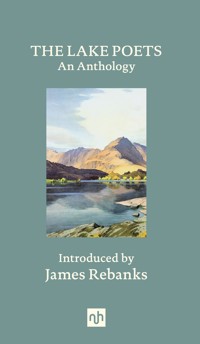
'These poems put the Lake District at the heart of the English literary imagination.' James Rebanks William Wordsworth, Dorothy Wordsworth, Samuel Taylor Coleridge, Robert Southey and Charles Lamb – the English 'lake poets' – were famously inspired by the landscape of the English Lake District in the first half of the nineteenth century. This beautifully produced anthology of their work includes favourites such as 'I Wander'd Lonely as a Cloud' and 'Kubla Khan,' as well as extracts from letters and journals. Introduced by James Rebanks, who grew up in the region, it is the perfect companion for visitors to the Lakes and a delightful gift for poetry lovers.
Sie lesen das E-Book in den Legimi-Apps auf:
Seitenzahl: 146
Veröffentlichungsjahr: 2025
Das E-Book (TTS) können Sie hören im Abo „Legimi Premium” in Legimi-Apps auf:
Ähnliche









i
Notting Hill Editions is an independent British publisher. The company was founded by Tom Kremer (1930–2017), champion of innovation and the man responsible for popularising the Rubik’s Cube.
After a successful business career in toy invention Tom decided, at the age of eighty, to fulfil his passion for literature. In a fast-moving digital world Tom’s aim was to revive the art of the essay, and to create exceptionally beautiful books that would be lingered over and cherished.
Hailed as ‘the shape of things to come’, the family-run press brings to print the most surprising thinkers of past and present. In an era of information-overload, these collectible pocket-size books distil ideas that linger in the mind. ii
iii
THE LAKE POETS
An Anthology
–
Introduced by
James Rebanks
v
There is one cottage in our dale,
In naught distinguished from the rest,
Save by a tuft of flourishing trees,
The shelter of that little nest.
The public road through Grasmere Vale
Winds close beside that cottage small,
And there ’tis hidden by the trees
That overhang the orchard wall.
You lose it there – its serpent line
Is lost in that close household grove;
A moment lost – and then it mounts
The craggy hills above.
– ‘A Sketch’ by Dorothy Wordsworth, c.1800–1803 vi
Contents
xiJAMES REBANKS
– Introduction –
Thirty years after William Wordsworth died, the Reverend Hardwicke Drummond Rawnsley walked around Grasmere chatting to the locals in search of memories of the great poet. To a late nineteenth-century man of letters, Rawnsley, this must have seemed a rich seam to hack into because Wordsworth had by then been lionised as a giant of English poetry for several decades. So, who better to speak to about his legacy than the local working people who had sometimes featured in the poems?
There were a couple of problems with the endeavour: the locals had to be over forty years old to have overlapped, even in their childhood, with the elderly Wordsworth, and they had to have known who he was. Comically, Rawnsley struggled to find any memories of Wordsworth and his friends. It became almost funny because barely anyone he met seemed to give a damn about the greatest of the ‘lake poets’. Rawnsley began to sense that there were two cultures in the Lake District, that of the locals, and that of the poets, and latterly their readers and scholars beyond the fells, and, in turn, of the visitors they inspired. These two cultures seemed to exist in parallel, but to be barely aware of each other. xii
Rawnsley speculated that as Wordsworth became a man of some importance he had stopped mingling much with shepherds and blacksmiths, and the rural people who had peopled his youth and his memories. He never went in their homes, or to the places where they worked, and only rarely talked to them. The few remembered conversations were of an oddball wandering about with his sister in tow, and what he’d said to the locals had seemed strange. He’d said they shouldn’t white-wash their houses or that they had built their chimney in the wrong style. The people of Grasmere, it seems, didn’t care much for Wordsworth, his writing, or his national fame.
I grew up in such a Lake District farming family, from a valley not far from those that Wordsworth wrote about. My dad would groan every bank holiday at the bad drivers on the roundabouts at Penrith as he went between our flocks of sheep and herds of cattle, and would ask rhetorically, ‘WhoinGod’sname encouraged all these idiots to come and clog upourroads?’
I never heard the great poets’ names – Wordsworth, Coleridge, Southey or Lamb – come from anyone’s mouth, other than at school. I wondered what the fuss was about, these ‘great dead white men’ who pondered on clouds and daffodils, and mountain walks, and other chocolate-box things that no one I knew ever spoke of. I was, of course, xiiidetermined to dislike them, these men who had somehow defined ‘our’ landscape for others.
As a young writer I wanted to seize my dad’s frustration and run with it, tearing up the eighteenth- and nineteenth-century ‘discovery of the Lake District’ narrative. I’d tell everyone that this was the kind of ‘cultural imperialism’ that posh white people could no longer get away with anywhere else. I saw no reason why it should go unchallenged in our landscape. And I was in my thirties before I paid enough attention to their work to begin to see that I was not being entirely fair and that they represented a complex bundle of legacies, some of which benefitted and shaped my world and my family.
We tend to sift through literature for the age we live in, raiding it quite mercilessly for the bits we want, that comfort or speak to us, and ignore the rest. In the age of growing affluence, post World War II, with many families getting cars and paid holidays for the first time, we took the elements we wanted from the lake poets about being in nature, of escaping to the hills, and feeling it deeply like it was there for us. And we found a sense of ownership in Wordsworth’s claim that the Lake District should belong to everyone with a heart to feel and eyes to see it. Millions of us could cultivate the right sensibility, owning whole landscapes simply by looking down on these valleys from the mountains and loving what we saw. Romanticism fed this. We xivcould all be like Wordsworth and his friends.
My mum and her family made the trek up the M6 in their first car, in the 1960s, to enjoy this hard-won freedom, revelling in things that had been denied previous generations of her cotton-mill worker, often impoverished, undersized, Lancashire family. The freedom of the Romantics was a precious gift for them, an escape of the mind and the body from grimmer versions of the north. People like my mother’s family wanted to walk across the fells, rest by the lake shore, or row a boat beneath the very same crags the young Wordsworth had. And they got an even more pared-back set of guides from Alfred Wainwright that cut the locals almost entirely out of the story in favour of the landscape that was now theirs, first as a National Park and later as a UNESCO World Heritage Site. I am a product of this Romantic culture too. Not just as a scribbler of words, but biologically. When my mum left home as a teenager, she came to work for the Outward Bound Trust in the Lakes, and then met my dad.
These poems have a complicated legacy – a tangle of threads, some good, some bad, some hard to judge. They taught the educated English (or perhaps the reading English) how to ‘love nature’, and shelves full of books about the same subject now attest to that. Though I’m not sure they taught the locals how to love their place; that seems a claim too far for me. They profoundly changed the way many people xvthought about beauty, not least our most rugged landscapes. They put the Lake District at the heart of the English literary imagination, turning it from an impoverished place associated with backwardness into our most cherished community. They also taught us what to do with our leisure time: no local ever walked fells while daydreaming, for leisure, in the deeper past. They also changed how we thought about childhood, as a time of innocence and formation before we are corrupted and numbed. And thank goodness Dororthy Wordsworth, in recent decades, has been rescued from being a footnote to her brother and is now seen as a writer of note, in addition to being a vital part of that friendship group and what they created. She now shines, with her own sensibility, judgment and vision.
By the time I was a kid in the 1980s, the romantic vision of the Lakes had been absorbed almost entirely into how British people (and many others around the globe) viewed landscapes. I sensed this romantic culture as a super-powerful thing when I was young, because it was.
A summer working in an office in London, as the century turned, killed off my last irritation about other people needing these things from our landscape. I soon wanted my own romantic escape back to the north after a few weeks of staring through glass and at concrete. I went home and began to read the lake poets properly for the first time, and xvibooks about them, and I found they had written about way more than daffodils, clouds and feelings. There had been a forgetting in the twentieth century about other themes of their work. The best poems came from their youthful radicalism meeting the hard-bitten realities of the north.
The poems and other writings are full of what can only be described as political beliefs, and radical ones for that time. They were writing against an increasingly industrial society, in which political power was held by the rich, landed and mercantile class, who often only served their own interests. They wrote about social injustices like extreme poverty, with poems full of references to beggars and other rural people who had fallen on hard times. We are left in no doubt that this clashes with any sense of social justice. In that respect they would prepare the way for more radical politics that led to the welfare state after World War II. To be intelligent and English was to see poverty, in the midst of a wealthy country, and feel outrage.
When these friends first came together it was against the backdrop of revolution in France and persecution of dissent by the nervous establishment of Britain. This group of youthful radicals attracted the attention of the authorities, who were aware of Wordsworth’s time in revolutionary France. These were the punks of their day, daring to say and do things that made others uneasy. They came together xviilike teenagers creating a modern band. William and Dorothy, Coleridge and Southey, all a bit broke, unemployed, and yet strangely confident that they had something to say that might matter, whilst being comfortably ensconced in other people’s houses. They hung out alternating between moments of creation and youthful boredom. And from those conditions came their brilliance. They found a way to be radical in the most rural of places, Somerset and the Lake District.
We don’t think of rural places and romantic poetry as being radical, but we should. And we need, perhaps, to read these poems with that tingle of excitement of knowing they once upset stuffy old people, who were scared of the change these writers threatened both on the page and in the world around them. The preface to Wordsworth and Coleridge’s LyricalBalladslay down some beliefs that changed the course of literature: that ordinary life was a vital subject for poetry; that everyday language was appropriate for poets; that feelings were the stuff of poetry more than action or plot and that such feelings could be sought and found in places of tranquillity. It was a break with what came before, and the beginning of processes that are still unfolding to this day. I have learnt to be proud that this happened over the hills from me, a few short miles away.
These fells and valleys are not a tame place that exists to serve and soothe – they are their own place, xviiiwith their own communities and their own values. This place I call home has again and again stood against what was being promoted by southern Britain, or the industrial north. And we need to push back again, because we live in an age of ecological collapse, climate change and the accumulation of wealth and power that would make anyone before this age gasp – a love of nature, or a questioning about how we live in it, are not peripheral issues: they are amongst the biggest issues we must now grapple with. Our effect on the planet is now so great, everywhere, and so all affecting that we have created a new epoch – the ‘anthropocene’. We, in wealthy countries, now consume several times more resources per person than the planet can sustain, if everyone else did the same. An age in which billionaires become ever richer and more powerful, expanding their power and domination out in to space itself, and into our very bodies with AI. An age in which new industrial technologies threaten to overtake and overpower us, or, at the very least, demand energy and other resources on a scale no one has ever imagined. To pay attention to nature, to love it, and to think deeply about how we must live, is not the stuff of teenage daydreams – they are the great subjects of our age. I believe that we, in ‘backwards’ places, at the edge of things, often retain older values and ways of seeing. The edge is the place from which resistance is mounted. If that’s xiximprobable, remind yourself that every National Park, every protected piece of landscape on earth, owes a little something to these writers. They were among the first to dream that such a kind of ‘ownership’ was possible.
The best lines in the poems, for me, are those that give us glimpses of the people of the Lake District dales. People who were, too long, outside the pages of literature. The glimpses are sometimes frustrating, and of their time, but they are also exciting because a new way of seeing is being born. The scholars call it ‘human ecology’ – the study of traditional human communities as an interconnected part of their ecosystems.
If we are to escape our worst flaws, it will be by learning to live well in places again, with some humility. We need to think about that a lot more than we have done so far, looking for lessons from older ways of life that consumed less and got more of what sustained them, spiritually and culturally, from their natural surroundings. If we are to fight back to try and change the dominant narrative of our age then we must listen to the earth around us and see it, and our work in it, with clarity. This is what it means to be ‘romantic’.
When Wordsworth wrote his GuidetotheLakes, in 1810, he described the valleys he knew as a ‘perfect republic of shepherds and agriculturalists’. In his eyes, it was a community that had shaped xxa landscape, and had been shaped by it in turn. A people with attributes and values he admired, a model, with less hierarchy of wealth and class, for another kind of England. I believe something similar. The answers to our broken and corrupted age won’t come from the centre, from the rich and powerful, or from business-as-usual, but they might come from the places and people at the edge, off the beaten track, from those least corrupted by our vices, and from our listening to them. We need the spirit in these poems, and a new even bolder version of it for our own age.
WILLIAM WORDSWORTH
(1770–1850)
O




