


7,00 €
Mehr erfahren.
- Herausgeber: Garnet Publishing
- Kategorie: Gesellschafts- und Liebesromane
- Sprache: Englisch
Youssef, Vaqar's eldest son, died in the same house he was born in; the very house that became his after his father's murder. No one looked into his father's murder, and no one looked into Youssef's death either, which was perhaps for the best. The saga of Vaqar and his son had drawn to a close with the second murder. The saga was quite familiar to the family elders but they wouldn't recount it to their children; they wouldn't even talk about it with each other. It was a secret, a secret that had been hushed up to protect the family's good name. But discovery of the wedding invitation cards and those letters had confused everyone. No one could believe that Youssef had kept the invites for a wedding that had never taken place or the letters from a young girl now long forgotten. That young girl was Rana, who now, many years later, is struggling with dementia while she tries with all her might to hold on to the memory of Youssef, the love of her life. A love that was doomed since the beginning, yet it is the only thing that helps Rana keep going. The elders are gone now and Rana is the only one who can tell the story, and the only remaining keeper of that long lost world of love, loss, and family secrets. This book is an engaging love story set in contemporary Tehran. It won the prestigious Parvin Etesami literary award in Iran in 2009, and is available in translation for the first time.
Das E-Book können Sie in Legimi-Apps oder einer beliebigen App lesen, die das folgende Format unterstützen:
Veröffentlichungsjahr: 2013
Ähnliche




















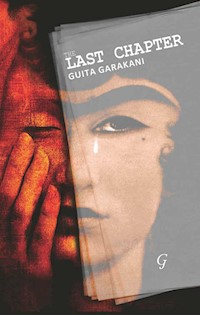
The Last Chapter
Guita Garakani
Translated from Persian by Sara Phillips
The Last Chapter
Published by
Garnet Publishing Limited
8 Southern Court
South Street
Reading
RG1 4QS
UK
www.garnetpublishing.co.uk
www.twitter.com/Garnetpub
www.facebook.com/Garnetpub
blog.garnetpublishing.co.uk
English version copyright © Guita Garakani and Sara Phillips, 2013
This translation is based on the Persian edition first published by Caravan Books Publishing House, 2006
All rights reserved.
No part of this book may be reproduced in any form or by any electronic or mechanical means, including information storage and retrieval systems, without permission in writing from the publisher, except by a reviewer who may quote brief passages in a review.
First Edition
ISBN: 9781859643051
British Library Cataloguing-in-Publication Data
A catalogue record for this book is available from the British Library
Typeset by Samantha Barden
Jacket design by Haleh Darabi
Printed and bound in Lebanon by International Press: [email protected]
To Amir Ferydoun Garakani, who wanted to evade his memories and the recollection of his memories
All the characters, names and events in the story are fictional. Any likeness is a matter of coincidence.
All acts draw to a close and the actors eventually leave the stage, one by one, until the stage is empty. When the last member of the audience leaves, no one is left in the theatre; there are no actors, no audience and there will be no performance. One day a developer will arrive and demolish the theatre. Memories from all the plays and stories that have been performed there will be lost to the land, which bears no memory. But what of the destiny of the land itself, you ask? God only knows. A land that yields nothing holds no memories and, without memories, the world does not exist.
Tonight’s show: The story of a man called Vaqar us-Saltaneh and his son Youssef.
Actors: None
Audience: None
The atmosphere: Desolate
Actually, No! Wait! There is one person left: an actor who was in the audience; a member of the audience who was in the act …
Prologue
The sun rose on Saturday just like on any other day of the week.
In that crepuscular hour the desert surrounding the city slowly began to take shape. The beams of light settled on the huts and modest houses, whose proprietors had left, well before sunrise, in search of work. The shaft of light progressed from the desert to the dusty narrow alleyways and, on its way, passed by the water-filled potholes and over the stones that had been scattered by schoolchildren tripping over them.
The shaft of sunlight reached the city, where it lit up its heart and main arteries. It passed by the newly constructed buildings, with stone façades that had not yet been dirtied by the city’s pollution: buildings that had not been around long enough to bear witness to many tales. The shaft reached the older districts. It squeezed through narrow passages where the memories had departed with their creators. When the shaft reached the gentleman’s house, it passed unscathed over the entrance before it descended through the branches of the trees and lit up the cobbled area in the garden, eventually reaching the main building. It passed through the closed windows of a house that still seemed to be asleep and then, reaching the second floor, penetrated through the thick drawn curtains of the study.
As Salman climbed the stairs, he wasn’t expecting to encounter anything untoward. As usual he was up before dawn and was about to begin his routine of dusting, which started in the study because it was early in the week. When he opened the door an unfamiliar odour wafted towards him. It was the smell of cigar smoke mixed with something much more unpleasant; an odour that was somehow familiar yet that he could not quite place. It was difficult in the dark room to work out where the smell was coming from, so Salman went to the curtains straightaway. He pulled one of the thick green drapes aside, which allowed the light to pour into the dark room through the white net curtain underneath. Salman then drew back the curtains on both sides of the window completely and used the hook on the wall to secure them. He turned to face into the room to decide where to make a start. It was then that he began to see: his master was in the room. It looked as though he had spent the entire night there but not in the position everyone was used to. He was not seated behind his desk, as he invariably was when dealing with visitors. Master was sitting on the arm of his chair, which was positioned in front of the desk, and yet he had managed to face the desk while staring into space. His fingers were clutching the arm of the chair. His white hair, which he always wore combed back, was dishevelled now, with a clump scattered across his high forehead, as though he had run his fingers through it in a state of distress. But this was impossible; Master Vaqar was never distressed. He was always a composed and gracious man: he walked graciously, spoke graciously, sat graciously, and dished out instructions graciously.
Gracious or not, he would never spend the entire night in his study. Salman didn’t know what to make of his master in his study at this hour. He had worked there long enough not to question his master’s actions; he knew his master did as he pleased. Master had always been this way – he never felt he needed to satisfy anyone’s curiosity.
Salman said hello, loud enough to be heard; then, since he didn’t know what to do in such an unusual situation, he lowered his gaze and began to dust the room as usual. He thought his master would call to him, growl, ask for tea, even order him to leave the room and not bother him. But he didn’t say a word. He did not call out to Salman; he did not ask for tea, or anything else. Salman approached his master. He had not moved, even when Salman drew the curtains. His head was resting against the back of the chair. His forehead was large, his cheekbones were rather prominent, his nose was straight and finer than most people’s, his lips were pressed underneath his neat white moustache, and he had a strong and shapely chin – he appeared to be gazing at some undefined object in front of him.
Salman couldn’t wait any longer. He stepped forward and asked, ‘Shall I bring you tea, Sir?’
There was no response; his master didn’t even move his head.
Salman tried again. ‘It’s the morning, Sir. Shall I bring you tea?’
Still no reply. Salman became concerned at this point. His eyesight was not good so he moved closer and narrowed his eyes to focus better. Master’s face looked relaxed, with no movement. His hands … Salman’s eyes drifted down the arms to the hands. They were not just clutching the arms of the chair; they were tied to them with a piece of rope. Someone had tied Master’s hands to the arms of the chair with a rope. Master wasn’t reacting at all. His head didn’t move. His chest was not going up or down. The man seated in the chair was an imitation of his master. It was a master-like doll whose eyes didn’t see and whose mouth didn’t utter any words.
Salman did not shout, nor did he cause a commotion. Since he didn’t know how to react to what was sitting there in place of his master, he just stepped backwards, left the room and quietly closed the door. Once he had closed it his senses returned and he gathered all the might in his tired legs and ran. He ran the entire length of the hallway and reached the kitchen. He swiftly opened the door and then forced it closed behind him. He leaned against the wall and then looked at Sakineh and Qanbar agog. His visage frightened them. He was panting. Finally, he announced to them, ‘Master! May the Lord lengthen his life! I think … Master … he … he’s not breathing!’
From that moment on, the house filled with people; first, family and relatives, and then the police. Perhaps the police came first and then the family; no one quite remembers.
Salman was right: Master was not breathing. His hands were tied to the arms of the chair but there were no marks on his body to suggest that there had been any resistance. Nor was there anything in the room to suggest a fight. One or more people had come to see Master the night before but they clearly had not come for money: as far as anyone could tell nothing was stolen; when they opened the safe, which was in the corner of the room, they found neat bundles of banknotes and documents sitting on both shelves, untouched.
Everyone who saw Master in his chair in that state was overcome with a sense of bewilderment mixed with dread. Perhaps a ghost had come to visit him to settle some issues from the past but they could tell nothing from the expression on Master’s face. The only visible sign there of anything untoward was that his mouth was slightly open, as is typically the case with the dead, and slightly distorted. That was all.
The police searched the room. They searched everywhere: the drawers in the desk, under the carpet, every book on the shelves, every object in the room, but they couldn’t find anything that offered any clues as to what had happened. It was as though Master himself had tied his own hands and then given in to death.
They only found one thing; it didn’t have particular significance as far as the police were concerned but it startled the family. The expressions on their faces showed the same bewilderment and fright as could be seen on Master’s face. There were two old envelopes in one of the drawers. They were worn and yellowed with age and each was tied with a ribbon as a result. One contained wedding invitations, but Master’s wedding had never taken place. The other envelope contained letters from the girl who had been supposed to marry Master once upon a time.
Youssef, Vaqar us-Saltaneh’s eldest son, died in the same house he was born in; the very house that became his after his father’s murder, and who was himself murdered mysteriously some years later. No one had tried hard to find the murderer, which was perhaps for the best. A saga had drawn to a close with the second murder; the saga of Vaqar and his son.
The story of Vaqar and his son was quite familiar to the family elders but they wouldn’t recount it to their children; they wouldn’t even talk about it with each other. It was a secret, a secret that had been hushed up because it would be detrimental to the family’s good name.
But discovery of the cards and letters had confused everyone. No one could believe that Vaqar’s son had kept the invites for a wedding that had never taken place or letters that had been written by someone now long forgotten.
Chapter 1
Some people are like the sun; you can bathe in the glowing light and warmth of their affection. And if you err and gaze in their eyes you can become bewitched and fall into a hypnotic trance, in which the narcoleptic is doomed to settle; you will never be able to release yourself from the spell. The intensity of their light is such that your eyes can never see any other faces quite so clearly and you could spend the rest of your life searching for a face, the details of which you no longer remember; it is only the blinding light, the immense warmth and the unique charisma of this face which has stuck in your mind. However, none of these characteristics can ever direct you to your destination. You walk in the dark looking for a sun which now ignores you and has forever set in your life. Or perhaps that sun has departed your life so that it can rise to mark the dawn somewhere else, to give light to another traveller who has lost her way; and, without warning, the sun could leave her in the dark as well. This is the nature of the sun. It doesn’t want to make you suffer; it just isn’t there for you all the time. The wise traveller learns to make progress in the dark and relies solely on the faint light emanating from the lantern that she holds in her hand. She can only see the modest cobbled road under her feet. She doesn’t fall in the potholes. She doesn’t have any dreams. She is not in pain. But she who has immersed herself in the light of the sun sees, for one moment only, the wider landscape; all the flowers, the trees, the birds and the mountains; all of life’s complex paths; the paths that all end up in dreams. And when her sun has set, she continues on her path regretting all that she could have had but now cannot. And this is the cycle of the story of love. Still, whoever finds her sun can’t help but gaze in its eyes, at which point she will drown in infinite despair.
Youssef was Rana’s sun. He wasn’t like anyone else; not in life or in death. And Rana knew this, even when she knew little else about life. And when she gazed into her sun’s eyes she had yet to learn about sunset.
Rana picked up the notebook from the desk and turned the pages, a metal bucket with a hole but repairable … two used copper sieves … a metre and a half of rope …
A shadow crept over the page. Rana lifted her head; it was Youssef. He was laughing, just like every time he wanted to tease her. He tried to pull the notebook out of her hand but Rana clung on to the book at the other end. She had no intention of letting Youssef have the notebook; she wanted to read it first. There ensued a silent commotion over the notebook. Youssef won and finally got hold of it. Rana pulled a face. Youssef began to turn the pages and then let Rana have the book. He was still laughing. His quiet laughter made Rana laugh. She could never sulk for long when it came to Youssef. They were almost the same age; the same age and playmates. Whenever Rana went to stay with Auntie Malek, Youssef came too. Youssef was slender and scrawny and a little taller than Rana. His skin was darker and there always seemed to be a twinkle in his large eyes. He was noisy but composed. He could be docile but also ferocious; patient yet intolerant. When they played a game and something was not to his liking, he would just leave. Rana would then have to beg him to return and continue to play. Many times, though, she wouldn’t succeed; if he decided to be stubborn nothing worked. Things would escalate quite quickly. There would be a flash of anger in his eyes. He would then purse his lips and leave. If they were in the garden, he would look down and then head back to the house. If they were indoors, he would leave without a word and end up in the garden. It was easier if they were out on the street because he would either walk ahead or walk behind, pretending he was looking in the shop windows. The situation would remain until he had calmed down and forgotten about the issue. But he never dwelt upon the subject; he never argued. He resented talking about what had upset him, though he exercised more patience whenever he was with Rana. They rarely squabbled, usually managing to compromise instead. They shared the consequences of their actions, whether it be reward or reprimand – they never betrayed each other by telling tales. If they were caught being mischievous they were both told off because no one could tell who the culprit was; it was assumed that they were both involved.
Rana asked, ‘Are they still making halva?’
Youssef replied, ‘They must be, otherwise Maryam wouldn’t still be with Mother.’
Taj Khanoum, Youssef’s mother, was Vaqar’s wife and was a better cook than most. She had come over so that Malek wasn’t left to do everything on her own. Ever since Mr Piran, Malek’s husband, had passed away, the house was always full of visitors; the familiar and the unfamiliar – there was no privacy. Visitors came and went. The servants darted from one place to another offering tea to the visitors. Rana’s hand was hurting now, having offered round the heavy tray laden with halva and dates. Malek remained seated but she would gesture to indicate to Rana who to offer the halva and dates to. Youssef helped out in the reception hall. He led the visitors in or out. He did all that youngsters in any household did to help out.
Malek and her late husband, Mr Piran, didn’t have any children of their own, hence the need to have Rana and Youssef around. As soon as there was less to do, or just too much commotion for anyone to notice the children, Rana and Youssef would go into the garden to play.
Rana asked, ‘Isn’t Maryam going to come?’
Youssef replied, ‘She’s still with Mother.’
‘Why?’ To which Youssef shrugged and said, ‘Perhaps she can’t wait to have some halva.’
Maryam was Youssef’s five-year-old sister. Her mother divided her wavy black hair into two plaits on either side of her head. Her black eyes always twinkled and were shadowed by long lashes, just like Youssef’s. Wherever Rana and Youssef went, Maryam wasn’t far behind: she always followed her brother. She didn’t speak. She never made any noise. If she fell while playing, she never complained. Youssef had warned her that he wouldn’t let her play with them again if she did. So Maryam tried not to make a nuisance of herself. She just wanted to be with her brother. To Rana, who didn’t have any siblings, Maryam was like a walking doll; her presence didn’t bother her. She loved her. Maryam was the little sister that she always wanted but never had. Rana didn’t know yet that Vaqar was soon to take Youssef’s little sister away from them. Maryam was not Vaqar’s only victim but she was the first that Rana knew about.
Maryam never grew up. She remained Rana’s young and amiable sister for ever. Rana always wondered what Maryam might have looked like had she grown up. She tried to picture her at different stages in her life: adolescence, youth, middle and old age. She wondered if Maryam would have remained the same beautiful girl after she had married and had a child. She would surely have put on weight, her hair would gradually have turned grey and her body would have lost its shape. She might have developed a double chin and perhaps little bags under her eyes. But girls tend to resemble their mothers as they grow older so Maryam would have been very lucky. Taj Khanoum was still a beautiful woman even though she was midway through her life and despite all that she had been through. In any case, Maryam didn’t resemble her father, Vaqar, at all, thank goodness.
Youssef had two brothers as well; two younger brothers. They did not participate in his games and perhaps this was why she could not remember them well. As far as Rana was concerned they were two faceless little ghosts. Youssef, Maryam and Taj Khanoum, their mother, were the only ones that Rana could remember. The lines of their faces did not fade with the passing of time, rather they seemed to have been carved in stone, the stone of time; a stone that was hard enough to shatter the goblet of dreams.
Rana had yet to put the notebook back in its place; she was concerned that Youssef might take it and use it to tease her again. It wouldn’t look good if the elders found out that they were laughing at Mr Piran. The cover of the notebook was black. Her aunt, Malek, had found it in one of the drawers in the desk when she was looking for the deeds of the land and the house first thing that day. The contents of the house were registered in the notebook in neat rows. Malek had bequeathed the notebook to Auntie and Uncle Sardari. Auntie turned the page, read a few lines, nodded and mumbled something with only one recognisable word: ‘Idiot!’
Uncle Sardari arrived later that day and when he scrutinised the contents of the notebook he nodded here and there, admiring the blessed soul’s attention to detail. Everyone else looked at it briefly before leaving it for the next person to browse. The last person to do so was Rana. Rana took the notebook and went through it thoroughly but she decided it was filled with nonsense, just like Mr Piran’s conversation and the way he expressed his opinions. But then she shivered at her audacity to think that way about a family elder. If her Aunt Malek found out, she would be upset. Father would say that children were not to poke their noses into the affairs of grown-ups. Before any of them noticed her touch the notebook she shrugged, placed it back on the desk, motioned to Youssef and they both left the room.
***
It was already past two in the afternoon. The visitors had left. The household was taking a rest before the next wave of visitors arrived. Everyone on the late Mr Piran’s list of relatives was supposed to be there by three in the afternoon so that the will could be read out. Malek, Mr Piran’s widow, had used her headache as an excuse to retire to her bedroom. The only people in the room were Uncle Sardari and Auntie, neither of whom took a nap in the afternoon. Uncle Sardari had picked up a newspaper and pretended to read so that he didn’t have to talk to Auntie, and she had bent over a book and turned the pages for the same reason.
Uncle Sardari made himself so comfortable in the deep large soft armchair that the newspaper covered not only his face and torso but also part of his thighs.
Auntie’s walking stick rested against the arm of the chair she was sitting on. The only part of her hair that the black headscarf did not cover was the front section, a white mass; otherwise the headscarf with fine dark grey lines running through it was tied firmly to the back of her head. The dark colour of the headscarf seemed to hug the oval face, the beauty of which had not yet faded with the passing of time. The creases around her large and intelligent eyes made her gaze more intense. She had high cheekbones with a nose so small and fine that it was as though it had been carved from stone by a sculptress. Her walking stick was testament to the permanent pain in her legs – since it had flared up particularly severely a few months ago, no one had seen Auntie walk without her stick.
The reception room was dimly lit. The straw blinds were let down outside the windowpane and the thick curtains were drawn so that there were no gaps to allow light in. The air inside the room felt warm and humid. Uncle Sardari got one of the servants to switch on the fan that was suspended from the ceiling. Auntie was grumbling but Uncle Sardari ignored her and instead shifted so that he was sitting directly underneath the fan. The movement of the air lifted his white hair like the sails of a sinking ship. Auntie gave him a dirty look, as though her only hope was that the ship might sink and relieve her from the domestic tempests. They barely communicated with each other. Each of them belonged to a different branch of the family: he was the nephew of one of Grandfather’s wives who had later married a grandson of Grandmother’s aunt. The passage of time had witnessed him amass quite a fortune and build a strong position in the family, a position that meant that his approval was required in order to get anything done. Auntie, however, was the eldest daughter and consequently Uncle Sardari’s only real rival. If anyone of the family wanted to marry their daughter off or was thinking of finding their son a wife, if anyone wanted to invest in a significant venture or end a family feud, they would go to Auntie. She seemed to know all the answers and have a solution to every problem. And, given that she was housebound due to rheumatism, she had time for everyone; for everyone except Uncle Sardari. She thought the only thing Uncle Sardari was capable of dealing with was the posthumous affairs of the dead. She would shake her walking stick in the air and chuckle, ‘He’s at it to bury everyone in the family. He can dream on, good luck to him! He’ll take his dream of seeing me dead before him to his grave.’
The reality was that they had both lived longer than most and so had attended countless funerals. Now it was impossible to imagine a wedding or funeral without them. Choosing a ceremony or a date for a ceremony, or a venue for that matter, was impossible without first seeking their opinion.
The white chrysanthemums trembled in their large crystal vase on the table as the fan sent ripples through the air. The petals were not, however, lifting in the air like Uncle Sardari’s hair; they just swung from one side to another, giving the impression that the vase could fall at any moment. Auntie called for Rana, who was in the kitchen. Hearing her voice, Rahman the servant appeared in the room. Rana and Youssef followed as well.
‘Yes?’ Rana asked.
‘Rana dear, take this vase away please,’ Auntie said, but before Rana could move, Rahman stepped forward and stretched out his arms to lift the vase and carry it away.
‘There’s no need,’ Uncle Sardari protested.
‘Take it away,’ Auntie commanded.
‘It looks better where it is,’ he suggested.
‘When the fan blows the vase over and onto the tray of halva, it’ll look even better I suppose,’ said Auntie, pulling a face. ‘Rahman, take it away …’ she ordered. ‘Take it to the dining room and leave it on the dining table.’
Rahman, who was still holding the vase, began to walk towards the dining table. The dining table had been pushed against a wall to the side of the room and had a large framed photograph of the late Mr Piran in the middle, with a thick black ribbon to the side. The table was dotted with various platters of halva and dates. Rahman placed the vase in the middle, next to the photograph and in among the various plates.
Uncle Sardari said to Youssef, ‘Put Mr Piran’s picture on the side table, Son, right there; we can’t see it from here.’
Youssef picked up the frame and placed it where Uncle Sardari had asked him to. ‘No, a little further to the side,’ he said. ‘A little more forward, to the front of Great Auntie’s picture.’
No one, not even the late Mr Piran, had dared to touch the frame of Great Auntie’s photo without first seeking Malek’s permission. She was Malek’s eldest aunt and had died young. The photograph was of a maiden of striking beauty with large, deep-set eyes, a small nose, and fine lips that seemed to press together – she was wearing large hoop earrings.
Standing next to Youssef, Rana pulled the photograph slightly to the back to allow room for Mr Piran’s photograph. Uncle Sardari said, ‘That looks good! Perfect! It’s quite easy to see it now.’
Mr Piran’s photo frame was in Auntie’s line of vision. She duly gave it a contemptuous look, shuffled in her chair and searched for her walking stick so that she could avoid seeing the picture.
Rana found the sight of Auntie and Uncle Sardari comical. She looked at Youssef and found that he too was forcing himself not to smile. They both decided to look for Maryam so that they could walk out, leaving the two steadfast rivals to themselves.
Mr Piran’s photo frame was not usually placed near the other photographs; it was kept in a suitcase with the collection of family photographs. As a child, Abtin would sometimes climb into the suitcase containing the photographs, ransack it, and then ask Rana to promise to buy a few albums so that he could place all the photos in them. Rana did promise but the albums never materialised. The photographs in the suitcase were those she didn’t wish to see. Abtin would put Mr Piran’s photograph aside saying that he did not want that particular one in the album. ‘There’s no need for this one to go in. He doesn’t look in a good mood here.’ Rana couldn’t bear the sight of Mr Piran’s image either, because it reminded her of Youssef standing by the wall, smiling, in Auntie Malek’s reception room. She would miss him so much, his happy and innocent expression, that her chest felt like it was about to burst open.
Mr Piran’s black and white photograph showed a long-nosed and small-eyed man with very little hair. The black ribbon, marking the corner of the frame, was so wide that it made Mr Piran look as though he had a beret on his hairless head. The photograph had been taken when Mr Piran was a young man; it had been chosen carelessly and in haste for the funeral. The person usually behind such decisions was Uncle Sardari; he used a photographer acquaintance, someone of his generation, as old as himself and with poor eyesight – he could not focus well. For example, at the funeral of Rana’s mother, Marjan, the photographer had accidentally enlarged a photograph of her husband, Nasrullah Khan, who was alive and well. The incident called for a few smiles except from Nasrullah Khan who, though not a superstitious man, considered the episode ominous. Auntie claimed that Uncle Sardari had photographs ready for everyone’s funeral. Her claim had reached the ears of Uncle Sardari as well.
Mr Zaeem ud-Dowleh arrived before everyone else, clad in his top hat and tails; he believed that no major family event could take place without his presence. Auntie Mehr us-Saltaneh also made an appearance despite her lassitude and ailments. She was always mindful of what went through other people’s minds and, since she did not want Malek to take offence, she had turned up. Vaqar, Youssef’s father, arrived after the other two. After exchanging pleasantries he sat to the side keeping himself to himself but his small and cunning eyes watched everyone in the room like a hawk in search of its prey. The two cousins and a few others in the family felt an obligation to attend and hear the will read out.
The late Mr Piran’s nephews and their wives were the last to arrive. Mirza Muhammad Khan, Mr Piran’s eldest nephew, who was more than fifty years of age, was the first of them to step into the room. His title suggested that he had some pedigree but it was, in fact, one he had adopted of his own accord; he wasn’t blessed with the best of handwriting either. His sisters insisted on the title, which meant that no one could bring themselves to call him otherwise. The rest followed him into the room, including Munir, Mah Leqa, Maheen, and even Mahmoud, who still didn’t have a title because he was the youngest although already in his mid-forties. The daughters-in-law hadn’t arrived yet. Assieh, Mirza Muhammad Khan’s wife, a gracious and devout lady, had used her mother’s illness to excuse herself from attending. Mahmoud’s wife, who was younger than the rest and didn’t seem to be on good terms with her in-laws, was nowhere to be seen. Munir’s husband as well as Mah Leqa’s and Maheen’s entered the room one by one. Munir’s husband was presented as the retired employee of an important organisation, but no one knew just which organisation. The other two husbands were supposed to be reputable merchants. They had a shop in the bazaar but no one knew what merchandise they sold or how they managed to do so well. Auntie believed nothing was straightforward with this family and didn’t trust them – if they really were that well off then they would not be there, flattering their uncle. What the reality was God only knew.
The arrival of Mr Piran’s nephews brought about more commotion: some stood up to greet them and then everyone settled back in their chairs while pleasantries were exchanged. The gloomy atmosphere gave way to smiles and then everyone began to chat quietly to his or her neighbour.
The tea tray went around followed by the offering of dates and halva. Condolences had already been exchanged on the day Mr Piran had passed away, as they went to bury the body and during the funeral.
Mr Piran’s lawyer had invited everyone named on a list the deceased had drawn up when he was still alive. He had also made the point that the deceased had insisted upon Uncle Sardari and Auntie being present when the will was read out.




