



1,90 €
Mehr erfahren.
- Herausgeber: Lebooks Editora
- Kategorie: Gesellschafts- und Liebesromane
- Sprache: Englisch
The Leopard, by Giuseppe Tomasi di Lampedusa, is a profound and elegiac novel that explores the decline of the Sicilian aristocracy during the Italian unification in the 19th century. Centered on the introspective and aging Prince Fabrizio of Salina, the novel portrays a world in transition, where tradition and nobility give way to political upheaval and social change. Through rich historical context and poetic prose, Lampedusa captures the melancholic beauty of a fading era and the complexity of adapting to inevitable transformation. Since its posthumous publication in 1958, The Leopard has been celebrated for its philosophical depth, subtle irony, and vivid characterizations. It masterfully blends personal reflection with political commentary, offering a nuanced critique of power, decay, and the illusions of permanence. The novel's famous assertion—"If we want things to stay as they are, things will have to change"—embodies its central paradox and continues to resonate with readers today. The lasting significance of The Leopard lies in its exploration of identity, time, and the cost of survival in a world shaped by historical forces. It remains a cornerstone of Italian literature, offering timeless insights into the nature of change and the quiet dignity of letting go.
Das E-Book können Sie in Legimi-Apps oder einer beliebigen App lesen, die das folgende Format unterstützen:
Seitenzahl: 393
Veröffentlichungsjahr: 2025
Ähnliche

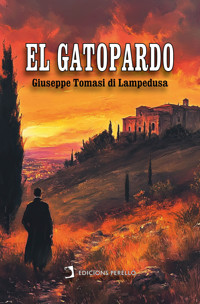


















Guiseppe Di Lampedusa
THE LEOPARD
Original Title:
“Il Gattopardo”
Contents
INTRODUCTION
THE LEOPARD
1. Introduction to the Prince
2. Donnafugata
3. The Troubles of Don Fabrizio
4. Love At Donnafugata
5. Father Pirrone Pays A Visit
6. A Ball
7. Death of a Prince
8. Relics
INTRODUCTION
Giuseppe Tomasi di Lampedusa
1896 – 1957
Giuseppe Tomasi di Lampedusawas an Italian writer best known for his only novel, The Leopard (Il Gattopardo), a landmark of 20th-century Italian literature. Born into a noble family in Palermo, Sicily, Lampedusa captured the twilight of the Sicilian aristocracy with an unparalleled sense of detail and historical insight. Though his work was published posthumously, it earned immense acclaim, securing his place among the most significant Italian novelists of the modern era.
Early Life and Education
Giuseppe Tomasi di Lampedusa was born into Sicilian nobility, the last in a long line of princes. Raised in a world of refinement and tradition, he was deeply influenced by classical literature and the cultural heritage of his homeland. He studied law in Rome but did not complete his degree, instead leading a largely private and introspective life. He traveled extensively across Europe and fought in World War I, experiences that shaped his reflective and melancholic worldview.
Career and Contributions
Lampedusa wrote little during his lifetime and remained unknown in literary circles. It was only in the last years of his life that he began writing The Leopard, a historical novel set during the Risorgimento — the period of Italian unification. The novel tells the story of Prince Fabrizio Salina, a fictionalized version of Lampedusa’s great-grandfather, as he witnesses the decline of the aristocracy and the rise of a new social order. Through lyrical prose and deep psychological insight, Lampedusa portrayed the inevitable passage of time and the futility of resisting historical change.
The Leopard was initially rejected by publishers, and Lampedusa died without seeing his work in print. It was only after his death that the manuscript was championed by literary critic Giorgio Bassani and published in 1958. The novel was met with critical and popular success, and it won the prestigious Strega Prize in 1959.
Impact and Legacy
The Leopard is regarded as one of the greatest Italian novels of the 20th century. Its themes of decay, transition, and memory struck a deep chord in postwar Italy. The book offers a poignant meditation on mortality and political transformation, highlighting the subtle mechanisms through which power shifts hands, often leaving the essence of social structures unchanged. The famous line, “If we want things to stay as they are, things will have to change,” encapsulates the novel’s complex and ironic perspective on revolution and continuity.
In 1963, Luchino Visconti adapted The Leopard into a celebrated film starring Burt Lancaster, further cementing the novel’s legacy and bringing Lampedusa's vision to an international audience.
Giuseppe Tomasi di Lampedusa died in 1957 from lung cancer, unaware of the profound impact his work would have. His literary output was minimal, yet with The Leopard, he offered an enduring portrait of a vanished world, infused with both nostalgia and critical distance. Today, he is remembered not only as a chronicler of Sicilian identity but also as a masterful observer of historical change and human frailty.
Lampedusa’s legacy endures through his singular novel, which continues to be studied, adapted, and admired around the world. His ability to intertwine personal memory with the grand sweep of history has left a lasting mark on literature, making him a timeless voice in the exploration of societal transformation.
About the work
The Leopard, by Giuseppe Tomasi di Lampedusa, is a profound and elegiac novel that explores the decline of the Sicilian aristocracy during the Italian unification in the 19th century. Centered on the introspective and aging Prince Fabrizio of Salina, the novel portrays a world in transition, where tradition and nobility give way to political upheaval and social change. Through rich historical context and poetic prose, Lampedusa captures the melancholic beauty of a fading era and the complexity of adapting to inevitable transformation.
Since its posthumous publication in 1958, The Leopard has been celebrated for its philosophical depth, subtle irony, and vivid characterizations. It masterfully blends personal reflection with political commentary, offering a nuanced critique of power, decay, and the illusions of permanence. The novel’s famous assertion—“If we want things to stay as they are, things will have to change”—embodies its central paradox and continues to resonate with readers today.
The lasting significance of The Leopard lies in its exploration of identity, time, and the cost of survival in a world shaped by historical forces. It remains a cornerstone of Italian literature, offering timeless insights into the nature of change and the quiet dignity of letting go.
THE LEOPARD
1. Introduction to the Prince
Rosary and introduction to the Prince — The garden and the dead soldier — Royal audiences — Dinner — A carriage to Palermo -Going to Mariannina's — Conversation with Tancredi — In the office; estates and politics — In the observatory with Father Pirrone -Relaxation at luncheon Don Fabrizio and the peasants — Don Fabrizio and his son Paolo — News of the landing, and Rosary again.
MAY, 1860
NUNC ET IN HORA MORTIS NOSTRAE. AMEN.
The daily recital of the Rosary was over. For half an hour the steady voice of the Prince had recalled the Glorious and the Sorrowful Mysteries; for half an hour other voices had interwoven a lilting hum from which, now and again, would chime some unlikely word: love, virginity, death; and during that hum the whole aspect of the rococo drawing room seemed to change; even the parrots spreading iridescent wings over the silken walls appeared abashed; even the Magdalen between the two windows looked a penitent and not just a handsome blonde lost in some dubious daydream, as she usually was.
Now, as the voices fell silent, everything dropped back into its usual order or disorder. Bendico, the great Dane, vexed at having been shut out, came barking through the door by which the servants had left. The women rose slowly to their feet, their oscillating skirts as they withdrew baring bit by bit the naked figures from mythology painted all over the milky depths of the tiles. Only an Andromeda remained covered by the soutane of Father Pirrone, still deep in extra prayer, and it was some time before she could sight the silvery Perseus swooping down to her aid and her kiss.
The divinities frescoed on the ceiling awoke. The troops of Tritons and Dryads, hurtling across from hill and sea amid clouds of cyclamen pink toward a transfigured Conca d'Oro, (literally "Golden Shell," is the name of the hills encircling Palermo) and bent on glorifying the House of Salina, seemed suddenly so overwhelmed with exaltation as to discard the most elementary rules of perspective; meanwhile the major Gods and Goddesses, the Princes among Gods, thunderous Jove and frowning Mars and languid Venus, had already preceded the mob of minor deities and were amiably supporting the blue armorial shield of the Leopard. They knew that for the next twenty-three and a half hours they would be lords of the villa once again. On the walls the monkeys went back to pulling faces at the cockatoos.
Beneath this Palermitan Olympus the mortals of the House of Salina were also dropping speedily from mystic spheres. The girls resettled the folds in their dresses, exchanged blue-eyed glances and snatches of schoolgirl slang; for over a month, ever since the "riots" of the Fourth of April, they had been home for safety's sake from their convent, and regretting the canopied dormitories and collective coziness of the Holy Redeemer. The boys were already scuffling with each other for possession of a medal of San Francesco di Paola; the eldest, the heir, the young Duke Paolo, was longing to smoke and, afraid of doing so in his parents' presence, was fondling the outside of his pocket in which lurked a braided-straw cigar case. His gaunt face was veiled in brooding melancholy; it had been a bad day: Guiscard, his Irish sorrel, had seemed off form, and Fanny had apparently been unable (or unwilling) to send him her usual lilac-tinted billet-doux. Of what avail then, to him, was the Incarnation of his Saviour?
Restless and domineering, the Princess dropped her rosary brusquely into her jet-fringed bag, while her fine crazy eyes glanced around at her slaves of children and her tyrant of a husband, over whom her diminutive body vainly yearned for loving dominion.
Meanwhile he himself, the Prince, had risen to his feet; the sudden movement of his huge frame made the floor tremble, and a glint of pride flashed in his light blue eyes at this fleeting confirmation of his lordship over both human beings and their works.
Now he was settling the huge scarlet missal on the chair which had been in front of him during his recitation of the Rosary, putting back the handkerchief on which he had been kneeling, and a touch of irritation clouded his brow as his eye fell on a tiny coffee stain which had had the presumption, since that morning, to fleck the vast white expanse of his waistcoat.
Not that he was fat; just very large and very strong; in houses inhabited by common mortals -his head would touch the lowest rosette on the chandeliers; his fingers could twist a ducat coin as if it were mere paper; and there was constant coming and going between Villa Salina and a silversmith's for the mending of forks and spoons which, in some fit of controlled rage at table, he had coiled into a hoop, But those fingers could also stroke and handle with the most exquisite delicacy, as his wife Maria Stella knew only too well; and up in his private observatory at the top of the house the gleaming screws, caps, and studs of the telescopes, lenses, and "comet-finders" would answer to his lightest touch.
The rays of the westering sun, still high on that May afternoon, lit up the Prince's rosy skin and honey-colored hair; these betrayed the German origin of his mother, the Princess Carolina, whose haughtiness had frozen the easygoing Court of the Two Sicilies thirty years before. But in his blood also fermented other German strains particularly disturbing to a Sicilian aristocrat in the year 1860, however attractive his fair skin and hair amid all that olive and black: an authoritarian temperament, a certain rigidity in morals, and a propensity for abstract ideas; these, in the relaxing atmosphere of Palermo society, had changed respectively into capricious arrogance, recurring moral scruples, and contempt for his own relatives and friends, all of whom seemed to him mere driftwood in the languid meandering stream of Sicilian pragmatism.
In a family which for centuries had been incapable even of adding up their own expenditures and subtracting their own debts he was the first (and last) to have a genuine bent for mathematicize this he had applied to astronomy, and by his work gained a certain official recognition and a great deal of personal pleasure. In his mind, now, pride and mathematical analysis were so linked as to give him an illusion that the stars obeyed his calculations too (as, in fact, they seemed to be doing) and that the two small planets which he had discovered ("Salina" and "Speedy" he had called them, after his main estate and a shooting dog he had been particularly fond of) would spread the fame of his family through the empty spaces between Mars and Jupiter, thus transforming the frescoes in the villa from the adulatory to the prophetic.
Between the pride and intellectuality of his mother and the sensuality and irresponsibility of his father, poor Prince Fabrizio lived in perpetual discontent under his jovelike frown, watching the ruin of his own class and his own inheritance without ever making, still less wanting to make, any move toward saving it.
That half-hour between Rosary and dinner was one of the least irritating moments of his day, and for hours beforehand he would savor its rather uncertain calm.
With a wildly excited Bendico' bounding ahead of him he went down the short flight of steps into the garden. Enclosed between three walls and a side of the house, its seclusion gave it the air of a cemetery, accentuated by the parallel little mounds bounding the irrigation canals and looking like the graves of very tall, very thin giants. Plants were growing in thick disorder on the reddish clay flowers sprouted in all directions, and the myrtle hedges seemed put there to prevent movement rather than guide it. At the end a statue of Flora speckled with yellow-black lichen exhibited her centuries-old charms with an air of resignation; on each side were benches holding quilted cushions, also o~ gray marble; and in a corner the gold of an acacia tree introduced a sudden note of gaiety. Every sod seemed to, exude a yearning for beauty soon muted by languor.
But the garden, hemmed and almost squashed between these barriers, was exhaling scents that were cloying, fleshy, and slightly putrid, like the aromatic liquids distilled from the relics of certain saints; the carnations superimposed their pungence on the formal fragrance of roses and the oily emanations of magnolias drooping in corners; and somewhere beneath it all was a faint smell of mint mingling with a nursery whiff of acacia and the jam my one of myrtle; from a grove beyond the wall came an erotic waft of early orange blossom.
It was a garden for the blind: a constant offense to the eyes, a pleasure strong if somewhat crude to the nose. The Paul Neyron roses, whose cuttings he had himself bought in Paris, had degenerated; first stimulated and then enfeebled by the strong if languid pull of Sicilian earth, burned by apocalyptic Julies, they had changed into things like flesh-colored cabbages, obscene and distilling a dense, almost indecent, scent which no French horticulturist would have dared hope for. The Prince put one under his nose and seemed to be sniffing the thigh of a dancer from the Opera. Bendic6, to whom it was also proffered, drew back in disgust and hurried off in search of healthier sensations amid dead lizards and manure.
But the heavy scents of the garden brought on a gloomy train of thought for the Prince: "It smells all right here now; but a month ago...
He remembered the nausea diffused throughout the entire villa by certain sweetish odors before their cause was traced: the corpse of a young soldier of the Fifth Regiment of Sharpshooters who had been wounded in the skirmish with the rebels at San Lorenzo and come up there to die, all alone, under a lemon tree. They had found him lying face downward in the thick clover, his face covered in blood and vomit, his nails dug into the soil, crawling with ants; a pile of purplish intestines had formed a puddle under his bandoleer. Russo, the agent, had discovered this object, turned it over, covered its face with his red kerchief, thrust the guts back into the gaping stomach with some twigs, and then covered the wound with the blue flaps of the cloak; spitting continuously with disgust, meanwhile, not right on, but very near the body. And all this with meticulous care. "Those swine stink even when they're dead." It had been the only epitaph to that derelict death.
After other soldiers, looking bemused, had taken the body away (and yes, dragged it along by the shoulders to the cart so that the puppet's stuffing fell out again), a De Profundis for the soul of the unknown youth was added to the evening Rosary; and now that the conscience of the ladies in the house seemed placated, the subject was never mentioned again.
The Prince went and scratched a little lichen off the feet of the Flora and then began to stroll up and down; the lowering sun threw an immense shadow of him over the grave like flower beds.
No, the dead man had not been mentioned again and anyway soldiers presumably become soldiers for exactly that, to die in defense of their King. But the image of that gutted corpse often recurred, as if asking to be given peace in the only possible way the Prince could give it: by justifying that last agony on grounds of general necessity. And then, around, would rise other even less attractive ghosts. Dying for somebody or for something, that was perfectly normal, of course; but the person dying should know, or at least feel sure, that someone knows for whom or for what he is dying the disfigured face was asking just that; and that was where the haze began.
"He died for the King, of course, my dear Fabrizio, obviously," would have been the answer of his brother-in-law Malvica, had the Prince asked him, and Malvica was always the chosen spokesman of most of their friends. "For the King, who stands for order, continuity, decency, honor, right; for the King, who is sole defender of the Church, sole bulwark against the dispersal of property, 'The Sect's' ultimate aim." ("The Sect" refers to liberals and Freemasons0. Fine words, these, pointing to all that lay dearest and deepest in the Prince's heart. But there was something that didn't quite ring true, even so. The King, all right. He knew the King well, or rather the one who had just died; the present one was only a seminarian dressed up as a General. And the old King had really not been worth much. "But you're not reasoning, my dear Fabrizio," Muvica would reply; "one particular sovereign may not be up to it, yet the idea of monarchy is still the same.))
That was true too; but kings who personify an idea should not, cannot, fall below a certain level for generations; if they do, my dear brother-in-law, the idea suffers too.
He was sitting on a bench, inertly watching the devastation wrought by Bendic6 in the flower beds; every now and again the dog would turn innocent eyes toward him as if asking for praise at labor done: fourteen carnations broken off, half a hedge torn apart, an irrigation canal blocked. How human! "Good! Bendico" come here." And the animal hurried up and put its earthy nostrils into his hand, anxious to show that it had forgiven this silly interruption of a fine job of work.
Those audiences! All those audiences granted him by King Ferdinand at Caserta, at Capodimonte, at Portici, Naples, anywhere at all.
Walking beside the chamberlain on duty, chatting as he guided with a cocked hat under an arm and the latest Neapolitan slang on his lips, they would move through innumerable rooms of superb architecture and revolting decor (just like the Bourbon monarchy itself), plunge into dirty passages and up ill-kept stairs, and finally emerge into an antechamber filled with waiting people: closed faces of police spies, avid faces of petitioners. The chamberlain apologized, pushed through this mob, and led him toward another antechamber reserved for members of the Courti a little blue and silver room of the period of Charles III. After a short wait a lackey tapped at the door and they were admitted into the August Presence.
The private study was small and consciously simple; on the white-painted walls hung a portrait of King Francis I and one with an acid, ill-tempered expression of the reigning Queen; above the mantelpiece was a Madonna by Andrea del Sarto looking astounded at finding herself in the company of colored lithographs representing obscure Neapolitan saints and sanctuaries; on a side table stood a wax statuette of the Child Jesus with a votive light before it; and the modest desk was heaped with papers white, yellow, and blue; the whole administration of the Kingdom here attained its final phase, that of signature by His Majesty (D. G.).
Behind this paper barricade was the King. He was already standing so as not to be seen getting up; the King with his pallid, heavy face between fairish side whiskers, with his rough cloth military jacket under which burst a purple cataract of falling trousers. He gave a step forward with his right hand out and bent for the hand-kiss which he would then refuse.
"Well, Salina, blessings on you!" His Neapolitan accent was far stronger than the chamberlain's. "I must beg Your Majesty to excuse me for not wearing Court dress; I am only just passing through Naples; but I did not wish to forgo paying my respects to Your Revered Person."
"Nonsense, Salina, nonsense; you know that you're always at home here at Caserta."
"At home, of course," he repeated, sitting down behind the desk and waiting a second before motioning to his guest to sit down too.
"And how are the little girls?"
The Prince realized that now was the moment to produce a play on words both salacious and edifying. "The little girls, Your Majesty? At my age and under the sacred bonds of matrimony?"
The King's mouth laughed as his hands primly settled the papers before him. "Those I'd never let myself refer to, Salina. I was asking about your little daughters, your little Princesses. Concetta, now, that dear godchild of ours, she must be getting quite big, isn't she, almost grown up?"
From family he passed to science. "Salina, you're an honor not only to yourself but to the whole Kingdom! A fine thing, science, unless it takes to attacking religion!" After this, however, the mask of the Friend was put aside and its place assumed by that of the Severe Sovereign. "Tell me, Salina, what do they think of Castelcicala down in Sicily? "
Salina had never heard a good word for the Viceroy of Sicily from either Royalists or liberals, but not wanting to let a friend down he parried and kept to generalities. "A great gentleman, a true hero, maybe a little old for the fatigues of viceroyalty."
The King's face darkened: Salina was refusing to act the spy. So, Salina was no use to him. Leaning both hands on his desk, he prepared the dismissal: "I've so much work! The whole Kingdom rests on these shoulders of mine." Now for a bit of sweetening: out of the drawer came the friendly mask again. "When you pass through Naples next, Salina, come and show your Concetta to the Queen. She's too young to be presented, I know, but there's nothing against our arranging a little dinner for her, is there? Sweets to the sweet, as they say. Well, Salina, 'bye, and be good! "
On one occasion, though, the dismissal had not been so amiable. The Prince had made his second bow while backing out when the King called after him, "Hey, Salina, listen. They tell me you've some old friends in Palermo. That nephew of yours, Falconeri ... Why don't you knock some sense into him?"
"But, Your Majesty, Tancredi thinks of nothing but women and cards."
The King lost patience: "Take care, Salina, take care. You're responsible, remember, you're his guardian. Tell him to look after that neck of his. You may withdraw."
Repassing now through the sumptuously second-rate rooms on his way to sign the Queen's book, he felt suddenly discouraged. That plebeian cordiality had depressed him as much as the police sneers. Lucky those who could interpret such familiarity as friendship, such threats as royal might. He could not. And as he exchanged gossip with the impeccable chamberlain, he was asking himself what was destined to succeed this monarchy which bore the marks of death upon its face. The Piedmontese, the so-called Galantuomo* (*Victor Emmanuel 11, of Piedmont, northern Italian province with Turin as its capital. In 1861 he became the first King of the United Kingdom of Italy.) who was getting himself so talked of from that little out-of-the-way capital of his? Wouldn't things be just the same? just Torinese instead of Neapolitan dialect, that's all.
He had reached the book. He signed: Fabrizio Corbera, Prince of Salina.
Or maybe the Republic of Don Peppino Mazzini? "No, thanks. I'd just be plain Signor Corbera."
And the long jog back to Naples did not calm him. Nor even the thought of an appointment with Cora Danolo.
This being the case, then, what should he do? just cling to the status quo and avoid leaps in the dark? That would mean more shooting, like that which had resounded a short time before through a squalid square in Palermo; and what use was shooting anyway? "One never achieves anything by going bang! bang! Does one, Bendico? "
"Ding! Ding! Ding! " rang the bell for dinner. Bendico' rushed ahead with mouthwatering in anticipation. "Just like a Piedmontese! " thought Salina as he moved back up the steps.
Dinner at Villa Salina was served with the slightly shabby grandeur then customary in the Kingdom of the Two Sicilies. The number of those taking part (fourteen in all, with the master and mistress of the house, children, governesses, and tutors) was itself enough to give the dining table an imposing air. Covered with a fine but mended lace cloth, it glittered beneath a powerful oil lamp hung precariously under the Murano chandelier. Daylight was still streaming through the windows, but the white figures in painted bas-relief against the dark backgrounds of the door mantels were already lost in shadow. The silver was massive and the glass splendid, bearing on smooth medallions amid cut Bohemian ware the initials F. D. (Ferdinandus dedit) in memory of royal munificence; but the plates, each signed by an illustrious artist, were mere survivors of many a scullion's massacre and originated from different services. The biggest, from Capodimonte, with a wide almond-green border, engraved with little gilt anchors, were reserved for the Prince, who liked everything around him, except his wife, to be on his own scale.
When he entered the dining room the whole party was already assembled, only the Princess sitting, the rest standing behind their chairs. Opposite his own chair, flanked by a pile of plates, swelled the silver flanks of the enormous soup tureen with its cover surmounted by a prancing Leopard. The Prince ladled out the minestra himself, a pleasant chore, symbol of his proud duties as paterfamilias. That evening, though, there came a sound that had not been heard for some time, a threatening tinkle of the ladle against a side of the tureen: a sign of great though still controlled anger, one of the most terrifying sounds in the world, as one of his sons used to call it even forty years later. The Prince had noticed that the sixteen-year-old Francesco Paolo was not in his place. The lad entered at once ("Excuse me, Papa") and sat down. He was not reproved, but Father Pirrone, whose duties were more or less those of sheep dog, bent his head and muttered a prayer. The bomb did not explode, but the gust from its passage had swept the table and ruined the dinner all the same. As they ate in silence the Prince's blue eyes, narrowed behind half-closed lids, stared at his children one by one and numbed them with fear.
But, "A fine family," he was thinking. The girls plump, glowing, with gay little dimples, and between forehead and nose that frown which was the hereditary mark of the Salinas; the males slim but wiry, wearing an expression of fashionable melancholy as they wielded knives and forks with subdued violence. One of these had been away for two years: Giovanni, the second son, the most loved, the most difficult. One fine day he had vanished from home and there had been no news of him for two months. Then a cold but respectful letter arrived from London with apologies for any anxiety he had caused, reassurances about his health, and the strange statement that he preferred a modest life as clerk in a coal depot to a pampered (read: "fettered") existence in the ease of Palermo. Often a twinge of anxiety for the errant youth in that foggy and heretical city would prick the Prince's heart and torture him. His face grew darker than ever.
It grew so dark that the Princess, sitting next to him, put out her childlike hand and stroked the powerful paw reposing on the tablecloth. A thoughtless gesture, which loosed a whole chain of reactions in him: irritation at being pitied, then a surge of sensuality, not, however, directed toward her who had aroused it. Into the Prince's mind flashed a picture of Mariannina with her head deep in a pillow. He raised a dry voice: "Domenico," he said to a lackey, "go and tell Don Antonio to harness the bays to the brougham; I'll be going down to Palermo immediately after dinner." A glance into his wife's eyes, which had gone glassy, made him regret his order; but as it was quite out of the question to withdraw instructions already given, he persevered and even added a jeer to his cruelty: "Father Pirrone, you will come with me; we'll be back by eleven; you can spend a couple of hours with your Jesuit friends."
There could obviously be no valid reason for visiting Palermo at night in those disordered times except for some low love adventure; and taking the family chaplain as companion was sheer offensive arrogance. So at least Father Pirrone felt, and he was offended, though of course he acquiesced.
The last medlar had scarcely been eaten when the carriage wheels were heard crunching under the porch; in the hall, as a lackey handed the Prince his top hat and the Jesuit his tricorne, the Princess, now on the verge of tears, made a last attempt to hold him-vain as ever: "But, Fabrizio, in times like these ... with the streets full of soldiers, of hooligans ... why, anything might happen."
"Nonsense," he snapped, "nonsense, Stella; what could happen? Everyone knows me; there aren't many men as tall in Palermo. See you later." And he placed a hurried kiss on her still unfurrowed brow, which was level with his chin. But, whether the smell of the Princess's skin had called up tender memories, or whether the penitential steps of Father Pirrone behind him evoked pious warnings, on reaching the carriage door he very nearly did countermand the trip. At that moment, just as he was opening his mouth to order the carriage back to the stables, a loud shriek of "Fabrizio, my Fabrizio!" followed by a scream, reached him from the window above. The Princess was having one of her fits of hysteria. "Drive on," he said to the coachman on the box holding a whip diagonally across his paunch. "Drive on, down to Palermo, and leave Father at the Jesuit house," and he banged the carriage door before the lackey could shut it.
It was not dark yet and the road meandered on, very white, deep between high walls. As they came out of the Salina property they passed on the left the half-ruined Falconeri villa, owned by Tancredi, his nephew and ward. A spendthrift father, married to the Prince's sister, had squandered his whole fortune and then died. It had been one of those total ruins which included even the gold braid on the lackeys' liveries, and when the widow died the King had conferred the guardianship of her son, then aged four. teen, on his uncle Salina. The lad, scarcely known before, had become very dear to the irascible Prince, who perceived in him a riotous zest for life and a frivolous temperament contradicted by sudden serious moods. Though the Prince never admitted it to himself, he would have preferred the lad as his heir to that booby Paolo. Now, at twenty-one, Tancredii was enjoying life on the money which his uncle never grudged him, even from his own pocket. "I wonder what the silly boy is up to now," thought the Prince as they drove past Villa Falconeri, whose huge bougainvillaeas cascaded over the gates like swags of episcopal silk, lending a deceptive air of gaiety to the dark.
"What is he up to now?" For King Ferdinand, in speaking of the young man's undesirable acquaintances, had been wrong to mention the matter but right in his facts. Swept up in a circle of gamblers and ladies called "light," as the euphemism went, all dominated by his slim charm, Tancredi had actually got to the point of sympathizing with the Sect and getting in touch with the secret National Committee; maybe he drew money from them as well as from the Royal coffers. It had taken the Prince a great deal of labor and trouble, visits to a skeptical Castelcicala, and an overpolite Maniscalco, to prevent the youth from getting into real trouble after the Fourth of April "riots." That hadn't been too good; on the other hand, Tancredi could never do wrong in his uncle's eyes so the real fault lay with the times, these confused times in which a young man of good family wasn't even free to play a game of faro without involving himself with compromising acquaintanceships. Bad times.
"Bad times, Your Excellency." The voice of Father Pirrone sounded like an echo of his thoughts. Squeezed into a corner of the brougham, hemmed in by the massive Prince, subject to that same Prince's bullying, the Jesuit was suffering in body and conscience and, being a man of parts himself, was now transposing his own ephemeral discomfort into the perennial realms of history. "Look, Excellency," and he pointed to the mountain heights of the Conca d'Oro still visible in the last dusk. On their slopes and peaks glimmered dozens of flickering lights, bonfires lit every night by the rebel bands, silent threats to the city of palaces and convents. They looked like the lights that burn in sickrooms during the last nights.
"l can see, Father, I can see," and it occurred to him that perhaps Tancredi was beside one of those ill-omened fires, his aristocratic hands throwing on sticks being burned to damage just such hands as his. "A fine guardian I am, with my ward up to any nonsense that passes through his head."
The road was now beginning to slope gently downhill, and Palermo could be seen very close, plunged in complete darkness, its low shuttered houses weighted down by the huge edifices of convents and monasteries. There were dozens of these, all vast, often grouped in twos or threes, for women and for men, for rich and poor, nobles and plebeians, for Jesuits, Benedictines, Franciscans, Capuchins, Carmelites, Redemptorists, Augustinians....... Above them rose squat domes in flabby curves like breasts emptied of milk; but it was the religious houses which gave the city its grimness and its character, its sedateness and also the sense of death which not even the vibrant Sicilian light could ever manage to disperse. And at that hour, at night, they were despots of the scene. It was against them really that the bonfires were lit on the hills, stoked by men who were themselves very like those living in the monasteries below, as fanatical, as self-absorbed, as avid for power or rather for the idleness which was, for them, the purpose of power.
This was what the Prince was thinking as the bays trotted down the slope; thoughts in contrast to his real self, caused by anxiety about Tancredi and by the sensual urge which made him turn against the restrictions embodied by the religious houses.
Now the road was crossing orange groves in flower, and the nuptial scent of the blossoms absorbed all the rest as a full moon absorbs a landscape; the smell of sweating horses, the smell of leather from the carriage upholstery, the smell of Prince and the smell of Jesuit, were all cancelled out by that Islamic perfume evoking houris and fleshly joys beyond the grave.
It even touched Father Pirrone. "How lovely this would be, Excellency, if ... "
"If there weren't so many Jesuits," thought the Prince, his delicious anticipations interrupted by the priest's voice. At once he regretted this rudeness of thought, and his big hand tapped his old friend's tricorne.
Where the suburbs began, at Villa Airoldi, the carriage was stopped by a patrol. Voices from Apulia, voices from Naples, called a halt, bayonets glittered under a wavering lantern; but a sergeant soon recognized the Prince sitting there with his top hat on his knees. "Excuse us, Excellency, pass on." And a soldier was even told to get up onto the box so that the carriage would have no more trouble at other block posts. The loaded carriage moved on more slowly, around Villa Ranchibile, through Torrerosse and the truck gardens of Villafranca, and into the city by Porta Maqueda. Outside the Caffe Romeres at the Quattro Canti di Campagna officers from units on guard were sitting laughing and eating huge ices. But that was the only sign of life in the entire city; the deserted streets echoed only to the rhythmic march of pickets on their rounds, passing with white bandoleers crossed over their chests. On each side monastery walls were continuous, the Monastery of the Mountain, of the Stigmata, of the Crusaders, of the Theatines, massive, black as pitch, immersed in a sleep that seemed like the end of all things.
"I'll fetch you in a couple of hours, Father. Pray well."
And poor Pirrone knocked confusedly at the door of the Jesuit house as the brougham wheeled off down a side street.
Leaving the carriage at his palace, the Prince set off for his destination on foot. It was a short walk, but through a quarter of ill repute. Soldiers in full equipment, who had obviously just slipped away from the patrols bivouacked in the squares, were issuing with shining eyes from little houses on whose balconies pots of basil explained the ease of entry. Sinister-looking youths in wide trousers were quarrelling in the guttural grunts Sicilians use in anger. In the distance echoed shots from nervous sentries. Once past this district, his route skirted the Cala; in the old fishing port decaying boats bobbed up and down, desolate as mangy dogs.
"I'm a sinner, I know, doubly a sinner, by Divine Law and by Stella's human love. There's no doubt of that, and tomorrow I'll go and confess to Father Pirrone." He smiled to himself at the thought that it might be superfluous, so certain must the Jesuit be of his sins of today. And then a spirit of quibble came over him again. "I'm sinning, it's true, but I'm sinning so as not to sin worse, to stop this sensual nagging, to tear this thorn out of my flesh and avoid worse trouble. That the Lord knows." Suddenly he was swept by a gust of tenderness toward himself. "I'm just a poor, weak creature," he thought as his heavy steps crunched the dirty gravel. "I'm weak and without support. Stella! Oh well, the Lord knows how much I've loved her; but I was married at twenty. And now she's too bossy, as well as too old." His moment of weakness passed. "But I've still got my vigor and how can I find satisfaction with a woman who makes the sign of the Cross in bed before every embrace and then at the crucial moment just cries, 'Gesummaria!' When we married and she was sixteen I found that rather exalting; but now ... seven children I've had with her, seven; and never once have I seen her navel. Is that right?" Now, whipped by this odd anguish, he was almost shouting, "Is it right? I ask you all! " And he turned to the portico of the Catena. "Why, she's the real sinner! "
Comforted by this reassuring discovery, he gave a firm knock at Mariannina's door.
Two hours later he was in his brougham on the way home with Father Pirrone beside him. The latter was worried: his colleagues had been telling him about the political situation, which was, it seemed, much tenser than it looked from the detached calm of Villa Salina. There was fear of a landing by the Piedmontese in the south of the island, near Sciacca; the authorities had noticed a silent ferment among the people; at the first sign of weakening control, the city rabble would take to looting and rape. The Jesuit Fathers were thoroughly alarmed and three of them, the oldest, had left for Naples by the afternoon packet boat, taking their archives with them. "May the Lord protect us, and spare this holy Kingdom!"
The Prince scarcely listened. He was immersed in sated ease tinged with disgust. Mariannina had looked at him with her big opaque peasant's eyes, had refused him nothing, and had been humble and compliant in every way. A kind of Bendico in a silk petticoat. In a moment of particularly intense pleasure, he had heard her exclaim, "My Prince!" He smiled again with satisfaction at the thought. Much better than "mon chat" or "mon singe blond" produced in equivalent moments by Sarah, the Parisian slut he had frequented three years ago, when the Astronomical Congress gave him a gold medal at the Sorbonne. Better than "mon chat)" no doubt of that; much better than "Gesummaria!" No sacrilege, at least. A good girl, Mariannina; next time he visited her he'd take her three lengths of crimson silk.
But how sad, too: that manhandled, youthful flesh, that resigned lubricity; and what about him, what was he? A pig, just a pig! Suddenly there occurred to him a verse read by chance in a Paris bookshop, while glancing at a volume by someone whose name he had forgotten, one of those poets the French incubate and forget next week. He could see once more the lemon-yellow pile of unsold copies, the page, an uneven page, and hear again the verses ending a jumble of a poem:
... donnez-moi la force et le courage de contempler mon coeur et mon corps sans degout
And as Father Pirrone went worrying on about a person called La Farina and another called Crispi, the Prince dozed off into a kind of tense euphoria, lulled by the trotting of the bays, on whose plump flanks quivered the light from the carriage lamps. He woke up at the turning by Villa Falconeri. "Oh, he's a fine one too, tending bonfires that'll destroy him!"
In the matrimonial bedroom, glancing at poor Stella with her hair well tucked into her nightcap, sighing as she slept in the huge, high brass bed, he felt touched. "Seven children she's given me, and she's been mine alone." A faint whiff of valerian drifted through the room, last vestige of her crisis of hysterics. "Poor little Stella," he murmured pityingly as he climbed into bed. The hours passed and he could not sleep; some powerful hand was stirring three fires smoldering in his mind: of Mariannina's caresses, of those French verses, of the autos-da-fe on the hills.
Toward dawn, however, the Princess had occasion to make the sign of the Cross.
Next morning the sun lit on a refreshed Prince. He had taken his coffee and was shaving in front of the mirror in a red and black flowered dressing gown. Bendico was leaning a heavy head on one of his slippers. As he shaved his right cheek he noticed in the mirror a face behind his own, the face of a young man, thin and elegant, with a shy, quizzical look. He did not turn around and went on shaving. "Well, Tancredi, where were you last night?"
"Good morning, Uncle. Where was I? Oh, just out with friends. An innocent night. Not like a certain person I know who went down to Palermo for some fun!"
The Prince concentrated on shaving the difficult bit between lips and chin. His nephew's slightly nasal voice had such youthful zest that it was impossible to be angry; but he might allow himself a touch of surprise. He turned and with his towel under his chin looked his nephew up and down. The young man was in shooting kit, a long tight jacket, high leggings. "And who was this person, may I ask? "
"Yourself, Uncle, yourself. I saw you with my own eyes, at the Villa Airoldi block post, as you were talking to the sergeant. A fine thing at your age! And a priest with you too! You old playboy!"
Really, this was a little too insolent. Tancredi thought he could allow himself anything. Dark blue eyes, the eyes of his mother, his own eyes, gazed laughingly at him through half-closed lids. The Prince was offended: the boy didn't know where to stop; but he could not bring himself to reprove him; and anyway, he was quite right. "Why are you dressed like that, though? What's going on? A fancy-dress ball in the morning?"
The youth became serious; his triangular face assumed an unexpectedly manly look. "I'm leaving, Uncle, leaving in an hour. I came to say goodbye."
Poor Salina felt his heart tighten. "A duel?"
"A big duel, Uncle. A duel with little King Francis. I'm going into the hills at Ficuzza; don't tell a soul, particularly not Paolo. Great things are in the offing, and I don't want to stay at home. And anyway, I'd be arrested at once if I did."
The Prince had one of his visions: a savage guerrilla skirmish, shots in the woods, and Tancredi, his Tancredi, lying on the ground with his guts hanging out like that poor soldier. "You're mad, my boy, to go with those people! They're all in the maffia, all troublemakers. A Falconeri should be with us, for the King."
The eyes began smiling again. "For the King, yes, of course. But which King?" The lad had one of those sudden serious moods which made him so mysterious and so endearing. "Unless we ourselves take a hand now, they'll foist a republic on us. If we want things to stay as they are, things will have to change. D'you understand?" Rather moved, he embraced his uncle. "Well, goodbye, for now. I'll be back with the tricolor." The rhetoric of those friends of his had touched Tancredi a little too; and yet, no, there was a tone in that nasal voice which undercut the emphasis.
What a boy! Talking rubbish and contradicting it at the same time. And all that Paolo of his was probably thinking of at that moment was Guiscard's digestion! This was his real son! The Prince jumped up, pulled the towel from his neck, and rummaged in a drawer. "Tancredi, Tancredi, wait! " He ran after his nephew, slipped a roll of gold pieces into his pocket, and squeezed his shoulder.
The other laughed. "You're subsidizing the Revolution now! Thank you, Uncle, see you soon; and my respects to my aunt." And off he rushed down the stairs.
Bendico was called from following his friend with joyous barks through the villa, the Prince's shave was over, his face washed. The valet came to help him into shoes and clothes. "The tricolor! Tricolor indeed! They fill their mouths with these words, the rascals. What does that ugly geometric sign, that aping of the French mean, compared to our white banner with its golden lily in the middle? What hope can those clashing colors bring them?" It was now the moment for the monumental black satin cravat to be wound around his neck: a difficult operation during which political worries were best suspended. One turn, two turns, three turns. The big delicate hands smoothed out the folds, settled the overlaps, pinned into the silk the little head of Medusa with ruby eyes. "A clean waistcoat.
Can't you see this one's dirty? " The valet stood on tiptoe to help him slip on a frock coat of brown cloth; he proffered a handkerchief with three drops of bergamot. Keys, watch and chain, money, the Prince put in a pocket himself. Then he glanced in a mirror; no doubt about it, he was still a fine-looking man. "Old playboy indeed! A bad joke, that one of Tancredi's! I'd like to see him at my age, all skin and bone that he is!"




