


Erhalten Sie Zugang zu diesem und mehr als 300000 Büchern ab EUR 5,99 monatlich.
- Herausgeber: Lightning Books
- Kategorie: Poesie und Drama
- Sprache: Englisch
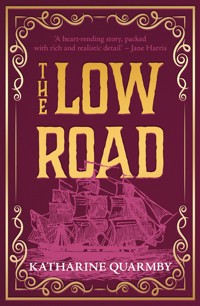
SHORTLISTED: NEW ANGLE PRIZE Norfolk, 1813. In the quiet Waveney Valley, the body of a woman - Mary Tyrell - is staked through the heart after her death by suicide. She had been under arrest for the suspected murder of her newborn child. Mary leaves behind a young daughter, Hannah, who is sent away to the Refuge for the Destitute in London, where she will be trained for a life of domestic service. It is at the refuge that Hannah meets Annie Simpkins, a fellow resident, and together they forge a friendship that deepens into passionate love. But the strength of this bond is put to the test when the girls are caught stealing from the refuge's laundry, and they are sentenced to transportation to Botany Bay, setting them on separate paths that may never cross again. Drawing on real events, The Low Road is a gripping, atmospheric tale that brings to life the forgotten voices of the past - convicts, servants, the rural poor - as well as a moving evocation of love that blossomed in the face of prejudice and ill-fortune.
Sie lesen das E-Book in den Legimi-Apps auf:
Seitenzahl: 475
Veröffentlichungsjahr: 2025
Das E-Book (TTS) können Sie hören im Abo „Legimi Premium” in Legimi-Apps auf:
Ähnliche

















KATHARINE QUARMBY has had a long career in the print and broadcast media. Her reporting on Rwanda (alongside Fergal Keane) won the One World Trust Award for Best News Film of 1999, and in 2011 she was shortlisted for the Paul Foot Award for investigative journalism. Her non-fiction books include No Place to Call Home, about the lives of Gypsies and Travellers, and Scapegoat, based on years of journalism about disability hate crime. She has also written several books for children. The Low Road is her first novel. She grew up in Norfolk and lives in London.
Praise for The Low Road
‘A well-crafted and intensely dramatic novel, with characters you care about facing circumstances so dire a contemporary audience might strain to fully imagine them’
Sydney Morning Herald
‘A heart-rending story, impeccably researched, packed with rich and realistic detail, and reminiscent of Charlotte Brontë and Sarah Waters’
Jane Harris, author of The Observations
‘A darkly gripping picaresque tale of cruelty, courage and kindness as an orphaned girl survives poverty and injustice to seek love on the other side of the world’
Maggie Gee, author of The White Family
‘Beautifully written, achingly moving historical fiction. Echoes of Charlotte Brontë and Emma Donoghue, but the essence is Katharine Quarmby’s own unique gift of storytelling’
Essie Fox, author of The Fascination
‘An engrossing and beautifully written novel. All sorts of horrors are to be found here, but also love and bravery and hope. A must for lovers of historical fiction’
Adele Geras, author of Dangerous Women
‘Soft, swelling storytelling… Beautiful writing transports you to every place with ease’
Australian Women’s Weekly
‘A beautifully written novel. From the streets of London to the distant shores of Australia, readers are immersed in a world that is rich in detail and atmosphere’
Tasmanian Times
‘Impeccably researched, increasingly gripping’
Tom Shakespeare, The Friend
‘Historically, most of the population were domestic servants, but they rarely left any record of their thoughts and experiences. In The Low Road, Quarmby brings servant girl Hannah convincingly to life. It’s beautifully written, and Hannah seems entirely believable: not sentimental, often untrusting, but able to maintain her integrity’
E.J. Barnes, author of Mr Keynes’ Revolution
‘A vibrant queering of convict history... The voices of these working-class queer women – categories nearly as invisible to history as they were to the period – come to life in Katharine Quarmby’s hands’
Brisbane Times
‘The novel is almost a “progress”, but closer to Hogarth than Smollett or Cleland; the otherwise voiceless Hannah is granted her place in history at last’
Historical Novel Society
‘Hannah Tyrell’s story is as gripping as it’s moving and The Low Road is a book that will stay with me for a long time’
Marika Cobbold, author of On Hampstead Heath
‘Ever evocative of time and place, The Low Road reads compellingly as an act of love and restitution’
Lydia Syson, author of A World Between Us
‘At times a hard, and uncompromising read, nonetheless Quarmby has fashioned a beautiful story of forbidden love and loss, and the doggedness of the human spirit, that ultimately leads to redemption’
Julia Williams, author of It’s a Wonderful Life
‘The reader is drawn into this beautiful story from the first page. A compelling and exquisitely crafted story, immaculately researched and written with such love’
The Australian Friend
‘It is important that stories like Hannah’s are preserved. A very thought-provoking read’
Beauty and Lace Book Club
‘Moving…a resolute tale of survival’
Whispering Stories
‘Because the story is based on fact, it becomes so much more real and disturbing. The quality, depth and detail of the research is clear’
Trip Fiction
‘Against a backdrop of adversity, bright spots of kindness, love and beauty shine through’
Friends Journal
First published by Unbound in 2023
This edition published by Lightning in 2025
Imprint of Eye Books Ltd
29A Barrow Street
Much Wenlock
Shropshire
TF13 6EN
www.eye-books.com
ISBN: 9781785634628
Copyright © Katharine Quarmby 2023
Cover design by Nell Wood
Typeset in Adobe Garamond Pro
The moral right of the author has been asserted. All rights reserved. No part of this publication may be reproduced, stored in a retrieval system, or transmitted, in any form or by any means without the prior written permission of the publisher, nor be otherwise circulated in any form of binding or cover other than that in which it is published and without a similar condition being imposed on the subsequent purchaser.
British Library Cataloguing in Publication Data.
A catalogue record for this book is available from the British Library.
Our authorised representative in the EU for product safety is:
Logos Europe, 9 rue Nicolas Poussin, 17000, La Rochelle, France
For my family, and in memory of Michael Quarmby, 1935–2017Stephen Tindale, 1963–2017 and Ingrid Abrell, 1966–2017
Contents
Part One
Chapter One
Chapter Two
Chapter Three
Chapter Four
Chapter Five
Chapter Six
Chapter Seven
Chapter Eight
Chapter Nine
Chapter Ten
Part Two
Chapter Eleven
Chapter Twelve
Chapter Thirteen
Chapter Fourteen
Chapter Fifteen
Chapter Sixteen
Chapter Seventeen
Chapter Eighteen
Chapter Nineteen
Chapter Twenty
Chapter Twenty-One
Chapter Twenty-Two
Chapter Twenty-Three
Chapter Twenty-Four
Chapter Twenty-Five
Chapter Twenty-Six
Chapter Twenty-Seven
Chapter Twenty-Eight
Chapter Twenty-Nine
Chapter Thirty
Chapter Thirty-One
Chapter Thirty-Two
Chapter Thirty-Three
Chapter Thirty-Four
Part Three
Chapter Thirty-Five
Chapter Thirty-Six
Chapter Thirty-Seven
Chapter Thirty-Eight
Chapter Thirty-Nine
Chapter Forty
Chapter Forty-One
Chapter Forty-Two
Chapter Forty-Three
Chapter Forty-Four
Chapter Forty-Five
Chapter Forty-Six
Chapter Forty-Seven
Chapter Forty-Eight
Acknowledgements
Part One
Waveney Valley, Norfolk
Chapter One
The sound of it in the darkness: a thudding; the fracturing next; then silence, before a screaming fills the air till it is full. I am clenched in a grip that defeats me.
The man on the black horse is quite still. The constable looks at him. He nods. The stake descends again.
I must be the one who is screaming and I am wet with tears – or is it sweat? – and I am held so tightly that I cannot break free.
The clutch releases. I open my eyes and they are on each side of me and their voices are low, reassuring. I look at them in the candlelight and slowly come back to here, to now. He helps me up for a moment. I rest against him. She makes the bed and I lie down on cool cotton. Between the two of them.
I wasn’t always like this. I think if I tell the truth it will help me, and so, as the light moves across the swept wooden floor, I make a start. There will be gaps, I don’t doubt. I will tell what I can when I can.
For a moment I remember how it felt, holding that dear dying hand, so worn down and rough with honest labour. How she fixed me with her eyes and told me: write down what you cannot say out loud. I wasn’t sure then how much I could reveal.
It’s different now. I cannot get through this if I do not talk true; tell the whole of my story now. So I make a start. This is not just for me any more.
The worst comes first. If I could stand with the child I was, and take her by the hand, if I could pull that poor little girl to my breast so she could not see what is about to unfold I would, a thousand times. Too late for that, so instead I’ll tell our tale: the child, the girl and woman that I was and am, and I’ll mend our story so that it becomes a whole for the first time.
This is a story about love, honestly. About the three people I have loved with everything I have in me, and how I’ve loved them miles and miles and years and years apart and I won’t be told by anyone, any more, that my love is wrong. I take the words that have been thrown at me and I cast them away. I will not be judged. I am not unnatural or vicious. Let me explain.
Here I am where it started then, as dusk falls on a late spring day. It has not chilled yet, and my window is open. I hear the thud and scuffling of many footsteps on the dusty road outside the doctor’s house. I stand on my tippy toes and peer out of the attic window and as far as I can see there are people, a great crowd of them, processing slowly down the Thoroughfare. As they come closer, I see that Matthew Wypond is at the front.
Then I see my mama lying on a cart. The sacking that should have covered her nakedness has slipped. The great concourse moves on and my eyes are scarred with this, as if a hot knife has seared my eyeballs.
The birds do not sing even as they roost for the night so that the only sound is the trundling of the wheels, for the people are quite silent, their heads bowed.
I tear my sheet from my bed and I run down the back stairs. I am clad in the linen shift I won on that fine day when I ran the length of the town and could not be beaten. I keep my head down, join the back of the concourse. The street is dry beneath my bare feet.
The light has nearly left the sky when we arrive at Lush Bush, where our parish ends and another begins. Everyone halts, and I creep between their legs. They are spattered with mud, blood on the butcher’s long apron, the reek of unwashed people at the end of a long day’s work.
I must get to my mama for I have her shroud. I see a great deep hole, hard by the willow tree. I hear the sound of a horse, trotting, and there is the archdeacon, Tom Olderhall, astride Black Bessie. He pulls on her bit and she walks through the crowd to the centre. To the hole.
Two men lift my mama from the cart. I see now that she is dead then; the archdeacon spoke true. And then I am whirled upwards, and Jem Summers is smiling at me with the two teeth missing that means that he whistles as he talks and he hoists me to his shoulders and fixes me there so I cannot move. Olderhall nods, once.
The men tip my mama in the hole and it is then that I scream and try to throw my bed sheet in to shroud her, but I cannot reach her. Summers laughs but then the silence falls. Although Olderhall gives no blessing, all at once the people kneel, but Summers does not let me go so I sway, sickened, as the people remove their hats. Olderhall sits high and straight above us on Black Bessie, frowning.
He nods again.
The parish constable takes a stake and places it between my mama’s breasts and then another man drives it home. A long sigh comes out from all of us, and then he nods once more. The stake makes sure. My mama will wander no longer on the parish boundary. She is fixed for ever more.
The screaming is all around us and it comes from me, a child of just ten years, and then it cuts off with a gulp of air and at last I am silent.
Chapter Two
Before then. I was a girl living with my mama on Wypond’s Farm, in the village of Weybread, in the Waveney Valley, right near the market town of Harleston, in the Earsham Hundred, in the fine English county of Norfolk. My mama, Mary, named me Hannah Tyrell. The farmer, Joseph Wypond, grazed his cows and sheep on the water meadows and I could see them, moving slowly from spot to spot, if I stood right straight and peeped out of the small bedroom window. If I looked the other way, stretching out as far as I could until my neck ached with it, there was nothing but fields, flat and far, until they met the big old sky. Joseph Wypond and the good wife, Martha, grew barley for the brewery, oats, wheat and some smaller fields of rye and sugar beet. But the good wife loved her milk cows most of all.
I begged to help Mama and the good wife with the milking, and so when I turned five or six, they put me to it. We washed our hands under the pump with a sliver of soap so thin I could see through it, and then we took the clean buckets into the barn. We had a stool each, and I remember how it felt to sit down by the warm flank of a cow, and take the teats in each hand, holding them between my thumb and forefinger and pulling gently down as the milk spurted into the pail. Sometimes the cows moved, restive. The good wife said, “Stroke them on their flank, girl; talk to them gentle,” and so I did, and learned how to still them. As I grew accustomed to them, I could milk with my eyes half closed. At the end of milking, when our work was done, the good wife took up her scoop and filled up three small wooden cups with warm milk. That was my dawn and my dusk until everything changed.
By evening I was so tired that Mama would push me up the stairs, step by step and round the corner till we were in our room. If I lift up my arms even today, as I undress, sometimes it comes back to me, how I would stand there as she slid my garments up and over, folded them neatly on the chair and then did the same till we were naked together and shivering as we put on our nightgowns and knelt down. The rag rug was soft beneath my knees as she prayed that the Good Lord would keep us safe from the perils and dangers of the night, then a sigh as she added, without fail, “on land and sea”. Then last of all, a prayer for my dear dead father, and then we climbed into bed for the best moment in our day.
The tales told in bed. I try to remember all of them, but they come back in snatches for I must have slept and missed so many endings, so what I have is in fragments. Tales of the sea, up Great Yarmouth way, where the Tyrells came from – they were my favourite, as I lay curled up like a teaspoon inside a soup spoon, breath on my neck as she talked. Those tales she told me, which were sometimes bad, sometimes happy and sometimes sad. Sometimes I have woken since and a piece has matched up with what I knew, so it makes sense at last. Sometimes, though, a patch has torn off from the whole. I wish I could summon her, ask her how I should stitch my tale together.
See I can conjure her up even now, her voice with the grey North Sea in it, a washing and pulling over Yarmouth Sands. “I was born a week before Christmas, in the year 1785, within sight and sound of the sea, and if I close my eyes, girl, I find myself there again.” Her voice was sometimes steady and sometimes warmed with remembered happiness, a chuckle in the back of the throat, a rough hand gently stroking my head.
“I can even smell the herring that Father hauled home at the end of a good day’s fishing. We had our two lighthouses, to guide the fleet in, and there was the fine old church of St Nicholas, which rose so high that you could see it wherever you were and follow it home. I was christened there in the bitter February of 1786, and then our Henry after me, three years on. Our house was in the third row, counting back from the marketplace, and we would run up and down the rows, back and forth to school or to get provisions, dodging the troll carts. They would come rumbling along after you, and you would hear a man or woman shouting for you to ‘git out the way, bor’ and we would squeeze ourselves against the wall so that they could rumble past and look at what they were carrying. Once we were through the rows and out on the quay there were ships as far as our eyes could see, so close that there was scarcely a gap between them, so that even a child could jump from one to one. If they dared. If I dared.”
Her voice breaks on the shore and I fall asleep.
I can see the farm table, where we ate together and worked side by side. The great brown teapot and the sugar bowl next to it, the bread that we proved and kneaded every day, the churned butter, salted and melting on the crust I was given every time the loaf came out of the oven so that my tongue fair popped with flavour when I bit down. My favourite food was a Sunday best: dumplings with salted pork, green beans from the kitchen garden if it was summer, or a braised dish of rooted vegetables from the sacks in the barn, herbs sprinkled on top with a flick of Mama’s fingers. In the hungry gap, when the harvest was eaten and our stores ran low, we rode up to market in Harleston and shopped for heavy baskets of provisions until I thought my arm would break. I did not know what hunger was then.
Even now, when I open the door to the big barn and the waiting animals, as I breathe in, it takes me back to that other barn I knew then, the cows and the sheep, the horses that farmer Joseph kept to hitch to his cart, and then his sturdy young stots he raised for the market. I breathe in and I am home, or sometimes, when I am near running water, I swim back upriver, through the years to the beck, which joined the Waveney and ran slow and quiet through the water meadows. On the spring and summer evenings, once the men had finished their working day, they took up their rods and went down there and cast into the clear water. I can remember the great day that old Mr Snowling hauled out a pike that weighed in at a full ten pounds and he brought us a piece. I pulled out the bones from my mouth and never ate it again.
I was sent to the parish school in a village nearby, whose name I have somehow forgotten. I remember walking there after milking, over the fields with Mama, to join the other boys and girls. The Reverend Smith, who taught us at first, was very kind to us. He was a tall, well-built man, although deaf, so we had to speak up loudly when we sang our letters out. He taught us to ring the handbells as well, for he told us that he missed the bells he had rung as a young churchman, and so we rang out a chime for him quite heartily for we loved him. He even taught us to knit and sew, although Mama had raised me already to do both, so he would pat my head as I knitted a row in front of him, quick as anything. I was always sorry on the days that I had to miss school, when all of us were put to sowing crops or bringing in the harvest, for I loved it there so much.
I recall one fine warm day when Mama was not in a bustle to get back to the farm, on the way home from school. She led me off the cart track and down to the river, to a place she knew where the bank sloped gently into the water. We sat down and she fumbled in her pocket, brought out a bread roll to share, still warm from the oven, wrapped in cloth.
The taste of the salt butter on the warm bread stays with me, as we gazed out on the river and ate until every crumb was gone and all that was left was a lick of salt on my lips. Then Mama lay down on her stomach, and so did I. “Look, Hannah,” and she showed me how to float my fingers into the water so that the little fishes could swim under and over. “Close your eyes now,” she said, and I did. There was a tickle over my hands, and I opened my eyes to see how the fishes moved across them; I laughed to feel them, and so did she.
In the winters it was different, and we went at a brisk trot to and from the school. Two years running the river froze over and all who had boots skated the length of it between Redenhall and Barber’s Sluice. That second year, when I turned seven, or eight was it, Robert Threlford ducked too late as he skated under the bridge and laid himself out quite flat on the ice. He woke up to find the whole village laughing, as he swore out loud that there were stars in the sky though it was still daytime.
There was a place in the river where Mama and the other villagers always pulled us children past, fast as they could. It was just as we walked up the hill into Harleston, over the Shotford Bridge, where the river curves right round like a bent pin and is deep and fronded so that the water runs over the waving weeds. If any folk were on a cart the man would whip the horses hard to trot over the bridge, fast as they could. I asked Mama why one day, but she pinched her lips together and said not one word. Then I went behind Mama’s back, for I was quite eaten up with curiosity.
I was in the kitchen with the good wife, when she was dropping off one afternoon and I was sewing up a rent in a skirt. She opened one eye, drowsy and looked at me sleepily. “I remember my grandmama telling me that the witches were ducked there, and if they floated, they were condemned. Look around when we cross, my lovely, for if you see magpies, the witches will be nearby. You be careful now, my girl.” I gasped, but she had fallen fast asleep now, and I dared not tell Mama what she had said.
Every time we crossed the bridge I looked down into the water where the weeds floated and then up into the air in case there were magpies above us, with their blue-black plumage glinting as they flew.
Sometimes, when I dreamed, the witches visited me, asking me to free them from the green fronds that grew in the depths and had entangled them. I would wake up and Mama, stirring, would ask me thickly what ailed me. But I did not tell her and instead waited, safe in her arms but quite stiffened, until the witches freed themselves and flew up and vanished into the night air. Then at last I could sleep.
I think I knew even then that I was lucky to live with my mama on Wypond’s Farm, for I never wanted for a thing and that was not true of everyone in the village. From time to time Mama and the good wife would hunt out everything that was spare in the great larder and pack it up, and then Mama and I would fill a basket each and take it out to families who had less than ourselves.
One of them I remember well, for her husband had died and when we got to her cottage at the end of the village, I could hardly believe what I saw when we went in. Everything had been sold from under them, so they slept in their clothes on the floor and the children sat in a row on the dry soil as I went along and fed them.
When we left them, shaking her head, Mama said that the poor man had been in despair, for he had lost his employment, and been driven to an awful death. Now the family had no money.
“Still,” she said, with a shake and a shiver, “I will pay our respects when he is buried at the church, but you will stay behind to milk on your own.”
She came back from the funeral with the good wife, and I saw how they were both crying, and then Mama wiped her eyes on her apron and joined me for the last of the milking.
“Was it terrible, Mama?” I asked, once we were in bed.
“They have been sent to the workhouse now and their cottage is empty,” she said. We hardly knew them, but she was so sad.
“Can we visit them there, Mama?” I asked. I felt how her arm tightened around me.
“No,” she said, between her sobs, and when we were next walking by the workhouse she pulled me to her and away from the gates and hurried me on. I never knew why she hated and feared the buildings that locked the poor like us in, until much later.
On Sundays we walked along the lane and the Low Road, and I watched where the sky joined the land until at last, I spied it – the church tower soaring out of the flat lands, the four turrets glinting gold in the sun. There was a good half-hour walk after that sight, for the church sat like a squat toad amongst the fields, with only the tower soaring up into the skies. As we got nearer, we could hear the old bells ringing out that were lifted into the tower when old Queen Elizabeth reigned, summoning all to prayer. When we got to the church, I would count the white and brown cattle out loud for Mama – one, two, up to thirty at times – as they grazed quiet on the meadowlands. Then Mama would open the lych gate, and walk past the gravestones. In the spring, violets and primroses burst out with colour in the green hedges, and the birds sang their hearts out. We would always stop at one particular grave with a wooden cross, and lay flowers we had gathered, or winter berries. This was where my papa lay, from before I was even born.
For Mama was a widow, she said. The man she had been betrothed to, my papa, her George, had died. His family, the Lings, did not know us, even in church.
I knew this tale off by heart, and when I remember it now, I can hear how she told me, with her voice rising and falling like the sea, and how she held me closer and closer as she talked until I could hardly breathe.
“We had saved for many months so that we could marry. I had no dowry and George’s family had set themselves against the marriage.” A deep sigh, and then she continued. “The good wife had given me a grey dress, in a soft cotton, and I had hand-sewn our favourite flowers around the hem, cornflowers for me, and poppies for George. I had put by a small trousseau, too, and hand-sewn it, in the summer evenings when there was enough light. You know the dress.” Her voice wavered. Then she brought her tale to an end, with a kiss on my head. “He would have loved you with all his heart, my dear one, but he was taken from us too early.”
She never told me how, but I knew, right enough, for she had cried in the kitchen with the good wife on the day that marked his death, and the good wife had held her and told Mama that she would never be alone, as long as she lived, and that the farm was our home. I sat at the top of the winding stair and listened as Mama recounted what had happened, as if she could not believe how he had been taken from her so sudden, as if by talking she could wind back time and win my papa back.
“I’ll never forget what you did for me,” said Mama.
A rumble from the good wife, kindly as always, then she spoke up clear.
“His was the first accident with a threshing machine, but not the last. I can still hear your screams when they came running to tell you that his hand got stuck.”
I wanted to go to Mama and comfort her, but I needed to know the truth about my papa. I held my breath to hear the last of it.
“I cannot tell you how it was to sit with him on the cart as we jogged up to Dr White, and how he winced over every jolt but even tried to smile at me. And then they carried him in to Dr White and I was sent out and I could hear this awful sawing sound and one sharp cry from George.”
“They had cut off his finger for it was so badly crushed,” Mama added.
The good wife spoke then, and said, “I still cannot understand why the Lings have been so cruel to you, for Hannah is their only granddaughter.”
“They never acknowledged me, even when he was dying, for they blamed me. They said I had forced him to take the work on the machine, and that it was my job to check it and if I had done so it would not have jammed. But that was never true and when Mrs Ling came to the doctor’s house she cursed me and has never spoken to me since.”
I heard how the good wife comforted Mama as she sobbed her way through the last few hours of Papa’s life. “Dr White came to me and I knew straightaway from his face and I flew down to George and kissed him. He jerked one last time, then he was still, and I saw how the whiteness crept up from his fingers and the colour left his dear face and my poor George was gone.”
I shuddered at that, and crept away, when I had heard more than enough, about how the magistrate had called for an inquest at the Swan Inn, and how Mama was spared any blame, but she had to give evidence all the same, pregnant with me.
Mama went through a hard labour with me on the farm. Just before she pushed me out from safety into the wide world, the parish midwife, Mercy Gunton, came in to inquire upon the father. Mama cried out in her pain and told Wife Gunton it was her George, her true love, but that he was dead.
Just moments later there I was and I had dark hair like my mama and papa, and the good wife Martha cleaned me as best she could, and swaddled me, and laid Mama down gently after washing her, and put me at her breast. I had been right easy to feed and had latched on straightway, then fallen asleep on the breast. That was always the point in the story when Mama would say, as she stroked my hair, “You are all I have ever wanted, my girl.” But then her voice would tremble, as she added, “If only your papa had held you, just the once.”
Then the parish, armed with the information from Mrs Gunton, went to the Lings for relief. But they denied the betrothal, and denied that they would have been married and said Mama had ill-used Papa by not minding the machine well enough.
“They never owned who you were to them,” said Mama, and if it was not for the good wife, where would we be? “She kept my place here, and promised that no cost would ever fall on the parish.” And so the Lings were not pressed for relief, and some even called me a bastard, and my mama worse words still.
The Reverend Smith christened me, although some people said it was wrong to do so. Mama said I hardly cried when he took me in his arms, and poured water on my head, and said the blessed words: “She will be kept safe, and turned away from Satan.” Mama took the pen she was given, and wrote my name into the register. “No dead man could be named as father, so I was not allowed to write Papa’s name in, and so the reverend entered you as base-born. But we know the truth.” This said by Mama with a brave look on her face.
So Mama always laid flowers at his grave and then looked me up and down, from my shoes to my bonnet, before we went into the church. She would tie my hat closer and flick dust off my clothes and shoes and tell me to put my shoulders back and walk straight into the church, and make her proud.
We sat at the back of the church, in the free seats, on the nearest side to the carved oak door where all entered. The working men sat on the other side. If we were kept working too long, and had to hurry to get to the service, we had to climb upwards, where a few old stools jostled for space before you took the winding stairs to the bell tower. That was my favourite seat, looking down on the people of the town, for I could be quiet there, and gaze down on the whole crowd of them. I would try not to laugh as I saw one scratch his head and then another person did the same, as the lice jumped from pate to pate, and I saw a child pinch his sister, and nobody looked up to see how I watched.
Once the poor were in their places, I would hear a trotting and then a flurry of voices outside, as the carriages came up the track to the church. The archdeacon and the great people of the parish came in, two at a time, to sit at the front in their private pews, processing down the aisle towards the nave. There went the squire from the Gawdy Hall estate, and the other squires from further afield if they were visiting, the doctor and his wife, and the overseer, Mr Wypond, the farmer’s brother. He would turn and nod to his brother and his wife somewhat grandly, as if he was better than them, but everyone knew who he was just the same, and some wondered quite openly why the overseer was not married, with him nearing some forty years in age.
Then came the pews for the postmaster and the draper, then Mr Henry Fox, the town’s attorney, then the butcher and the other tradespeople. Then came the churchwarden to shut the collarmaker, the watchmaker and the grocers into their pews, with bowing and bowing, and I would count them all in as the pew doors closed with a snap. The farmer and his wife sat near to us, and the good wife would always turn and wave at me. Sometimes we walked back together, and sometimes she even found room for us in the cart, if it was raining.
One day, in the February when I turned eight years of age, on Valentine’s Day, the Archdeacon Tom Olderhall, our new reverend, came calling at the schoolroom for the first time. Silence fell as he entered, for he was now the big man of the parish, and then we rose as one to honour him. I had heard about him, for the farmer’s brother had visited and told the good wife all about the honour of the great man arriving. He had met him and welcomed him to the town, and had an audience with him. The archdeacon had not chosen to come here, he told Wypond, but it was his Christian duty. He had wanted to pursue his studies in algebra, for he had won prizes for his superior knowledge. But instead his father had told him that he would represent his alma mater in the county of Norfolk. He might even become the Dean of Norwich, and this would be an even greater honour for the parish.
He had ridden over from Cambridge on his horse, Black Bessie. He had told Wypond that he had taken advice from the Reverend Walton, and he would reduce the number of base-born children in the parish, and there would be no more baptisms of such children as Reverend Smith had done.
After he had gone Mama brought the dough from the larder and slapped it against the table, as she spoke with the good wife. “Hannah, you must go upstairs,” the good wife said, and shut the door against me. But I put my ear to it, and heard snatches of what she said to Mama.
“You must be careful, Mary, for he has an eye on women without husbands. On children who are base-born.”
Mama spoke then and I heard how angry she was, as she thumped the bread.
“It is not our fault. Does it count for nothing that we were going to marry before he died?”
The good wife murmured something back, comforting at first, but Mama spoke up and at last Martha said sharply, “I have told you; stay out of his way. For Hannah’s sake, if not your own.”
And then I heard the kitchen door slam and the good wife sigh impatiently, and I tiptoed upstairs as the dough slapped on the board, more violently than before, until at last there was silence, and a smell of baking.
The archdeacon’s wife, Elizabeth, the daughter of the warden at his college, came four weeks later to open up the rectory at Starston. The good wife visited her and told Mama how beautiful she was, with dimples in her cheeks, golden hair and blue eyes. She gazed up at her husband in church, I noticed, as if he was God himself. But she looked away in his first sermon when he thundered about fallen women and I saw how her gaze faltered, before she put her head down and her bonnet hid her from view.
Her husband visited my school two or three times a week. And on that day, as he swept into the classroom, I was instructed to stand up straight and say to him, “Good morrow, Valentine.” And I remember that I spoke so well that his stern face softened briefly and he fumbled in his cassock and he gave me a penny, a whole penny, for speaking up so clearly.
At Easter that same year the whole town assembled for the races down the Thoroughfare. Mama put me in for one, and Jem Summers and the overseer held the ribbon on each side of the children to mark our starting line. Then the archdeacon blew the whistle, the ribbon fell away and we were off. I knew I could run, but not like that. I left the girls behind me, then the boys. The twins to Jem Summers were just in front of me. I could beat them, I thought, and I ran between them and to the finish line and it was only when we were walking back, and one of the two kicked me, that I saw they were quite dark with anger that a girl had beaten them. But as we came to the square there was my mama, a great grin on her face, and the archdeacon Olderhall holding a packet for me, and two smaller packets for the twins.
I unwrapped it later, with Mama. “It is quite beautiful,” she said, stroking down the embroidered shift. “Almost too pretty to wear.” And then, with a shake of her head, “Your papa ran as you did. Like the wind. You did us proud, girl.” A little pause, then she added, “I saw how the archdeacon smiled on you. Perhaps things will turn out well, after all.”
Chapter Three
On May Day there was a furious flurry at the farm. We roused ourselves and the milking was done right early and the cows led out with a slap on their rumps to the meadows. The farmer was outside brushing the horses down and he had brought a man to the farm for the evening milking, for we were going out for the day. I helped the good wife and Mama pick flowers and wind them around the sides of the cart and to garland the two fine horses. The three of us went into the house then, to dress in our Sunday best, but still Mama would tell me nothing about where we were going, as I heard the horses being readied for a day out. Instead she plaited my hair with two pink ribbons and bade me shush so we could hurry. We ran back outside. The farmer stepped back and his face cracked open to see the three of us. “Pretty as a picture; all of you,” he said, as he helped the good wife up first, her round cheeks shining, then Mama, along with a great basket and an earthenware jug, both covered over with muslin, with Mama holding tight for safety. Last of all me, with a rough bow.
I piped up, “Where are we going?” and all of them looked at each other before Mama put a finger on her lip and said, “Just you wait and see.” With a jolt we were off, and before long had turned off the farm track, into the village and beyond.
When I woke from Mama’s shoulder, for it had been an early start, I found that we were by the river, in a spot where I had never been before. All around me there were market stalls and everyone was dancing and there was a long pole in the middle with ribbons. I clapped my hands and I saw how all of them were smiling at me, and one after one the farmer whirled us off the cart. Mama undid the basket and the farmer and his wife handed round large hunks of bread and cheese and we stood there in a row, eating. Then she poured out a sweet drink for each of us, and I could taste the honey and lemon in it, though I was allowed no more than a few sips, and then the farmer took his wife’s hand and they went off to the dance.
We packed up the food and then Mama took my hand. First, we danced up and down and across and around and she told me this was called strip the willow. I can feel her hands on my arms, my waist, even now, how she guided me through the steps that all the dancers knew but me, and how she held me tight and let me loose, and then off I spun in the dance as we moved up and down. I saw how the good wife beamed as the farmer stumbled over his feet, and how the whole great party laughed and danced. My feet were fair smarting, but as that dance reached its end, we all then stood in a circle and took a ribbon; Mama and I shared one. The music started again and we wove in and out as my feet burned hotter and hotter, and at the end, I looked at the pole and the ribbons were woven together and now everyone was smiling and clapping their hands and the farmer and his wife held each other tight and he was stroking her hair.
Mama took me to sit on the cart, and I leaned on her shoulder and looked out. The musicians were up higher, on a stage, and I saw how they were dark and the men wore scarves around their necks, rings through their ears and how their feet tapped as they played. There was one young man whose hair curled over his collar, and at the end of a song they all ceased except him; he put his violin to rest on his shoulder and then his bow sang a song that I knew was sad and happy at the same time, and I saw how all the faces turned up to him and then to the ones they loved as they held them tighter.
Mama must have carried me up the stairs asleep that night because I woke to find her shaking me and smiling, and it was milking time again. As I leaned against my cow, half asleep, I asked Mama, “Can we do that every May Day?”
She laughed and said the farmer would decide, but she hoped so. “After May Day comes the summer, and then the harvest, so there is plenty to look forward to,” she said, passing me my mug of milk. We drank them together and I saw how she had a moustache of white froth, before she wiped it on her apron.
We had a good harvest that year, and Joseph and Martha gathered everyone together in September to celebrate, with a table groaning with food, and he sat at one end, and his wife at the other.
Before we ate, the farmer gave a prayer of thanks for the plentiful food, the hard work, the good weather, and the plentiful harvest. The workers were thanked as we ate, and Mama was given an extra shilling for setting out the table, for to produce such a feast was a right enterprise. The farmer himself took the knife and great ladle, saying it was his turn to serve, and heaped fine red meat on the plates, in a thick stew with carrots, turnips and potatoes.
Usually the farmer dealt with rabbits and hares himself, hanging them for a full seven days, for he liked his game rich. This time he had no occasion to skin the hare himself, so Mama herself had to cut the fur, then get her hand in and pull the skin off. “Like flaying,” she muttered, and looked fair green with disgust.
I could not look away from the hare’s head, cut loose from its body, staring at me all the while as Mama took his jacket off, as the farmer called it. “You’ve undressed him well,” he said, passing through. “Can you paunch him yourself ?” Mama nodded reluctantly, and pulled out the hare’s entrails, cleaned the body of its waste. When he was clean inside, she held him up and poured his blood into a bucket, threw the innards in.
“Here, Hannah, for the dog,” she said, handing me the bucket. The old dog came out to the end of his chain eagerly, as I went over. I tipped the mass into his dish and walked away so I did not hear his jaws working.
We jugged the hare with carrots, turnips and potatoes, and I ate heartily as the men did, for I relished the taste. But I cast an eye sideways, saw how Mama hid her portion underneath a turnip, then scraped it away hurriedly into the waste when she cleared the plates. I wondered why she did that, but all of a sudden the men took out their clay pipes and lit them, and the bowls smoked so much that I could not even see my mama’s face.
I coughed and heard a man laugh, and felt my mama put an arm around me; then the farmer opened the kitchen door and the smoke cleared.
The men put the table to one side and I was set to work, putting out more candles until the whole room was alight and the smoke drifted up and away. Mama took me in her arms and a fiddle scraped, then we all started to dance. Mama handed me on to the good wife and we danced strip the willow and I laughed out loud to hear the clogs and boots all about us, clicking and galloping on the hard stone floor, as Mama watched on, smiling. A pause then, before the next dance struck up, and Jem Summers came towards me, begging for my hand. Mama shook her head.
“If she will not dance, then you must,” he said, with a hoarse guffaw, and dragged her to the middle of the room. She looked back at me for a moment and tried to smile. I watched how she danced with him, and how he passed her to the overseer, and then my eyes must have closed for the next thing I knew, it was morning time and we were in bed together, her arm curled around me.
Chapter Four
The good wife was stricken, a month after Harvest Supper. She lost a child, who would have been their first-born, and the poor tiny body was buried in the churchyard. He had not been christened, so the archdeacon said there could be no funeral, but he would say a blessing as he was laid to rest, and the farmer and the good wife came back in tears.
She was in pain all over and she asked Mama to go to the dispensary for opium or laudanum, anything that would ease her sorrow. I begged to go with her, for I loved the town and I had never been in the dispensary. We walked up the hill in silence, and there was no pointing out of fruits in the hedgerows, or birds in the sky, or playing a counting game with me. This, I knew, meant that taking me was against her better judgement, her mouth shut like a trap and her eyes set forward, walking so fast that I had to run and then walk so as to keep up with her.
I was excited all the same, as I had never entered the shop before, and it was a mysterious place from the outside; I ran to the door and opened it for my mama as the bell tinkled overhead. It was not a big place, from the inside, but quite dark and resplendent with wooden panels from floor to ceiling. Mrs Spurgeon stood behind a high counter, in a starched white apron. Above her were glass bottles in different colours – clear, blue, brown and green. The brown ones were set high on a shelf behind her. White pottery measuring jugs sat on the counter, below which there were more bottles, and the dark panels slid open so that the apothecary, Mr Spurgeon, also quite resplendent, could select his items. Mama asked for “Mrs Wypond’s medicine” and before handing it over, the apothecary asked, earnestly, how she was faring. Mama nodded and said she was recovering, with God’s grace.
Then the apothecary handed over a brown paper bag, with four packets inside, and wished us a good morning. Mama handed over the money, and then we walked back. I was not so happy to go again, more than once a week, as the year turned and the road up to Harleston grew mired and icy. The good wife had become so desperate that she would be watching for us at the farm gate and walk with us to the kitchen. She would have a jug of water on the table, and swallow her packet down in one gulp, she was so eager to recover.
But she grew no better and could no longer milk. She was so quiet now, so tired. Mama pleaded with her to rise early, to get back to the old ways, before the sorrow, but the good wife could not find a way out of her sickness. Mama brewed her poppy tea to still the pain, and she sat by the window, sipping it, until she put it down and asked for her powders instead. Mama asked the chemist if there was anything weaker she could give the good wife, and he offered her Godfrey’s Cordial instead, in a dark brown bottle, and Mama put the powders away. As the good wife got even weaker, she took to sipping this instead, off a teaspoon, until her hands shook so much that Mama took the spoon and fed her off it like a baby. I smelt it once, and it was sweet and sickly. I put out my tongue to lick what was left but Mama caught me, slapped my hand away and the spoon clattered onto the floor.
The farmer said little, as his wife wasted away before his eyes. But our household changed, and there was no more singing as he came in after working, and he could not whirl the good wife round when he saw her, but instead dropped a kiss on her poor head. Where once the good wife had held sway at the table, now it was he. We had taken over the milking, but now Mama also helped the good wife to dress, whilst I mucked out with one of the men, and at night there were no more stories, for we were both so tired. Mama then helped the good wife down to the parlour, and she only spoke to ask for her Godfrey’s, like a child begging for a sweetmeat. She would sit by the open window and go into a kind of dreamland.
I can see the farmer now, standing at the open door, looking at his wife, as she looked out and away from him. As if he had lost her, but she was still there.
I asked Mama when she would get better, and Mama just shook her head and looked down at me. “She lost her child, Hannah; a woman finds it hard to recover from such a loss,” and she stroked my hair. I ran to the good wife then and tried to rouse her, amuse her with a game of cat’s cradle. But she just sat there, quite still, the wool falling from her limp fingers, and in the end, Mama took me away and put me to work.
Towards the end of that year the good wife seemed to grow smaller; sometimes I wondered if she would just disappear altogether. She shrivelled and shrank, and Mama took in her dresses for her, tightening the seams so they fitted again, on a Sunday afternoon before the light faded.
Towards the end, as the pain got worse, she could take as many as a hundred drops of laudanum in one night, and still moan with pain. And in the day, she was so stupefied she hardly knew me at all, but she knew Mama, and followed her with her eyes, slowly, like a dying dog.
She died just two weeks before Christmas, a hop and skip before my mama’s birthday. She was to be buried in the churchyard at Redenhall, and when they came to measure her for her coffin, it was almost as small as that of a child; four men were enough to carry her out to the cart and on to the churchyard. We followed after, crying. I loved her, and so did Mama, and nobody I knew had ever died in my born days.
Not even a week after she passed, Archdeacon Olderhall came to the farm on Black Bessie, looped her reins over the farm post and knocked and entered the kitchen without waiting. I was chopping apples at the table as the farmer sat there, still and silent, as he had done every day since the good wife passed. Mama had told me, “Just stay with him, when I cannot.”
Olderhall sat down. The farmer scarcely stirred, and so Olderhall reached over, tapped him on the shoulder. “Your brother sends his regards, Wypond.”
A pause, and then to business. “Boney is threatening trouble.” He spoke grimly and my knife shook in my hand.
Mama had told me about the emperor, Napoleon Bonaparte, and the sea battles that brought the wounded to shore up on the coast, round Yarmouth way. “There were men who lost limbs, my girl, yet they kept Boney from our shores,” she said proudly, although others had lost their lives. Yet he was threatening us still, from over the seas.
“I will be training the men to defend themselves if he invades. I can count on you, Wypond?” A question in his voice and the farmer looked up at last. Olderhall continued. “If Boney comes ashore, I will send the children and wives to the workhouse for safety.” At that I shivered with fear and saw how the farmer started, and tears rounded in his eyes, for he had no wife or child, but Olderhall talked on, ignorant of the pain he was causing.




