


9,99 €
Mehr erfahren.
- Herausgeber: Bedford Square Publishers
- Kategorie: Gesellschafts- und Liebesromane
- Sprache: Englisch
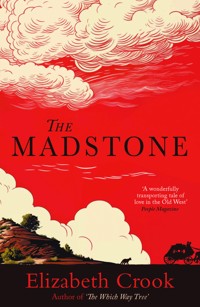
Texas hill country, 1868. As nineteen-year-old Benjamin Shreve tends to business in his workshop, he sees a stagecoach leave a passenger stranded. The man, a treasure hunter, persuades Benjamin to help track down the coach, drawing him into a drama he could never have imagined. On reaching the coach they discover that its passengers include Nell, a pregnant young woman, and her four-year-old son, Tot, who are fleeing Nell's brutal husband and his murderous brothers. Nell is in grave danger. If her husband catches her, he will kill her and take their son. Benjamin offers to deliver Nell and Tot to a distant port on the Gulf of Mexico, where they can board a ship to safety. He is joined in this chivalrous act by two companions: the treasure hunter whose stranding began this endeavour and a restless Black Seminole who has an escape plan of his own. Fraught with jeopardy from the outset, the trek across Texas becomes still more dangerous as buried secrets emerge. And even as Benjamin falls in love with Nell and begins to imagine a life as Tot's father, vengeful pursuers are never far behind.
Das E-Book können Sie in Legimi-Apps oder einer beliebigen App lesen, die das folgende Format unterstützen:
Veröffentlichungsjahr: 2024
Ähnliche




















JOIN OUR COMMUNITY!
Sign up for all the latest crime and thriller
news and get free books and exclusive offers.
BEDFORDSQUAREPUBLISHERS.CO.UK
Praise for The Madstone
‘Crook has a gift for engaging details… The guiding spirit here is Dickens… An entertaining, well-paced yarn’ Kirkus
‘A wonderfully transporting tale of love in the Old West’ People
‘A treasure: a brilliant, beautiful page-turner of a book. Elizabeth Crook has reimagined the Western, giving us a poignant love story and a riveting road novel. I devoured it’ Chris Bohjalian, author of Midwives
‘Elizabeth Crook is a magician of a novelist, bringing the past to life with a tale of epic proportions that must be read to be believed. The voice of Benjamin Shreve stands alone in recent fiction, and all of Crook’s characters linger long after you’ve finished reading. The Madstone is a marvel’ Nathan Harris, bestselling author of The Sweetness of Water
Praise for The Which Way Tree
‘Poignant and plainspoken… Crook crafts Benjamin’s narration beautifully, finding a winning balance between naivete and wisdom, thoughtfulness and grit’ Publishers Weekly
‘When I began to read this book its unique voice appealed to me immediately. Elizabeth Crook has written a beautiful novel with wonderful characters’Robert Duvall
‘A fast-paced story resonating with rich characters and mythic elements that come to us as folklore that mustn’t be doubted’ Daniel Woodrell, author of Winter’s Bone and The Maid’s Version
‘Readers new to the Western genre will be hooked if they start this compelling novel’ Emily Hamstra, Library Journal, starred review
‘This is a story of unremitting deprivation allayed by unexpected kindness, with a dangerous chase motivated by love and suffused with humanity’ Michelle Leber, Booklist
For Charles Butt
The Madstone
Comfort, Texas
November 1868
Dear Small Tot,
I hope to lay down these events in a manner helpful to you, concerning some days you will probably not fully remember when you get older. I think you will want a clear idea of what occurred. It is plain to me I should do this, as otherwise you might worry over too many hard questions you can’t ever answer.
I will arrange for this account to come to you when you are nineteen years of age or greater, not sooner, there being sundry adult matters involved in it.
Currently I am nineteen years of age myself and think it a suitable age for you to read this. That should give you time to of done a few things and known people and figured some of them out. Also to of read books. Amongst the books given or borrowed to me is a autobiography of Benjamin Franklin about his quest at the age of twenty to improve on his morals and scruples. I figure he must of had worthy ideas by the age of nineteen to of even embarked on such a notion, and from what I have seen of you, Tot, I believe you might grow to be equally wise and nineteen would do to read this.
As well, don’t read it if you don’t want to, on account of you didn’t ask for it.
Another point made by Benjamin Franklin was how the best method to live your life over again, if a person might want to, is to put down tracks to recall it even whilst it takes place. He advised noting events on paper. I can’t do that on your behalf, as you are but four years old currently and no doubt seen different things from what I did, and seen some of the same things in different lights as well. But I will do what I can to that end.
For myself, I am bound to remember these days I write about until the reaper should come fetch me.
It is not the best paper and my grammar is not perfect but I intend to be truthful and keep to the point and not go on about other things. To get to it, here is how I come to be mixed up in the matter of your life.
I first laid eyes on you earlier in this year, in the town of Comfort, where I live and now am. You will probably not remember the place. It sits just south of the center of Texas if maps is correct in their scale. Folks who live here is mostly Germans who built the town some fifteen years back. There is a few hundred citizens all told. I settled in here a year ago when I give up on some things in my life and a German widow allowed me use of a shed for my carpentry. I make chairs and coffins and tables and such items that might be called for. My specialty is chairs. I lodge in the woman’s house, pay board, and work in her shed.
I was stationed out in the yard on a morning in May, six months back from now, shaping the legs of a rocker, when I seen across the street our sheriff enter the privy alongside the livery stable. He had papers for reading and shut hisself in. It is a two seater privy intended for stage travelers, but the sheriff is in the habit of latching the door and keeping the place to hisself whenever he wants, no matter if there is travelers who need in it or not.
Whilst he was shut in the privy a coach of the Ficklin line rolled in and drew up at the livery. It was a mere mud coach, worse for wear, not the Ficklin’s best, coming south from Fredericksburg twenty miles off. The mules was jaded. A door of the coach swung open even before the mules come to a halt, whereupon a man sprang out in haste and headed direct to the privy, as a issue must of come over him. His shirt had a ratty aspect, his trousers was shabby, his hair called for a cut and his beard was untidy. He was a stout man. I had not seen him before. He attempted to open the privy door and was shouted at from within by the sheriff. I could not make out the exact words of the sheriff.
The traveler answered back, It’s urgent! I need in!
The sheriff denied him again.
The traveler shouted, It’s a two seater size! Is there two of you in there! Unlatch the door! He cursed to express he was in a hurry. He said, God damn, can you not understand the bad straights I am in.
He then commenced to pound at the door. A person or two who was passing seen the fuss but did not tarry. I wished I might offer the use of the privy back of the house where I live, but I required the right to do that.
I should tell you our sheriff is not a person to suffer nonsense nor rudeness, nor even excuses from others, no matter his own bad habit to hog the stage privy. He was brought down here from up north by the US army that has took over to see folks abide by the laws and won’t go about cheating and mistreating Negroes and local folks who was true to the Union in the war, as that time is meant to be over. He gets along fine with the Germans here, as they had nothing to do with the fight between Yankees and rebel Confederate sesesh. Mostly the Germans tried to escape that, down to Mexico. They are fond of the sheriff and give him all manner of treats and strudel. He wears his Yankee uniform and is friendly with them but not with folks passing through, such as the traveler, as they are often a bad lot and cause strife and yell at the Germans to go back where they come from. The sheriff affords such travelers no second chances, and rightly not, mostly, although on this occasion I thought he might of been nicer, given the man’s trouble.
Therefore I tried to warn the traveler of who it was in the privy. I whistled to get his attention but he did not hear me nor turn.
He shouted such things as, I’ll kick this door down!
You might think the Ficklin driver would act on the issue, but he did not. The traveler appealed to him, yelling, There’s somebody hogging both shitholes! Is there another privy!
The driver paid him no mind. I suppose he had seen worse quarrels. He was old for a driver and missing a ear. He got down from the box in a weary manner, called for the stable boy, hauled a mail sack out of the boot and started across the livery yard to the store with the postal office. He appeared as spent as the mules. It was a warm day, although early.
The stable boy commenced to exchange the mules in harness with a team eager to cut loose. The fresh ones caused a fuss, and he jerked them about and hollered at them in German and put on their blindfolds to get them settled. The fracas jolted the coach and swung the door open. The traveler must of not properly closed it, being in haste to bust out.
That was the moment I seen your mother seated within, and you there alongside her. You was both mostly hid by heaps of parcels and bags of mail piled up around you, however I made out one of you was a child, the other being a woman. I wondered why neither of you had got out to visit the privy nor walk about for a respite, as most people do. Your mother then pulled the door closed. I did not see more after that, on account of the window flaps was all down.
Whilst this happened the traveler give up the shouting, looked about him and seen nobody passing at that moment, it being early, as I have stated. He then jabbed a hole with his boot in the dirt close alongside the privy and squatted and done as he needed.
It was not lucky for him the sheriff come out at that time. The sheriff give him a look of disgust.
The traveler got hisself up and arranged his clothes. I figured he might be sorry to learn how it was a sheriff he had been hollering at. This was not the case, however. He told the sheriff, You son of a bitch. Look what I had to do.
The sheriff said, That is publicly lewd behavior. You’ll have to clean that up. You’ll need to be fined. I’m charging you with crimes against public morals and decency.
The traveler spat to express he was not sorry.
The sheriff said, There is a steep fine for public indecency.
If this is public indecency, where is the public, the traveler said. There is no public about. I see no public just now. I see a coach with the shades down. I see a store with nobody at the windows. Where is the public. Nobody seen me but you.
The sheriff looked about, and spied me, and called out, Young man! Come over here!
What else could I do but go. I crossed the street to him.
He said, What is your name.
Benjamin Shreve, I told him.
You witnessed what happened here at the privy, did you not, he said.
I owned as I had.
Well then, here is your public, he said to the traveler, and told me to state the particulars of what I had seen occur.
I related the traveler had undertaken to enter the privy, had been denied, had appeared in discomfort, and then had done what he did.
The traveler become heated at hearing events of the wrong inflicted on him recounted. He cursed the sheriff a great deal, to which the sheriff replied there was now two charges, those of public indecency and public profanity. Raise your hands, sir, he said, I need your piece.
The traveler scoffed but done as ordered, and the sheriff disarmed him of a pistol. The sheriff then got fetters out of his belt pouch and said, I am taking you to my office to decide what penalty should incur and collect the charges.
On seeing the fetters, the traveler commenced to beg. He said, I got to get back in the coach. I got business. I got important matters! The coach is fixing to leave soon and I got to be on it!
The sheriff granted no hint he might yield.
I have a through ticket to San Antonio! the traveler said. Name me a fine and I’ll pay it, but I got to get back on the coach!
He drew a large money pouch out of his coat to show he could make the payment, but the sheriff ordered he put it away, as papers would have to be signed in his office for proof of the charge and imbursement.
Tot, if I had behaved in a different manner from what I did in that moment, I would now be telling a different account, or none at all. Moments have either a short bend or a long bend in the way they turn how things go, and this one had a long bend to it.
There stood the traveler and sheriff, face to face. And there stood I, called to the situation for being the only public. It was a unlikely pair of men I stood alongside. The traveler was husky and shabby, whilst the sheriff was tidy. The sheriff had made a name for hisself as a Yankee soldier, which I believe was the best side to of been on. But he was mistaken in this occasion.
I thought I might speak up for the traveler and felt a urgent need to do so, and yet my better angel did not advise me of it. And whilst I stood quiet and considered what I might do, I caught sight of you, Tot, looking direct at me from under a window flap in the coach. I seen only your eyes and a small share of your face, but you looked eye to eye with me, and I felt you evaluating my actions. I felt the weight of your expectation, and words was urged to my lips. And yet the voice that come in my ear was my worse angel’s. It whispered at me to stay quiet, as who wants to be on the wrong side of the law. I had lived in Comfort but one year, having moved from my home near Camp Verde, and my carpentry business was on the rise. I had nobody but myself to depend on, and I did not want to bring any trouble upon my standing. On that account, I said nothing. I seen your eyes witness my silence from under the flap in the Ficklin, and I felt shame, and yet my mouth remained shut.
The next I seen was the hand of your mother draw you away from the window, and the window flap fall shut. Your judgment of me, whatever it might of been, was not to be seen anymore. This left me to bear the weight of my own judgment of myself, the sort that’s hardest to shoulder.
The sheriff then called to the stable boy to bring over a shovel, and he come running with one.
The traveler had a forlorn look whilst he shoveled a hole and buried his shat. He piled the dirt neater than called for, yet the courtesy gained him no favor. When he was done, his wrists was placed in the fetters, even whilst he continued to make his case and ask, in desperate terms, if he might be turned loose. He showed distress at the risk of his rifle and bags going off on the coach without him and repeated a number of times, I need my bags! There’s one in the coach and one in the boot. I need to be on the coach. My hat is in there! I got to get to San Antonio and catch a stage out!
The sheriff give me permission to take my leave. Whilst I crossed back over the street I heard him charge the stable boy to let the driver know the traveler was apprehended. He further told the boy to check the waybill and remove the traveler’s bags and rifle and hat before the coach should depart. The boy answered in English so I supposed he knew enough of the language to work out the instructions.
I retired into the shed to get tools and my water jug, it being a warm day, although early, as I have aforesaid. Whilst in there, I heard the coach depart. When I come out, the sheriff and traveler was nowhere in sight neither, as they was off to the sheriff’s office to settle claims which was, to my thinking, trumped charges.
* * *
For a half a hour or so after this event, I seen nothing unexpected, just folks starting about their morning routines. I returned to my work on the rocker. It was a nice piece in my opinion and better than what the cabinet maker in town turns out, and that is saying a lot. He studied back in the old country of Bohemia and learned his trade in a place called Prog. He turns out good looking furniture named Beedamiyer and does scroll-back in walnut with a cross splat carved like they do it on islands in Greece. I have not been to Greece, nor anywhere else, but that is what he told me. He has asked me to work for him, but I work best on my own. My customers is loyal on account of the fact I am cheaper and my work is just as good. Also I will make a hide seat if requested. The folks here generally do not want hide, but some lack funds for the Beedamiyer and look to the new ways here, not the old ones back there.
I don’t know if any of that is of any interest to you.
So for a short time I worked on my rocker. I was powering the lathe and getting warm, as it was hard foot work. The spindles was looking nice, and I was thinking of taking a rest when a rider come charging down the street from the same direction the coach come before, dodging folks and carts and aggravating people. He reined in hard at the livery. His horse was a fine looking roan but must of been rode some distance at a reckless pace, as it was badly lathered and winded.
The rider was dressed in a frock coat and bowler hat and appeared to be greatly agitated. He had a shotgun strapped to his saddle. He alighted and run into the livery calling for assistance. However, he found none to his satisfaction. I heard him exchange but a few words with the stable boy before he come back out in a hurry, seen me across the street working my lathe, and headed my way whilst hollering about there being no mount to be had at the livery.
He said, Do you know of a horse I can let! Mine is played out. I’ll pay good money!
I did not care to offer the use of my mare, as she is a good mare, if past her prime, and by the lathered look of his roan I knew the man was a hard rider.
I said, If the livery don’t have one, I know of none.
In the whole town, he asked. Not one horse to let.
I said, There might be. I don’t know of it.
I did not like the way he seemed to blame me for the fact. He appeared about ten years my senior, perhaps thirty years of age, and his features was decent but there was a meanness about him. His whiskers was dark and thick, not mutton chop but almost. His shirt was nicely pleated, however I noted the buttons was loose. His frock coat was frayed and looked to be made for a man bigger around, like maybe he’d lost some heft of recent. Whereas mostly a belt or suspenders will do on their own, his pants was held up by both. His shoes was fine but appeared to of spent time roaming on soggy ground. He carried a sidearm as well as the shotgun. It was a Colt’s revolving belt pistol such as was used in the war.
He bore down a hard look on me, saying, You must know of a person to ask for a horse.
It’s not my business to find you a horse, I told him. I got my business here with this rocking chair.
He give me a long stare and I give him one back. He had already made it such that even had I known of a horse, I would not of told him of it, but I knew of none. Comanches was coming through town at nights and helping theirselves to horses.
The man turned about and hollered at folks that was going into the store, Do you know of any mounts to let, buy or trade in this town!
Two men give him a look but declined to answer and went on into the store. They was Germans, and Germans is not by habit the friendliest people.
The man crossed back over the street and went into the store hisself. He must of found no satisfaction by way of a horse for offer, as he come back out in a huff, stomped to the livery, mounted his spent roan, set spurs to it and rode off.
I sat in my yard to rest my foot from the pedal and drink water, and to reflect on the man and to further consider the question of if I might be a coward not to of spoke up to the sheriff on behalf of the traveler at the privy earlier in the morning. I could not get that issue out of my head.
About then, here come the traveler hisself, freed of the fetters and wearing his pistol again, tramping back down the street from the direction the sheriff had took him off in. He went direct into the livery, from where I heard him engage with the stable boy within and commence to argue.
The stable boy shouted in English, despite it sounded like German. He yelled, I do not have blame of your baggage!
The traveler replied, Then where is it! There was two bags! There was one in the coach and one in the boot. The one in the coach was small. Did you not get it out! The sheriff told you to hold two! You was told to check the waybill!
The stable boy answered he did not have the waybill, it was the driver that had it. He maintained he had told the driver to check it, and the driver only give him the rifle and one bag. He yelled at the traveler to take them and go, and commenced to shout what likely was curses in German. The traveler demanded a horse, and the stable boy yelled, I have none horse!
The traveler come out red in the face, hauling his rifle and one bag. It was a sizable bag. I could not see why he would need another.
He spied me and come over, saying, The driver took off with one of my bags! Do you know of a horse for sale or let! I need to catch up with the coach!
He appeared beside hisself and breathed hard. I figured the gone bag must hold money or some other valuable item. Yet how a traveler as grubby as him might come by a bag of money was hard to fathom. If I was to judge by his ratty attire, I would say he had not spent much in a while.
I asked what the bag might hold that was crucial, but he did not say.
He said, I appeal to your earnest nature, which I see that you’ve got. The coach is headed to San Antonio. I need a horse to catch up.
I said, I have only my mare and she’s not for let.
The traveler tossed down the bag he carried, opened his coat and seized from a inside pocket his money pouch, it being large and leather and tied with a hide string. He took from the pouch a coin the likes of which I had not seen before.
He said, Help me get hold of a horse in decent shape and I’ll give you this piece. It’s a twenty peso piece from Mexico worth a dollar. It’s gold. I got more of these in here. I’ll hand over your asking price, just ask it. You look like a fair man to me. I appeal to your tenets.
I will tell you, small Tot, I was not prone to let him take off with my mare, but there was that in his eyes which I somewhat trusted, and that in his speech which struck me as genuine and which I liked. Also I felt I owed him, as I had not spoke up for him to the sheriff, so my tenets was smart to appeal to. As well, the desperation he showed is hardly that which a man will pretend at. He might claim he is doing just fine, and that things is all to his liking, and to his own devising, but a man is not apt to pretend despair. I believed the fellow. His teeth was bad, his attire was seedy, and he wore no socks. But he did not seem a swindler by trade, as his eyes was accordant with his words, and his consternation appeared true.
He give me the coin to study, and it decidedly looked to be gold. It was the size of a silver dollar and but two years old, dated 1866. One side had a man’s head and said Maximiliano Emperador. The other side said Imperio Mexicano, 20 pesos, and had on it a crown and a eagle and dragons alongside the date I already said. The pouch appeared like it might hold nearly a hundred such coins of that size.
I said, Here’s the problem I’ve got. I won’t chance my mare. There might be a person in town with a horse to sell you, but I don’t know who that might be. Comanches was through here a night last week and taken four horses I know of. If there’s none for let at the stable, then you’re unlikely to find one. Horses that folks has hired out don’t always come back, so folks here in town won’t chance letting.
That was the truth of the matter. There was thieves attacking travelers in every direction. Out west was bands of Comanches and Mescaleros and others not fun to meet up with. Roads north and east was preyed on by low life robbers. South was plenty of Mexican bandits. The bandits was primarily known to be friendly and not harm and kill folks like Comanches done on the roads, but nevertheless they was thorough in what they took. This traveler wanted to head southeast on roads that was pretty well used, but who could say what danger might arise out of the brush.
I offered, I won’t put my mare at risk without me along to see to her, but I could take you myself in my wagon as far as Boerne. You might find you a horse for let there. If you tell me a price you think is fair I’ll see how it strikes me.
Is your mare fit, he asked me.
She’s old but she pulls a wagon, I told him.
He said, I got fleeced on the Ficklin but I’ll raise that if she’ll pull in a hurry. I’ll pay you four dollars to get me to Boerne. That’s better than first class wet rates, and we got good weather.
No thank you, I told him. Boerne’s fifteen miles off. We’d not get there much before dark. I’d have to pay board tonight and travel back home tomorrow. I can make upwards of five dollars a day, staying here. What did you pay by the mile on the Ficklin.
Short of twenty cents by the mile, he said.
Well I guess I cost more, I told him. First you was begging, and then you was bargaining. Name me a fair price.
He consulted a watch he got from his trouser pocket. It was a scratched up stemwinder with a cracked face, but appeared to tell time, as he cursed how the time was passing.
All right then, he said. I’ll pay you a generous two days of work, at more than your price by the day, plus another half dollar. Twelve of these gold ones and fifty cents. Plus your board for the night.
And feed for the mare, said I.
He argued my mare would need feed regardless of if she went or stayed here.
She’ll need more if she’s drawing a wagon all day, I told him.
He thought on it, and agreed fair is fair.
Do I have your word it’s genuine coins, I asked him.
I seen counterfeit all my life, and this ain’t any of that, he swore. This come out of a hole in the ground. Who buries counterfeit. Nobody. I found this. It’s honest coins. The sheriff had no problem taking these coins just now. He took plenty. How quick can you hitch up the mare.
He did appear honest and short on time. He commenced to stomp and fidget.
I told him I had to talk to the lady that owns the house about putting her chickens up for the night, as that was a task I usually done and she would need to see to it.
He said, Show me the mare and the wagon and I’ll get her hitched.
I put my work away in the shed and took the man around back to the pen.
He seen my mare in full light and lost heart in the situation, and said, If that’s her, she won’t do! She’ll drop in the traces! She’s too old! She’ll die on the road!
Then find you another, I told him.
He agreed he could likely not find one in time.
Tot, that is the conversation we had, to the best of my recollection. I aim to be thorough.
I then went into the house and took care of things with the woman who owns it. She’s young for a widow. Her husband was with a assemblage all slain by the rebel Confederate sesesh whilst trying to travel to Mexico. He was a socialist free thinker and she is likeminded, the best I can tell. I said to her I would be off to convey a man to Boerne in my wagon and would be gone for the night but back by the next. It took me a while to make myself clear, on account of I don’t speak German.
She give me a bag of dinner to have on the way. It was nearly enough to feed the traveler as well as myself, although she was short on items, the varmints having plundered more than their share of her garden.
I retrieved my spectacles from my room, as they help me see down the road. The traveler and myself then buckled my mare in the traces, loaded his rifle and bag along with my rifle and satchel and what might be needed, and pulled for Boerne.
It was half past nine, by the traveler’s watch, at that time.
* * *
We went at the usual pace for my mare, which is not a fast one.
The traveler pestered me over it, saying, Can you not even give her a tap on the rump.
I told him she had come by her age the hard way and should not be bothered. She appeared to of had a rough youth. Comanches had used her up and left her for spent until my father found her, and claimed her by law, and patched her up and left her for me when he passed, of a fever.
The traveler give up pestering but continued to lean frontward and bounce his weight on the seat as if to thrust us forward. He offered his name was Richard Dean Bell and I was to call him Dickie. He said he had made a arduous journey from El Paso, long portions of which he traveled afoot for days. He’d taken a stage part of the way but got delayed on account of Indians struck a station and took off with stock that then had to be replenished. He’d finally arrived in Fredericksburg and stayed the night and boarded the coach at sunrise, the only other passengers being a lady in the domestic manner, that being your mother, and her son, who was you. Your mother had shown a ticket and told the driver on boarding that she would be traveling to San Antonio and from there to the port of Indianola, which lies down the coast from Galveston. This was Dickie’s destination as well.
I asked what business he had at Indianola.
A ship to New Orleans to get on, he told me.
What’s your business in New Orleans, I asked, and he said there was things entailed which he would be poorly advised to speak of.
I asked what he might of been up to out in El Paso, and he begun to talk a great deal about hunting gold in Arizona, which he swore had promise to it. He said he had strayed from that enterprise due to rumors of silver down in El Paso, which turned out false. There being no silver, crowds of upset seekers was stranded without fare to leave, and those who had fare was all taking off in a sorry mood. It was a bust, he said. He had lit out from there in the company of three seekers he’d met up with, but they had got disgruntled with one another and split up and left him. He was making his way through Castle Gap on a mule by hisself, keeping a lookout for Apaches and Kickapoos and Comanches and Mescaleros and whatnot, and feeling concerned about his prospects, when his life took a harsh unforeseen turn. This happened nearby the Horsehead Crossing on the Pecos river.
Upward or downward turn, I asked.
Upward, he said in a solemn manner. But how far upward is yet to be seen. It entails what’s in my bag that’s gone with the stage, and why I have to retrieve it, and why I’m headed to Indianola. I should never of left that bag when I got out for the privy. It’s small, but it holds my future.
His urgency to press forward come to a brief halt when he stated these words, and a stillness settled on him. I wanted to prod him further, as he had presented a mystery and his manner give me a sense he would like to speak more of the situation. Yet it also give me pause to pry, and I decided to keep my questions to myself.
The road we traveled was rocky, with difficult inclines, but it was familiar to me and well trod. We come on sundry carts and folks afoot and was hindered skirting a cattle outfit that hogged a portion of road. I wished I might be going along on horseback with the cowhands, not making my way by wagon to Boerne, someplace I had already been and nothing to it I hadn’t seen. There’s plenty of cattle need to go north, now that the war is over, and I dream often of striking out and seeing a piece of the world. If I was to make enough money at that, then things might play out in such a way I could purchase cows of my own, and someday buy a good patch of land in south Texas, or maybe out west. I believe I’d do well in the business.
But that is off the point of what I mean to tell you.
We ate our meal of jerked beef and carrots, and Dickie told more of his hunt for treasures. It was a lifetime hunt, he said, embarked upon when he was a boy and his father taught him to pan for gold in a stream in Arkansas nearby their house. The stream was no more than a gully and oftentimes dry, and this give him the gift of eternal hope, he declared, as there was no gold in the waters he learned to pan in, and none was ever found there, and the task was only a trick to get him out of the house, as otherwise he was a pest to the family, being the youngest. But he was good at the work, he said, such that he come into a notable talent. He could pan mud if he had to. He could pan dust.
How did that make you a optimist, I asked, as it seemed a sensible question.
He scoffed that I should ask it. If you find nothing, you hold the eternal hope of coming across it, he claimed.
A point or two against such thinking come to my mind, but I did not see any purpose in making any of them, and kept my mouth shut whilst he carried on with his talk of treasures and being hopeful and such. It was primarily hogwash. The day become hot, in spite of it wasn’t June yet, and after some time Dickie dozed off and I lost myself in easy thoughts, as I had a open view and heard none but accustomed sounds of birds and crickets, and the creak of a wheel I aught to of oiled, and the tread of my mare. I had my rifle along, and Dickie had his, and also his Whitney pistol returned by the sheriff, and a knife as big as a Bowie tucked in his boot. Therefore we was prepared in case of trouble, although it seemed unlikely.
I halted at the Big Joshua to await a boy with a haul of lumber crossing the bridge from the far side, and Dickie woke from his snooze and hailed the boy to ask if by chance he’d come head on with a Ficklin at any point in the day.
I come on one stopped with wheel troubles this side of Boerne, not too far from here, but they’d got the rim back on and was heading on to Boerne, the boy recounted.
Dickie become excited on hearing the coach was close ahead, thinking how if we hurried we might catch up sooner than he had figured.
We crossed the creek and pulled on down the road. The heat and doggedness of the work commenced to trouble my mare and she grew damp beneath the harness. I rested her at the Small Joshua whilst Dickie complained of the resting, and then we continued, and was keeping a steady pace on a desolate spell when I spied a person afoot ahead.
Is that a lone figure up there, I asked Dickie.
He give it a squint, and replied, A lone figure indeed.
The figure was far enough off I could not make out which way it was moving. However, on dusting my spectacles, I seen it to be a man, viewed from the back, traveling the same direction as us. There was a oddness to how he walked, and a strangeness to him being there in a lonely patch of the stretch, with neither a mount nor conveyance. He did not appear to of heard our approach, and did not turn to take note of us.
He ain’t out taking a stroll here in the midst of nowhere, Dickie noted. I’m thinking he’s trouble. Let’s halt and let him move on out of our sight.
Out of our sight is exactly where I don’t want him, I said.
You got a point about that, Dickie granted.
My thought was to hail the man, as what was our options. We had either to speak to the fellow and take his measure, or follow along at a walking pace to keep him in sight, or allow him to vanish into the brush, that being the worst idea of the three, as folks that go into the brush tend to come back out with their friends.
Therefore we halted to make ourselves ready for a encounter. Dickie crawled to the back for his bag. He brought it up front and secured it under his feet, unholstered his Whitney and placed it in hand, and loaded his rifle. It was a foreign type muzzleloader called a Lorenz, and nice looking. I checked my rifle was ready across my lap, then encouraged my mare to pick up time.




