


5,99 €
Mehr erfahren.
- Herausgeber: Edizioni Esordienti E-book
- Kategorie: Gesellschafts- und Liebesromane
- Sprache: Englisch
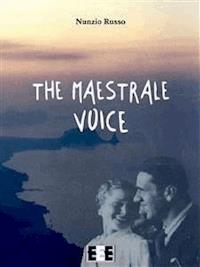
Nunzio Russo’s The Maestrale Voice could be defined as a painting, rather than a novel. The author’s delicate pen gently describes a century of Sicily, specifically the part of the island that gave birth to the product that most represents Italy: the pasta. His vivid descriptions include all aspects of the reality of those days, never forgetting the wonders of that land. So its colors, its perfumes, its sunsets, but also its people’s faces and their moods, their behaviors, their real essence: all these elements emerge on the surface of a canvas made of words.This novel is not only the story of a pasta plant, but also the story of the families that gravitate around it; the background of a country that went through war, governed by the Fascist Regime which, in that land kissed by the sun, has merged its interests with the ones of an obscure power: the Mafia. But besides all these events, what mostly delights the reader’s minds and eyes are the images of a 20th century Sicily, cradled by the immense blue sea, caressed by the intense Maestrale.
Das E-Book können Sie in Legimi-Apps oder einer beliebigen App lesen, die das folgende Format unterstützen:
Veröffentlichungsjahr: 2016
Ähnliche



















Nunzio Russo
THE MAESTRALE VOICE
Nunzio Russo, The Maestrale Voice
© Edizioni Esordienti E-book
ISBN: 9788866903529
First Italian Edition: 2005
Second English Edition: 2016
All rights reserved, in all countries.
English translation: Cecilia Negri and Ilaria Battaglia.
Cover image: © Nunzio Russo.
To my two sons,
like a sun that never fades.
The Maestrale Voice
Dying is often a relief, especially if you are old and are going through bad days. In this case, the brief disease and following death came right on time.
The old Honorable Member was eighty-six years old and, as most old people, clearly remembered past events but nothing about the last few weeks. At times, he was so focused and determined to impress even the biggest skeptics but often the senile dementia and obsessive sex mania, obviously caused by his illness, made him believe he was capable of great achievements with the women. These achievements weren’t obtained with his smooth words, which in his youth were always clever and had brought him to capitulate to many good purposes, but obtained, so he believed, thanks to the charm of his old, nude body. Lately, nude, he’d face the balcony and call out loudly, with his shrill old voice, to his intended victims. Equally as loud, his better half Mrs. Helen, reproached him, open hearted.
“Totò, shame on you! Look at what you have become! Actually, you have always been this way: a pervert! Only God knows how many times you have cheated on me. And I have been quiet about it because I am a lady.”
All this happened on the terrace of the building where a lot of people watched on, amused.
At six in the morning the phone rang.
“Hello,” Andrea Rao said, still sleepy and annoyed.
“It's mom. Your grandfather is dead.”
Andrea had been waiting for this news. His grandfather was sick and the last time he had seen him, just a couple of days before, the old man wasn't able to even recognize anyone. Nevertheless, the news was so final that his eyes tore up and it took a few minutes to collect himself and get dressed so he could go bless the coffin, which had been put in the ancient family estate.
The gate was open and allowed a glimpse of the avenue of palm trees and flower beds that, in spite of the cold season, were flowering oleanders and geraniums. The enormous rocky cliff, the timpa, that covered the house, had a sort of powerful and dark look.
The building at the end of the avenue was an old 1700’s construction. It reflected in its whole the comfort of which many Sicilian families had enjoyed up until the recent past, as well as its state of neglect, which reflected the crisis that followed.
It was in fact possible to sense how, during the last years, the Honorable had neglected its upkeep.
Andrea searched in his memory and realized it had been at the end of the ‘60s that the decline of his grandfather, and the rest of the family, had started. Strangely the period also coincided with the premature death of his brother, Uncle Peppuccio to everyone, but his grandfather was the one who suggested the initiative and gave him the strength and the courage to act. Since then, so many events followed, and all of them were disastrous.
Thinking about it, Andrea was realizing that, during that time, not only had the fate of his family changed, but perhaps even the course of history. Yet this awareness did not give him the clarity to accept the facts calmly: he had lived them and he still wore the scars.
Deep in his thoughts, Andrea did not notice he just had crossed the main entrance of the Villa, opened for this occasion. He passed the corridor that was leading to the grand room with its glass walls and, suddenly, he laid his eyes on the dead man, already inside the coffin and placed in the middle of the room.
He asked himself, for a moment, if everything was real because, as God as his witness, apart from the coffin, it didn’t seem like his grandfather was dead: red silk robe, dark socks, scarf around his neck; his face was serene and smiling slyly with the same expression he remembered as a child. No, this must be a bad nightmare, made of various familiar faces sitting in a circle who, without leaving their positions, opened their mouths to echo cries, with mystical and painful tones.
“Andreino, condolences,” someone called out.
“Andrea, there's nothing we can do, it's life. The time comes for everyone,” said another one.
“He did so many good things, rest in peace! Not many men are like him,” said Assunta Bonsignore, the old mother of Uncle Adriano.
Andrea couldn’t adapt himself to these circumstances because, even though he was thirty-five years old, he had never attended a ritual of the night, the so called smortu cunzatu.” Actually, to tell the truth, Andrea had never seen a dead man before, even though he suffered the loss of a parent. A few years ago, his father had died, but he did not see the dead body. There had been no wake for him.
The morning passed and as the lunch hour approached, the crowd of relatives began to wane.
The grandmother, after facing the first long night, decided that it was better to go back into town before facing the next afternoon and the new night coming. Only then, finally, she would be able to bury him. She thought about closing the house for a few hours, going against the tradition, but Andrea decided to stay.
“I am happy to stay with grandfather, so I can give him a last goodbye in the proper way,” he said, and he thought he had so many things to discuss with him that he couldn’t say in front of all those cockroaches of relatives, nor when his grandfather was in the cemetery, buried. Without looking into his eyes, it wouldn’t be the same.
Andrea understood that this was a good time, certainly the last one, in which he could tell his grandpa what he had already said, but which the old man refused to understand. Now that his grandfather had a cleared vision of things he certainly would understand that Andrea had been right. Obviously, if he was able, he would have apologized for all the times his reactions had been so exaggerated and for all the times he had been disrespectful.
And so, Andrea found himself face to face with his grandpa but suddenly all the previous thoughts vanished, leaving instead only the sweetest memories. They appeared like so many lights, the moments he had spent with him, starting with those of his carefree childhood. He saw himself at seven years old in his grandmother’s house in Collesano. On Saturday, perched on the railing of the terrace, he was watching the street below being crossed by several mules. He stood there and waited to hear the roar of the car and the arrival of his beloved grandfather who, along those curves, seemed like a great driver of the Targa Florio. He had to be the first to run to him and kiss him, waiting for him to say, “Now my little Andrea gets into the car and drives all alone.”
At ten years old, at the stage of the Favorita stadium in Palermo, his expression was exulting and proud. He sat in the gallery of authorities, to his right was his grandfather and on the playing field his favorite football team, Inter, the one Mazzola and Buoninsegna played for. Of course, he would have loved to scream and cheer for them, but his grandfather had told him, “Andrea, in Palermo you need to support Palermo. You're Sicilian.”
And then he was older, sitting on the rocking couch placed in the forecourt of the countryside where the bricks of cement in front of the house were burning from the early afternoon sun, radiating a stifling heat. But at fifteen years old, for Andrea and a few friends, getting a tan was the most important thing. His grandfather had just returned and had crossed the threshold of the house quickly, looking for cool air. Immediately he had heard the angry voice of his grandmother, who even then had found something to complain about. They fought for forty years now, but in such a cute way, and those arguments always made everybody laugh. His grandfather, still in his aquamarine dress, had filled a bag and returned to the car, according to the same old repetitive script.
“It is over. I won’t sleep under the same roof with that woman!” he said.
Andrea didn’t flinch and his grandpa actually never got into the car: maybe he was discouraged by the heat or maybe, and this was more likely, he was creating this scene because he liked them and his grandson did too.
Suddenly, Andrea remembered how in the past few years his grandpa didn’t laugh anymore. Recently, he saw him cry once while watching the striped white and blue winter sea in front of him as he thought, he is getting older and losing his marbles.
Now, Andrea understood that he was crying because of love and because he had realized he was old and useless and he couldn’t help anyone anymore. His entire life, every time he could, he took, but he also gave a lot, generously.
So Andrea, through these memories, found the vision of his grandpa and what he had been: not the old man, with his easy ways and his light thoughts that annoyed him in the last years, but a friend and an example. A man that, for many years, had occupied the biggest spot in his mind and in his heart, the one you concede to the loved and idealized. The tears that had previously moistened his eyes now copiously flowed down onto his cheeks, while the sobs uncontrollably exploded.
“My little Grandpa…” he kept repeating, with a broken voice.
The noise of a car running through the avenue shook him. Andrea went to the bathroom immediately, washed his face and pushed all his feelings back. He always did so and maybe it was for this reason that he felt his soul was so heavy and troubled. His face instantly regained its composure and, given that according to the custom the visitors entered without knocking, he returned to the living room, glancing toward the door, waiting to see who would enter.
In the corridor leading from the hall to the living room, three figures stepped forward. In the middle was an elderly man, his legs unnaturally arched, needing the support of a cane to walk. On both sides, slightly behind him, proceeded two young men, his bodyguards.
Entering the hall, the old man took off his cap and looked at the corpse.
“I had to come, even though I’m dog-tired,” the man said. Then, without even looking at Andrea, he sat on one of the chairs around the coffin and continued. “Honorable. You have been a lord and a father. I’ll give you that.”
Then he fell silent and, with his chin on his crossed hands, which were rested on his cane, he didn’t move, like a sphinx.
Andrea shuddered because he had recognized the character by his attitude and the way he spoke. Awkward and uncomfortable, he consumed himself with the thought that this man had dared show up. Andrea couldn’t believe that this man and his people, who were so detested and, at the same time, so feared, were here.
Thank God it was over after five minutes when the old man, placing himself at the foot of the coffin, stretched out the hand that held his cap.
“I salute you, Honorable,” he said. Then, he turned around and tiredly walked out of the room.
Andrea was thinking about how his grandpa used to know them, and once, victim of irritability and agitation, he had blamed him for that, too.
“What do you think, that living in this place burned by the sun and the fire of the mob is easy? Andrea, life is about giving and taking everywhere, and here it is vital. Everybody knows and shuts their mouths because they cave in. Don’t offend me. I am not one of them, but I have a duty to protect my family,” he told him, with a proud look.
Andrea couldn’t reply and then he thought about the bomb that exploded in his father’s pastry shop when he was still a kid. Matteo Rao never touched this topic, but everybody said that he didn’t want to pay.
Thinking about that scene, and with his mind filled with those thoughts, he looked at his grandpa’s face and felt his heart becoming softer.
“You have lived as a main character for almost a century of history during which you have always played an important role, but most importantly you came out with honor. You realized you couldn’t excel anymore and you thought to die.”
Visits were over. Andrea went into the kitchen and looked for something to eat, but apart from a coffee can, he didn’t find anything. After all, the house had been unused for years. Somber, he returned to the living room. He was about to enter when he sensed that during his absence, someone else had come in.
“And now that you have left, who will I talk to? Confide in? We were the survivors of an era and we understood each other. God bless you, Totò.” An old man was bending over the coffin and caressing grandpa’s head.
The man was surprised to see Andrea walk into the living room. Actually, his attitude was the same of that of a kid who had been caught mid-prank. The old man blushed and the red contrasted with the whiteness of his thick hair. His glasses had slipped down to the tip of his nose. He moved them up with his hand, pushing from the metal in the middle.
“Oh, it’s you, Andrea,” he said.
“You were very close with my grandpa, right?” Andrea recognized him.
“Close? No, I don’t believe that is the appropriate word. See, nobody ever heard me call him by name. I beg your pardon.”
“I am sure he would have appreciated it.” And since the man was standing there, embarrassed, Andrea invited him to sit.
They sat in silence for a few minutes.
“It’s lunch time and you probably need to eat. I'll leave. See you in church for the funeral,” said the old gentleman, as he left the little bamboo armchair he was sitting on.
In his eyes, he read a great sadness and thought that the man was afraid to bother Andrea with his presence. Perhaps, until a few minutes before, that was true. “Stay, accountant Ventura. Keep me company. Let’s keep grandpa company.”
Nino Ventura’s relief was obvious. The man returned comfortable to the chair. He was holding a walking stick resting on the side. It was made of a seasoned wood and had a beautiful pearl handle.
Andrea offered him a cup of coffee and had one too. They began to talk of his grandfather, and about the family history, of eras and unknown events. The man talked, sometimes he stopped and smiled smugly, or a veil of emotion steamed up his face. Outside the house, the maestrale let his voice be heard loudly, almost as if it didn’t want those stories to reach the ears of any living being.
Part One (1910 – 1940)
I
On Garibaldi Avenue the dust was prominent. The royal administration was delaying funds for the paving of this village’s main road. And the mayor, the only person the citizens could express their anger with, was chided with threats and harsh words. The notary Cangemi, who despite his age had not abandoned his old Bourbonic official style, had even asked Maria Sofia for a recommendation. How was it possible that he was convinced that the revolutionary and creative ideas of the former Queen of Naples against the current sovereigns could have the strength to contribute to make the avenue decent, was the question people wondered, as well as the mayor, with anger.
At dusk, after a long day of work, Turi Musumeci, the miller of the village, walked down the avenue, but the dust did not give him any discomfort. As always, his mind was busy devising new ways to compete with the cylinder mill of the Prince of Granata, lord of the area, landowner and founder of the village.
“Mastro1 Turiddu,” called the nanny, looking out from the balcony of his building.
Turi Musumeci raised his eyes and his red beard, mingled with the color of his face that was flushed with fury.
“What do you want this time!” He yelled. And the anger was not in response to the hour on the clock, but to the harassment he suffered because she called him mastro. -Family members, employees and servants had to understand that I spent a huge sum to buy the barony of Mezzocannolo, a remote location in the countryside of Sicily above Granata! Turi thought angrily as he watched Donna2 Gaetanina’s disproportionate breasts and matron hips.
“Master, Baron... whatever your title is, your daughter-in-law is giving birth now,” the woman said, like she was reading his thoughts, and disappeared quickly into the house.
Turi Musumeci blanched. Suddenly, his face drained from too red and became too white. It was a male and that was a certainty. This other Turi would be a Baron and industrialist. He went back to Station Square, to the mill.
“Vincenzo, stop for the day and go home. Your wife is in delivery,” Turi screamed, still on the square in front of the factory.
The door of the storage building that held the outbound goods opened and a tall young man with light brown hair as beautiful as the sun came outside quickly.
“What did you say, Dad?” asked the young man.
“Look how fituso3 you are; you’re disgusting. Why did I let you study, so I could always see you covered in white flour?” thundered the Baron.
“Dad, you always say the same thing. You gave me the mill, and I have to know wheat and how to grind it the right way. On the contrary, I’m afraid that in the future I won’t have much opportunity to work on accounts behind a desk. There are no more mules to turn the millstones and with machines it’s quite different,” said Vincenzo Musumeci in one breath.
The words of the son shut him up. My son is a genius, Turi thought, admiring him. If only he appreciated the feud that I bought for him. But for him, the factory is everything and I hope it lasts. The prince is rich and his money can crush anyone. He tried, however, not to express himself aloud.
Turi Musumeci pointed his stick with the handle of pearl in the direction of the building and, adjusting the right lapel of his corduroy jacket with his left hand, turned back to the young man.
“Go home and let us hope that your son wants to be a great man in life. He’s about to be born. Your wife is in labor.”
“Oh, Dad. You’re wasting my time!” and Vincenzo Musumeci ran away like crazy.
Run, kept thinking Turi. This industry has been built for you too.
So, while deep in his thoughts, he crossed the door of the prosperous establishment of the Musumecis. He had built the mill from nothing, with one stone millstone and two mules. Many years had passed by, a whole lifetime. The adventures and the hardships in the beginning gave way to the success of the industry and the new respect of the inhabitants of the village, and especially the prince’s, who graciously authorized him to increase the production to eighty quintals per day of flour to make bread.
Beyond that amount, the prince did not allow him to produce: Granata was his reign. The repeated requests of Turi to the Chamber of Commerce, aimed to obtain a license for greater quantities, went unanswered for a decade.
Meanwhile, the prince’s operation continued to grow, selling two hundreds quintals of flour daily from the sea mill of his Granata House.
It was only from exasperation and not for the other benefits that Turi Musumeci bought Mezzocannolo and become a Baron. He hoped that the new rank would give more credit to the aspirations of the expansion of the industrial activity. Unfortunately, he had forgotten about another reality: the prince was also a senator of the Kingdom and nothing could get by without the political bureaucracy linked to the ownership of the land. Not much changed in Sicily; in fact the noble heirs of the Gattopardi’s were in decline and already saw the dissolution of their immense fortunes, but some of them enjoyed the power too much and refused to accept this. Next to them, in the twilight of that civilization, had come the hyenas. First, they would have served them and then they would have overtaken their position. Meanwhile, the only seat of the Parliament in Rome was occupied, for life, by the prince of Granata.
That bitch of politics is as valuable as a piece of land, reflected Turi, in silence, and even if I wasn’t too old to work on it, I couldn’t buy it anyways.
There was another miller in the village. It was the Chevalier Matthew Rao. The Chevalier was a good man. A bourgeois as the Musumeci family, but he didn’t compete with the prince. His small mill produced durum wheat flour, but only for the pasta factory he owned. And since Excellency cared more about bread than pasta, he let him live.
The Princes of Granata were the Lords of bread for centuries and the people knew it. When someone tried to enter the field of flours, they either failed and closed the factory, or devoted their production to pasta, as the nearby pasta makers of Termini Imerese.
Turi Musumeci, however, did not build a pasta factory, and his mill produced for the bakers: those few prepared to have the prince as an enemy and those that the great factory of Granata couldn't serve. Worried, Turi observed twenty workers at work. All family men, to which his son had added himself to proudly.
Vincenzo had learned as a child how to select the flours to be produced and could choose the best beans to ground up. He was a graduate in accounting and an accountant in the company; in a period when no one thought they could give an education to their children, this was priceless capital. Credit and finance would soon make companies a fortune.
From the balconies, the sun of May was entering. Inside the room of Corso Garibaldi, soberly furnished with solid pieces from the 1800’s, Ada Caronia, Vincenzo’s Musumeci wife, was laying on the bed, squeezing the rosary between her hands. She was in the grip of pain and the family nanny was worried. Labor was lasting far too long.
“Tana, I'm dying. Can't do it anymore!” Ada cried, with a hysterical voice.
“Mrs. Ada, breathe. Don't be afraid, everything is normal,” said Donna Gaetanina, while wiping the sweat from the face of the woman with a lace handkerchief.
The bedroom double doors opened and Vincenzo walked in. In his green eyes there was joy and excitement.
“How long?” he asked.
“A few moments. Maybe a couple of hours,” said the nanny. Then, she lowered the tone of voice. “The lady is worrying me. She is too nervous.”
“I’ll take care of her. Please prepare the necessities,” said Vincenzo.
Ada looked at her husband. He didn't seem as happy as when he entered the room. She sobbed. In two years of marriage, Vincenzo had intervened several times to reassure her. She was often a victim of non-existent fears and depressive crises of any kind.
“Ada,” said Vincenzo, taking her hand. “You have to be strong. Our son is coming.”
Ada Caronia felt like a little, lost girl and even younger than her age. One meter and fifty-five inches high, before pregnancy she weighed forty-five kg. On Sunday mornings, at the church, Vincenzo looked like her father. He had blue crystal eyes, but the fog that sometimes enveloped his mind made them often inexpressive.
Ada's lost gaze rested on the reassuring face of Vincenzo and for a moment she was able to find rest and refuge. Vincenzo was smiling at her sweetly.
“I will give you a nice son, Vincenzo and… you will not hate me if this is a baby girl, right?”
“Of course not, my love. Not at all.”
The smile, the typical shape of Vincenzo’s mouth, and his nose became large and full. The skin of his face and his lines, almost Nilotic, inherited by his mother, made him look like an Egyptian god in her eyes. She felt better and she began to prepare herself for the labor, feeling serene.
Then I'll see how to treat you, Vincenzo thought in silence.
The eyes of Ada now had the sparkle of the most precious stones.
Donna Gaetanina leaned in again and observed that the dilatation was good. Based on her experience, she determined that it was almost time and ordered the house cleaners to bring water, warm towels, and pillow cases. Then, she arranged the old chest on which Turi Musumeci was born next to the bed of the future Baroness.
Vincenzo left the room. In the living room, the whole family had already been waiting for a few hours.
From the window, Vincenzo looked down on the street and checked that Capizzi was at the carriage, ready to bring the news to the Baron. He smiled. He just couldn't imagine someone like Capizzi driving a car and his father had intended to make that step up. Turi Musumeci dreamed of buying a car, to make the prince die of envy.
The wait was feverish. Occasionally, Aunt Norina Reitano Musumeci, sister of the Baron and owner of part of the mill, peeked out from the bottom of the marble stairwell that connected the floors of the building.
“Vincenzo, Vincenzo, still nothing?”
“Auntie, can you hear crying?” Vincenzo answered every time with the same question, trying to be courteous. After half an hour of useless waiting, the aunt began again.
“It would be nice if you came down here to say something to your family. They are so impatient,” the aunt said, calling out to her nephew and teaching him the duties of hospitality that needed to be respected, even during circumstances when privacy was more appropriate.
They’re all anxious to know if the son of a crazy woman will be handicapped, or maybe a screamer, Vincenzo thought before answering.
“I am coming right away, so I can apologize for making them wait so long.”
Mario Fidone, the new doctor of Granata, arrived at the Musumeci house at 1 PM, as he had told the midwife who had preceded him he would. He was feeling hot and tired, but tried not to show it.
Vincenzo Musumeci, informed by a house cleaner, came to meet him.
“Dr. Fidone, I’ll lead the way,” he said.
The doctor stopped a moment and, without a smile, replied: "I know the way, accountant."
Vincenzo hesitated, but the doctor’s look discouraged him from asking the questions he had in mind. In the village, everybody feared Mario Fidone’s attitude; however, they all loved him.
“You can wait in the hallway, accountant,” said Fidone as he entered the room.
Vincenzo looked absently at the shelves, in Empire style, and sat on one of the two chairs placed on the either side of the cabinet. The poor chair creaked, maybe surprised to stay intact under the weight of ninety kilograms.
Another two hours passed.
Donna Gaetanina placed Ada on the Baronial chest. Then, aided by the midwife, poked the legs of the young lady inside the pillowcases and lifted them up to encourage childbirth.
“He is breeching,” said Fidone, tersely.
Gaetanina answered with a croak, a kind of pained moan like the yelp of a dog taken away from his master.
The baby was coming out with the lower part of the body first and could have stifled at birth. Internal lacerations due to that position were often the cause of severe bleeding in mothers, who died in a few hours.
Gaetanina looked at the doctor, pleading.
“My bag,” he said, quietly.
His shirt and forehead were drenched with sweat, but his disposition remained strong. A house cleaner handed him the suitcase and he took a pair of scissors out. He cut the sides to try and help. It was not enough. So, he went with his hands into the vagina and tried to realign the child. He succeeded and noted with satisfaction the retropulsion of the coccyx; the last part of Ada’s spine moved back naturally to make room. “Come on, Mrs. Push... good, one more time,” said Mario Fidone, as he pulled out a limb of the newborn.
Ada Caronia screamed in pain and lost consciousness, but the baby was born and it was a boy. Mario Fidone quickly cut the umbilical cord and tied the two ends with pharmaceutical eyelets. Then he held the little baby upside down, to help the baby breathe regularly. The strength of the tears that life imposed on the newborn moved him, as always.
“Hold him,” he said to the midwife. “I have to stitch.”
When he finished, he paused a moment to admire his work, pleased at the perfect job. Ada began to recover.
“Donna Tanina, let’s check that there is no bleeding. If everything is normal, I'll see you tomorrow for the dressing,” he said to the nurse. He washed his hands and up to the elbows and then grabbed his jacket that he had taken off when he had entered the room. He left, without leaving the package of required medicines and a kg of meat for the mother and child. After all, this was a rich house.
Turning up a giant cloud of yellow dust, a mixture of sand and flour, the carriage stopped in front of the mill.
“Capizzi, great cuckold, you’ll ruin the horse this way,” yelled Turi Musumeci, coming out of the factory.
“Baron, your grandchild has been born. It’s a boy.”
The Tuscan cigar butt, red with heat, fell down from the lips of Turi Musumeci. It hit his silk shirt at the bottom left, close to the hand-embroidered initials, and immediately made a gash.
Baron Mezzocannolo did not care; he possessed a vast collection of them, which was completely replaced every year.
“Take me home, Capizzi,” Turi said to the driver, and got into the box.
Capizzi turned the vehicle with extreme caution and from Station Square turned down Via dei Mulini.
“Capizzi, start trotting,” Turi Musumeci, impatient, tapped the platform of the buggy with his stick. “And if that’s too slow, you can take it to a gallop.”
The employee looked at his master, then grinned and snapped the reins. The horse of Turi Musumeci perked up and began to run through the streets of Granata. He stopped at the front door of the building, which the Baron crossed in a fury.
II
On the other side of the railroad tracks, the castle of Granata had been built near the harbor, close to the sea. On the shoreline and at the two sides of the manor, the prince’s factories and warehouses extended. Its activities were sprawling, and his power immense. He took care of the land and the collection of ancient tariffs; he managed businesses and produced food; he fished tuna, and exported oil to America.
The building was immersed in a varied world of tropical plants. The rooms were huge and decorated with glitz. The circumferences of the crystal chandeliers were impressive. The towers were equipped with terraces for sunbathing and some others were sheltered by curtains, always wet, to stay cold in the hottest hours.
Your Excellency, tall and elegant, was looking at the sea from the west tower. He had just gotten up from the desk that, during spring, he moved to the terrace, and he was drinking coffee. He was unsatisfied. Business was good, but there were always problems caused by some new hotshot whose success was flourishing. He had made tempting offers to purchase the mill in Station Square and he was willing to spend much on it. Turi Musumeci, who became Baron and was the landowner, would have been able to sell the company without making a fuss. But no. The prince clenched his jaw, not because Musumeci was a Baron, but for the outrage that was continuously caused from his stubborn rival. Bread was his product, and into that broad coastal area between Bagheria and Finale, no one challenged that. The fact that Turi Musumeci, a citizen of Granata, had remained the only serious competitor made him furious. He even asked him to convert the establishment and transform it into a modern pasta factory. The pasta makers made a decent living after all. The more far-sighted industrials were building empires thanks to the pasta business and he left them in peace. After all, he could not work in all sectors. He was a senator and the majority of the middle class had to be on his side. No complaints could reach Rome and thus he had relationships with all the traders. He obtained grants and loans for entrepreneurs and then was able to, partly, steal from them. He paid a private army that helped him in this kind of financial transaction, acting on the frond between productive activities in the area.
He had been able to maintain what he had inherited, multiplying his capital, and he thought himself to be different from the Sicilian wimps, who were still plagued by inexplicable inner conflicts that had forsaken themselves to the fate of their old rulers. Once the Savoy family arrived he had received the notables of Turin with all the honors, and they found themselves dealing with a clever and unscrupulous partner, who had accepted immediately, unlike the others, the appointment of senator to the Kingdom of Italy, obtaining carte blanche for all the affairs of the coastal region. So things had continued the same way as always, the immutability of his power had been guaranteed and he could still rule as an absolute monarch.
“Your Excellency, Capizzi is outside,” Pietro Bellomo, overseer of the house of Granata and longtime hand of the prince, appeared on the west tower.
“What news does he bring?” asked the prince.
“Musumeci Turi’s grandson has been born.”
Prince Gioacchino of Granata turned slowly toward Don Pietro and looked at him. The prince remained silent, while the other waited. That birth would make the Baron of Mezzocannolo even more inflexible.
“Order to extend my best wishes,” he said, interrupting his own thoughts. “Indeed, you will take him a card.”
Pietro Bellomo waited for a little longer with his master. After about an hour he was knocking at the door of Corso Garibaldi. He brought an elegant envelope with the embossed coat of arms of Granata.
In the hall, he was welcomed with formality and detachment from Norina Musumeci. Ventimiglia Maddalena was also there, the stepdaughter of the Baron.
“Mrs. Norina, this is from Your Excellency,” he said.
“We are grateful for the kind thought.”
Don Pietro was standing at the entrance of the first floor. He was waiting for an invitation to enter that, however, was not to come. Therefore, he bowed and, putting his cap on his head, he returned to the road. Retrieving his horse from behind the building, he headed, trotting, in the direction of the castle on the sea.
“In this house, we don’t give coffee to the Mafia men,” Norina opened the envelope and read the stately message. “Ah, so this is what it’s going to be like. It’s better if my brother does not read this message,” she said, while concealing the document inside her dress. “The prince is a coward! He constantly has an attitude of superiority towards Turi. The ticket is addressed ‘To Mr. Musumeci of Granata.’ My brother is the Baron and he pretends like he doesn’t know this.”
“Calm down, Aunt,” said Maddalena of Ventimiglia, with an affectionate tone. “There is no point in getting angry.” Lena, this was her nickname, was a doctor and a missionary in the colony of Eritrea. She had returned three months prior to attend a course at the Laboratory of Hygiene and Prophylaxis of Rome. Then, before leaving for Africa, she had stopped in Sicily. She wanted to celebrate the birth of Vincenzo’s son.
“The congratulations of the illustrious prince just arrived,” Norina said aloud, returning to the living room.
Everyone nodded, recognizing the respect that Musumeci’s family enjoyed. Only Lena, like Aunt Norina, in her heart disapproved of the attitude of the family. The prince was the sworn enemy of Turi and in her still lived the memory of a summer a few years ago.
She was in Mezzocannolo when Don Pietro Bellomo arrived on his horse and asked for the Baron. Turi and Calorio Bonsignore, the overseer of the feud, had received him and had secluded themselves for a discussion. Distancing themselves, something in their movements aroused the curiosity of Lena, who was studying them from under the porch. Bellomo was, in fact, under the pull of the revolver that Calorio held against him. Concerned, she followed them from a distance. She was running towards them without being seen. She reached the field where, behind a barrier of prickly pear, a wild olive tree stood alone. Calorio had already made Pietro Bellomo jump off the horse and had tied his feet with a rope and, while Turi remained still, wrapped a rope around a branch and hung the poor man upside down from the tree.
“Baron, let me go. You will pay for this,” Don Pietro screamed, struggling.
“Be quiet, Bellomo. I don’t want to kill you.”
Don Pietro was able to take the rope from between his feet and stood up. Then he sucked up phlegm from his lungs and aimed a greenish spit in the face of the Baron. Turi Musumeci dismounted from the horse, and with a handkerchief wiped the crap off his face. His face was flaming and Calorio looked at him puzzled, while shoving the rope, bringing down the prince’s man. Lena thought she was about to witness a murder. Turi could not bear insults and feared no one. Not even the Mafia man in front of him could frighten him.
“Killing you would be a wonderful gift to mankind,” said the Baron, approaching Bellomo.
The man was now silent. Evidently he believed that threat to be real, and pissed himself with fear. A large stain of liquid spread over his light shirt and soaked it. Then the urine fell down his neck and bathed his face.
“I do not fear someone who pisses on himself,” Turi Musumeci growled. “And not even your boss.”
The whip of rhinoceros skin, one of Turi’s weird Oriental objects, began to strike Bellomo.
The Baron whipped the delinquent, methodically and with a heavy hand. The shirt, wet with piss, became stained with blood. Turi struck until Pietro Bellomo no longer had the strength to scream. Then he ordered Calorio to untie the rope, and the thug fell to the ground with a thud, dull and chilling.
“Calorio, put this man on his horse and send him home,” said the Baron.
The overseer of Mezzocannolo helped Don Pietro get up and walked him, hobbling, toward the tied animal. He gave him a drink of fresh water, quenching his thirst. Then the man mounted the horse and walked towards the barrier of prickly pear, right where Lena was hiding.
She cowered in the bush and felt the prick of thorns through her dress, when suddenly Pietro Bellomo turned his steed, making it tower on its hind legs.
“You will die, you bastards!” he cried and turned back, throwing the animal into a gallop. He jumped over the prickly pears, almost hitting her head, and disappeared.
The story had traveled around the village, because despite the warnings of Turi Musumeci, Calorio could not contain his enthusiasm and keep his mouth shut. It was the first time someone challenged the nobles and their minions without getting killed. He recounted the incident to all, enriching it with fantasies and ridiculing the figure of Don Pietro. But it was not as simple as he thought. One day, six months later, Calorio disappeared and nobody heard from him again.
Remembering that old story, Lena shivered. The prince was a cold and calculating man, and if he still had not punished the Baron, there was a reason. Maybe he thought, frightened by the disappearance of Calorio, Turi would finally gave the mill to him.
The Baron of Mezzocannolo, however, was not so pitiful. He provided everything the widow and her children needed, and had even allowed bakers to make purchases on credit. The flour of Musumeci could be paid thirty days after delivery, and in no time the factory began to operate even on Sunday afternoons, but even still they were not able to keep up with all the eager customers.
Lesen Sie weiter in der vollständigen Ausgabe!
Lesen Sie weiter in der vollständigen Ausgabe!
Lesen Sie weiter in der vollständigen Ausgabe!
Lesen Sie weiter in der vollständigen Ausgabe!
Lesen Sie weiter in der vollständigen Ausgabe!
Lesen Sie weiter in der vollständigen Ausgabe!
Lesen Sie weiter in der vollständigen Ausgabe!
Lesen Sie weiter in der vollständigen Ausgabe!
Lesen Sie weiter in der vollständigen Ausgabe!
Lesen Sie weiter in der vollständigen Ausgabe!
Lesen Sie weiter in der vollständigen Ausgabe!
Lesen Sie weiter in der vollständigen Ausgabe!
Lesen Sie weiter in der vollständigen Ausgabe!
Lesen Sie weiter in der vollständigen Ausgabe!
Lesen Sie weiter in der vollständigen Ausgabe!
Lesen Sie weiter in der vollständigen Ausgabe!
Lesen Sie weiter in der vollständigen Ausgabe!
Lesen Sie weiter in der vollständigen Ausgabe!
Lesen Sie weiter in der vollständigen Ausgabe!
Lesen Sie weiter in der vollständigen Ausgabe!
Lesen Sie weiter in der vollständigen Ausgabe!
Lesen Sie weiter in der vollständigen Ausgabe!
Lesen Sie weiter in der vollständigen Ausgabe!
Lesen Sie weiter in der vollständigen Ausgabe!
Lesen Sie weiter in der vollständigen Ausgabe!
Lesen Sie weiter in der vollständigen Ausgabe!
Lesen Sie weiter in der vollständigen Ausgabe!
Lesen Sie weiter in der vollständigen Ausgabe!
Lesen Sie weiter in der vollständigen Ausgabe!
Lesen Sie weiter in der vollständigen Ausgabe!
Lesen Sie weiter in der vollständigen Ausgabe!
Lesen Sie weiter in der vollständigen Ausgabe!
Lesen Sie weiter in der vollständigen Ausgabe!
Lesen Sie weiter in der vollständigen Ausgabe!
Lesen Sie weiter in der vollständigen Ausgabe!
Lesen Sie weiter in der vollständigen Ausgabe!
Lesen Sie weiter in der vollständigen Ausgabe!
Lesen Sie weiter in der vollständigen Ausgabe!
Lesen Sie weiter in der vollständigen Ausgabe!
Lesen Sie weiter in der vollständigen Ausgabe!
Lesen Sie weiter in der vollständigen Ausgabe!
Lesen Sie weiter in der vollständigen Ausgabe!
Lesen Sie weiter in der vollständigen Ausgabe!
Lesen Sie weiter in der vollständigen Ausgabe!
Lesen Sie weiter in der vollständigen Ausgabe!
Lesen Sie weiter in der vollständigen Ausgabe!




