


Erhalten Sie Zugang zu diesem und mehr als 300000 Büchern ab EUR 5,99 monatlich.
- Herausgeber: Salt
- Kategorie: Gesellschafts- und Liebesromane
- Serie: Salt Modern Fiction
- Sprache: Englisch
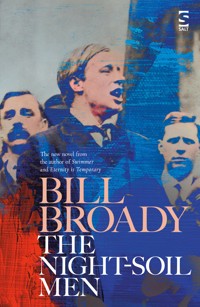
Broady's major work of fiction, nearly a decade in the writing, explores the origins and development of the Independent Labour Party – the working-class political movement founded in Bradford in 1893. Detailing the exploits, fortunes, and relationships of three central characters: passionate Fred Jowett, ruthless Philip Snowden (later, the Labour Party's first chancellor), and the licentious and unforgettable Victor Grayson. Spanning four decades, the novel covers the socialist foment and activism of fin-de-siècle Britain, the impact of the First World War and the changing landscape of the interwar years, as social change points forward to a new politics and the reinvention of Britain, despite fierce resistance from the establishment and its allies. And all punctuated with sex, comrades, hustings, art, dialect and copious points of order. With cameos of every leading socialist of the age, this sweeping generational tale is thrilling, revolutionary, ribald and laugh-out-loud funny.
Sie lesen das E-Book in den Legimi-Apps auf:
Seitenzahl: 820
Veröffentlichungsjahr: 2024
Das E-Book (TTS) können Sie hören im Abo „Legimi Premium” in Legimi-Apps auf:
Ähnliche




















BILL BROADY
THE NIGHT-SOIL MEN
v
To Jane and Mignon
“Is fiction which makes fact alive, fact too?
The somehow may be thishow.”
– Robert Browning:The Ring And The Bookvi
CONTENTS
CHAPTER ONE
CONFERENCE (1893)
As they crossed the square the town hall clock was striking nine. Once more the sun had neglected to rise over Bradford: two faint smears of light that did relieve the gloom were in quite the wrong quarters of the sky. Whenever it snowed Jim Sharp was reminded that the stone of the civic buildings was not black at all but mossy green. However lightly he stepped, the scraping of his clogs through the slush almost drowned out the words of his companion.
Jim swung round: they were still not being followed. This was the morning of the inaugural meeting of the Independent Labour Party; the world was about to be turned upside down but nobody seemed in the least concerned. Outside the Law Courts two policemen, lighting each other’s clay pipes, did not give him a second glance. Under one arm he was carrying a large bale of soft-leaded pencils: it could have been dynamite for all they knew. He leaned a shoulder against one of the Doric Columns but it wouldn’t budge. He was no Samson: the tubby peelers could smoke on in peace.
“There’s smallpox passing through the ward again,” Fred was saying. “Three streets a day, one house in four, like the plagues of old Egypt. The council says there’s nothing it can do but all the necessary powers are right there in the Housing of the Working Classes Act. The Liberals put things on the statute book then join the Tories in ignoring them.”
Fred Jowett’s voice was slightly slurred, as if he was a toper, but Jim had never seen him go beyond a single half of dark mild. Fred’s 2mother came from Devonshire but although he had often sat in the Jowetts’ parlour, Jim had never heard her utter a single word.
“Smallpox in January! It’s the privy middens. The colder it gets, the worse the smell: even after a frost the air is full of flies. The ash freezes solid so that it can’t absorb and then the dirt piles up until the streams of urine carry it down the yards right up to the back doorsteps.”
Once Fred got on to sanitation there was no stopping him. How often Jim had wished that he would find a more elevated hobby-horse to ride! As Fred became excited his thick black hair ridged up like the hackles of an angry dog. Although the down that shadowed his upper lip gave him an adolescent look he was already silvering at the temples. Jim knew that he didn’t fuss about his appearance but he still contrived to have an almost dandyified air. He wore a baggy grey suit with a red ribbon tie that was always on the point of coming undone. Jim could actually see the thoughts and emotions passing across those pale features: it was like prising open a fob watch to reveal the cogs and wheels whirring round inside. Even so, Jim had never glimpsed the least trace of meanness, fear or calculation. He wasn’t sure whether to envy Fred or to pity him: perhaps a man without weaknesses was not really a proper man at all?
“And all they ever say is, ‘Why can’t you turn your thoughts to higher things?’” Fred continued. It’s true what Kipling said about William Morris: that one decent primer on sanitary engineering is worth all the tomes of sacred smut ever written.” Jim took his cue. “But I thought that Kipling was a jingo while Morris is on our side.”
“Yes,” said Fred triumphantly, “but even good Socialists can act like ninnies and even a jingo is sometimes right.”
Jim decided not to enquire where he could obtain some of this sacred smut in order to reach a properly informed judgement.
Before they had set out together he had wagered Fred that in crossing the city they would not see on a single face anything approaching a smile. First they had encountered, trudging from 3somewhere to somewhere else, half a dozen swaddled figures who appeared to have no mouths at all. Then there had been a skeletal woman driving before her a pack of feral children. These had teeth aplenty but no lips to speak of. Everyone was blighted: even the peelers had seemed to be disgusted by the taste of their own tobacco. Now, beneath the statue of Forster, ‘The Great Educator’, a brindled terrier was busily worrying an obviously long-dead rat. On seeing them, it dropped its trophy and danced a little jig, revealing that it was missing a foreleg, then put its ears back, opened its jaws and rolled out its scarlet tongue.
“Nay, Fred,” said Jim, before his companion could speak, “Dogs don’t count.”
At the bottom of Chapel Street the gates of the mills burst open and they were engulfed by a great flood of humanity. The night-workers had reached the end of their shift. Perhaps it was only to be expected that as the two men approached their appointment with History they should find that everyone else was heading in the opposite direction.
The first wave had separated them. Jim watched Fred forging up the hill as he himself was jostled sideways. His friend’s mouth was still moving, even though he was no longer at his side. Jim was bigger and stronger but stiffer and slower and bandy-legged, the result of childhood rickets. In the event of his meeting a pig in a passageway, perfect strangers were always taking it upon themselves to inform him, it was unlikely that he would be able to stop it. Even when he was not carrying two hundred pencils he would walk, for the sake of symmetry, with his elbows pointing outwards.
Crowds terrified him: he felt swallowed, like Jonah in the belly of the whale. There had been rumours of kidnappers who, taking advantage of the press, would roll their victims up in carpets. Surely even the clay-pipe policemen would notice gangs of roughs lugging wriggling lengths of Axminster?
He saw that Fred had stopped and was peering through his chipped eyeglasses. Everyone found this myopia endearing rather 4than comical. It was as if he could never get your face into focus: it made Jim feel somehow blurred, not quite there. Although Fred was always talking about ‘The People’, Jim wondered if he had ever been able to see them properly. Perhaps a stronger pair of spectacles might modify his Socialism? The faces in the crowd were sullen or downright hostile: they walked in silence, save for a curious hissing sound as they drew deeply on cigarettes or pipes, like a fuse burning down to an explosion. It would be just Jim’s luck to be in the middle of them when it finally happened. Even though they were working men like himself, he still could not think of them as brothers.
“We need to begin again,” Fred was saying when Jim, fighting for breath, finally rejoined him. “To raze Manchester Road and Longlands to the ground and build municipal terraces, wide straight streets with trees and lawns, where people can work and live with dignity. And we need new schools with proper teachers, in which every child is guaranteed at least one nutritious meal a day.”
Sometimes Jim wondered if he secretly disliked Fred: he felt like giving him a good shaking to waken his ideas up. But this was the whole point of Socialism: unlike religion, you did not have to pretend to love everybody, merely acknowledge a mutual interest. Now, however, he felt Fred’s right arm hook through his left, with the slightest squeeze, and he looked into that open face with its strangely wavering smile, the eyes swimming behind the dusty lenses as if filled with tears. On these rare occasions when he and Fred touched, a sweet glow would spread through his body and his perpetual restlessness would ease. And so the oft-told tale of how Councillor Jowett had scuppered the Sanitation Committee, forcing them to conduct weekly inspections of every privy midden in Manningham, would suddenly seem the most fascinating thing in the world.
More people were emerging from the side streets. There were lost children seeking their parents, ragged pickpockets pulling off their mittens and evangelicals brandishing cheap tracts but mostly they were lonely souls in search of companionship. There were no 5carpet-roll kidnappers but Jim could see looming ahead a couple of unusually tall mill-girls, also arm in arm, like a distaff mirror image. The tiny heads bobbed on their goose-like necks while their hips swung sideways and forwards at the same time. The younger one’s features were heavily pitted but smallpox scars could be an adornment to some faces. She looked to have been hewn out of sandstone: Jim imagined that his stubble might strike sparks against those cheeks. Her companion resembled a ship’s wooden figurehead, salt-stained and faded. Their chins were tilted as if they got a clearer view down their nostrils and their shawls were pulled back to display expanses of blueish throat and chest.
Jim already knew that there would be no pairing off: they were only interested in Fred. Women liked thick hair that they could get their fingers into and they seemed to prefer little men, perhaps because they were more agile, less of a weight or, if it came to beating, less likely to do a girl serious damage.
Fred was trying to focus but the glasses had slid to the end of his nose. It was apparent that to him the women were nothing more than a pale obstruction.
“Excuse us, gentlemen,” he muttered as, stretching out a hand, he parted them like saloon doors. Jim caught a sweet, cider-like smell as they passed.
“Nay, nay,” he was protesting. “They’re lasses, Fred, ladies!” – but it was too late. Looking back, he could still see the women’s faces bobbing above the crowd like backstroke swimmers on a choppy lake. They did not seem to have taken offence, however. From those black and yellow flashes, he could swear that they were actually smiling. He wasn’t going to tell Fred, though: a bet was a bet.
Women! There really was no accounting for them. Every time he tried to raise the subject Fred would merely laugh politely as if at a joke he did not understand. Had he never noticed the women who continually sighed and brushed against him? It made no sense: if Jim had been a woman he certainly would not have fancied Fred. It was something you were born with: you either had it or you hadn’t. 6And whatever Jim did – whether he smiled or scowled, however he dressed or combed his hair – they never noticed him. Nor could he blame the rickets or the stammer: even sitting down, with his mouth shut tight, he remained utterly invisible.
Some of the older ones in his weaving shed had showed faint signs of interest but he could tell from the bitter twist of their lips that they were considering him as a last resort. Jim had his pride: if he could not be anyone’s first choice he was damned if he would be a consolation prize, better than nowt but only just. Nor was he prepared to patiently woo through steadiness and dependability. He wanted to be desired – at first sight by a total stranger – before any financial or social considerations could enter in. He would have settled for just one of those looks that Fred attracted a dozen times a day and never noticed. He had entertained one last hope that under Socialism women might begin to feel for him what he felt for them but the movement’s few eligible spinsters had shared the prejudices of their less enlightened sisters.
Now the masses convulsed again, clearing a path for a group of tall-hatted figures. Half a dozen under-managers were marching two steps behind their manager who in his turn remained four steps behind the mill-owner, Behrens. You could have divined their relative status by the silkiness of their hats and the length of their watch-chains. It appeared that God had given Gustav Behrens the right to move in a six-foot radius of empty space, like the prime grave plot next to his father that awaited him in Undercliffe Cemetery. In the three years since Sir Jacob’s death, blithe young Gustav had somehow aged three decades to become the spitting image of his evil papa. At least he had the courage to show his face: Soapy Sam Lister had not been seen in public since his glorious victory over the Manningham Mill Strikers.
With their unblinking eyes and bloodless lips, their hands gripping their coat lapels and their shiny toe-caps pointing at ten to two, the men reminded Jim of bad actors – or perhaps actors who, all too well cast, had descended into caricature. Since he became a 7Socialist he saw them in a new way, with contempt and even a little pity. “Poor devils,” Fred had once commented, as the millocratic clan had rattled past in their great black and silver coach drawn by Shorts and Damages, those famous high-stepping geldings. “It must be an awful strain having to be wicked all the time.”
They had recognised Fred. Jim saw the familiar consternation as they wondered why anyone would choose to be on what was obviously always going to be the losing side. It was common knowledge that Jowett had recently turned down the offer of a partnership in Leach’s Mill: could there possibly be something that he knew and they didn’t?
“… And if the Liberals and Tories won’t agree to realistic taxation or fair rents” – Fred looked up, vaguely aware of another obstacle to their progress – “We shall be compelled to take the land, with or without compensation, into public ownership.” Once again his left hand, fingers spread wide, was extended in that hesitant yet peremptory gesture.
“Excuse us, ladies.”
The under-managers became all tangled up with each other, skittling the manager and forcing Behrens to plant one immaculate foot in the filthy suint-clogged gutter. As Jim and Fred passed through, that shockingly-wizened face, almost swallowed up by an astrakhan collar, turned even whiter than before.
Jim was certain that Fred was unaware of what had happened. Some cynics claimed that it was all an act, intended to raise Jowett’s asking price beyond the regulation thirty pieces of silver when he finally, inevitably, allowed himself to be suborned. But Jim knew that if he told Fred, he would go back and apologise: he would rather have died than insult anyone. Such squeamishness would not do when the Day of Retribution dawned – unless a way could be found to cut Behrens’ throat without hurting his feelings.
During the five years that he had worked with Fred, life had gradually come into focus. Fred made everything seem just as it 8should be, logical and inevitable instead of a pointless, bloody mess. Even an apparent disaster like the failed 1891 strike was merely a necessary pause for retrenchment before the steady march of Socialism was resumed. Jim recalled how his friend’s lunch had always come wrapped in the pages of the Sunday Chronicle so that instead of eating he would end up reading aloud the articles of the notorious radical Robert Blatchford. Fred had never seemed to notice when the ever-hungry apprentices filched his bread and scrape.
Fred had been the first person to whom Jim had confided his great dream of emigrating to America: a dream that was gradually becoming a reality at the rate of sixpence a week. A new life in the New World! But Fred had just shaken his head: “Wasn’t it Goethe who, when his friend told him that he was going to America to start again, replied ‘Here is America – or nowhere!’?” What had convinced Jim were the accompanying gestures: Fred had spread his arms wide and then with clenched fist given his chest a double rap right above the heart. Jim had promptly abandoned the project but, out of sheer habit, had continued to set the money aside.
At the mill, Jowett had risen from warp-slayer to whitening-licker and then, at the unprecedented age of nineteen, to overlooker. Everyone had suspected a cruel joke: Fred certainly had the delicate fingers for loom work but how on earth could he carry the warps up and down the steep staircases between sheds? He was a mere seven stone while each beam weighed at least twice that. But Fred had been practicing for years, building up his arms and upper body in readiness for that moment. Although the tiny form disappeared beneath its burden, the beams then proceeded, seemingly of their own volition, to fly dizzyingly around the building. It was not Fred’s outspokenness or election to the council that disturbed his enemies – it was the memory of those beams. A recent public meeting had been addressed by the sitting Liberal MP for Bradford West, Briggs Priestley, who had just talked out another feebly reformist Factory Bill. Fred had risen and silently pointed his finger at the wretched 9man who – as if a warp loom had been launched unerringly towards his head – had flinched so violently that he fell off his chair. Jim had begun to wonder whether such power was only incidentally to do with Socialism.
At last they reached the brow of the hill and turned left into Peckover Street. Here the silent men before them kept pausing to spit or stamp the snow off their boots, while surreptitiously checking the pavement behind. Unlike Fred, they appreciated the need for discretion. Under the pulled down cloth caps were faces different from the nightworkers, displaying the even deeper tiredness of hard toil overlaid by equally hard strivings against it. One by one, after a final scan of the street, they ducked inside the Labour Institute, except for the familiar figure of Horner, the Keighley delegate who – drunk even at this hour – was throwing up against the tannery wall. Keighley was a peculiar place: even its Temperance fanatics were alcoholics.
Despite its dilapidated facade, the Institute was a relatively recent building. Originally a Wesleyan Chapel, it had then become a Salvation Army barracks before being leased to the party at an extortionate rate, presumably making the point that although God could be bought he did not come cheap. Jim saw that the two Sugdens from Laisterdyke were manning the door: although identically squat, dark and unsmiling, they were not in fact related.
“Comrades, Mr Sharp here is supernumerary,” announced Fred. “He will be attending to refreshments and clerical needs and restoring order should it need to be restored.” Jim thrust out his chest and tried to look fierce even though this reputation of his had been lightly come by. Although he had indeed recently ejected two lackeys of the Duke of Devonshire for disrupting a branch meeting at The Royal Oak in Shipley, the men had been, even for gamekeepers, thoroughly soused.
The doormen’s attention, however, was focussed on a tall red-bearded Irishman in an obscenely tight russet-brown suit of 10scratchy-looking wool. Whatever could this strange Paddy have to do with Socialism? Jim wondered. Universal brotherhood was all very well but a line had to be drawn somewhere.
“There’s only one delegate from the Fabian Society on this list,” Sugden One was saying, “and that’s a Mr De Mattos.”
“That’s me,” said the Irishman.
“I thought you said your name were Shaw,” said Sugden Two.
“No,” crowed De Mattos/Shaw, “I said that my name was De Mattos, to be sure.”
The Sugdens pointed to their list. “This mark shows that Mr De Mattos has already arrived.”
“And that black line below is where my name’s been crossed out,” said Shaw, “Everyone knows me. I’ve been up here for three days and I’ve spoken at eight meetings already.”
“Aye,” sighed Sugden Two. “we walked out on you at Laycock’s last night. Permeation! Permeation! Permeation! We thought you were never going to stop.”
“But I’ve come all the way from London.” Shaw somehow contrived to bestow four syllables on the capital.
“If coming from London had owt to do with it,” said Sugden One, “then Dan Leno, Jack The Ripper and the bloody Queen would be writ down here an’ all.”
And so it was that on this very last step Jim lost his bet. Shaw’s smile was dazzling, like someone throwing open a canteen of cutlery. Wherever had the fellow got hold of such teeth?
“What’s all this permeation?” Jim asked Fred, as they went inside.
“It’s the Fabians’ great new scheme. Instead of forming our own party we join the Liberals and gradually radicalize them. As Aveling says, such a process would have to be measured in geological time.”
“That Shaw looks like a police spy.” Jim spoke softly for the Irishman was bigger than the gamekeepers and seemed to be mad rather than drunk.
“He’s a writer of some sort,” said Fred. “completely harmless.”11
Once the delegates were off the street they tore away their mufflers to reveal bright red ribbon-ties: a couple even perched eye-glasses on the end of their nose. Much though Jim admired Fred, he had never thought to copy him.
At the inner doorway, Keir Hardie was greeting each delegate in turn. He had a reputation for never forgetting a face or a name, although this was hard to confirm because everyone was ‘laddie’ or ‘lassie’ to him. Jim had to admit, though, that when those tiny black eyes locked on to his he felt that this was a man he had known and trusted all his life.
Hardie had recently been elected Independent MP for West Ham South, although the Cockneys understood hardly a word of his broad Lanarkshire. He was wearing the same outfit that had so scandalized the House of Commons: rough tweed jacket and dogstooth check knickerbockers with a ragged purple comforter tied in a hangman’s knot and white canvas shoes. His left sleeve was rolled back to reveal the famous watch that bore the teeth marks of a pit pony from his years down the mines. Jim suspected that the soft metal casing displayed the configuration of the man’s own scanty fangs. With his matted hair and shaking hands it seemed that he had arisen from his death-bed to utter some terrible final prophesy but apparently he had always looked this way. The puffy grey lips did not move when he spoke: “There’s a problem with the pencils, laddies.” The voice was breathless, as if he had made a perilous journey across country, pursued by packs of hounds.
The wide high-ceilinged hall was filled with long trestle tables draped with bolts of scarlet cloth. Each delegate’s place was laid with a stack of vellum flanked by two pencils. Hardie’s eagle eye had seen from the gold lettering that these had come from a notoriously anti-union firm. On Fred’s signal, Jim sent his bale of properly Socialist pencils rolling along the Executive Committee’s dais.
“Here’s two gross, ladies and gentlemen,” he announced, “But I’m afraid you’ll have to sharpen them yourselves.”12
The sweet smell of cut wood filled the air as the hundred delegates whittled away. As Jim gathered up the rejected pencils he regretted that his own suggestion of having just one huge round conference table had been ignored. They could have told the papers that they were founding a Second Camelot. He had to admit, however, that it was difficult to imagine Hardie as being able to even lift Excalibur and harder still to see sturdy Mrs Bullock from the Women’s Labour Union as Guinevere. And Merlin and Lancelot had apparently declined to attend. There were no flagons of mead or silver wine goblets, only chipped and various jugs and carafes, brimming with well-boiled but still turbid water. Most of the delegates had followed Hardie in signing the Temperance Pledge.
The two Sugdens had taken their places, locking the doors behind them, but Shaw could still be heard outside. Although the plain glass lancets were a full seven feet off the ground, his flat-topped head kept appearing. “Affiliated delegate!” It was wonderful how he was able to jump and shout at the same time.
A full two-thirds of the assembly were from the northern textile areas, with half a dozen Scottish Labour Associations and a smattering of small trade unions. Only four had come from south of Birmingham. “London’s a broken reed, laddies,” Hardie was always saying. A few of the Social Democratic Federation’s Lancashire branches were represented but its inner circle – Hyndman and his anarcho-Communists – had remained in the metropolis.
Jim recognised Ben Tillett, an old comrade from the Manningham Strike. He was Alderman Tillett now. Fred always maintained that he had a sanctified air but with his broadbrimmed black hat and long poker face he reminded Jim of the man who parts you from your money at a cock-fight. Next to him was chubby Ben Turner who was always laughing, even when no-one else could see the joke. The press had styled him ‘The most dangerous man in Britain’ – a professional agitator, moving from strike to strike, dispensing funds from bottomless bags of gold – but Ben presented himself as a simple wandering weaver and 13versifier who by chance kept fetching up in all the wrong places. Jim prayed that he would not try to read one of his dreadful poems.
The befuddled Horner had lost his pencils. He disappeared under the table for a full two minutes before returning empty handed. The delegate from Keighley would not be taking notes. Across the aisle, Edward Aveling, Karl Marx’s son-in-law, was watching in appalled fascination. He was swarthy, with a pronounced squint and there was something horribly wrong about the way his shoulders joined his neck but he was said to be irresistible to women. The more you wondered about such things the less sense they made. Aveling’s legs were as bandy as Jim’s own.
The warm fug of tightly-packed bodies had awakened an enormous bluebottle which began to fizz around the room. Perhaps this was the fraternal delegate from the Amalgamated Society of Dunghill Workers? Every time it passed, the normally gentle Fred flailed wildly but Jim himself did not move: his responsibility was security, not flies.
Up on the executive table a tiny figure struggled to its feet: W. H. Drew was opening the conference. He was so shrill that you would have taken him for a woman if it had not been for his enormous soup-strainer moustache.
“Mr Shaw has been going round town saying that this conference is premature. So we’ve decided not to waste any more of his valuable time.” Pausing, he took a violent pinch of snuff which caused his voice to drop to a bass rumble before racking back up to its usual level. “It’s not us that’s too early but him and his permeations that’s too late. The blows he thinks it will take a century to strike are already being struck.”
As the cheers subsided, Fred rose to his feet. “Point of order, Comrade Drew. In the light of revised circumstances, I move that Delegate Shaw be readmitted to this conference.”
“What revised circumstances?” squeaked Drew.
“It’s snowing again.”14
Shaw’s cries were getting fainter and his now white-capped head no longer appeared. Tellers were appointed and the hands went up. Forty-nine were for readmission and forty-six against. Scottish voices called for a recount and when the result was unchanged demanded another but the Sugdens were despatched, with obvious bad grace, to admit the permeationist.
“Before I cede this chair to Comrade Hardie,” Drew continued, “I have been instructed to notify delegates that after the meeting you are all invited to a tea in Temperance Hall. It’ll be nowt fancy though” – his near-scream drowned out the applause – “soup and buns is all we can run to by way of a feed.”
Shaw entered at a trot, huge boots clattering as if shod with steel. Taking his place next to De Mattos – who did not noticeably welcome him – he ignored his unsharpened Socialist pencils, producing instead from his capacious pockets a green baize notebook, ink bottle and a beautiful silver-topped pen. Then he cracked his finger-joints and looked expectantly around. He resembled Mephistopheles, ready to draw up a contract for any souls that might be going cheap. Jim was sure that he could hear a forked tail thumping upon the floorboards.
“For the right moment, you must wait, as Fabius did most patiently when warring against Hannibal, though many censured his delays; but when the time comes you must strike hard, as Fabius did, or your waiting will be in vain, and fruitless …”
Without raising his eyes from the page, Philip Snowden tracked his mother’s progress around the living room. In the twenty-three months since his accident he had developed this intermediate sense, somewhere between sight and hearing. How he pitied the rest of humanity who, not being paralysed, would never even suspect the existence of such superhuman but useless powers! Mrs Snowden grasped the faded curtains, shook them violently, then let them fall. 15This made no difference to the amount of light entering the room; it was merely a habit. And now she was going to do the furniture, moving each piece a few inches to the left then back again. She was still a strong woman, pushing and pulling the worm-riddled sideboard with one arthritic hand. Philip saw, heard – no, felt – her lips slide over her teeth in a terrible smile: everything was in its proper place. And now she would polish the glass case of stuffed birds – a dingy pea-hen and a half-sawdust thrush – proudly displayed in the window to identify theirs as a Temperance house. Sometimes Philip’s rascally uncle, and landlord of The Grinning Rat, would threaten to pot them with his fowling-piece, but only when his termagant sister-in-law was out of earshot.
It was fortunate that Mrs Snowden had a sense of humour: her God liked his little jokes. Just when the years of struggle had seemed to be over – with the girls married and Philip off to his new civil service career – Jack, her husband, newly promoted to overlooker, had dropped down dead. He had never had a single day’s illness in his life. And now Philip had come home again, bed-ridden and helpless in his prime, unable to reach the door, let alone the earth-closet half-way up the fellside. It was as if the son was dying the father’s death. The lines around her mouth and eyes had deepened and the skin tightened, turning her habitually mild expression into a sardonic mask. She had learned that no matter how bad things got, the worst was yet to come. This was not to punish your sins or test your faith: it was merely God’s little joke. Now she appeared utterly content: if she herself had been a god she would have ordered things in exactly the same way.
He could feel her standing behind him, one hand on the doorknob, staring at the back of his head. Would she try to shave him again? He still insisted on doing it himself: as a result, his cheeks and chin were a patchwork of cuts and rusty fur and a hedge of beard ran under the jawline. Slowly he lowered the book until it touched his nose, then let the pages close around his face. The door’s hinge and his mother’s piercing laugh sounded the same resigned note.16
Being alone was best. At first there had been a regular procession of former schoolmates, ex-colleagues, uncles and aunties, ministers and their congregations. Dutiful, well-intentioned folk, emanating sympathy and simple human kindness: every sentence they uttered was more idiotic than the one before. Even their breathing sounded stupid. Until his accident he had not been fully aware of such things.
Last week, after two years of sick leave, the Civil Service had invalided him out with a gratuity of £31. At first they had treated him as a malingerer, then as if he had, by some unspeakable sin, brought down these tribulations on himself. Yesterday, four policemen had come to repossess his bike: they acted as if he had stolen it and they were expecting him to put up a fight.
Philip had no idea how the accident had happened. There had been some rain and a light cross-wind, but nothing unusual. One moment he was on the bike, the next he was off. There had been no other traffic or passers-by. He had got to his feet, brushed himself down, tied a handkerchief round his barked shin, then remounted and cycled on. Still shaken, he had tried to ease down but his legs had insisted on pedalling away at their accustomed speed. That evening, after a hot bath, he had felt fully restored: it was a full two days before the paralysis gripped him while he slept.
You never got used to the pain. Sometimes it was dull and slow, like a hymn tune, but at others it tripped along like a Gilbert and Sullivan patter song. Pressing his palms against the offending areas provided some relief: they sopped it up like bread in gravy but then the ensuing finger cramps were even sharper, with every phalange and metacarpal having its own distinct ache. It stabbed, then it throbbed, then it stabbed and throbbed. He almost felt sorry for his pain: if he had no respite from it, then it had no respite from him.
Even worse than the pain was the stink, like a dead ewe left rotting in a ditch. It was unnatural to be aware of your own smell, let alone to be disgusted by it. He had taken up his father’s old 17briar pipe: when the acrid black twist smouldered it was as if he was smoking away his own useless body.
He lowered Fabian Essays on to his chest. He had been reading so much that he was no longer aware of turning the pages: the words seemed to pass across his illuminated palms. Now his groping fingers found the shaving mirror, interposing it between the roughly-plastered ceiling and his own face. The eye-sockets were purple and the cheeks and forehead seemed to have been scorched. The tip of the nose – how long and narrow it had become! – glowed a drunkard’s fiery red, although he had never touched a drop in his life. The chin had also changed shape, sharpening to resemble the blade of an adze. If the glass had not been cracked already, then that phiz would have done the trick.
The sofa on which he lay had been the bane of his childhood. It had protruded or sagged in all the wrong places, at once rock-hard and horribly enveloping. But now its contours perfectly fitted his broken frame: all these years it had been patiently awaiting his accident. The walls and ceiling felt to be expanding then contracting: one moment he was out on a vast empty plain, and the next narrowly confined, as if already in his coffin.
By twisting his neck he could trace, against the skyline, the jagged shape of Cowling Crag. He closed his eyes and imagined himself up there once again … First, he gazed across the valley to the Craven Highlands, then turned to the North West where sharp-prowed Ingleborough and Pen-Y-Ghent stood like twin men ‘o’ war exchanging broadsides. Then he dropped his gaze to scan the three hamlets of Cowling – Stotthill, Ickornshaw and Top End – until he had picked out, on the last terrace before the fells, the final house with its crooked chimney. He capped his view until he could see through the window a grotesque figure stretched across a shapeless sofa. And then he shrugged and turned away from himself, heading sure-footedly towards the mountains, without looking back.
At school Philip had always been the cleverest, especially in those subjects that did not appear on the curriculum. When, on his 18signal, pandemonium broke out in the classroom, he alone remained head down at his desk, piously scribbling away. The teachers had never suspected that he was the Top Lad, the one behind it all. They had even paid him to stay on as an assistant but unfortunately he had disciplined the pupils so much that they had been too terrified to learn. Now, he feared, he was never going to be behind anything again.
Having dodged the mill, the forge and the army, Philip had landed the best job of anyone in the whole parish. He had become a revenue man, surveying and gauging for the Excise at £50 a year. “Na’ then, here’s the scurvy gouger!” they would jeer on his infrequent returns to the village. And he had scurvily gouged from Liverpool to Plymouth, from Carlisle to Aberdeen. He’d even spent three fruitless months in the Orkneys: where, whenever they entered a harbour, flotillas of boats were just casting off. Sometimes it had been exciting, when smugglers fought or tried to run away, and he had stayed in proper hotels with chambermaids and silver jugs of warmed milk on the breakfast tables. He had cycled through thousands of miles of countryside: everywhere the leaves had their own distinctive rustle, each meadow was a slightly different green and endless varieties of wild flowers would come bursting out of the hedgerows.
Ting-ting! Parp-parp! How he had loved that bike! On particularly fine days he would find himself unnecessarily sounding the bell and horn simultaneously. He could ride with no hands: on long slow descents he would sit up with his fingers laced behind his head, whistling the Hallelujah Chorus. The whistling days were behind him too: his mouth was always dry and it was all he could do to breathe, the air dribbling in and out hardly reaching those congested lungs.
He recalled one particularly idyllic afternoon, pedalling across Salisbury Plain. Just beyond Western Camp he had espied three shotguns blasting away into a cloud of red grouse. He had already passed similar groups but something about this one caused him to 19stop. After a while you developed an instinct for such things. He propped the bike against a convenient gate which he then effortlessly vaulted. The hunters had ceased firing: he could see that their own instincts were telling them who he was.
“Revenue and Excise,” he said, displaying the seal. His Yorkshire accent vanished whenever he was in his official capacity.”May I please see your shooting licences” – he paused slightly – “Gentlemen?”
“I seem to have forgotten it,” said the one in the too-small deerstalker, patting his pockets, while the oldest began spluttering.
“Look here, young man, don’t you know who you’re talking to?”
Yes, he had actually used those words, while his face had gone from puce to crimson.
“I could have sworn that I had it here in my wallet,” said the youngest, in a surprisingly high-pitched voice. He was leafing through a thick wad of banknotes. First he held out a brown one, then a yellow one, then both together. But Philip merely smiled. Although that smile looked all right in the mirror it had a curious effect on folk. The man hurriedly put them away.
“This is sheer effrontery,” said the splutterer. “Sansculottism run mad!”
“Your licence must be carried at all times,” said Philip, examining their visiting cards.”If it is not on your person then it cannot be said to exist. Nor is it valid retrospectively”.
Two were baronets and the squeaky one turned out to be Sir Walter Long, Chief Secretary to The Treasury: so that was why he was carrying so much cash! Deerstalker’s shotgun was twitching like a divining-rod: Philip could tell by the glitter in his eyes that the man really wanted to shoot him. All he had was the penknife in his pocket but he still felt in complete control of the situation. When those twin barrels finally touched the ground he knew that the man had acknowledged it too.
“You will be receiving your summonses in due course” – he smiled during the even longer pause – “Gentlemen”.
And away he had cycled, as the grouse and cock-pheasants 20mocked the impotent guns below. “Good-bye!” they clucked – “Good-bye! Good-bye!”
At least there had been one such perfect moment in his life! When he got home he had looked up ‘sansculotte’: they needn’t have worried – he was too shy to ever take off his shirt in public.
Once more Philip took up his book. That grating sound was coming from his sternum: he would chant the words of Shaw’s ‘Transition’ until it stopped.
“The Young Socialist is apt to be catastrophic in his views – to plan the revolutionary programme as an affair of twenty-four lively hours, with individualism in full swing on Monday morning, a tidal wave of the insurgent proletariat in the afternoon and socialism in complete working order on Tuesday.”
This was reassuring: Philip had indeed feared that he might miss the whole show. Who could tell what might be happening in the world beyond Cowling? Every Saturday, when Mother brought his newspaper, he was relieved to find that the revolution had not yet taken place.
He had been working through his father’s surprisingly wide-ranging library. The poets had been pleasant companions – who would have thought that Burns and Swinburne could be so racy? – but it was the political and speculative writers – Ruskin, Morris, Kirkup, Henry George – who had hooked him. It had been like tunnelling through to Australia and discovering that all was indeed turned on its head. So many heretical doctrines and so calmly and judiciously argued! Such anathemas against industrialism, ugliness and waste, against poverty and disease, against monarchy, bad sanitation and the Church! Most wonderfully, it was as if he had already known but had somehow forgotten all this, as if the true nature of his own mind was now revealing itself to him. He had been born a Socialist but had slumbered on unawares until the accident had awakened him. Perhaps it was a spirit, some socialist Ariel, that had overturned his bike, but miscalculated the impact and the extent of his injuries?21
After the funeral Philip had discovered Fabian Essays down the side of his father’s bed. The familiar bookmark – a faded postcard of Niagara Falls – was six pages from the end. He had worried that Dad, wherever he might be, would be vexed at never finishing it.
John Snowden had died four years before. He had arisen in the middle of the night, gurgled and expired without a word. Philip was not sure whether his mother had said ‘gurgled’ or ‘giggled’ but thought it callous to enquire further. Try as he might, he could no longer recall Dad’s face even though he could picture every last one of his schoolmates taken off by the diphtheria epidemic fifteen years ago.
Philip was surprised at how extensively his father’s pencil had been employed in the margins of his books. Exclamation and question marks were interspersed with lines of Xs large and small. He had ticked passages that he agreed with and scored out those he didn’t. His comments were indecipherable, except for those baffling capitals – SULPHUR VALVE – above the Unearned Increment section. The final essay, the one that he had never finished – ‘The Outlook’ by Herbert Bland – was particularly heavily marked, with the pencil sometimes driven right through the paper. Unlike the other contributors, Bland called for the formation of a new party, a working-class alternative to the Liberals. Everything was in place, he argued, except for the necessary leader. “The eye expectant searches in vain for such a man now among the younger brood of the new democracy. He is possibly at this moment in his cradle and equitably sharing out toys and lollipops to his comrades of the nursery.” His father had underlined the word ‘lollipops’ and filled the margin with squiggly vertical lines. Could he have found it amusing? This suspicion was hard to credit because Philip had never seen him crack a smile.
His father had never talked much about anything, least of all the past. Only once, visiting relations in Calderdale, had he let slip that the last time he had been in Halifax was as one of the eighty thousand Chartists converging on Skircoats Moor. That was eight 22times the strength of Henry V’s army at Agincourt, four times that of Wellington’s at Waterloo. “What was it like?” Philip had asked. “It were a bit of a crush,” came the laconic reply. “And who won the battle?” At this his father had made a curious snuffling sound. Apparently they had listened to some speeches, applauded, sung some songs and then gone home. Philip gathered that the enemy – whose precise identity remained unclear – had declined to engage.
As a child Philip had wanted to be a preacher. He felt no vocation or burning faith, merely liked the idea of being looked at with respect and listened to in silence. After leaving home, however, he had discovered something even better. Acting: it was like a cathedral organ compared to a leaking harmonium. Even Pastor Grimshaw could only take his flock down to Hell then up to Heaven, whereas Henry Irving or Barry Sullivan, in one short speech, could bounce them half a dozen times between ecstasy and despair. Such dreams could be forgotten now, unless he confined himself to Richard Crookback and Caliban, but there was still another way of being listened to and looked at. In Aberdeen he had seen Kropotkin address a street corner meeting: the princely anarchist had hardly finished clearing his throat before the previously apathetic crowd were in a frenzy. Then, in Nelson Town Hall, there had been Charles Bradlaugh, ‘The Iconoclast’, debating in favour of atheism – but with such authority, good humour and grace, that he had seemed himself to be the very embodiment of the Divine. And there was Dad’s old favourite, the American economist Henry George: he had spoken haltingly, almost inaudibly, but the rapt crowd were almost finishing his sentences for him.
You didn’t need to be able to move in order to read, think and speak. Folk could carry you onto the platform and afterwards lift you down again. Philip’s memory had always been sharp but now he could recall every word he read. Some untapped part of his brain was synthesising all the information into logical and accessible arguments, suitably adorned with similes and metaphors, quotations 23from the Bible and the poets, homespun jokes and ironies. He had no illusions that he might be an original thinker, but he was sure that he could proselytize, expressing and embodying the ideas of others, setting them to his own pain-racked inner music and before giving them thrilling utterance.
Now, to his relief, the grinding bones were no longer audible, but his spine jarred every thirty seconds as if he was being dropped from a considerable height. Each impact triggered a volley of sneezes: his head seemed to be trying to rip itself from his condemned body. At least the doctor had told him straight: he was a hopeless cripple with only a few, doubtless miserable, years to live. But even as the man had been pronouncing this sentence, Philip had felt a great surge of hope. It had risen from his solar plexus, filling his lungs, constricting his throat and then bursting in his brain as an utter conviction that a great, unimaginable future lay ahead of him. And the more common sense told him that this could not be, the more certain he became. He would never be the man he had been before – the top lad and the scurvy gouger were gone for good – but he could feel each word he read moving him closer to his rebirth. He was no longer waiting for death. Even though he could hardly lift this book, let alone a standard or a sword – he was waiting like the original Fabius Maximus for the right moment to strike. The next thing to do was to work on his smile.
The voices droned on and on. Jim could no longer follow what was being said: the words were merely flickering patterns like the snowflakes in the rising wind. His face was burning and sweat dripped on to the still blank paper but from the waist down he became increasingly chilly until his feet felt to be encased in ice. He had finished snapping the non-union pencils between forefinger and thumb; the fly had dashed itself to death against the windowpane. If he had been granted wings he might have done the same.24
At least he had some excuse for moving, stamping across the room to gather the empty water carafes. Horner was apparently trying to sluice himself back into sobriety. Although there had been no break in proceedings, not one delegate had left their place: even their bladders were committed to the cause.
As if being boring was not enough, most of them were ugly as well. Ears and noses were either huge or vestigial and heads and limbs seemed to have somehow attached to the wrong bodies. Horner apart, everyone was unnaturally pale: the executive committee were decomposing before Jim’s eyes. At least his own ugliness was of an individual and striking nature.
Shaw was not exactly ugly but he had some curious mannerisms. He would grip his ankles then force his knees up to touch his jutting chin. He took from his pocket handfuls of nuts and raisins, wadded with fluff, which he would cram into his mouth and – despite those remarkable teeth – swallow without chewing. Jim’s attentions switched to a small man dressed in light grey except for a high-collared shirt of dazzling whiteness. The hair had been cut close to the skull but the black moustache, gleaming like a well-tended piece of ordnance, was so enormous that it shadowed the lower part of his face. It was ‘Nunquam’ – Robert Blatchford himself, editor of The Clarion, voice and conscience of the movement, whose words, declaimed by Fred, had cut through the frowsty air of the weaving shed. The head and neck never moved but the man’s dark, liquid eyes, expressing a mixture of amusement and scorn, ceaselessly swept the room. Although silent so far, he seemed to be on the point of saying something truly momentous.
For the last half hour Conference had been debating what their new party should call itself. Carson and Smillie of Lark Hill – in accents even thicker than Hardie’s – favoured ‘Socialist Labour Party’. What did it matter? It might as well be called ‘The Schlis-La-Ba-Pa-Da’ as anything else. ‘The Will of the People’, someone suggested. “No, the Cause of the People,” said someone else. “The Sword!” a beefy lad from Lilycroft shouted, while his neighbours 25ducked his flailing arms. “The People’s Sword!” All of these had to be proposed and seconded before they were voted down. “Why not … ‘The Future’?” came a deep voice from the back. Fortunately, no-one would even second this. Then one of the SDF contingent got to his feet, clenched his fist and said, very slowly and emphatically, “S … D … F!”
This was too much for Ben Tillet. The very thought of Marxism was enough to set him off. He launched a tirade against “harebrained chattering magpies of continental revolutionists,” looking pointedly at Aveling who was reportedly the eyes and ears of Friedrich Engels. When Ben had exhausted himself Hardie gave the right of reply to an ex officio journalist from Vorwarts!, a German radical paper. Jim was delighted to see that this individual – with oiled black hair and long pale face, protruding eyes and a manner at once timid and aggressive – did indeed resemble a magpie crossed with a hare. Anyone more calculated to raise the hackles of an honest English working man could scarcely be imagined.
After Herr Bernstein had finished, Aveling rose. He was the same height standing as sitting down.
“May I suggest that for now ‘Independent Labour Party’ be retained. The name is immaterial, comrades. What matters is the programme and the constitution.” Now Jim understood the secret of his allure: there was a whole orchestra in that voice. It was as if the sound were descending from heaven, reaching a crescendo as it passed through Aveling’s larynx, then floating up again to exit through the skylight. The three women in the room seemed initially unaffected but then Jim saw a scarlet tide slowly spreading up Katharine St. John Conway’s long, long neck. She was one of those frightening Girton girls, so devastatingly smart and sweet that he did not dare look into her face. Now vast Mrs Bullock had begun to wriggle and tiny Mrs Reynolds to languorously stretch her limbs. Why was Aveling wasting his time on politics? If Jim had been in his shoes he would have swept up all three of them and been off to bed until Spring.26
Now Conference was away again into a maze of motions and counter-motions, proposers seconded and seconders proposed, composites, points of order and references back to references back. Jim had a panicky sense of time passing, as if when they got outside they might find themselves in suddenly unfamiliar streets, with everything having changed without them. “I can’t take much more of this,” he muttered but Fred merely nodded vigorously, as if he took these words to be an enthusiastic endorsement of the proceedings.
Fred would put up with any amount of faffing about if there were the slightest chance of achieving something at the end. He was usually right, but the more Jim recognized this, the more uneasy he became. Their friendship had been the making of him but he was not sure that he liked having been made. True, Fred would listen respectfully to him, but after a couple of minutes Jim would become aware of the inadequacy of the words coming out of his mouth. He would stutter, then fall silent, and Fred would gravely resume his monologue.
It was not only politics that Fred had revealed to him. Before they met, Jim had been oblivious to Nature. He was astonished to find that there were wild places so close to the heart of the city. Fred took him down to Heaton Woods where, under the shade of the trees, all smells and sounds of industry vanished. Here Fred’s vision was curiously restored, his eyes catching the tiniest bird on the highest branch, the merest shadow of a squirrel’s tuft. He moved quickly and silently, blending into the greens and browns despite his dark suit. The undergrowth seemed impenetrable but wherever Fred set his foot, a path would obligingly appear.
Jim recalled how the young rabbits did not seem to hop but to be gently tipped forward by invisible hands. When their soft noses had sniffed at the toes of his boots he had resisted the urge to stamp on them, suspecting that this would not be the Socialist thing to do. A line of bristling jays had perched on a branch, screaming warnings to which they themselves paid no regard, while two young kestrels, 27under their parents’ unblinking gaze, plummeted from the rocks above, flattening out at the last moment to claw their way back up, as if the air was a solid thing to them. Each time the birds fell, it was straighter and more slowly until, at last, they began to swoop.
Jim had found it disturbing that all these creatures needed to learn how to run and fly and hunt and be afraid of men. Apparently everything had to be taught how to be itself.
“All of Creation starts out the same,” Jowett had said. “Alone. Helpless. Lost.”
“And most stay that way an’ all.” Jim had been surprised by the strength of the grip on his arm when Fred replied. “Not for much longer, Comrade!”
Who would have thought that there could be such variety of butterfly and moth? Each appeared equally miraculous, as if it were the first he had ever seen. And so many songs and cries, that seemed only to deepen the silence behind them! But according to Fred, this was not even the half of it.
“Our chatter scares away the deer, foxes, badgers and wolves. You should come down here on your own some time.”
“Wolves?” Jim was not sure whether he was excited or scared.
“Not real ones,” Fred laughed, “just a pack of feral lurchers from Laisterdyke way.”
When Jim returned a few days later it had been a disaster. Everything was grey and dripping, although he had not been aware of any intervening rain. Fred’s tracks now led into deep bogs or impossible gulleys. The stepping stones by which they had blithely crossed the beck had become slimy and unsafe. The water was stagnant and discoloured: everything smelt of rot and decay. Nothing stirred, no birds sang and the only insects were black flies that darted into his face. The silence was no longer magical but a menacing absence of sound. He had the sense of being watched, malevolently: perhaps the dogs were sizing him up? He turned and ran, churning through the mud so that, as he sobbed with exertion and shame, the whole bank seemed to be shifting beneath his feet. 28Before, he had been able to share Fred’s delight but now, alone, he had been given the woods he deserved. At last the great square-topped chimney of Lister’s Mill had risen before his eyes. It was the first time that he had regarded it with anything other than loathing.
“Hum culneys,” a Scottish voice was saying. “Hum culneys.” Opening his eyes, Jim realized that his head had tilted right back. He hoped that he had not been snoring: his brothers said that it sounded like a hen fighting with a sow. Perhaps this explained his failures with women: they could pick out the snorers. “Dignity in work for all our people,” Hardie continued. This Home Colonies scheme – mass road construction for the unemployed – was his hobby-horse, equivalent to Jowett’s sanitation. Jim had never understood how navvying could be ennobling. Why not just put the money in their hands and send them off to the pub until it was time for them to be digging graves, with the rich making their own contribution by filling them?
In the New Jerusalem there would be an eight-hour working day, with overtime and piecework abolished. Children under fourteen were to be banned which seemed a good idea until Jim realized that it was merely a raising of the working age. For a moment it had seemed that university education would be compulsory for all but Conference were divided on whether it should be secular or non-sectarian. The executive wanted to extend suffrage to women. As far as Jim was concerned, women were welcome to all the suffrage they wanted, so long as no-one was stupid enough to give them the vote.
“The chair recognizes Comrade Blatchford,” Drew squeaked. For the first time in the day there was a smattering of applause as the man, apparently savouring the drama of the moment, rose slowly to his feet. He cleared his throat, looked around the room, then cleared his throat again. The well-tanned face turned pale and his papers slipped from his grasp. The pronounced Adam’s apple bobbed alarmingly and the eyes seemed to have rolled back into their sockets. Three times he tried and failed to balance his 29gold pince-nez on the bridge of his aquiline nose. His trembling hands poured a glass of water but he did not attempt to drink it. The silence only lasted a minute but it felt like forever. Fred’s face showed genuine distress, his lips moving like an unheeded prompter at a play. At last Blatchford sat down or, rather, seemed to plummet a considerable distance back into his chair.




