


8,49 €
Mehr erfahren.
- Herausgeber: Verve Books
- Kategorie: Gesellschafts- und Liebesromane
- Sprache: Englisch
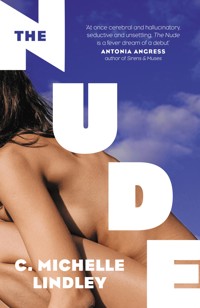
1999: An island off the southern coast of Greece. Art historian Elizabeth Clarke arrives with the intent to acquire a rare female sculpture. But what begins as a quest for a highly valued cultural artifact evolves into a trip that will force Elizabeth to contend with her ambition, her desire, and her troubling history.
Disoriented by jet lag, debilitating migraines, and a dependence on prescription pills, Elizabeth finds herself enthralled by her new surroundings – and equally, by her translator’s inscrutable wife, a young artist named Theo.
As the nude’s acquisition proves to be riskier than she could have ever imagined, the fates of Elizabeth and the sculpture are called into question. To find a way out, Elizabeth must grapple with the role she’s played in the global art trade and the ethical fallout her personal and professional decisions could leave behind.
The Nude is an evocative and intense exploration of art and cultural theft, combining the moody atmosphere of Katie Kitamura’s A Separation and the complex gender dynamics of Lisa Taddeo’s Animal with the sensual exploration of female desire of Deborah Levy's Hot Milk. Your next summer obsession!
'As thought-provoking as it is propulsive, The Nude is a tense and sultry tale of art, beauty and power. A richly detailed read for the salty summer months' - Chloë Ashby, author of Second Self
'With rippling prose, C. Michelle Lindley carves a taut and thrilling story about the necessary role of art in society, and sheds light on the sweltering way that complex beauty entangles not just its viewers, but those who seek to claim it' - Elle Nash, author of Deliver Me
'An incredibly sensitive and perceptive exploration of femininity, ownership and beauty... A tale that will keep you guessing up until the last page' - Hanna Johansson, author of Antiquity
'A captivating and profound novel that delves unflinchingly into the eternal love triangle between desire, power, and art... Masterful' - Antoine Wilson, author of Mouth to Mouth
'In sumptuous, lyrical prose, C. Michelle Lindley excavates thorny questions of art, ownership, and agency. At once cerebral and hallucinatory, seductive and unsettling, The Nude is a fever dream of a debut' - Antonia Angress, author of Sirens & Muses
'The Nude dives headlong into tense questions about art and ownership and the unanswerable enigma of beauty... I'll be thinking about this book for a long time' - Alyssa Songsiridej, author of Little Rabbit
'A remarkable debut, a slow-burn page-turner that turns a sweltering Greek island into a haunting house of mirrors. C. Michelle Lindley would have made Patricia Highsmith and Graham Greene proud' - Chris Bohjalian, author of Hour of the Witch
'Stunning, complex and carefully crafted... The lush, lyrical writing of The Nude depicts the gray areas of cultural appropriation, ethics, and sexuality so seamlessly, I had to remind myself to breathe while reading' - Ling Ling Huang, author of Natural Beauty
'Thrillingly taut and magnetically told, The Nude pries apart the pristine veneer of classical art and allows something sublimely twisted to emerge' - Alexandra Kleeman, author of Something New Under the Sun
'Set on a Greek island, wrought in a delirium of desire and loss, The Nude looks unflinchingly at the violent contestation of the female body - as artifice and art, and object and agent alike... Exhilarating, terrifying, and brilliant' - Emily Fridlund, author of History of Wolves
This novel contains discussions of sexual assault.
Das E-Book können Sie in Legimi-Apps oder einer beliebigen App lesen, die das folgende Format unterstützen:
Seitenzahl: 455
Veröffentlichungsjahr: 2024
Ähnliche




















Praise for The Nude
‘Stunning, complex, and carefully crafted… I was astounded and utterly enchanted by Lindley’s portrayal of a woman’s internal journey from object to subject... The lush, lyrical writing of The Nude depicts the gray areas of cultural appropriation, ethics, and sexuality so seamlessly, I had to remind myself to breathe while reading’ – Ling Ling Huang, author of Natural Beauty
‘In sumptuous, lyrical prose, C. Michelle Lindley excavates thorny questions of art, ownership, and agency. At once cerebral and hallucinatory, seductive and unsettling, The Nude is a fever dream of a debut’ – Antonia Angress, author of Sirens & Muses
‘The Nude dives headlong into tense questions about art and ownership and the unanswerable enigma of beauty. Elizabeth’s confrontation with the true cost of her museum-world rise, through her sensual and frightening travels in Greece, thrilled me. I could never guess, while reading, what would happen if she acquired her prize. I’ll be thinking about this book for a long time’ – Alyssa Songsiridej, author of Little Rabbit
‘A remarkable debut, a slow-burn page-turner that turns a sweltering Greek island into a haunting house of mirrors. C. Michelle Lindley would have made Patricia Highsmith and Graham Greene proud’ – Chris Bohjalian, author of The Flight Attendant
For Logan
Seeing is pleasure, but not knowledge.
– Elizabeth Bowen
This novel contains discussions of sexual assault.
1
When a Greek fisherman caught a woman’s body in his net – a marble statue, around five feet tall, missing two arms – I was working for a museum in Los Angeles on the other side of the world. After the discovery, a group of men hauled the figure to the island’s only museum, cleaned her, and kept her on a metal table in a climate-controlled room near the back of the building. It was there, somewhere in southern Greece, on a windy day in April, where I first saw her.
‘Doctor Clarke,’ the local antiquities dealer, a man named Alec, said. ‘What do you think?’
We were standing on opposite ends of the table where she lay, the only living people in the room, his eyes darting from me to her, her to me. I specialized in female statues of the Hellenistic Mediterranean, and though I was a curator for one of the most respected institutions in the states, whenever a colleague or patron called me Doctor, I did not immediately register myself as the object of their address, and in the ensuing blip of silence, an overwhelming self-consciousness would turn my tongue to stone.
What did I think? Pentelic marble, head tilted back, a stretched neck. If the statue should have cracked anywhere, it would have been there, but that delicate neck defied its own vulnerability. She was completely nude, with a rift on her right breast, a smooth abdomen, and censored vulva. Minor depressions carved into both sides of her hips. She might have been holding something in her left hand – a mirror, likely – based on the way her chin pointed slightly upward, as though she were studying a reflection of something – or someone – behind her.
I tried mentioning this possibility to Alec in Greek, but upon hearing me, he appeared shocked, offended. I repeated myself, quieter, and with a questioning lilt. He shook his head. In English, I apologized. I told him my Greek was rusty. He waved his hand as if to say, it’s nothing.
He offered me a pair of white cotton gloves and I began inspecting the statue’s every bend and fold, casually measuring proportions, lightly tracing areas of abrasion. Both her arms had snapped off at nearly identical points. It wasn’t uncommon for figures to be found without limbs, noses, genitalia, but usually, the breaks were uneven. Hers appeared, somehow, purposeful. Which isn’t to say the fissures seemed inauthentic – just, rare. Each new vantage point conjured more questions, more ways of seeing. Her hunched posture insinuated a self-consciousness, while her curved torso and bent knee invited the eye to travel down, then back up again, suggesting either an indifference to possible observers – or else, an invitation. I bent to her level, my eyeline meeting the top of her head, where ropes of wavy hair twisted into a crown, curls like limpets around her temple.
Meanwhile, Alec circled the room’s perimeter, the edges of his wrinkled khaki shorts skimming each hairy kneecap, his black socks pouring into white tennis shoes. On his left ring finger, he wore a thin silver band.
In English, he asked if I had been to Greece before, and in Greek, I said I’d been to Athens.
‘Athens,’ he said. ‘Alone?’
‘Yes,’ I lied, hiding my hesitation, ‘alone.’
I stood and glanced out the single clerestory window, where I could see nothing but a stone wall covered in pink-blooming cacti. I’d noticed the size of the room – no more than a ten by ten – but it was only then that I allowed myself to feel its smallness.
‘My cousin,’ Alec said. ‘Your–’ He searched for the word. ‘Translator. Here soon.’
‘Yes, great,’ I said, thanking him, and though I certainly did need a translator, I resented this stranger’s disbelief in my abilities.
As I walked around, the statue’s pupil-less eyes followed me. I couldn’t decide if her expression was desireful or agonized. Likely, it was both. Her features had remained in decent shape and, when eyed from certain angles, glitzed with traces of red and gold paint. That any pigment had remained was highly unusual for a figure so ancient. Elsewhere, she was either poorly sculpted or else decayed: the ears, for example, pockmarked and peppered with limonite; the feet, hewn without detail, except for the toes, of course, which curled under, as though in a perennial pre-orgasmic state. When viewed holistically, these mismatched conditions gave her beauty a patina of unease. I’d never seen anything like her.
A few moments later, someone walked through the door and a gust of cold air hit me in the back of the neck. I turned. The translator came to me piece by piece: bouncy dark hair, a long-lensed camera in his right hand, swim trunks, a white poplin shirt open slightly to expose a rose-tinged tan. His features were impeccable. The kind of face I fell for in my youth, but tended to avoid now, the soft, feminine shapes too familiar – though he was a couple of years younger than me, I guessed. Early thirties.
I had come straight to the museum from the airport in my usual, conservative work attire: anemic blouse and slacks, closed-toe pumps. Hair pulled into a neutral ponytail. My luggage – an ugly shade of purple, the kind of monstrous bag someone usually reserves for backpacking – leaned up against the wall in the corner. To get through the long plane ride, I’d knocked myself out with a careful concoction of pills, which meant that I had not brushed my teeth or reapplied antiperspirant in over sixteen hours. When I shook the translator’s hand, I offered a close-lipped smile, trying to maintain eye contact as a way to show a dominance unfelt. He introduced himself as Niko Yorgos and began taking photographs of the statue.
‘I thought you were the translator?’
He picked the camera up and said, ‘Budget cuts.’
As Niko walked around the room, he relayed unprompted information about himself (he grew up in Athens, but disliked the pace) and tried to gather knowledge about me (he asked where in California I was from and I said, ‘Northern,’ and then he said, ‘Los Angeles?’ And I said, ‘I’m not from there, from there. I’ve just been living there’). He asked how I was liking the island (good, though I had just arrived). After some time, he returned to my upbringing and said, ‘You know, my wife, she spent many years in Los Angeles. Is that not a miniature world?’ He got closer to the statue’s nose and pressed the shutter. Though I knew little about this man, his having a wife seemed odd. I couldn’t exactly place why.
‘It’s a big city,’ I said.
At the thought of discussing my life back home, I turned away and refocused on the statue. I noticed something about the positioning of her body: her chest and shoulders were slightly turned inward, which made me consider the possibility she had come in a pair.
‘What do you think of her?’ I asked Niko.
‘Well, Doctor,’ he said, as though reading my mind, ‘I think she looks lonely.’
Soon, Alec suggested we take a walk around the museum. He wanted to show me the architecture and some other prized items, which were mostly chipped vases, and various clay figurines. Alec was the leading purveyor of terracotta vases around the Cyclades Islands and so, the nude was an atypical sell for him. I’d never handled a deal this large, or this risky either, at least, not on my own. A few months previous, I’d attended an antiquities sale in Switzerland in the hopes of acquiring a promising vase, but it turned out to be worthless. I’d watched my colleague Madison purchase a femur-sized figurine last year in London, and even though I was the one who helped him with the appraisal, I’d received no recognition. Not that I’d put up a fight or complained to anyone after the fact. I was still trying to showcase commendable sportsmanship, prove I worked well with others.
Alec’s tour was quick, as the museum wasn’t large, mostly underground, and with various parts closed for repair. When we passed by the front, I grabbed a brochure with a Spedos figurine on the cover. After a few minutes, we walked down to the lowest level, where an entire wing was cordoned off. I wondered what was inside but didn’t feel comfortable enough to ask. Alec quickly led us out to a small, overgrown garden, where he began a lecture about the museum’s history. Above us hung a swollen mid-day sun, and despite the heavy wind, it felt unbearably pleasant. The more Alec talked, the less I understood, but I followed along, feigning engagement. Every so often, someone would walk into the garden and wander around with their brochures and coffees. The island draft – warm and wicked – threatened to blow everything out of their hands.
Niko said hot wind came up from the south and caused the locals to believe the earth’s passions had the power to change their personalities. He called it the siroccos effect. ‘It offers people an excuse to act out of character.’ But, he said, the sirocco had come early this year. His shirt, white and blank as a canvas, rippled as he rolled up the sleeves.
‘Perhaps it’s a by-product of the impending apocalypse,’ I said.
He nodded. ‘Y2K.’ He nodded again. ‘Are you ready?’
A loud group of Westerners – four or five college-aged men dressed in sagging jeans and American labels – ambled inside the garden, their loud conversation supervening ours. As they walked around in total disregard of the property, I felt a shift in the air, or else in myself, the distinct foreignness of my own presence projected back at me. I watched Niko to see how he would react, but he only eyed the young men with an unconcerned, passive expression. Alec, on the other hand, stared at them like a scorned and impatient father. A minute gruelled into two, and finally, the party lost interest and swaggered back inside, leaving behind only an echo of their arrogance, a sound I feared I wouldn’t shake, but then, as though there’d been no disruption at all, Alec began orating again, quickly losing himself in his performance, and so, I turned back to Niko, pleased to see that he was smiling at me, waiting still, on my answer.
‘I’ve been ready,’ I said. ‘You?’
He laughed but did not reply.
Alec instructed us to move on, and Niko walked alongside me, his hands poised behind his back. He smelled charged, moneyed, or else gorged on luck, as he leaned in unguardedly, whispering into my neck, ‘I think you make my cousin nervous.’ I regarded him again. This time, he struck me as especially masculine. Algorithmic. I stood straighter, churning my head for a rebuttal: something presumptuous, yet lighthearted. But nothing came in time.
Once we reentered the room, Niko insisted the two of them take me to lunch. I didn’t want to go. I’d have rather stayed with the figure, to whom I already felt a sense of allegiance, but I knew what William would say back home. Gaining trust with sellers was vital; curation was nothing if not a business built on relationships. Unfortunately, I’d had an eye for sculptures, but not for people. If you are to fail, William had warned me once, your tendency toward coldness will be to blame. What I couldn’t say was that I did not feel cold, I felt attached to too much, all the time.
Alec and Niko invited a woman named Melia and another man named Thomas, both of whom had worked at the museum for years, though I wasn’t sure of their positions and did not feel energetic enough to manage conversations with more than two people at one time. Thomas was somewhere in his forties, and I hoped I wouldn’t have to correspond with him much. With his designer denim and clean, leather shoes, he emitted an air of quiet self-importance. Melia, on the other hand, was just quiet.
We all walked up the marble steps, and into the cobblestoned town, where the air had cooled a few degrees since my initial arrival.
Seeing as I planned to leave for my rental after our meal, Niko insisted on carrying my bag. Every time I caught sight of its color in the corner of my vision, its youthfulness irritated me. How unbecoming it appeared amongst the contours of the ancient architecture, the stooped timeworn trees. On top of that, it seemed as though Niko was struggling with the bag’s weight, and though I wanted to take it off his hands, I worried the suggestion would paint me as a person incapable of trusting others. Which, for the most part, I was.
As we plodded along – the roads narrow, mazelike, at times, dangerously steep – we passed several churches and small shops, bleach-white buildings, and more cats than I could count, most of them immobile and unperturbed by commotion, their ears pulled back, eyes squinted shut. The air smelled of salt and tar. Bells reverberated; bay laurels rustled somewhere behind us on the hillside. The blend of sensations had a calming, alchemic effect on my mood, and I tried to personify this by smiling when passersby looked our way, though I was often hindered by a rolling ankle, as cracks in the stones kept taking hold of my heels. Every time I almost fell, Niko reached for my arm, and every time, I politely thanked him and retracted. After what seemed like miles, but was likely only minutes, the pleasantry wore itself out, and the balls of my feet pulsed with pain. I began counting down the hours until I could be alone, prostrate, and anonymous in an impersonal hotel bed.
We came across a café, in the middle of the town square, with bright blue umbrellas and white plastic chairs. Under a yellow awning out front, Niko and I sat on one side, facing the square and its central fountain, while everyone else squeezed on the other. This all happened without my input, which I wouldn’t have given anyway. Niko handed me a cigarette, and though I didn’t smoke, I took it and thanked him. He offered me a light, and then I said, ‘No, sorry. I don’t smoke.’
‘Why did you take the cigarette?’
I examined it and considered. ‘I don’t know,’ I said. We laughed. Already, we had our own little jokes. I couldn’t stand how unprofessional he was making me feel.
The sun dropped behind a mountain and the table ordered a round of ouzo. ‘To your time in Greece,’ Niko said, facing me, lifting his glass, a thin shadow garroting his neck. The table toasted and the drink tasted like licorice. Niko asked if he could take a group photo of myself, Alec, Melia, and Thomas. Not wanting to ostracize myself, I obliged, sitting straighter and smiling without teeth. As soon as the shutter clicked, I regretted saying yes to the photograph and was sure it would be unforgiving. When the waiter reappeared, I ordered like a philistine: white wine and a salad, and then Niko scoffed and reordered for me. At first, this perturbed me; it was a clear undermine. But once the food arrived – a plate of stuffed grape leaves, sodden with oil, curled calamari, sautéed wild greens – I forgave him. We finished the meal with Lokmas, balls of fried dough drenched in simple syrup, and freddo espressos. Mostly, Melia and Thomas talked to Alec, and Alec to them. For their inattention, I was grateful.
I turned to Niko and asked when he would develop the photographs he took. He said he’d have them to me right away. We digressed. He said he knew a man who photographed Gustave Courbet’s painting L’Origine du Monde, a close-up view of a woman’s nude torso wrapped in white sheets, legs open, revealing her genitals. ‘Are you familiar?’ he asked. I said of course I was. ‘Right,’ he said. ‘My apologies.’ He went on. Apparently, the man sold photographs of the art to tourists on the street, passing them off as originals. I said that was unethical because the photos were not the real piece of art, and he said, ‘If the customers were happy with the reproductions, then does the reality of it matter?’
‘Plato said mimesis was a corruption of the soul.’
‘Is it not true, that much of the Grecian objects with which you work, is it not true that they are Roman replications?’
‘Well, sure, but those were born out of admiration. Roman citizens were feeling this – this desire for Greek culture. They wanted a piece of it for themselves. Something they could display in their homes with pride.’
‘And this is a deviation from my example, how?’
We lapsed into a silence, his confidence clouding my thoughts. But then, off my look, he held up his hands. ‘Of course. I am no expert.’
By the time we were done, it was four pm, though it felt like three in the morning.
On our way out, Niko said something about his wife, whom he hadn’t mentioned all lunch, but whom I’d thought about whenever he nodded or smiled – suspiciously eager – at my comments. He said she was a photographer. A better one than him. A real one. He said she had received some acclaim, a few years back, for a series of self-portraits. He likened her early work to Cindy Sherman if Cindy Sherman had an interest in the naked form. I nodded along, my curiosity waxing. Alec, Melia, and Thomas said goodbye and walked off, leaving Niko and me alone, a cavalcade of shiny bicycles whizzing past us, car horns blaring. Someone around the corner yelled; a glass shattered.
‘Are you married, Doctor?’
I told him I was not. Usually, I’d have bristled at such personal questions, but I found myself softened by his sincerity, his directness. Or else, by the ouzo.
‘It is probably better. For your line of work? Lots of travel.’
‘I suppose,’ I said.
He told me his wife was working on a new project, and then, curiously, he paused, as though waiting for me to inquire.
‘What kind of project?’
He hesitated, then said he wasn’t at liberty to discuss. He said his wife had a strong sense of self and of what she needed as a person, as an artist, and what she needed most of all, right now, was privacy, because there was no freedom without privacy. I had a feeling he didn’t know what the project was either, and I didn’t understand why he’d brought it up in the first place. Maybe he thought I’d be able to illuminate or validate something for him, and though I wanted to be helpful, or at least appear helpful, outside of some required classes, I’d known shamefully little about contemporary art. Over the years, I’d pared my focus down to certain, sacred aesthetic truths – geometric patterns and cool, objective faces; the movement of a body, caught in marble. But I couldn’t let him know this, and risk not living up to the person I thought he wanted me to be, so I said nothing.
He dropped his head, and in newfound shyness, slipped his hands in his pockets, kicked away a small rock. ‘In most simple terms,’ he said, ‘she is interested in vacancies.’
I said the project sounded interesting, because it was the only thing to say about a pitch so vague.
When he looked back up, I felt penetrated.
The wind began moving the other way, or else we had shifted without my noticing. A piece of dust flew in my eye, and I tried to feign indifference as Niko said he’d like to walk me to my hotel. I thanked him and said no; my feet were tired, and I wanted to take a cab. Truthfully, I’d wanted some quiet. He asked how long I was in town for. I said I didn’t know. I mentioned that I’d be taking a break at some point to deliver a lecture in Athens, but he didn’t respond to that information, and instead asked how long acquisitions usually took. I told him it depended on many factors, but likely, no more than a week or so. This seemed to disappoint him.
‘Well,’ I said. ‘It was nice to meet you, Niko Yorgos.’ He moved in closer for a hug, but I intercepted with a handshake, and once I noticed his discomfort at the interaction, I wished I’d had more to drink.
I managed to find a cab quickly. American music boomed from the driver’s speakers, a hit from the previous year, the melody slow and dull. A photograph had been taped on the dashboard – a little girl with her front teeth missing. The cabdriver’s daughter, years ago, I assumed. He told me his name was Dimitri. All men exhausted me, but I found older men, anyone from my stepfather’s age upward, especially draining, as I often tried too hard to impress them. Thankfully, this man seemed unimpressible, with his balding pate and puffy hands. When we got going, the labyrinthine streets opened up like mouths. I felt feverish. My limbs, my neck, rubbery. I rolled down the window. The middle of town bumbled with noise, with people, clusters of shadows fuzzy in the waning light, coteries of teenage girls perched on railings, watching. Their sinuous, informal posture reminiscent of the statue’s. Dimitri turned away from them, onto a residential street where fuchsia flowers laced the sides of homes. An iron chair dragged across stone. A mother called for her child. A wind chime blew. I suspected Dimitri was taking me on the longest route, but I didn’t mind. I was either delirious or content, but perhaps I’d never been able to tell the difference. I stuck my hand out and reached toward the architecture, toward something concrete, the smooth curves of the statue’s body flashing before me, taking hold. ‘Be care,’ said Dimitri, instructing me to pull my arm back inside, and I relented, but not before I allowed myself a few more seconds of freedom as I closed my eyes, and reached again, one inch farther, a breath held in my chest, the tepid air slapping my palm.
2
William’s assistantSandra had booked the rental through an agency, and I’d had no way of surveying the property before arriving, so I wasn’t sure what to expect. To find it, I had to walk down a narrow street that I’d at first thought was nothing but an alleyway until Dimitri assured me, twice, verbally, and then once with a delicate push forward. I craned my neck. Balconies jutted from the building; wild plants grew over iron railings. Open windows gave way to cerulean blue, grass green, apricot orange shutters – so bright they seemed, almost, to glow.
As I hauled my luggage toward the entrance, Dimitri asked for the fare. I searched my wallet and couldn’t find any drachmas, though I remembered procuring some at the airport, the weight of them in my hand. I apologized profusely, my breath quickening. I asked if he took the dollar. He shook his head, and I worried I’d upset him. I said I was good for it, if he came back. He handed me a business card, printed with checkered yellow and black. His taxi was number twenty-six. ‘Me, I will find you,’ he said. He didn’t mention when.
I made it inside, where a child stood at a walnut-wood front desk with headphones on, bobbing his head. The lobby was less of a lobby and more of a dim, oblong room with a water cooler, a pile of plastic bags containing other plastic bags, and a mop left damp in the middle of the entryway. As I approached the kid behind the desk, he eyed my luggage. I set it down, then pushed the bag behind my leg. I told him my name and handed him my passport, which he smirked at and then photocopied twice. He gave me a set of rusted keys, a tie-dyed rabbit foot attached, then took me outside, where we walked up several flights of concrete stairs.
My room was on the corner of the second-to-top floor, and though it did face the water, another building obfuscated the view, so I had a direct line of vision into another woman’s space, which meant that she, too, could see into mine. The idea of this made me uneasy, but what could I do? Her studio looked like the mirror image of my rental – our bathrooms and kitchenettes on opposite sides. Unlike me, she didn’t have a terrace. Mine faced the street, iron rails lined with plants: sharp succulents in belly-shaped terracotta pots, olive trees, a cluster of bear’s-breeches sprouting from a watering can. I turned my head and squinted. Up the stone walls ran a wilted vine of bougainvillea. There was a café across the way, and beyond the café, a pharmacy with a broken, neon green plus sign missing its top so that it looked like a squat, uppercase T. Between buildings, multiple strings of light – the bulbs as big as oranges – hung.
When the boy left, I kept the window open and thought I’d take a nap for twenty, thirty minutes. Anything longer would distress my already fragile circadian rhythm. I slipped into the twin bed with its crinkled sheets and floral comforter and fell asleep quickly to the sound of wind soughing through the linen curtains, the faint smell of garbage and sugar and sea. I dreamed of my little sister Margaret pulling herself out of the pool water and twisting her neck like a rag, tongue out. I dreamed of a room full of male statues, each with a mouthful of bees. I dreamed of Margaret’s eyes gushing with honey.
I woke to the familiar, pulsing beat of an oncoming migraine, unaware of how long I’d been out, displaced by the change in light, by my dreams. I almost never dreamed of Margaret.
The clock on the side table flashed numbers: 88:88, their brightness worsening my headache.
I decided I’d run to the pharmacy for extra-strength ibuprofen to get ahold of the pain before it took hold of me. With the possibility of a promotion ahead, and against the unflappability of Madison, I promised myself I’d cut back on my prescriptions, though I’d already taken two – three – on the plane ride over.
I grabbed a sweatshirt from my alma mater and walked down the stairs and out the lobby, where the front desk child now sat with a backward cap, reading a comic book, a silver Discman in his lap. He waved at me but did not look up.
The sun had already begun disappearing behind the horizon; the sky twisted from pale blue to wistful violet. Whenever I blinked and opened my eyes, the world appeared a little duller. This alarmed me, though I tried not to let it. The last thing I needed was a migraine aura. Hippocrates was the first to describe the phenomenon in writing – noting a glare that shone before him, superseded by a violent throb in his right temple. Then again, he also believed that a womb could wander upward toward the throat like a blood-thirsty animal, block a woman’s airflow, and therefore, choke her to death. At the museum, we had a collection of ancient amulets said to hold headache-breaking spells. I sometimes spent my lunch break staring at their inscriptions, tracing with my mind’s eye the lines, the curves of the characters. But in their presence, I’d never felt anything other than an untenable, uncertain dread.
None of my colleagues knew the extent of my afflictions, and if I ever endured an attack on the clock, I’d take a pill and wait it out in my office, tell someone I was in the middle of a substantial research project, as I tried to will away the floaters, the blurring zigzags. I’d experienced total blindness twice in my life – the first time after Margaret died, and I couldn’t see anything but vague colors for a few hours, and again, when Julian and I married. In the latter case, I’d lost my vision for days. I lived in constant fear of another episode, certain the next would last longer and preclude me from hiding the condition at work – everything I’d cultivated, unraveled in a literal blink.
3
When I got to the pharmacy, I pulled the door, pushed it, put my face against the warm glass. At first, I didn’t see anyone inside, and then appeared the shadows of a group of men sitting around a plastic table. I couldn’t make out what they were doing, but they waved me off and said they were closed, so I moved on in the hopes of finding another location. Walking through town felt like walking through someone else’s warped idea of the island, my headache washing everything in a tint of the unreal. A large gray dog with black ears – husky-like – seemed to be trailing me, but every time I turned around, he stopped, sat down, clicked his jaw shut, and stared at my face through shrewd eyes. I had the odd sensation he recognized me, or that I reminded him of someone. Elsewhere, it seemed oddly desolate. A silver-painted man stood stoically in front of some hat shop, eager to collect coins from guilty tourists, though no tourists were around. Except for me. If I counted. Hot pain seared the base of my skull, and the air felt dry and distended, pushing on my lungs. I could smell the aromas of several restaurants either opening or closing – garlic, onion, disinfectant – and hear, in the distance, the acoustic strum of a guitar. I moved toward the music, stepping over a red sandal, flipped upside down in the middle of the street, the strap torn violently from its sole. Eventually, the music stopped, but I didn’t notice when.
I made it to a busier street where locals sat outside with newspapers, smoke and dust in the balmy atmosphere, soft chatter and silent babies on laps. I waded in and out of couples holding hands, lighting cigarettes, but could see only their silhouettes, their faces vacuous.
At one point, I thought I heard someone say my name, and turned around to find no one there but that same gray dog – or was it the same dog? I was fairly certain. Wasn’t I? I knew I wasn’t far from the rental. Before meeting Julian, I’d always thought I had a decent sense of direction, but he never trusted my assuredness, said I’d rather kill him than look at a map (once, after a wrong turn at night, I almost drove us off the Pacific Coast Highway). Presently, I felt a similar stubbornness – a blister forming on my heel. I turned around to look for the dog, but he was gone, and the sky had darkened once again. Had I walked in a complete circle? I heard the water to my left and followed the sound, and then, finally I saw something familiar: bleary bulbs hanging between buildings. A green neon T. The sight of them like the breaking of a days-long fever.
My headache relentless now, I prayed the boy at the front desk wouldn’t notice and ask what was wrong or if he could help – Was anything wrong? Could he help? – but as I walked inside, cooled by a charitable gust of AC, I knew I’d worried for nothing. Head down and away from me, he didn’t even blink.
Once up the stairs and inside the room, I reached for my pills. Since my stepfather Henry began treatment on me, I’d been on and off, though mostly on, a variety of medications: benzodiazepines for anxiety, methysergide for preventive purposes, even antipsychotics. If it promised to quiet the percussive echoes of pain, I’d swallowed dutifully, hopeful as ever that its specific chemistry would make me whole. But benzodiazepines had always been my favorite. Even though lately, I’d required more and more of them to achieve any ounce of effectiveness, they numbed me to the dreadful, nettled textures of existence in a way nothing else ever had.
I took one – stopping for a moment to gape at my dwindling stash – and when that didn’t blunt me quickly enough, I took another, and afterward, fell into bed, shoes on, dizzy with weariness, relief. I slipped into a deep sleep, my aches dissolving. This time, I did not dream.
4
I woke in the middle of the night. It was two pm back home. Soon, I’d have to call William. He’d need to know that I’d gotten in all right, that I’d seen the statue, that she was everything we’d hoped her to be. But I didn’t feel settled enough to speak with him, didn’t feel I could yet impress him with my assessment. I needed more time. To calm myself, I ran a bath.
The bathroom’s terrazzo floors thermal under my feet, I undressed and plunked into the tub, draped my leg over the side and shaved, immediately nicking myself on the ridged bone of my shin. Blood leaked out fast, alarmingly so. When I put my leg under, the carnage – a red tendril – disappeared into clear water. I dipped my head beneath the faucet, scrubbed my scalp. Once I got out, I took a pill and then twisted a towel around my wet hair and wrapped one around my chest before falling back onto the bed, weary to the bone and completely still. I took a deep breath in and held it behind the nose. Often, before one-on-one meetings with William, I’d shut and lock the door to my office, turn out the lights, lie on the floor, and perform a similar breathing exercise. Afterward, I’d peek through the glass of William’s office and try to decipher his mood. Knowing never changed his reactions, but the foresight afforded me a temporary sense of agency, of control.
A few weeks prior, William had been promoted to Director of the trust, and the antiquities department was feeling pressure to fill his spot. They wanted a new, younger face – fresh blood. And who better to choose his own successor than the man who had built the department himself? Everyone knew it was between two assistant curators: me and Madison. William’s favorites. Madison was a distant relative of a prominent donor and younger than me by several months. Though I’d never heard William call Madison kiddo, a condescending nickname he’d ascribed to only me. Both Madison and I had been working for William the same amount of time, and both of us were offered this trip – actually, at first, William suggested we go together, but Madison’s wife had gone into early labor. Everyone understands, I told him in the hallway between our offices, trying to hide my smile, family first. Until then, the promotion might have been going in Madison’s favor – he had the connections, the pedigree – but in that moment, the score evened itself out, and now, as William had reminded me before I left, it was all but mine to lose.
An ambulance’s siren pealed through the streets, and the unfamiliar, European bleat of it, the blue flashing lights, jolted me from the bed and brought me closer to the phone, which was poorly affixed to the wall. International calls weren’t going through, though I tried several times before giving up. My panic crested, and against my will, collapsed into frustration. I threw on some clothes, took a calling card from my wallet, and went outside to find a pay phone.
The streets were blank, the air filled with the smell of burnt firework powder, the sound of errant car honks, motorcycles. One came out of nowhere and almost hit me. I yelled out an apology. A few blocks away, I found a booth and went inside. The wind shield was dingy and cracked, the number buttons greasy and warm to the touch, as though someone had just been there.
‘Hello,’ I said.
‘Hello?’
‘William, it’s Elizabeth.’
‘Elizabeth? Elizabeth who?’ he said, laughing.
Already, the interaction left me drained.
‘Got you. Hi, Elizabeth.’
‘You got me,’ I said, adding a compensatory, ‘ha-ha.’ I heard someone on the other end of the line, out of earshot. I wondered what conversations my coworkers were having in my absence. There were only two women who worked on the curation side of things – me and a retired professor, whose interest was in The Baroque. As for those in my department, I wondered what they thought about me being here; if they preferred Madison take the helm; if they believed he’d already inherited it, been prepared for it in a way I hadn’t – though I was not so deluded as to think that I’d been rewarded on merit alone – the difference was that I, unlike Madison, had been caught somewhere I didn’t belong.
‘Pardon the interruption,’ William said into the line. ‘Now. Tell me everything, kiddo.’
I relayed my initial thoughts. (‘It’s one of a kind,’ I said, ‘and the marble is in excellent condition.’) He asked if it was Parian and I said no, I thought it was Pentelic, which he and I both agreed was unusual, unless the figure had been created nearer to Athens than we’d originally assumed. I told him about the potential mirror. The crown of hair. The flecks of gold paint. He applauded my efforts. (‘Good instincts. Is it strong enough to anchor the new space?’)
Along with a staffing change, the museum was set to undergo extensive structural renovations: seventy thousand square feet dedicated to Hellenistic art, from Alexander the Great’s death to the Roman Empire’s birth. Under my direction, I envisioned an experience of chronological timing, a narrative of beginning to end, encircled by topiary, lauded by scholars and casual admirers alike. The statue was the perfect object to fill a gap in the museum’s oeuvre. She would be featured prominently. People would travel from all over to see her.
‘It’s going to be even more influential than we imagined,’ I told William, citing the Riace bronzes, discovered in Southern Italy in the early seventies. Their display was such a cultural event that their image crossed over the art history milieu and into the general consciousness. At one point, the pair’s likeness was even printed on postage stamps.
‘I’ll fax you the photographs when I’ve got them,’ I said, ‘along with some notes.’
‘When?’
‘Soon. Very soon.’
‘Good,’ he said. I heard his thin lips smack together. He might have been eating. He was always eating. ‘Let’s move quick on this. We don’t want anyone sniffing around.’
It was an unfathomable kind of luck, finding the statue in such good condition. It seemed unlikely it had been submerged long, and yet we would be able to claim the provenance as international because it’d been found far enough away from the Greek border – at least, according to Alec. And who were we to dispute his word? On this technicality, Greece did not have ownership. Although, somewhere down the line, those in power could claim the figure illegally exported before it’d been discovered, and therefore, ask for it back. But we’d deal with that when the time came, if it ever came at all.
‘Just remember to act in good faith,’ William said.
The phrase had become something of an internal joke in our department, shorthand for the show of it all, for our acquisition policies – if you could even call them policies – the ways in which we believed our commitments to art rose above the so-called laws. Work a few days in the business and you start to see the paint peeling back. I’d witnessed a few indiscretions firsthand: under-the-table kickbacks, flying families on the trustees’ dime, allowing high-profile friends to claim tax breaks. William had faked paperwork – or looked the other way when a dealer had – but only when desperate, only when he was sure the benefits would outweigh the risks, when he knew bringing something valuable to the public took precedence over everything else. At first, I questioned his methods, the ethics they presented, the lack of protocol, but every time we unveiled a new piece of art, and I saw its earthly beauty through the eyes of our patrons, I could justify almost any sin. Nothing on which a mind might sway lives free of indiscretion.
‘Elizabeth?’
‘Right,’ I said, forcing myself to smile. ‘Good faith.’
The truth was every institution behaved improperly, it was more a matter of who did it best.
‘And one last thing. It won’t kill you to be extra friendly, would it? Show some warmth. Do what you can to speed this along?’
‘Consider it done,’ I said, my best attempt at assurance.
I heard a soft chortle in the background. A mumble. Someone’s voice – ‘Ask if she’s got any of those low-cut numbers,’ it said. ‘That should do it.’ By instinct, I prepared to get ahead of the joke by offering a light, easygoing laugh, and a coy rebuttal that I would likely regret for the rest of my life, but before William returned to the line, the time ran out. I hung up and stared at the receiver. A woman with a screaming child walked by the booth, trying to coo it back to sleep.
5
When I first met William, I was fresh out of graduate school, twenty-seven years old with a PhD, but no real experience – I’d graduated college early, shy of twenty-one, and went straight into a doctorate program. My last semester, a professor had told one of my male peers William was hiring, and I’d overheard him. William had an impressive résumé, one of the most esteemed in the industry. He’d become the head curator of the department in the late sixties. I knew he was tough, and I knew he’d trained the best curators in the country – they called him Wily Willy. He’d rub your neck if you seemed tense, then ignore you for days at a time, forget your name. He’d hand you a hundred-dollar bill for lunch, but as an outspoken agnostic, if you used BC/AD instead of BCE/CE, he’d humiliate you in front of everyone. Still, to a select few, he had his moments of brilliance, of generosity. He was exactly the kind of man from whom I’d sought approval.
That afternoon, I cold-called William’s secretary, explained my credentials, said I would fax my résumé over. She seemed unimpressed. She must have received so many calls like mine, but there was something about me William took interest in. A few days after, I got an interview.
The museum was clean and slick and expensive. As I walked through the halls, I imagined the envy of my classmates. They would have killed for this. I let that fuel me.
At the front desk, I greeted William’s young secretary, Sandra. She was pretty and kind but seemed suspicious of me. ‘What is the name again?’
Immediately, I wanted her on my side.
‘Elizabeth. Clarke.’
‘I’ve always loved that name,’ she said. ‘Elizabeth.’
When she rose from her desk, her stomach protruded. I admired her bump. She was one of those women who carried everything in her belly.
‘Congratulations,’ I said. She gave me a meek smile. She probably hoped for her body to go unnoticed. She led me to William and opened the door into his office. It had rounded vaults and ceiling-high windows. A whitewashed bookshelf without books, populated instead with a collection of pottery shards. And on his desk, a shock of yellow daisies.
His handshake was a death grip, and his palm, a little sweaty. That he might have been nervous comforted me greatly. It spoke to some complex anxiety that I felt only I could see or understand. It gave me an in. He placed his hands on his desk and maintained eye contact throughout the interview. He said my credentials had been sufficient, but what had set me apart was my cover letter, wherein I discussed the prototypical Greek female nude, the Aphrodite of Knidos.
The original sculpture hadn’t survived, but the Knidia was the first full-sized statue of a goddess’s unclothed – and therefore human – form. This, four centuries after the first disrobed male. Hundreds of imitations were created in her likeness – the bend in the stomach, the slight hunch – after she was destroyed in a fire in the fifth century CE. That original statue became legendary. According to an old tale, an admirer once fell in love with her, spent days of his life visiting her shrine, until one evening, he hid at the temple until everyone left. The next morning, she was found defiled, a mark across her thigh: evidence of his uncontrollable lust. He was exiled. He couldn’t have her. So he went mad, jumped off a cliff, and impaled himself on a rock. I saw a copy in the Vatican once, right out of college. I was so overcome that I sat down on the floor and zeroed in on her, afraid to miss something, afraid to move. Cooled by the icy, marble tile below me, I felt like I was in the presence of real Beauty, real Art, a slice of history bigger, more important than I’d ever be, and I truly believed, however naïvely, this kind of Beauty, this kind of Art had the power to alter me in all the ways I’d needed to be altered. For hours, I stayed there, fixating on the statue, every so often getting up and sitting back down on a different side, completely unaware of my other surroundings. By her, I wrote in my letter to William, I had felt consumed. I had felt, for the first time, bodiless.
William said my words had provoked something dormant inside him, and that he’d culled me from a stack of applicants. It was not lost on me that culled meant both ‘selected’ and ‘destroyed.’
I felt we had a good rapport, even though, when he looked at me, he looked either at my neck or past my ear. I wondered if he was a drunk; he seemed like the type. Whiny eyes and a mild case of rhinophyma. This simplified our relationship for me. I liked being around venerable men with bad skin. They made me feel shiny and untouched.
He got up from his chair and shook my hand to confirm the end of our meeting, his grip looser than the first time; he’d softened to me already. I saw on his desk the framed article of his profile in the Los Angeles Times, and then, the photographs of his daughters. They angled toward him. A pair of white-blond twins, and one girl with dark hair. The twins wore matching black dresses with Peter Pan collars like subjects in a Diane Arbus. I said, ‘Your daughters?’ He told me their names and said he’d adopted the darker-haired girl. She had a larger photo than the twins, an aureate frame, the specialness of which made me uneasy. I said they were all lovely. He liked that. I said I had a sister. He liked that too.
He asked if I wanted children. I said, ‘Not any time soon.’ Which was a lie. I wasn’t sure I’d wanted them at all. To mother seemed – at once – too public, too private an act.
‘Good,’ he said. ‘Smart.’ He picked my left hand up and searched for a ring. ‘But you are married.’
I let him hold on as I said, yes, yes I was.
‘That’s a beautiful blouse,’ he said. It was deep blue and silk. ‘What color would you call it?’ I thought for a moment.
‘Somewhere between lapis and royal.’
‘Are you a tetrachromat?’ he asked. ‘It’s when–’
‘I know what it is,’ I cut him off, though in a friendly manner.
‘Very good,’ he said. ‘Are you?’
‘I like to think yes,’ I said.
‘And where are your weaknesses?’
‘You’ll never find them.’
‘We’ll see about that,’ he said.
He told me I had a strong presence, and I knew the job was mine. On the way back home, I rolled the windows down and listened to the susurration of the hot Los Angeles air, overwhelmed with gratitude. I knew I wasn’t special or more deserving than anyone else, but I loved nothing more than being made to feel special, especially by someone like William, who had heard me, my words, my ideas, and deemed them worthy. It was such a small thing, but then again, it was comprehensive. By his attention, I felt fed. Alive. Moony about the future, about who I could become under William’s direction, his care. I’d failed at a lot of things, but my career was not going to be one of them.
When I got home and relayed the good news to Julian, he was unable to hide his disappointment. He was jittery, fidgety, said he’d been worried about it all day. The museum’s name was too big. ‘Couldn’t you work for a smaller one? Couldn’t you be a professor? Get summers off? This is all a bit sudden for us, isn’t it?’
For us? It had nothing to do with him. From the beginning, he’d known about my ambitions, my priorities, and I was about to reiterate this point, until his face grew serious. ‘Do you think,’ he said, ‘this man – what’s his name – has a thing for you or something?’ At that, I let his words go. Not because I was afraid of standing up to Julian, but because – even if his question circled around some unseemly truth that I myself had wondered about – I’d found his disillusionment shamefully uninspired. If this was the worst of what he thought of me, I decided I could live with it.
For the most part, I didn’t hate working for William. He was up-front about his ugliness. In a room full of men, he referred to Aphrodite’s breasts as knockers. I was flattered by how he didn’t better himself in front of me. He didn’t expect me to be a saint either. Perhaps I should have been troubled by this, but I wasn’t – and that’s what he’d really seen in me during our first interview, that I would do almost anything for his acceptance. Regardless, in those eager, early days, I felt William viewed me as one of his own, someone with whom he could really work. The others didn’t seem to agree. I was rarely invited to any post-work drinks or unofficial celebratory dinners, despite doing everything I could to appear willing.
Once, at a holiday party, I had a few glasses of champagne and confessed to William that when I was a teenager, my sister had died.
He leaned into me, scotch on the rocks rumbling in his hands. ‘So, you had two sisters?’
‘Right,’ I said, not having the energy to clarify. What did the truth matter in the face of death? ‘I had two.’ The declaration felt so easy, feathering out of my mouth.
‘I could sense you had lost someone,’ he said. ‘You have that look.’
He told me he’d lost his mother when he was nine. Car accident. She was a drunk. ‘I’m so sorry,’ I said.
I thought I watched a tear roll off his cheek and drop into his glass, but even in the moment, it seemed dreamlike, too perfect to be true. I put my hand on his obtuse shoulder. An instrumental version of ‘Baby, It’s Cold Outside’ played above us and the AC in the corner rattled. It’d been seventy-eight degrees that day. ‘There, there,’ I said. I felt huge.
After that, he kept a closer eye on me, often called me into his office, stood close to me, and christened me his protégé. I registered the warmth of his attention, clocked it as impure, unfair – to whom, I didn’t know – and reveled in it anyway. Whenever I walked out his doors, I could feel his gaze rolling down my spine and onto my ass like sunshine. It wasn’t apparent to anyone but us, and for a while, he never crossed the line; rather, he teetered on it with blithe privilege. I understood my role. I understood that – at least for a little while – my body was an asset and an affront, a creation made for everyone else’s eyes and opinions but my own. I understood that there would come a time when I’d walk into a room and fade into the wall, when my presence would no longer grant me access to certain things. I feared this more than I was ever willing to admit.
6
After the call, I settled




