


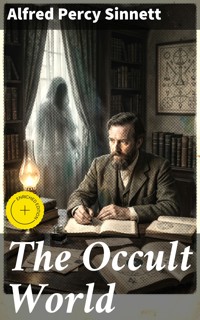
1,99 €
Niedrigster Preis in 30 Tagen: 0,99 €
Niedrigster Preis in 30 Tagen: 0,99 €
Mehr erfahren.
- Herausgeber: Booksell-Verlag
- Kategorie: Religion und Spiritualität
- Sprache: Englisch
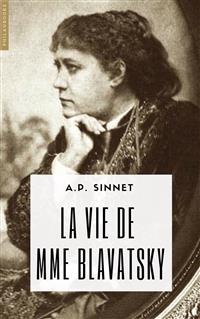
In "The Occult World," Alfred Percy Sinnett embarks on a profound exploration of spiritualism and esoteric philosophy during the late 19th century, a period ripe with increasing fascination for the unseen and the mystical. Sinnett's engaging narrative is braided with personal anecdotes and philosophical reflections, presenting an accessible yet intellectually rigorous approach to topics such as telepathy, reincarnation, and the hidden laws of nature. His literary style combines clarity with depth, aiming to bridge the gap between scientific inquiry and spiritual understanding, inviting readers to ponder the mysteries that lie beyond empirical observation. Alfred Percy Sinnett, an influential journalist and theosophist, was deeply entrenched in the spiritual movements of his time. His collaborations with prominent figures within the Theosophical Society, most notably Helena Blavatsky, were pivotal in shaping his worldview and ignited his passion for uncovering the layered realities of our existence. Sinnett'Äôs background in rational journalism contrasts sharply with the mystical subjects he tackles, revealing a man who sought to reconcile the material world with the profound truths of the metaphysical. "The Occult World" is highly recommended for readers who are not only curious about metaphysical phenomena but also wish to challenge their understanding of reality. Sinnett'Äôs work serves as a vital bridge between science and spirituality, making it essential reading for those interested in the historical context of occult practices and their place in modern thought. This book will resonate with both skeptics and believers alike, provoking contemplation and understanding. In this enriched edition, we have carefully created added value for your reading experience: - A succinct Introduction situates the work's timeless appeal and themes. - The Synopsis outlines the central plot, highlighting key developments without spoiling critical twists. - A detailed Historical Context immerses you in the era's events and influences that shaped the writing. - A thorough Analysis dissects symbols, motifs, and character arcs to unearth underlying meanings. - Reflection questions prompt you to engage personally with the work's messages, connecting them to modern life. - Hand‐picked Memorable Quotes shine a spotlight on moments of literary brilliance. - Interactive footnotes clarify unusual references, historical allusions, and archaic phrases for an effortless, more informed read.
Das E-Book können Sie in Legimi-Apps oder einer beliebigen App lesen, die das folgende Format unterstützen:
Veröffentlichungsjahr: 2021
Ähnliche








The Occult World
Table of Contents
Introduction
In The Occult World, everyday certainty is tested against the unsettling possibility that unseen laws and intelligences shape human experience more than modern habit is willing to admit.
Alfred Percy Sinnett’s The Occult World belongs to the Victorian-era literature of esoteric inquiry, written in the nonfictional register of a personal report and argument. It is not a novel but a sustained attempt to make sense of purported occult phenomena and the ideas said to underlie them, presented in prose shaped by nineteenth-century debates about science, religion, and the limits of empirical proof. The book’s setting is chiefly intellectual rather than geographical, moving through questions and claims rather than a plotted sequence of events, and drawing its atmosphere from the era’s confidence in reason alongside its fascination with the mysterious.
Sinnett frames his subject as an investigation into what “occult” might mean when treated as more than superstition or theatrical illusion. The premise rests on the claim that certain extraordinary effects and teachings can be approached as a coherent body of knowledge, even if they do not fit comfortably within conventional methods of verification. Readers encounter a work that proceeds by assertion, reflection, and the careful shaping of plausibility, asking them to hold skepticism and curiosity in deliberate balance. The experience is that of following an engaged advocate who is also aware of the incredulity he expects to meet.
The voice is formal, argumentative, and explanatory, aiming to persuade without resorting to sensation for its own sake. Sinnett writes with the cadence of an educated commentator addressing an audience he assumes to be rational, yet undecided. He often pauses to clarify terms, anticipate objections, and distinguish between what is alleged and what is inferred, which gives the book a measured pace. The tone is serious rather than confessional; its interest lies less in dramatizing marvels than in constructing a framework through which marvels might be discussed as intelligible. This combination makes the book feel like a document from a period when metaphysical questions were being re-litigated in public view.
At the core are themes of knowledge, authority, and the boundaries of evidence. The book repeatedly asks who is entitled to speak about hidden matters, what counts as a reliable witness, and whether the standards of proof appropriate to the laboratory are adequate for every domain of experience. In doing so, it exposes the tensions between private conviction and public demonstration, between tradition and innovation, and between the desire for spiritual meaning and the discipline of critical thinking. It also explores the psychology of belief and disbelief, showing how cultural expectations can harden into assumptions that govern what people are willing to consider possible.
The Occult World also matters as a case study in the rhetoric of persuasion around extraordinary claims. Contemporary readers, living amid renewed interest in alternative spiritualities and a parallel crisis in trust and expertise, may recognize the same pressures at work: the pull toward total skepticism on one side and uncritical acceptance on the other. Sinnett’s method, whatever one concludes about his conclusions, demonstrates how arguments are built when evidence is contested, how narratives of legitimacy are formed, and how intellectual communities define insiders and outsiders. Reading it today can sharpen one’s sensitivity to how conviction is communicated and how uncertainty is managed.
Approached with historical awareness, the book rewards readers who are interested in the encounter between modernity and the esoteric. Its value lies not only in the specific claims it discusses but in the disciplined insistence that difficult questions be treated as questions rather than dismissed by reflex. Without demanding assent, it invites a careful examination of what we mean by reality, proof, and human potential, and why those definitions matter. For modern audiences, The Occult World offers both a window into Victorian metaphysical debate and a continuing prompt to think critically about the unseen assumptions that organize belief.
Synopsis
The Occult World by Alfred Percy Sinnett is a late nineteenth-century nonfiction work that lays out the author’s case that certain “occult” phenomena and teachings deserve serious consideration. Sinnett frames the book as a report addressed to educated readers who are curious but skeptical, positioning himself as an investigator rather than a devotional writer. He introduces the idea that unusual events and communications he encountered are not mere superstition, and he signals that the book will connect these experiences to a broader worldview in which hidden laws of nature and mind might operate beyond conventional scientific explanation.
Sinnett proceeds by recounting how his interest was drawn to contemporary occult claims and to persons presented as knowledgeable intermediaries. He describes a chain of inquiry in which observation, correspondence, and discussion gradually replace casual curiosity. The narrative emphasizes method: weighing testimony, distinguishing rumor from what he considers direct evidence, and insisting on coherence across multiple incidents. Without treating the subject as entertainment, he uses the progressive unfolding of information to keep the central question in view—whether extraordinary reports can be integrated into a disciplined understanding of reality rather than dismissed outright.
A central thread is Sinnett’s presentation of purported phenomena that, in his view, suggest nonordinary capacities of mind and agency. He recounts circumstances in which effects are reported without an obvious physical cause, and he considers how such claims should be evaluated. Rather than offering a single spectacular proof, he stresses patterns, repeat occurrence, and the character of the conditions under which events are said to happen. Along the way he contrasts the expectations of laboratory science with the constraints of experiences that depend on particular people, environments, and ethical or psychological preconditions, complicating simple demands for public demonstration.
From these reports, Sinnett moves toward interpretation, arguing that the alleged phenomena point to underlying principles and to a community of custodians of esoteric knowledge. He outlines how such a community, as he represents it, would have reasons for discretion and selectivity, making access intermittent and contentious. The book’s argumentative momentum comes from this tension: readers are invited to see secrecy and rarity not as automatic evidence of fraud, but as features of a tradition that claims to prioritize long-term moral and intellectual preparation. This raises questions about authority, verification, and the responsibilities of witnesses.
Sinnett also uses the work to address common objections and alternative explanations, including misperception, deception, and the influence of expectation. He does not present skepticism as wholly hostile; instead, he treats it as an essential discipline that must be paired with openness to anomalous evidence. The discussion frequently returns to standards of credibility: what counts as trustworthy testimony, how much weight to assign to personal experience, and how to interpret events that cannot be easily repeated on demand. This back-and-forth gives the book its investigative character and defines its central conflict between competing epistemologies.
As the book develops, Sinnett broadens the implications beyond isolated marvels toward a proposed philosophical framework. He suggests that if the reported experiences are taken seriously, they invite reconsideration of prevailing assumptions about consciousness, causation, and the boundaries of human knowledge. Yet he remains careful to present his account as provisional, contingent on the reader’s assessment of the evidence and on the plausibility of the explanatory model. The resulting picture is of a worldview that is simultaneously expansive and contested, asking readers to weigh intellectual humility against the desire for definitive proof.
In closing movement, The Occult World functions less as a final demonstration than as an invitation to inquiry and a marker of its historical moment, when spiritualism, esotericism, and emerging scientific attitudes competed for cultural authority. Sinnett’s synthesis of reportage, argument, and reflective caution helps explain why the book remained influential within debates about occult claims and modernity’s limits. Its enduring resonance lies in the questions it keeps open—how knowledge is validated, how experience becomes evidence, and how societies negotiate the boundary between the credible and the extraordinary—without requiring readers to accept a single, settled conclusion.
Historical Context
Alfred Percy Sinnett’s The Occult World appeared in 1881 in late-Victorian Britain, a period marked by expanding print culture, popular lecture circuits, and debate about religion and science. London served as a major hub for publishers and voluntary societies, while British India functioned as a key administrative and cultural contact zone of the empire. The book was written soon after Sinnett’s return from India and addressed an English-speaking readership curious about “Eastern” wisdom, mesmerism, and spiritual phenomena. It situates itself amid contemporary disputes over materialism, faith, and the authority of new forms of expertise.
paragraphs】【:】【“】【type":"string"}]}
paragraphs[
During the 1870s and 1880s, Spiritualism had become a durable international movement, with séances, spirit photography, and public mediums attracting both believers and critics. In Britain and the United States, investigators attempted to distinguish fraud from genuine phenomena, while churches and many scientists condemned such practices. Simultaneously, comparative religion and translations of Asian texts were reshaping educated discussions of Buddhism and Hindu traditions, often through Orientalist frames. Sinnett’s book engages this milieu by presenting occult claims as structured knowledge rather than parlour entertainment, and by appealing to readers who sought alternatives to conventional Christian doctrine.
paragraphs[
The Theosophical Society, founded in New York in 1875 by Helena Petrovna Blavatsky, Henry Steel Olcott, and others, provided the immediate institutional context. In 1879 the Society relocated its headquarters to Adyar, near Madras (Chennai), aligning its public identity with Asian religious and philosophical traditions. The organization promoted study of comparative religion, esoteric philosophy, and alleged psychical capacities, and it cultivated correspondence networks linking India, Britain, and North America. Sinnett, then editor of the Allahabad-based Pioneer, became closely connected to Theosophy through contact with Blavatsky and her circle during his time in India.
paragraphs[
British India in this period was governed directly by the Crown after the 1857–58 rebellion, and its public sphere included English-language newspapers, missionary institutions, and reform movements. Educated Indians engaged with Western science and liberal politics while also debating religious reform, as seen in organizations such as the Brahmo Samaj. For British officials and residents, India could be cast either as a field for modernization or as a repository of ancient wisdom—an ambivalence visible in popular writing. Sinnett’s experiences in India, including travel and elite social networks, shaped his readiness to treat Indian religious ideas and local claims of yogic powers as topics for serious inquiry in English prose.
The Occult World
Dedication Page
To one whose comprehension of Nature and Humanity ranges so far beyond the science and philosophy of Europe, that only the broadest-minded representatives of either will be able to realise the existence of such powers in Man as those he constantly exercises, — to
Koot Hoomi Lal Singh,
whose gracious friendship has given the present writer his title to claim the attention of the European world, this little volume, with permission sought and obtained, is affectionately dedicated.
A P Sinnett.
Contents Page
Introduction
Occultism and Its Adepts
The Theosophical Society
Recent Occult Phenomena
Teachings of Occult Philosophy
Introduction
Page 1
There is a school of Philosophy still in existence of which modern culture has lost sight[1q]. Glimpses of it are discernible in the ancient philosophies with which all educated men are familiar, but these are hardly more intelligible than fragments of forgotten sculpture, — less so, for we comprehend the human form, and can give imaginary limbs to a torso; but we can give no imaginary meaning to the truth coming down to us from Plato or Pythagoras, pointing, for those who hold the clue to their significance, to the secret knowledge of the ancient world. Side lights, nevertheless, may enable us to decipher such language, and a very rich intellectual reward offers itself to persons who are willing to attempt the investigation.
For, strange as the statement will appear at first sight, modern metaphysics, and to a large extent modern physical science, have been groping for centuries blindly after knowledge which occult philosophy has enjoyed in full measure all the while. Owing to a train of fortunate circumstances, I have
Page 2
come to know that this is the case; I have come into some contact with persons who are heirs of a greater knowledge concerning the mysteries of Nature and humanity than modern culture has yet evolved; and my present wish is to sketch the outlines of this knowledge, to record with exactitude the experimental proofs I have obtained that occult science invests its adepts with a control of natural forces superior to that enjoyed by physicists of the ordinary type, and the grounds there are for bestowing the most respectful consideration on the theories entertained by occult science concerning the constitution and destinies of the human soul. Of course people in the present day will be slow to believe that any knowledge worth considering can be found outside the bright focus of European culture. Modern science has accomplished grand results by the open method of investigation, and is very impatient of the theory that persons who ever attained to real knowledge, either in sciences or metaphysics, could have been content to hide their light under a bushel. So the tendency has been to conceive that occult philosophers of old — Egyptian priests, Chaldean Magi, Essenes, Gnostics, theurgic Neo-Platonists, and the rest — who kept their knowledge secret, must have adopted that policy to conceal the fact that they knew very little. Mystery can only have been loved by charlatans who wished to mystify. The conclusion if pardonable from the modern point of view, but it has given rise to an impression in the popular mind that the ancient mystics have actually been turned inside out, and found to know very little. This
Page 3
impression is absolutely erroneous. Men of science in former ages worked in secret, and instead of publishing their discoveries, taught them in secret to carefully selected pupils. Their motives for adopting that policy are readily intelligible, even if the merits of the policy may seem still open to discussion. At all events, their teaching has not been forgotten; it has been transmitted by secret initiation to men of our own time, and while its methods and its practical achievements remain secrets in their hands, it is open to any patient and earnest student of the question to satisfy himself that these methods are of supreme efficacy, and these achievements far more admirable than any yet standing to the credit of modern science.
For the secrecy in which these operations have been shrouded has never disguised their existence, and it is only in our own time that this has been forgotten. Formerly at great public ceremonies, the initiates displayed the powers with which their knowledge of natural laws invested them. We carelessly assume that the narratives of such displays describe performances of magic: we have decided that there is no such thing as magic, therefore the narratives must have been false, the persons whom they refer to, imposters. But supposing that magic, of old, was simply the science of magi, of learned men, there is no magic, in the modern sense, left in the matter. And supposing that such science — even in ancient times already the product of long ages of study — had gone in some directions further than our much younger modern science has yet reached, it is reasonable to conclude that some
Page 4
displays in connection with ancient mysteries may have been strictly scientific experiments, though they sound like displays of magic, and would look like display of magic for us now if they could be repeated.
On that hypothesis modern sagacity applying modern knowledge to the subject of ancient mysteries, may be merely modern folly evolving errorneous conclusions from modern ignorance.
But there is no need to construct hypotheses in the matter. The facts are accessible if they are sought for in the right way, and the facts are these: The wisdom of the ancient world — science and religion commingled, physics and metaphysics combined — was a reality, and it still survives. It is that which will be spoken of in these pages as Occult Philosophy. It was already a complete system of knowledge that had been cultivated in secret, and handed down to initiates for ages, before its professors performed experiments in public to impress the popular mind in Egypt and Greece. Adepts of occultism in the presetn day are capable of performing similar experiments, and of exhibiting results that prove them immeasurably further advanced than ordinary modern science in a comprehension of the forces of Nature. Furthermore, they inherit from their great predecessors a science which deals not merely with physics, but with the constitution and capacities of the human soul and spirit. Modern science has discovered the circulation of the blood; occult science understands the circulation of the life-principle[2q]. Modern physiology deals with the body only; occultism with the soul
Page 5
as well — not as the subject of vague, religious rhapsodies; but it is an actual entity, with properties that can be examined in combination with, or apart from, those of the body.
It is chiefly in the East that occultism is still kept up — in India and in adjacent countries. It is in India that I have encountered it; and this little volume is written to describe the experiences I have enjoyed, and to retail the knowledge I have acquired.




