


7,19 €
Mehr erfahren.
- Herausgeber: Orenda Books
- Kategorie: Gesellschafts- und Liebesromane
- Sprache: Englisch
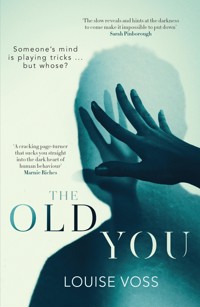
When Lynn's husband is diagnosed with early-onset dementia, strange things start to happen – things that can't be explained – and her perfect world starts to crumble… Unputdownable, Hitchcockian domestic noir from number-one bestselling author Louise Voss. 'The slow reveals and hints at the darkness to come make it impossible to put down' Sarah Pinborough 'A brilliant tale of deception with a twist that took my breath away' Mark Edwards 'Brilliantly unsettling' Jane Casey ____________________ Lynn Naismith gave up the job she loved when she married Ed, the love of her life, but it was worth it for the happy years they enjoyed together. Now, ten years on, Ed has been diagnosed with early-onset dementia, and things start to happen; things more sinister than missing keys and lost words. As some memories are forgotten, others, long buried, begin to surface … and Lynn's perfect world begins to crumble. But is it Ed's mind playing tricks, or hers…? ____________________ 'A disturbing, brilliant tale of lies and psychological manipulation' Kate Rhodes 'Tense, super-twisty and well-written' Amanda Jennings 'A cracking page-turner that sucks you straight into the dark heart of human behaviour' Marnie Riches 'Completely gripping' Cass Green 'An addictive thriller with a damaged and relatable heroine at its center, The Old You is an original novel that is both shocking and touching' Foreword Reviews 'Twists, turns and stabs you in the heart. It deserves to be huge' Martyn Waites 'I was guessing right to the end' Katerina Diamond 'Cleverly plotted and beautifully executed' Susi Holliday 'Poignant, clever and terrifically tense' William Shaw 'A must-read for all psychological thriller fans' Steph Broadribb 'A twisty, thrilling read with engaging and complex characters!' Sarah Ward 'Kept me up way past my bedtime … really original and compelling' Howard Linskey 'Exceptionally clever, intriguing and mysterious … this is how a psychological crime thriller should be written' Random Things through My Letterbox 'Gripping and twisty' Mel McGrath 'An expert piece of contrivance' Publishers Weekly 'Ingeniously plotted and totally addictive' Paddy Magrane 'A masterclass in how to write an accomplished, clever and slick domestic noir – characters that are believable, secrets that are merely hinted at and twists that are genuinely jaw-dropping without being absurd' Beverley Has Read
Das E-Book können Sie in Legimi-Apps oder einer beliebigen App lesen, die das folgende Format unterstützen:
Seitenzahl: 541
Veröffentlichungsjahr: 2018
Ähnliche


















PRAISE FOR LOUISE VOSS
‘A cracking page-turner that sucks you straight into the dark heart of human behaviour. I couldn’t put it down!’ Marnie Riches, author of Born Bad
‘A twisty, thrilling read with engaging and complex characters’ Sarah Ward, author of In Bitter Chill
‘I loved the subtlety and style of Louise Voss’s writing; the slow reveals and hints at the darkness to come in The Old You will make it impossible to put down!’ Sarah Pinborough, author of Behind Her Eyes
‘I’m a huge fan of Louise Voss’s novels and this one did not disappoint. Cleverly plotted and beautifully executed, a must-read for fans of emotionally driven, dark and twisted thrillers’ Susi Holliday, author of The Damselfly
‘The way the plot unfolds, unfolds – and unfolds again – is brilliant. Poignant, clever and terrifically tense’ William Shaw, author of A Song from Dead Lips
‘A top-notch thriller, with seams of doubt and illusion sewn through the plot with total skill. I love books where you wonder who to trust, and keep changing your mind’ Hayley Webster, author of Jar Baby
‘If I’m looking a bit sleep-deprived right now it’s because this one is keeping me up way past my bedtime. A really original and compelling story from Louise Voss that will keep you turning the pages’ Howard Linskey, author of The Drop
‘A disturbing, brilliant tale of lies and psychological manipulation, with a gutsy, believable heroine’ Kate Rhodes, author of Crossbones Yard
‘A brilliant tale of deception with a twist that took my breath away’ Mark Edwards, author of Follow You Home
‘One of the twistiest books I’ve read for a while. Completely gripping’ Cass Green, author The Woman Next Door
‘It’s immense! I loved it! Couldn’t put it down’ Jane Isaac, author of The Lies Within
‘Brilliantly unsettling, a gripping, clever novel where nothing can be taken at face value’ Jane Casey, author of After the Fire
‘This novel was so creepy it kept me awake. I was guessing right to the end’ Katerina Diamond, author of The Teacher
‘Grippy and twisty, this one will keep you guessing’ Melanie McGrath, author of White Heat
‘An ingeniously twisty tale of simmering resentments, long-hidden secrets and murderous intent – a must-read for all psychological thriller fans’ Steph Broadribb, author of Deep Down Dead
‘The Old You has a unique vibe that makes it stand out, and is also a truly twisty yet believable tale with memorable characters and a cleverly woven, atmospheric narrative’ Liz Loves Books
‘The Old You provoked an uneasy feeling inside me from beginning to end, as I worried about what was to come, yet I couldn’t tear myself away from it. I wasn’t sure what was real and what wasn’t, whether everything was as it seemed or something more sinister was going on … Filled with jaw-dropping revelations, I had no idea where the book was heading and I was certainly surprised as I followed this twisty rollercoaster journey’ Off-the-Shelf Books
‘Storytelling at its best’ Now
‘Compelling stuff’ Heat
‘It is Louise Voss’s voice that you remember at the end: contemporary, female, authentic’ Independent
‘An exhilarating ride’ New Woman
‘Strong characters, a meaty plot and a satisfyingly unexpected twist’ Woman and Home
‘An exceptional achievement’ What’s On in London
‘A beautifully written début novel’ OK!
‘A sad, funny book about friendship, love and getting a new life’ The Big Issue
‘It’s brilliant … Funny, smart, believable, honest, moving … a lovely book’ Phill Jupitus
‘My favourite book this year. A beautifully written story which I didn’t want to end’ Cerys Matthews
‘One of the most moving books about friendship I’ve ever read’ Lisa Jewell, author of Ralph’s Party
‘Louise Voss hooks you from the first page and doesn’t let go’ Lauren Henderson, author of Dead White Female
The Old You
Louise Voss
The Old You
Contents
1
September 2016
Ed’s condition was formally diagnosed on the same afternoon I had my interview for the job at Hampton University. A probable ending and a potential new beginning, all on the same day.
I’d rushed home and picked him up – there wasn’t even time to change out of my interview suit – and now here we were, in the Memory Clinic of the local mental health centre. We were with the consultant, whose name was Mr Deshmukh; the three of us crowded together in such a small side room that our knees almost touched.
‘Spell “world” backwards,’ Mr Deshmukh instructed, gazing intently at Ed as though Ed was in the spotlit black chair in the Mastermind final, not in this tiny windowless office in Mountain Way.
‘D,’ Ed began, confidently.
There was a long pause.
L, I silently urged him. This was the man who did the quick crossword and the Sudoku in the Guardian every day without fail, rarely leaving any blanks – or at least, he had done for years. It occurred to me that I hadn’t seen him even pick it up for a couple of months now.
‘Um,’ Ed said, and the breath stopped in my throat.
He couldn’t really have dementia. It was unthinkable. He wasn’t even sixty yet! My heart sank as I remembered all the qualms I’d dismissed about marrying an older man. The fourteen-year age gap hadn’t seemed insurmountable back then.
‘Go on.’
‘Um – D, L…’
I mentally cheered. He was fine! That, surely, was the trickiest part of the task.
But then Ed corrected himself. ‘Wait, no: D, R, L, O, W.’
He looked pleased with himself, like a shy child winning a prize on sports day. This was not the Ed I knew. The Ed I knew was political, clever, confrontational.
Mr Deshmukh shook his head. He was a smooth-cheeked Indian guy with the sort of thick, glossy, black hair that wouldn’t look out of place on a luxury cushion. It undulated gently, like the movement of wind through a cornfield.
‘Try again,’ he urged.
Ed was puzzled and then annoyed. ‘Why? That’s correct!’
‘I’m afraid not.’
My husband made his exasperated face – a face I was very familiar with. ‘D, R, L, O, W! What the hell is wrong with that?’
‘It’s not quite right,’ the consultant said. ‘Let’s come back to it.’
He slid a blank sheet of paper across his desk towards Ed and handed him a pencil. ‘Please draw me a clock face, with the numbers, and draw the hands indicating that the time is twenty to four.’
I saw the swoop of Ed’s Adam’s apple as he swallowed. He thought for a moment, then, with decisive movements drew something almost recognisable as a circle. It was more of an oval, and the ends didn’t meet properly, but it wasn’t bad, I thought.
Then I thought, not bad? A kid in infants’ school would have done a far better job.
The tip of Ed’s pencil hovered over the oval. He wrote a 1 at the top, where 12 should be, then, far too close together, 2, 3, 5, 7 and 9. He’d only got as far around the clock face as 4 should be.
‘There’s something wrong with that,’ he admitted miserably.
There was something wrong full stop, I thought. I’d never be able to take the uni admin job if I was offered it. I’d have to stay home and look after him. And how, dear God, were we ever going to break it to Ben? He adored his dad.
Mr Deshmukh scribbled something on a pad. ‘In the light of the knowledge that your father died of Pick’s Disease, an MRI scan would be by far the best way to diagnose you; much better than these neuropsychological tests. Plus, it would exclude other reversible causes of dementia like hydrocaephalus or brain tumour. I’ll refer you.’
‘No way,’ Ed said, jumping up in agitation. ‘There is absolutely no chance whatsoever of me going into one of those scan things.’
‘He’s developed claustrophobia,’ I told Mr Deshmukh. ‘He can’t be in small spaces, and he won’t fly any more either. I don’t know if that’s related.’ I paused. ‘Is there any likelihood it might be something reversible?’
I barely remembered Victor Naismith, Ed’s father. He died soon after Ed and I met, a tiny catatonic shell hunched in a nursing-home vinyl armchair, doubly incontinent, unable to recognise anybody, speak, or do anything at all for himself. Years of misery, guilt, pain and vast expense for all of their family.
Victor had only been seventy-four when he died. Was this what was in store for Ed? For me? All our plans! Travel, hobbies, the helter-skelter whiz into retirement I’d envisioned, rather than a slow plod gravewards. I would have to shelve everything and stand by watching as Ed’s brain gradually shrivelled and his intellect crumbled daily, until there was nothing left but a breathing corpse that would probably cling to endless long, expensive years of a useless life … I wasn’t sure I could do that, and it made me feel terrible.
Deshmukh ignored my question, which didn’t make me feel any better. Instead he turned to Ed: ‘If you’re really adamant about not wanting an MRI, I suggest you get a lumbar puncture instead. That will also rule out any unusual infections or cancer. And an EEG, although with FTD – sorry, frontotemporal degeneration – that may be inconclusive, especially early on in the disease.’
Ed suddenly sat up straight, the light back in his eyes making them flash a startling, piercing blue. ‘What are you saying? Is this a diagnosis?’
Mr Deshmukh opened a cardboard folder in front of him and didn’t meet Ed’s gaze – which I thought was fairly poor, as bedside manners went. He held up a sheet of paper that I hadn’t seen before.
‘Dr Naismith, this is your second visit. We’ve already diagnosed mild cognitive impairment and that was – when? – Hmmm, yes, six months ago.’
I held up my hand. ‘Wait – what? What do you mean? This isn’t Ed’s second visit!’
Ed looked sheepish. He reached over and gently pushed down my outstretched fingers. ‘I didn’t tell you, honey. I came before. I was worried because of Dad. Hugh Lark at the surgery referred me.’
I stared at him. Now he was Ed again, not a little boy with milk teeth drawing a wobbly circle, but a strong man; a medical man, wise and insightful. My husband, the man for whom I’d given up my career, my reputation, my friends…
He squeezed my fingers and a lump came to my throat.
‘Why didn’t you tell me? You’ve been worried for six months and you didn’t tell me?’ My voice was high and tight, veering dangerously towards being out of control as I remembered the numerous times I’d felt infuriated by him recently, accused him of ‘not listening’ when he repeated things or forgot arrangements or made odd claims that people had stolen personal possessions that it transpired he’d just mislaid.
‘You’ve been worried too,’ he said in a sulky voice.
This was true. But I had convinced myself that he was just being annoying – a natural corollary of his advancing age.
‘If we compare the tests, I’m afraid that it’s fairly obvious there has been a significant decline in mental capability since then, and in tandem with the information you have already given me, and your GP’s report stating his belief that the damage has not been caused by an infection, or thyroid malfunction or vitamin deficiency, I’m sorry to say that I do believe you to be in the early stages of either Alzheimer’s or Pick’s Disease – most likely the latter, given your family history. Please do not assume that this is a death sentence…’
He was going to say more but Ed cut him off. ‘Please remember that I was a GP myself, Doctor…’ – Ed had to look at the brass nameplate on the doctor’s desk – ‘Dekmush. I don’t need to make any assumptions. It could be a fluid build-up in my, um…’ He gestured towards his head. ‘Or a lump thing. Or a bleed.’
The doctor scribbled something on a pad. I noticed how hairy his knuckles were, like a werewolf. ‘It’s Mr Deshmukh,’ he corrected gently. ‘Of course, but unless you agree to brain scans then we can’t find out much more, clinically.’
‘Can you give him some medication, to improve his memory?’ I felt desperate. ‘What’s that drug – Aricept?’
Mr Deshmukh gazed levelly at us both. ‘I’m afraid that the usual drugs for dementia really don’t work with Pick’s disease; in fact they can be quite counterproductive.’
Ed snorted. ‘Even when they do work, they only work for about fifty percent of parents … patents … patients, and only for about a year. What’s the point?’
I was aghast. ‘Is that the best that medical science can offer? Drugs might buy him a year if they work at all, which they probably won’t?’
I had a sudden, unbidden mental image of Ed’s dad the last time I saw him, being hoisted out of the wingback chair in which he spent the majority of his days, into a wheelchair to be taken to be ‘toileted’, as the staff euphemistically referred to it. His nappy had been clearly visible above the waistband of his stained tracksuit trousers, and there had been an enormous lump at his groin where the nappy – or ‘continence aid’, another euphemism – had got wet and bunched up. The brightest man Ed said he’d ever known was drooling, his hands curled into claws, his teeth turning black and dropping out because nobody had been able to clean them for weeks.
Poor Victor. Poor Ed. And poor me, I thought, suddenly angry. This was not what I’d risked everything for.
2
We left Mountain Way in shock, a fistful of leaflets on support groups, phone numbers of counsellors and cards with dates for follow-up appointments and lumbar punctures stuffed into my handbag.
I glanced sideways at Ed as I drove home, worried about the blankness of his expression. It was as if he hadn’t taken it in at all.
‘It’ll be OK,’ I said. ‘We’ll get through it.’
Ed ignored me.
He came into our bedroom later, as I was changing out of my interview suit. The thick elastic waistband of the tight skirt had left striations on the skin of my hips and stomach, as though I’d been wearing bandages all day. I peeled it off, struggling to keep my balance as I hopped around the room.
‘How are you feeling, darling?’
He sat down heavily on the bed, causing it to creak under his weight. ‘I don’t want to talk about it. Not yet.’
‘OK,’ I said. I put my arms around him and he wrapped his own around my hips, burying his face in my stomach. I could feel his breath on my skin, through the thin mesh of my tights. His lilac cashmere jumper was soft under my hands.
Ed only ever wore cashmere sweaters – he had one in every single colour. I never knew a straight man that liked clothes as much as he did – he also owned over fifty pairs of jeans. We had a separate wardrobe for them; stacked in piles on shelves as if our spare room was a shop, many still with the cardboard designer labels attached. Just yesterday I’d teased him that if he’d only stop shopping, I might not need a job.
‘I’m sorry. I’m so sorry, Ed.’ My voice cracked.
‘I said, I don’t want to talk about it. Anyway. I didn’t ask you how your job thingy went. You don’t want to take it, do you?’
I balled up the skirt and threw it with some force into the laundry basket, wanting to cry. I did want it.
‘It was great, actually,’ I said. ‘Office with a view to die for, in this amazing old Regency house on campus – apparently Florence Nightingale’s aunt used to live there –and it’s more about organising concerts than a secretarial job. Colleagues seem nice. Slightly mad boss, but mad in a good way, you know?’
‘Hmm,’ said Ed, as if he didn’t believe a word. ‘Can’t see it being your sort of thing though really, can you? Working in a college.’
‘Why not? I can totally see myself there. It was fantastic to be around so many people again; all that music. It’d be like Fame. Much more interesting than working for Henry.’
Henry was the financial advisor I’d bored myself rigid working for.
‘“I wanna live for ever”,’ Ed quoted, deadpan, sounding so like his old self that the breath caught in my chest, fluttering like minnows.
‘I won’t take it though, if they offer it.’
‘Why not?’
‘Isn’t that obvious?’
We gazed at each other for a minute, his expression unreadable.
‘No,’ he said. ‘It’s not obvious. Of course you should take it, if you want it. We could use the money. I just didn’t think you’d be that into it.’
I hesitated, aware that he didn’t want me to talk about it – but I had to. Unclasping his arms from round my waist I sat down on the bed next to him. ‘I don’t want to be so far away from you. I know it’s only part-time but…’
He leaped up as if I’d scalded him. ‘So, what, now you don’t want to leave me on my own? Don’t you dare treat me like a, like a…’
I didn’t supply the missing word but it hung between us like a rotten fruit: invalid. In-valid. Ed had been diagnosed as an invalid person. No wonder he was angry. Normally if he used that tone of voice on me, I’d rise to the bait and we’d be yelling at each other within seconds. But how could I blame him for being angry?
I was torn. If I was offered the job and didn’t take it, he’d be upset. But if I did take it, I had no idea how I’d be able to enjoy it, if I was worrying about him the whole time…
Hopefully I wouldn’t be offered it. That would just be easier. I flopped back on the bed, my arms spread wide in surrender.
‘When will you know?’ Ed asked, calm again.
‘Soon. Alvin – the boss – said in the next couple of days if not before. They need someone to start ASAP. The new students have already arrived for Orientation Week, and next week is Induction. Lectures start the week after that.’
At that very moment my mobile rang. I picked it off the bedside table and answered it, Ed leaning close to me so that he could hear too.
‘Lynn? Professor Cornelius; Alvin. We all loved you, you walked it. Can you start next week? We’re happy for you to do Mondays, Wednesdays and Fridays, if that suits. HR will email you some details.’
I bit my lip and turned to face Ed. To my surprise the clouds had cleared from his stubbly face and he was laughing at me, nodding his approval and giving me a thumbs-up. I’d meant to ask for a day or two to think about it, but Ed’s reaction sealed the deal.
‘Brilliant,’ I said. ‘Thank you so much! See you on Monday morning.’
When I finished the call, Ed kissed me effusively.
‘Hey, well done you. I knew you’d get it!’
By the time I put our lamb chops on the table at seven-thirty that night, I’d changed my mind again, several times. It wouldn’t be fair for me to take the job if Ed’s health suddenly went downhill and he couldn’t be left alone.
But it might be a year or two before he got worse…
Suzan next door could keep an eye on him, she worked from home. I could have a discreet word with her.
The job was only three days a week, and we did need the money. Ed’s pension wasn’t enough for us to live on comfortably, and our savings were in case of emergencies. Now they’d most likely all have to be used for his residential care, at some point in the future.
I called up the stairs. ‘Dinner’s ready!’
Ed appeared, took one look at the food on the table, and turned around again. He was wearing his pyjamas.
‘I’m going to bed. Not hungry.’
He stomped back upstairs, in sulky teenager mode again. I heard him crash about in the bathroom, the flush of the toilet and the buzz of his electric toothbrush then, finally, the decisive bang of our bedroom door.
Suddenly I had no appetite either.
When I crept up about half an hour later to check on him, I could hear him snoring through the closed door. All his clothes had been discarded on the landing in an untidy pile, so instead of disturbing him, I draped them over the banister and went back downstairs.
I couldn’t concentrate on the TV, so I poured myself a large brandy instead and sat in the armchair in the conservatory with my socked feet up on the radiator, staring out at the dark garden, until the tumbler contained nothing but fumes and my eyelids were heavy with worry. I was just nodding off over a programme on the radio about the miners’ strike when a sudden noise made me jerk awake. The miners’ programme was still on, so I couldn’t have been asleep for long. The noise sounded like the front door clicking shut, but Ben was the only other one with a key, so it couldn’t have been that.
‘Hello?’ I called, sitting bolt upright, every sense awake and tingling. ‘Ben? Is that you?’ I knew it wasn’t, though, because he and Jeanine were on their way back from a safari in South Africa.
I reached over and switched off the radio, straining my ears into the silence. I’d have assumed it was the cat, knocking something off a shelf – except that Timmy was here with me, curled up on one of the other chairs, one ear twitching.
I got to my feet, looking around for something to use as a weapon. Our house was so isolated, ours and Suzan’s next door, two halves of a whole, standing alone on the towpath. We’d been the target of burglars in the past when we’d been away on holiday.
The knife block in the kitchen felt too far away, and there were no heavy lamps or anything in the conservatory. Outside, the darkness still pressed against the windows and I felt a shiver play up my spine, a finger across harp strings. Had someone just been standing out there, watching me? Perhaps they knew that Ed was asleep upstairs and I was alone down here.
Our conservatory was, unusually, at the front of the house so that we had a direct view of the Thames, with only the muddy towpath and our front garden in between. Hardly anybody came along there after dark, so I’d never minded sitting in the lit room before.
Heart thudding, I grabbed a table mat I had made myself, gluing and varnishing pebbles from Jersey beaches onto an old heatproof mat. It was heavy – I’d used far more pebbles than I’d anticipated and I’d ended up supplementing them with gravel from our own driveway. As I stared at it, in a weird kind of mental synchronicity I was sure I could hear the faint crunch of a footstep outside on that same gravel.
Maybe it had been one person who had just left, or maybe there were two of them; one inside and one out? My imagination was going into overdrive. I raised the mat high in the air, holding it with both hands, ready to bring it crashing down on the head of an intruder. Slowly pushing open the door from the conservatory with one foot, I crept into the hall. There was nobody on the stairs and no sound from above. The hall was quiet and empty and felt cold, and I tried to work out if it had been like that earlier or if it felt cold because the front door had recently been opened. It was closed now, but not Chubb-locked. Ed usually did that before we retired to bed.
I checked the front room, then the kitchen and back doors – all secure – and then padded up the stairs in my socked feet, still brandishing the mat. Bathroom, study and spare room were all empty. Finally I pushed open my bedroom door. It was pitch dark and silent, not even any green light coming from the digital display on the clock. Ed always leaned a coaster against it because it bothered him when he was trying to get to sleep.
‘Ed? Ed? Are you OK?’ I went over to the bed and poked him.
‘Whaaargh?’ he grumbled, stirring.
I put down the mat and lay on the bed behind him, spooning him through the duvet, curling my arms and legs around his broad back. ‘Did you just come downstairs?’
His voice was thick with sleep. ‘Er … no, not unless I was walk sleeping.’
‘Sleepwalking.’
‘Wharrever,’ he mumbled before subsiding back into gentle snores.
I kissed the back of his head and went back downstairs to lock up and turn off the lamps. I must have imagined the noise. Stress, probably. Or my justifiably over-developed sense of suspicion.
3
‘It’s what his dad died of,’ I concluded, looking away as our neighbour Suzan’s eyes filled with tears. Other people’s tears never failed to make me itch with discomfort, however much I empathised.
Suzan’s house smelled, as always, of white spirit and oil paint. She’d answered the door with her paintbrush in her hand, and sat at her kitchen table twirling it absently while I gave her our grim news.
‘Oh Lynn,’ she said. ‘This is awful.’
‘I know. But what can we do?’
She gave a watery smile. ‘I’ll get you a mug with Keep Calm and Carry On written on it.’
‘Please don’t.’ I tried to sound light-hearted but it didn’t work.
‘He’s too young.’ Suzan picked at an oil paint scab on the back of her hand.
‘I know,’ I repeated miserably. I paused. ‘Suze … were you here on your own last night?’
She nodded. ‘I’m working flat out to get that finished. My art class is having an exhibition next month. Why?’
She gestured with the end of her paintbrush towards a splurgy-looking seascape on her easel. I didn’t know anything about art, but to me it looked like someone had thrown up on the canvas. Similar paintings hung all around the room, crowding me, looming down on us, their smeary colours and slimy stripes unsettling me. I imagined them like the inside of Ed’s brain.
‘I thought I heard someone prowling round on the gravel.’
I wasn’t going to tell her that the noises I’d heard had been inside the house as well; she’d been nervy enough since her husband died a couple of years before. Keeled over one Saturday morning over his cornflakes. It had been horrendous. She’d come round screaming and crying, and Ed and I had run straight over there. Ed had performed CPR on Keith while I rang the ambulance, but it was no good.
Now she threw herself into her painting. She was in her early seventies, a former Biba model and photographer’s muse, and her house was full of amazing monochrome photographs of her – I was fairly sure that was partly why Ed enjoyed going round there so much.
‘I probably imagined it.’
‘Darling, don’t you think you should tell the police?’
Most likely, I thought. But that wasn’t going to happen. ‘I’m sure it’s fine. I feel silly for mentioning it. Anyway, the other reason I came over is to tell you that I’ve got a new job.’
‘You’ve got a new job – now?’ Suzan looked over her glasses at me and I felt hot with guilt, which immediately made me defensive.
‘It’s only part-time, three days a week,’ I said. ‘I don’t have to do it forever! Ed’s basically fine on his own, it’s only words and stuff that he keeps forgetting at the moment. I left Henry’s eight months ago and Ed’s pension isn’t really enough for us both. But it would really put my mind at rest if I knew that you were…’
‘Keeping an eye on him?’
I bit my lip. ‘I wasn’t going to say that, not exactly. I was going to say, “aware of the situation”. So if he locked himself out or anything, you could let him back in. Or perhaps invite him over for coffee occasionally. As long as he doesn’t think you’re keeping an eye on him…’
‘I’d be happy to,’ she said, reaching over and covering my hand with hers. ‘Where’s the job, and when do you start?’
‘Thanks, Suze. It’s only up at Hampton Uni – the music department at Fairhurst House, you know? Round the corner really. I could be back in twenty minutes if there was a problem. I start on Monday.’
‘I’ll do what I can.’
I thanked her and said goodbye, as she gave me a turpentine-scented kiss on the cheek.
Walking back up our garden path, I glanced affectionately at the house, then paused. My gaze swept across the front door, living-room and conservatory windows – then back to the living room. That was it – the blinds were down. They hadn’t been down last night because we hadn’t been in there. Ed had gone to bed at seven-thirtyish and I’d spent the evening in the conservatory, until I’d heard the footsteps on the gravel. Last time I’d been in the front room had been at some point yesterday afternoon, fetching a couple of dirty coffee cups left from when we were watching TV the night before that. Obviously the blinds had been up then, because it was still daylight. So Ed must have got up in the night. Weird that I hadn’t heard him. But then I had heard other noises when Ed had definitely been asleep. It was all rather unsettling … unless Ed wasn’t the only one having memory problems.
It was horrible leaving the house the following Monday morning to start work. I’d come into the kitchen to say goodbye and found Ed slowly banging his head against the fridge door, fists bunched by his sides.
‘Ed! What’s the matter?’ I rushed over and hugged him from behind, trying to tug him away from the refrigerator.
‘I. Just. Can’t. Bear. It,’ he said, punctuating each word with another bang. When he turned around and I saw the tears in his eyes, I felt my heart breaking.
I couldn’t dwell on it, though, once I arrived at Fairhurst House and took my place at the spare desk in the music school office. Not with the brain-overload that accompanied the deluge of new information I was required to retain.
The other administrator, Margaret, was helpful and polite, in a slightly distracted way. She was a tall, slender woman with a short crop of bleached hair, who seemed to glide from filing cabinet to Xerox machine as she filled me with a stream of facts I had to scribble down in order to have the faintest chance of remembering.
I called home once, ringing Ed on my mobile from the toilet, trying to pee silently when he answered. He was fine, he said. Round at Suzan’s doing a painting of some tulips with her.
‘Nice one, Pablo Naismith,’ I said, relieved that he sounded better than he had earlier.
My new boss Alvin appeared just as my stomach was rumbling and I was asking Margaret what refreshment options there were.
‘Come on then, I’ll show you the staff canteen,’ he announced. ‘In fact, I’ll give you a tour of the campus, shall I?’
I scrutinized him surreptitiously as we walked along together. He must have been at least six foot six, with a shiny-bald tonsure, but a mass of thick, curly auburn hair and matching beard. He was ridiculously skinny, one of those people who seem entirely composed of angles and knobbles, but strangely, he somehow managed not to look like a nerd, despite the silly hair and pipe-cleaner limbs.
After a soggy panini and a tepid latte, he gave me the grand tour, ending up back at Fairhurst House, where we had a look at the computer lab, the equipment hire office and the seminar rooms. In the final corridor, Alvin showed me into a damp room full of random bits of percussion, half a drum kit, and some scuffed amps. A stepladder and tools lay around, along with a digital radio that someone had left on, and a pile of crumbled bits of plaster on the floor.
‘This is one of the band practice rooms,’ he said. ‘We’ve had a work order in for months to get the damp removed. Right – that’s everywhere, I think. Next stop Asda – we need to buy booze and crisps for the Freshers’ party tomorrow.’
‘Oh! We don’t have caterers then?’
Alvin snorted. ‘You must be joking. No, we do it ourselves. There’s a kitchenette outside the gamelan room. Always thought it was risky, having a drawerful of sharp knives with a load of hormonal teenagers around – but how else are we supposed to cut up the cheese to have with our wine?’
We were just leaving the room when a voice from the radio stopped me in my tracks. I gasped and Alvin turned. ‘Everything OK?’
I made a ‘hang on’ gesture and peered at the digital read-out on top of the radio. It was tuned to 5 Live – not a station that we ever listened to at home.
So what was Ed doing on 5 Live talking about cuts to the NHS?
‘Sorry,’ I said, not wanting to sound like a maniac, but needing to explain. ‘That sounds just like my husband!’
The Ed-soundalike was spouting off about zero-hours contracts, exactly the sort of topic that he used to get very aerated about – except that Ed had shown no interest whatsoever in current affairs for several months now. He no longer read the paper or watched the news. He talked aimlessly over the top of all the radio news bulletins. It was one of the things that first alerted me to the changes in his personality. I felt a stab of overwhelming sadness that I’d never again hear him doing anything like this.
‘Is it him?’ Alvin enquired. I could see he was keen to get on, but I couldn’t leave. It felt like I would be walking away from the man my husband used to be. The caller did sound exactly like him – if Ed had a cold; the voice was deeper and croakier than his usual one, but it had the same timbre. He was talking in an articulate, concise way, using all the cadences and expressions that Ed used to, before he began to forget how to construct sentences properly. I realised how much I already missed him.
Just as he was saying something about erosion of civil rights, the DJ cut him off: ‘Well, I’m afraid we’re coming up to the news now so we’ll have to leave it there. Thanks very much for your input, Steve from Cheam…’
‘My husband’s called Ed. But he sounded so like him,’ I said slowly.
Alvin looked at me. ‘Been married long?’
The question seemed loaded.
‘Eight years now. No kids, just a grown-up stepson.’ I always preempted the inevitable next question about children. It just seemed better to get it out of the way, on my own terms. ‘Ed’s a bit older than me – he’s been round the block once already.’
I didn’t know why I’d said that. Perhaps deep down I knew I’d have to admit to Alvin about Ed’s diagnosis sooner or later and I was subconsciously preparing for it.
‘Ed? Ed Naismith?’
Alvin had that amused ‘small world’ look on his face.
‘Yes … do you know him?’
‘Only vaguely. Was his nickname Edna? Many moons ago, before I married Sheryl, I dabbled in a bit of am-dram with the Molesey group. Fancied myself playing Hamlet, truth be told, but they never recognised my obvious talent and the sort of parts I got were more along the lines of “second spear-carrier on the right” so I didn’t last long. I’m sure Ed was the director of whatever the play was that I ended up almost doing, before I decided it wasn’t for me.’
I laughed, relieved. ‘Yes. Edna I. Smith, that’s what they called him in MADS. That’s where he and I met, actually. I joined MADS when I first moved to the area and didn’t know anybody, as a way to meet people. So you know him? What are the chances of that?’
A slightly hooded expression crossed Alvin’s features and he looked suddenly reticent.
‘What indeed?’ he asked. ‘Come on then, let’s go and buy some cheap wine and E numbers.’
4
‘So, I never thought I’d end up pushing a trolley around Asda on my first day at work,’ I told Ed. ‘You should’ve seen the cashier’s face when we went through with all that wine and beer – oh, and a bottle of Jack Daniels for his office drawer. He said, “This should keep us going for a day or two, honey,” to me, you know, like he was pretending we were a couple and it was all for us.’
Ed just stared at me. He had a stain of indeterminate origin on his blue cashmere and splodges of paint on his hands, which were hanging uselessly between his manspread legs as he sat on a kitchen chair. I’d found him like that when I’d come in twenty minutes ago. There were no signs of any dinner preparation and I was starving.
‘Ed? Are you listening?’
I poured us each a glass of wine, waiting for him to answer me, or at least ask me something about my day, but he didn’t say anything. Then, as I replaced the half-empty bottle in the fridge, something caught my attention. I rolled my eyes; it was a pair of Ed’s socks, balled up next to the eggs. I discreetly removed them and stuffed them in my pocket.
‘Where’s the painting you did at Suzan’s, then? I can’t wait to see it! Are you going to do more?’
He took the wine and finally made eye contact with me. ‘Might do,’ he said.
‘So you enjoyed it?’
‘Yeah.’
‘What did you paint?’
‘Some flowers.’
‘Was it difficult?’
‘Not really.’
I remembered with a pang the days we used to stay up late into the night, debating all sorts of things, from the latest line-up of Take That to cuts in arts funding, Trident, the existence of God, and which was the most flattering style of jeans for a man in his late fifties…
Then I remembered something else. Carefully scrutinising his face as I spoke, I said, ‘Hey, Ed, there was someone on the radio at lunchtime who sounded just like you, it was spooky!’
Did I imagine the tiny hostile flare of his pupils, an almost imperceptible narrowing of his eyes? Then the blank expression was back again.
‘What do you mean? Of course I wasn’t.’
I turned away, busied myself with emptying the dishwasher’s clean contents, thoughts crowding my mind. Being on the radio was something Ed used to boast about, not try to deny. Since he took early retirement he’d often rung up radio stations. He’d booked to be in the audience of Question Time within minutes of hearing the announcement that it was to be filmed in Kingston a couple of years ago, and he’d been fuming when he wasn’t picked to ask a question.
As I stacked cereal bowls and plates – and retrieved a second pair of socks I’d found, soaking wet, in the cutlery basket – I made a mental note to ask Suzan what time Ed left her place. If she gave him a firm alibi I’d know I had been mistaken.
But it was that flare of panic in his eyes when I mentioned it, the hard set of his lips, just for a nanosecond, that flung me into a grey cloud of doubt.
Unless the panic had been because he’d forgotten, then remembered again after already denying it? That was far more likely.
I put a clean saucepan on the hob with a clatter and changed the subject. ‘So, are you looking forward to Saturday?’
‘What’s happening on Saturday?’
‘Dinner with April and Mike. On the boat, remember?’
‘I don’t want to go! Do we have to?’ A muscle ticked in his cheek.
‘Why not?’
He and Mike used to be really friendly, but in recent years they’d been funny with each other, distant and strained. Something must have happened between them but neither man would admit to me or to April what it was, so we doggedly continued to arrange social events in the hope that it would blow over.
Ed shrugged. ‘I’m not really in the … er … mood. Not feeling great.’
He did look tired and a bit flushed. I felt his forehead – it was warm, but not feverish.
‘Come on, Ed, you know you’ll love it when you get there. And it’s not till the weekend. It will be a good way to celebrate the end of my first week of work.’
It was his turn to change the subject. ‘By the way, a doctor rang me earlier. Deckmush. Deshmuck.’
‘Deshmukh. What did he want?’
‘No. Wait. It wasn’t him. It was someone else. Can’t remember his name but he wants me to join some sort of, er, thing, you know – trial thingy. A new treatment for whatever my silliness is.’
‘Illness?’
‘Yes.’
‘It’s all top secret though. I’m not allowed to tell anybody except you. I have to take pills, or have injections. It might be a … fake thing, or the real drug.’
‘A placebo? Sounds promising, Ed; you should do it. Can I talk to him about it?’
‘He said not to tell anyone.’
‘Except me, you said. Which hospital would it be based at? Or do they do it in a lab, or at the doctor’s surgery?’ I had no idea how clinical trials worked.
Ed shrugged. ‘I think he told me but I can’t remember. He said he would email me the, er, details.’
As I poured boiling water into the pan, switched on the gas and tipped in some fusilli, my instinct told me that something didn’t seem quite right about the way he was trying to relay this information – but then, nothing was right about someone getting dementia in his fifties. Of course he was likely to be vague about the details – the man couldn’t remember what he’d had for breakfast and was leaving socks in the dishwasher and fridge – I’d just need to wait and see what the email said.
Yet I couldn’t seem to stop all my old worries from popping up again, roiling inside my head like the water in the pan. Those understandable concerns I’d had back when I first met him, about the wisdom of dating a man who’d been the main suspect in a murder investigation.
5
By the end of the first week, I felt I was beginning to learn the rhythms of the job. I was in the swing of planning and promoting the concerts; I’d learned the names of the biggest student troublemakers, and that the vending machine had ants in it. All the important stuff, as Alvin claimed.
He and I were getting on well – so well, in fact, that he’d just taken me to The Feathers for a curry and a pint or two (although I was sure this was more about him wanting a legitimate excuse for a couple of drinks at lunchtime). Back at my desk, I was feeling a bit tipsy. Tipsy, and a bit guilty, too – I’d ended up confiding in Alvin about Ed’s diagnosis. I didn’t fancy Alvin at all, but he was a good listener. It was just that I knew Ed would hate that I’d told my new boss anything personal, let alone something we hadn’t yet told our close friends and family.
I got back to my PC and the document I’d been working on – an event plan for music at the graduation ceremonies at the Barbican the following month – but I couldn’t concentrate. I’d called Ed three times to check he was OK and he hadn’t picked up or returned any of the calls.
By 4pm I had visions of him falling into the river or electrocuting himself making tea. I was about to ring Suzan and ask her to pop round, when he finally called me back. He sounded very grumpy.
‘What’s with all the missed calls? I was in the bath!’
‘Sorry, honeybun. I’ve been trying you all afternoon. You’re OK?’
‘Of course I’m OK! Why wouldn’t I be?’
I didn’t reply. ‘Good … well, I’ll be home soon. Love you.’
It was Ed’s turn not to reply. I hated it when he didn’t reciprocate with an endearment.
‘That your husband?’ Margaret asked from across the office as she logged off her computer. I watched in astonishment as she managed to gather up a scarf, yoga mat, leggings, novel, iPod, headphones, washed Tupperware and extra cardigan and stuff them all into one bag.
I nodded, trying to discern if her tone was disapproving because I was making personal calls during office hours, or perhaps merely because I was in possession of a husband, but she sounded neutral enough.
‘I’m off to yoga. With any luck, that skinny hippie in the obscene shorts won’t fart every time he does a shoulder stand. But I’m not holding out much hope. You got anything good planned for tonight?’
‘No. Just cooking supper.’
She looked briefly scornful and I had an urge to say, ‘It’s not ALL I know how to do – I’m a black belt in taekwondo! I’m not just some downtrodden housewife, you know!’ but obviously I didn’t. I really liked Margaret, but sometimes her willowy calm was tinged with a faint aura of superiority. ‘Actually, no,’ I said instead. ‘We’re going to my stepson’s. I’ve just remembered.’
‘Well, have a nice time. See you Monday.’ She hurried out, scarf trailing behind her, and I thought, great, if she’s left for the day, so can I. Alvin was teaching until six, and the office closed to students at four-thirty. I sent Ed a quick text saying I was on my way.
Half an hour later I was bumping down the potholed track towards our house. I parked at the back and went around to the front, the wide Thames streaming silently past and the leaves of the trees on the opposite bank just beginning to turn. It was a view I would never tire of.
Through her window I could see Suzan standing at an easel, head tilted to one side as she scrutinised her efforts. She waved at me as I opened my front gate, flattening myself against it to avoid the muddy splashback from two lycra-clad cyclists who whizzed past, swerving around the large puddle on the towpath that, annoyingly, was a permanent fixture for nine months of the year.
I turned the key in the lock but the door didn’t open. Ed must have Chubb-locked it, and I’d only grabbed the single Yale key off the dresser in the hall that morning.
I banged the knocker, then stooped and called through the letterbox. ‘Ed! Can you come and unlock the door? I can’t get in!’ My rectangular view showed the hallway silent and empty. ‘Ed!’
Surely he had seen that I’d left my big bunch of keys behind? And why would he suddenly choose today to double-lock the door when he went out? He never usually did.
Bloody dementia. Death by a thousand tiny cuts.
Delving in my bag, I grabbed my mobile and rang Ed’s, listening intently through the letterbox for its ring inside. But there was no sound, which either meant that Ed was out, or across at the lock – our house and Suzan’s had once been two halves of the lock-keeper’s cottage and our half had come with what the estate agents called ‘The Studio’, a small room on the now-redundant lock’s island that Ed used as his man-cave. Or maybe he was in, but had his phone on silent for some reason. I called the landline and immediately heard its ring echo around the house’s interior, on and on for the ten rings until the machine picked up. I sighed and redialled Ed’s mobile. No response.
Snap out of it, Lynn, I thought, panic beginning to bubble. He couldn’t have gone far.
I walked back out to the towpath and hurried across the narrow metal bridge, wrenching open the studio door – although there was no sign of him through the windows. It wasn’t locked, so he must be somewhere near. What if he’d fallen in the river? There were no boats around, even on this sunny autumnal afternoon, and no hikers or cyclists, apart from the two I’d just seen. My house keys were sitting on the desk, so I put them in my jeans pocket.
He definitely wasn’t in the office and the river was giving up none of its secrets. Heart in mouth, I glanced out on the far side of the studio, where there was a small patch of grass hidden from view by the building itself, visible only from the riverbank on the other side – and there he was.
He was sitting in a deckchair on the grass, stark naked, listening to music on his phone through earphones. Why hadn’t he answered when I’d rung?
‘Ed!’ I shouted, banging on the window, but he didn’t move. He must have had the volume up really loud. Irritated now I could see he wasn’t in danger, I yelled, louder. ‘ED!’
I walked out to him and poked his shoulder, finding that I was averting my eyes from the flaccid penis nestled in the dark hair surrounding it.
‘What are you doing over here?’ he asked, taking out his earphones and staring at me, astonished. ‘I thought you were at work?’
‘I was. I texted you to say I was coming back early. Quick, get inside the studio before someone sees you and calls the police! I’ve been calling you! Aren’t you freezing?’
He scowled, waving a hand across the vast, empty expanse of river. There was only woodland on the far side. ‘Nobody can see me! Only the, um, docks.’
‘Ducks,’ I corrected automatically. How long had he been sitting there with his dick out? Had those two cyclists seen him? There was no sign of any clothes around him or in the office, so he must have walked across starkers from the house. They must have seen him – they only passed me five minutes before.
I dashed into the studio and took an old oilskin off the back of the chair, throwing it over Ed’s lap as though it was a fire blanket and his genitals were in flames.
He blinked. ‘Thanks Mum,’ he said, and I had no idea whether he was being sarcastic or whether he was actually mistaking me for his mother. I helped him up and fed his arms into the coat sleeves, giving him a kiss on the mouth.
He reciprocated automatically – then reared back.
‘You’ve been drinking!’
‘Well, not really,’ I said. Ed had always had such a keen sense of smell.
‘Not really?’
‘I had a cider at lunchtime.’ I didn’t mention that it had been two pints.
‘But you’ve been at work!’ He looked utterly outraged.
‘I know. But Alvin wanted to go to the pub, and wanted me to go with him. He’s the boss.’
‘Alvin,’ Ed said as if it was a swear word. ‘Nice cosy time in the pub, did you have?’
I wasn’t sure if his syntax was out of whack because he was annoyed or because of the Pick’s.
‘It was OK,’ I said cautiously, guiding him out of the studio and back across the iron bridge towards our house, checking that there wasn’t anybody about. ‘I think Alvin and I will be mates – but honestly, Ed, that’s it. I don’t remotely fancy him; he’s the strangest-looking man I’ve ever met. When you meet him you’ll see what I mean. And he definitely doesn’t fancy me. He doesn’t stop going on about how lovely his wife is and how much in love they are.’
This wasn’t entirely true, but felt like the prudent thing to say. Then I remembered something else. I’d meant to tell Ed before but had forgotten: ‘Oh, and he knows you! He used to be at MADS years ago, before you and I met. He remembered that Mike calls you Edna.’
Ed padded with me across the bridge in his bare feet. He had feet like The Gruffalo, I’d never liked them. I could see gooseflesh sweep over his legs causing the thick hair on them to spring up like brushed fur, so I focussed on that, because his face was like thunder.
‘Don’t remember him.’
He splashed barefoot through the muddy puddle, through the gate and up the garden path, then stopped suddenly. ‘Wait, yeah I do,’ he said. ‘He auditioned for something I was directing. Death of a Salesman. Read so badly that when I stopped him, he chucked his, thingy – you know, the book thingy – on the floor and stormed out. He’s a twat.’
I wondered if Ed really had remembered, or was making it up. It didn’t sound like the sort of thing Alvin would do – but then I supposed I hardly knew the man.
‘Really?’ I said neutrally, unlocking the front door. ‘Let’s get you in the shower, you must be freezing – and your feet are filthy!’
‘Oh stop going on,’ he grumbled, but he allowed me to usher him up the stairs and into the bathroom. I turned on the shower and he dropped the coat to the floor and climbed in.
‘I’m not having you going for any more drinks with your boss, because I know he wants to sleep with you,’ he said, raising his voice to be heard over the water splattering off his head and shoulders. ‘That’s an order!’
I made a face that he couldn’t see through the opaque shower curtain and, childishly, flicked exaggerated Vs at him from my position, seated on the bath mat. His behaviour reminded me of when Ben had been an irrational teenager, shouting in Ed’s face at even simple requests to remove crusty cereal bowls from his bedroom, or to flush the toilet.
‘All right,’ I said, with no intention of obeying. I’d recently read a book on dementia care that stressed that the best way to deal with a deluded patient was to just agree with everything he said, unless it was a life-and-death situation.
Although it didn’t work in this instance.
‘You’re patron – patronating me, you bitch!’ he roared suddenly and before I even realised what was happening, he’d jumped out of the still-running shower, flailing at the plastic curtain, and launched himself at me, dripping and swearing, punching wildly at my head.
I rolled away from him and jumped up, immediately in a defensive position. The next time he lunged at me, I performed a double forearm block on him, then grabbed his elbow and twisted his arm behind his back.
‘OW!’ he yelled. ‘Get off me, you evil cow!’
‘Well, are you going to stop attacking me?’ He was lucky I hadn’t thrown him, but the room was too small and he was too big.
He struggled for a minute then went limp, sinking against me as I released my grip and hugged him from behind. Within seconds my t-shirt was drenched. The shower still spattered away and I felt weak with horror. I’d never even come close to doing taekwondo moves on him before. Was this what we’d come to already?
‘I’m sorry,’ he said eventually.
‘It’s not your fault.’
He turned then and kissed me full on the mouth. ‘I love you, Lynn.’
‘I love you too.’
‘Let’s get back in the … thing. The shaver.’
‘OK,’ I said, stripping off my damp clothes so fast that I banged my funny bone on the towel rail.
6
By the time we got to Ben’s flat, normal service had been resumed. Nobody would have been able to guess that there was anything at all wrong with Ed. Somehow this made it harder to contemplate what we had to tell Ben.
We’d waited until after dinner, a stodgy paella cooked by his girlfriend Jeanine. Ed and I sat together on Ben’s black leather sofa, our hands just touching, looking meaningfully at each other over the top of Ben’s iPad as he showed us hundreds of digital photos of his and Jeanine’s safari trip. I loved Ed always, but there was a kind of magic in the post-coital connection we had.
Jeanine sat on the opposite sofa, with a slightly anxious expression on her face, as if we were an interview panel. She and Ben had been together a year, but she had only moved into his flat in Kingston a few weeks before and still had the air of a guest, as if she was about to ask his permission to make a cup of tea. Mind you, I thought enviously, the pair of them went on so many holidays that she probably hadn’t time to work out where he kept the kettle.
I liked Jeanine. Although she had the appearance of one of Ben’s standard bimbo types – manicured and groomed to within an inch of her life, two great slabs of dark-brown eyebrow dominating her tiny face – she was really sweet, with a diffident, obliging manner. Ed, in a rare comment about his first wife, once said how like Shelagh Jeanine was, and I felt sad for Ben. I couldn’t blame him for subconsciously seeking out a life partner to try and replace the mother he’d lost at such a young age.
‘Look at the focus on that lion’s head,’ Ben boasted. ‘You can see every whisker, and he was at least fifty metres away!’
I swallowed a yawn. Not from boredom – even though looking at 698 photographs of trees and wildlife was undisputedly dull, however impressive the zoom lens or exotic the landscape – but because I always yawned when I was in stressful situations. I Googled it once and discovered it was to do with lack of oxygen to the brain; the shallow breathing constricted the blood vessels, or something.




