


15,59 €
Mehr erfahren.
- Herausgeber: Independent Thinking Press
- Kategorie: Bildung
- Sprache: Englisch
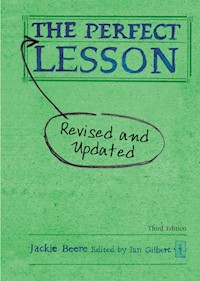
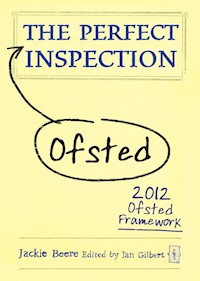
A revised and updated version of Jackie Beere's bestselling The Perfect (Ofsted) Lesson (ISBN 9781781350881) covering the latest Ofsted inspection framework. An observation is only a brief snapshot of your teaching. It could turn out to be like a flattering studio portrait or like that dire passport photo from one of those booths! Either way it is just a snapshot. The aim of this book is not simply to make that brief observation look outstanding but for it to truly reflect your everyday outstanding teaching. The inspection framework aims to discover the 'typical' quality of the teaching that is delivered every day of the year, not just during inspection. The best way you can be 'outstanding' is to develop a flexible, multifaceted approach that draws on the very best ideas and which continually adapts and responds to individual learners' needs. Here, Jackie Beere shows you how as she shares her expertise and experience in a practical, down-to-earth way; it is as much about world-class quality in teaching and learning as it is about surviving an inspection. The advice is easy to apply - no matter what subject you teach or what sort of teacher you are. Many different teachers have successfully implemented the strategies offered here and adapted them to suit their different styles, personalities and classes. With The Perfect Lesson, you can be confident of revealing your school in the best possible light and, who knows, you may even enjoy the process.
Das E-Book können Sie in Legimi-Apps oder einer beliebigen App lesen, die das folgende Format unterstützen:
Veröffentlichungsjahr: 2016
Ähnliche









This book is dedicated to all the teachers in the world who are making such an amazing difference to so many children. I have the privilege of working with them and seeing their dedication and determination. They are creating our future.
Acknowledgements
One day my daughter Carrie asked me to do a workshop at a conference she was producing called ‘Facilitating the Perfect Ofsted Lesson’. She couldn’t find anyone else who would do it so, of course, I stepped in. I planned a session based on the latest Ofsted criteria that really focused on how to demonstrate progress in learning. I then tried out my idea on my other daughter, who is a teacher in a challenging school, experiencing constant lesson observations. Lucy used this technique with great success. In fact the inspector said, ‘You really nailed the progress in learning.’ I want to thank my two daughters for their inspiration, love and support.
I also want to thank my publisher Caroline Lenton who had the idea that this could be made into a book, my husband John who has spent many hours checking the book for me and Ian Gilbert who has worked his magic with encouraging and helpful feedback.
I also want to say a special thank you to Bev at Crown House, who is such a pleasure to work with, and Tom for achieving the impossible in a ‘little book’.
Contents
Introduction
Most of the very best teachers have experienced an unsatisfactory judgement at some time in their careers. Learn from it, and it will work as a positive force in your development. Dwell on it, beat yourself up about it, argue about it, and it could be destructive and very demoralising.
Remember, an observation is only a snapshot of your teaching. A collection of these snapshots are put together along with outcome data, work scrutiny and comments from parents, pupils and school leaders, to help Ofsted form a view of the impact a school has on pupil progress. Lessons and teachers will not be given an individual grade but everything observed will contribute to the conclusions drawn.
The aim of this book is to make the snapshot of your teaching look not only outstanding but for it to truly reflect your everyday outstanding teaching.
We all want to do well and impress observers in our lessons. This book is written to help you achieve the very best results you can when an official observer or inspector pays a call. However, the guidance will also help you to develop your teaching techniques and to become the great career teacher you want to be.
The advice is not a prescriptive set of rules, but suggests a model around which you can build your own ideas. Its purpose is to help you deliver a lesson that will demonstrate to any observer that the students in your class are making great progress in their learning, under your supervision. ‘Progress’ is the magic ingredient required for outstanding lessons.
The advice is easy to apply – no matter what subject you teach or what sort of teacher you are. Many different teachers have successfully implemented the strategies offered here and adapted them to suit their different styles, personalities and classes.
The book begins by offering seven simple steps towards creating the ‘perfect’ lesson. The following chapters then elaborate on these steps, explaining the key ideas within them in more detail. You can read these straightaway or look them up at a later date if needed.
You don’t need the ‘wow’ factor to deliver an excellent lesson but you do need engaged, enthusiastic and determined students who are driven to make progress because they want to learn. You need to be able to nurture this ethos through having very high expectations for all of your students and by using your expertise to enthuse them about new learning.
You also need to be able to accurately measure and respond to the progress they make in your lesson in order to plan the next phase. Your classes have to make a contribution to the value-added results of your school. Therefore your students need to make progress in their lessons. They must move forward with their learning – and know they have. And know how they did it – so that they can do it again next time. Equally, if they haven’t made enough progress, they need to know why and how to fix it.
In my experience, students and teachers who understand how learning works best for their particular brain and have nurtured the habits of PLTs (Personal, Learning and Thinking skills) find it far easier to achieve success. This is because such an understanding requires developing a language with which to discuss and reflect on learning and how it works. With the right vocabulary, students and teachers can talk about how learning has worked and, perhaps more importantly, how it has stalled or floundered and what they have learned from that outcome.
An observer or inspector needs to see a learning environment that is challenging learners to exceed beyond their expectations and feel the tangible excitement of brains making connections to new learning. This will only develop and be evident to observers if the advice offered in this book becomes part of your everyday practice and is demonstrated in the students’ books and class discussions and in the classroom dynamics, all of which take time to develop. The culture of your classroom will allow any observer to see whether or not good learning takes place every day. You will know when you get this right because you will actually wish every day for someone official to walk through the door and see the fantastic learning going on in your classroom!
‘Inspection is primarily about evaluating how well individual children and learners benefit from the education provided by the school or provider. Inspection tests the school’s or provider’s response to individual needs by observing how well it helps all children and learners to make progress and fulfil their potential.’
Ofsted, The common inspection framework (2015): 6
Chapter 1
The perfect lesson in simple stages: meeting the new criteria and delivering progress in learning
Schools cannot be judged as ‘outstanding’ for overall effectiveness unless the ‘quality of teaching, learning and assessment is outstanding.’
Ofsted, School inspection handbook (2015): 37
There is no one, magic formula or set structure for the ‘perfect’ lesson but the steps here will give you some ideas on how to develop your own version of the very best learning experiences for your class.
Step 1. Know what they are looking for
How can you ensure, in the brief time an inspector (or other observer) is in your classroom, that it is clear that your pupils ‘typically’ make great progress, achieve their full potential and exhibit the attitudes and behaviours of great learners daily?
Sharing the criteria for success is essential for any learning experience. If you (or your students) do not know what they are expected to strive for, how do you (or they) know they have achieved success? So, with this in mind, the Ofsted 2015 grade descriptors for outstanding teaching, learning and assessment are shown below:
Outstanding (1)
Teachers demonstrate deep knowledge and understanding of the subjects they teach. They use questioning highly effectively and demonstrate understanding of the ways pupils think about subject content. They identify pupils’ common misconceptions and act to ensure they are corrected.
Teachers plan lessons very effectively, making maximum use of lesson time and coordinating lesson resources well. They manage pupils’ behaviour highly effectively with clear rules that are consistently enforced.
Teachers provide adequate time for practice to embed the pupils’ knowledge, understanding and skills securely. They introduce subject content progressively and constantly demand more of pupils. Teachers identify and support any pupil who is falling behind, and enable almost all to catch up.
Teachers check pupils’ understanding systematically and effectively in lessons, offering clearly directed and timely support.
Teachers provide pupils with incisive feedback, in line with the school’s assessment policy, about what pupils can do to improve their knowledge, understanding and skills. The pupils use this feedback effectively.
Teachers set challenging homework, in line with the school’s policy and as appropriate for the age and stage of pupils, that consolidates learning, deepens understanding and prepares pupils very well for work to come.
Teachers embed reading, writing and communication and, where appropriate, mathematics exceptionally well across the curriculum, equipping all pupils with the necessary skills to make progress. For younger children in particular, phonics teaching is highly effective in enabling them to tackle unfamiliar words.
Teachers are determined that pupils achieve well. They encourage pupils to try hard, recognise their efforts and ensure that pupils take pride in all aspects of their work. Teachers have consistently high expectations of all pupils’ attitudes to learning.
Pupils love the challenge of learning and are resilient to failure. They are curious, interested learners who seek out and use new information to develop, consolidate and deepen their knowledge, understanding and skills. They thrive in lessons and also regularly take up opportunities to learn through extra-curricular activities.
Pupils are eager to know how to improve their learning. They capitalise on opportunities to use feedback, written or oral, to improve.
Parents are provided with clear and timely information on how well their child is progressing and how well their child is doing in relation to the standards expected. Parents are given guidance about how to support their child to improve.
Teachers are quick to challenge stereotypes and the use of derogatory language in lessons and around the school. Resources and teaching strategies reflect and value the diversity of pupils’ experiences and provide pupils with a comprehensive understanding of people and communities beyond their immediate experience. Pupils love the challenge of learning.
Ofsted, School inspection handbook (2015): 48–49
Inspectors are looking for typicality in teaching, not the one-off brilliant lesson. They will check whether or not the lesson they are seeing is typical for the teacher by talking to students and looking at their books. This is a very good reason to make sure that what you are delivering each and every day is helping children progress.
Searching for the ‘x’ factor: what are the magic ingredients that will make your teaching outstanding and demonstrate the high quality of provision in your school?
Key ingredients for success, based on the descriptors above are:
All the pupils, particularly those who have the greatest needs, are making rapid and sustained progress.
Able children experience appropriate opportunities to really challenge themselves and fulfil their potential.
Teachers have very high expectations of all pupils and enable them to learn exceptionally well across the curriculum and this includes modelling and promoting the core skills of literacy and numeracy in all subjects.
Teachers are constantly checking understanding, giving powerful feedback and intervening with impact on pupils’ progress and learning. Pupils are responding to the feedback given and consequently making more progress.
Imaginative teaching strategies are used to engage and motivate pupils on a regular basis – not just for observations. This is evidenced by their positive attitude to learning.
Consider these, too, as essential elements of outstanding lessons and spiritual, moral, social and cultural development (SMSC):
Developing independent and resilient learners.
Using classroom assistants effectively so that they can help pupils make exceptional progress in your lesson.




