


Erhalten Sie Zugang zu diesem und mehr als 300000 Büchern ab EUR 5,99 monatlich.
- Herausgeber: Independent Thinking Press
- Kategorie: Bildung
- Serie: Perfect series
- Sprache: Englisch
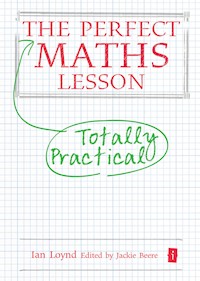
The Perfect (Ofsted) Maths Lesson recognises that teaching is hard and that, although no teacher is perfect, their lessons can be. Drawing on his experience as a secondary maths teacher and assistant head teacher Ian Loynd provides practical ideas and common-sense methods that can help every teacher to be outstanding, and uncovers the essential strategies that help teachers appear to walk on water.
Sie lesen das E-Book in den Legimi-Apps auf:
Seitenzahl: 96
Veröffentlichungsjahr: 2014
Das E-Book (TTS) können Sie hören im Abo „Legimi Premium” in Legimi-Apps auf:
Ähnliche









Praise for The Perfect Maths Lesson
As someone who struggled with maths growing up, I often asked/wailed, ‘Why are we learning this?’ Ian understands the need to bring the real world into the classroom, to give maths value and to engage learners so that they have a reason to show up. He provides pupils with stimulating real-life contexts that will challenge and prepare them, not make-believe contexts used simply to practise strategies or pass a test. Therefore, young people can adapt to our ‘compressed global community’ whilst becoming better learners; they are learning to learn in maths to empower them for the future.
So, why should you read this book? Like any good teacher, regardless of subject area, Ian knows you have to hook pupils in and challenge them from the off, but then maintain this pace and balance throughout the lesson: he summarises how to do this with top tips. I will be keeping this book to hand as a gentle reminder and to try out some of his practical ideas and activities (from starters to original and creative assessment opportunities) to ‘perplex, mystify and delightfully baffle’ learners, which he succeeded in doing to this reader many times. He even includes mathematical jokes and inspirational sayings, as he knows that learning for children is emotional and they have to enjoy it.
His handy checklists guide you through the whole process of the planning, delivery and assessment of an outstanding lesson, with references to Ofsted’s expectations, although the learners are the main concern, first and foremost. There are even novel ways of setting homework which promote real independent learning (not just working on your own) and the discipline for students to push themselves.
Ian continually endorses challenge, ‘occupying a space at the edge of their ability’, so young people embrace being stuck and see it as ‘an exciting gateway’ to new knowledge or skills. Children’s fear of failure is bigger in maths so he illustrates how to encourage them to ‘fail better’. They will then feel more able to take risks in these real-life/unknown situations, as the children’s emotional well-being is at the heart of his drive to make maths fun and accessible for all.
In my classroom, I will now be posing, pausing, pouncing and bouncing with my pupils to ensure they truly understand maths and are not merely ‘doing’ it, and so that I am teaching with students not to them.
Ruth Saxton, primary teacher and Chair of the National Association for the Teaching of Drama
The Perfect Maths Lesson is a concise guide to teaching maths and is full of interesting pedagogy and practical ideas. Whilst regularly referencing Ofsted, the mathematical learning that children undertake remains the focal point, as it should. Ian Loynd’s enthusiasm for the subject, and for teaching, comes across in abundance and all readers should close the back cover having taken away new ideas to implement in the classroom.
Oliver Saunders, maths teacher, Millfield School
The Perfect Maths Lesson will be a great addition to the ‘Perfect family’ of books in our staffroom library. This little book contains a wealth of good ideas, all of which can be modified and extended to use across different age ranges. It is a good mix of practical ideas to try in lessons and theory to improve teaching and learning. I found it really easy to read and it even made me smile in places. As always, the checklists at the end of each chapter will help teachers to reflect on their classroom practice; this will definitely lead to a better experience for children in our school. I particularly enjoyed the cheesy mathematical jokes and will definitely be trying them out on my children! Thank you.
Beverley Dandy, Head Teacher, Outwoods Primary School
This is my first experience of the ‘Perfect Lesson’ series from Jackie Beere and friends and, to me, the title has a lot to live up to! I needn’t have worried. From the start, Ian gives compelling and motivating reasons for learning; not just learning maths, but any learning and, particularly importantly, advises on how to deal with the ultimate question, ‘Why are we learning this?’ He frames the learning and content of the book within the context of the modern, ‘flat’ world, which every conscientious teacher is desperately trying to give their learners an advantage in. Now I’m hooked.
I read the rest of the book with enthusiasm, even though it is about maths! Ian delivers an excellent balance of theory and context with hundreds (well, it seemed like hundreds; I haven’t actually counted them) of practical examples that any teacher can take into a classroom tomorrow. From engaging and challenging learners, including some great ideas for using apparatus through to chilli heat-rated activities to increase independence, the wealth of thought-provoking exercises makes this book a must-have in any staffroom. There is a hugely important chapter on emotional connections with learners and the end-of-chapter checklists act as quick reminders and useful pointers.
So, will this book mean you deliver the perfect maths lesson? Personally, I don’t think any book, no matter how good, can; but this one will provide you with a whole toolbox of strategies and ideas that cannot fail to improve the learning in your lessons. And here’s the important bit: any learning could be improved by using this book. The underlying principles, with a bit of un-maths tweaking, will have a direct impact on your teaching and, although the book has a secondary ‘flavour’, these can be equally applied to the primary phase.
In sum-mary (I tried really hard to resist a number of maths puns!), if you’re looking for easily accessible ideas and strategies to refresh your teaching, whether in maths or other curriculum areas, this book will be an excellent addition to your collection. It’s a quick and easy read that you can dive into at any point and pull out a gem. And, who knows, maybe that will be the one that secures the ‘outstanding’ judgement – or better still, gives your learners an advantage in the real world!
Now, I’m off to look at the rest of the ‘Perfect Lesson’ series!
Paul Bannister, Head Teacher, Highbank Primary School
For Greg
Contents
Acknowledgements
To the wonderfully talented, exceptionally dedicated and invariably barmy colleagues I have had the pleasure of working alongside over the last decade. These ideas are entirely yours, unashamedly stolen, tried, tested and summarised neatly in this little book. To my family, who have encouraged me, supported me and reminded me that there is more to life than school. To Jackie, for her expert guidance. To Caroline and Crown House Publishing for having confidence in me. And to all the young people who make my job the best in the world. Thank you.
Foreword
I have trained teachers for a couple of decades now, but I always know that my biggest challenge is to ensure that the maths teachers feel that what I am saying and doing is relevant for their subject. They are some of the most scrutinised and pressurised teachers in schools and often feel that the unique demands of their subject make it difficult to apply some aspects of research on teaching and learning to their classroom practice. As an English teacher myself, I am in awe of how great maths teachers excite and engage their students, and on many occasions I have observed maths lessons and learned something new.
So, let’s be clear: being a maths teacher is a tough job. Furthermore, we have a shortage of maths teachers who are able to really engage and inspire young people to love the subject. We are constantly told that the quality of maths education in the UK is not good enough when judged against international standards, so it is hardly surprising that maths teachers can sometimes feel maligned or even cynical about their job.
This book is an antidote to all of the above.
Ian’s love for maths and his ability to apply his knowledge of the way learning works in a maths classroom shines out so much that I feel like I want to go and sit in his lessons on a rainy Friday afternoon and learn algebra. His passion for practical solutions that stimulate engagement and interest provide maths teachers with a range of ideas that can be used immediately.
Important guidance on the craft of maths teaching comes through in examples of questioning and feedback that clarify how a teacher can truly become John Hattie’s ‘change agent’. The focus on creating emotionally intelligent classrooms where children love learning challenges is particularly relevant as too many students find learning maths scary or just plain boring.
This book is not just for maths teachers – it’s for anyone interested in teaching and learning because it gives such an insight into the ‘how to do it’ (and why it works) of outstanding lessons. It has been thoroughly researched against the national frameworks for inspection and the latest innovative thinking in education, and it provides a plethora of ideas and solutions that all teachers will find useful, whatever the stage of their career. Ian’s belief in flexible, child-centred approaches to teaching permeate his philosophy, while his record as a highly successful maths teacher and school leader proves that these strategies work.
The Perfect Maths Lesson has that special combination of passion and pragmatism that makes it an immensely welcome addition to the Perfect series – enjoy!
Jackie Beere, Tiffield
Introduction
Delivering the perfect maths lesson is no simple task. My aim in this book is to provide practical ideas and common-sense methods that can help every teacher to be excellent, and uncover the essential strategies that help teachers appear to walk on water (or at least secure an ‘outstanding’ judgement)!
The ‘perfect’ maths lesson?
Teachers have the most important job in the world. At a time when expectations and accountability are at an all-time high, delivering excellence in the classroom has never been more difficult. The perfect maths lesson is about getting it right for inspectors by first getting it right for the children you teach. This book aims to be a pragmatic and down-to-earth guide, recognising that, although no teacher is perfect, their lessons can be. It is about learning and teaching as much as it is about surviving that dreaded lesson observation.
Jackie Beere (2012b) has provided us with a concise overview of the elements of the perfect (Ofsted) lesson. This book builds on her insights but is written with maths teachers and maths lessons in mind. But, like hers, much of this book can (and should) be applied in all areas of the curriculum. It is not designed to be a mechanistic checklist of expectations which inspectors will tick for compliance. Instead, The Perfect Maths Lesson




