


0,49 €
Niedrigster Preis in 30 Tagen: 1,99 €
Niedrigster Preis in 30 Tagen: 1,99 €
Mehr erfahren.
- Herausgeber: Booksell-Verlag
- Kategorie: Gesellschafts- und Liebesromane
- Sprache: Englisch
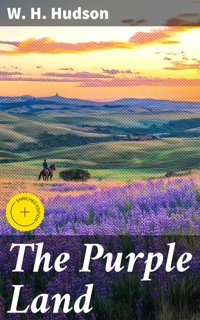
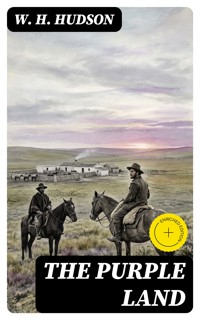
In "The Purple Land," W. H. Hudson presents a vivid exploration of the Argentine landscape intertwined with a passionate narrative of love and freedom. Set in the late 19th century, the novel employs a lyrical, impressionistic style that captures the vastness and beauty of the Pampas, juxtaposing vivid imagery with deep philosophical reflections. The book is recognized for its rich character portrayals and emotional depth, encapsulating Hudson's ability to meld the personal with the universal against a backdrop of social and political transformation in South America. W. H. Hudson, an Anglo-Argentine author, draws upon his formative experiences in Argentina to craft this semi-autobiographical tale. His early life spent on the Pampas deeply influenced his literary sensibility, offering a unique perspective that marries his British heritage with the Argentine spirit. Hudson's dual identity allows him to bridge cultural divides, making his themes of longing, identity, and belonging resonate on multiple levels. "The Purple Land" is a must-read for those intrigued by the intersections of nature, emotion, and identity. Hudson's evocative prose invites readers to immerse themselves in the beauty of Argentina while exploring the complexities of human relationships. Whether you seek adventure, nostalgia, or philosophical insight, this novel promises to leave a lasting impression. In this enriched edition, we have carefully created added value for your reading experience: - A succinct Introduction situates the work's timeless appeal and themes. - The Synopsis outlines the central plot, highlighting key developments without spoiling critical twists. - A detailed Historical Context immerses you in the era's events and influences that shaped the writing. - A thorough Analysis dissects symbols, motifs, and character arcs to unearth underlying meanings. - Reflection questions prompt you to engage personally with the work's messages, connecting them to modern life. - Hand‐picked Memorable Quotes shine a spotlight on moments of literary brilliance. - Interactive footnotes clarify unusual references, historical allusions, and archaic phrases for an effortless, more informed read.
Das E-Book können Sie in Legimi-Apps oder einer beliebigen App lesen, die das folgende Format unterstützen:
Veröffentlichungsjahr: 2019
Ähnliche









The Purple Land
Table of Contents
Introduction
In The Purple Land, a restless outsider tests the promises of freedom against the claims of love, loyalty, and a country at war.
William Henry Hudson’s novel, first published in 1885, is a picaresque adventure set largely in Uruguay, then widely known as the Banda Oriental, amid nineteenth‑century civil strife. Written in the first person, it blends romance, travel narrative, and social observation, drawing on the author’s intimate knowledge of the Río de la Plata region. Although Hudson later became celebrated in England for his nature writing, this early work addresses frontier life and political turbulence in a landscape of estancias, small towns, and open pasture. Its publication in the late Victorian era gave British readers a vivid, unconventional portrait of South American society.
At the center is Richard Lamb, a young Englishman whose impulsive marriage in Buenos Aires propels him across the river into Uruguay, where he becomes a wanderer. Seeking safety and a future, he rides through cattle country and border towns, falls in with gauchos and soldiers, and stumbles into the shifting quarrels of rival factions. The narrative is episodic and quick-footed, told in a candid, conversational voice that favors encounters over intrigue and the open road over strict plot machinery. Readers encounter danger and comedy in equal measure, set against a sun‑blasted horizon that alternates hospitality with sudden, decisive violence.
Freedom is the book’s presiding idea, tested by travel, love, and the unwritten codes of honor that govern men on horseback. Hudson explores how allegiance—whether to a person, a province, or a cause—both shields and endangers the individual. The customs of welcoming strangers, the duties owed to hosts and companions, and the risks of speaking one’s mind shape the hero’s choices more than formal law. The land itself is a force: river plains, thorny scrub, and immense skies impress a rhythm of patience and ferocity. These elements together create a meditation on how character is formed when institutions are fragile.
As an English expatriate writing about a neighboring republic, Hudson frames the tale through an outsider who learns by watching and listening. Admiration for horsemanship, courage, and generosity sits beside incomprehension at local feuds and the costs of caudillo politics. The book’s depictions reflect nineteenth‑century sensibilities, including assumptions about gender and class that modern readers may scrutinize. Yet the narrative’s curiosity is persistent; it lingers over speech, gesture, and habit, and it records how friendship forms across differences of language and origin. In this sense, the novel doubles as an informal ethnography of everyday life without claiming scientific authority.
Stylistically, the book favors immediacy: scenes arrive as anecdotes gathered on the road, with digressions that convey the meandering pace of travel. Hudson’s background as a naturalist informs the attention he gives to weather, wildlife, and the colors of the plain, yet description rarely pauses the ride for long. A supple mixture of English and local terminology grounds the action in place without overwhelming the reader. Dialogue carries warmth and humor; set‑pieces pivot swiftly to danger. The result is a narrative that reads like a long conversation by a campfire, intimate in tone but expansive in its compass.
For contemporary readers, the novel offers both armchair travel and a lens on questions still alive today: how to live freely without abandoning responsibility, how to honor local codes while remaining oneself, how to see another culture without presuming to own it. It speaks to those drawn to borderlands, to pastoral lifeways under political pressure, and to stories where peril, courtship, and companionship share the same road. Its Uruguay is historically specific yet symbolically open, inviting reflection rather than prescribing lessons. Approached on these terms, The Purple Land rewards with energy, atmosphere, and a provocative meditation on belonging.
Synopsis
W. H. Hudson’s The Purple Land follows Richard Lamb, a young Englishman in the River Plate region, who impulsively marries Paquita against her ambitious mother’s wishes. Threatened with legal trouble and separation, he escapes across the Río de la Plata to Uruguay, hoping time and distance will allow the marriage to stand. Cast onto unfamiliar ground, he narrates his experiences in a country unsettled by factional strife. The story adopts a picaresque rhythm as Lamb moves from one refuge to another, seeking news of Paquita and a path toward safety. His goal is steady: survive, learn the land, and find a way back to his wife.
Arriving in Montevideo, Lamb quickly discovers that the city offers little refuge, so he rides inland into the pastoral interior. There he encounters gauchos and small landowners whose hospitality, customs, and codes shape his days. Hudson’s narrator learns to drink maté, handle a horse with more confidence, and read the subtle signs of camaraderie and suspicion. The landscape’s wide horizons and swift weather become part of the story’s rhythm. Rumors of political upheaval thread through these scenes, but early on Lamb’s concerns remain personal: to avoid arrest, conserve his limited funds, and secure lines of communication that might reconnect him with Paquita.
Lamb’s route becomes a chain of improvised lodgings. He is welcomed in some estancias and warned away from others, experiencing both generosity and mistrust. He observes knife duels and campfire songs, gaining a practical respect for local honor and prudence. He entrusts letters to travelers when possible, learning that Paquita is under pressure from her family while officials question the marriage. The uncertainty compels him to linger in rural districts where anonymity is possible. Occasional threats—mistaken identity, horse theft, suspicions about his nationality—remind him how precarious his position is. Yet chance kindnesses and quick thinking allow him to keep moving.
A new phase begins when Lamb finds shelter with Doña Isidora, a strong-willed widow whose household combines refinement and frontier frankness. The social life around her estancia exposes him to courtship rituals, domestic alliances, and the reading of character so valued in the countryside. Lamb is drawn into errands and social calls that test his tact and courage, including rides through districts where loyalties are sharply divided. A misunderstanding places him in sudden danger, forcing a nocturnal flight that highlights the constant risks facing a foreigner with few protectors. These events deepen his dependence on speed, discretion, and the goodwill of strangers.
Political conflict intensifies between rival parties—the Colorados and Blancos—whose skirmishes shape travel and trade. Lamb, tied by friendships rather than ideology, is pulled into the periphery of the struggle. He meets Santa Coloma, a charismatic young caudillo whose courage and informal authority magnetize followers. Lamb’s role remains modest but consequential: scouting, carrying messages, and sleeping rough with mounted partisans. The narrative foregrounds camp routines, improvised tactics, and the suddenness with which peaceful plains turn dangerous. Through these movements, Lamb’s priorities coexist uneasily—loyalty to companions who protect him and the persistent resolve to arrange a safe reunion with Paquita.
Marches and encounters follow, depicted through Lamb’s practical observations: how to choose a ford, where to find water, when to lie low, and how to answer a challenge without provoking a duel. Minor clashes erupt and fade, and rumors outrun fact. At times Lamb risks capture; at others he evades pursuit by exploiting the code of hospitality or the confusion of shifting command. News from the cities is fragmentary, and he must rely on improvisation. Amid uncertainty, he keeps his marriage at the center of his plans, measuring every alliance by whether it opens a corridor back to legality, livelihood, and Paquita’s safety.
Quieter interludes punctuate the dangers. Lamb stays with families whose evenings revolve around guitars, stories, and neighborly visits. He witnesses the region’s egalitarian ease and its strict points of honor, noting how women shape domestic stability while men range widely for work and war. These episodes emphasize the book’s ethnographic texture—food, speech, horsemanship, and social obligation—without halting the plot. Lamb reflects on the contrast between Old World convention and frontier freedom, framing Uruguay as a testing ground for character. The tone remains observational, as he draws practical lessons from hospitality, secrecy, and the value of reputation on a landscape that rewards nerve and restraint.
The conflict’s stakes rise when fortunes shift among Lamb’s allies, and a change of circumstance compels him to ride alone across contested districts. He undertakes a delicate mission to secure papers, passphrases, and safe-conducts that might clear a path to Montevideo and beyond. The journey requires diplomacy at isolated posts, careful reading of uniforms and flags, and reliance on friendships formed earlier. An encounter at a river crossing nearly unravels his plans, but he navigates suspicion by appealing to shared custom. This stretch brings the narrative toward a hinge point, as Lamb weighs remaining entangled in local loyalties against pursuing his original purpose.
In the closing movement, Lamb acts decisively on his promise to Paquita, attempting to convert hard-won experience into a secure future. The narrative draws together its strands—personal vow, political turbulence, and the education of a stranger in a complex land—without dwelling on battle outcomes. The book’s message emphasizes the transforming force of open-country life, the dignity of ordinary people, and the limits of rigid social ambition. It leaves a portrait of nineteenth-century Uruguay as both refuge and trial, where freedom demands responsibility and quick judgment. The concluding tone is steady, presenting resolve and attachment as guides through uncertainty.
Historical Context
Set largely in the Banda Oriental—present-day Uruguay—The Purple Land unfolds across a mid-nineteenth-century frontier of grasslands, low sierras, and riverine borders on the Río de la Plata. The period spanning roughly the 1830s to the later 1860s was marked by civil wars, cross-border incursions, and a cattle-based export economy centered on estancias and saladeros. Montevideo functioned as a contested Atlantic entrepôt while the interior remained a world of gaucho horsemen, caudillos, and shifting allegiances. This setting, including towns such as Paysandú, Salto, Maldonado, and Rocha, is inseparable from the novel’s episodes of hospitality, pursuit, and factional suspicion, and from the author’s first-hand familiarity with the Argentine-Uruguayan pampas region.
The earliest matrix for the novel’s world is the Artiguist revolution (1811–1820). José Gervasio Artigas, after victories such as Las Piedras (1811) and the Exodus of the Oriental People (1811), organized a federal, rural-based polity and in 1815 issued the Reglamento Provisorio, a land measure favoring smallholders and displaced people. Portuguese forces invaded in 1816, pushing Artigas into Paraguayan exile by 1820. Artigas’s pastoral republicanism and frontier autonomy forged a political culture of local militias and caudillo leadership. The novel reflects this inheritance in its admiration for decentralized authority, egalitarian hospitality, and the moral prestige of countryside leaders who command loyalty outside formal institutions.
A second structuring event was the Luso-Brazilian annexation and the road to independence. Portugal’s 1816 invasion culminated in the Cisplatine Province (1821) of the Brazilian Empire. In April 1825 the Thirty-Three Orientals, led by Juan Antonio Lavalleja with Manuel Oribe, landed at Agraciada and reignited war; on 25 August 1825, they declared independence from Brazil and union with the Argentine provinces, prompting the Cisplatine War (1825–1828). The British-brokered Treaty of Montevideo (27 August 1828), under envoy John Ponsonby, recognized Uruguay as a sovereign buffer state. The novel’s characters invoke these founding struggles as living memory, shaping their patriotic symbolism, suspicion of Brazilian power, and pride in a hard-won autonomy.
The Guerra Grande (1839–1851) most deeply imprinted the land and social relations the book portrays. Rival caudillos Fructuoso Rivera (Colorado) and Manuel Oribe (Blanco) polarized politics after the first constitutional decade (Rivera president 1830–34; Oribe 1835–38). Backed by Juan Manuel de Rosas’s Argentina, Oribe besieged Montevideo from 1843 to 1851, while a Colorado “Government of Defense” held the port with British and French support. Giuseppe Garibaldi’s Italian Legion fought river and coastal actions (1842–1848), and the Anglo-French blockade of the Río de la Plata (from 1845) pressured Rosas. Rural zones suffered levas (forced levies), cattle seizures, and reprisals; estancias were burned, and trade faltered. The novel’s itinerant dangers, veteran soldiers turned drovers, and ingrained factional identities mirror this long wartime normalization of militias, campismo, and partisan checkpoints, even after formal peace restored a semblance of order.
The Flores uprising, or Cruzada Libertadora (1863–1865), and its tie to the Triple Alliance War provided the immediate political climate for many incidents echoed in the narrative. Colorado leader Venancio Flores, aided by Argentina’s Bartolomé Mitre and Brazil, moved against the Blanco government of Bernardo Berro (1860–1864) and provisional president Atanasio Aguirre (1864–1865). The pivotal Siege of Paysandú (Dec 1864–Jan 1865), defended by Colonel Leandro Gómez, ended with Brazilian Admiral Joaquim Marques Lisboa (Tamandaré) and Flores taking the town on 2 January 1865. Uruguay then aligned with Brazil and Argentina against Paraguay (1864/65–1870). Flores served as president (1865–1868) before his assassination in 1868. The novel’s recurring press-gangs, patrols, and factional tests at pulperías gain concrete plausibility from this intervention-ridden, mobilized borderland.
Gaucho lifeways and caudillismo formed the social infrastructure of conflict. Mobile horsemen armed with facón knives and lances adhered to patron–client bonds under regional chiefs. Vagrancy statutes and emergency levies turned rural labor into a conscription pool, while cattle exports and saladeros tied the countryside to Atlantic markets. British mercantile houses—such as those of Samuel Fisher Lafone in mid-century Montevideo—financed trade networks, and by 1865 Liebig’s Extract of Meat at Fray Bentos signaled industrialized beef by-products. The novel’s mate circles, knife duels, and estancia solidarities, alongside disdain for petty officials, trace these structures, rendering visible how economic circuits, informal justice, and militia service intersected in everyday survival and allegiance.
Border dynamics with Brazil and the Río Grande do Sul intensified volatility. The Farroupilha (Ragamuffin) War (1835–1845) in Brazil’s south spilled contraband, refugees, and ideologies across the Yaguarón and Jaguarão crossings, while smuggling and cattle raiding knitted twin communities like Rivera/Sant’Ana do Livramento. Brazilian interventions in 1864, naval actions on the Uruguay River, and the Paysandú campaign demonstrate how international forces shaped local destinies. The book’s episodes of flight toward frontier rivers, encounters with Portuguese-speaking lancers, and ease of slipping between jurisdictions reflect this permeability. Such a landscape made identity and allegiance situational, a condition dramatized in the protagonist’s precarious negotiations with patrols and camp commanders.
As a social and political critique, the book exposes the costs of caudillo factionalism, militarized recruitment, and oligarchic landholding that kept rural people vulnerable to coercion. It scrutinizes foreign meddling—Argentine, Brazilian, and British—whose strategic aims often outweighed Oriental welfare, while recognizing how commerce bound locals to distant interests. By foregrounding gaucho honor codes, women’s precarious protections, and the pulpería as a node of surveillance and solidarity, it indicts a legal order that privileged force over rights. The celebration of open-handed hospitality and local autonomy is coupled with disquiet at arbitrary justice, showing how liberty could be both a lived ethic and a fragile shield against entrenched power.




