


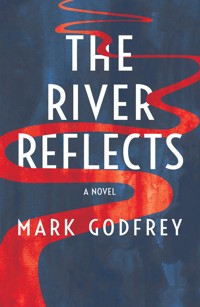
Erhalten Sie Zugang zu diesem und mehr als 300000 Büchern ab EUR 5,99 monatlich.
- Herausgeber: Cinnamon Press
- Kategorie: Gesellschafts- und Liebesromane
- Sprache: Englisch
We become like the river reflected, both light and dark. Struggling artist Sylvia is offered an unusual commission by the mysterious Victor, acting on behalf of a secret sponsor, who wants to engage her for a year to produce art depicting the Holocaust. She accepts the project on trust and discovers an enigmatic thirteen-year-old girl Nina, who becomes her model and pupil. As the months pass, Sylvia begins to unravel the truth about Victor, the secret sponsor and Nina, while unearthing more about history and identity than she was ever prepared for. A family drama that champions the structures and beliefs that underpin a civilised society, The River Reflects faces the darkest shadows of human nature. With the Thames winding relentlessly through this compelling story, Sylvia, Victor, Nina and those around them progress from fear and isolation to seek love and fortitude and the redemptive power of the human spirit.
Sie lesen das E-Book in den Legimi-Apps auf:
Seitenzahl: 477
Veröffentlichungsjahr: 2020
Das E-Book (TTS) können Sie hören im Abo „Legimi Premium” in Legimi-Apps auf:
Ähnliche




















Contents
Title Page
Copyright
Acknowledgements
Dedication
The river is ceaseless
Chapter One
Chapter Two
Chapter Three
Chapter Four
Chapter Five
Chapter Six
Chapter Seven
Chapter Eight
Chapter Nine
Chapter Ten
Chapter Eleven
Chapter Twelve
Chapter Thirteen
Chapter Fourteen
Chapter Fifteen
Chapter Sixteen
Chapter Seventeen
The River Reflects
Mark Godfrey
Published by Leaf by Leaf
an imprint of Cinnamon Press
Meirion House
Tanygrisiau
Blaenau Ffestiniog
Gwynedd, LL41 3SU
www.cinnamonpress.com
The right of Mark Godfrey to be identified as author of this work has been asserted by him in accordance with the Copyright, Designs and Patent Act, 1988. Copyright © 2020 Mark Godfrey.
Print ISBN: 978-1-78864-912-4
Ebook ISBN: 978-1-78864-919-3
British Library Cataloguing in Publication Data. A CIP record for this book can be obtained from the British Library.All rights reserved. No part of this publication may be reproduced, stored in a retrieval system, or transmitted in any form or by any means, electronic, mechanical, photocopying, recording or otherwise without the prior written permission of the publishers. This book may not be lent, hired out, resold or otherwise disposed of by way of trade in any form of binding or cover other than that in which it is published, without the prior consent of the publishers.
Designed and typeset by Cinnamon Press. Cover design by Adam Craig © Adam Craig.
Cinnamon Press is represented in the UK by Inpress Ltd and in Wales by the Books Council of Wales.
Acknowledgements
I owe thanks to a great many people whose influence, guidance, love and support has knowingly or otherwise enabled me to live and write. Here are a few to whom I owe the most heartfelt thanks.
My family: My wife, Ann; my father Christopher and mother Sheila; my children Jonathan and Charlotte; my sisters Sarah and Anna. And every other member of the Godfrey/Lawrence/Thomas/Carling clan, especially those in nappies and those not yet born.
My friends: Clare and Mick, John and Cath, Roger and Sarah, Penny and Jon, Clare and Sean, Martin, Richard and Adam, Peter.
Special mentions: Ben and Sheila for providing the river; Sarah Willis for asking what I was prepared to give up in order to do this; Roger Finnigan for reading the manuscript and believing I should persist with it; Angela Macmillan and Sarah Coley at The Reader magazine for publishing my first short story; Tim Lyons for being my first writing partner; the members of my writing group: Daragh, Gill, Joely, Melissa, Ravi, Rosemary and Toni; Andrew Michael Hurley for his tutorship and encouragement.
Authors: This novel owes a monumental debt to the work of Richard J Evans and Steven Pinker, as well as Timothy Snyder, Nicholas Stargardt and David Cesarani. I hope I have done justice to the factual in this work of fiction.
Publishers: Jan, Adam and Rowan at Cinnamon Press for taking on this project at the most difficult of times. Your trust in this book means the world.
Finally: Great Ormond Street and Harefield hospitals, who have literally enabled me to live.
For Ann
The river is ceaseless, the ocean inexorable—sifting the grime—dissolving the salt—moving matter as if merely a thing—until the thing becomes other matter—and other matter becomes another thing—and that thing becomes us—and we become like the river reflected, both light and dark.
Chapter One
We sit in silence. The gathering darkness of the evening has crept into the room and softened the harsh lines of the argument. I watch Alexander’s face crease into a tired smile.
‘What will you do?’
This time the impatient snap to his voice is absent. He’s asked me three times, and with the argument spinning and circling and almost dying of boredom, I have lost the will to attempt an answer. I look at him and say nothing. I exaggerate the weariness in my expression. It’s the only response I can give, hoping that he too is fed up of a discussion that should have timed-out an hour ago and continued only because neither of us quite had the heart to walk out on it.
‘You have to make a decision.’
Not again, I say to myself. I stretch my arms, hoping for some release.
He breathes out: a long exhale, deliberate, conveying the weight of his resignation. And did I catch the slight accompanying twitch of the lip that might signal contempt? It’s said that once that so much as flickers across the face of your spouse you might as well call the lawyers.
But maybe I’m looking for it, examining every move he makes for evidence? We’re past the anger and entrenchment; we’re tired now, and stuck, and both of us know nothing will change this side of the morning. He loves me, I’m sure—he’s said it twice—although I haven’t said it back.
So I say it: three little words that mean everything in the right context.
He smiles. ‘So will you do it?’
‘No,’ I say, wishing I hadn’t bothered, wondering how an expression of love concedes an argument.
I reach for a cigarette, the sixth or seventh of the evening. I won’t enjoy it. It’s a mechanical act. Two or three during the course of an evening are to be savoured. After that the effect is lost and guilt supersedes pleasure as I rote-suck my way to an early grave.
He gets up and walks to the window. It’s his habit when things are tense between us. He has to pass me in my chair. I watch as he gets closer, maybe in expectation of something, a touch on the arm or a genuine, warm smile. But he doesn’t offer so much as a glance as he passes. Perhaps he can’t bring himself to. I stare at the far wall, the one with my series of paintings about rejuvenation, a group of three semi-abstract oils that mingle dystopia with optimism. A defining statement, or so I’d hoped. They’re on our wall because no one would buy them.
Which is where the argument began. My gallery hadn’t paid me for the paintings that had sold. Alex said I had to ‘do something,’ meaning sanctions, threats, lawyers. I said, it’s not deliberate, they’ve always been bad at admin. He told me to go somewhere else where they can ‘organise shit.’ I said they’re having a tough time and I should support them through it, not tip them over the edge. He said my career is going ‘down the tubes’ while they ‘play at being shopkeepers.’
So it went. The truth is, they picked me up years ago when no one else would. They believe in me, love my work, and I like them. They’re more interested in art than commerce and I owe them my patience.
‘You owe them nothing.’
‘I want to owe them, I’m loyal.’ Then I added the spiteful aside, the one that felt good when it was delivered, no matter how bad I feel now: ‘why do you think I’m still with you?’
‘Because you love me?’ It was a genuine question and something in me retracted the moment I realised he did care what the answer might be.
I’d stung him, but having gained the upper hand I wasn’t about to surrender it by giving the easy answer.
Which was when he started telling me he loved me.
Now, while he stares aimlessly—or pointedly?—out of the window, I draw hard on the cigarette, hearing the faint crackle that primes me for the hit that’s to follow. But there’s no hit, no satisfaction. I hold the smoke down in the hope of extracting some pleasure from it. I exhale the disappointment, the final inch of breath made audible.
‘What?’ he says, turning back from the window.
‘Nothing.’
‘You sighed.’
‘I’m smoking.’
He opens his mouth as if to follow up, but closes it again, perhaps, belatedly, making the connection.
‘Can I have one?’ He doesn’t smoke. Or, at least, he smokes once a year, every June 30th, the anniversary of him giving up five years ago. It used to be something we did together. I wave in the direction of the packet.
He takes one and looks for the lighter. It’s on the coffee table, inches from the cigarettes and I suppress the instinct to get up and hand it to him.
‘Where is…’ he says, still looking. I don’t answer as only a fool could fail to find it. ‘Ah,’ he says, picking it up, ‘hidden behind your Chagall catalogue.’
I wonder about the tone of voice. Forced jollity? Or is it peevishness, as if I’d hidden it deliberately in anticipation of him choosing this moment to break a five-year abstinence?
‘And I thought I’d hidden it so well.’
‘I was joking,’ he says.
‘So was I.’
We manage a faint laugh. The argument about who is likelier to take the other too literally was one we’d had last week and it ended in a civilised draw.
He goes back to the window and I gaze, distractedly now, at my paintings. I want to remark on him taking a cigarette, but daren’t. It was tonight’s argument that had provoked him to want one, that much is obvious, and any reference, however oblique, would risk opening that up again. It’s comforting to believe he chose this moment to evoke our past, when we were happier, when smoking was a shared pleasure.
And if I’m mistaken in that, I don’t want to know.
‘There’s an odd looking man hanging about on the street,’ he says.
‘Odd?’
‘I don’t mean odd as in weird. In fact he looks implausibly normal, which is what’s odd.’
It’s a curious change of subject and a welcome distraction. I join him at the window.
‘There.’ He points to a figure partly sheltered from the light of a streetlamp by the shade of a tree, about three doors down. ‘He’s been there for a while.’
I wonder what’s remarkable about a man standing on our street. He’s well dressed and looks like he’s minding his own business, maybe waiting for a taxi or a rendezvous. I see that his shoes, the part of him that isn’t shaded, shine with an abnormally brilliant lustre, but that quirk apart, his appearance seems innocuous enough.
‘Tell me what’s odd about him.’
Alexander looks towards the man. A hint of a smirk crosses his lips and I realise he’s ready to enjoy himself, as if we’ve begun a new game.
‘To start with, he’s been there for several minutes.’ He raises a hand to stop me butting in. I wasn’t about to, but the habit of the night’s argument has formed. ‘No big deal in itself I admit, but think about it: if he’s waiting for someone, why do it half way down the street? A corner is more logical.’ He holds a hand up again.
‘I wasn’t…’ I say, and smile in spite of myself.
‘And look at the way he’s dressed: he’s smart. It’s eleven-o-clock. No one sets off for a posh do at this time. He’s just standing there. He’s going nowhere.’
I tell him I’m not convinced.
‘Look at his raincoat. It’s a fine, warm night.’
‘There’s a man over the road wears a parka all year round, some people do.’
‘He’s a cold-blooded, skinflint who only owns the one jacket.’ He jerks his thumb towards the man in the street. ‘This guy is properly tailored. He’ll have coats and jackets for every occasion and weather.’
‘Time for bed, Sherlock,’ I say. He likes to be called Sherlock; it’s one of our endearments. It feels like we’ve contrived a truce and, although the discussion will resuscitate tomorrow, this is the opportunity to close it for the night.
He gently squeezes past me, the sharp defensive movements of earlier no longer required. I reach up to draw the curtains and look again down the street. It may be a coincidence but, at the moment I glance in the man’s direction, his head jerks away, as though guiltily, like I’d caught him staring at me.
I dream of the man in the street and wake with a curious, unaccountably palpable urge to know if he’s still there. Five-thirty. It’s light, birds are singing, and the rumble of traffic hasn’t begun, save a distant, solitary vehicle that is probably a refuse van. Alex is still asleep, so I go downstairs to throw open the curtains of the living room.
Why am I doing this? Having been so dismissive of anything unusual about this man’s presence, what possesses me now to believe he’d still be there? Was it the moment when he seemed to turn his face away? Is it the question of whether he had been looking at me? Was that when the benign appearance of a well-dressed man on our street became an entity in my mind’s eye? And if he had been looking at me, why?
I banish the thought for its ridiculousness. There wouldn’t have been any intent. He was perhaps embarrassed to be caught staring, but he has to be looking at something while he stands there in the night.
‘He stands there in the night.’ I roll the words around my head until I’m almost chewing them, aware I have the beginnings of an obsession. I tell myself to shut up and go back to bed for another hour before the alarm goes off. But I think back to the dream and, as more of it filters back into consciousness, realise I know the answer, the reason he’s stuck in my head: it’s the needle-sharp glints of light burned into my mind; it’s the shoes.
I’ve been seeing the shoes in my dreams and now I see them in daylight, in my imagination. So shiny, like burnished metal, as alive in my head as if I’d closed my eyes after looking at the sun.
As I grab a curtain to pull it back, I have a premonition of what will be revealed: the man, standing in the garden, staring straight back at me. Only this time he won’t avert his gaze. Instead, he will look at me, face fixed and hollow, eyes glassy and emotionless. I pant with the shock of it, the fear, then I upbraid myself for my irrationality. My knuckles have whitened from the tightness of my grip on the curtain and I force myself to relax.
Sliding a finger between the two curtains, I slowly part them and press my eyebrow against the cloth, anticipating the moment when the chink of light widens enough for me to see the view outside. At first there is nothing, but the field of vision is still too narrow to be sure. This is so stupid, and I feel so weak that I decide, in a rush, to pull the curtain back with a flourish and expose myself to whatever, whoever, may be lurking there. First one curtain, then the other. I watch them slide back on their runners and fasten my gaze on the horror outside.
There’s nothing, except the flutter of a startled wood pigeon. Our modest street-side garden with its familiar small trees and shrubs is peculiarly empty, as though the absence of the imaginary figure owes more to it having vanished than never having been there. And now the strangest disappointment. Something about my fear not materialising has left me thwarted. I look up and down the street, willing the man into existence, hoping he will emerge from behind a tree, or hedge, or van, or a neighbour’s garden, or from somewhere, anywhere.
With my attention fixed on the view from the window, I don’t sense the movement behind me.
‘Sylvia.’ The voice is initially chilling, but I recognise it at the same moment I turn and see Alexander. ‘What’s the matter?’
‘You surprised me,’ I say.
‘I only live here.’
I laugh and reach over to hug him. I say I wasn’t expecting him. He asks why I’m up so early and, after hesitating, weighing whether the desire to share a burden is worth the risk of embarrassment, I decide to tell him the truth: that it’s because of the man on the street and I think I’ve been spooked by him.
This has the potential to open up a new argument because he won’t understand and I won’t be able to find any better words of explanation. But all he says is, ‘I told you there was something odd about him.’
‘I had a dream about him.’
‘Oh?’ he says, but I know his heart isn’t in it. He’s something of a fundamentalist in his belief that the more fascinating someone believes their dream, the more tedious it will be in the retelling.
‘I don’t remember the detail,’ I say.
‘But you woke up worrying he might still be there?’ He smiles and puts an arm around my shoulder, but I stiffen, feeling faintly stupid.
‘It’s okay,’ he says, ‘he’s bugging me too.’
I look at him, surprised by this admission. He isn’t bugged by much. Normally he’s so sure of himself or, at least, good at maintaining the appearance of being sure. He makes money by exuding certainty, which is useful since I don’t earn much.
I make us coffee and I take mine up to my studio. The leftovers from last night’s argument are still hanging around and I decide to get away before anything reactivates. As I make my way from the room Alex doesn’t challenge me and I guess he realises nothing has changed and it would be wiser for him to leave me alone.
The studio is on the second floor. More accurately, it is the entirety of the second floor, running the length and breadth of the house, with a house-width window at one end overlooking the river. At the other end are skylight windows that would give a view of the street if they weren’t too high to look out from. I own this space in almost every sense, since the house was built for an artist and is governed by a covenant that forbids its sale to anyone other than an artist. My husband’s money may have bought it but the entitlement to live here is mine.
This is where I feel safe. It’s a place where I’m in control. It’s my dominion, my territory, a place where everything is an extension of me, where every item and artefact, every tool and gadget, every piece of furniture and lighting, is chosen and arranged by me alone. It’s where I’m the one with the knowledge of the whats, the whys and the hows, the one who understands it all, who fits the elements together. It’s my consciousness, character, my very nature on display. I feel privileged here, and lucky.
I look out over the river. It is my companion, an irresistible, mesmerising presence, with its ever shifting, yet unchanging, repertoire of low and high tides, eddies, pools, fast streams and slack water—but always the same slow flow, sedate and grey-brown, sometimes blue, drawn inexorably to the sea.
On the river path there’s the unending procession of walkers and joggers who come past in singles and twos, or sometimes packs from a school, or in a tangle of leads from a dog walk service. However early I wake or however late I stay up, there’s someone out there, making their contribution to the continuous flow of my life. How kind of them.
I walk back between the painting zone and drawing zone, between the larger of my two easels—currently set up for a manga style group portrait in acrylic of the G7 leaders—and my drawing table and chair, the place where I find my greatest composure, where the concentration of work most perfectly stills the restless spirit and frees the mind.
The drawing table is an extravagance since I could have bought a perfectly good one for a fraction of the price, but it’s comfortable and tactile, seductive even, with its drawers and holders, as well as its artfully designed combination of wood, steel and glass, and its smooth, silent mechanisms for adjusting height and tilt. To its side is my computer. I press the space bar to wake it up.
The overnight email traffic is predictable: summer sale; holiday offers; last chance to vote; a petition to sign. Easy to deal with at least. But there’s one, sent at 01.08, which makes me hesitate. Its subject line reads: ‘Can we meet?’ It hangs there challenging me to open it. I struggle to work out why I’m tempted. Nearly all spam is efficiently diverted into my specially trained junk mailbox and it is rare for anything like this to get through. So, why? Who? I click to open the message, half expecting to unleash some horrible consequence, some malware, spyware, virus or other unintelligible cyber gunk sure to wreck my computer and ruin my day. But it opens like any normal email.
12 June 2014 01.08
Dear Ms West
I have been following your career for a while. You produce very promising work and your solo show in Camden earlier this year dispelled any notion of you as a purveyor of pretty images, revealing you to be an artist of serious intent. I was very impressed.
Consequently, you have been shortlisted for a private project of mine, one that I have been nurturing off and on for some time. I would prefer not to say any more via this medium and propose instead a meeting between yourself and a representative of mine at your earliest convenience.
I will say that the commission is a substantial one and will require the artist who is selected to devote their entire energy to the project for a period of not less than one year.
If you would wish to take this a stage further and meet my representative, please reply with a date, time and location, and he will be there.
I read it again. During the first reading my concentration on the later paragraphs was overshadowed by the phrases in the first: ‘promising work,’ ‘purveyor of pretty images’. Who is this man? It has to be a man. I’ve been producing art, professionally, for fifteen years and I’m beyond ‘promising’. Anyone who thinks I ever produced ‘pretty images’ has missed the point. Have I only now become a ‘serious’ artist, is that what he’s saying?
As I read it a third time the words ‘very impressed’ gain weight and the prospect of a year long commission registers. I play around with what that might mean financially and how it would affect the schedule of other projects.
But who is this person? I still think it’s a man, but I suppose you never know. Why write an email in the style of a letter but put no name at the end? I google the ‘name’ that appears in my inbox, but I guess it’s an account set up to disguise the sender’s identity and it’s no surprise when nothing comes back.
But is there anything to be lost by meeting this ‘representative’? I click ‘reply’ and hover my hands above the keyboard. Then I sit back. This needs more thought, not least about where to meet. And is it really a good idea? Does this person know or understand my work? Is this some elaborate fishing exercise? Is someone getting a kick out of seeing how many desperate artists will respond to the prospect, however vague and sinister, of a full year’s commissioned work?
I wonder who else may be on this shortlist. Anyone I know? I sit up and start a message to people in my network, to see if anyone else has been approached. But I delete it. Something stops me. I feel both chosen and toyed with, but I want to believe it’s the former, that some nameless person out there is so taken with my work he wants to engage me for a whole year.
I walk back to the window. Watching the river solves most dilemmas, I find. And not just dilemmas: creative impasses; hurt feelings; self-doubt and loss of perspective—metaphorically speaking—are drawn to the river’s unrelenting flow and carried to sea.
On the opposite bank I see a man, standing still, looking downriver towards Hammersmith Bridge. Only, from his angle, on the river’s inside curve, with the trees in full leaf, he can’t see the bridge. Is he lost? He looks out of place, that’s for sure. Then: fuck.
I pick up a pair of binoculars from the windowsill. I’m never sure whether I’m an invader of people’s privacy or a student of the mores of riverside life, but I keep them there for whenever something catches my interest, and often, as now, it is to confirm what I already think.
When I told myself he was too smartly dressed to be walking along that stretch of the river, I felt a chill. The binoculars tell me I was right. The raincoat and shoes give him away, the shoes still surprisingly immaculate after their walk along the dirt track that constitutes the footpath on that side of the river.
Has he slept? Did he go and come back? I watch him and expect him to look towards me. Or maybe that’s exactly what he has been doing? That’s why he’s looking pointlessly in the direction of the bridge: he saw me come to the window and switched his gaze, just as he did last night.
He turns, a graceful pirouette as though having made a snap decision, his eyes blankly scanning the bank in front of him, and as he completes his turn and readjusts his focus of attention, he raises his head and starts walking slowly upriver.
Am I going crazy, or has he deliberately avoided lifting his head in my direction, even though it would be the natural thing to do given the direction of his turn? He carries on walking, still slowly, face fixed squarely forward. I watch him for a minute or so during which he doesn’t stop or deviate or take any interest in anything on the river or its opposite bank; in other words, anything that will cause his head to tilt in my direction. He’s retreating and, finally, he’s gone.
Placing the binoculars back on the sill, turning from the window, rushing across the floor to the computer, I have the one burning, implausible but inescapable thought. I reopen the email, click reply, and in less than thirty seconds have specified a date, a time and a location.
He says nothing. He sits there with his stage farce open-mouthed look. He’s saying ‘are you fucking nuts?’ without the words. Next thing we’re in my studio and he’s leaning over my shoulder as we open the email.
‘Alex,’ I say, and stop. I want him to back off. I want him to calm down. I didn’t want to tell him; except I had to tell someone and it would be wrong to hide it. But now he’s trying to take over.
‘What?’ he says.
‘Space,’ I say. It’s my word meaning that he’s crowding me, hassling me, flustering me, making me talk gibberish. After years together it’s a word I’ve made him understand.
‘Sorry,’ he says, and leans back.
He reads it in a flash.
‘He’s a stalker,’ he says, and puts his arms up like there’s nothing else to say on the subject.
‘Will you read it again?’ I say, ‘and this time with an open mind.’
As though to punish me, he reads it aloud very slowly. For the first two paragraphs he injects a sneer into his voice, but this fades during the last two. He reaches the end and I sense a subtle shift in him.
‘I don’t buy it.’
I look at him, waiting for the expansion.
‘He’s more or less admitted to having stalked you.’
‘You mean that someone who’s been following my career is automatically a stalker?’
‘He’s outside the fucking house.’
I feel my temper rise. I want to point out that he’s conflated the man outside with the content of the email. I want to tell him that he thinks he’s so clever yet he’s dispensed with reason. But I don’t because, much as I would love the opportunity to counter-patronise him for an argument lacking in rationality, I’m viscerally aware of the inconvenient truth: I’ve reached the same conclusion.
‘What?’ he says.
‘It’s an unorthodox approach, I admit,’ I see him jumping to get back in, ‘and it’s true he could be a stalker, but…’
‘There’s no “but”, Sylvia. Email him back and tell him you’re not interested and then ignore him. If he doesn’t back off we call the police.’
‘But, Alexander,’ I continue, relishing the retaliatory use of his full name, ‘he might be genuinely interested in my art. Some people are. Did you know that? Some people even buy it occasionally. Are you aware of that? If I want to meet him and find out exactly what he’s proposing—in a wide open public place where the whole world can bear witness to whatever evil plan he has in mind—I will.’
He softens at last. I knew he would. When he knows I’m angry with him he conciliates. He may assume control too quickly, and his instant judgements are infuriating, but he isn’t a bully.
‘I’m coming with you,’ he says.
‘No,’ I say, ‘trust me.’
‘It’s him I don’t trust.’
‘Neither do I. But I’m prepared to try.’ I look at him and reach for his hand.
He yields reluctantly, but when his palm relaxes I feel its warmth and I know I’ve won him over, for now.
Chapter Two
I arrive early, stop outside for a smoke, then go inside and take a walk round the British Galleries. When the impulse to meet this ‘representative’ first struck it was partly because I’d already pencilled in the Victoria and Albert Museum as a meeting place. This is the backwards way round thinking that I long since ceased sharing with my highly sequential husband. When I told him the venue, minus the thought process leading to it, he surprised me by nodding his approval, but still felt the need to say ‘good choice’ in the manner he reserves for when he grants an endorsement while implying that it is his idea. But still, we’ve come a distance since the out-of-your-tiny-mind attitude he kicked off with.
I plough through the rooms, desultorily and without interest, just about noting the familiar pieces along the way. It’s not that Alex has ruined it; in fact we parted well, as though the argument of the last couple of days hadn’t happened. But I’m preoccupied with the meeting and unable to shake off a nagging fear.
I have convinced myself that the tearooms of this vast museum are as safe a meeting place as any, the likelihood of an attack being close to zero. But that’s not it. My actual fear, the one I struggle to disclose even to myself, is that this mystery person is telling the truth, and I really have been shortlisted in a competition for a year’s commission. Some instinct tells me he isn’t bogus; my real fear isn’t him, but me: I may not measure up and I’ll blow the opportunity.
Walking through the tearooms, a cup of coffee on a tray, more a prop than because I need the caffeine, I am looking for a smartly dressed man in shiny shoes. Failing to see anyone fitting the description, I settle into the Poynter room, my favourite, its blue Dutch tiles and dark wood panelling closing around me like a comfort wrap.
The museum throngs and resounds in the background, a multitude of people and languages, milling together, some no doubt discovering the treasures for the first time, some rediscovering their favourites, all pursuing their interests, drawn by a fascination for civilisation, history and the human capacity for learning and accomplishment. It’s a world in artefacts. But something also saddens me when I come here, something that took me a while to understand but eventually came to me when staring at an eighteenth century silk gown in a fashion gallery and thinking of the person who would have worn it. I wondered what she would have been thinking as she put it on for the first time, imagining the giddy expectation as she prepared for her first appearance at court. And how did her life ahead look to her? And how quickly was it over? Set against the span of history, her life, though privileged, was small and fleeting. All around is the permanence of the dead.
Maybe it’s not the man with the shiny shoes I’m waiting for. Maybe his appearance was a harmless coincidence. But it doesn’t matter, whoever it is will be in the museum by now, making their way towards me, and the mystery will soon be over. I imagine him, or maybe her, about to turn the corner and loom into view this very second. I count to three. No one appears.
I look away, look back again, and there he is. It’s unmistakeable; it’s the same raincoat, the same shoes. As he sees me—harder for him, scanning a whole room, than for me, covering the entrances—he smiles with such unexpected familiarity, a mix of knowingness and beneficence, that my mind goes into reverse and I doubt, after all, if it can be the same man.
He quickens his step as he walks, almost glides, towards me. He moves with such grace, and when he reaches me he extends an arm. I take his hand and he makes no attempt to squeeze mine, just holds his in the air allowing me the sensation of caressing, rather than shaking, until he withdraws it, smiles again, and meets my eye.
‘Victor,’ he says.
‘Sylvia,’ I say.
‘I know,’ he says, raising an eyebrow, almost conspiratorially. He’s relishing the moment, and my doubts fully resolve: I was expecting someone sinister and I’m presented with someone of impeccable charm. Close up, it has to be said, he is older than I had imagined. I might previously have believed him to be in his mid-thirties, not that I’d really thought about it, but Victor is, as far as I can tell, a youthful looking fifty year old.
He removes his coat and declines my polite but nervous suggestion that he gets himself a drink. He sits and looks around the room.
‘Good choice,’ he says. I shudder at the echo of Alex’s phrase. ‘Don’t look alarmed, I have good feelings about our meeting.’ He smiles. There’s something reassuring about how he says this. Presumptuous, maybe, but what the hell? Here I am, I have surrendered to the intrigue, I may as well play my part for all it’s worth.
I tell him that his methods are scary, that my husband went ballistic and I shouldn’t be here.
‘But you are here, aren’t you,’ he says, with a faint but pointed narrowing of the eyes. He doesn’t say it to catch me out; he says it as if to imply that I quite enjoy the adventure. I smile back at him, and my nerves settle.
‘You have a number of questions, of course. This is what I propose.’ He leans forward, thrusting his arms out, cufflinks now exposed from beneath the sleeves of his suit jacket, his shirt pure white and smooth. ‘I will give you some background, some explanation, some idea of how the process will proceed, and if I miss anything, you ask. How’s that?’
I nod acceptance. It seems so logical, so well prepared of him, so considerate.
‘First, please accept my apologies for staking out your house.’ I should look annoyed but my response is shrugged indifference. ‘No, it was bad,’ he says, ‘very bad form indeed. But it’s a risk we take to find the right person.’
I half expect him to continue his justification, but a change in his manner tells me that line is ended.
‘We,’ he says, ‘are our sponsor and myself. Our sponsor is a person who wishes to remain unknown. Suffice to say we are talking about someone of standing, of means, and someone who knows about art. Some considerable effort has been expended to reach this point, and a great many artists have disqualified themselves by being too modish, too trivial, too abstract, too figurative, too stuck in one medium, too political, not political enough, too whimsical, too frightening, too vacuous, too egotistical, too self-regarding, too crude, too subtle, too drunk and so on.’ He waves a hand to suggest these are top-of-the-head examples from an extended catalogue of disqualifications.
‘Surprised you have anyone left,’ I say.
‘I think we surprised ourselves,’ he says, in all seriousness, ‘for a while we thought there was no one in whom we could trust.’ He looks at me, a trace of uncertainty on his face, a flicker of something almost vulnerable.
‘It’s true,’ he says, reading my expression, ‘you are all we have.’
I want to laugh. He’s being so serious and the situation is so ridiculous. I’m flattered—I think—and horrified. I look at his face and into his eyes and catch a glimpse behind the charm. I don’t know what it is, but it seems to arise from some recess of his brain, and manifests in the faintest tremor on his upper lip.
‘I’m sorry, I didn’t mean to sound so melodramatic.’
I tell him it’s okay, and ask, ‘But why me?’
He leans back and looks at me, almost into me. It seems he’s on the verge of something. A revelation? Something he isn’t meant to tell me but now wants to? There’s an expectation, but it’s cut off when he says he’ll get that drink after all. A glass of wine, he says, and asks me if I’d like one.
‘Join me.’ The charm is back on.
By the time he returns with a bottle and two glasses, I have been sitting self-consciously, darting looks around the room at the other snackers, drinkers and diners, wondering what the answer to the question will be. I think back to feeling flattered, but flattered by who? By some deluded madman and his accomplice? I’m past thinking he’s a danger, but I’m not past suspecting him of being plain crazy.
He places the glasses in the centre of the table and seems to be creating some ceremony out of the pouring of the wine. Eventually it is clear he’s taking care to measure out exactly equal amounts. Satisfied, he pushes one of the glasses towards me.
‘To business,’ he says, raising a glass. I pick mine up and raise it to chink his, wondering whether the toasting of a transaction, still nearer the beginning than the end, is quite the right thing to do.
‘You have the right psychological profile.’ It’s a statement that could be a compliment but, right now, out of the blue, sounds weird. I gulp more of the wine than I intend.
‘I had better explain,’ he says. ‘We have studied your art, your website, your life history, including your family background, education, husband, the fact you don’t drive a car, the petitions you have signed, the causes you espouse, your press interviews—there’s a surprising amount of information for someone who is not, shall we say, in the superstar league—and you fit precisely.’ He sips his wine, and from the gleam in his eye, as he rolls the liquid around his mouth before swallowing, I assume he’s expecting my approval.
‘I’m happy not to be in the “superstar league”,’ I say, ‘fame is not my spur.’
‘We know. That’s the beauty of psychological profiling.’ His smile widens. I would get angry with most men at this moment, including my husband. The smugness would infuriate me and I would normally say something—intending a witty put-down, but usually settling for an insult—designed to shut them up. But I want the job. I have no idea why. I don’t really need the money since Alex earns enough for both of us, and I have no idea what the job is. Something about this strange man, his shiny shoes, his secrecy, his impulsive desire to share a bottle of wine and his mysterious so called sponsor, has snared me.
‘Could you look any more pleased with yourself?’ I say, laughing.
‘British sense of humour, I love it.’
He looks at me closely, as though examining me, perhaps measuring me against this profile of theirs.
‘What are you doing?’ I ask.
He sips his wine. I sip mine.
‘You are strong, stronger than you think. I am sure of it.’
My smile feels weak and I expect him to revise his view immediately. He’s hit a nerve. I feel exposed for the first time since we settled down together. But it isn’t him who’s exposed me, at least not intentionally: it’s me. I fear I’m not the one they’re looking for at all.
‘Strong,’ he says, with a little, fast nod, ‘even though you doubt it.’
I want to change the subject. ‘So, where are you from?’
‘From? How do you mean?’ He looks puzzled by the question. At last, I think, I have him at a disadvantage.
‘You mentioned the British sense of humour, as if you were a foreigner. Although, you do sound English.’ I notice his poise returning, which is a disappointment since his discomfort was, briefly, gratifying.
‘I have, shall we say, origins, but they are so long ago and I have never known a country other than this one.’ He stares at me—probably working out that I don’t think he’s quite answered the question. ‘I am a British citizen,’ he says, at last, his eyes glazing over as he picks up his glass for another sip. ‘The thing is,’ and I know we’ve returned to the subject of “why me?”, ‘is that you are unusually sensitive to the feelings of others.’
‘Empathy is important to me.’ He looks blank. ‘In my work as well as in life, I mean.’
He throws up his arms and I half expect him to shout something, but he settles and leans towards me with his eyes now sharply focused. ‘I despise that word,’ he says. ‘Please don’t use it again.’
I instinctively apologise and promise to remember, before checking myself and thinking it shouldn’t be me who’s doing the apologising. I drink more of the wine and wonder when it will start kicking in, and how that might change the conversation. Will he get angry? Will I say something stupid?
‘Empathy is a nothing word,’ he says, ‘it is a noble feeling but it has been trivialised by sofa journalists, soft-soap do-gooders and lifestyle gurus who pretend it’s meaningful whilst turning it into a cliché, a word in a vacuum.
‘What I am talking about is this: if I take, say, a pet rat from my pocket and pin its tail to the table and start burning it with a cigarette lighter, burning its fur to begin with, then burning into the flesh, making it squeal in agony, until slowly, ever so slowly, I bring it to the point of death, will you feel for the rat? I dare say you would. But you have sat and watched. What is your empathy worth if you sit and do nothing?’
I jump to my feet. I tell him I want nothing more of this charade, that I don’t want anything to do with someone who can even think such a sadistic thought. I pick up my bag and turn to leave.
He grabs my arm. A surprisingly firm grip, yet not aggressive, and I yield; a struggle will make a spectacle of us.
‘Sylvia,’ he says, ‘you are the one.’
‘The chosen one?’ I say, putting as much emphasis as I can on the word ‘chosen’ to convey, I hope, the right note of sarcasm.
‘Please sit down,’ he says. He’s pleading, and I soften. ‘There is much more to discuss, much more to say, and I promise no more gimmicks.’
‘Was that some kind of a test?’ I’m still angry but I put my bag down.
‘No,’ he says, ‘not a test. We already know.’
I collapse back into the chair and thrust my head into my hands. I smile at Victor to ease off attention from a nearby table.
‘Thank you.’
‘Not you,’ I say at a whisper, ‘I don’t want the whole restaurant thinking we’re having some kind of bloody domestic.’
‘Great creative alliances need passion.’ His hand reaches to touch my arm, the contrast with his earlier grab is mesmerising, the soft pads of his fingers gently, but decisively, touching my forearm. Once more his presumption precedes my submission and I smile again, this one signalling that our conversation is back on.
‘Where was I?’
‘Victor, I think we’re still pretty much at the beginning.’ I don’t want to sound tart so I smile once more as I say it.
‘I’ve told you about the sponsor, I’ve told you about our exhaustive search for the right person, and I’ve told you about me.’ He looks at me hard-faced, then laughs.
I maintain my smile as best I can. I’m relieved he’s aware of his obfuscation, but don’t quite share the joke.
‘Okay,’ he says, turning off the laugh and thrusting his cuffs forward, ‘I will give you the bones of what is proposed.’ His face is stern. ‘No interruptions.’
‘Promise,’ I say. Having to play the obedient child now we’re at the crux of the matter isn’t too much of a sacrifice.
‘You have been told it will run for a year. That is a minimum. We don’t expect it to run to two years but it will probably continue well into a second year. You have to give it your undivided attention. By that I mean you will do no other work whatsoever during the period in which you are engaged by us. I mean, literally nothing. No idle sketches, no treatments, no proposals. Nothing. Not even at the end of a day, during what you might consider free time. We will own you completely for the duration. Is that understood?’
I tell him that I understand perfectly, but the condition seems extreme. Surely if I fulfil the terms of the project my free time is to do as I please? He looks at me and draws breath slowly, as though carefully weighing up the limits of his authority.
‘We will allow you four weeks holiday in the year,’ he says, ‘other than that the terms are rigid, set in stone, just as I have described.’ He comes closer. ‘Sylvia, this will be exhausting, mentally, emotionally and physically. You have to be strong.’ He smiles and reaches for my forearm again. ‘You will be strong, I know it.’
There are several questions begging to be asked, but since he’s giving me the outline and I’ve promised not to interrupt, I make a mental note and let him continue.
‘The details of what we require will become apparent in stages. I will brief you at the beginning and end of each stage. The subject of the whole project will be revealed to you at the start of stage one. I will not tell you today.
‘If you agree to these conditions, a sum of five thousand pounds will be transferred into your bank account before close of business today. You will be allowed one opportunity to quit: when the full subject brief is first known to you. That seems to us only fair. What is more, if you pull out at that point, you can keep the five thousand; that is our gesture of good faith. But after that, once you have said yes, we will not permit you to say no.
‘Payment for the year will be no less than a six figure sum. If it runs beyond the year, further payment will be in proportion.
‘Finally, no one must know. We make an exception for your husband, but no one else. You have to impress upon him that he is to maintain total silence. It would be best if he were kept out of your studio for the duration, but we are reasonable people and we know that he has certain rights within the matrimonial home.’ He smiles at this last remark, enjoying the mix of irony and innuendo. Testing out his British sense of humour, perhaps.
‘That’s a lot to think about,’ he says, ‘and I realise you must now have questions. But have I made myself clear?’
As crystal, I think. Or mud, depending how you look at it. ‘I seem to have an incentive to work slowly.’
‘But you won’t.’ I know that he means it’s not in my nature.
‘My husband,’ I say, ‘is not the most containable person. If he wants to tell someone, he will.’
Victor holds out his arms. ‘You will impress upon him the importance and he will understand.’
I wonder if they have a profile on Alex. If he gives his word he will honour it, I know that. But seeking his acquiescence for a project that is still so faintly sketched will be bound to incite one of his cross-examinations, the outcome of which is entirely unpredictable and out of my control.
Still, I ask the question that has been butting itself against the front of my mind since Victor mentioned it.
‘Why will it be so exhausting? I’ve always worked long hours, I’ve done big projects before, or juggled several smaller projects, and I’m used to working to hard, fixed deadlines. What is so demanding about this, particularly since it has no definite end point?’
Victor drains the last of his wine and refills our glasses. I watch the sudden deliberation in his movements, along with an avoidance of eye contact, which, I know already from our short acquaintance, is uncharacteristic, and I wait for his reply.
‘A year is a long time,’ he says, ‘and our sponsor is demanding.’
He lifts his glass and drinks. It appears to be the only answer I will get. I pick up my glass and take a large sip. I want to get out now, go home and sift things through my mind in my own time.
‘In a hurry?’ he says.
He’s noticed the change in me. Maybe it’s the alcohol, and the feeling I’m no longer in control of myself, even less this bizarre process, or maybe it just feels like the end of a conversation that deep down I should never have got into, but the delicate balance of intrigue and fear has tilted and slid from my grasp and all I can hear is Alex asking me if I’m out of my tiny fucking mind.
‘Sylvia,’ he says, and leans forward, his face serious and concerned, ‘we need you, you have a part to play and you will play it well. Trust me.’
Once more he touches my arm and this time I tug it away, as though he’s administering a burn. ‘I’m sorry,’ he says, and looks hurt.
‘No, I’m sorry,’ I say, ‘I need to be alone.’
I can see he’s disappointed. Moments later we’re on our feet. I have my bag on my shoulder and he is putting his coat back on.
‘I hate waste,’ he says.
I watch in amazement while he carefully decants the remaining wine from our glasses back into the bottle. He rescues a third of a bottle and, as he screws the cap back on, looks up and sees the look on my face.
‘What?’
I hesitate; I don’t want to say what I’m thinking, but he keeps looking at me, challenging me to come out with it.
‘I’ve been wondering why you wear a coat on a summer’s day,’ I say, to deflect the question.
He grins and plunges the bottle theatrically into one of his raincoat pockets.
I laugh. ‘Ask a silly question…’
We establish that we’re heading in different directions—he to the Cromwell Road exit and me to the one on Exhibition Road.
It is a quicker parting than either of us had reckoned and he rounds on me suddenly. ‘Walk with me through the garden.’ He nods to the door out onto the garden quadrangle that sits at the centre of the museum’s north side, and which, I realise, would be en route for both of us.
Stepping into the sunshine I notice the age in Victor’s face. Not old, but not the young version of his age that I had first credited him with. In fact he looks tired, there’s a touch of grey in his otherwise tanned pallor, and the bags under his eyes, invisible indoors, stand out sharply.
‘The answer isn’t “no”, is it?’ There’s a hint of panic in his voice, which makes me wonder if he might fear having failed in his mission and, if so, what does that say about the demands of this anonymous sponsor? Will there be consequences for poor Victor?
‘We will be disappointed,’ he says, as if he has read my thought, ‘but our search will continue, and we will eventually succeed in what we have sworn to do.’
Having crossed the garden we re-enter the museum, and reach the crossroads where we must separate. I look at him and see him looking back at me. It’s just an instinct, but it seems as though some light breaks between us, some radiance that puts us on the same side in whatever scheme is laying claim to us.
‘It’s not a “no”,’ I say, and from the happiness in the smile he gives back to me, I know it will soon be “yes”.
Chapter Three
It begins on the bus ride home, the long debrief, where I launch a bout of self-recrimination for having found myself in this bizarre situation. What am I thinking? Am I really, seriously contemplating entering this deal? Am I crazy?
The bus stops and starts as often as I change my mind: either I’m an idiot whose vanity got in the way of common sense, or I would be an idiot if I didn’t take advantage of this opportunity. It feels like a ping-pong match in my head. But somewhere along the way it slows and my head cools and I start fitting things together, making some kind of sense of it all and finding reasons to be kinder on myself.
By the time I’m back at the house, two lists are coming together in my mind: the things I know and the things I don’t. Up in the studio I write them down. The second is a lot longer, which prompts a third: questions I should have asked.
But maybe I know as much as he was prepared to tell me? He wasn’t going to reveal the name of the sponsor or the precise nature of the project. I know approximately how long it will last and how much I’ll be paid: several times what I’m used to in an average year. I know I have to keep it a secret and that, in their view, it will take its toll on me in ways unspecified. But they’ve chosen me following exhaustive research and will pay me five thousand pounds just for saying yes even if I say no immediately afterwards. Under the terms stated, why wouldn’t I say yes, at least for now?
I look to the river. In its sweep to the sea, its inert power and predictability, it measures out my life more exactly and sympathetically than the days and months of the year. It draws me to a meditation, detaches me from time, let’s my mind wander beyond the river to an endless garden, along a path that turns and twists and reveals in sequence its infinite variant displays.
Somewhere in this radiant daydream is Victor. I think of him without his shoes or raincoat, as he might appear on a summer’s day in a country garden. I picture him playing with two children and a dog, feigning to throw a ball but holding on to it. The dog runs a few yards, sees it’s been conned and turns back to face him again. The children laugh, then Victor throws the ball and the children yell for the dog to fetch. Everyone’s happy; Victor is the kindly uncle who plays tricks.
There’s subterfuge and forcefulness, but also kindness and understanding. I won’t accuse him of empathy, however. Was that quite necessary? But I am, apparently—trumpet blast—the chosen one! What a laugh, how can I refuse?
My afternoon whiles away in a soporific, post-alcohol fuzz of warm air and a quivering breeze. I sit on the balcony, beyond the insulating pane of glass, closer to the river, vaguely studying an exhibition catalogue, listening to the cries of adults in small motorboats, who zip about shouting instructions at school-age rowers.
When Alex arrives home I tell him I’ve reserved a table at our local Nepalese restaurant. It will put him in a good mood and the fact we’re in public will force him to behave when I tell him about Victor.




