



0,49 €
Niedrigster Preis in 30 Tagen: 1,99 €
Niedrigster Preis in 30 Tagen: 1,99 €
Mehr erfahren.
- Herausgeber: DigiCat
- Kategorie: Abenteuer, Thriller, Horror
- Sprache: Englisch
In "The River's End," James Oliver Curwood weaves a compelling narrative that intertwines themes of love, adventure, and the struggle against nature's unforgiving wilderness. Curwood's prose is both lyrical and vivid, effectively capturing the majesty of the Canadian landscape while exploring the inner turmoil of his characters. As an early 20th-century author often associated with the naturalist movement, Curwood's work reflects a deep appreciation for the great outdoors, and in this novel, he examines the interplay between human ambition and the sublime forces of the natural world. The story follows an American soldier navigating the treacherous waters of the Michigan Peninsula, culminating in a profound exploration of destiny and desire amidst the backdrop of rivers and forests. James Oliver Curwood was a pioneering journalist and novelist whose passion for the Canadian wilderness shaped his literary voice. His experiences as a wildlife enthusiast and conservationist profoundly influenced his writing. Curwood's strong advocacy for nature and wildlife preservation is embedded in his work, inviting readers to contemplate both the beauty and peril inherent in untamed landscapes. His personal connection to the natural world resonates through the characters and conflicts in "The River's End." This novel is a must-read for those who appreciate rich storytelling imbued with ecological significance. It invites readers to reflect on their relationship with nature while engaging with a gripping narrative. Curwood's masterful portrayal of the struggle between man and environment makes "The River's End" an enduring classic that speaks to contemporary concerns about conservation and our place within the natural world. In this enriched edition, we have carefully created added value for your reading experience: - A succinct Introduction situates the work's timeless appeal and themes. - The Synopsis outlines the central plot, highlighting key developments without spoiling critical twists. - A detailed Historical Context immerses you in the era's events and influences that shaped the writing. - A thorough Analysis dissects symbols, motifs, and character arcs to unearth underlying meanings. - Reflection questions prompt you to engage personally with the work's messages, connecting them to modern life. - Hand‐picked Memorable Quotes shine a spotlight on moments of literary brilliance. - Interactive footnotes clarify unusual references, historical allusions, and archaic phrases for an effortless, more informed read.
Das E-Book können Sie in Legimi-Apps oder einer beliebigen App lesen, die das folgende Format unterstützen:
Veröffentlichungsjahr: 2022
Ähnliche










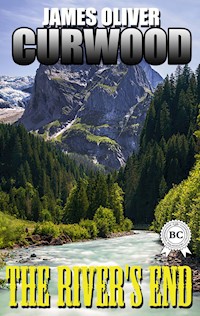



The River's End
Table of Contents
Introduction
At the heart of The River’s End lies a pursuit in which the hunter and the hunted are separated by little more than a mirror’s surface. James Oliver Curwood channels the stark, magnetic North into a crucible where identity is tested as severely as endurance. The novel invites readers onto frozen trails and along swift water, staging a chase that continually narrows the space between duty and compassion. Without crossing into revelation, it is enough to say that resemblance, chance, and choice converge to unsettle every certainty about who is owed justice and who deserves mercy. The result is suspenseful yet humane storytelling, sharpened by weather, distance, and silence.
First published in the 1910s, The River’s End belongs to the tradition of early twentieth‑century wilderness adventure, often called Northern fiction. Curwood, an American novelist noted for tales of the subarctic and Canadian forests, situates the action in the vast Northwest, where rivers, spruce, and scattered settlements define both map and mood. The story blends pursuit thriller, survival narrative, and restrained romance, aligning it with popular adventure while giving it a reflective core. Readers encounter not only the hardships of winter and trail, but also the institutional presence of the Royal Northwest Mounted Police, emblematic of order pressing into expanses of solitude.
At its outset, the novel follows an officer on a long pursuit of a wanted man through country where a wrong step can be as lethal as a bullet. The trails they cut overlap across forests, rivers, and remote posts, their movements shaped by storms, hunger, and the watchfulness of small communities. Complications arise not only from terrain and weather, but from an uncanny likeness that confuses witness and pursuer alike. Curwood builds tension through nearness: the echoing footprints, the campfire discovered cold, the knowledge that law is riding hard—and that the law’s target is human, capable of change.
Curwood’s narrative voice is clean and ardent, alternating between swift, clipped sequences of action and patient attention to light on snow, water in thaw, and the silent industry of the woods. The third‑person perspective keeps close to physical stakes while opening space for moral reflection, so that pursuit scenes carry the pressure of conscience as well as speed. Dialogue is succinct, often carrying the weight of decisions, and set pieces resolve with a craftsman’s timing. The overall tone is earnest and romantic, but never inert; it is animated by the elemental pull of distance, weather, and the will to endure.
From its central conceit of doubling, the book presses questions of who we become under pressure, and whether the roles society assigns—outlaw, officer, protector, quarry—can be transformed from within. Duty is treated as both a compass and a burden, set against the claims of empathy and the possibility of personal renewal. The landscape is not mere backdrop; it functions as a testing ground that disciplines impulse and clarifies character. The River’s End also weighs law against justice, asking how far restitution and forgiveness might travel on the same trail as retribution. Love, loyalty, and trust emerge cautiously, earned rather than bestowed.
Read today, the novel offers a window onto the era’s fascination with northern frontiers and with the Royal Northwest Mounted Police as an emblem of order. That fascination carries the simplifications of its time, including romanticized vistas and institutional confidence, yet it also invites close scrutiny of how myths about nation, wilderness, and policing are made. Contemporary readers may find in Curwood’s pages an opportunity to reflect on authority tempered by conscience, on how appearances shape judgment, and on our enduring desire to reconcile justice with mercy. The rhythms of travel by river and trail remain evocative in an age of speed.
As an entry point into Curwood’s body of work, The River’s End offers both the immediacy of a chase and the aftertaste of moral inquiry, a combination that allows it to speak across a century. Its economy of scene and clarity of stakes make it approachable, while its layered meditation on identity feels newly pertinent in a world of shifting roles and public scrutiny. Readers who value brisk storytelling will find momentum; readers who prize atmosphere will find light, wind, and river enough. Above all, the novel reminds us that character is forged where distance, danger, and choice intersect.
Synopsis
In The River’s End, James Oliver Curwood sets a relentless chase across the northern wilderness. A constable of the Royal Northwest Mounted Police follows a wanted man accused of murder, tracking him along lakes, forests, and frozen waterways toward the place the title evokes. The pursuit is not simply a contest of skill; the two men are startlingly alike in appearance, a fact that complicates purpose and perception. From the beginning, Curwood frames the chase as a test of law, endurance, and character, suggesting that the truth behind the crime, and the character of the pursued, may be more complex than rumor allows.
As trail and season turn, Curwood dwells on the rigors of survival that frame the conflict. The lawman’s methodical patience, the fugitive’s ingenuity, and the indifferent power of storms, hunger, and distance create a rhythm of pursuit that feels both procedural and primal. Each gains an unwilling respect for the other’s endurance. The Mounted Police code, with its emphasis on duty and restraint, gives the constable a steady compass, even as solitude urges self-reliance over strict procedure. The fugitive’s evasions never read as mere trickery; they open questions about motive and necessity that the wilderness, unsentimental and demanding, refuses to answer.
When the hunter and the hunted finally face one another, the encounter unfolds not as a single decisive clash but as a prolonged test of conscience. Circumstances of injury, exhaustion, and isolation force choices beyond the manual of arrest. The uncanny resemblance between the men magnifies every hesitation, turning recognition itself into a problem the law is ill prepared to solve. In close quarters, the constable’s oath and the fugitive’s will to live press against a quieter obligation to human decency. The contest becomes a conversation: about what a uniform means, what guilt might look like, and what mercy can risk.
As nights pass and trails shift, fragments of the past surface through recollection and rumor. The crime that set the chase in motion remains the axis, yet motives blur in the telling. Stories, reputations, and prior loyalties complicate the straightforward mandate to bring a prisoner in. Curwood uses these piecemeal revelations to keep the moral pressure taut without resolving it, placing the reader beside the constable in a landscape where evidence is provisional and delay can be fatal. The fugitive neither confesses nor neatly proclaims innocence; his guarded integrity invites judgment while withholding the decisive fact that could end debate.
Eventually the wilderness gives way to an outpost where cabins, trade, and the routines of a small settlement reassert social order. There, relationships complicate the pursuit more than terrain ever did. A young woman becomes central to choices that cannot be postponed, not as an ornament to the plot but as a measure of trust, responsibility, and the costs of silence. The men’s resemblance, plain in the civilized light, makes scrutiny from others an immediate danger and an opportunity. Authority presses for clarity. Personal feeling resists it. The result is a fragile equilibrium in which revelation promises safety and ruin at once.
As tensions gather, a final journey along northern waterways takes shape, literal and symbolic, pointing toward a terminus where decisions can no longer be deferred. Rivalries, weather, and long-held vows narrow the choices to those that define character rather than tactics. The constable must decide how to serve justice without betraying what he has learned; the pursued must weigh freedom against the truth he is prepared to speak. Love, friendship, and duty intersect at dangerous angles. Curwood drives the narrative with clean momentum, keeping the outcome uncertain while pressing the theme that identity is both given and chosen under extreme conditions.
The River’s End stands as a characteristic northern romance-adventure by James Oliver Curwood, prized for its spare setting, swift pace, and ethical preoccupations. Its enduring appeal lies in the entwined questions it raises about resemblance and responsibility, the reach of institutional law in remote places, and the human capacity to change without denying the past. Without disclosing the resolution, the novel closes the line of pursuit in a way that secures consequence while preserving compassion. Readers are left with the sense that the landscape, like the river, reveals character by attrition, and that justice, to be true, must look beyond appearances.
Historical Context
The River’s End (1919) unfolds across the northern forests and river systems of Canada during the early twentieth century, when the Royal Northwest Mounted Police (RNWMP) maintained far‑flung detachments in what are now northern Manitoba, Saskatchewan, Alberta, and the Northwest Territories. Towns were sparse, with mission stations and Hudson’s Bay Company trading posts acting as administrative and commercial hubs. Winter travel relied on dog teams; summer routes followed interconnected lakes and rivers by canoe or scow. The setting presumes a jurisdiction recently reshaped by the 1905 creation of Alberta and Saskatchewan and emphasizes how distance, climate, and limited communications tested law, livelihood, and character.
Founded in 1873 as the North-West Mounted Police to extend federal authority across the Prairies and the North, the force became the Royal Northwest Mounted Police in 1904 and merged into the Royal Canadian Mounted Police in 1920. Its duties included criminal investigations, patrols to remote communities, regulation of the liquor trade, customs enforcement in the Yukon, and mediation in disputes. Members undertook long winter patrols by dog sled, often over hundreds of miles, to deliver mail, check on settlements, and execute warrants. The novel’s pursuit narrative draws on this institutional reality and on the public image of incorruptible, disciplined service.
By the period depicted, the fur trade remained a vital northern economy, though no longer a near‑monopoly after the nineteenth‑century end of Hudson’s Bay Company’s privileged charter and the 1870 transfer of Rupert’s Land to Canada. Trading posts functioned as supply depots, courts of convenience, and points of contact among Indigenous trappers, Métis freighters, and Euro‑Canadian traders. Prices, credit, and seasonal rhythms shaped livelihoods, and disputes over debt or wildlife scarcity often drew police attention. The novel’s reliance on rivers, portages, and post‑to‑post travel reflects this commercial geography and the social world created by exchange, obligation, and the practical dependence on waterways.
In the years before extensive northern aviation and highways, mobility depended on muscle and seasonal advantages. Summer brigades used canoes, bateaux, or scows on systems such as the Athabasca and Mackenzie; winter movement turned to snowshoes and dog teams on packed trails. Telegraph and rail reached only to the southern margins of the boreal, leaving detachments to rely on couriers and scheduled patrols for news. Such isolation gave local officers considerable discretion while magnifying the consequences of error or delay. The novel leverages this logistical reality—distance measured in portages and sled‑days—to frame endurance, decision‑making, and the moral weight of authority far from courts.
Canadian nation‑building underpinned the institutions present in the story. Following Confederation in 1867 and the 1870 acquisition of Rupert’s Land, Canada pursued westward expansion through the Numbered Treaties (1871–1921), settlement, and infrastructure. The NWMP/RNWMP embodied federal presence, from quelling disturbances in 1885 to regulating the Klondike Gold Rush traffic in 1897–1899. Their reputation for non‑partisan order contrasted with sensationalized American frontier violence in popular imagination. The novel’s emphasis on duty carried out within clear chains of command reflects this state‑building ethos: law delivered by uniformed agents who were expected to be self‑reliant, restrained, and accountable across immense and culturally diverse territories.
Curwood wrote within a thriving “North‑Western” adventure market that flourished in the early twentieth century in North America and Britain. Readers sought wilderness romances featuring moral tests, arduous journeys, and stoic officers, as seen in contemporaries like Ralph Connor and Ridgwell Cullum. These narratives often fused crime pursuit with nature writing, foregrounding cold, hunger, and silence as dramatic forces. Magazine serialization and inexpensive reprints helped such works circulate widely. The River’s End participates in this trend, presenting the Mounted Police not merely as detectives but as figures whose authority rests on stamina, honor, and intimate knowledge of weather, trails, and communities.
James Oliver Curwood (1878–1927), an American from Michigan, made repeated expeditions to northern Canada and Alaska beginning in the first decade of the twentieth century, using field experience to ground his fiction’s settings, survival details, and police procedures. By the 1910s he increasingly advocated conservation, criticizing wasteful slaughter of wildlife and supporting game protection in Michigan. He later built the turreted “Curwood Castle” writing studio in Owosso (completed 1922). His northern novels, including The River’s End, reflect a turn toward respecting animals and landscapes while maintaining brisk plots, registering a broader Progressive Era concern with resource stewardship and outdoor recreation.
Published in 1919, the book arrived just as the RNWMP was about to merge with the Dominion Police to create the Royal Canadian Mounted Police (1920), symbolizing a centralized, professionalizing state. Wartime readers, recently acquainted with sacrifice and discipline, responded to stories of endurance and clarified duty. Early film adaptations in 1920 and 1930 attested to its wide appeal and to the Mounties’ cultural cachet. The River’s End mirrors its era’s confidence in lawful order asserted across remote spaces, yet it also favors restraint and personal conscience over spectacle, presenting the northern wilderness as both testing ground and moral counterweight to human ambition.




