


4,49 €
Mehr erfahren.
- Herausgeber: Ben Yehuda Press
- Kategorie: Poesie und Drama
- Serie: The Jewish Poetry Project
- Sprache: Englisch
“Shabbat arrives as usual,
dressed in silk
with her hair and make-up
beautifully arranged.”
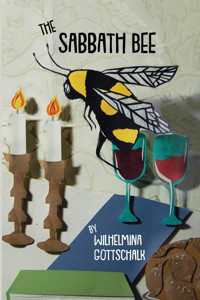
So begins The Sabbath Bee by Wilhelmina Gottschalk, which updates the millenia-old genre of Jewish Sabbath poetry for today's world.
“Torah, say our sages, has seventy faces. As these prose poems reveal, so too does Shabbat. Here we meet Shabbat as familiar housemate, as the child whose presence transforms a family (sometimes in ways that outsiders can’t understand), as a spreading tree, as an annoying friend who insists on being celebrated, as a child throwing water balloons, as a woman, as a man, as a bee, as the ocean… Through the lens of these deft, surprising, moving prose poems, all seventy of Shabbat’s faces shine.”
—Rachel Barenblat, author, The Velveteen Rabbi's Haggadah and Texts to the Holy
Das E-Book können Sie in Legimi-Apps oder einer beliebigen App lesen, die das folgende Format unterstützen:
Seitenzahl: 51
Veröffentlichungsjahr: 2024
Ähnliche








The Sabbath Bee
Love Songs to Shabbat
Wilhelmina Gottschalk
BenYehuda Press
Teaneck, New Jersey
The Sabbath Bee. Copyright ©2018 by Wilhelmina Gottschalk. All rights reserved. No part of this book may be used or reproduced in any manner whatsoever without written permission except in the case of brief quotations embodied in critical articles and reviews.
Published by Ben Yehuda Press
122 Ayers Court #1B
Teaneck, NJ 07666
http://www.BenYehudaPress.com
To subscribe to our monthly book club and support independent Jewish publishing, visit https://www.patreon.com/BenYehudaPress
Jewish Poetry Project #9
http://jpoetry.us
ISBN13: 978-1-934730-69-0 paper
978-1-963475-15-9 epub
Cover illustration by Katie Skau
18 19 20 / 5 4 3 2 1
*
This book made possible
through the generosity of Judy Heicklen
Dedicated to my husband
Rabbi Neil Schuman
Who brought poetry to my life of prose
*
Contents
Introduction
The Sabbath Bee
The day after Purim
Candle afterglow
Running over
Brought forth
The Muse-Shabbat smackdown
The first real day of spring: ימין ושמאל תפרוצי
Geode
Kneading
The Sabbath bee
No briefcase
Dancing shoes
Pet shop with allegory
Double manna
Big and small
Invisible royalty
Clubhouse
Blind date
Just be
Grandpa’s house
Creeping sunlight
Four somethings
Came for me
Blanket
Closets
To the Choirmaster: A solo for violin
Storm
The bride
Letter
The luckiest person
Water damage
Beads
Combat nurse
Not white
Nothing new
The sleepy guest
Becomes easy
Looked everywhere
Just cuddle
Time change
Guerilla performance art
Nights like this
Winter wonderland
Stopping by the bookstore on a snowy evening
Pockets of delight
Holiday guests
Winter white
Tropical paradise
The cover of night
Snowflakes
In a single word:בדיבור אחד
Fairy tale
On Shabbat
Pity date
Above the tablecloth
Sunday’s child
Cause and effect
The Sabbath tree
Haiku
Lifeblood
Hiddur mitzvah
Flower bride
Exact timing
Macaroni necklace
Pomegranate
Wardrobe choice
Quiet spaces
The art of a perfect sunset
A song for Shabbat
Road ends
Reluctant Shabbat
Stayed the night
Memory lane
Weekday ruins
Too far
Havdalah
Water balloons
Introduction
The earliest glimmers of The Sabbath Bee came into being shortly after the holidays in 2007, on Shabbat Noach. I later dubbed the day Shabbat Normal because it was our first return to the regular weekly rhythm after a month of joyful, soul-searching, thought-provoking and sometimes uncomfortable holiday upsets.
The timing is significant because, due to that year’s series of three-day holidays and Yom Kippur’s invasion of Shabbat, we had gone for a solid month without offering a single welcoming party for the Sabbath bride. It was as if she had come in quietly through the service entrance week after week, ceding her position to the visiting dignitaries of the month of Tishrei.
I didn’t realize how much I had missed her grand entry until the evening of Shabbat Normal, when we began to sing. Though I cannot be certain that the collective spirit in the room was higher than usual on that night, I felt that everyone around me was just as enthusiastic as I was about finally bringing Shabbat back to her place of honor. We welcomed the Sabbath bride not like a weekly visitor but as a long-awaited, yearned-for beloved.
During L’kah Dodi, as we sang about the arrival of Shabbat in the words of Judaism’s mystic tradition, I felt that Shabbat herself was sharing our eagerness for a true reunion. Excitement drummed through me while voices thundered similar sentiments and words of welcome from all sides. The whole community seemed to be saying, person by person, “Finally, it can be just me and you again—with no distractions.” When we turned to the door to greet Shabbat, she entered as if on New Year’s Eve—with champagne, confetti and a breath-hitching kiss.
That evening’s reunion gave me a more intimate appreciation of Shabbat than any that I had experienced before, demonstrating what the Kabbalists meant by “the bride” and “the queen.”
Without meaning to at first, I began to image Shabbat in various guises, making a unique entrance every week. I kept these images to myself for about half a year, until a bleary-eyed post-Purim Shabbat demanded that I share it. The positive responses I received led me to begin recording the outcomes of my encounters with Shabbat week by week.
The Sabbath Bee is the outcome of this experience, of a game that I play with Shabbat. It is midrash—a living reinterpretation, a story designed to bring new ideas into an ancient institution and apply fresh understandings to a heavily examined religious structure.
For those familiar with the mystical side of Judaism or the Friday night liturgy, there’s nothing unusual about referring to Shabbat as a bride or queen. The white dress and the crown require a sizeable mental leap, since in our everyday comparisons of this-to-that, we rarely go so far as to compare days to people. I would probably get weird reactions if I tried telling a friend that he was like a breath of Thursday, and most personifications of days of the week invariably end with clichéd images—Monday with his briefcase, Sunday reading the paper during a leisurely breakfast.
In Shabbat’s case, the talk of brides and queens is all about big, transcendent emotional connections. Shabbat demands certain behaviors, and the Jewish people scramble to obey these commands. We are married to Shabbat because we’ve sworn an oath of loyalty to this day—with all of the grandeur and restrictions that a lifelong contract should entail. Every week is an opportunity to prepare a celebratory feast, to await sunset with the joy and jumping-up-and-down excitement of a groom about to meet his bride.
However, images of brides and queens can only tell some of the story. Some facts that are true of Shabbat are not true of a bride. There are times when Shabbat might be more like a visiting uncle than a queen. And for that matter, as a citizen of a representative democracy, how should I feel about royalty? By calling Shabbat a queen, am I saying that it is respected, powerful and compassionate or am I calling it an impotent a symbol of an outdated system?




