


9,99 €
Mehr erfahren.
- Herausgeber: Titan Books
- Kategorie: Fantasy und Science-Fiction
- Sprache: Englisch
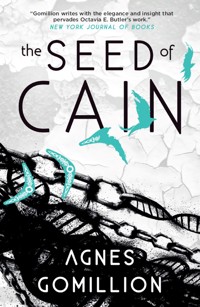
Return to the startlingly original dystopian world of The Record Keeper in this stunning sequel. For readers of Octavia Butler, Kim Stanley Robinson, Nnedi Okorafor and Tade Thompson comes this Afrofuturist tour de force. General Arika Cobane, beloved leader of the worker rebellion, makes a bold—but illegal—move to ensure the people's freedom. When her scheme fails and her co-conspirator hangs for treason, Arika—overworked and overwrought—blacks out. When she awakens, everything has changed. She's been stripped of her rank and power and the new leader of the Kongo, Kira Swan, is a charismatic traitor bent on consigning the Kongo under the guise of peace. Desperate, Arika reunites with Hosea Kahn and seeks treatment for her blackouts at the Compound, deep in the deadly Obi Forest. Arika is determined to regain her influence, stop Kira Swan, and continue leading the Kongo to freedom, but time is running out and she's still unwell. Control is slipping from her fingers. When a new source of strength presents itself, an ancient authority reserved for the One destined to save the Kongo, Arika gives up everything, including Hosea Khan, to grasp the power, but—all alone, and sick and tired—can she muster the will to hold it?
Das E-Book können Sie in Legimi-Apps oder einer beliebigen App lesen, die das folgende Format unterstützen:
Veröffentlichungsjahr: 2022
Ähnliche









TABLE OF CONTENTS
Cover
Also by Agnes Gomillion and Available From Titan Books
Title Page
Leave us a Review
Copyright
Dedication
Part Four: The Arena
The Raid of Cobane
The Library
The Berserker
The Fugitive
The Veil
Part Five: The Obi Forest
The Compound
The Brother, Lee
The Other Lab
The Bracelet
The Library West
The Eagle
The Director
The Widow’s Portion
The Third Amygdala
The Lift
The English
The Report
The Market
The Rock, the River and the Vine
The Filter
The Binder
The Workout
Part Six: The New Metropolis
The Court Transcripts
The Third Witness
The Verdict
The Cake
The Cuff
The McCormick
The Cistern
The Variant
The Climb
The Road to Cobane
The City
The Second Vehicle
The Ax in the Back
The Nuclear Vote
The Runaway
The Push to Hasting
The Truth About Obi
The Truth About Kira Swan
The Bridge
Part Seven: The Cottage
The Woman, the Maid and the Lark
The Saviors
The Next Seven Days
The Garden
The Story
The Answer
The Record Keeper
The Optimist
The Coming
The Wekas
The Watchtower
The Ascension
Epilogue
ALSO BY AGNES GOMILLION
AND AVAILABLE FROM TITAN BOOKS
The Record Keeper
LEAVE US A REVIEW
We hope you enjoy this book – if you did we would really appreciate it if you can write a short review. Your ratings really make a difference for the authors, helping the books you love reach more people.
You can rate this book, or leave a short review here:
Amazon.com,
Amazon.co.uk,
Goodreads,
Barnes & Noble,
Waterstones,
or your preferred retailer.
The Seed of Cain
Print edition ISBN: 9781789091182
E-book edition ISBN: 9781789091199
Published by Titan Books
A division of Titan Publishing Group Ltd
144 Southwark Street, London SE1 0UP
www.titanbooks.com
First edition: June 2022
10 9 8 7 6 5 4 3 2 1
This is a work of fiction. Names, places and incidents are either products of the author’s imagination or used fictitiously. Any resemblance to actual persons, living or dead (except for satirical purposes), is entirely coincidental.
© 2022 Agnes Gomillion
No part of this publication may be reproduced, stored in a retrieval system, or transmitted, in any form or by any means without the prior written permission of the publisher, nor be otherwise circulated in any form of binding or cover other than that in which it is published and without a similar condition being imposed on the subsequent purchaser.
A CIP catalogue record for this title is available from the British Library.
For Black women and girls,namely the Queen Mother, Connie
THE RAID OF COBANE
We came like a tide. All at once, at night. A surge of swinging sickles. The English diplomats, at first, resisted. They didn’t understand what had changed and, perhaps, neither did we. But the drums knew. The hollow horns we filled with beans and tied to our feet that hissed as we waged like locusts accosting the foliage. They knew. And so, we came. Swinging the sickle, swinging the sickle. Slaughtering anything that stood. And when the English understood that nothing would be left standing—and that that was the point—not to win, but to reckon—they ran. And, still, we came. Sweeping. Shrieking. Swinging the sickle.
On day ninety-six we shattered their defense, scattering the Kongo Guard. And the diplomats, with a handful of their army, fled to Hasting where they applied to the American Assembly for aid.
We are under siege.
Out of resources.
Please advise!
Each missive went unanswered. Later we learned that, during this time, America was on its knees. A tribe of female activists, the Sisters to the North, led riots in every major northern city. They aggravated the food shortage that already plagued the Northridge, so famine spread, killing thousands. The chaos depleted national resources, forcing the Assembly to abandon the southern diplomats.
Dana Kumar, their leader, forsook them too. Before the fighting started, he vacated his commission, fleeing north to a base in the Obi Forest, which was rumored to be impenetrable. Behind, he left a stockpile at the Kongo Technology Center, and the worker militia, with me at the helm, seized it. Armor, communication equipment, medicine and, notably, ten thousand Double Helix swords.
And so, in a twist of fate, the old southern masters were left to the grace of those they’d abused for years. We treated them fairly, ending the siege and allowing food and water. They could stay, interned at Hasting, with the understanding that the rest of the Kongo was ours.
They accepted our generosity then plagued us at every turn. They stalled peace negotiations for weeks, then months, obstructing a final agreement. When we held truth talks, to account for our suffering, they registered counter-complaints and made demands. At great length, they issued a public apology. But their guilt, once acknowledged, became insufferable. It manifested in fevered religiosity that, strangely, made them less generous. And more paranoid.
They dug a moat around Hasting and filled it with salt and water. They sealed every entrance and built a drawbridge with massive ropes wound on a giant spool. They installed turrets on every side and kept watch, day and night.
In arrogant English style, they made way for these improvements by destroying what they didn’t understand. Countless treasures and 200 years of Black history, gone in a month. The library, and the stories of the people inside, were put to fire. Only Obi’s mausoleum, a clay watchtower, mysteriously resisted the flame. Though they burned it seven times, six times it refused to light. In their last attempt, they doused it in accelerant, so the fire raged—gold—with gilded smoke. And still the watchtower, in defiance of physical laws, remained. A ten-story pillar, with a domed cap, against the Kongo sky. Seeing it, the diplomats’ terror compounded. They huddled together, murmuring.
Sorcery.
Devils, magic.
Judgement?
They kept a distance from the flames and prayed the rosary. For twenty-four days the watchtower burned, like a beacon for the Kongo people, a symbol of the bright dawn of democracy.
Hailing it, the people formed a line that spiraled around the voting polls and swirled into the countryside for miles. As they waited, the electors clutched talismans, clay towers speckled with gold to represent the flames. And as they cast their votes, a black stone for General Cobane, white for Senator Osprey, brown for the Rebel Voltaire—they felt the watchtower looking over them, like a sentry.
We established a council of nine with one head—Hosea Khan, the Kha. They elected him over his objection and despite his absence from the battlefield. During the fight, he founded a clinic, tending the wounded and healing the fever that plagued the Kongo before the rebellion. His image was suffused in lore, which he ignored.
After the war, he closed his clinic and abandoned his Council seat. He camped on unclaimed land and passed his time studying earth science. When we held an election to fill his seat, the people refused to replace him. They rebuffed the other candidates and wrote in his name on their ballots. After that, the Council carried on; one vote short on every matter, and with me as the uncrowned head.
I performed the role with zeal. Drawing on my study of world history, and my dream of a Black utopia, I saw to the ratification of sweeping legislation. Marriage and probate, trade and free speech, farming and land-use law. No aspect of Kongo life was beneath my concern. And because of the Kongo’s faith in me, and in my love for them, I had free rein—in the early days.
* * *
I don’t know which came first—my public decline, or my personal. But the fall began in the Schoolhouse. It was there that I, at seven, discovered shame. And there again, in the anemic light of the Schoolhouse library, I discovered my grail: the incriminating photo of Obi Solomon dressed in English clothing before the end of the Last War.
Obi was my political forefather, my only counterpart, the people’s first general. That he, after leading them to victory in the Last War, would precipitate their demise was incredible to me. What had happened?
The question consumed me. In the days before the rebellion, the people shared my obsession. The photograph circulated as White-Face soldiers, Rebels, Keepers and Workers alike analyzed the roots of our oppression.
Obi, his motives and limitations were the subject of debates and rambling pamphlets, all ending inconclusively, since the reasons behind Obi’s betrayal remained a mystery. Months of research from every camp produced only more questions as, perplexingly, none of Obi’s writings—not a single letter or note—had survived.
Following our victory, I sought to revive the discussion. I demanded entry to the library at Hasting to scour the records there. But, as the Kongo bathed in the prospect of a prosperous future, the nuances of history became unimportant to the people.
Nevertheless, I agitated the matter, relentlessly. No truth, no peace. I proposed to reinstate the siege until the diplomats allowed us access to our history. We would know it, or repeat it, I warned again and again—until, eventually, the Kongo splintered.
The military proved loyal to me, ready to follow my command. The business sector, with an eye on their purses, balked at the thought of another war. Tension mounted, but the fight never came to a head. When the diplomats burned the library, it ended—superficially.
In truth, nothing was settled. The mystery surrounding Obi’s treachery remained with us, towering like the tomb guarding his remains. The stories, and the rumors surrounding them, were a slick of oil that, eventually, separated me from my people. Their faith slipped a fraction, then another. And their doubt planted fear deep inside me, so an old shame festered.
Months later, word came: Nicky McCormick, the leader of the Sisters to the North, was detained. Her disciples were scattered and the northern skirmish was winding down. America was, once again, standing. Soon, it would turn its attention south.
The news revived the diplomats at Hasting. They set aside their prayer beads, lowered the drawbridge and dispatched their final offer—the Accord.
Preamble—
A new world re-union, if you will. A revival of the old American way. Open borders, equal opportunity, meritocracy and, above all, peace. A tri-territory, voluntary surrender of arms.
On the day their ultimatum arrived, the Kongo Council held a public debate—would we allow America to confiscate our weaponry, as the Accord required? Or take up the sword and solidify our secession from the union?
For hours, I urged the people to reject the Accord outright. “We must fight!” I said. “The so-called ‘Accord’ is nothing less than old bondage in new clothing—a neo-captivity. Stand up with the Kongo militia and me, your general. No compromise, no Accord!”
Looking back, it’s clear I was terrified. Rejoining the American union without our Helix swords was, to me, the height of naïveté. I was determined to see the Council reject the measure, no matter the personal cost. And, in the end, dear reader, it cost everything—including my life.
The page you are reading—whoever you are—is not the first page of this journal. The first ten sheets are crumpled around me like failures, discarded after one line.
It seems the first line of a story is most important. The teller’s whole soul. The crux from which everything flows. I know the first line here. And, for months, I’ve wrestled with it, knowing too its trajectory. The story it tells is the arc of a grave mistake. And all along the bend is rage and hope. Tears that demand justification or, at least, a destination. And there isn’t one. In the end, there is only the bend of another story, sad but true. And good—if your faith allows. So, you ask me, would I have left the arena that night had I known the toll?
I would.
THE LIBRARY
The arena door slid closed behind me. I kept my head low and walked, forcing a casual pace. In a secluded alcove off the corridor, I flipped open my comm-unit.
“Jetson, are you there?” I said. “It’s time.”
A holograph of Jetson, clad in sleek black leggings, appeared, floating above my palm. He was in the Schoolhouse, two miles south of the newly constructed arena.
His deep voice clipped in my earpiece. “Arika, I didn’t expect a call. I—oh—hey, are you okay?” he said, his gaze narrowed on my face. “You look ill.”
I ignored his concern. “Are you in her room?”
“I’m down the hall,” he said. “When you didn’t message, I left. I thought—well, I hoped—you’d called it off.”
I stiffened at the sound of footsteps; someone was rounding the hall towards me. I hid Jetson’s visual in my cupped hand and continued down the corridor that skirted the arena floor, staying just out of sight.
When the steps faded, I bent my head to my palm. “I’m late because the debate ran long,” I whispered. “Kira Swan took an extra twenty minutes, and no one stopped her! Cowards, all of them!”
“Well, how did it go?” he asked. “Do we still need this?” His moss-green eyes darted to the bag he held which, I knew, contained the equipment to break into Kira Swan’s safe and photograph its contents.
“Oh, Jetson, yes,” I said. “We need it now more than ever.”
“Dammit, Arika!”
I held up my empty palm, stifling his outburst. “Blame Kira!” I hissed. “She used the extra time to demand a formal inquiry into Jones’s injury.”
Jetson gaped. My fight with Jones in the testing room had dogged me for months, but this was an ominous turn. My vengeance, while morally gratifying, was legally questionable, since Jones had been unconscious and disarmed when I’d taken her eye. The diplomats continually pressured the Council to charge me with attempted murder. Now Kira Swan, my political rival, had taken their side.
“Surely the Council denied her!” Jetson said. He sounded afraid.
“They didn’t deny her,” I said. “They didn’t even deliberate. They approved her motion unanimously.”
“Even Osprey?”
I swallowed. Osprey’s vote had hurt most. In the Schoolhouse, when I’d watched her stand up to Jones, she’d become my idol. Then, during the rebellion, she was the first to read the tenor of the moment. She’d joined the Rebels, and after the fight, floated to the top of society with unmatched savvy. She represented the height of political acumen and the fact that she’d taken Kira’s side meant she sensed I was no longer favored to win the Accord vote.
“Osprey’s an opportunist. I’ll win her back,” I said. “Only now, I’m on probation while they investigate. After my closing argument, I’m to clear my docket while they choose an inquisitor.”
“Slow down,” Jetson said. “An inquiry isn’t an indictment.”
“It’s close enough,” I said. “This mission is more than politics now. I need to get into that safe.”
Jetson hesitated, but he knew I was right. “She is attacking you, and we know she’s hiding something,” he said, acknowledging why I’d designed the mission in the first place. A maid that fancied Jetson had stumbled upon a safe in a false bottom of Kira’s wardrobe last week. The maid gave him the tip, which he’d passed on to me. I despised intrigue, but Kira’s scheme had left me no choice. If she had a shameful secret, I would exploit it, just as she’d exploited mine. I had to outmaneuver her or lose control of the Council.
“So, you’ll do it,” I prodded.
Inside the arena, Senator Osprey, the debate moderator, slammed her gavel, initiating the closing arguments.
Jetson ran a hand over his low-cut hair. “I’ll do it,” he said.
Gratified, I gave him a reassuring nod and closed my palm on his image.
I circled my finger in the air, raising the volume on my earpiece. “Jetson?” I asked, speaking under my breath.
“Copy,” he said.
I moved to the closest entrance to the arena floor. “And the image?” With a flick of my wrist, I turned the scope.
“Crystal clear, General,” Jetson said. “The stadium is packed. You’re through the double doors now. Walking to the platform, towards Osprey, and there’s Swan at the high table, left of center.”
My skirted robe swept behind me as I crossed the stadium, mentally thumbing through my argument. Kira advanced her position brilliantly, framing the Accord, and the confiscation of arms, as a path to prosperity. She’d won the business sector, handily. Wooing them with a temperate tone and smile that never wavered, even as she decimated my character. I had command of the militia; they’d follow me, even against the Council. But everything in me resisted that path. The people together was the strongest sword. I wouldn’t stop until they united behind me.
I mounted the stage steps as Osprey outlined the structure of the closing arguments. “General Cobane will speak first,” she said, “followed by Senator Swan. Agreed?”
I lifted my chin and rested one hand at the small of my back, where I holstered my Apex. I nodded, acknowledging the rules.
Osprey looked to the high table. “And you, Swan? You agree to adhere?”
“I will,” Kira said, softly.
The audience roared their approval. As Osprey backed away, giving me the podium, my supporters chanted their devotion.
Ber-seeer-ker, Ber-seeer-ker. Berserker—it was the name the soldiers gave me on account of my battle style. Ber-seeer-ker, Ber-seeer-ker.
I acknowledged their praise but, as I stepped forward, weakness buckled my knees and I grabbed the podium. I hated to admit it, but Jetson’s observation had been on point. I didn’t just look ill, I felt it. Insomnia and bouts of vertigo plagued me. More, my memory—sharp from birth—was failing. Last week, I accepted a medal of valor for my leadership in the Raid of Cobane, the first battle of the rebellion. They said I fought on the frontline for forty-two hours, earning the name ‘Berserker.’ At the award ceremony, I nodded along as soldiers recounted the battle. But, during my acceptance speech, I realized I couldn’t remember details of the Raid or the war, just vague impressions and, at times, disturbing echoes—
Find them! Find their hiding places and leave nothing alive. Advance!
A chair screeched against the floor as Osprey resumed her seat at the high table. The cheers from the tiered seating lulled. It was time. Setting my jaw, I punched down the weakness billowing inside me. I took a breath and mentally started the mission clock.
“People of the Kongo,” I said. “We have a grave decision before us.”
Through my earpiece, Jetson narrated his progress. “I’m in her room,” he said. “Moving towards the wardrobe.”
I went on. “If we accept the diplomats’ Accord, dark people will no longer control the Kongo. If we reject it, we will remain at war with America. Many of you have seen battle, and so have I. I have the scars to prove it.” I untied my crimson Council robe and let the wide neck slide down my shoulders. Half-inch haute ink tattoos lined my naked back. In the evening light of the arena, they glowed like matchsticks.
“I bear five hundred and twelve marks,” I said. “One for each person who died in the first battle.” I held the drape of the embroidered robe to my chest and turned a circle. The soldiers in the auditorium followed my lead, recalling the fallen. Howling, they ripped their shirts to display neck-to-waist haute tattoos. They lifted their faces, showing off florescent designs the breadth of the neon rainbow.
In my ear, Jetson buzzed. “I’ve removed the false bottom of the wardrobe. Initiating radio silence in three, two, one.” A scuff sounded in my ear as Jetson removed his earpiece to work the dial of the safe.
I gripped the podium as sweat beaded on my back. The safe would lock for an hour if we entered the wrong combination. We had one shot to get it right.
“There’s only one path forward,” I said, launching the next segment of my speech. “We’ve got to—”
Jetson cursed. I jerked and my earpiece slid sideways. I worked to maintain my composure before the crowd. “We—We’ve got to—”
From my dislodged earpiece, Jetson shouted, “Arika, there’s a time stamp. She’s been alerted.”
“We—uh,” I stuttered.
At the head table Kira Swan frowned as the alert came to her comm-unit. She rose.
“Stall her!” Jetson said.
Panicked, I shouted, “Senator Swan!”
Kira froze beside her chair. She had her comm-unit displayed in her hand. Her face tense, she scanned her palm for information. Every head in the arena swiveled her way, then back to me. Kira looked up and glared at me as if I’d lost my mind.
“Senator, you—can’t leave,” I said, improvising.
Osprey sat taller. Her hair, in bonsai style, was shaped like a bird in flight. It lifted from her head, adding clout to her already prominent stature. “General,” she said. “Explain yourself.”
My mind raced. “It’s Senator Swan’s turn,” I said. Moisture pooled at my temples and my headdress, a horned antelope skull, slipped on my ears. I removed it, resting it on the podium, and hedged on. “We’ve been here all day; the Council needs rest,” I said. “So, I’ve decided to relinquish my time.”
Senator Osprey studied me, her glare calculating. “We are running late,” she said. Other Council members nodded. “Okay, General, you’ll finish this one remaining minute.”
Kira Swan’s gaze narrowed on me. Her expression darkened as she determined I was responsible for invading her privacy. Her eye skirted the room, looking for a way out.
“Senator Swan?” Osprey said, expectantly. “You’re up next. Please take your seat.”
Trapped, Swan swallowed. She was still young, only ten years my senior, but her deep bosom and thick waist aged her. With a sweet smile that, for some reason, looked wrong on her broad-chinned, thin-lipped face, she sat.
Filtering through my remaining speech, I picked the most important line. “The first lesson they taught us,” I said, “was assimilation for the greater good. Brothers and sisters, Councilors, after years of appeasement, it’s time to demand our terms on our land. We will not assimilate! No compromise—”
“No Accord!” the crowd shouted.
I performed the workers’ salute, crossing a hand over my heart and lifting it to form a fist, elbow bent, in the air. The room roared to life, joining the cheers of Kongos who watched the debate via live holograph around the territory.
“Council,” I said, over the noise, “I concede the remainder of my time to Senator Swan.”
I descended the stage and readied to leave the arena. With my pack on my back, I turned at the exit door to look at the stage.
Kira stood at the podium, her jet-black eyes wide with false humility. As she waved, absorbing the shouts of her constituency, I was struck with a moment of clarity. I envisioned the whites of her eyes liquifying. They bled down over her face—erasing dark skin to reveal the pallor beneath. Kongo in flesh, but white at the root.
With a burst of adrenaline, I jogged from the arena floor. In a twist, Kira’s inquiry had provided an opportunity. Clearing the docket I kept at my bench in the Schoolhouse was just the excuse I needed to leave early and fix whatever had gone wrong with the mission. As soon as it was safe, I spoke.
“Jetson, are you out?” I said. “Are you in the study room?”
He didn’t respond.
I checked to see that the call was still connected. “Jetson?” I said, securing my earpiece.
“I’m here,” he said, finally. He sounded faint.
Alarmed, I pulled up his image. He wasn’t in the library as we’d planned. He was in his quarters, a Council-issued space in the renovated Schoolhouse. He sat on his unmade bed, looking sick. “What is it?” I asked. I flipped the scope, showing him my face.
His throat pulsed. “The contents of the safe,” he said. “There wasn’t just one thing to photograph.”
“Okay?” I slowed to a walk.
He went on. “There was a folder of papers. I didn’t know what was important. And it was dark so—”
My heart sank. “You didn’t get photos.”
“No,” he said, quickly. “I took the folder.”
I tripped, caught myself. “Obi.”
He swallowed. “If I hurry, I can put it back. Yes, that’s what I’ll do.” He stood.
“Are you mad?” I hissed. “You can’t go back to her room. She’ll send someone there to check the breach.”
“You have to stop her,” Jetson said, his face grey.
I shook my head. “Impossible. You saw the look she gave me. She knows I’m involved. And with the time stamp, she’ll know someone helped me.”
Our eyes locked. Everyone knew he cared for me still. He was the first person she’d suspect.
“We have to destroy the evidence,” Jetson said, a thick folder in his hand. He carried it to his fireplace.
I bit my lip as he bent to light the hearth. He removed a long match and flicked his wrist. A flame puffed to life. As it wobbled toward the folder in slow motion, a handful of facts coalesced.
I’d spent months searching for a crack in Kira’s perfect image, but the details of her life remained obscure. She graduated from the Schoolhouse, but her records were redacted, something only the headmistress—Jones, at the time—could have approved. She had no verifiable house, heritage or name. And yet, as valedictorian, she received a recommendation, again, from Headmistress Jones. All that was damning enough, and now, this last piece—her demand for an inquiry. Everything pointed to Jones.
“Wait!” I said.
Jetson hesitated.
I bit my lip, wanting to give the order to put out the light, but needing to be sure. “Is that what you’re hiding, Swan? Are you Teacher’s pet?” I whispered.
“What’s that?” Jetson asked.
“Put out the light,” I said, finally.
Jetson complied as I spoke slowly, tracing the logic.
“Jones favored Kira Swan. We know that from her records. Jones’s recommendation buoyed Kira to the top of the Kongo political scene. In the Council election, only Hosea Khan and I earned more votes.”
Jetson frowned. “What are you getting at?”
I leaned forward, gaining conviction. “Attacking me, backing the Accord,” I said. “What if she’s returning Jones’s favor?” Jones had been silent for months, lying low at Hasting, and now I knew why. Kira Swan was doing the work for her. My mind narrowed on the memory of Kira’s face when she realized I’d opened her safe. She’d been terrified. “There’s something in those papers,” I said. “Something big. If it proves Kira is working for the North, it won’t matter how we found it.”
“But, if you’re wrong, we’ll be charged with treason,” Jetson said. He lit another match.
I stared into its glow. He was right. The Council demanded impeccable fealty. We were always on the lookout for the next Obi Solomon, the next leader who would betray the Kongo. Most suspected Voltaire, who disappeared a week ago after months of odd behavior. But now, I felt sure Kira Swan was not just a traitor; she was eerily similar to thetraitor—Obi Solomon.
I mentally counted the parallels: both charismatic leaders with obscure records. Both ostensibly seeking peace. Both intent on surrendering arms and trusting the English.
“History is repeating,” I said.
My gaze lifted to Jetson’s. I didn’t issue an order; I didn’t have to. He extinguished the second flame.
“Start reading. I’m on my way,” I said. I tapped my ear, disconnecting the call.
The grounds people who conducted traffic at the arena met me at the exit door. “General!”
I nodded curtly. They held the crowd of local spectators at bay as I passed through and mounted the ramp to the newly installed crystalrail station.
With the debate in progress, the station was mostly deserted. I passed a handful of people waiting for the rail and ducked into the bathhouse. Inside, I entered a stall and changed my clothes, rolling my cloak into a ball and stuffing it into my pack. Outside of the stall, I splashed water on my face and huffed, revving the dredges of my adrenaline stores. I dried my face and glanced at the time. Kira was allotted twenty minutes to close her argument. She would cut herself short and follow me, but the audience would be dismissed at the same time. The crowd would clog the rail which, in regular traffic, curved lazily around the city on its way to the Schoolhouse. We had forty-five minutes, at least, to complete the mission.
I moved to the only window in the bathhouse. With a grunt, I jumped for the wide ledge, and pulled myself up to look out at the early evening. Below and to my right were the golden gates of the first Kongo metropolis—City One. They’d built the newer additions around the old Cobane village, and the result was a hodgepodge—juts of modernity imposed on the old, familiar ways. Out past the city skyline was the steepled center of my destination, the Schoolhouse. The most direct route was an overgrown trail I knew from my days as a student. It was the path we’d used to sneak to the village.
Minutes later, I hugged the limits of the secluded path, ducking in the tall grass, like a thief. My heavy pack and a creeping dizziness slowed me down, but I got into a steady rhythm, keeping aware of my surroundings.
I came to a familiar stretch and, out of habit, I squinted to my right. Past the overgrown pasture that buttressed the foot trail was a fenced-in hill of metallic waste. And, beyond that, just visible in the fading daylight, was Hosea Khan’s camp. I could see the front flap of his tent was open. I craned my neck, hoping to catch a glimpse of him, but I didn’t slow down. The north gate of the Schoolhouse was just ahead.
Breathing heavily, I slipped through the entrance to the green lawn of the sparsely populated yard. I slowed to ensure I wasn’t detected as I moved, flitting between fountains, pieces of art and manicured bushes. My aim was a library window that I knew had a faulty latch. The pane was in sight when a woman, talking on a comm-unit, came into view. I ducked into a shadow.
When she passed, I darted into the open to crouch at the window. I looked back to check that I hadn’t been followed. I scanned left and right, then my eye caught on a statue across the way, and I froze.
The statue was new to the yard. It must have been placed overnight. Seven feet tall and wrought of solid lava rock, it depicted a warrior and mount in battle. When I saw the warrior’s face, I rose from my crouched position. I didn’t think of the woman who’d passed or whether another was coming. I’d forgotten the mission entirely. Unblinking, I crossed back over the walkway, as stiff as a statue myself.
I stopped at the base and gazed up at the face, trying to make sense of it. As I stared, a foghorn sounded in the distance and the twilight darkened around me, as if some heavenly creature had closed a curtain on the moon. I looked up through the veil to the stars and the foghorn sounded again, closer—louder. It startled me, but, when I tried to move—Icouldn’t.
Come quick, a soft voice said. She needs you.
* * *
My body jerked back to life. I gasped and blinked, checking the time. Fifteen minutes had passed. I was in the Schoolhouse yard on my back. When had I fallen? How? I bent my elbows and rolled my neck, assuring myself that I could, indeed, move. The terrifying rigidity was gone.
However, the sound of that soft voice haunted me still—Come quick. I winced. Behind my lids, I could still see her eyes, the color and shape of whole almonds. They belonged to the little kitchen maid who’d brought the news of Robin’s illness and, later, of her death.
Footsteps sounded to my right, and I jolted, recalling the mission. The steps were coming closer. I scrambled to my hands and knees and launched myself over the path to the window. I opened the left pane and climbed inside just in time.
I leaned back against the wall to regroup. Placing a hand on my spinning head, I tentatively closed my eyes. They flew open again. The maid and the warrior were still there, in the dark—lurking. I pushed from the wall and hurried into the stacks.
* * *
I found Jetson in a private study room. He stood on a chair with an instant print solar-pixel camera in his hand. Documents, some tattered and yellow with age, were spread across the study table below him.
“Arika!” he said, looking down at me. “Where have you been?”
“I—I’m sorry.I—”
“Close the door!”
I closed the door and then stared up at him. His bright complexion demanded an answer—Wherehad I been?
I opened my mouth to speak but no words came out. There was no explanation for what had happened at the statue. Fifteen precious minutes had passed without my knowledge. I closed my eyes, willing the world to stop spinning.
Jetson’s face softened. “Well, you’re here now,” he said. He adjusted the lens of his camera and gestured to the table of documents. “We’ll take condensed pictures and destroy the originals,” he explained. “The pictures will be easier to hide.”
“Good thinking,” I said, softly.
Jetson eyed me. “You should sit down.” He nodded to a chair pulled away from the table. On the seat were two photographs and a small sheet of paper.
Feeling shaky, I sat on the ground by the chair and picked up the paper. “Department of Vital Records,” I read.
“It’s Kira’s birth certificate,” Jetson said. “Rare in the south, I thought. And the pertinent information is redacted. I set it aside to examine.”
I checked the time. “Anything else? Anything about Jones? We need more, now.” If my estimation was correct, Kira Swan was on her way back to the Schoolhouse.
“There’s nothing incriminating,” Jetson said. “It’s memorabilia. Pictures, handwritten letters, newspaper clippings.” He snapped an image of the table. “The prints are tiny, but we can magnify them later. Ten snapshots should do it.” The print slid from the camera. “Nine down,” he said.
He jumped down, placed the print with the other aerial photos on the chair and moved back to the table. “How will we destroy the originals?” he asked, angling the camera over a new layer of papers.
“Purnell’s office sits above the old furnace. We can burn it all there,” I said.
Jetson nodded. As he snapped a picture, a photo fluttered from the table. I picked it up and froze. The woman pictured was familiar.
She was English. Her white-blonde hair was slicked back in a style that reminded me of the Teachers at the Schoolhouse. She posed with her left shoulder turned out. Her blue eyes focused over the photographer’s head.
“Who is this woman?” I asked. My spine tingled as I got to my feet, holding the picture up for Jetson’s inspection.
“No clue,” he said. Moving quickly, he packed up the contraband and secured the bag against his chest. “Let’s move.”
I collected the aerial photos and slipped them into my breast pocket with the picture of the woman.
We moved through rows of bookshelves on our way to Purnell’s office. As we reached the newly renovated wing of the library, my Apex buzzed, and a chill of premonition grazed my neck. I stopped behind a stack of books and reached for Jetson’s shoulder—too late. He stepped into the open.
Kira Swan saw him immediately. “Captain!” she said.
Through the space between the books and the top of the shelf, I saw Jetson jerk to a halt.
“Where is she?” Swan growled. She stood as tall and broad as the armed men flanking her. Her thick bonsai rose like a crown and her laid edges blended into the black skin of her forehead. A thin gold chain hung between her regal brows.
She looked down on Jetson as she reached out a meaty fist and lifted the bag of contraband over his stiff neck. She confirmed its contents. “These came from my private safe. The safe of an elected Kongo official,” she said. “And we thought the traitor would come from the Council.”
I watched as Jetson squared his shoulders and set his jaw.
“Where is General Cobane? She’s wanted for questioning,” Swan said.
Jetson shrugged. “I acted alone.”
Swan glowered. “Seize him.”
“No!” The word burst from my lips. I stepped into the open. “Leave him be.”
Kira pointed a thick finger at me. “General, you’re under arrest.”
I placed a hand on my Apex, daring the soldiers to try. There were six in all, and they were used to following my commands.
Jetson deepened his stance as I turned my head, my mouth in my shoulder. “On my command,” I whispered.
“Get her!” Kira ordered.
“Run!” I shouted.
I leapt into the stacks as the soldiers darted towards us. They were fast, but I knew the library. I pushed over a shelf of books and hurdled over a desk and chair. At the old section, I ran left and shoved Jetson right, splitting the chase. I raced in and out and, finally, lost them.
I wove my way to the old librarian’s office and found Jetson waiting in the shadow of a bookcase close by. I beckoned him forward and we ducked inside.
“Under here,” I said.
We crouched beneath Teacher Purnell’s abandoned desk. Shoving Jetson’s leg aside, I felt for the latch of a door that I knew led to the basement. I lifted it, revealing a metal ladder and a switch that ignited the furnace. I scrambled down, then looked up.
Jetson wasn’t following.
“Hurry,” I hissed.
In the dark of the open trap door, he shook his head. “This is my fault,” he said. “I took the folder.”
I climbed up, impatient. I heard the soldiers coming in our direction. “Come down; we’ll talk. I have the pictures here in my pocket.” I tapped the breast of my tunic, where I’d hidden the aerial photos. “We can still stop the Accord vote.”
“That’s days away,” Jetson said. “Kira won’t stop hunting until she finds me. But, if I turn myself in, you’ll get time to find what she’s hiding and use it to free me.”
“Then let’s stay together and work twice as fast,” I said.
“And what if we don’t find anything?” Jetson whispered.
I shook my head, resisting the possibility.
Jetson went on. “If nothing turns up, I’ll insist I did it alone, that you only helped me escape. If we stay together, we’ll both go down,” Jetson said.
“Then I’ll take the blame—”
He brushed his lips against mine, cutting me off. “I’ve already confessed,” he said. “And even if you beat the charge, a new accusation on top of Jones’ claim…” his voice trailed off. “You’ll lose your Council seat, and the Kongo needs you. Now more than ever.”
He was right.
I lifted a hand to the pale speckles on his cheek. Only the students who’d endured Jones knew they weren’t freckles, but scars. Tiny ghosts reminding me of the one thing that echoed in my gut—that I should have killed Jones in the testing room suite when I had the chance. Now she was hunting me—and, in Kira Swan, she had a talented hound.
“I won’t sleep until you’re free,” I said, passionately.
But, when he bent his head again, I drew back, avoiding his mouth.
He sighed. “And the Vine Keeper wins,” he whispered.
“Don’t say that. It’s—not him,” I lied.
Jetson sat back. “When you find something that will save us both, come back for me. Until then—” He offered a graceful salute, touching his hand to his heart and raising a fist.
I responded in turn, I tapped my forehead and wrapped my hand around his, forming an apex. Our fists tightened together, locking in place. He stepped back and closed the trap door.
I never saw Jetson again.
THE BERSERKER
I spent that night in the basement of the Schoolhouse. From the top of the ladder, I heard Jetson walk out and close the door behind him. Minutes later, Kira Swan’s unique voice, like a muzzled dog, directed the soldiers, “Arrest him!”
They treated him roughly. Our connection was such that I didn’t only hear shouts, I was with him in spirit. My grip tightened on the ladder rung in my hand, and I ground my teeth, tasting blood.
As their steps faded, a slow drip sounded, and something tickled my cheeks. I lifted a hand to feel tears. They streamed down my face to swell beneath my chin and drip—mournfully. I swiped the wetness away and climbed down into the basement.
The room beneath the office was bare except for the ancient furnace that heated the old section of the library. I moved stiffly from the base of the ladder toward the belching blaze. Its dry heat was treacherous, but the flames were the only light in my hiding place. I fell to my knees, setting the ten photos and a half-empty water skin before me in a line.
Our scheme had rendered the content of the documents nearly illegible. Without a magnifying glass, I squinted over the tiny words as I tried to make out a case against Kira Swan. I needed evidence: proof of treachery that explained why I’d broken the law to expose her.
As the hours passed, the furnace roared, and I dried in its fervor. My cheeks and forehead tightened and peeled, exposing the tender skin beneath. When I lowered my head to shield my face, my eyebrows singed, and moisture steamed from my sockets. The thought of Jetson in the Pit drove me forward. I pulled in a burning lungful of air and pressed on. Even so, my strength waned.
With no food and only a little water, my tongue puckered, and my lips stuck to my teeth. Exhaustion set in and I grew disoriented. Scarlet images seared my mind and circled the room. They twittered, divulging secrets, then puffed into smoke as I chased them.
Most insidious was the portrait of the blonde woman with her severely styled hair. Her fine features, her blue eyes, her gleaming head—the combination disturbed me. I glared at her serene face and, in my mind, her pink lips peeled back and her white teeth crumbled, revealing a silver tongue. I snatched up the picture and rushed to the furnace. I pulled back to throw it in then froze, sniffed. A singed smell—like burning hair—stung my nose! I lifted a hand to my bonsai as it crackled—on the brink of flames! Obi!
Covering my head, I stumbled to the room’s only window to smother the heat against the cool glass. At length, I straightened and ran shaking fingers over my hair. I had to get help!
I flipped open my comm-unit and entered the number for the Sky Valet. The service delivered hovercrafts to any address in the Kongo. If I ordered a craft, I could take it to Covington’s flat on the far side of the city. Covington would help. Crafts were in short supply but, like all Council members, the Valet reserved a vehicle for my exclusive use.
A voice answered. “Sky Valet, registration number, please.”
I snapped my palm shut, cutting off the call as I realized my mistake.
Registration was required to reserve the vehicle, so it could be tracked. I would have to get to Covington’s place on foot.
I collected the aerial photos and secured them in my breast pocket. I moved to the window, shifted the lock and shoved upward. Moist air splashed across my face. I opened my parched mouth and lowered the crown of my head, so wetness settled on my nape like a washcloth.
I boosted my bag through the opening then, with trembling muscles, I heaved my upper half onto the window ledge and scrambled into the Schoolhouse yard. I pulled the cloak from my pack and got my bearings. I moved right, across the deserted yard, toward the north gate.
As I walked, I wondered what had transpired in my absence. Did the Council believe Jetson had acted alone? Were they hunting for an accomplice? Perhaps they assumed I, like Voltaire, had succumbed to the pressure of leadership and absconded. To be cautious, I kept to the early morning shadows.
Close to the high northern gate, I passed a pole where a freshly printed poster caught my eye. My name, in bold lettering, jumped out from the page. WANTED: GENERAL ARIKA COBANE, ATTEMPTED MURDER, FAIR TRIAL. I glared. The investigation had taken less than a day! I ripped down the poster, stowed it away and hurried on, slowing only when the statue that had transfixed me earlier came into view.
Beside the warrior replica was a model of Obi’s mausoleum. I moved between the pair of statues, keeping my head down to avoid seeing the warrior’s face. I was nearly past when the urge took hold of me to look up. I shook my head, trying to loosen the craving. It was senseless. The statue was grotesque; I wanted nothing to do with it. I was here, a fugitive, on account of the time I’d wasted, horrified by its visage. And yet, still, like a rotting tooth, hanging on by a root, I felt the need on the tip of my tongue to probe it.
Tentatively, I read the title plate: The Berserker. I took a breath and looked up.
It depicted me, ferocious during the Battle of Cobane. I was astride Mary’s back, straining, standing in the stirrups. Aside from her dark form, the only familiar part of the work was the bauble around my neck. Dark red, tear-shaped, set in gold. I’d stolen it from Jones on the day of the final exam. The day I’d watched my papa die. It served as a reminder, decorating my chest, like a tiny mausoleum. The rest of the statue was barely human. Sharpened incisors, raised veins, spare fingers bent on a dripping sickle.
Find them! Find their hiding places and leave nothing alive. Advance!




