


Erhalten Sie Zugang zu diesem und mehr als 300000 Büchern ab EUR 5,99 monatlich.
- Herausgeber: Titan Books
- Kategorie: Fantasy und Science-Fiction
- Serie: The Sumerians trilogy
- Sprache: Englisch
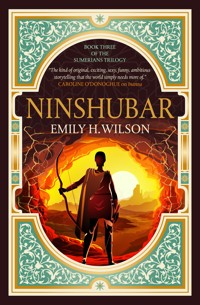
The conclusion to the enthralling and lyrical fantasy Sumerians trilogy, retelling The Epic of Gilgamesh, that will captivate readers of Madeline Miller, Jennifer Saint and Lucy Holland. It has been six months since the fall of the great cities of Ancient Sumer. Six months since war and chaos scattered everyone to the wind. Ereshkigal, the queen of the underworld, finds herself trapped in the rubble of her realm with only one thought: to rescue the man she loves. In the realm of light, Harga and Marduk mount a hopeless resistance against the vast Akkadian forces, whilst Gilgamesh, once king of Uruk, travels to Egypt in search of a legend that could save them. High above them all, in the kingdom of Heaven, a goddess with no memory lies imprisoned and helpless whilst a faint voice on the wind whispers a name... Inanna. And, wandering between the realms, a lost and lonely spirit named Ninshubar desperately tries to find her lost mistress. But as their search for one another begins to draw them closer, Tiamat, the many-headed dragon-queen of Heaven, is preparing for an assault on the realm of light that could crush all life on Earth. Don't miss the thrilling conclusion to the Sumerians trilogy as the threads of destiny pull ever tighter, and the fate of the entire world lies perilously in the balance.
Sie lesen das E-Book in den Legimi-Apps auf:
Seitenzahl: 613
Veröffentlichungsjahr: 2025
Das E-Book (TTS) können Sie hören im Abo „Legimi Premium” in Legimi-Apps auf:
Ähnliche

















Contents
Cover
Title Page
Leave us a Review
Copyright
Dedication
Map
Part 1
Chapter 1Harga
Chapter 2Ninshubar
Chapter 3Gilgamesh
Chapter 4Ninshubar
Chapter 5Inanna
Chapter 6Harga
Chapter 7Ninlil
Chapter 8Gilgamesh
Chapter 9Ereshkigal
Chapter 10Inanna
Chapter 11Marduk
Chapter 12Ereshkigal
Chapter 13Ninshubar
Chapter 14Ninlil
Chapter 15Gilgamesh
Chapter 16Marduk
Chapter 17Gilgamesh
Chapter 18Ninlil
Chapter 19Ereshkigal
Chapter 20Inanna
Chapter 21Harga
Chapter 22Ninshubar
Part 2
Chapter 1Inanna
Chapter 2Ninlil
Chapter 3Ninshubar
Chapter 4Ereshkigal
Chapter 5Ninlil
Chapter 6Inanna
Chapter 7Harga
Chapter 8Gilgamesh
Chapter 9Inanna
Chapter 10Ninshubar
Chapter 11Inanna
Chapter 12Harga
Chapter 13Ninlil
Chapter 14Ninshubar
Chapter 15Gilgamesh
Chapter 16Ninshubar
Chapter 17Ereshkigal
Chapter 18Ninshubar
Chapter 19Ninlil
Chapter 20Harga
Chapter 21Inanna
Chapter 22Ninlil
Part 3
Chapter 1Inanna
Chapter 2Ninlil
Chapter 3Ereshkigal
Chapter 4Inanna
Chapter 5Marduk
Chapter 6Gilgamesh
Chapter 7Ereshkigal
Chapter 8Gilgamesh
Chapter 9Marduk
Chapter 10Inanna
Chapter 11Harga
Chapter 12Gilgamesh
Chapter 13Ninlil
Chapter 14Harga
Chapter 15Inanna
Chapter 16Ninshubar
Chapter 17Gilgamesh
Chapter 18Harga
Chapter 19Ereshkigal
Chapter 20Inanna
Chapter 21Ninlil
Chapter 22Marduk
Part 4
Chapter 1Ninshubar
Chapter 2Marduk
Chapter 3Ninlil
Chapter 4Ninshubar
Chapter 5Harga
Chapter 6Ereshkigal
Chapter 7Inanna
Chapter 8Ninshubar
Chapter 9Ninlil
Chapter 10Inanna
Chapter 11Ninshubar
Chapter 12Ninlil
Chapter 13Ninshubar
Chapter 14Inanna
Chapter 15Harga
Chapter 16Gilgamesh
Chapter 17Inanna
Chapter 18Ninshubar
Chapter 19Ninlil
Chapter 20Marduk
Chapter 21Inanna
Part The Last
Chapter 1Ereshkigal
Chapter 2Inanna
Chapter 3Marduk
Chapter 4Harga
Chapter 5Ninlil
Chapter 6Inanna
Chapter 7Gilgamesh
Chapter 8Ninshubar
Chapter 9Inanna
A Note from the Author
Acknowledgements
About the Author
PRAISE FOR THE SUMERIANS TRILOGY
“A wonderfully evocative novel… whisking the reader away to ancient Sumer with its dry humour, atmosphere and complex characters.”
GRIMDARK MAGAZINE
“The kind of original, exciting, sexy, funny, ambitious storytelling that the world simply needs more of.”
CAROLINE O’DONOGHUE,New York Times bestselling author of All Our Hidden Gifts
“I love it! Spectacular storytelling, vibrant prose, wonderful handling of multiple narrators, and genuinely gripping. I haven’t read a historical novel this good for years: it’s reminiscent of Rosemary Sutcliff at her peak.”
JOANNE HARRIS
“Inanna may take Gilgamesh as its source material, but it is wholly its own creation. In this richly rendered world of gods, mortals and monsters, the pace never falters, and neither does the sense of an epic being constructed – like the temple to a new divinity – before your eyes. The most enjoyable novel I have read this year.”
LUCY HOLLAND, author of Sistersong
“Beautifully crafted and elegantly told, I was carried away to a world both familiar and unknown – Inanna has an enthralling magic all of its own.”
CLAIRE NORTH, World Fantasy Award winner and author of Ithaca
Also by Emily H. Wilsonand available from Titan Books
InannaGilgamesh
LEAVE US A REVIEW
We hope you enjoy this book – if you did we would really appreciate it if you can write a short review. Your ratings really make a difference for the authors, helping the books you love reach more people.
You can rate this book, or leave a short review here:
Amazon.com,
Amazon.co.uk,
Goodreads,
Barnes & Noble,
Waterstones,
or your preferred retailer.
Ninshubar
Print edition ISBN: 9781803364445
E-book edition ISBN: 9781803364452
Published by Titan Books
A division of Titan Publishing Group Ltd
144 Southwark Street, London SE1 0UP
www.titanbooks.com
First edition: August 2025
10 9 8 7 6 5 4 3 2 1
This is a work of fiction. All of the characters, organizations, and events portrayed in this novel are either products of the author’s imagination or are used fictitiously. Any resemblance to actual persons, living or dead (except for satirical purposes), is entirely coincidental.
© Emily H. Wilson 2025
Emily H. Wilson asserts the moral right to be identified as the author of this work.
No part of this publication may be reproduced, stored in a retrieval system, or transmitted, in any form or by any means without the prior written permission of the publisher, nor be otherwise circulated in any form of binding or cover other than that in which it is published and without a similar condition being imposed on the subsequent purchaser.
A CIP catalogue record for this title is available from the British Library.
EU RP (for authorities only)eucomply OÜ, Pärnu mnt. 139b-14, 11317 Tallinn, [email protected], +3375690241
For Jenny and Andy
DRAMATIS PERSONAE
THE ANZU, HIGH GODS OF HEAVEN
Tiamat | queen of Creation
Apsu | first lord of Creation
Ninlil | princess of Creation, daughter of Apsu and Tiamat
Nergal | son of Ninlil and Enlil
Qingu | the Bull from Heaven
THE ANUNNAKI, HIGH GODS OF SUMER
Inanna | goddess of love and war
An | king of the gods
Nammu | queen of the gods
Enki | lord of wisdom and water, son of An
Enlil | lord of the sky, son of An
Ninhursag | former wife of Enki
Nanna | god of the moon, father of Inanna
Ningal | goddess of the moon, mother of Inanna
Ereshkigal | queen of the night, Inanna’s sister
Utu | god of the sun, Inanna’s brother
Lugalbanda | Gilgamesh’s father, sukkal to An
Ninsun | Gilgamesh’s mother
THE HALF GODS
(immortal children of the Anunnaki and humans)
Dumuzi | god of sheep, son of Enki
Geshtinanna | daughter of Enki
Isimud | Enki’s sukkal
Osiris | lord of Abydos, son of Enki
Isis | lady of Abydos, daughter of Enki
Damkina | wife of Enki
THE HUMANS
Gilgamesh | mortal son of Lugalbanda and Ninsun
Harga | former stone man
Enkidu | the wild man
Amnut | Inanna’s childhood friend
Della | mortal daughter of Enlil, wife of Gilgamesh
Shara | son of Gilgamesh and Della
Lilith | high priestess of Uruk, lover of Ninsun
Akka | King of Kish
Inush | Akka’s nephew
Shamhat | priestess in Shuruppak
Biluda | royal steward at Kish
Dulma | priestess at the Temple of the Waves
Adamen | leader of the marshmen
Tilmun | son of Adamen
Sagar | the old marshwoman
Userkaf | Egyptian boat captain
Tallboy | one of Harga’s crew
Shortboy | one of Harga’s crew
DEMONS AND OTHER CREATURES
Ninshubar | a new god, sukkal to Inanna
Marduk | formerly known as the Potta, a Sebitti
Bizilla | soldier of Creation, first amongst the Sebitti
Enmesarra | leader of the lost Sebitti
Galatur | the black fly
Kurgurrah | the blue fly
Namtar | priest-demon of Ereshkigal
The gallas | demon warriors of the underworld
Neti | gatekeeper to the underworld
CHAPTER 1
HARGA
In the marshes north of Eridu
They say there are days in the deep marshes, in high summer, when the frogs boil alive in the shallowest stretches of water.
I had never believed it.
Until now.
* * *
We were making our way, in crushing heat, through a wilderness of reeds and narrow waterways. It had become my duty, in the months since the fall of Sumer, to patrol the marshes that had become our hiding place.
I was in the first canoe with the boys and the dogs. Behind us came our marshmen allies, in their own carved-out canoe. As I turned to look at them, all eight of the marshmen turned their eyes to me, like a pack of panthers hunting as one.
My black robes and turban were soaked through with sweat and the air was so humid that I could get no relief from it. Clouds of insects swarmed at my mouth and cheeks. Every muscle in me strained to flap at them or even to throw myself into the murky water, just for the brief release of it. But there could be no flapping or leaping with the hard eyes of those marshmen on me.
They were all so deadly serious. Everything was deadly serious to a marshman. Even when they drank and danced, or tied up a sandal, you would think their lives depended on it.
I turned back to my study of the reed beds ahead of us. Reeds that might at any moment reveal a hut, a fisherman, or a boatful of enemy soldiers.
My two Uruk boys were stood at the front of our canoe, poling us along with reasonable dexterity. They pushed on their long wooden poles, silently pointed out crocodiles to each other, and flashed each other smiles, quite as if neither was aware of the heat or the insects.
The Uruk boys had come to me in the usual way.
I first saw them begging in the main square at Uruk. Both were missing teeth and fingers, and I could tell that they were starving. They looked like trouble, but then they also had that look to them, that they might flourish if shown kindness.
I added the two of them to my crew and soon enough they had a bit of flesh on them, although nothing would ever make them pretty. The short boy, we named Tallboy, and the tall boy, we named Shortboy. Such were the heights of what passed for humour in the barracks at Uruk.
When the city fell, there was not much time to be worrying over my gang of boys, but I kept those two close to me, them being the newest of my crew and the least likely to survive out on the wind.
As for the boy in the back of our canoe, he did not come to me in the usual way. He was not the usual sort of boy, if indeed he was a boy at all.
I turned to glance at Marduk.
He was a tall young man, extremely unusual to look at, with skin so pale you could see his veins through it and hair the red of a setting sun. He had daubed his ghostly face with marsh mud for the purposes of our expedition, and he now sat with his muddy chin resting on the head of his Akkadian dog of war. Behind him were his pair of high-bred court dogs, with their black coats and razor-sharp ears. They had once belonged to a half-god called Dumuzi.
I had told Marduk not to bring the dogs, but he was an impossible boy to deal with.
Marduk turned his dark blue eyes to mine when he felt me looking at him.
“Harga, I have been dreaming about her again.”
I did not need to ask who he meant by “her”. “Whisper,” I said.
“It is the same dream over and over,” he said, more quietly. “Always with us sitting by a campfire together. So vivid I know it to be a vision, not a dream.”
What could I say to him? Ninshubar had been dead six moons, cut down by the war god Nergal on the banks of the Euphrates. She was lost forever. So, I said nothing.
“We will find her, Harga,” Marduk said. “I am certain of it. I don’t know the how or the why of it, but we will see her again.”
At that moment a flamingo lifted off and the two court dogs began barking. The dog of war at once joined in with her short, rasping bark.
My cheeks burned with the humiliation of it; that this appalling breach of discipline should be witnessed by the occupants of the boat behind.
“Control them,” I hissed at Marduk.
The dogs quickly stopped with their barking, only to stand with their front paws on the edge of the canoe as they stretched out their snouts after the now-distant flamingo.
“Marduk, you are going to get us killed,” I said. “Keep them quiet or I will put them over into the water.”
We travelled on in grim silence. The shame of what had happened slowly seeped into my bones.
At last, Marduk whispered: “I am so sorry, Harga.”
I rolled my shoulders but did not answer.
“The dogs are all very sorry too,” he said, which was patently untrue.
I took a round pebble from the leather pouch at my waist and began rolling it around between my fingers.
* * *
I once had a dog. A good dog, clever and alert, who would not have started barking when I was out on a hunt. How I loved that dog. But that was when I was very young and had not learned the cost of loving something.
Oh, the memory of that good dog, and how he trusted me.
* * *
Marduk put a cool hand on my right shoulder. “What is it, Harga?”
I rolled my shoulders and he took his hand off me.
“I thought you said something,” Marduk said. “You made a noise.”
“Just keep a look out,” I said. “And keep those dogs quiet. Perhaps there is some deaf old man here, many leagues distant, who has not yet heard us coming.”
“Smoke!” whispered Shortboy, turning back to us. He pointed left. “A hut.”
I nodded and tipped my head left, and the two Uruk boys pushed us over and straight into the reeds. I felt the lurch and bite of the canoe sliding onto mud.
The marshmen came swarming up beside us. I made eye contact with the leader of the marshmen and he twitched his eyebrows at me by way of agreement. This was definitely the place, then.
“Knives out, lads,” I said to my crew, voice low. I took two more pebbles from the leather pouch at my waist. “Keep your ears open. I want every single one of them dead. Man, woman, goat. Everything here dies today.”
Tallboy gave me his gap-toothed grin. “Everyone dead, sir.”
The boy Marduk stood up behind me and, with a bronze axe in each hand, leaped out of the canoe with godlike lift and poise. The eyes of every marshman followed him as he soared and landed, knees softly bent, upon the island.
The three dogs leaped out after him onto the muddy bank.
I pulled my sling shot from my belt and made the secret signs on my chest.
“May the gods of Sumer look kindly on us,” I said.
CHAPTER 2
NINSHUBAR
Lost
I was standing on a plain of new spring grass with a soft blue sky arching over me.
Low hills rolled away from me like waves upon an ocean. The sun, a pale yellow, stood directly overhead.
For a heartbeat, the rolling green hills flickered. For a heartbeat, there was darkness and I could not breathe.
A heartbeat, and the light was true again. The grass was soft and damp beneath my bare feet. The wind was cool and sweet.
I was wearing a simple red robe fashioned from one long piece of cloth. It fell, glowing and soft, to my knees; the spare cloth was thrown over my left shoulder. It was the same red cloth we had used, in my own country, for celebration feasts and deep-cave ceremony.
I had a beautiful flint axe in my left hand and a fire-hardened spear in my right. I had my bow and quiver over my left shoulder. All these objects were familiar to me. I had made them all myself.
I put the back of my left hand to my throat. My eight-pointed ivory star was missing. And where were my mees? My arms had been heavy with the weapons of the gods when… when it happened.
When the thing happened that I could not quite remember.
Again, the dark flicker, the threat of something being very wrong indeed.
The thought wormed its way to the front of my mind: Am I dead?
Once allowed in, the thought took hold of me.
I breathed in deep.
I had no idea where I was or what had happened to bring me to this rolling grassland.
I sat down, heavy, on the ground. I laid down my axe and my spear beside me and took off my bow and quiver, laying them over my lap.
Was I dead?
Fragments of memory sparked bright in my mind. Rolling, locked in violent embrace, with the Lord of War and Chaos upon the banks of the Euphrates. I had been trying to kill him. It was a fight to the death.
The image of Inanna lying close to me, bloody and battered. Her black eyes on mine.
Half a memory – a sliver only – of terrible pain.
Did the soldier of Creation break my neck?
If I was dead, this rolling grassland, these weapons I could hunt with, made sense to me. When my father and brothers were killed by lions, the shaman talked of them hunting in the afterlife. Perhaps I would meet my father and brothers out here on this undulating plain.
For a few heartbeats, I was overwhelmed with emotion. If I was dead, I had failed to protect Inanna. I had failed to protect my son, the Potta. I was a fool and I had failed.
I rubbed a tear from my cheek with the back of my right arm.
Harga’s face came to me then, his mouth pinched in amusement.
What would he think if he could see me sitting there, weapons down, wallowing in my failure, when I had not even made sure of the area? I laughed out loud at myself.
Yes, I must make sure of the area. There could be enemies in all directions. This might not be death. This might be something else entirely. What might be over the horizon? If I could cry and laugh, what else could I do? I would find out. Inanna might be out there on the rolling plain.
I picked up my weapons and I climbed back onto my feet.
I paced down the rolling grassy hill into the gently curving valley below, and then up the hill on the far side, before scanning the horizon very carefully. All I could see was the steady roll of the hills, going on in every direction without change or feature.
I walked down into the next valley. The memories of what had gone, of who I was, were slipping into order.
I was sukkal to a high goddess. I was a child of the red moon. A creature of war. Whatever was out there in this vast grassland I would find it and if necessary, wrestle it to the ground.
Axe in one hand, spear in the other, I kept on walking, my bare feet strong upon the fresh green grass.
I said to myself the running words.
One step and then the next.
CHAPTER 3
GILGAMESH
North of Uruk
Once this had been Sumerian country and I had ridden the land as a prince and a king.
Now it was Akkadian territory and we kept to the forests and the marshes until it was time to put our heads up and strike.
The moon goddess and I, along with our gang of irregular soldiers, were camped out in a stand of date palms somewhere to the north of Uruk.
I had volunteered to go into town for supplies, it being a long time since I had put myself forward for such a chore. I had disguised myself as a trader; one of those men who bring coracles of goods down from the mountains. And so, in a heavy robe and wrapped headdress, I limped my way through the mud-brick town and into the central market.
Yes, there I was, large basket in hand, pointing at fresh-baked bread, soft cheese with flecks of rosemary in it, and some very good-looking peaches. Just by chance, I suppose, the baker, in his leather apron, said to me: “Did you hear they killed Gilgamesh’s wife?”
I had to remember to breathe.
“No,” I said, keeping my face still and my voice soft. “I had not heard.”
I took a deep breath in and a deep breath out.
The baker nodded at me as he passed me my warm loaves. “They threw her off the moon tower at Ur. With her baby boy in her arms.” He shook his head. “These people,” he said, by which he meant the Akkadians.
I took my loaves and put them in my basket, and nodded and even smiled at the man. “That is certainly how they kill people in Ur,” I said. “I have watched people make the fall.”
The market and its busy throng seemed to swim around me, the faces blurring into each other.
“Gilgamesh will go mad, when he hears his son is dead,” the baker said. “He did not care much for the girl, but a man cares about a son.”
“No doubt you are right,” I said.
I bought two large jars of the local spirit at the next stall. I drank the first jar sat in the dust in an alley behind the market, my bad leg stretched out in front of me. A lone chicken pecked around me as I drained the jar. It was a long time since I had had a drink.
“That was for my wife Della,” I said to the chicken. “This one is for my son, Shara.” I raised the second jar to the ragged-looking bird and took my first swig of it.
The bird looked so thin and dirty.
I put a loaf of bread down in the dust for it and watched as it pecked at the crust. It did not make much progress, so I tore apart the loaf and let it peck at the soft stuff inside.
“My family is dead,” I said to the bird. “My mother, the goddess Ninsun, was cut down in battle outside Uruk. I did not see her die, but afterwards the men there showed me pieces of her, so I am certain she is dead.”
I downed the second half of the second jar. “My uncle Enlil, who I loved more than anyone perhaps, is also dead. He had his head cut from his shoulders.” I nodded to the chicken. “Enkidu, who I knew such a short time, died in the loft of a flea-ridden hostel, dead to poison, all my fault. And now my wife and child are also dead. Thrown out to their deaths from the Temple of the Moon. And that is my fault too.”
They said my father, Lugalbanda, was still alive inside Sippur, although the city was besieged and no one could be sure of what was happening inside it.
Did Harga count as family?
I wondered if my boy was frightened as he tumbled from the moon tower. I wondered if Della managed to keep hold of him as she fell or whether she let go of him and he died alone.
I pressed the tears from my eyes with the heels of my hands.
I was going to need more alcohol.
* * *
Somehow, at some point, I made it back to our camp, although I remember nothing of that part of it.
I woke up in the early dawn, face down on a sweet-scented bedroll. My head was split in half with pain. I was no longer in the main camp; I was down by the water hole beneath the date palms.
It took a while for me to remember about my wife and child, and I lay still while the memory of it sliced through me. Only then did I realise that there was someone lying behind me. I could feel their warmth along my spine.
I did not, at that moment, very much care what I had done the night before or even what might follow after. It was not the first time I had woken up, after too many cups of wine, to find some man or woman lying next to me and with no memory of how they got there.
The secret was to slip away before they awoke. If they found you already gone, the subject might never be spoken of.
I sat up, quietly, my head thumping. Very, very carefully, I stood up, putting all of my weight into my good knee, the other having been ruined during the siege of Uruk and what came after. Even standing up carefully was agony.
I glanced down at my bedroll partner: a young woman with dark curls, face down.
My belly turned over. It was not a woman: it was a goddess. An ancient goddess, although she looked no more than twenty years old. It was Ningal, goddess of the moon, once high goddess of Ur. Oh, and mother of the goddess Inanna, who I had once lain down with in private.
Well, did it matter? The goddess and I were both adults. Inanna was long gone, more than likely lost forever. Perhaps she was high up in Heaven and looking down from there at this squalid little scene.
Probably, it did not matter.
A flash came to me, of Ningal pouring me wine. She was a beautiful woman. Another flash of memory: me, crying in her arms.
I had always thought her beautiful. Looking at it from that angle, perhaps it had always been going to happen.
So yes, probably it did not matter. Yet it was not my first disaster and this smelled, faintly but distinctly, of disaster.
I limped quietly away, in the direction of the camp, careful not to stand on anything that might snap and make a noise.
It did not matter who I had woken up with. She would forget it. I would forget it. We would go back to being comrades in arms again.
* * *
After I had forced down my breakfast porridge and a skin of water, I found a scrap of shade and laid myself down again.
I woke with an even worse headache and someone gently squeezing my right arm.
The moon goddess, Ningal, was sitting cross-legged next to me with a cup of water held out to me.
“It’s my fault,” she said, her voice low and soft. “I knew it would end in trouble, the moment I accepted a drink from you. But I did it anyway.”
She looked as if she had slept a full night and woken entirely refreshed. You would never have guessed at anything else from the soft bloom upon her skin.
I sat up, groaning out loud as I moved my left leg, and took the cup of water from the goddess. “I am very happy indeed for it to be your fault,” I said. “In general, I find people prefer to blame me for everything.”
I could not quite look her in the eye.
“I have felt your eyes lingering on me, time and time again,” she said gently. “Presumably it was your intention to lie with me. And yet now you cannot even look at me. I forget how very young you are.”
“I’m not sure that intention is the right word,” I said, sipping at my water. “Certainly, I have noticed how handsome you are. Who could not?”
She sighed out. “Well, I am not often a drunken fool. Or have not been for many hundreds of years. I suppose I must count this as adventure.”
We sat in silence for some moments.
“There’s a supply run going up to the Kur,” I said. “I’m going to join them. They need extra muscle.” I smiled at her. “I can still throw an axe.”
She sat up straight. “Are you going because of last night?”
“I’m going because I’m too slow to be out here. I’m too slow in a fight. Maybe I can be of more help up at the Kur.” After a short pause, I said: “Of course, you are very welcome to join me.”
The last part was untrue. Added to that, I knew very well that she would never willingly spend time with her father, Enki, who was currently camped up at the Kur.
Ningal put on her temple face: austere, without emotion.
“I will rejoin Isimud,” she said, “and do what can be done down here by the river.”
She stood without saying anything more.
I felt sorry for the whole thing as she walked off, but no doubt I would forget soon enough. The shame would die just as it always did.
It was then I remembered again about my wife and son. An icy rush of sadness passed through me and I sat there, only breathing, until it died down.
I would have liked to have known my son.
How I hoped that he had died painlessly.
CHAPTER 4
NINSHUBAR
Lost
I walked across the rolling grassland, and I made my calculations.
The sun was directly above me and there it stayed as I climbed up countless, gentle hills and down into countless, gentle valleys.
The sweet wind kept on blowing, never changing.
The grass was soft and lush beneath my feet. Not a thorn in it. Not one bare patch of earth, or flower, or sapling.
I walked for what must have been hours, yet I felt no tiredness, no hunger, no thirst. Only a sprightly vitality; a pleasure in my movement.
Would this day ever end? Would the sun ever set? I stopped walking on the brow of a hill exactly like all the others. What if there were no edges to this world?
More and more, it seemed unlikely that I was alive, yet here I was, in a strange world with different rules.
I stood and shut my eyes a moment. Where did my instinct lead me? I realised I did have a preference as to my direction. I did not know why, but the path I was on felt right to me.
I broke out into a run, fast at first then slow and steady: the hunter’s run. I found I could keep running without effort. I ran as strong and clean as I had as a young girl on the savannah of my childhood.
For hour upon hour, I kept on running, never tiring, never sweating, never needing water or food.
I emptied my mind of everything except the running.
Thoughts bubbled up. Would I simply run on forever, on a hunt that would never end? Would I ever see my son again? Would I ever find Inanna? Would I ever go hunting with Harga again and watch him skin a rabbit?
I examined the thoughts and let them go, and I kept on running.
I said to myself, over and over, the running words.
One step and then the next.
* * *
Something changed.
I dropped down into a valley like all the other valleys, but when I looked upwards, I found myself at the bottom of a hill far larger than all the other hills I had climbed. How had the hill grown larger?
I climbed it, of course, but at the top of the rise, I froze.
Below me, close enough to shout down to, two figures stood together on a grassy plain: one very small, and one very large.
The small figure was Inanna. She stood with her chin lifted high… looking up at a huge, black dragon.
I had seen images of dragons scratched on cave walls. I had thought them a fantasy, but this creature was real. A giant, many-headed lizard, with heavy wings furled upon its back and a powerful, swinging tail. I counted its heads: it had seven.
The black dragon towered over Inanna, six times her height at the shoulder.
Tiamat.
It was Tiamat. I knew it in my gut.
As I watched, the creature dipped its fanged jaws down towards Inanna and Inanna stretched up her right hand as if trying to touch one of the creature’s black-scaled heads. Why was she not afraid?
“Inanna!” I shouted.
I think she heard me and was turning to me.
I ran down the hill at a sprint. For a handful of heartbeats, I lost sight of them in a curve of the land that had not been there before. When I saw them again, Inanna was stepping forward towards the night-black monster.
And then they were gone.
When I reached the spot where they had been standing, I could smell sulphur in the air and, for some heartbeats, the noxious stink lingered. Then it was gone and there was nothing to suggest that Inanna and the dragon had ever been there.
I bent over to touch the grass. It was soft and lush. There were no marks on it.
Everything flickered around me: for a heartbeat, everything went dark.
I had to keep hold of what I knew to be true. I was dead. That was probable. Yet I felt very alive in that vivid world.
Only heartbeats before, Inanna had been there.
“I will find you, Inanna,” I said out loud, to the grass, to the unchanging sun, to the soft wind. “This is the sacred promise of a goddess. I will find you and I will help you get back home.”
CHAPTER 5
INANNA
In Heaven
I sat with my friend Amnut in the ochre room at my mother’s temple in Ur. We were playing the game of twenty squares, with the ancient board set out between us on a small ebony table.
“Inanna, tell me again about your mother stealing the melam,” Amnut said.
I looked up at her in surprise. “Did I tell you about that?”
Amnut was dressed in her crimson dress and matching cape, and she was looking at me very seriously, a frown upon her lovely brow. “You said that your mother could not bring a baby to term until she had eaten all the melam she could find. That she devoured all the melam your father had and all the melam that your grandfather Enki had too. And only then did you begin to grow strong inside her.”
Her eyes were such a brilliant blue.
“My father could not forgive her for taking the melam,” I said. “Even though I was the result of it. That seemed to bring him no comfort.”
Were Amnut’s eyes always blue?
“Amnut, something is wrong,” I said.
The room was moving around me.
My chair collapsed beneath me and I cried out in pain and shock as I tumbled to the floor.
“Amnut, help me,” I said.
But I was falling into the dark.
* * *
I stood with my hands upon a stone wall, my fingers pale against the blocks of dark rock. There were black marks on my forearms, about the size and shape of fingerprints, and I was cold and all of me ached, even my fingers, even my skull, even the skin on my forehead and my eyelids when I blinked.
I had to be dreaming. Why else was I standing with my hands on a stone wall?
A memory came to me, very clear, of a tall, dark-skinned woman with an axe in one hand and a spear in the other. She had been shouting out to me and I knew that whatever she was shouting was important. But I could no longer remember what she had said.
I realised that I had no idea who I was or what was happening, and panic rose up in me. My heart hammered hard against my ribs. There was something around my neck: a thick loop of metal, too tight for comfort. I pulled at it, but it would not come off.
I realised there was someone behind me. In terror, I slowly turned around.
And saw the tall, golden figure by the door.
She was so familiar to me. Her short hair was flame red, her skin strangely pale. She turned her dark blue eyes to me.
Bizilla.
It was Bizilla. I could breathe again. My heart began to slow. She did not mean me harm.
“Bizilla, what is happening?” I said.
We were in a small, windowless room with stone-block walls and a heavy wooden door.
Bizilla was stood with her back to that door as if at sentry. She was dressed in a coat of golden scales, with a blocky, gold belt around her waist.
When she did not answer me, I said her name again. “Bizilla?”
“Get back into bed,” she said.
I had not noticed the bed, but there it was along one wall. A wooden bed with a thin mattress and a grey blanket upon it. Next to the bed, on a small wooden table, stood the large, flickering candle that was our only source of light.
“Why am I in this room?” I said.
“You always ask that,” Bizilla said.
“How do I know you?” In that moment, I could not be sure I really knew her at all.
“You always ask that. And I always tell you: I am Bizilla.”
“You are very familiar to me,” I said.
I walked over to the bed, careful of my aching feet upon the stone floor.
“Where is this?” I said, putting my hands down to the mattress.
“Nowhere good,” said Bizilla.
I sat down upon the bed too quickly and pain shot up my spine. “How long have I been here?”
She closed her blue eyes, just for a moment. “Long enough for you to stand over by that wall and put your hands on it perhaps two hundred times.”
I was naked. How had I not noticed? My whole body was covered with the bruises that looked just like fingerprints. I pulled again at the metal band around my neck.
“Bizilla, what has happened to me? I think I am hurt.”
“It’s not time yet for your medicine,” she said. But then she looked over at me again. “I don’t really see what difference it will make,” she said, coming to sit beside me. She drew a small glass bottle from her sleeve, poured some clear white liquid into the lid of the bottle, and passed it to me to drink. It tasted of vanilla.
“Bizilla, I have seen someone just like you before,” I said. “I am certain of it. A boy. A young man.”
“You’ve seen me every day here,” she said. “You have seen some of my comrades too, although you may not remember it.”
“Is one of them young? Does he have a dog?”
“We don’t have dogs here,” she said. “Except in stories.” She frowned. “The medicine has confused you.”
“Bizilla, I think something bad is happening. I think I am in the wrong place.”
“No doubt that is true,” she said. “Now go back to sleep.”
Again, the darkness came for me.
CHAPTER 6
HARGA
In the marshes north of Eridu
I climbed, stiff-legged, onto the wooden jetty at the Refuge. As I reached down for a rope, I realised I had torn the muscle in my right shoulder again. Perhaps in that day’s fighting, perhaps before that without noticing. It was an old injury, from when I carried Gilgamesh out of Ur, and it didn’t need much to make it flare up again.
I thought to myself, I am too old for this. The same thing I always thought, these days, when I got out of a canoe.
I was old and I was dirty, befouled with marsh mud and other people’s blood. The boys were no cleaner and the three dogs were worse.
Tallboy took the rope from me when he saw me grimacing and the three boys made sure of the boat, tying it up close to the jetty. “We’ll get you a bucket of water, sir,” said Tallboy.
“Bring it to my hut,” I said.
As the two Uruk boys trailed off along the shoreline, giggling over something, the priestess Lilith appeared. She put her hands on her hips and placed herself as a firm block on the path that led to the heart of the Refuge. Her long soft waves of hair were gone, shorn off after the death of her lover, the goddess Ninsun, but she was still a beautiful and imperious woman even in a ragged apron and wooden clogs.
“Did you find the alleged spies?” she said.
“Who knows what we found.” I shrugged and winced again at the pain in my right shoulder. “But anyway they are all dead.”
I made to walk past the priestess, but she put a flat palm up to me.
“You should swim and get clean,” she said, lifting her chin at both me and the god-boy Marduk, who was by then stood behind me, fussing over his dogs. “You will attract rats. You will terrify the children. Swim first.”
“The boys are fetching me water,” I said. I was bone tired by then from the day’s heat and the savagery and I could not summon a smile for her.
“I don’t know why you don’t just swim,” she said.
A mosquito landed on my cheek and I slapped one exhausted hand at it. “There are swamp sharks here and they are hard to see coming, being all covered in green slime. And then also there are the crocodiles.”
As I said the words, Marduk began stripping. A moment later he dived naked off the end of the jetty, a pale streak against the red sky and the green of the reed beds. The dogs leaped after him, paws outstretched, into the brown marsh water.
“Marduk, there are more sharks at dusk,” I shouted. “Think of the dogs!” I turned back to the priestess, frowning. “It is not safe, Lilith.”
“Is that a cut?” she said, reaching for my blood-encrusted left arm.
“It’s a graze.”
“Harga, let me see it.”
“No.”
For some moments we glowered at each other, and then the priestess said: “Did the marshmen fight well?”
“Oh yes, most viciously. They are the very pattern of good allies.” I cast a glance out at the pale god-boy, who was laughing and splashing with the dogs in the slimy and fetid marsh water.
“We are not taking the dogs again,” I said.
“You should not have agreed to it.”
“You took Marduk’s side! Anyway, he did most of the killing, impossible as he is. He moves so quickly now it can be hard to keep your eye on him.”
“Do be careful of him, Harga,” she said. “He is not like your other lost ducklings.”
“I do not have ducklings,” I said, pulling myself more upright. “They are soldiers, not ducklings.”
At that moment my two young soldier-ducklings returned with heaving wooden buckets and armfuls of cleaning rags. They had washed their faces and looked very young as they made their way towards us through the gloom. But that was neither here nor there.
The boys dipped heads and knees to the priestess and set the buckets down before me. When the priestess seemed not to be moving anywhere, I went to pull down my long under-trousers.
“All right, I will leave you to it,” she said. “I will have some lamps sent down for you all.”
“I’ll see you in the Palace after,” I said.
The priestess threw me back a smile. “Your curls are growing back, Harga,” she said. “But there is silver in them now.”
I ran my hand over my head. “I will shave it again tomorrow.”
It had not yet been a year, after all, since Enlil and the others had been killed.
* * *
A long time before, in a war that only the gods remembered, Enki, the lord of wisdom, had created a secret hiding place in the deep marshes north of Eridu, his home city. He fashioned his hiding place on an island you could walk around in one hour, but it was solid mud at least in a land of floating islands and constant flooding.
For centuries after, Enki kept the island stocked and garrisoned, in case one day the land, and his city, were invaded.
We called the island the Refuge and it was a clever place to hide. First off, why would an Anunnaki, a lord of the Earth, choose to build a village in the most awful place imaginable? You could not look at the water without getting gut cramp. The frogs made so much noise you could not sleep. The island, such as it was, was home to rats as big as dogs and deadly snakes and everything was thick with fleas.
Then there were the marshmen, who would kill you if they didn’t know you, but if they did know you then they would certainly kill you. Perhaps because of something your grandmother once said to their grandfather. Not to forget the marshwomen, who were twice as dangerous as the men.
Lilith, once high priestess of Uruk, once lover of Gilgamesh’s mother, was now self-appointed queen of the Refuge. At one point we had had Enki’s wives, past and present, on the island, but neither of them found the fleas to their taste, and they had ceded the ground to Lilith.
At the very centre point of the Refuge there stood a long reed hut that served as our main gathering place and that had come to be known as the Palace. It was built of reeds rolled together into logs and then fashioned very ornately into a high-ceilinged building.
“You do not believe the stories about spies in the marshes?” Lilith said to me as we ate our bowls of crocodile stew in the Palace that night.
“I don’t think Adamen knows how to tell the truth,” I said. Adamen, the leader of the marshmen, was someone I had disliked on sight.
“Adamen’s brother was a good man, his father too.”
“Yet somehow they are dead and he is who we have to deal with.”
We were sitting together, cross-legged, on the rug at the centre of the Palace. The heat and the smoke and the fleas were just as thick upon the rug as in any other part of the Palace, but the rug had once been in Enki’s palace at Eridu, and so by common consent was left for Lilith and her most senior counsellors.
On that muggy evening, with most of our ruling council away from the Refuge, the rug was ours alone.
All around the edge of the Palace sat a crowd of priestesses, orphaned children, and courtiers who had escaped the Akkadian slaughter.
“Adamen wants us to believe that there are spies creeping into the marshes,” I said to Lilith, chewing determinedly at my crocodile. “That’s about all I can be certain of.”
Lilith put her bowl down. “These marshmen are warlike and murderous, it is true, but who in Sumer has been more loyal to the Anunnaki and their servants? I do not think there are any tricks here.”
“This crocodile is inedible,” I said.
“It’s snake,” she said. “Giant water snake. It’s all the boys could catch today.”
“Oh,” I said, peering closer at it. “I did not think they could be eaten.”
Lilith began to thread an ivory needle, holding it up to the dim light of the fire as she did so, her tongue between her teeth.
“How can you see to do your darning in here?” I said.
“I’m no god, but I have good eyes even in dim light. And anyway, I’m not going to darn, I’m going to sew up your arm, so pass it over.”
“No.”
“Quickly, Harga.”
“I do not see why you are in charge of me,” I said. But I moved over, sullen but obedient, and rested my arm on one of her knees.
I looked down at her neat stitches as she sewed and tried hard not to wince or flinch.
“I’ll help your girls with the new garden tomorrow,” I said.
Marduk arrived, stooping to pass beneath the reed lintel. His red hair was still wet from his swim but he had put on a clean smock. A moment later all three of his dogs were leaping on me. The dog of war put her snout into my bowl, rendering it instantly empty.
Marduk tipped his head to me in greeting. “I’m going out looking for Ninshubar tomorrow. I would like it if you came.”
“I’ve got business here. I’ve said I’ll help with the garden.”
“Please come, Harga,” he said.
“Oh, Harga,” said Lilith. “We can do the garden without you.”
Marduk cast his very beautiful smile down at her and then turned back, shining, to me. “I will do all the paddling,” he said. “You can sit at the back of the canoe like a king.”
I gave out a sigh. “The dogs must stay here.” But I said it with no fight in me.
“We will find her,” the god-boy said as he dropped down to sit beside me.
What was the point in arguing with him?
* * *
Much later, before turning in, I went to say goodnight to Lilith.
She was sitting out in front of her small sleeping hut, looking up at the full moon.
“Sit down then,” she said, when she saw it was me. “I have some secret wine that I bought off a marshwoman, if you’d like to share it with me.”
“I would like to wash the giant snake out of my mouth.” I settled myself cross-legged beside her. “I have eaten all kinds of snake, but never one so unpleasant.”
“I think this will certainly clean your mouth out,” she said, sniffing the wine before she poured.
We touched our cups together and drank.
It tasted like concentrated urine, or perhaps fruit that had been left on the ground to rot.
“Can that really be wine?” I said.
“The heat must have turned it.”
“Such heat,” I said, shaking my head.
When we had both drained our cups and she was refilling them, I said to her: “So how are you?”
“I am no better.” She tipped her face back up to the bright night sky. “I go on because the children here deserve to be looked after. And because I think, what if Gilgamesh comes back and has need of me? He no longer has a mother except me. So I go on. But it is an effort, even sitting out here with you, who I count now as an old friend.”
“I’m old, certainly. I feel it more each time I meet the enemy.”
“How old are you exactly, Harga?”
“We don’t celebrate birthdays in the stone country. But I think thirty-six perhaps, or thirty-seven.”
She laughed. “Old then. But not as old as me.” She gave me an appraising look. “Do you grieve for her, Harga?”
I sat up straighter. “For Ninshubar?”
“Yes.”
I gave a shrug.
“But you had feelings for her?”
“I learnt better than that a long time ago.”
“I thought you had hopes of her. That’s what people say.”
“No,” I said, more firmly than I meant to. “They are wrong to speak so. I did not have hopes of her. And I do not have hope now of us finding her, as that foolish boy does. Hope is what kills you. Hope is what rots you out from the inside.”
She looked at me sternly, her face silver in the moonlight. “Maybe it’s better to fight hope than to have none at all.”
I leaned over and kissed her stubbly head. “I’m very sorry for your loss, Lilith,” I said. “Ninsun was a fine soldier.”
“She was also a fine lover, in the time that she loved me.”
“She will always be remembered,” I said. “If that is of comfort. They will still build temples for her.”
“Perhaps,” said Lilith. “Perhaps when the Akkadians are gone.”
I took a deep breath in. “I lost a lover, a long time ago.” It was strange to even say it out loud. “It occurred to me today that with the god Enlil dead, perhaps I am the only one alive in the world who remembers her.”
“Who was she?”
“My wife,” I said. “And I lost my son too, the same night. And a dog, although it feels foolish to mention him. In my early days with Enlil, when I was not much more than a boy, he let me have a family.”
“How did you lose them?”
“In the great flood. Our house was washed away in the night and for a while we were all together. But in the morning I was alive, caught up in a tree, and they were all gone. Somehow I lost hold of them in the darkness.”
“I’m very sorry for your loss, Harga. I did not know.”
“It was a long time ago.”
“I’m sorry all the same.”
“After they died, I realised I did not have the strength to lose anyone like that again. I thought, it is not enough to say I am from the stone country. I must be a real stone man. With a heart only of stone. I must be stone all the way through. And that is how I live now.”
“That is how you think you live your life now?”
I nodded. “Stone all the way through.”
She poured us more of the terrible wine, one eyebrow raised.
“I do miss Enlil, though,” I went on. “And I miss Ninshubar, too.”
Then we sat there in the muggy dark, we two old humans, and listened to the infernal frog noise, and looked up at the moon, and thought about those forever lost to us. I wondered if they were somewhere out there in the infinite dark, or instead just entirely extinguished.
CHAPTER 7
NINLIL
In Heaven
My white-robed body servants knocked at the door to my bedchamber and came in without waiting for an answer, as they were used to doing. They brought with them the freezing air of the palace corridors.
In the days before I was snatched away from Creation, my bedchamber seemed enormous and thrillingly luxurious. Most importantly, it had been mine. I was allowed to choose the pink velvet curtains and the thick white rug that lay in front of the fireplace. Bizilla, my holy sukkal, helped me hang my attempts at artwork upon the pale pink walls. On warm days the curtains would be pulled back and the huge window opened, and I would look out on fountains and, beyond, an avenue of flowering bushes, and I would breathe in the sweet scents of the gardens. Once, with Bizilla’s blessing, I climbed out of the window, jumping down onto the stone terrace.
Now the curtains were brown with age, the rug was thin and worn, and the pictures I had painted were so faded I could no longer make them out. The window behind the ancient curtains had long been boarded over and the room did not seem spacious with all my servants crammed into it.
I stood passive, my arms raised, as they sewed me into my white dress and knotted diamonds into my hair. They were focused entirely on the cloth, on the fit, on the sparkle.
None of them said to me: “Why did you come back?” They must all have been thinking it, though. After all, who would willingly return to this palace of darkness and pain?
In fact, my son and I were chased through the gate to Heaven by the goddess Inanna. But before that… the truth is that I had chosen to climb the staircase to Heaven. I had thought I was doing the right thing. Facing old demons, facing up to my responsibilities.
More and more, that seemed like a terrible mistake.
At last, the dressers draped a heavy white fur cloak over my shoulders and clasped it at my neck. They sank into deep curtseys and were gone.
I was alone, in the bedchamber of my early childhood, for perhaps a minute. For that minute, I stood completely still, my eyes on the coal that burned in the grate.
Another knock and two white-clad footmen entered the room, bringing another blast of iced air with them. Their job was to deliver me to the banqueting room at exactly the right time and with the right amount of pomp, and this they would do elegantly but without fail.
* * *
When I first returned to Heaven, I fought against the nightly dining ceremony. I told everyone who would listen that unless they brought me my son, Nergal, I would not go along with any of it. I sat myself down with my arms folded tight across my chest when the body servants came. Soldiers came then to strip me, dress me, and carry me to table. They were happy to tie me to my dining chair. I learned that there was no point in fighting, because in the palace of Creation dinner would go on, just as it always had, and I would be there at it regardless of how much fuss I made.
“Are you ready, my lady?” one of the footmen said, when they were all in the correct position in the corridor.
“Quite ready,” I said.
I moved out into the corridor and then we began our sombre, very formal procession to dinner. I walked with thirty footmen in front of me, all in white and with white ribbons in their hair, and with another thirty footmen behind me, all equally splendid.
The corridors we slowly paced along were dark, dirty and decaying. The windows had been blocked up to keep out the snow and the jagged storms, yet the cold quickly sank into my bones.
To reach the banqueting hall we had to pass along the vast, central hall at the heart of the palace. The alcoves were full of refugees, camping out on the cold flagstones, and they turned desperate faces to me as I walked by.
There were Sebitti everywhere, gold in the gloom.
I glanced up and noticed that one high-up window had not yet been boarded over. Through that one small rectangle of transparent mica, perfectly framed, I glimpsed the Star of Creation. A dim, pale, fading sun. I paused a moment, absorbing the shock of how familiar it was to me and yet how strange, after four hundred years spent in the glare of Earthlight.
“My lady?” said the footman behind me. Obedient, I walked on. Far above my head, barely visible in the low light, huge dragons decorated the vaulted ceilings. Great monsters, breathing out fire, with streams of smaller creatures spilling out behind them.
We reached the towering basilisk entrance to the banqueting room. I paused a moment as Sebitti pulled the enormous doors open, and then continued my stately progress.
The central table was carved from black stone and lit by scores of candles. Each of the four walls of the hall had its own fireplace, heaped with burning coal, yet it was even colder in that dining room than in the cavernous hallway outside.
My father was already there at the head of the obsidian table. The great Apsu, lord of Creation, lord of Heaven, had all-but-died before I was born. It was said that he could no longer bear to be alive in a realm with my mother in it.
The years of barely being alive had left him mummified, his flesh welded to the rusting chair he sat in. Over the years he had been rather knocked about, despite everyone’s best efforts. He had lost two fingers and much of his hair, and now he sat with his balding skull drooping almost to his lap. If he was conscious, it was many turns of the Wheel of Heaven since he had given any sign of it, but all the realms forbid that the first lord of Creation should miss a family meal.




