


1,99 €
Niedrigster Preis in 30 Tagen: 1,99 €
Niedrigster Preis in 30 Tagen: 1,99 €
Mehr erfahren.
- Herausgeber: DigiCat
- Kategorie: Geisteswissenschaft
- Sprache: Englisch
In "The Symposium," Xenophon presents a fascinating exploration of love, companionship, and social discourse through a series of lively conversations amongst notable figures of ancient Athens. Written in the tradition of Socratic dialogues, this work employs a straightforward yet engaging style, allowing readers a transparent glimpse into the philosophical views prevailing in the 4th century BCE. The text serves not only as a literary artifact but also as a vital commentary on the cultural and social dynamics of ancient Greek society, particularly regarding the complexities of human relationships and the nature of desire. Xenophon, an Athenian historian, soldier, and student of Socrates, was deeply influenced by his philosophical training and his experiences in numerous military campaigns. His unique perspective as both a participant and observer granted him insight into the multifaceted nature of human interaction. In crafting "The Symposium," Xenophon aimed to preserve the intellectual legacy of his time while also reflecting on the moral and ethical dimensions of love and friendship. Readers seeking to grasp the intricate interplay of love and thought in ancient Greek culture will find "The Symposium" both enlightening and enjoyable. This text not only enriches one's understanding of classical philosophy but also resonates with contemporary discussions of love and human connection, making it a timeless addition to any literary collection. In this enriched edition, we have carefully created added value for your reading experience: - A succinct Introduction situates the work's timeless appeal and themes. - The Synopsis outlines the central plot, highlighting key developments without spoiling critical twists. - A detailed Historical Context immerses you in the era's events and influences that shaped the writing. - An Author Biography reveals milestones in the author's life, illuminating the personal insights behind the text. - A thorough Analysis dissects symbols, motifs, and character arcs to unearth underlying meanings. - Reflection questions prompt you to engage personally with the work's messages, connecting them to modern life. - Hand‐picked Memorable Quotes shine a spotlight on moments of literary brilliance. - Interactive footnotes clarify unusual references, historical allusions, and archaic phrases for an effortless, more informed read.
Das E-Book können Sie in Legimi-Apps oder einer beliebigen App lesen, die das folgende Format unterstützen:
Veröffentlichungsjahr: 2022
Ähnliche














The Symposium
Table of Contents
Introduction
In the soft glow of lamps and the measured rhythm of song, an Athenian banquet becomes an arena where wit, desire, and discipline spar for authority, as companions probe whether pleasure must be governed by virtue, whether the charm of beauty can itself educate the soul, and whether the habits that knit a convivial company—laughter, praise, display—strengthen character or seduce it, so that over shared wine and performance the most ordinary refinements of sociability reveal themselves as a test of freedom, a study of love, and a contest for the right to call one’s life truly harmonious.
Xenophon of Athens (c. 430–354 BCE) was a soldier, historian, and associate of Socrates whose writings range from campaign narrative to practical ethics. The Symposium, a Socratic dialogue composed in the fourth century BCE, stages a convivial banquet at which Socrates joins fellow guests in conversation and entertainment. Within this familiar social frame, the work explores how love, friendship, and excellence shape conduct. Xenophon’s clear Attic prose, shaped by a life of action and observation, sets a scene that is at once intimate and public, allowing the reader to watch character emerge through speech, gesture, and the rituals of dining.
Unlike Plato’s famous treatment of a similar setting, Xenophon’s Symposium leans toward the everyday and the practical. Its conversations do not climb toward a theory of forms but circle questions of self-control, generosity, and the uses of charm. Comedy, banter, and light performance mingle with earnest inquiry, so that entertainment never fully loosens its tie to education. The initial premise is simple: a group of Athenians gather for dinner and, prompted by the occasion, offer displays and remarks about love and virtue. From this modest setup, Xenophon composes a portrait of sociability that measures character under the gaze of peers.
As a classic, the book occupies a pivotal place in both sympotic literature and Socratic writing. It preserves in concentrated form a social institution central to classical Athens, while simultaneously offering one of antiquity’s most influential portraits of Socrates at leisure. Its lightness is not triviality: Xenophon shows how ethical seriousness can inhabit play. The work’s balance of narrative frame and dialogic exchange became exemplary for later prose. Readers across centuries have returned to it for its poise, lucidity, and insight into the moral uses of conversation, qualities that help explain its persistent presence in discussions of Greek culture and thought.
Xenophon’s literary craft supports this double aim. He writes with an economy that flatters the reader’s intelligence, preferring understatement to ornament and allowing irony to arise from situation rather than flourish. Short portraits sketch distinct temperaments; sparring compliments reveal rivalries; laughter punctuates instruction. The dinner’s sequence provides gentle structure, as courses and entertainments offer occasions for shifting topics and perspectives. Scene-setting remains precise but unforced, so that details of dress, music, and etiquette color the argument without overshadowing it. Above all, Xenophon’s Socrates moves lightly: attentive to others, quick with analogy, and determined to make the pleasures of company serve moral clarity.
Enduring themes organize this apparent ease. Eros, explored here not as abstract force but as a texture of attraction and admiration, is linked to training and self-command. Friendship and the pursuit of the noble-and-good intersect, showing how esteem can guide or ensnare. Displays of beauty and skill raise questions about performance and authenticity, while gifts and favors test reciprocity and gratitude. The work probes ambition, vanity, and the desire to be seen, asking how public recognition coexists with private integrity. In doing so, it makes the symposium a microcosm of civic life, where reputation is negotiated and virtue is tried.
The dialogue’s philosophy is recognizably Socratic without becoming austere. Rather than staging formal refutations, Xenophon often lets practical examples carry argument, making moderation and usefulness recurrent measures of worth. Socrates questions to elicit self-knowledge and to redirect admiration toward what sustains character. The result is a pedagogy of attention: who or what one praises, what one imitates, how one spends leisure, and how pleasures are ordered. By dramatizing such choices in company, the book shows ethics lived in real time. It also illustrates Xenophon’s distinctive voice among Socratic authors—plainspoken, humorous, and oriented toward what can be trained rather than merely contemplated.
Together with Plato’s work on the same social institution, Xenophon’s Symposium helped establish the banquet as a durable stage for philosophical and moral exploration. Later Greek and Roman writers continued this tradition of table talk, from Plutarch’s dialogues of questions at dinner to the expansive feasts of Athenaeus, where learning and entertainment interlace. Xenophon’s depiction of Socratic conversation in a convivial setting also shaped subsequent images of the philosopher as an educator of character rather than a recluse of abstractions. In modern scholarship, the text remains a touchstone for interpreting Socrates’ civic persona and for reconstructing sympotic practices and ideals.
As cultural testimony, the book is invaluable. It registers the etiquette of reclining meals, the roles of musicians and entertainers, the expectations placed upon hosts and guests, and the conversational games through which status is displayed and moderated. It samples the vocabulary of beauty and excellence that informed elite education and courtship. At the same time, it records the constraints and hierarchies embedded in that world, revealing how pleasure depends on labor and how public ideals are rehearsed in private rooms. These elements are not presented as a museum exhibit, but as living materials that shape and are shaped by ethical choice.
The Symposium has long circulated with the rest of Xenophon’s corpus and has been translated into many modern languages, inviting comparisons with his Memorabilia and Oeconomicus. Its compactness makes it especially accessible to students of Attic Greek and to general readers encountering Socratic literature. Editors and commentators have used it to triangulate Plato’s portrait of Socrates and to anchor discussions of Athenian social life. Its survival owes something to the long-standing esteem for Xenophon’s clarity and moral seriousness, qualities praised in antiquity and valued in later eras committed to humane letters, civic education, and the study of classical models.
For first-time readers, it helps to treat the work as both play and inquiry. Attend to who speaks, why they speak then, and how their remarks echo earlier exchanges. Watch how displays invite ethical appraisal without heavy-handed commentary. Notice, too, how the convivial frame keeps philosophical ambition tethered to everyday conduct. Xenophon does not offer a single theory to memorize; he offers a social choreography to judge and, perhaps, to emulate. Resist the urge to measure every page against Plato’s different design; read this book on its own terms, and its humane intelligence and stylistic finesse become unmistakable.
Today, The Symposium endures because it shows that the art of living well begins in how we share our time, our attention, and our pleasures. It asks what conversation owes to truth and what beauty owes to discipline. It treats the dinner table as a school of character, where power, desire, and generosity must find a just arrangement. In an age fascinated by networking, performance, and influence, Xenophon’s modest banquet remains bracing: it suggests that grace without integrity is brittle, that amusement need not be thoughtless, and that the best company is that which makes excellence welcoming and durable.
Synopsis
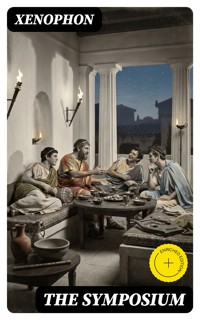
Xenophon’s Symposium is a Socratic dialogue from the fourth century BCE that presents a festive dinner in Athens. The wealthy Callias hosts the gathering to honor the admired youth Autolycus, whose father Lycon also attends. Socrates is present with companions and acquaintances, including Critobulus, Antisthenes, Charmides, Hermogenes, and Niceratus. Xenophon recounts the proceedings as a remembered sequence of talk, entertainment, and shared drink. The convivial framework allows ethical questions to arise naturally from leisure. Instead of a single extended argument, the work offers alternating scenes that reveal character, test values, and consider how beauty, love, wealth, friendship, and discipline ought to be handled.
As the guests recline, attendants pour wine and a Syracusan showman arrives with entertainers, among them a flute-player and agile youths trained for dance and acrobatics. A professional jester drifts in and tries to amuse the company with jokes, sometimes succeeding, sometimes falling flat. The host encourages good humor, and the early atmosphere is light. Xenophon sketches the seating, the small exchanges of courtesy, and the rhythm of a typical Athenian banquet. The mixture of spectacle and conversation sets up a contrast that the dialogue will explore: whether pleasure is best pursued through passive diversion or through the active, shared pursuit of thoughtful talk.
With the music underway, Socrates steers attention to moderation. He cautions that overpowering sound can stifle conversation and suggests that entertainment should serve, not dominate, the company. The flute-player is asked to play sparingly, and the group agrees to interleave performances with discussion. The practice of measured drinking becomes a theme: wine may loosen tongues and spirits, but self-command remains prized. This balance between delight and discipline frames the evening. Socrates participates playfully yet persistently, modeling inquiry that neither condemns pleasure nor yields to it. The symposium thus becomes an arena for testing whether philosophical reflection can refine convivial enjoyment rather than oppose it.
To prompt discussion, the guests propose a lighthearted contest of self-praise, each naming the trait or accomplishment he values most. Critobulus claims beauty as a power that wins goodwill. Niceratus boasts of deep familiarity with Homeric poetry. Hermogenes emphasizes the strength of his friendships. Antisthenes insists on the usefulness of wealth when properly applied. Charmides advances the advantages of poverty’s simplicity and freedom from burdens. Callias extols love as an ennobling influence. Socrates, with characteristic irony, declares expertise in bringing worthy people together, turning his claim into an invitation to examine what makes association beneficial. The playful competition launches sustained, probing exchanges.
Socrates engages Critobulus on the dangers and benefits of beauty. If attractiveness captivates others, does it bestow true advantage or expose one to temptation and resentment? They weigh whether physical allure, absent self-control, becomes a liability, and whether admiration can be guided toward virtue. Socrates presses for distinctions between appearance and character, suggesting that influence grounded in looks is unstable unless disciplined by purpose. The conversation maintains a humorous tone, yet it presses on real ethical stakes: how to wield whatever gifts one possesses without harming oneself or others. In this way, a seemingly frivolous claim becomes material for moral examination.
Similar tests are applied to other boasts. Antisthenes argues that wealth proves its worth only when it equips one to help friends and manage affairs well; otherwise it burdens its owner. Charmides counters that poverty relieves anxieties and encourages resourcefulness and restraint. Niceratus defends the benefit of poetry by stressing how memorized verses can offer guidance if interpreted prudently. Hermogenes presents friendship as a store of reliable support that surpasses possessions. Socrates encourages each to clarify ends and means, repeatedly asking what use, measure, and intention convert a raw asset into a genuine good. The exchanges reveal priorities embedded in Athenian civic life.
Between rounds of talk, the Syracusan’s troupe performs. A boy and a girl display intricate dances, tumbling and balancing with impressive control. Socrates praises their training and draws lessons from their grace, noting how disciplined movement can cultivate readiness and order. He connects dance to exercises associated with civic and martial preparation, proposing that beauty in motion can be both pleasing and useful. The company reflects on practice, skill, and the bodily dimension of education. Entertainment thus becomes a prompt for further inquiry: what kinds of accomplishments deserve admiration, and how do habits of body and mind reinforce each other?
A pantomime of courtship and marriage follows, which turns conversation back to love. Observing desire awakened by spectacle, Socrates distinguishes between possessive, fleeting attraction and an attachment that seeks the partner’s improvement. He argues that affection directed by moderation and mutual respect can elevate both parties, whereas indulgence without discipline degrades. The guests consider how admiration of beauty might be redirected into friendship, mentorship, or lawful partnership, and what responsibilities accompany intimate bonds. Socrates’ own comic claim to be a facilitator of connections reappears here, now recast as concern for fitting matches that promote virtue rather than mere gratification.
As the evening winds down, talk, laughter, and measured cups have woven a portrait of sociability under scrutiny. Xenophon leaves a picture of Socrates at ease among companions, joining games while persistently asking what makes pleasures safe, friendships steadfast, and talents properly used. The work’s lasting interest lies in this everyday stage for ethics: no grand courtroom drama or crisis, but a dinner table where values are tried through wit, example, and patient testing. The broader message is durable and spoiler-safe: philosophy can meet ordinary pleasures without disdain, guiding them by moderation, friendship, and purposeful use toward a more coherent life.
Historical Context
Xenophon’s Symposium is set in classical Athens in the late fifth century BCE, a city dominated by its democratic institutions, imperial ambitions, and vibrant civic culture. The Assembly, the Council, and popular courts organized public life, while the city’s religious festivals provided a calendar of communal identity. The work stages a convivial banquet among elite men, embedding its talk of love and virtue within the practices of an Athenian democracy where citizenship, military service, and festival participation structured status. Although composed later, the dialogue’s scene reflects the atmosphere of a polis whose political power and cultural prestige were at once at their height and under strain from prolonged war.
The symposium itself was a core institution of elite sociability. It took place in the andron of a household, after a shared meal, with wine mixed in a krater and distributed by attendants under a symposiarch’s rules. Guests sang skolia, told stories, played games, and competed in wit. Such gatherings could cement friendships, display cultural cultivation, and form political alliances. Xenophon’s depiction of performances, playful contests, and moral conversation captures this mixture of pleasure and seriousness. The form offered a familiar stage on which to test claims about beauty, self-control, and leadership in a setting where reputation mattered as much as argument.
Athletics and festival competition frame the narrative’s occasion. The Great Panathenaea, held every four years in Athens, combined religious procession with contests in music, athletics, and horsemanship, awarding valuable prizes. The pankration—an arduous blend of wrestling and boxing—conferred special prestige on victors. Xenophon situates the banquet after Autolycus’s victory, and the presence of his father Lycon reveals how athletic success reflected on a household’s honor. Sponsors and wealthy patrons often supported training, and victorious athletes received public acclaim. By linking his characters to festival triumph, Xenophon roots ideas about beauty and excellence in the civic spectacle that celebrated strength, discipline, and the polis’s gods.




