


1,99 €
Mehr erfahren.
- Herausgeber: Quickie Classics
- Kategorie: Geisteswissenschaft
- Sprache: Englisch
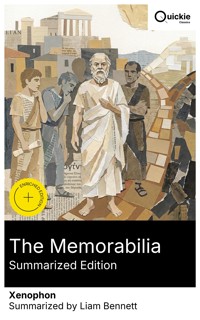
The Memorabilia gathers Xenophon's recollections of Socrates, arranged thematically as a sustained defense against charges of impiety and corruption. In concise dialogues and vignettes, Socrates tutors Euthydemus, Aristodemus, and even the hostile Anytus in practical ethics—self-control, justice, piety, friendship, and civic responsibility. Xenophon's lucid, unadorned prose favors exempla, preserving Prodicus's "Heracles at the Crossroads" and projecting a didactic counterpoint to Plato's dramatic elenchus. Xenophon—soldier, historian, and devoted pupil—writes with the pragmatism of a commander who marched with the Ten Thousand and later lived in Spartan-friendly exile at Scillus. Valuing discipline and utility, he shapes a Socrates concerned with everyday excellence and divine favor. Absent from the trial, he composed this work, alongside an Apology, to rebut calumny and memorialize the teacher who formed his ethics. Recommended to readers seeking an alternative, reliable witness to Socrates: it complements Plato while remaining accessible. Classicists, students of philosophy, and thoughtful generalists will find a clear guide to virtue tested amid postwar Athens—useful both as historical testimony and as a handbook for living. Quickie Classics summarizes timeless works with precision, preserving the author's voice and keeping the prose clear, fast, and readable—distilled, never diluted. Enriched Edition extras: Introduction · Synopsis · Historical Context · Author Biography · Brief Analysis · 4 Reflection Q&As · Editorial Footnotes.
Das E-Book können Sie in Legimi-Apps oder einer beliebigen App lesen, die das folgende Format unterstützen:
Veröffentlichungsjahr: 2026
Ähnliche


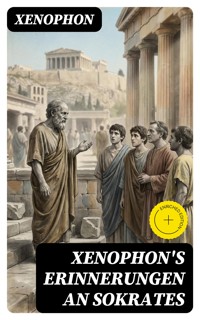



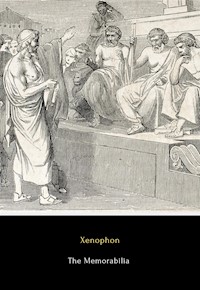







The Memorabilia (Summarized Edition)
Table of Contents
Introduction
Poised between a city’s condemnation and a philosopher’s unadorned routines, Xenophon’s Memorabilia challenges readers to ask whether the truth about a life is discovered in verdicts and rumors or in the patient work of examining oneself, practicing moderation, honoring obligations, and testing claims to expertise against the realities of action, as it follows a teacher who refuses ornament for clarity, prizes usefulness over display, and pursues the kind of companionship that strengthens character, so that the measure of wisdom emerges not from theatrical speeches but from steady habits of inquiry, counsel, and service in the midst of ordinary Athenian affairs.
Memorabilia is a Socratic work by Xenophon, an Athenian soldier and writer, composed in the early fourth century BCE after the execution of Socrates. Set in Athens and written in simple, direct prose, it belongs to the genre of recollective Socratic literature that preserves conversations and encounters rather than systematic doctrine. Across four books, Xenophon gathers episodes to defend Socrates’ character and way of life against the charges of impiety and corrupting the young that led to his death. The result stands alongside other Socratic accounts of the period while maintaining a distinctive emphasis on practical ethics and everyday utility.
Taking the stance of an eyewitness and careful reporter, Xenophon narrates Socrates' interactions with Athenians of different ages and occupations, showing how questions uncover assumptions and redirect ambition toward self-mastery. The narrative is episodic: brief scenes, plain speech, examples drawn from common crafts and civic practices. The tone is apologetic yet composed, aiming less to exalt an untouchable sage than to display habits anyone might imitate. Readers encounter a voice that favors clarity over wordplay, that treats virtue as something learned through exercises and comparisons, and that trusts ordinary experience as a testing ground for lofty moral claims.
Several themes weave through these recollections. Virtue appears as teachable through practice and attention, joined to self-control in pleasures, courage in risks, and justice in exchanges. Piety is presented as obedience to lawful worship and gratitude for benefits received, a guard against arrogance rather than a weapon for faction. The difference between genuine expertise and pretentious show is probed through analogies to crafts, asking what counts as evidence of knowledge. Friendship and mentorship receive sustained attention as arenas for mutual improvement. Household and civic management supply concrete contexts, linking the care of the soul to the organization of shared life.
These concerns remain strikingly current. In an age wrestling with misinformation, performative politics, and the confusion of celebrity with authority, Xenophon’s focus on tested competence and verifiable benefit offers a countermeasure. The book models civil disagreement without cynicism, asking interlocutors to define their terms, accept counterexamples, and align ambition with the common good. Its portrait of mentorship speaks to educators and managers seeking to cultivate judgment rather than merely transmit rules. By tying piety to humility and gratitude, it also illuminates how convictions can stabilize public life without coercion. The emphasis on disciplined habits anticipates modern insights about character formation.
Readers new to Socratic writing may find the book refreshingly straightforward. Compared with the dramatic architecture of Plato, Xenophon prefers brevity, repetition for emphasis, and illustrative cases, building persuasion cumulatively rather than through theatrical reversals. The scenes are compact enough to read singly, yet they resonate when considered together, since recurring concerns—what to desire, whom to trust, how to measure benefit—gain weight across encounters. Attention to small details repays effort: the order of questions, the choice of examples, the pairing of praise with admonition. The result is both accessible and quietly demanding, an education by steady increments.
Memorabilia endures because it does not trade in slogans or paradox for their own sake; it offers a portrait of wisdom as disciplined usefulness to oneself, one’s companions, and one’s city. By assembling conversations rather than composing a treatise, Xenophon allows readers to rehearse judgments, adopt practices, and test their own reasons against examples. The book thus serves as a gateway into classical ethics and a mirror for contemporary character, inviting renewed attention to the difference between knowing about virtue and becoming capable of it. In presenting Socrates as a daily presence, it makes philosophy plausible within ordinary life.
Synopsis
The Memorabilia, composed by Xenophon in the fourth century BCE, presents a sustained defense and portrait of Socrates after his trial and death at Athens. Organized in four books, it gathers recollections that aim to show Socrates’ character, methods, and beneficial influence. Rather than offering a single continuous narrative, Xenophon arranges episodes and conversations to counter accusations that Socrates was impious and corrupted the young. The work blends biographical observation with philosophical themes, emphasizing Socrates’ practicality and everyday counsel. It complements other Socratic literature by depicting a teacher focused on useful virtue, civic responsibility, and disciplined inquiry, more concerned with living well than with constructing a system of doctrines.
Book I frames the central controversy: whether Socrates’ teaching harmed the city or improved his companions. Xenophon argues that Socrates neither charged fees nor claimed to be a sophist, but sought to benefit those around him. He highlights Socrates’ attentiveness to a divine sign and to established religious practice, portraying a man cautious, pious, and law-abiding. Socrates’ questioning aims at self-control, prudence, and justice, and he steers interlocutors away from vanity toward usefulness. Throughout, Xenophon contrasts public accusations with private conduct, assembling examples in which Socrates urges moderation, respect for authority, and honest deliberation about what genuinely helps oneself, one’s household, and one’s city.
Within this initial defense, Xenophon stresses Socrates’ piety and measured approach to divine matters. Socrates encourages prayer and sacrifice according to civic customs while warning against superstition and guesswork about the gods. The famous inner sign is presented as a restraining warning rather than a license to disobey laws. He counsels obedience to magistrates, discipline in personal affairs, and gratitude for benefits received. To the charge of corruption, Xenophon opposes numerous conversations in which Socrates promotes filial respect, reliable friendship, and careful choice of companions. The portrait is of a man who tested claims by reasoned inquiry and aimed consistently at the improvement of character.
Book II turns to the practical reach of Socrates’ instruction. Xenophon shows him advising on household management, the use of wealth, the cultivation of friendship, and the ordering of daily life. Socrates presses his companions to define what they mean by advantage and to examine whether their habits actually secure it. He recommends effort, temperance, and foresight rather than dependence on luck. Wealth, for Socrates, proves beneficial only when guided by knowledge and self-command; otherwise it can harm its possessor. The conversations emphasize usefulness and service, training people to make prudent choices and to prefer durable goods—competence, trust, and moderation—over superficial displays of status.
The same book depicts Socrates’ method in action: he rarely delivers lectures, preferring to draw out premises through questioning so that interlocutors recognize contradictions themselves. He adapts his approach to each person’s situation, aiming to strengthen judgment rather than impose conclusions. Xenophon underscores Socrates’ accessibility; artisans, would-be gentlemen, and ambitious youths alike find him ready to converse. He connects bodily training and frugal living with clarity of purpose, arguing that hardiness supports freedom from compulsion. The cumulative impression is of a mentor who avoids flattery, urges self-reliance, and equips companions to govern themselves, their households, and their commitments sensibly.
Book III extends the scope to public life. Socrates examines the ambitions of those eager for political leadership, insisting they acquire the necessary knowledge before addressing the Assembly or commanding troops. He links good leadership to justice, planning, and care for subordinates, calling for attention to logistics, morale, and fair distribution. Xenophon includes episodes in which Socrates critiques empty rhetoric and urges the mastery of relevant crafts, whether civic management or military practice. The book also explores social conduct, where Socrates advises on managing desire and reputation, suggesting that self-possession and thoughtful reciprocity are crucial for stable relationships and civic harmony.
A recurring concern in these discussions is the alignment of piety and prudence. Socrates recommends consulting the gods about uncertain matters while insisting on human responsibility where knowledge is available. Religious observance accompanies, rather than replaces, careful preparation. He treats friendship as a resource grounded in character and mutual benefit, advising generosity that sustains trust without breeding dependency. Through such examples, Xenophon develops a civic ethic centered on competence, fairness, and measured ambition. Socrates emerges as a patient critic of impulsive action, steering would-be leaders toward habits that make their plans durable and their service to the city credible.
Book IV deepens the philosophical underpinnings of this portrait. Socrates argues that human faculties and the order of nature indicate divine care, encouraging gratitude and thoughtful worship. He contends that excellence requires training and that knowledge directs courage, moderation, and justice toward their proper ends. A prominent series of conversations with a confident but inexperienced youth illustrates how apparent wisdom dissolves under examination, leading to renewed study of definitions, means, and aims. Xenophon thereby ties practical advice to a broader view: virtue is not a knack or gift but a disciplined understanding that informs choice, grounded in attention to what is truly beneficial.
The Memorabilia closes by consolidating its case for Socrates as a beneficial presence in private and public spheres. Across episodes, Xenophon shows a teacher who honors the laws, cultivates piety without credulity, exposes pretension, and orients companions toward competence and moderation. The work’s enduring significance lies in its fusion of moral inquiry with everyday practice, offering an image of philosophy as guidance for living rather than an abstract doctrine. It invites readers to measure ambition by preparedness, friendship by reliability, and piety by thoughtful action, leaving a durable model of examined life and civic responsibility without resting on dramatic revelations.




