


11,49 €
Mehr erfahren.
- Herausgeber: Titan Books
- Kategorie: Fantasy und Science-Fiction
- Sprache: Englisch
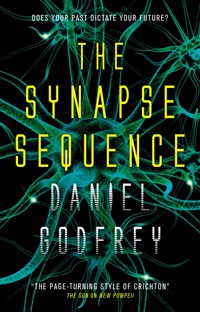
The new thrilling sci-fi novel from the author of New Pompeii and Empire of Time.In a future London, humans are watched over by AIs and served by bots. But now that justice and jobs are meted out by algorithm, inequality blooms, and protest is brutally silenced.Anna Glover may be the most hated woman in the troubled city – the media's scapegoat for an unpopular war. Now she hides from the public eye, investigating neglected cases by using the mind-invading technology of the synapse sequencer to enter witnesses' memories. When a PI brings her a new high-stakes case, Anna sees a chance for atonement. But soon she is drawn into a plot that threatens to upend her hard-won anonymity and put everyone in danger – even those she hopes to save.
Das E-Book können Sie in Legimi-Apps oder einer beliebigen App lesen, die das folgende Format unterstützen:
Veröffentlichungsjahr: 2018
Ähnliche


















Contents
Cover
Also by Daniel Godfrey and Available from Titan Books
Title Page
Copyright
Dedication
Prologue
1
2
3
4
5
6
7
8
9
10
11
12
13
14
15
16
17
18
19
20
21
22
23
24
25
26
27
28
29
30
31
32
33
34
35
36
37
38
39
40
41
42
43
44
45
46
47
48
49
Author’s Note
Acknowledgements
About the Author
Also Available from Titan Books
Also by Daniel Godfrey and available from Titan Books
NEW POMPEIIEMPIRE OF TIME
The Synapse SequencePrint edition ISBN: 9781785653179E-book edition ISBN: 9781785653186
Published by Titan BooksA division of Titan Publishing Group Ltd144 Southwark Street, London SE1 0UP
First edition: June 20181 2 3 4 5 6 7 8 9 10
This is a work of fiction. Names, characters, places, and incidents either are the product of the author’s imagination or are used fictitiously, and any resemblance to actual persons, living or dead, business establishments, events, or locales is entirely coincidental. The publisher does not have any control over and does not assume any responsibility for author or third-party websites or their content.
Copyright © 2018 by Daniel Godfrey. All rights reserved.
No part of this publication may be reproduced, stored in a retrieval system, or transmitted, in any form or by any means without the prior written permission of the publisher, nor be otherwise circulated in any form of binding or cover other than that in which it is published and without a similar condition being imposed on the subsequent purchaser.
A CIP catalogue record for this title is available from the British Library.
Did you enjoy this book?We love to hear from our readers. Please email us at [email protected] or write to us at Reader Feedback at the above address.
To receive advance information, news, competitions, and exclusive offers online, please sign up for the Titan newsletter on our website:www.titanbooks.com
FORELIZABETH ANNE JEYACHANDRANAND FAMILY
THE PRODUCTION OF TOO MANY USEFUL THINGS RESULTS IN TOO MANY USELESS PEOPLE.
KARL MARX
THE ARGUMENT OF THE BROKEN WINDOW PANE IS THE MOST VALUABLE ARGUMENT IN MODERN POLITICS.
EMMELINE PANKHURST
PROLOGUE
N’GOLO DURRANT STOPPED running just long enough to make another call for help. The AI answered quickly, but not so fast that it could be misunderstood: ‘What is the nature of your emergency?’
‘The girl,’ N’Golo said, his voice straining somewhere between panic and anger. He swept some wetness from his nose and winced. The pain where Connolly’s fist had connected was still raw. A long, sticky, dark red streak appeared on the back of his hand. ‘I told you before, they’re going to take her!’
‘Please remain calm. Are you in immediate danger?’
N’Golo held his breath for a moment. Was he? Had he been followed? He couldn’t be far from the gap in the security fence; he could see the lights of his foster-home. He ought to be safe. But nothing was safe now. A soft squelch behind him, then silence. N’Golo spun round. Most of the farm track he’d been running along was lost in darkness, curtained between a tall hedgerow and a cluster of trees; only a few slivers of water shone back from the tractor ruts in which he’d just stumbled. The light wasn’t sufficient for him to see much else.
He doubted they’d let him escape so easily. N’Golo thought back to the basement. Remembered how he’d tried to shrug past Connolly before the older man had grabbed at him and pulled him back.
‘Caller, please respond. Are you in immediate danger?’
‘No, not me,’ N’Golo replied. The house was right there; he’d be inside quickly once he’d found the gap in the fence. But he couldn’t tell them. He’d be shipped off to another home as soon as he opened his mouth, his foster-father’s opinion of him confirmed. He had to make the police understand – now. ‘I told you,’ he said. ‘I told you before… but I know it this time! It’s going to happen!’
‘Are you in immediate danger?’
The emergency AI was locked into its preprogrammed routine, just as unbending as Connolly had always said. And this time it was also wrong.
‘Check your records!’ N’Golo hissed. For a fraction of a second he thought he saw some movement. A patch of darker shadow moving against the background black. He turned and started walking – fast – trying to ignore the growing stitch in his side. ‘You can do that, can’t you? You know what I’m asking you?’
‘Please remain calm,’ the AI responded.
‘I am fucking calm…! The girl…’
‘Who is the girl?’
‘Beth Hayden.’
‘A “Beth Hayden” lives with you at 19 Vicarage Lane, Amblinside. Is this correct?’
The voice continued to be both patient and efficient. There was no apparent hurry, not when it could answer hundreds of calls simultaneously. And while it spoke, the AI would also be crawling through its databases for any and all information about him.
‘Yes.’
‘And who has taken her?’
N’Golo felt another rip of frustration. ‘Take her,’ he corrected. ‘I told you they’re going to take her!’
‘Is Beth in your vicinity? Can you see her?’
‘No.’
‘And do you believe Beth Hayden to be in immediate danger?’
N’Golo stopped. There was something wrong. The conversation with the AI was caught in a circle. ‘I told you all this before,’ he said, his voice now quiet.
‘Please return to 19 Vicarage Lane. An investigative team has been dispatched.’
Investigative team. Not the emergency boys. Not the bulldogs they sent when the heat was on. Certainly not the hunter bots. And that confirmed it. He was being ignored.
N’Golo ended the call to the AI. That noise again, louder, echoing his own movements. The squelch of work boots on the muddy path. He risked a glance over his shoulder. The shadows shifted again. Or perhaps it was just one shadow that was moving, detaching itself from the surrounding darkness. Was it a man? Was it Connolly?
He clenched his fists.
He was so very nearly home.
1
ANNA GLOVER ALLOWED herself a thin smile of satisfaction. She’d been right. Nobody had known the man wearing the light yellow shirt had dropped into the café prior to heading to the entertainment plaza. Yet he stood just a few metres away, ordering a flat white. Anna watched him, not trying to attract his attention. Instead, she made a few mental notes about his actions and demeanour that she’d later try to fit into the overall puzzle.
The man didn’t make eye contact with the female barista. But he did nod slightly as his drink was placed on the counter, then apologised as he tried to pay with cash. It didn’t appear to concern him she couldn’t offer any change; that most people now paid with a swipe of their wrist rather than using coins or notes.
Anna kept still at her table, appreciating the irony of where he’d chosen to purchase his last drink. This was a relatively expensive place: one of the few that still employed people to operate the coffee machines rather than using a much cheaper, multi-armed swivelling bot. She’d taken up a position against the back wall of the café, right next to the toilets. The customers near her were mostly sitting in silence, all wearing the alert but distant expression of anyone connected to the boards. No one looked at her. She may as well have not been there. Which, of course, she wasn’t. At least, not when the events had actually occurred.
She looked back to the counter. The guy with the flat white hadn’t moved. His drink remained in front of him, untouched. He seemed hypnotised by it. A young couple who’d come to stand just behind him were impatiently calling their order over his shoulder. Anna tensed. Maybe he was listening to the voice of his conscience – and yet, if indeed that was what was happening, it had been all too distant. All too quiet.
He stood up.
Anna got ready to follow him out on to the street – but instead he took his flat white and went to a nearby table. She relaxed again, checking her watch. Yes, it wasn’t quite time. It wouldn’t take him long to get to the entertainment plaza; a couple of minutes, max. So it was about to happen, and she would witness it all.
Sure enough, the man didn’t allow the coffee to cool. Instead, he took heavy gulps, showing no sign of pleasure. She wondered why he was here. Perhaps it was just to take part in some sort of ritual. Just to take that last hit of caffeine before he did the unthinkable.
Anna didn’t know. The man pushed his foam cup aside, his shoulders and neck stiffening. But he wasn’t accessing the boards, his attention hadn’t left the room. Instead, he wiped his brow. Fidgeted. His skin acquired a thin sheen of sweat that could only be associated with building nerves. He knew he’d soon have to make a decision. He was almost at the point where he wouldn’t be able to stop himself.
Or maybe he’d long since sailed past it. Maybe before he’d ordered the flat white. Before he’d even left his hostel. Maybe at the time he’d gone to sleep the previous night he’d known that, when he woke up, he’d be living through his last day. Drinking his last cup of coffee in a café his friends would later say they’d never known him visit. And yet would she catch the moment where he realised his path to destruction was set?
In her previous job, she’d witnessed those horrifying moments all the time. Mainly from trained men and women who couldn’t see what they were doing was wrong until they could no longer do anything to correct it. Minor mistakes, effortlessly rolling into larger ones. But there was always that sudden, snapping moment when the brain can only summon up a single word: Fuck.
The man with the flat white was nowhere close to that point yet. And the details around him were becoming less clear. When he’d been at the counter, the slowness of his order had been enough to draw the attention of the other customers. Now he’d begun to merge into the background. Forgotten, and softening into the nondescript.
Two men dressed in suits stood and moved towards the door, further hindering her view. As they passed, the walls of the café blurred for a moment – and then the man with the flat white once more appeared in her eye line. He pushed himself from his chair and headed for the door.
Damn.
He really had been alone. Other than the interaction with the barista, he hadn’t spoken with anybody. That disproved one of her theories. Nobody had pushed him into action, or was cheering from the sidelines. But that didn’t mean she couldn’t pick out anything useful.
She stood – took a steadying grip of the edge of her table and waited for the café to stop swaying. A few more customers were finishing their drinks and making their way back on to the street. As they left, they took with them further detail of the counter and the tables immediately surrounding it. It felt as if something was pulling her brain upwards while also keeping her feet clamped to the floor.
A waiter was already clearing the flat white’s table. Anna stumbled over, but didn’t try to stop him. The grey laminate in front of her just held the foam cup and a couple of sachets of sweetener. But there was something on the floor. She stooped out of habit to retrieve it, and was again beaten by the waiter. He frowned, then crumpled the sheet and pushed it into the empty neck of the cup. It would soon be on its way to the recycling centre, but at least now Anna had seen it: a single giant fist emanating from the wrists of many.
The café grew a little dimmer. Twisting, Anna saw that the couple she’d seen earlier were leaving, and she followed them out of the door. The other customers dispersed left and right, but she already knew she could only follow the pair heading towards the entertainment plaza. Anna hovered behind them, unnoticed, searching for the man who’d been drinking the flat white.
She saw him ahead. He hadn’t gone far from the café door, which was just as the local CCTV had recorded. He lingered alone, blurred and anonymous, and then pushed onwards – always a few feet ahead of the couple.
Anna couldn’t help but feel a tiny pull of regret. From the stilted and jarring rhythm of the conversation ahead of her, she could tell this relationship was still new. She wanted to warn them. Tell them to turn and run. But it was too late. The couple in front kept glancing at each other and, as they did so, more and more of the detail of the street became lost, blurring into nothingness even though the approaching plaza should have made everything more vibrant.
They’d perhaps been the closest, but had actually seen the least.
Right up until the first shot.
And then Anna saw it. The moment. Written in large panicked letters across three different faces, as the street scene first exploded in more detail than Anna could possibly process, and then simply disappeared.
* * *
ANNA FLINCHED AND rolled onto her side. She lifted her head just as the first wave of vomit came into her throat, just about managing to direct most of the liquid onto the tiled floor rather than across her steel bench or disposable clothing. A learned response, after months working in the synapse chamber.
The tuneless whistle of the hub technician, Cody Weaver, passed into her ears, but most of her consciousness was still on the street outside the coffee shop. Watching from the point of view of her witnesses, as the man who’d ordered the flat white had started to open fire.
Cody pushed her gently back onto the bench, checking with a practised move that her airway was open and clear. Their eyes met, but they both knew she couldn’t answer his questions yet, no matter how desperate he was to find out what she’d seen. He moved out of her eye line, and soon began to whistle again.
Anna tried to ground herself, concentrating on the chamber she was in now, not the place she thought she’d been just a few seconds ago. All her witnesses would still be attached to the sequencer, lying outstretched on their own stainless-steel synapse benches. The effects of the sedative would keep them submerged until the experiment was finished. Right now, she could hear from the whistling that Cody was checking each one in turn.
Yes, she thought. She was at the hub. She was back from the street, and had never really been there. All she’d seen was a patchwork of memories. A series of recollections from those witnesses who’d agreed to take part in her experiment – all processed into a single reconstruction.
Cody ambled into view again, pushing a string-headed mop ahead of him, which left a characteristic wet squeak as it swept the slick of vomit into a gulley beneath the beds. ‘Your heart rate, adrenaline, all stable,’ he said, his voice breaking into a nervous chuckle. ‘As if you were sitting at home, watching TV. Now, if you could just stop spewing everywhere…’
Anna opened her mouth to reply, but her tongue felt heavy and thick. Like a slug was filling her mouth, pushing up against her cheeks and lips.
‘Relax. Don’t force it.’
Anna closed her eyes as she continued to reclaim her brain from the street outside the coffee shop. Sure enough, after a few minutes her tongue began to feel normal again. In a few more, her fingers would become less like bananas. The sensation from her legs would take the longest to return. ‘It doesn’t… get any… less… awful.’
The vomiting was, of course, the one clear problem with the synapse sequencer, the thing that stopped most of its more commercial uses from being put into practice.
‘Were we right?’ Cody asked, his voice hopeful.
‘No.’
His face clouded over, but Anna’s attention was on her own recovery. She attempted to push herself upright, and was rewarded with an unflattering view down the length of the muslin overalls which covered her normal clothes. Next, she tried to move her feet. Failed. Her nervous system needed more time, but she was impatient. She forced herself up, and sat looking around her, legs dangling uselessly over the side of the bed. The synapse chamber was large and mostly empty. Her steel bench was one of twenty arranged as spokes around a central unit. Most of the equipment required to transfer and merge the subjects’ memories was contained within the structure of the benches, which lent a certain cold efficiency to her surroundings.
The witnesses from the coffee shop were still ‘asleep’. They’d all been sedated to oil the wheels of the process: a light dose for Anna, to keep her higher functions lucid while allowing her to slip into the other’s memories; a higher dose for the witnesses. It gave them no opportunity to think about different actions or alternative courses of events, kept the combined memory as steady as it could be.
There were two notable absentees from the chamber: the man who’d ordered the flat white, and the young woman Anna had been walking behind just before the first shots had been fired. Her boyfriend, Marlon, was with them, though. His overalls were covered in orange liquid as he struggled on his steel bench, as though caught in a thick mud.
‘He’s bumped out,’ said Anna.
‘Yeah,’ Cody replied, drawing his mop along the tiles, cutting them clean. ‘I see him. Give me a second.’
‘You didn’t notice?’
‘My concentration was on you.’
‘Put him back under. Quickly.’
‘It’s just shock.’
‘I know what it is,’ Anna snapped. She couldn’t bring herself to watch Cody administer the drug, pushing Marlon back under so he could be given a more controlled return to consciousness. He’d been her most reluctant witness. She’d only persuaded him to take part in their experiment by telling him that what his brain could remember – perhaps outside his waking memory – might hold some clue as to why Jeanette had been shot. But now, after watching him struggle back to the surface, she understood. He didn’t want to remember. Didn’t want to go through it again. His girlfriend had died: she’d been murdered beside him.
‘Another failure, then,’ Cody said.
‘No.’ Her reply was too quick. ‘Not a failure. CCTV and drone footage told us nothing about what happened inside the café. It all adds to the picture.’
‘Did the shooter meet anyone?’
‘We can rule that out now, I think.’
‘So this Luke Taylor just ordered a drink, and then strolled outside to open fire?’
‘He had a leaflet with him: the Workers’ League.’
‘The police already knew he was a commie,’ Cody growled.
Anna slipped down gently, trying each leg in turn to check all the feeling was back before shifting her weight fully off the bench. Her star witness was sleeping again, the suffering still etched on his face. He’d been shot as he’d looked into his new girlfriend’s eyes; she had died in his arms. What was she going to say to Marlon? That this had all been a waste? That he’d seen nothing that day that would really help?
No. The synapse sequencer could save lives. She wouldn’t allow it to fail.
2
GRACE TROTTED INTO my little box room with a tray of food and her usual cheerful greeting: ‘Good morning, Anna.’ I was grateful that it was the dumpy nurse and not the careless one. I’d managed to lever myself into my wheelchair already, but she checked that I was secure before she placed the cushioned tray on my lap.
Given I wasn’t particularly hungry, I didn’t pay much attention to the food. But I was amused that Grace had already started the little ritual she always performed when delivering my dinner. First she picked up the cutlery a fraction of an inch, before putting it down again firmly onto the tray, each piece making a sudden, sharp tap. Then she did the same with the three-quarter-filled glass of orange juice. I was never quite sure why she did this. Maybe it was to make sure I knew it was all there, or to draw my attention downwards so I didn’t forget about it.
‘Spaghetti, meatballs and bolognese sauce,’ Grace said, pronouncing every word like she was talking to a five-year-old. It was perhaps what they taught them to do, but it was still irritating. I wasn’t deaf, never had been. ‘Your favourite.’
‘Yes,’ I said, playing my own version of the game, ‘I look forward to Tuesdays.’
Grace didn’t pass comment. She kept her smile fixed even though a part of her brain would have triggered: Friday. It’s Friday.
‘And are you finished with the TV, Anna?’
My neck moved in a series of jerks and clicks. The TV was just a shimmer in the background. I squinted at it – not quite sure if the damn thing was actually on – and then attempted a dismissive hand wave. ‘Nothing worth watching, anyway,’ I said.
Grace walked over to it. Her movement brought some of the light from the screen into brief focus, and I realised all I was missing was reruns of old TV shows. The home ran a fixed-channel system, and the management chose programming to sedate rather than entertain. Occasionally, they would make a mistake and there’d be a welcome flash of nudity, some of it male. But those days were all too rare.
‘Did I ever tell you the story of Arnold Anderson?’ I asked.
Grace stopped, her smile still fixed. Behind her, the shimmer had vanished and been replaced by a cold black void. ‘Why don’t you remind me?’
‘Arnold Anderson was a soldier who woke up in hospital the day after D-Day, and wondered why he was finding it hard to move, hard to see and hard to hear. When he looked in the mirror, he saw an old man staring back at him. Every day he woke up and said the same thing to his doctor. Every day he thought he was still twenty-four years old, just returned from the Front.’
The nurse crouched so she could communicate at eye level. ‘I never know whether to find that a sweet story or a horrific one.’
‘It’s neither,’ I replied sharply. ‘It’s life. You always feel like you’re twenty-four years old. When you’re sixteen you feel older, when you’re thirty-seven you feel younger. And when you’re my age you feel it too – but you also wonder why you can’t kneel down any more, nor get back to your feet so easily.’
Grace’s smile was genuine now. I glanced at my food tray, and cursed again at the machine that turned everything into a pre-chewed gloop.
‘It’s good for you,’ Grace said.
‘A student came to see me yesterday,’ I said, still not picking up a fork.
‘The children from the local school have already been,’ Grace replied. She sounded a little nervous. ‘You asked not to see them, remember? But they’ll be back again soon enough, so you can catch their next performance.’
I sighed. She was playing dumb, trying to distract me and hoping I would instead start my dinner. But that would be easier to eat once the sauce had started to stiffen.
‘No,’ I said. ‘No, I don’t want to listen to a bunch of tone-deaf kids… I can remember the songs fine, thank you. I don’t want them ruining them just as the album’s about to finish.’
‘Album?’
‘Whatever you want to call it… LP, album, CD, shuffle. Always new words for the same thing. To confuse the old and trick the young into thinking they’re cleverer—’
‘Than they are,’ Grace finished the well-worn statement. She was kind. Unlike the careless one. Unlike the bitch.
‘This student came from the university,’ I said. ‘Not a kid. Not one of the local sprogs, although I think his sister might be one of them. Didn’t you say he wants to talk to me about what happened in Tanzania? You know, the crash?’
I couldn’t really remember – it was all lost in something of a fog – but I just about caught a flash of annoyance cross Grace’s cheek. She stirred the gloop on my plate as if that would tempt me to eat it. If she’d been the bitch, then she might have made a callous remark that my memory was failing. Just like my eyesight. Withering away like my skin.
My nurse’s face turned serious. ‘It would be best if you just told him to go away,’ she said. ‘It won’t do you any good to drag that all up again, Anna.’
It was too late, though. I was already thinking of that place. That stupid decision. When I was too young, too proud and too arrogant to take the right course rather than the correct one. ‘Who is he?’
The question seemed to disappoint my nurse. She raised up a little, her hands levering against her knees and her face screwing up for a moment or two. ‘All I know is his name is Sean.’
‘And what is his research topic?’
The nurse looked back at me blankly.
‘What is he studying?’ I asked again.
‘I think you told me that,’ Grace replied. ‘You used some pretty fancy words, Anna. But I guess it comes down to why people do things.’
‘Why they make their choices?’
‘Yeah, I guess that’s it.’
‘My choice was that I said a plane had been sabotaged.’
‘That wasn’t a choice, though, was it?’
The nurse hadn’t meant it as a question, but my slow eye roll caused her to take a sharp intake of breath. Only then did she relax. Realising the joke. It was, after all, Friday not Tuesday.
‘I think it would be interesting to see him,’ I said, turning my head away towards the dresser where I kept my now meagre collection of vinyl. It was a format that had gone in and out of fashion throughout my adult life, although I was no longer allowed to play them lest the noise disturbed the other inmates. ‘What does it matter now, anyway? The album will soon be finished.’
Grace didn’t try to offer any empty words of reassurance. We both knew we couldn’t beat what was coming.
‘I’d been thinking I’d be forced to explain sooner or later,’ I continued. ‘Just, perhaps, after the end and not before it.’
The nurse checked a device in her pocket. Vital signs, no doubt. Another piece of my independence that had been passed over to others, somewhere along the line. But this mention of Tanzania hadn’t triggered any anxiety. No tightening of the throat. No dizzying feeling that the world was about to fall away.
So it was finally time.
Time I made my admission.
3
Top News:
UI set for above average increase(Read more)
Government announces extension to artist patron scheme(Read more)
Police hail latest update to Serve & Protect(Read more)
Selected for You:
Flashback feature: The 1800s, when people were employed to light street lamps!(Read more)
‘You’re tense.’
Anna felt something well up inside her, but the frustration didn’t quite break. Instead, she switched her attention away from the boards’ latest feeds and slipped off her coat. Her housemate, Kate, was sprawled on their sofa, eating pasta from a plate balanced on the very tip of her knees. Anna tried to ignore the fact it might topple, and instead headed to the kitchen.
Her lodger had probably been in their apartment most of the day, though there wasn’t any evidence of her doing anything useful. Yesterday’s dishes remained stacked beside the sink, and they’d now been joined by a series of cups and beakers that must have been filled and discarded at some point. But just as Anna was about to shout something sarcastic through to the lounge, the oven signalled her evening meal was ready. A hot stew and a stick of crusty bread. Which meant the fridge, Kate, and the connecting logistics chain had all successfully conspired to get her some food just when she needed it. Even if it wasn’t exactly what she wanted.
She would have vastly preferred her housemate’s pasta. Not that this was Kate’s fault. The oven wasn’t set to Anna’s biorhythms. To all intents and purposes, it thought she was already home, eating her dinner on the sofa where Kate was now sitting. The meal it had prepared was for someone else entirely, a phantom populating its circuits. An algorithmic substitute coded with the express intent of fooling the main program. The thought caused a sudden knot of doubt and panic.
‘Hey,’ shouted Kate, ‘if you don’t like it, I’ll eat it!’
‘It’s fine,’ Anna answered. When she’d first invited Kate into her apartment, keeping track of which lifestyle algorithm was following which inputs had been confusing. But now she was just about used to it. And food was food.
Anna retrieved the meal from the oven and started slicing up the loaf – carefully holding back the two crusty end pieces for when she’d finished. She tried not to think about anything else, but found herself dwelling on the usual fears anyway. The trip home had been okay, and with winter approaching, the nights were already providing that extra element of covering darkness. She always walked quickly, varying her route between the hub and the pod station, as she’d so often been advised. But it was more reassuring when she knew there was less chance of being recognised.
‘It’s been a bad day,’ Kate said, not shifting her attention from her pasta as Anna returned to the living room. The plate on her knees was now at an even more gravity-tempting angle, and there was more than enough sauce remaining to make a mess. If it fell. ‘Well, I guess the morning was okay, but your PPA has been bugging me all afternoon.’
Anna pulled her attention away from the plate. Just like the oven, her Personal Psychological Assistant was tied to Kate rather than Anna. The arrangement meant the PPA’s alerts could be contained within the apartment, rather than being relayed to her at work. It was typical of the Home Office’s ineffectiveness that its main response to her situation – compelling her to use a PPA – had effectively made it harder to be re-employed. If she admitted to it. ‘Saying what?’
‘Wanting to chat… you know how Elsy is. Yada, yada, yada.’
‘Thank you.’
‘No problem,’ Kate replied, shrugging. ‘It’s what you pay me for.’
Her lodger – her employee – her spoof – continued to eat, relaxed. Her head moved in an almost imperceptible bobbing motion, but whatever music was vibrating through her inner ear didn’t emanate into the wider room. Another slight irritation. Just like the plate.
Kate’s head stopped. ‘Okay – I hear you.’
‘I didn’t say anything.’
Kate tapped at the side of her skull. ‘I heard you loud and clear, Mum.’
Anna tried not to respond to the young woman’s taunt. But, of course, she did. The two of them were linked. The routing of Anna’s personal biodata feed via her spoof meant Kate always had a good idea of how she was feeling. All it had taken was enough time together to allow her spoof to learn how to interpret the data.
Kate flinched at Anna’s unspoken response. ‘Okay, sorry. My bad. Shitty day, huh?’
‘That thing I told you about?’
‘Yeah?’
‘It didn’t work.’
‘Not this time,’ Kate replied. The answer had been almost instantaneous. Positive. Unworried. Her lodger grinned, and let the plate slide cleanly onto the sofa – where it would likely stay for the rest of the evening. ‘And, anyway, you’ve only just started. They’re not going to give you a job and then take it away just like that. I mean… the company you’re working for is smart, right?’
Yes, Anna thought, very smart. Which meant using a spoof was a very dumb idea. But Jake Morley would have been unlikely to have offered her the job if he’d known she had a PPA. And so it would remain her only option until she could get the damn thing uninstalled.
‘You seen UI payments are increasing?’
Anna nodded, grateful for the necessary distraction. She’d seen it on the boards, and knew the increase in the Universal Income payment would have attracted Kate’s attention. The same cash increase would also be going to her own account, of course, although she also had a job to supplement it. For the time being.
‘And there’s a new round of grants for creatives.’
Yes, she’d seen that too. Every so often, the government liked to hand out cash to keep individuals going for a year or so. It was unlikely, however, that any would end up in Kate’s pocket. She was good at painting, but so were a lot of other people.
‘Hey – my creativity index is in the top bracket,’ Kate replied, reacting to the unstated negativity. She settled back, her head already starting to bob to her inaudible music.
Anna forced herself to relax. She was home; she had food. And even though her apartment wasn’t spacious – just two bedrooms, a kitchen and a living room – it was at least comfortable and secure. A sideways glance from her housemate confirmed her subtle change of mood had been registered. The simple moment of kindness reminded her of how lucky she’d been in finding Kate at the right time. Eventually, Kate would get sick of being a spoof and the search would be on for a replacement, someone else who could even out her mood.
‘Hey…’
Anna turned. Kate tilted her head. ‘You’re becoming maudlin.’
‘I was just thinking.’
‘Then stop. Eat your dinner. Go to your room and listen to some of your crackly old records. You’re not at work now, you know.’
Anna took a mouthful of the stew, but didn’t quite bring herself to relax again. Her spoof stretched out on the sofa and gave a long, slow yawn.
‘You’ve had a visitor, by the way,’ she continued. ‘Thought I should say before you check in with the front desk.’
‘Oh?’
‘One of them,’ Kate continued, rolling her eyes.
‘They came to the door?’
‘Uh-huh. You maybe got a ping from me? I was still in my dressing gown, so I was just, like, so not ready for that shit.’
Anna silently shook her head. She hadn’t felt anything at work. Received no corresponding pulse that anything had been wrong here. Did nothing disturb her spoof? Then again, it was Kate’s job to be unruffled. ‘Did they say anything?’ she asked, knowing her heart rate had already turned up a notch, and her housemate would feel it. ‘Tell you why they came?’
‘As I said, I got rid of them,’ Kate replied. ‘And then I informed the security desk they’d fucked up. Don’t fret about it.’
4
THERE WERE TREES in the distance, but Anna’s attention was instead drawn to the lake directly in front of her and the ruined abbey overlooking it. The summer sun hung motionless above the scene. Everywhere appeared calm, the lake only disturbed by the passage of a swan with its cygnets.
She took a few steps forward, sensing the slight distortion and lag of the sequencer. Around her, a few families lolled in the centre of the park. Even from here it was clear that several sets of parents and children were direct copies of each other. But they were only ancillary details – decoration rather than the centre of the memory. By contrast, the detail of the abbey, from the remaining arches to the weathered gargoyles lining the tops of its walls, had been transferred into the sequencer with remarkable clarity. Which meant Jake must have been fascinated by it. He’d examined and could recall every little crack and wrinkle of its structure.
‘Anna!’
A man was jogging towards her – coming from the lake that he’d been using as the centre of a natural athletics track. Summer heat or not, Jake didn’t look tired as he hammered closer. And he recovered his breath all too quickly.
Anna suppressed a smile. Her boss was perhaps in his mid-thirties, tall and muscular. He didn’t much look like a distance runner, more a sprinter, and his orange running vest seemed to have been chosen specifically to show off his shoulders and biceps.
‘Rufford Abbey Park,’ Jake explained. ‘I used to visit it as a child.’
‘I think we’ve met here before.’
‘Possibly. I understand yesterday’s experiment didn’t go well?’
‘We know more than we did before,’ she said, trying to sound confident. ‘I should have at least something to add to my report.’
‘Don’t bother with a report yet. Good ideas are never rushed. I’m thinking we need to pursue another example, though. I know we’ve discussed it before, but Luke Taylor never seemed a suitable choice to me.’
‘The man killed over thirty people.’
‘And everyone knows why,’ Jake replied. ‘A solicitor, five years out of work after losing his job to a bot.’
‘It takes more than that to push someone—’
‘He took the plunge down to the UI,’ Jake repeated, ‘and snapped.’
‘Most simply move on, and try again.’
‘Just like you, you mean?’
Anna had joined Synapse Initiatives after her career as an air crash investigator had come to an unscheduled end. Perhaps it wouldn’t have been much longer before she – just like most solicitors – became obsolete anyway. Planes rarely crashed any more, just like most legal details could be dealt with by an AI. But she’d been one of the lucky ones, until she’d investigated the wrong crash. The one that went political. The one that led to China’s proxy war in Tanzania against the US and Europe.
It had been barely a year ago; a short, clinical drone-fought war for the foreign powers, and a brutal one for Tanzanians – seventy-five thousand civilians killed. The government line was that it had been an honourable war fought to protect American allies against Chinese-backed terrorism; the people Anna met in the street were still raw from seeing pictures of dead children, desperate doctors in bombed-out hospitals, and they were looking for a scapegoat.
‘You wanted me here to give you another way of looking at things,’ Anna said. ‘That’s what I’m trying to do. The police concentrate on the who and the when, when I think there’s more long-term value in finding out the why. We still need to know why he shot up that plaza.’
It was hard to tell if she was making an impression. Her experiment was just one of the projects being funded at the synapse hub. And the hub itself was just another part of Jake’s wider empire, even if he spent more time on it than his other investments.
‘Aircraft became safe because we never accepted the easy answer,’ Anna persisted. ‘Pilot error, mechanical failure, weather conditions. Hardly any crashes had a single cause. And I don’t believe what happened at the plaza that day can just be ascribed to someone “being put on the UI”.’
‘So what’s this extra detail for the report?’
‘He was a member of the Workers’ League.’
Jake sucked in some air his body didn’t appear to need. ‘A tiny organisation made large through hysteria.’
Anna didn’t contradict him. How big the Workers’ League had become was a matter of some debate. The organisation was constantly in the news, thanks to its attacks on systems that supported AI and robotics initiatives. Like the Luddites before them, its leaders preached the message that violent protest was justified if it protected people’s jobs.
‘Plus, it doesn’t help that this guy shot up a load of people who were on the UI,’ Jake continued. ‘If he’d chosen a time after working hours, then the case would be of higher value. It might have earned a visit from a politician, maybe even the new prime minister.’
Unlikely, Anna thought. With so many employment protests being agitated into violence by the Workers’ League – tiny organisation or not – most politicians had long since disappeared from public view. Every now and then one would make a blink-and-you’ll-miss-it appearance to capitalise on some rare good news, or to take credit for someone else’s hard work.
‘The key problem for your team is that the police don’t appear to be interested in buying a new system from us. They’re happy with the system they already have.’
‘Serve and Protect has its flaws,’ Anna replied, all too quickly.
‘Yeah, but it seems to be driving down crime, which is all anyone cares about.’
Jake was right. Crime was falling – that much was pretty self-evident. People simply didn’t have the same opportunity to commit crime and, more importantly, to get away with it. Not when policing was governed by the seemingly omnipotent eye of S&P.
‘Of course,’ Jake said, ‘there’s this emerging issue with the use of spoofs. That might change things.’
Anna remained silent, catching her answer mainly because she didn’t trust her voice. The technician monitoring her biofeeds would not detect any blips, thanks to the fact that they were actually reading Kate’s vitals, not hers.
A blond child in a striking red T-shirt started chasing a duck down the bank towards the river. About a hundred metres away, the same blond child in a red T-shirt was holding its father’s hand, walking through the park. The same child, built from the same memory. The sort of mistake her witness program was designed to eliminate.
‘I want this to succeed,’ Anna said. ‘We can offer something to supplement S&P, I’m sure of it.’
‘There are many potential uses for the sequencer. It’s just a case of figuring out which are the right ones. Commercially, ethically.’
‘And addressing the nausea.’
From the look on Jake’s face, her comment was in poor taste. ‘Speaking of health,’ he said, ‘you should get yourself out a bit more. Most of your biodata looks good, but there’s an alert that your vitamin D is bumping along the bottom.’
Kate. The downside of her spoof spending all day in the apartment was that she didn’t get much sunshine.
‘Take a few supplements. Remember: a healthy body is a requirement for a productive mind.’
Anna wondered momentarily about her other stats – and didn’t want anyone in HR to look too closely at the data. A few quick sweeps was fine. Anything more than that might highlight oddities that would be harder to explain.
‘You had a visitor yesterday.’
Shit. How does Jake know about that? Her first couple of weeks at the company had been marred by a steady trickle of protests at the outcome of her final air crash investigation. But then again, the reason for those protests was the same one for which he’d employed her. ‘I’ve reported the failure to the desk security,’ Anna said. ‘She won’t get into my apartment block again.’
‘I meant you had a visitor here, at the hub. And it was a man, not a woman.’




