


Erhalten Sie Zugang zu diesem und mehr als 300000 Büchern ab EUR 5,99 monatlich.
- Herausgeber: Cinnamon Press
- Kategorie: Gesellschafts- und Liebesromane
- Sprache: Englisch
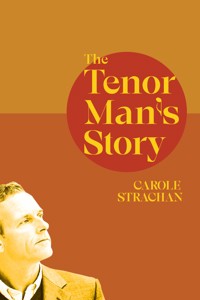
Alex Ingram is well-acquainted with sorrow. He's overcome childhood polio to become a successful singer whose lyric voice 'lays bare the joy and pain of being alive.' When tragedy strikes again, Alex finds hope through the healing power of music. And an epiphany awaits... an unforeseen encounter that changes everything. Standing alone but reconnecting with characters from Carole Strachan's acclaimed debut, The Truth in Masquerade, The Tenor Man's Story returns to the world of classical music. With a vivid and compelling story of love and loss, reminding us that life can be wonderful, often in the most unexpected of ways.
Sie lesen das E-Book in den Legimi-Apps auf:
Seitenzahl: 528
Veröffentlichungsjahr: 2024
Das E-Book (TTS) können Sie hören im Abo „Legimi Premium” in Legimi-Apps auf:
Ähnliche




















Contents
Title Page
Copyright
Permissions
About the Author
Also by Carole Strachan
Epigram
The Choirmaster’s Burial—‘The Tenor Man’s Story’
PART 1: Winter 1983 to Spring 1987
6 December 1983
Park Town
Return to Cork
A Life in Books
April 1949: Mortuos Plango, Vivos Voco
Philip Nash
Christmas Day
Spring Awakening
Father and Daughter
Bright is the Ring of Words
Kindred Spirits
Come to My Arms, Myfanwy
Let us Garlands Bring
Looking Forward
Before Life and After
Winter Words
Leaden Skies
An Old Belief
PART 2: Spring 1987 to Spring 1988
To Cairo
Encounters
Mother and Son
Chaos and Curiosities
A Pharaoh’s Journey
The Moghul Room
Elijah
Going Home
The Archive
The Empty Chair
Staying Alive
Catharsis
PART 3: Spring 1988 to Spring 1993
When I Set Out for Lyonnesse
We Grow Accustomed to the Dark
Crossing the Curlew River
Onwards
Lillian
Hephzibah
In Search of Aschenbach
Those Eyes
A Dangerous Thing
Death in Venice: Rehearsals
Death in Venice: Performances
Ah, Tadzio
If Only
The Red House
Into the Silent Land
An Untold Story
Life Changes
6 December 2006
The Tenor Man's Story
Carole Strachan
Published by Cinnamon Press,
Office 49019, PO Box 15113, Birmingham, B2 2NJ
www.cinnamonpress.com
The right of Carole Strachan to be identified as author of this work has been asserted by her in accordance with the Copyright, Designs and Patent Act, 1988. © 2024, Carole Strachan.
Print Edition ISBN 978-1-78864-165-4
Ebook Edition ISBN 978-1-78864-178-4
British Library Cataloguing in Publication Data. A CIP record for this book can be obtained from the British Library.
All rights reserved. No part of this publication may be reproduced, stored in a retrieval system, or in any form or by any means, electronic, mechanical, photocopying, recording or otherwise without the prior written permission of the publishers. This book may not be lent, hired out, resold or otherwise disposed of by way of trade in any form of binding or cover other than that in which it is published, without the prior consent of the publishers.
Designed and typeset by Cinnamon Press.
Cover design by Adam Craig © Adam Craig. Image: DMP/iStock.
Cinnamon Press is represented by Inpress.
Permissions
Every effort has been made to contact holders of works in copyright. The publishers will be pleased to rectify any omissions brought to their attention in future editions.
Excerpts from Under Milk Wood by Dylan Thomas, copyright ©1954 by New Directions Publishing Corp. Reprinted by permission of New Directions Publishing Corp.
Extract from Snakes and Ladders by Dirk Bogarde reproduced by kind permission of The Dirk Bogarde Estate.
Death In Venice: Music by Benjamin Britten, Libretto by Myfanwy Piper (based on the short story by Thomas Mann). Music © 1973, 1974, 1975 by Faber Music Ltd English Libretto © 1973 by Faber Music Ltd. Extract reproduced by permission of Faber Music Ltd. All Rights Reserved.
This is a work of fiction. Names, characters, places, and incidents either are the product of the author’s imagination or are used fictitiously. Any resemblance to actual persons, living or dead, events, or locales is entirely coincidental.
About the Author
Carole Strachan grew up in Merthyr Tydfil and studied History at St Hugh’s College, Oxford. In a working life that took her from the Potteries to Manchester, from Cardiff to Llandeilo and back to Oxford, in 2001 she returned to live permanently in South Wales. This is her third novel for Cinnamon Press and like The Truth in Masquerade (2016) and A Song of Thyme and Willow (2019), its characters inhabit the world of classical music, reflecting the twenty-three years Carole spent working in opera.
Also by Carole Strachan
The Truth in Masquerade
An unusual story of love, loss and the possibility of second chances, The Truth in Masquerade follows Anna Maxwell, struggling to understand the abrupt ending of her marriage. Haunted by memories of her husband, Edwyn, and of another man who once loved her, she returns to Oxford to sing the role of the Governess in Benjamin Britten’s spine-chilling opera, The Turn of the Screw. Caught up in a world of secrets and uncertainties, Anna has to confront the reasons her marriage unravelled. Meanwhile, Edwyn, is haunted by his own ghosts, and a mystery of identity is revealed that Anna must resolve for both of them, if either is to move on with life.
A Song of Thyme & Willow
At the heart of the story is the mystery of Isabel Grey, a successful opera singer who disappeared in the late 1970s. Two musicians, facing life-changing crises of their own, decide to look for her. Steven Bennett’s career as an orchestral bassoonist has been ended by a violent mugging; singer Alice Wade is suffering serious vocal problems and trying to move on from the latest in a long line of failed relationships.
When Steven takes a job as archivist for Hope Street Theatre and Alice takes refuge in the house she’s inherited from her godmother, Imogen, finding that Imogen had a sister she never spoke of, their discoveries become woven into Isabel’s gradually unfolding story. As Isabel emerges from the shadows, Alice faces her own loss and, not wanting her life to become a sad echo of Isabel’s, must look to the future with courage and acceptance.
for there is no despair so absolute as that which comes with the first moments of our first great sorrow, when we have not yet known what it is to have suffered and be healed, to have despaired and to have recovered hope.
George Eliot Adam Bede
In the dark times
Will there also be singing?
Yes, there will be singing.
About the dark times.
Bertolt Brecht The Svendborg Poems
The Choirmaster’s Burial—‘The Tenor Man’s Story’
by Thomas Hardy
He often would ask us That, when he died, After playing so many To their last rest, If out of us any Should here abide, And it would not task us, We would with our lutes Play over him By his grave-brim The psalm he liked best— The one whose sense suits “Mount Ephraim”— And perhaps we should seem To him, in death’s dream, Like the seraphim. As soon as I knew That his spirit was gone I thought this his due, And spoke thereupon. “I think,” said the vicar, “A read service quicker Than viols out-of-doors In these frosts and hoars. That old-fashioned way Requires a fine day, And it seems to me It had better not be.”
Hence, that afternoon, Though never knew he That his wish could not be, To get through it faster They buried the master Without any tune.
But ‘twas said that, when At the dead of next night The vicar looked out, There struck on his ken Thronged roundabout, Where the frost was graying The headstoned grass, A band all in white Like the saints in church-glass, Singing and playing The ancient stave By the choirmaster’s grave. Such the tenor man told When he had grown old.
PART 1
Winter 1983 to Spring 1987
6 December 1983
Fog smothered the city like a blanket—a winter visitation both sinister and beautiful. In the parks and meadows, ice sheaths had appeared on the trees and hedgerows and the streetlights were so faint and blurred as to be of little use. Even the showy Christmas decorations were no more than glowing smears in the mist, with one side of the street barely visible from the other.
Near the church of St Giles, two cyclists, trying to avoid a bus that bore down on them out of the darkness, found themselves sprawled on the icy pavement in a tangle of wheels and spilt saddle bags. Bruised but unhurt, they picked up their bikes and their bags and pedalled away into the night. In the distance behind them, the clock at Carfax Tower chimed the half hour, its bells sounding muffled and mysterious. A mile away, the Holywell Music Room resounded with applause for a song recital just ending, the audience unaware they would soon emerge into a world robbed of all its familiar markers.
People were standing, demanding more. When Johnny smiled and went back to the piano, there were grateful murmurs of anticipation and soon everyone was once again seated. Though I was tired and my left leg was aching, I hoped our final gesture would be as potent as the last sentence of a book or the closing frames of a film—a delicate postscript the audience would take out into the world with them. I waited for the last ripples of applause to die away, and as I smiled at the faces looking up at me from the lower part of the hall, in my mind’s eye, I saw my parents, Jane and George, in a row near the front almost forty years ago. They’d ventured out alone to hear a concert in Freshers’ Week and prophetically found themselves sitting next to each other.
‘Thank you,’ I said at last. ‘Thank you for being such an appreciative audience. I know you’d like something else, and if you’ll allow me, I’ll sing two more songs to close the evening.’
I felt my breathing quicken and I took a moment to shift my weight and steady myself. ‘First of all, a simple little song that has particular significance for me, and I’d like to tell you why it’s so special.’
I paused again and some of the audience leaned forward, as if willing me to go on. ‘In 1956, I spent several months in hospital in Cork. It was the most frightening time of my life. I’d never been away from my parents before and for several weeks, they weren’t allowed to visit me. I was very scared, but I was lucky, because one of the nurses took me under her wing and looked after me. Everyone called her “Jeanie with the light brown hair”. She was very pretty and very kind and like all the young doctors on the ward, I wanted to marry her.’ I shook my head and smiled. ‘I was five years old.’
Some of the audience laughed. ‘Whenever she had time, at the end of a day shift, Jeanie would carry me downstairs and push me in a wheelchair into a quiet corner of the grounds. And once there, she’d tell me stories and sing to me, and in those dark months, I learnt to love words and music and singing.’
I faltered as I recalled the sweet voice that had consoled and delighted me all those years ago. ‘I didn’t marry Jeanie, but we stayed in touch and became good friends. She married one of those young doctors and sadly, he rang me this morning to tell me she died in her sleep last night.’
Someone in the audience gasped audibly and I felt my heart skip a beat. ‘She’d been ill for many months, but her death came sooner than expected.’
There was a whisper of sighs around the room, and before I continued, I somehow summoned a smile.
‘Jeanie loved ballads and folk songs and one of her favourites was Simple Gifts. It’s well-known and popular now, but until 1944 it was a little-known Shaker song and then the American composer Aaron Copland made its haunting melody the central musical idea for his ballet, Appalachian Spring. A few years later, in 1950, at the request of Benjamin Britten, Copland arranged it for piano and singer as part of his set of Old American Songs, and it was given its first performance at the Aldeburgh Festival that summer by Peter Pears accompanied by Britten. It appears to be a simple Shaker dancing song, incorporating the dance instructions into the lyrics. But listen to the words, and you’ll see that the song relates to much more than a dance between two people.’
I spoke the words aloud:
‘Tis the gift to be simple, ‘tis the gift to be free,
‘Tis the gift to come down where we ought to be,
And when we find ourselves in the place just right,
‘Twill be in the valley of love and delight.
When true simplicity is gain’d,
To bow and to bend we shan’t be asham’d,
To turn, turn will be our delight,
Till by turning, turning we come round right.
‘As you see, it’s about the dance we perform every day of our lives, and it advocates a way of living lightly in the world—simple and free. Copland was once asked what he thought his music would be remembered for and he said he hoped it would be seen as an affirmation of life, so I’d like to sing this song as an affirmation of Jeanie’s life.’
I didn’t want to break the mood, so I didn’t move back to my earlier position near the piano, but sang from where I stood, at the edge of the platform. After two short bars of piano introduction, we began. By devising an accompaniment placed squarely on the weak beats, Copland gave the song a recitative-like quality, ensuring it would be sung without a regular rhythmic pulse, but I knew Johnny would follow me, however freely I took it, and I relaxed into focussing on the intention behind the words.
At the end, I closed my eyes briefly and smiled. After a short silence, there was warm applause and I stepped back to acknowledge Johnny and signal for him to stand. When the clapping died away, Johnny sat down, and I moved forward once again.
‘My final song tonight is—in my view—a miraculous masterpiece. It’s by one of the greatest ever song composers, Franz Schubert, and was written when he knew that time was running out for him. He completed this song not long before he died, a couple of months short of his 32nd birthday.’ I paused. ‘The age I am today. It’s called Der Winterabend—The Winter Evening—and it conveys the pleasure of being indoors on a long winter evening, with the narrator enjoying the tranquillity of his moonlit room in a small town. He tells us that the tradesmen have stopped work and gone home, and the street noises are deadened by a blanket of snow. In the beautiful, aching melody Schubert captures both the contentment of the man and the pain, as he remembers his wife, lost to him in person, but still very much alive in his heart.’
I stopped and clasped my hands together. ‘Ill as he was, Schubert could still write music of extraordinary serenity and joy and I’d like to dedicate this exquisite song to Jeanie’s husband, Eamon.’
In the small, elegant music room, I knew I could lower my voice as if I was crooning a lullaby to a sleepy child and I’d still be heard by people sitting in the tiers of crimson benches at the back. Immediately, I lost myself in the narrator’s musings and memories, imagining myself sitting alone in the darkness, gazing up at the clouds and stars, my only visitor the silent moonlight. In the song’s final lines, when the narrator looks back to a vanished past, I saw, immediately in my line of vision, an elderly man reach for his wife’s hand, while along the row from them, a young woman in a bright red jumper closed her eyes and held her hands on her chest. On her right hand, a ring clustered with diamonds sparkled in the light of the gilded chandelier above her head.
When it was over there was a long silence before the audience allowed themselves to applaud. Johnny stepped forward and took my hand, squeezing it hard as we smiled and bowed. The woman in the red jumper was dabbing her eyes and, when she smiled up at us, I saw that her cheeks were glistening with tears.
Later, when everyone had gone and we were ready to leave, a subtle pang of loneliness tugged at my heart. I needed companionship and was glad that Johnny wasn’t rushing back to London. We stepped into the street to discover the city had been taken over by a gothic-like miasma. We edged our way down Bath Place, a cobbled lane off Holywell Street, at the end of which the Turf Tavern awaited. Its two small bars were usually crammed and noisy with drinkers, but tonight it was easy to find a table in a quiet corner. The atmosphere was convivial enough, with the mainly student clientele refusing to allow the weather to spoil their end of term festivities.
While Johnny waited at the bar to be served, I hunted in my music bag for the small torch I kept there in case of gloomy church lighting or ill-timed power cuts, and which tonight, I’d be glad of on the walk home. As I retrieved the torch from among the music and pencils and put it in my coat pocket, my mind was a jumble of disjointed memories, and I was relieved when Johnny sat down with two pints of real ale and some crisps.
‘Cheers,’ he said. ‘Well done tonight. I know that was tough for you.’
My shoulders sagged and as I looked into my pint, I let out a long sigh. ‘It was, but I think it went alright.’
‘More than alright,’ he assured me. ‘The audience seemed to particularly enjoy the direct connection you made with them when you introduced the pieces, especially the encores. I do love that Schubert—the accompaniment almost as much as the vocal line. All those pattering semi-quavers give it a wonderful hypnotic restfulness.’
‘I fear the audience will be roused out of any restfulness by having to find their way home through this filthy fog,’ I said with a grimace.
‘How will you get home?’ he asked.
‘If there’s a taxi on the rank in St Giles, I’ll take it. If not, I’ll brave my way northwards.’
We settled into companionable silence, before Johnny asked me about Jeanie.
‘I met her a few weeks after I was transferred from St Finbarr’s Fever Hospital to St Mary’s, the rehabilitation unit. It was on a steep hill overlooking the centre of Cork.’ I frowned and shook my head. ‘I hated the place and if it hadn’t been for Jeanie, I think I might have died there.’
Johnny’s eyes widened in alarm.
‘St Finbarr’s was pretty old, but the nuns who were in charge were lovely. Perhaps understandably, the Irish health authorities concentrated the best doctors and nurses in St Finbarr’s, and they let the staff of St Mary’s run it like a barracks, with threats and shouting the default modus operandi.’
‘Sounds grim,’ said Johnny, offering me a crisp.
‘It was brutal. Jeanie was new and by the time she arrived, I’d retreated into silent misery, but in the midst of harridans, she was an angel of mercy. She was a trained nurse—unlike most of the others—and she had an interest in rehabilitation, which was why she was there and not at St Finbarr’s.’
I chewed a mouthful of crisps and washed them down with a gulp of beer. ‘One night, she found me crying in the dark. I’d wet the bed and was terrified of the wrath of the Matron. Without any fuss, Jeanie sorted me out and then brought me a glass of milk and a chocolate biscuit.’
‘Bless her. How long were you there?’
‘Three weeks at St Finbarr’s, which is where you went for the acute stage of the virus. Almost four months in St Mary’s.’
For a moment, I fell silent. I’d learned endurance from a young age and part of that involved filtering out unhappy memories, but Jeanie’s death made it feel necessary to face those parts of my childhood experience that were not completely lost to conscious memory. Johnny was a kind and patient listener, and I knew I could open up to him.
‘Did I ever tell you about Bobby?’ I asked.
Johnny shook his head and frowned, as if trying to recall the name.
‘He and I were admitted to St Finbarr’s on the same day, and we were in beds next to each other. He was a Londoner, too, and like me he was visiting Ireland for the summer. He was staying with his grandmother—the first time he’d been away from home without his parents and his younger brother. He was missing them.’
I ran my fingers across the rim of my glass. ‘When the pain was bad for one of us, we’d ask the nurses to push our beds together so we could hold hands.’ I smiled. ‘I always thought he was very brave. Even though he was so ill, he was a live wire.’
‘How old was he?’
‘He was nine but he seemed so much older than me. He couldn’t wait to go home for the start of the football season. He and his dad went to West Ham matches together.’
I turned to look at Johnny and his steady goodness encouraged me to go on. ‘When I was feeling especially miserable, he’d do his best to cheer me up.’ I laughed. ‘He had a good line in funny faces.’
To my horror, I could feel my eyes fill with tears, but Johnny, completely unperturbed, simply touched my hand and without saying anything, waited for me to go on.
‘At first, we had mostly the same symptoms—terrible headaches, raging fever, unbearable muscle ache—but Bobby developed a cough and was soon having difficulty breathing. They moved him to another part of the ward where I couldn’t see him. The next morning, his bed was still empty. The nurses were busy, and it was lunchtime before one of the nuns came to tell me that he had died in the early hours.’
Johnny gasped and then sighed.
‘I couldn’t grasp what she was saying or what it meant, but the loss of him knocked the stuffing out of me, so by the time I was transferred to St Mary’s I was very low. That first time Jeanie looked after me, I told her about Bobby and I’m sure it was her gentle care at that traumatic time in my life that put me back on the road to recovery.’
‘Thanks be,’ said Johnny, quietly.
I nodded.
‘I owe her so much. I’m relieved I can get to her funeral on Saturday.’
We finished our beers and agreed it would be wise to make a move. I pulled on my duffle coat and my claret and blue striped gloves.
‘How are they doing?’ Johnny asked, nodding in the direction of my hands as I held the door open for him.
‘Well, they lost in the cup on Saturday, but they’re in a good position in the league.’
Outside, thick fog still clung to everything, and it felt frightening and yet thrilling to be venturing into a world so utterly transformed by the elements. The illuminated window displays of Blackwell’s briefly gave us guidance, but as we passed the Sheldonian and headed further up Broad Street, the fog was so dense it was like walking through a cloud. It was a relief when the Martyrs’ Memorial gradually emerged from the mist.
‘What time are you leaving tomorrow?’ I asked, before we went our separate ways and Johnny set off towards Worcester College, where he was staying the night.
‘I’m having coffee with one of my old room mates who has a Junior Fellowship at Worcester. I’ll get a train after that. What about you?’
‘A train to Manchester mid-afternoon.’
He moved forward to embrace me in a bear hug. ‘All the best,’ he said. ‘See you soon.’
I stood outside the Randolph Hotel and watched him go. I’d only gone a short distance when he called after me. ‘Alex, I almost forgot. I promised to serenade you.’
I smiled and pressed on towards St Giles, with the strains of Happy Birthday growing ever fainter as my friend disappeared down the noiseless street.
Park Town
I was not surprised to find there were no taxis on the rank. The beam of my torch was no match for the enveloping mist, but it helped me navigate my way across the broadest point of St Giles to join the Banbury Road. In the distance I heard a dog barking, but the streets were eerily empty of people and traffic. The graveyard of St Giles loomed to the left and as I walked alongside the churchyard wall, I heard a woman’s voice calling out from somewhere ahead of me.
‘Please, will you help me?’
I stopped and listened.
‘I’m down here, on the path.’
I shone the torch downwards and saw a woman, no more than a couple of feet away from me, leaning her back against the wall.
‘Are you hurt?’ I asked, bending down beside her.
She held up something that in the light of the torch I could see was a bicycle pump.
‘I didn’t see it,’ she explained, handing it to me, ‘and I stepped on it and slipped over. I think I’ve sprained my ankle.’
‘Oh, poor you. Where are you trying to get to?’
‘Home, to Park Town.’
‘Do you think you could walk that far if you lean on me? I’m going to Bardwell Road, so it’s on my way.’
‘Thank you, yes,’ she said, with obvious relief. ‘I’m so grateful to you for stopping.’
I helped her to her feet and as she smoothed out her crumpled coat, I placed the bicycle pump on top of the wall.
‘How long have you been here?’
‘About an hour,’ she said, shivering. ‘The clock at Carfax struck ten o’clock when I passed the Martyrs’ Memorial.’
‘It’s almost eleven now. You must be freezing,’ I said, noticing her bare hands.
‘Thank goodness for my hat,’ she said, looking up at me with a smile.
‘Have my gloves,’ I said, peeling them off and handing them to her.
As she eased them over her stiffened fingers, there was a momentary sparkle of diamonds. ‘They feel good,’ she said. ‘As warm as toast. Thank you.’
I nodded. She took my arm and we set off, tentatively at first as she tested how much weight her ankle could tolerate. She was slightly built but I saw her glance quizzically at me and assumed she was concerned she was leaning against me too heavily.
‘Don’t worry,’ I said, laughing. ‘I can manage.’
But that was not it. She stopped at a lamp post and under its hazy glow she looked up into my face. ‘You’re Alexander Ingram, aren’t you? I thought I recognised your voice.’
‘Were you at the recital?’
She nodded and I realised she was the young woman in the red jumper.
‘I loved it,’ she said, as we set off again, ‘especially the Schubert. It’s so wistful, yet somehow very soothing.’
‘It’s one of my favourites, and it seemed right to sing it tonight.’
She squeezed my arm gently. ‘My mother died when she was thirty-two, and as you were singing it, I imagined my father sitting alone by the fire, remembering their life together. The time they had was very brief—only twelve years.’
This frank disclosure took me off guard but before I could come up with an appropriate response, she spoke again.
‘I’m Emily, by the way. Emily Fairfax. Perhaps you know my father?’
‘Freddie?’ I said with surprise.
She nodded.
‘We’ve never met, but I enjoy his broadcasts. I love the way he talks about what happens when words meet music.’
‘That’s one of his great interests.’
‘Mine, too.’
I’d often wondered about the man behind the radio programmes. I knew he was a respected academic and musicologist, so it was no wonder he spoke with intelligence and authority. But it was his sincerity and empathy that most impressed me when I listened to his rich, mellow voice discussing the power of music to move and uplift, to comfort and console.
‘I’m sorry about your mother,’ I said at last. ‘You must have been very young when she died?’
‘I was ten. Old enough to remember her.’
Our progress was slow because although she was making light of her injury, her ankle was clearly very painful. At last, to my relief, I could make out the illuminated red, green, and blue carboys in the window of the pharmacy on the corner of North Parade.
‘Let’s cross over. It’s not far now.’
I had only ever been to Park Town once before, as a student over twelve years earlier, and it had been a nerve-wracking experience.
‘I had a tutor who lived in one of the odd numbered houses on the north side,’ I said. ‘He was a Fellow at Balliol and he taught one of my specialist subjects—Thomas Hardy—but he wouldn’t take me on until he’d met me first.’
‘Sounds like an entrance interview,’ she said with a laugh.
‘It was worse than that. I had to undergo his version of the Spanish Inquisition to show I could pass muster.’
She laughed again.
At the entrance to Park Town were a number of detached Italianate villas set in large gardens. Beyond them, to the right and left, were a pair of matched curving terraces which faced one another across an elliptical, ornamental garden. Emily led us to a house in the terrace on the south side, a row of three-storeyed houses with basements and recessed front doors up a small flight of steps. As we got to the top step, her ankle gave way and fearing she would fall, I grabbed her clumsily and she stumbled against me, laughing and flinching at the same time. She had no sooner gathered herself and begun to look for her key when the door opened.
‘There you are! I was getting worried.’
‘Hello, Dad. I’m the walking wounded, I’m afraid, and had to be rescued. This is Alexander.’
Freddie Fairfax looked at me with a mix of uncertainty and amusement.
‘Alexander Ingram,’ she clarified.
‘Come in and get warm,’ he said at last, standing aside to let us pass into the hall.
Not expecting to be up close to this distinguished academic, I felt disconcertingly nervous, as if I’d been whisked back in time and was once again a callow student about to meet a fearsome professor. I stood awkwardly in the long, narrow hallway, feeling I had stepped into a Victorian time-capsule. Highly decorated tiles covered the hallway floor, from which a wide, handsome staircase ascended. On my left was a huge ornate mirror while the wall up the stairs was hung with Japanese embossed wallpaper and lined with close-hung prints and photographs. Here and there, wall lights with shiny brass fittings added a restful glow.
‘It’s Alex, actually,’ I said, recovering myself and holding out my hand. ‘I’m very pleased to meet you.’
Emily was heading for the stairs.
‘What happened,’ Freddie asked, looking from one to the other of us.
‘Someone must have dropped a bicycle pump,’ Emily said, ‘but I didn’t see it in the fog. I stepped on it and twisted my ankle when I tripped. I don’t think it’s anything serious, but I’ll give it some anti-inflammatory gel and strap it up. Will you stay for a drink, Alex? I won’t be long.’
I looked at her father and, as he was smiling, I sensed I was not unwelcome. Emily inched her way up the stairs and Freddie ushered me into the third of three rooms off the hallway. It was surprisingly large, having obviously been extended, with a modern kitchen area at the far end overlooking the garden and a slightly old-fashioned sitting area with a fireplace at the other. A faded, patterned carpet was surrounded by a border of polished floorboards and the walls were a rich, calming green and I began to feel more relaxed.
Freddie signalled for me to sit on a small sofa near the fire while he went to a low bookcase on which stood a tray of drinks.
‘What can I get you?’ he asked.
‘Whiskey, please.’
I watched as he unstopped a glass decanter and poured two tumblers of what looked like liquid golden syrup. On the end of the bookcase nearest the hearth was a large, framed black and white photograph of a young woman in her wedding dress with the Eiffel Tower in the background. The dress was ballerina-like, with a low neckline, short sleeves, and a full skirt. The woman was holding aloft a small nosegay of flowers as if in triumph, her face alight with a dazzling smile, the photo capturing a moment of joyful exuberance. I guessed this was Emily’s mother—the likeness was unmistakable. As Freddie turned towards me, I saw that even in his slippers and baggy cardigan he was still a good-looking man, with his ruddy, handsome face offset by tousled grey hair. Two decades earlier, he and his young wife must have made a handsome couple.
‘These are magnificent houses,’ I said as Freddie handed me a glass and sat down in an armchair on the other side of the fire. ‘How long have you lived here?’
He laughed. ‘My great-grandparents moved into the house in 1875 and it’s been in the family ever since.’
I shook my head in astonishment.
‘I never lived here as a child—though I visited of course—because my mother didn’t inherit it until 1945, when I was mainly away at school. My late wife and I moved in when we married in 1958, the year I took up a Fellowship at Pembroke College. My mother was still alive then, but she died in 1959. There’s been modernisation and some reconfiguration, but much of the house is unchanged. Some of the rooms—the downstairs cloakroom for instance—still have the William Morris wallpaper my great-grandmother chose in the 1870s. It’s faded and rather shabby now, but I’d be loath to part with it.’
‘How old is the house?’
‘Park Town was the first part of North Oxford to be developed in the early 1850s. These curved Classical-style terraces are unusual for Oxford. John Betjeman described them as “a kind of last gasp of Bath” and they certainly have more in common with the terraces and crescents of Bath or Cheltenham than with the gothic creations you see so much of in Oxford.’
He swirled his whiskey around his glass and smiled.
‘The family’s taste, however, as you may have noticed in the hallway, was for high Victoriana rather than Classical.’
I looked up as Emily appeared in the doorway.
‘Dad, are you boring Alex with the history of Park Town?’
Her right ankle was bandaged, and she limped a little as she eased her way into the room.
‘How’s your foot?’ I asked.
‘It’s a bit painful, but I think the gel will help.’
‘Where’s your bike?’ Freddie asked.
‘When I was leaving for work this morning, I discovered I’d got a puncture, so it’s in the shed in the garden.’
She came to stand beside me.
‘Thank you,’ she said, handing me my gloves.
I nodded and watched as she walked to the back of her father’s chair and put her arms around his shoulders.
‘Here’s a copy of the concert programme,’ she said, moving to sit in a chair next to him.
‘Ah, thanks. Before I look at it, let me get you a drink. I’m sure you need one.’
‘A very small brandy, please.’ She indicated with her fingers how little she wanted.
‘Medicinal,’ I said with approval, as the glass her father produced held rather more than a little.
He sat down again and opened the programme.
‘I’d like to have come, but there was an event at college I couldn’t get out of. How did it go?’
‘It was wonderful,’ Emily said, before I could answer more circumspectly.
‘Interesting combination of Vaughan Williams’ Songs of Travel in the first half, with Britten’s Winter Words in the second.’
‘Two of my favourite composers matched with two of my favourite poets. I studied Thomas Hardy as part of my degree and Robert Louis Stevenson’s poetry was the first I ever heard or read as a child.’
‘I enjoyed the way you introduced the pieces,’ Emily said.
‘I’m glad. I love the way poetry and music together can communicate so powerfully and I like to share that with audiences.’
‘You have an excellent accompanist, too,’ Freddie said. ‘Even as a student, he was exceptional.’
‘He is,’ I agreed. ‘We met when I was doing finals and he was in his first year. We hit it off immediately and I love working with him.’
‘’So, you read English?’ Freddie said, looking up from the programme. ‘Why didn’t you do music?’
‘It was a tough choice, and I would love to have done music, but in the end I had the best of both worlds, because as a choral scholar at Christ Church, I was immersed in music anyway, and the English degree enabled me to explore my love of literature and poetry.’ I hesitated. ‘It was actually one of your lectures that ignited my love of song and opened my mind and my ears to the alchemy of poetry and music.’
As soon as I’d spoken, I feared he would think I was trying to suck up to him, so I quickly turned to Emily and asked what she did for a living.
‘I’m an Assistant Librarian at Lincoln College. I went to Aberystwyth University to study librarianship and did a postgraduate qualification there in archives. In one of my summer vacations, I helped in the library at Lincoln. The vacancy for a part-time Assistant came up just before I finished my final year, so I went there straight from university.’ She looked over at her father. ‘I was very lucky. I could afford to take something part-time to begin with because I can live at home. And in January, I’ll start working part-time on Dad’s song collection.’
I turned to Freddie in surprise. ‘You have a song collection?’
‘Well, I will have,’ he laughed, ‘when Emily has turned chaos into order.’
‘Perhaps, you’d like to see it sometime?’ she suggested.
‘I would, thank you, but I should be going now. I’m off to Manchester tomorrow for a Messiah on Thursday.’
I finished my whiskey and stood up.
‘I hope you don’t have far to go?’ Freddie asked.
‘No, not far. I have a flat in Bardwell Road.’
‘How long have you lived there?’ Emily asked.
‘About three years. It was my aunt’s. She left it to me when she died. I’d been sharing a dingy flat in Earl’s Court with another singer and I was very happy to come back to live in Oxford.’
‘You must have been a much-favoured nephew,’ Freddie said with a smile.
‘I was. When my parents moved to Cairo, I was sent to school at St Edward’s, partly so that my mother’s sister, Ruth, could keep an eye on me. She was an administrator at the Ashmolean and sometimes I stayed with her in the school holidays. We were very close. She never married or had children and she regarded me as more of a son than a nephew.’
All the while I was talking, I felt Freddie and Emily studying me intently and, feeling self-conscious, I moved towards the door. Father and daughter followed me into the hall.
‘Would you like to come for supper next week?’ Freddie said. ‘We could show you the collection after we’ve eaten. How’s Tuesday?’
I turned in surprise. ‘I’d love to. Thank you.’
‘Good. Let’s say seven o’clock. It’ll only be Spag Bol but it’s my speciality.’
‘Then I’ll bring a suitable bottle of red wine to go with it,’ I said as I made my way down the steps.
When I turned to say a final goodnight, Emily was standing on the doorstep slightly in front of her father. ‘Thank you for looking after me tonight.’
I waved and her face lit up with a smile as luminous as her mother’s in the wedding day photograph on the bookcase.
Return to Cork
The morning of the funeral was cold and sunny, but it was raining heavily as the plane began the short flight to Heathrow. The lights of the city sparkled below us in the darkness and as I turned away from the window, I felt a sinking sense of loss and emptiness. Though Cork remained haunted by dark memories, it was where Jeanie had lived and, on my visits to see her, I could shut away those feelings and enjoy spending time with the woman who had set me on my life’s path.
The summer of 1956 was long remembered in Ireland because it was extremely hot. Instead of the typically uncertain Irish weather, the sun shone day after day. But that summer was also remembered for what was sometimes called the ‘summer plague’. The epidemic in Cork that year was one of the last major outbreaks of polio anywhere in Western Europe. Its peak came in August and September, and it was on the last day of August, a few days before we were due to go back to London, that I woke up with a headache and a sore throat and with my bed sheets damp with sweat. The epidemic had begun in July, so the local doctor had no doubt what was wrong with me.
I closed my eyes, feeling suddenly weary, just as a steward leaned across the empty aisle seat to offer me a drink. With quiet efficiency, he lowered the tray rest, poured the contents of a miniature bottle of whiskey into a plastic beaker and placed it on the tray along with a small bag of nuts. I felt myself relax and as I sipped the warming spirit, I thought back on the events of the day.
The church had been packed with friends and colleagues of Jeanie and Eamon, both of whom had lived and worked in Cork all their adult lives. Eamon gave the eulogy, full of sweet reminiscences of their life together, his narrative telling of lasting contentment, despite the lack of children they had both hoped for. He spoke without notes and his gentle voice remained steady throughout, but in his pale, tired face there was no mistaking the intensity of his pain. When it was time to introduce me, his tone lightened.
‘Alex Ingram was one of Jeanie’s first patients at St Mary’s, and he was always very special. During the months when she was caring for him, I’d already got my eye on her, and I was relieved that the chap she spent so much time with was just a poorly little lad because I could see he was as smitten with her as I was.’
The congregation laughed and I blushed.
‘When he grew up and pursued a career in music, we heard him sing in London on several occasions.’ He paused and indicated where I was sitting at the end of a row halfway back. ‘Alex,’ he said, ‘Jeanie was very proud of your achievements. But back then, in the 1950s, when you were a boy, her favourite singer was a handsome and flamboyantly roguish Irish tenor called Josef Locke. She especially loved his version of I’ll walk beside you, a song that had been popular since the second world war when Vera Lynn sang it. I’m delighted that Alex has travelled over from England to sing it for us today.’
As I walked up the aisle to the front of the church, I decided that though I hadn’t prepared anything, I would share the story of my friendship with Jeanie. Donal, the middle-aged man who was to accompany me, sat down at the piano with a flourish, but when I whispered that I wanted to say a few words before I sang, he nodded his head and folded his hands in his lap.
‘I met Jeanie when I was five years old. My parents and I were staying in a village on the coast, thirty miles from Cork, and for six idyllic weeks I played on the beach and in the orchard behind the house. Like most five-year old boys, I was full of energy. I loved kicking a ball about or doing somersaults across the lawn. I could even stand on my head and count to ten. When we were almost at the end of our holiday, I contracted polio. On the thirtieth of August, I was on the beach building sandcastles and collecting seashells. By the following afternoon, my left leg was floppy and I was too weak to stand. Months of physiotherapy and later, in London, an operation, meant that in time I could walk again, albeit with a limp, but eventually without needing a calliper or a crutch.’
I paused and looked around and my eye was caught by an elderly woman, sitting near the front, who was nodding her head vigorously. It took me a moment to recognise her as Brigid, one of the senior physiotherapists who had worked on me before I went back to London. I smiled at her and she beamed back.
‘I’m grateful to Jeanie and Brigid and all the other therapists who worked so tirelessly to mend my body and just as importantly, my spirit.’ I paused and considered what to say next. ‘It was when I eventually went back to school and mixed with ‘normal’ boys again that I realised I’d been changed by my illness. It was then I knew I would have to abandon dreams of being an athlete or a footballer. But Jeanie had opened up a different world to me—a wondrous world of books and music. She read me A Child’s Garden of Verse by Robert Louis Stevenson and told me that though Stevenson suffered badly from ill health and came close to death many times, he was always incredibly optimistic and positive with a great love of life. I’ve never forgotten that.’
I looked over at Eamon in his seat at the front and said, ‘I owe Jeanie more than I can say.’ I held his gaze and saw his eyes fill with tears of pride. I turned back to the congregation. ‘Jeanie often talked about her love of music. Many times, when we were sitting together in the garden at St Mary’s, she sang I’ll walk beside you. It’s a lovely song, and I’ll do my best, but I doubt I can match the incomparable Josef Locke!’
I turned to Donal, who was now ready to begin. We’d been introduced outside the church, and he’d assured me he’d been playing the song since he was a teenager.
‘Don’t you worry,’ he said. ‘I’ll not get in your way.’
And he didn’t. He played it with great sensitivity and a genuine feel for the idiom. The melody was sweet and simple, and I had learnt the words from memory in the days before the funeral. Now as the plane bumped its way through a patch of turbulence, I closed my eyes and sang it silently in my head, imagining myself singing along with Jeanie in the hospital garden.
I’ll walk beside you through the world today
While dreams and songs and flowers bless your way
I’ll look into your eyes and hold your hand
I’ll walk beside you through the golden land
It was a sentimental love song, but Jeanie loved it and I understood why Eamon had chosen it.
I’ll walk beside you through the world tonight
Beneath the starry skies ablaze with light
Within your soul love’s tender words I’ll hide
I’ll walk beside you through the eventide
By now I was feeling sleepy, and images of Jeanie and Ruth as young women blurred in my mind’s eye—two women who had nurtured and encouraged me, both taken too soon by the same cruel cancer.
The words of the third verse presented a challenge and it took all my self-control and technique to deliver the last line in the pianissimo falsetto called for in the score, and to sustain the long last note without my voice cracking.
I’ll walk beside you through the passing years
Through days of cloud and sunshine, joys, and tears
And when the great call comes, the sunset gleams
I’ll walk beside you to the land of dreams
At the end, as I walked back to my seat, Brigid reached out and squeezed my hand and I felt the tears come.
I opened my eyes and looked out into the darkness and the tears came again. I blew my nose and somehow I found myself wondering what music Freddie had chosen for his wife’s funeral. I was cheered by the thought of dinner the following week and as I finished my whiskey and closed my eyes, Emily’s smile was the last thing I remembered before I fell asleep.
A Life in Books
We ate supper in the dining room, the middle of the three rooms off the hallway, the walls of which were windowless and lined with bookshelves.
‘I lived in books for a long time,’ Emily said. ‘I found I could lose myself for hours in a good story and for a while, at least, I could forget how much I missed my mum.’
I nodded in recognition. I had turned to books for enjoyment and distraction, too, but also because studying hard became a necessary compensation for my lack of physical agility.
‘If you look around the house,’ she said, ‘you’ll see there are books everywhere, even on the landings and in the downstairs loo. The school I went to had a fantastic library so I grew up surrounded by books. All through my teens I was a compulsive reader and even before I left school, I knew I wanted to work in books. It was wonderful getting to know the National Library of Wales, and as part of my degree, we sometimes visited other libraries—I particularly loved Gladstone’s Library in North Wales and the Duke of Northumberland’s Library at Alnwick Castle. Books piled high in rooms aglow with buttery lamplight.’
She came alive as she spoke, and I was charmed by her enthusiasm.
‘Lincoln’s library is one of Oxford’s most beautiful, and that’s saying something because the city is full of magnificent libraries. You’ll have walked past it many times on the High Street; it was formerly All Saints Church.’
‘Ah, yes, I can picture it,’ I said. ‘What are you reading at the moment?’
‘The Song of the Lark by Willa Cather. I’ve been reading novels by American writers, and Dad recommended this one.’
‘What’s it about?’
‘It’s the life story of Thea Kronborg, from her hometown in Colorado to international success as a Wagnerian soprano.’
‘Is it good? Are you enjoying it?’
‘I’m loving it, though Thea isn’t always an easy person to spend time with.’
‘Why’s that?’
‘She’s intelligent and ambitious, but she can be pig-headed and crude. I find it sad that her artistic life is the only one in which she’s truly happy.’
‘Yes,’ said Freddie. ‘As her artistic life grew fuller and richer, it became more interesting to her than her own life.’
‘I think that may be true for many opera singers,’ I said.
Freddie nodded and poured each of us a glass of the Chianti I’d contributed.
‘What are you reading?’ Emily asked me.
‘Like you, I’m focussing on one type of work—novels set in modern-day Egypt. I’m currently working my way through the six books that make up The Fortunes of War by Olivia Manning. It’s about a young married couple who at the outbreak of the second world war, are forced to leave Romania and flee to Greece, then Palestine, and then Egypt. I’ve reached the spring of 1941 when they arrive in Egypt just as Rommel's forces are approaching Cairo. European refugees and well-heeled Anglo-Egyptians are preparing to pack their bags and escape, but at night, they flock to the seedy cabarets, looking for one last dance before the tanks roll in.’
‘It sounds amazing,’ Emily said.
‘It’s fascinating. It captures the uncertainty and excitement of civilian life at a time of political and military crisis.’
Emily passed me a small dish of grated parmesan.
‘I was introduced to books when I was in hospital in Cork, and from then on, all through my childhood and teens, I loved reading. Sometimes, I wondered if I might become a writer, but I soon realised I wanted to be a singer and use songs to tell stories.’
‘Did you sing as a boy?’ Emily asked.
‘Not seriously. My treble voice was sweet enough but nothing remarkable. I was sixteen when people began to say I might have a decent tenor voice.’
‘What were your first experiences of reading?’ Freddie asked.
‘Robert Louis Stevenson,’ I replied. ‘Jeanie, a nurse who looked after me in the rehabilitation hospital, introduced me to him, first with A Child’s Garden of Verse which I loved for the sheer delight of the way the poems sound when they’re read aloud. And later, when I was in hospital in London, she sent me Treasure Island which I loved because it’s the classic, exciting tale of a young boy’s search for buried treasure, pirates and all.’
We laughed, and I felt myself flushing.
‘Stevenson was an only child who like me suffered a serious attack of illness when he was very young. I admired the fact that despite his life-long ill health, he travelled widely, wrote prolifically, and above all, relished life, despite its problems and disappointments.’
I pondered for a moment.
‘I suppose I felt a sense of kinship with him. He gave me hope that one day I would be well enough to lead such a life.’
‘Jeanie sounds very special,’ Emily said.
‘Oh, she was. I sang at her funeral in Cork on Saturday and the church was full of people whose life she’d touched. When I was leaving, two sisters stopped me and told me that they, too, caught polio that summer and it was Jeanie’s encouragement that led them both into careers in medicine.’
‘Were you born in Cork?’ Emily asked.
‘No, in London. My father worked in the civil service there. In July 1956, we went to Ireland to spend the summer at Cedar Lodge, a house owned by a colleague of his. It was in a lovely spot near the coast, not far from Cork. My mother had suffered a series of miscarriages and my father hoped that an extended vacation would restore her health and her spirits. We unwittingly arrived in the midst of the polio epidemic, but my parents believed that the isolation of the house would give us protection.’
‘So, how did you catch it?’ Freddie asked.
‘My father made regular visits to London, and it’s likely he contracted a mild case during his train journeys to Dublin. I caught it much more seriously and had to go through years of rehabilitation, first in Cork and then in London.’
‘You were very unlucky,’ Freddie said with a frown, ‘because surely, around that time a vaccination was being rolled out?’
‘That’s right. It was being used experimentally in small quantities in Britain at the time I contracted the disease, but there were delays in implementing a mass vaccination programme. A year later, by the summer of 1957, people in Britain could look forward to the miracle of prevention.’
Freddie shared the remainder of the wine between the three of us.
‘I was unlucky,’ I said, ‘but at least I survived. I made friends in hospital with a boy who died, and I’ve often thought how wretched it must have been for his family to know that there was a vaccine that came too late for him.’
All three of us fell silent.
‘But in 1961, I threw away my calliper and my crutches and tried to live as normally as possible. That year, my parents moved to Cairo, and I came to board at St Edward’s. I spent Christmases with my aunt in Oxford and most of the other holidays in Cairo.’
‘Are your parents still there?’ Freddie asked, as he stood up to clear away the empty plates.
‘They are. They live in a quiet, leafy district where many expats live. They love it there.’
Emily got up to help Freddie take the dishes through to the kitchen and when they reappeared, she was carrying three glass dishes.
‘Lemon Posset,’ she said. ‘It’s very simple. Just cream, sugar, and lemons.’
‘It looks delicious. Thank you.’
I watched as she took her seat at the table and saw she was still struggling with her right foot.
‘Are you still in pain?’ I asked.
‘It’s much better, but it’s tightened up now so it’s a different sort of discomfort. The college nurse had a look at it and assured me it’s just a sprain.’
She smiled at me as she sat down, and to my horror, I blushed. She was younger than me, but she seemed remarkably at ease with herself and with me.
‘Can I tempt you to a glass of sweet red wine to wash down your posset?’ asked Freddie, going over to a small side table. ‘It’s Greek and totally delicious.’
‘Sounds good,’ I replied, thinking it was worth a try.
He poured three small glasses and carried them over to the table.
‘Cheers,’ he said. ‘Good health.’
I breathed in a rich aroma of dried fruits.
‘What are you getting?’ Freddie asked.
I took a cautious sip and then another more confident one.
‘Could it be dates? Raisins?’
‘It could. It’s a Mavrodaphne, which means black laurel. It’s particularly good with desserts, but it also works well with something strong flavoured like game stew.’
I liked it, though sensed it might be deceptively alcoholic.
‘What are your plans, short-term and further ahead?’ Freddie asked. ‘How do you see your career developing?’
‘Well, for the last few years, December has become the month of Messiah and I’m currently in the middle of a run of performances. I’ve done two since I saw you last week and I have three coming up before Christmas. It’s a work I owe a huge debt of gratitude to because it gave me my first big break as a professional soloist.’
‘Ah yes,’ Freddie said. ‘I was there at that concert on the South Bank. Quite a drama, but mercifully no lasting harm to the tenor you stepped in for.’
‘No, thankfully.’
‘What happened?’ Emily asked, bemused that her father and I had shared an experience of which she knew nothing.
‘It was sheer serendipity. One of those occasions when you find yourself in the right place at the right time.’
Freddie nodded in agreement, and I took another sip of the dark red wine.
‘On the morning of the concert, I had a singing lesson during which we were working on Messiah. The chap who played for my lesson was playing harpsichord for the Messiah that night and as I had a ticket for the concert, we agreed to meet up for a drink afterwards. In the break between the afternoon rehearsal and the performance, the tenor soloist left the building to get some fresh air but didn’t reappear. After some frantic phoning around nearby hospitals, the Company Manager discovered that he’d collapsed in the street near Waterloo station and gashed his head badly. A concerned passer-by called an ambulance and at the time the concert was due to start, he was flat out on a stretcher in A&E. The harpsichord player knew I would be somewhere in the building so suggested I could step in if I could be located. They put out calls on the public address system in the foyers, but by this time, I had just struggled to my seat in the middle of a row. I hadn’t even sat down when the Company Manager went on stage and said if Alexander Ingram was in the auditorium, would he please go to the pass door immediately.’
Freddie was relishing the description of an event to which he’d been witness, whereas Emily looked increasingly wide-eyed and aghast.




