


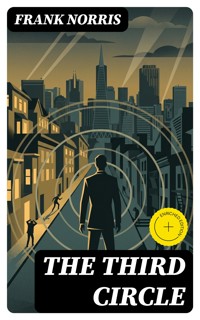
0,49 €
Niedrigster Preis in 30 Tagen: 1,99 €
Niedrigster Preis in 30 Tagen: 1,99 €
Mehr erfahren.
- Herausgeber: DigiCat
- Kategorie: Gesellschafts- und Liebesromane
- Sprache: Englisch
In "The Third Circle," Frank Norris delves into the complexities of human desire, ambition, and the darker side of the American dream. Set against the backdrop of San Francisco's burgeoning capitalist landscape at the turn of the 20th century, the novel employs a naturalistic literary style, interweaving vivid imagery and psychological depth to illustrate the struggles of its characters as they navigate the insidious influences of wealth and social status. Norris's exploration of fate, morality, and existential despair suggests a scathing critique of society's relentless pursuit of material gain, offering readers a profound reflection on the cost of ambition and the intricacies of human relationships. Frank Norris, a pivotal figure in American literary naturalism, drew inspiration from his own experiences with the harsh realities of life and socio-economic disparities. Born in 1870, his background in journalism and his keen observations of society fueled his literary voice. Norris was determined to reveal the underlying forces that drive human behavior, which is poignantly reflected in "The Third Circle," where his characters are often caught in a struggle between their aspirations and the societal pressures that dictate their choices. Readers seeking a thought-provoking examination of the human condition will find "The Third Circle" to be an illuminating and essential read. Norris's masterful storytelling and incisive commentary on the nature of desire and societal expectation challenge readers to consider their own values and the impact of ambition in their lives. This novel is not only a testament to Norris's literary prowess but also a timeless exploration of the cost of dreams.
Das E-Book können Sie in Legimi-Apps oder einer beliebigen App lesen, die das folgende Format unterstützen:
Veröffentlichungsjahr: 2022
Ähnliche











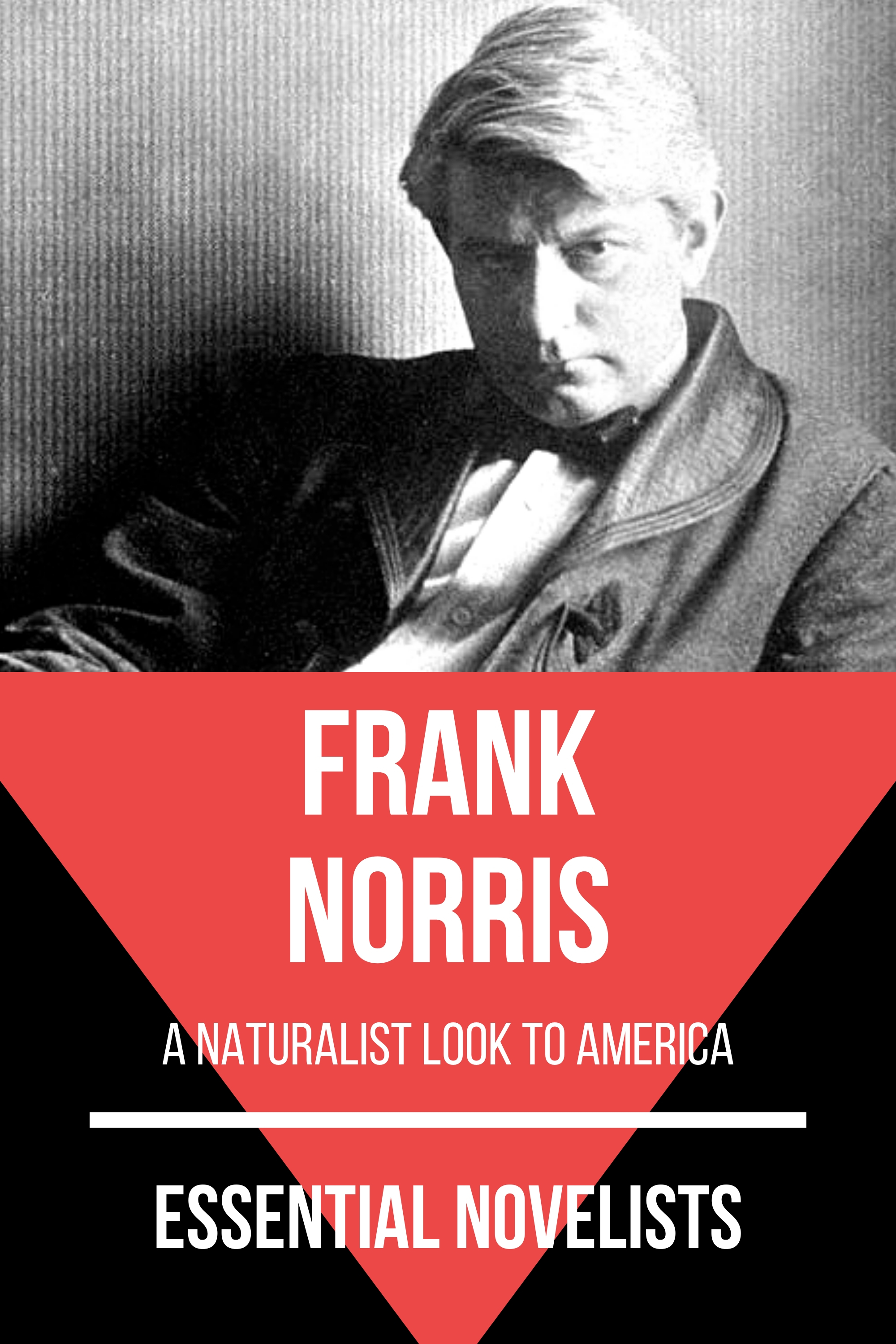

The Third Circle
Table of Contents
Introduction
The Third Circle gathers a representative group of shorter pieces by Frank Norris into a single-author collection intended for continuous reading rather than scholarly apparatus. It brings together an introductory framing piece and a sequence of standalone works under their original titles, presenting the breadth of Norris’s smaller forms alongside the intensity for which he is best known. The scope here is not a complete edition of his writings, nor a set of novels, but an accessible assemblage of fiction and related prose that allows the reader to follow recurring concerns across varied settings and situations.
The texts in this volume are chiefly short stories and sketches, often compact in scale and focused on a single incident, character, or social tableau. Several titles signal interest in street life, informal performance, and public spectacle, while others suggest domestic interiors, institutional encounters, or adventure-like premises. Norris’s training and practice as a journalist and his role as a major American literary naturalist help explain this concentration on immediate scenes rendered with strong narrative momentum. Read together, these pieces reveal how he could compress conflict, observation, and atmosphere into brief forms.
Across the collection, Norris repeatedly returns to pressure points where individual desire meets external constraint, whether the constraint is economic, social, or simply the blunt force of circumstance. His fiction is drawn to moments of strain that expose motive and consequence quickly, and the shorter format heightens that effect by limiting digression. The reader will notice a tendency toward sharply defined situations and a willingness to dwell on the physical and material facts of life. Without reducing the works to a single doctrine, the volume highlights Norris’s continuing fascination with how environment and impulse shape conduct.
A second unifying thread is Norris’s attention to public roles and the performances demanded by modern life: the way a reputation is made, a cause defended, a crowd entertained, or a livelihood negotiated. Some pieces point toward sport, combat, or bravado; others lean toward civic rhetoric, institutional language, or the formalities of honor. These arenas let Norris examine social hierarchies and the friction between private intention and public expectation. The collection’s variety underscores that his naturalism is not only about grim determinism but also about the social stage on which character is tested.
Stylistically, the pieces share a direct, forward-driving manner that privileges concrete detail and clear dramatic setup. Norris tends to build quickly toward a decisive turn, and even when he writes at satiric or comic angles, the prose keeps a hard edge of actuality. The titles themselves hint at the range of tonal registers: from the ominous to the colloquial, from the institutional to the intimate. This combination of vivid surface and structural economy demonstrates a craft suited to periodical publication yet capable of leaving a lingering moral and emotional afterimage.
The ongoing significance of Norris’s work is bound to his place in the development of American realism and naturalism at the turn of the twentieth century. In a period marked by rapid urban growth, industrial expansion, and sharp debates about class and power, his narratives often scrutinize how large forces register in individual experience. The selections in this volume invite readers to see naturalism not as abstraction but as narrative practice: choices about what to describe, what to compress, and how to stage collisions between persons and systems. That method remains instructive for understanding later American fiction.
Read in sequence, the collection allows patterns to emerge without forcing a single interpretive key. Certain pieces feel like moral experiments; others function as vivid reports shaped into story; still others approach parable or social critique through tightly controlled plot. What holds them together is Norris’s persistent interest in the real pressures of the world and the charged moments when those pressures become visible. The Third Circle thus serves as a concentrated portal into his art, offering a survey of his shorter work’s energies, preoccupations, and continuing power to provoke reflection.
Historical Context
Frank Norris wrote most of the pieces gathered in The Third Circle during the mid-1890s, when the United States was absorbing the consequences of rapid industrial expansion and the severe Panic of 1893. Unemployment, strikes, and widening class division sharpened public attention to city streets, casual labor, and the precarious lives of recent migrants. Norris moved between San Francisco and the East, reporting and studying, and he drew from the everyday theater of tenements, boardinghouses, and cheap amusements. The collection’s recurrent fascination with failure, bravado, and moral luck reflects a society debating whether economic hardship signaled personal weakness or structural injustice.
In intellectual life, the era was marked by Naturalism’s rise as a literary method, shaped by French models such as Émile Zola and by American debates about heredity, environment, and free will. By the time Norris later articulated his ideas in essays like “A Plea for Romantic Fiction” (1901), he had already been experimenting with stories that treat people as pressured by appetite, circumstance, and social machinery. This helps explain why the collection moves from comic sketches to darker reversals, and why characters often behave as if propelled by forces they barely comprehend. Contemporary readers encountered these elements amid controversies over realism’s frankness and “scientific” determinism.
The urban settings and street-level scenes reflect the transformation of American cities in the Gilded Age: expanded streetcar lines, crowded lodging districts, and a booming marketplace for sensational newspapers and mass-circulation magazines. Norris worked in journalism and contributed to periodicals that valued immediacy, vivid description, and strong incident, all suited to short fiction about curbside spectacles, petty crime, and neighborhood celebrities. The same cultural infrastructure that spread these stories also shaped their reception, as readers came to expect energetic pacing and topical detail. These conditions encouraged Norris to treat the city as both laboratory and stage, where small choices could trigger disproportionate consequences.
Reform movements provided another shared backdrop. The 1890s saw heightened attention to poverty and institutional charity, including the settlement-house movement associated with figures like Jane Addams at Hull House in Chicago (founded 1889). At the same time, public suspicion toward “organized charity” and its moralizing bureaucracies was common in newspapers and municipal politics. Norris’s satirical and critical portrayals of charity, civic virtue, and social respectability draw on these arguments and on the era’s uneven welfare landscape, in which aid was often contingent on surveillance and judgment. His fiction registers the tension between humanitarian ideals and the humiliations that accompanied relief in large cities.
Mass entertainment and “muscular” culture also shaped the collection’s fascination with performance, violence, and bravado. The 1890s were a golden age of American prizefighting, with national attention fixed on bouts involving figures like James J. Corbett and later Bob Fitzsimmons, while urban sporting clubs and saloons made boxing a social language for masculinity. Even where Norris is not writing about the ring directly, he borrows its rhetoric of toughness, spectacle, and sudden defeat to frame conflicts among working men and marginal characters. Such motifs resonated with readers living amid anxieties over immigration, labor unrest, and changing gender expectations, when physical prowess was often romanticized as social authority.
Norris wrote as the United States adopted a more assertive national posture, culminating in the Spanish–American War of 1898 and the surge of patriotic symbolism that followed. Debates over the flag, national honor, and civic duty intensified in newspapers and public ceremonies, and dissenting voices were frequently criticized as un-American. Stories in the collection that engage loyalty, public display, or the policing of patriotism reflect this climate, in which nationalism could offer both cohesion and coercion. For a writer trained in reportage, the war era also demonstrated how quickly public sentiment could be mobilized through print. That experience sharpened Norris’s interest in crowd psychology and moral absolutism.
The period’s racial and ethnic hierarchies further inform the collection, even when treated obliquely. Scientific racism and Social Darwinist arguments circulated widely in popular and academic venues in the 1890s, reinforcing stereotypes about “types” and justifying exclusionary policies. The Chinese Exclusion Act of 1882 remained in force and shaped West Coast attitudes, while new immigration from southern and eastern Europe fueled nativist agitation in Eastern cities. Norris’s frequent attention to “type,” slang, and social classification reflects how identity was read as destiny in public discourse. Modern readers may notice that these assumptions influenced characterization and tone, while contemporary audiences often accepted them as familiar social shorthand.
Finally, Norris’s imaginative range was nourished by the era’s eclectic literary marketplace, in which adventure, historical romance, and classical allusion coexisted with gritty realism. American colleges and magazines encouraged a blend of erudition and reportage, and Norris’s own education and reading enabled him to juxtapose modern city scenes with older heroic or saga-like materials. This mixture aligns with the 1890s tension between nostalgia for epic moral frameworks and a new commitment to portraying ordinary life without consolation. Early reception tended to value his vigor and vividness, even as some critics resisted his harshness. The collection thus captures a transitional moment when American fiction was renegotiating what counted as “serious” truth.
Synopsis (Selection)
Introduction
Frames the collection as a survey of Frank Norris’s short fiction, emphasizing his interest in ordinary American lives under pressure and the social forces that shape them. Signals a blend of gritty realism, satiric bite, and occasional romantic or mythic reach that the stories explore in different registers.
Highlights recurring Norris motifs: environment and class as destiny, the thin line between performance and identity, and institutions that claim to help but often harm. Prepares readers for sharp tonal shifts—from boulevard comedy to moral fable—while keeping a steady focus on character under stress.
Urban sketches and street-level social satire (The House With the Blinds; Little Dramas of the Curbstone; The Dis-Associated Charities; Dying Fires)
These pieces sketch crowded city life in quick, vivid scenes, turning everyday corners—tenements, sidewalks, aid offices, and dwindling hearths—into stages where need and dignity collide. Norris uses compressed realism and irony to show how poverty, reputation, and small decisions ripple into larger consequences.
Across the group, the city becomes a system that trains people into roles: watcher and watched, donor and supplicant, survivor and casualty. The tone ranges from reportorial to darkly comic, but the thematic throughline is the cost of social distance and the limits of “respectable” solutions.
Performance, bravado, and public identity (Shorty Stack, Pugilist; " Boom "; Son of a Sheik; A Caged Lion; " This Animal of a Buldy Jones ")
Centered on figures who live by spectacle—fighters, loud talkers, would-be lions, and self-made legends—these stories examine how reputation is constructed and sold. Norris’s style leans on punchy characterization and kinetic scenes to contrast private vulnerability with public swagger.
Together they return to a Norris signature: masculinity as performance under economic and social pressure, with violence or humor as a mask. The narratives often pivot on the gap between the myth someone projects and the reality that tests it.
Strangeness, inheritance, and the pull of type (The Strangest Thing; A Reversion to Type; Toppan)
These tales probe the unsettling moment when an ordinary situation turns uncanny or when personality seems overruled by deeper impulses. Norris blends psychological observation with naturalistic pressure, emphasizing how habits, desire, and social expectation can feel like fate.
The group’s thematic focus is identity under constraint—what is chosen versus what is inherited or conditioned. Stylistically, Norris shifts from straightforward realism toward more charged, suggestive storytelling that keeps the reader alert to sudden moral or emotional reversals.
Civic ritual and contested ideals (A Defense of the Flag; The Guest of Honour)
These stories take up public symbols and ceremonies—patriotism, honor, and communal recognition—and test what they mean when filtered through personal motives and social friction. Norris balances sincerity with critique, showing how ideals can inspire and also be exploited.
The recurring motif is the tension between private conscience and public performance, with civic language doubling as both uplift and pressure. The tone tends toward satiric realism, attentive to how communities decide who belongs and who is celebrated.
Mythic and historical reach (Grettir at Drangey)
Draws on a legendary, heroic frame to portray endurance, isolation, and the costs of reputation when survival becomes a test of character. The tone is more elevated and episodic than the urban pieces, emphasizing stark setting and moral atmosphere.
Placed alongside Norris’s modern realism, it marks a notable stylistic expansion toward saga-like storytelling and symbolic struggle. Its themes echo the collection’s concerns—identity, public memory, and pressure—translated into a harsher, more archetypal key.
The Third Circle
Introduction
It used to be my duty, as sub editor of the old San Francisco Wave, to "put the paper to bed." We were printing a Seattle edition in those days of the Alaskan gold rush; and the last form had to be locked up on Tuesday night, that we might reach the news stands by Friday. Working short-handed, as all small weeklies do, we were everlastingly late with copy or illustrations or advertisements; and that Tuesday usually stretched itself out into Wednesday. Most often, indeed, the foreman and I pounded the last quoin into place at four or five o'clock Wednesday morning and went home with the milk-wagons—to rise at noon and start next week's paper going.
For Yelton, most patient and cheerful of foremen, those Tuesday night sessions meant steady work. I, for my part, had only to confer with him now and then on a "Caption" or to run over a late proof. In the heavy intervals of waiting, I killed time and gained instruction by reading the back files of the Wave, and especially that part of the files which preserved the early, prentice work of Frank Norris.
He was a hero to us all in those days, as he will ever remain a heroic memory—that unique product of our Western soil, killed, for some hidden purpose of the gods, before the time of full blossom. He had gone East but a year since to publish the earliest in his succession of rugged, virile novels—"Moran of the Lady Letty," "McTeague," "Blix," "A Man's Woman," "The Octopus," and "The Pit." The East was just beginning to learn that he was great; we had known it long before. With a special interest, then, did I, his humble cub successor as sub editor and sole staff writer, follow that prentice work of his from the period of his first brief sketches, through the period of rough, brilliant short stories hewed out of our life in the Port of Adventures, to the period of that first serial which brought him into his own.
It was a surpassing study of the novelist in the making. J. O'Hara Cosgrave, owner, editor and burden-bearer of the Wave, was in his editing more an artist than a man of business. He loved "good stuff"; he could not bear to delete a distinctive piece of work just because the populace would not understand. Norris, then, had a free hand. Whatever his thought of that day, whatever he had seen with the eye of his flash or the eye of his imagination, he might write and print. You began to feel him in the files of the year 1895, by certain distinctive sketches and fragments. You traced his writing week by week until the sketches became "Little Stories of the Pavements." Then longer stories, one every week, even such stories as "The Third Circle," "Miracle Joyeaux," and "The House with the Blinds"; then, finally, a novel, written feuilleton fashion week by week—"Moran of the Lady Letty." A curious circumstance attended the publication of "Moran" in the Wave. I discovered it myself during those Tuesday night sessions over the files; and it illustrates how this work was done. He began it in the last weeks of 1897, turning it out and sending it straight to the printer as part of his daily stint. The Maine was blown up February 14, 1898. In the later chapters of "Moran," he introduced the destruction of the Maine as an incident! It was this serial, brought to the attention of McClure's Magazine, which finally drew Frank Norris East.
"The studio sketches of a great novelist," Gellett Burgess has called these ventures and fragments. Burgess and I, when the Wave finally died of too much merit, stole into the building by night and took away one set of old files. A harmless theft of sentiment, we told ourselves; for by moral right they belonged to us, the sole survivors in San Francisco of those who had helped make the Wave. And, indeed, by this theft we saved them from the great fire of 1906. When we had them safe at home, we spent a night running over them, marveling again at those rough creations of blood and nerve which Norris had made out of that city which was the first love of his wakened intelligence, and in which, so wofully soon afterward, he died.
I think that I remember them all, even now; not one but a name or a phrase would bring back to mind. Most vividly, perhaps, remains a little column of four sketches called "Fragments." One was a scene behind the barricades during the Commune—a gay flaneur of a soldier playing on a looted piano until a bullet caught him in the midst of a note. Another pictured an empty hotel room after the guest had left. Only that; but I always remember it when I first enter my room in a hotel. A third was the nucleus for the description of the "Dental Parlors" in McTeague. A fourth, the most daring of all, showed a sodden workman coming home from his place of great machines. A fresh violet lay on the pavement[3q]. He, the primal brute in harness, picked it up. Dimly, the aesthetic sense woke in him. It gave him pleasure, a pleasure which called for some tribute. He put it between his great jaws and crushed it—the only way he knew.
Here collected are the longest and most important of his prentice products. Even without those shorter sketches whose interest is, after all, mainly technical, they are an incomparable study in the way a genius takes to find himself. It is as though we saw a complete collection of Rembrandt's early sketches, say—full technique and co-ordination not yet developed, but all the basic force and vision there. Admirable in themselves, these rough-hewn tales, they are most interesting when compared with the later work which the world knows, and when taken as a melancholy indication of that power of growth which was in him and which must have led, if the masters of fate had only spared him, to the highest achievement in letters.
WILL IRWIN. March, 1909.
The Third Circle
There are more things in San Francisco's Chinatown than are dreamed of in Heaven and earth[1q]. In reality there are three parts of Chinatown—the part the guides show you, the part the guides don't show you, and the part that no one ever hears of. It is with the latter part that this story has to do. There are a good many stories that might be written about this third circle of Chinatown, but believe me, they never will be written—at any rate not until the "town" has been, as it were, drained off from the city, as one might drain a noisome swamp, and we shall be able to see the strange, dreadful life that wallows down there in the lowest ooze of the place—wallows and grovels there in the mud and in the dark[2q]. If you don't think this is true, ask some of the Chinese detectives (the regular squad are not to be relied on), ask them to tell you the story of the Lee On Ting affair, or ask them what was done to old Wong Sam, who thought he could break up the trade in slave girls, or why Mr. Clarence Lowney (he was a clergyman from Minnesota who believed in direct methods) is now a "dangerous" inmate of the State Asylum—ask them to tell you why Matsokura, the Japanese dentist, went back to his home lacking a face—ask them to tell you why the murderers of Little Pete will never be found, and ask them to tell you about the little slave girl, Sing Yee, or—no, on the second thought, don't ask for that story.




