


4,99 €
Mehr erfahren.
- Herausgeber: Tektime
- Kategorie: Fantasy und Science-Fiction
- Sprache: Englisch
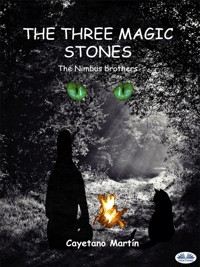
One cold winter morning, a great rumbling sound shakes the citizens of San Idrox. But a long forgotten threat awakens that day as well. Meanwhile, unaware of the fate that awaits them, the Nimbus brothers set off on their regular business trip to Capitol. On the way, they will be stalked and mercilessly attacked, with many questions arising about their enemy’s motives. They will only find the answers in a past which has been hidden from them. On their journey, they will come across wizards, knights and strange creatures, and find some unexpected allies.
PUBLISHER: TEKTIME
Das E-Book können Sie in Legimi-Apps oder einer beliebigen App lesen, die das folgende Format unterstützen:
Veröffentlichungsjahr: 2025
Ähnliche


















All rights reserved Any reproduction or transmission of this book in its entirety or in part using any electronic or mechanical procedure, including photocopy, magnetic recording or any information storage or recovery system is prohibited without the written permission of the author.
© Cayetano Martín 2025
Translation: James Peel
To my sisters, Celi and Charo, for instilling in me a love of reading
and for the work carried out in this book.
PART ONE: THE AWAKENING
1. Beyond Green Valley
It was a normal winter’s morning. Dawn had broken and a light breeze was stirring, its warm air helping to melt the newly fallen snow on the path, when suddenly a thundering sound filled the valley, waking the inhabitants of the small town of San Idrox and every living being in the Green Forest. The dogs barked in fear, the horses pulled free of their tethers and bolted through the streets, the birds flew in large flocks in different directions, suddenly changing course with no clear reason or sense. The children cried at the tops of their voices while their shaken mothers tried to soothe them, and their fathers armed themselves against an unknown enemy. The terrible rumbling didn’t seem to be coming from Green Valley itself, but from many leagues north in the distant Toruc Mountains.
Within five minutes the entire population of San Idrox had come together in the middle of the Main Square. The crowd drowned out what a sheriff, who had climbed up on a large marble fountain decorated with intricate, elaborate engravings, was shouting to the terrified masses. But among the hubbub, one voice was raised loud and clear.
“We have a big fight ahead of us.”
It was Lunk, a veteran soldier who had fought bravely at the Final Battle. Lunk was respected and admired by a large section of the town, while his forthright personality had also won him some critics. Men, women and children often gathered in the town’s inn, The Pint Pot, to hear the weathered soldier tell tales of what was known as the Army of the Three Races.
It was said in the town that Lunk didn’t have an important role in the battle, but he had experienced it close-up. When the fight started, the veteran had been assigned to one of the units at the rear. Although the allied forces were inferior in number, the intervention of these units was not needed because of how the battle played out. After the victory, the small number of remaining enemy troops dispersed, creating terror in the whole area. The units which hadn’t participated in the initial clash were assigned to hunt or kill the monstrous enemies who had made up the hostile troops. Two months after the battle, the Canianos, as the monsters who had formed the enemy army were known, had been captured or eliminated. Only a small group managed to flee through a secret passageway in the Toruc Mountains and take refuge in Cani, the city where they were born. This secret passageway was finally discovered by the elf explorers. The allied troops destroyed the fearsome city and its inhabitants. After that, with the help of the dwarves, they sealed the passageway for good, thus preventing the terrible man-dogs from returning. With permanent peace established, Lunk returned to his home town, having fought in several skirmishes and hand-to-hand combats with the fearsome monsters.
When they heard Lunk’s words, the crowd fell into a tense silence.
“Who will we be fighting, you crazy old man?” asked the sheriff, still standing on the fountain.
“Cromo,” said Lunk calmly, with his usual frown.
Some in the crowd shrank back from the old soldier as if the name he had uttered would bring its bearer into being before them. After a few seconds of astonishment, everyone there started giving their opinions all at once. Some said that it was impossible, dismissing what the veteran soldier said and calling him senile, while others took Lunk’s words seriously and said with certainty that the fearsome wizard was the cause of everything.
After several desperate attempts and much pushing, the sheriff got down from the fountain and stood before the veteran soldier.
“That black wizard was defeated and killed in the Final Battle. You know that better than anyone because you were there,” said the sheriff. “And his followers were killed or expelled forever too. That threat disappeared long ago for us.”
In San Idrox there was no military force, but they did have about twenty men who were responsible for keeping order and security. These sheriffs of the town hall usually spent most of their days looking for lost livestock or identifying the owners of animals found grazing on other people’s land. The town’s children used to make fun of them, calling them shepherds.
“Yes, I was there,” said Lunk. “But nobody ever found the wizard’s body.”
“Maybe his body was totally destroyed," the town’s baker plucked up the courage to suggest.
“Yes, that’s right," the sheriff agreed vehemently. “It was totally destroyed and the only Canianos who survived are on the other side of the Toruc Mountains, being watched by the king’s troops.”
He jumped back on the fountain, took a deep breath in, and addressed the crowd at full volume.
“By order of the mayor let it be known that the rumbling sound this morning is nothing to worry about, as it is due to thunder from a nearby storm, the sound of which was enhanced by the echo from the mountains surrounding our valley. Another possible cause is that the blacksmith’s forge has exploded again, but that is still to be checked.”
“No forge of mine has exploded,” said the blacksmith indignantly. “Besides, last time it was a manufacturing fault and nothing to do with me.”
There was some muffled laughter behind the blacksmith’s back among those present.
“Thunder? That’s impossible,” said the baker. “We all know the the rumble of a storm and that was nothing like it.”
“I’m not going to question the wisdom of our mayor," said the sheriff. “Anyway, tomorrow at midday there will be a meeting at the town hall where the mayor will listen to everyone.”
The sheriff got down from the fountain and headed for the town hall, ignoring the angry townsfolk who were bombarding him with hundreds of questions. Lunk considered the matter settled too, and headed for The Pint Pot to have his usual mug of ale, and to take advantage of the opportunity to tell his old stories now that everyone’s interest in hearing his tales had been piqued.
Little by little, the Main Square started to clear. The inhabitants of San Idrox returned home to continue their daily chores, although each of them harboured a feeling of unease.
San Idrox was a small town in the north east of the kingdom of Lebora, whose capital city was Capitol, City of Kings. The town was situated in what was known as Green Valley, nestled between two mountain ranges, the high Toruc Mountains to the north and the Green Mountains to the south and west. San Idrox had a history dating back five hundred years. The town was now set on what used to be a meadow on the border of the Grey Forest, which was very different to how it was now. In those days, the three races which made up the Known World were continually at loggerheads. The dwarves, after several conflicts with elves and humans for control of the Toruc Mountains, had withdrawn to the depths of Zuderhan and were preparing a large army to send to the surface, although in truth it is not known whether this large army was to be sent to fight the elves or the humans, both being hated in equal measure. Perhaps that is why they never emerged from their caves.
Meanwhile, relations between elves and humans were even worse. The subject of the discord occurred in the Grey Forest, in whose depths lay the Forbidden Kingdom of the elves. The cause of the conflict was an old lord, a friend of the king of Lebora called Quetal. This lord was a big fan of deer hunting, and during one of his forays, ignoring the warnings of his guides and hunting companions, he followed an injured deer deep into the Grey Forest, where quite by chance he came across the kingdom of the elves, who immediately captured him.
After the capture of Quetal, realising the misfortune of the human who had unintentionally and unwittingly stumbled upon his kingdom, the king of the elves was faced with a dilemma: whether to comply with the law which was to kill any stranger found on the road to the Forbidden City or to release the foreigner and thus put his own people in danger. Elvish law is very strict, as it forbids foreigners from entering its kingdom without the permission of its monarch, or from merely having knowledge of the way there, both being crimes punishable by death.
Meanwhile, the king of Lebora was very worried about the disappearance of his friend, so he sent several explorers to look for him, but with no success. Finally, through a wandering elf, he discovered that Quetal was being held prisoner in the kingdom of the elves, so he sent an urgent message to the elf king:
“Release your prisoner immediately or I will come and release him myself”.
The weeks passed, and these gave way to months, without the elf king, Gif, making a decision: whether to release the human and violate elvish law, or to kill him and provoke a war against the humans. Over that time, a great friendship was established between the king and the foreigner. Sometimes they would go hunting together, and on other occasions they would visit the marvels of the elf kingdom. The elf was a wonderful guide and the human was amazed by that world, which was so different from his own. The elf kingdom was a wonder of harmony between nature and the solemn elvish architecture. The trees and climbing plants grew in complete harmony with the elvish constructions, sometimes blending the natural and the artificial.
In the end, pressed by his people and after much reflection, King Gif made a decision: Quetal was to die at sunrise.
Therefore, at sunrise the monarch summoned his good friend. When the human came before the king, he ordered his subjects to leave them. Noticing the king’s solemn and melancholic tone, Quetal sensed that he had made a decision about his fate. When the king asked him to follow him, Quetal allowed himself to be led meekly through the palace’s sumptuous corridors. Soon they were out of these and had reached the royal gardens. They went through a maze of hedges and bushes, and came to a large stone courtyard with a crystalline spring bubbling up in the middle.
“This is the Spring of Life," said Gif ceremoniously. “According to elvish tradition, every elf should drink from these waters once in their lifetime so their spirit can be purified.”
At that moment, two tall elves, with white tunics and faces hidden by masks made of oak leaves, came towards the human. They removed his elegant clothes, shaved his head and led him to the bank of the spring. There they made him kneel down and they submerged his head in the cold water. The noble human meekly allowed them to do all of this, resigned to his fate. It was impossible to oppose the will of King Gif; he would never escape from the kingdom and to try would only serve to insult and disrespect his friend.
“Get up, my friend," said King Gif, placing his hand on the human’s wet head. “Quetal is dead. Your name is Quenzal, from now on you are an elf and you will remain in the depths of the Grey Forest until you die.”
That is how Quetal died in the Forbidden Kingdom and Quenzal the elf was born. The elf king had followed the law, and at the same time kept a good friend beside him. After this, Gif ordered the human’s clothes to be carefully wrapped and sent to the human king with a message:
“Quetal broke elvish law, may his human soul rest in peace.”
King Lebora was furious when he read the message, and he sent for his army to assemble immediately. The human army, led by Jig Nimbus, left Capitol in a hurry with the order to invade and destroy the elf kingdom. When the troops reached the borders of the Grey Forest, their commander, a decorated and experienced officer, gave the order to set up camp, disobeying the orders he had been given. Jig was a prudent and fair man, who believed it was reckless to enter that unknown territory to avenge the death of a nobleman who had sought his own fate. His army could easily be destroyed in that forest while they were looking for the Forbidden Kingdom, and his brave men would die futilely. So the human troops camped on the banks of a small stream, which was known as the Frozen River because its waters came from the snowmelt from the Toruc Mountains and their temperature was ice-cold, until the explorers had reconnoitered the area and located the elf kingdom.
During the time that their commander endeavoured to find the Forbidden Kingdom of the elves, his camp grew little by little as his task continued to be fruitless. A large brick building with numerous chimneys was created, where forges made arms and supplies for the army. The whole border of the Grey Forest was felled and cleared. Hundreds of bushels of grain were used for crops, because the army’s provisions were running low due to the long wait for news regarding the location of their enemy. Numerous stores were also created for provisions and mills had to be made to grind the grain. All of this activity attracted a large number of merchants and travellers. They even built a tavern, The Pint Pot, where the soldiers and other various people quenched their thirst. Soon the camp started to turn into a small town which they called San Idrox.
Commander Nimbus, after three years on the border of the Grey Forest, had failed in his search for the Forbidden Kingdom. He had sent dozens of explorers to comb every corner of the forest, but none had found the slightest hint of the route which led to the kingdom of the elves. The king of Lebora, enraged by his commander’s performance, sent him an ultimatum:
“Go into that damned forest with all your troops and tear it all down. Otherwise, it will be your head which falls”.
Jig knew that an incursion with all his troops would mean the end of his men. Because the elves had shown that, in their forest, they could attack them without the men even seeing them. Given the circumstances, commander Nimbus decided to change his strategy and he tried to arrange a meeting with the elf king. He gave each of his explorers a message for King Gif, which they should leave in clearly visible places inside the forest. Jig didn’t know if this message would reach its intended recipient, and, if it did, whether the king and the elves would come to a meeting with him.
The day after these messages were sent, when he woke up in his tent, there was a thin scroll with his clothes. Surprised, he picked it up and unrolled it. In fine letters, it read:
“We will meet in the Marmot Clearing, next to the large dried up tree. Come alone and unarmed.
Signed: Gif, king of the elves.”
Nimbus was very surprised that the elf should agree to meet him, and by the ease with which the message had been returned. They could have killed him if they had wanted to, because the messenger had slipped past the guard and got inside his tent while he was sleeping. He dressed in a hurry and, without informing his officers, sneaked out of the camp. The Marmot Clearing was a place not far from the settlement where Nimbus liked to go. He used to go there when he wanted to be alone and take refuge from the usual hustle and bustle of the camp. The fact that they had arranged to meet there meant that the elves were monitoring his every move, because not even his own men knew that place.
Jig didn’t worry that it might be a trap for him, because his enemies had clearly already had multiple opportunities to capture him or kill him without his noticing the danger he was in. When he got to the clearing, he looked around him and saw a figure wrapped in a beautiful cloak waiting for him next to the large dried up tree. Jig couldn’t believe that after so long looking for him, the elf king himself was standing there. For a moment he thought about taking out the knife he had hidden in his boot and satisfying his king’s vengeful desires. But Jig was a man of honour and he would never commit such a treacherous act. Besides, before he could even touch his weapon, an arrow would most probably pierce his heart. The place would almost certainly be teeming with elvish bowmen watching everything he did.
“You’ve been looking for me to claim vengeance for three years," said the king when Nimbus approached him. “What is it that you want from me now?”
“I want to put an end to this pointless feud," the commander said with humility. “Even though my king has ordered me to attack your kingdom and kill every elf in it, it is not my wish that there should be a massacre and valuable lives on both sides be lost.”
“You are an honourable man, so I will listen to you," the elf king answered. “What is your plan?”
“I just ask one thing, your majesty. Give me the body of Lord Quetal so it can be buried in his land.”
Gif fell silent for a few moments and looked thoughtful.
“I’m sorry, but I can’t give you Lord Quetal’s body.”
“In that case I’m afraid there’s nothing left to talk about," Nimbus said bitterly.
Commander Nimbus turned round and was ready to walk away when the king ordered him:
“Wait - don’t be hasty.”
Jig wasn’t used to following orders, even those from his king. But something in the elf’s voice made him stop.
“I have something to show you," Gif went on, with an enigmatic expression.
A hooded figure came out of the shadows. It walked heavily towards them. When it was a couple of paces away from commander Nimbus, it removed the hood and said in a deep voice:
“I am Quenzal the elf. No human is worth thousands of people dying for because of the stupidity of one man.”
Jig Nimbus was astonished when he saw the man’s face. He quickly understood what had happened. He returned to his camp with great satisfaction and ordered an urgent message be sent to Lebora. It read:
“Don’t worry about Lord Quetal; the crazy old man is still hunting.”
When these events became known, the army was disbanded and many of the soldiers decided to settle there. Commander Nimbus, after three long years, didn’t want to leave those lands, which had bewitched and enchanted him, so he stayed in the young town of San Idrox. Jig, as a senior officer, was rewarded with farming land and with the disbanded army’s large store. Soon, due to his great skills in business, he became one of the main traders in the region. Over time, dealings with the elves intensified, and San Idrox became the principal link between the two peoples and gained a reputation as a great trading centre.
2. The Nimbus brothers
The Bazaar was in San Idrox’s Main Square, and for generations it had belonged to the Nimbus family. However, it was Commander Jig Nimbus who ordered it to be built to meet the needs of the army which had established the town. Built by military engineers, it had a very solid and resilient appearance, and had been relatively unchanged for five hundred years. Its main gate was adorned with the best wood from the Grey Forest. Because it faced north, where there was always shade, it had a rough, dark surface. This large gate was made up of two matching leaves reinforced with three steel bars. Two of these bars ran vertically at either end of the gate, while the other went diagonally from left to right. When the gate was closed, the three bars made a large “N” which could be seen from far away. This letter had been the symbol of the Nimbus family crest since olden times.
The inside of the Bazaar was much more spacious than might have been expected from the outside. The floor and the walls were covered with a layer of tar, which allowed the products stored there to be better conserved. The roof was very high and had recently been coated with a yellow resin, which removed the risk of leaks.
Just to the right of the main gate, which was used for merchandise to go in and out, was a small, much more modest door which had been put in later. This entrance led to the Bazaar’s shop and to its office, an area built by Dante Nimbus which took space from the main nave. The business owner was succeeded by his sons, Orus and Cramer, who kept the changes made by their father unchanged. This area was just the right size for its use and was divided into two rooms. The first had a mahogany counter facing the door with several high shelves behind it crowded with various articles for sale. Here all of the small town’s inhabitants bought products produced on the Nimbus’ Farm, or others imported from Capitol or from any other part of the kingdom. This room had direct access to the store, so that it could be entered without having to go outside. There was also a door behind the counter leading to a room where the brothers would attend to day-to-day business operations. This other room, larger in size, was much more welcoming and comfortable. A large fireplace in the wall opposite the entrance gave heat to the whole room. Above it hung a sword, the plaque for which read:
“For Jig Nimbus, the friend I thought I’d never have.”
A strange inscription. As strange as the weapon itself, because the steel it was made from was as splendid and its blade as sharp as the sword’s origin was enigmatic. There wasn’t a blacksmith in the whole of the kingdom capable of making such a weapon. Because it had belonged to the legendary ancestor of the Nimbus family, just like all of his other possessions, it was passed down from generation to generation until it had arrived with its current owners.
The floor of the office was covered by flowery carpets, edged with images of the forest and its dwellers. In the middle of the room there was a small oak table around which beautifully made comfortable leather-upholstered armchairs had been placed. The walls, painted in warm colours, were adorned with various pictures and ornaments which added to the welcoming, calm atmosphere. On one side there was a large desk overflowing with documents, piled high in barely balanced mountains of paper. Behind this sea of documents, an old worn and damaged armchair was occupied by Cramer Nimbus.
“Every cloud has a silver lining," he said after glancing at a sheet of paper.
“Huh - everyone worried and frightened, but you seem to be happy," came a voice which was hidden behind the back of one of the armchairs. “Why so satisfied?”
“Well, because of this anxiety, tobacco sales have gone through the roof," Cramer answered, taking a large puff on his pipe. “People have never smoked so much in this town.”
“I see you’ve taken all this very well," Orus said from his chair. “But I don’t like it at all.”
Cramer and Orus were brothers, and after the death of their parents in strange circumstances they had inherited the family business.
“You heard the sheriff. The sound was made by thunder," Cramer said with irony.
“Yes, of course, because we know the blacksmith’s forge is unlikely to explode," answered the younger Nimbus. The brothers looked at each other complicitly and laughed loudly.
“Did you see the blacksmith’s face, red with indignation, I could barely stop myself from laughing," Orus chuckled.
“You wouldn’t be laughing so much if the blacksmith found out who was responsible for his forge being destroyed," Cramer laughed back.
“OK, but don’t forget the person using the bellows was you.” And they both burst out laughing again.
When the brothers were young boys, during one of their raids, they had the brilliant idea of sneaking into the smithy to make some swords. At night, the blacksmith used to keep the forge lit to keep its heat for the following day, so the brothers thought it would be easy to get their prized treasures. So, once inside, they revived the fire with generous amounts of coal, put the iron in the right place and waited for it to melt. But they had overfed the forge and didn’t have the necessary experience to be able to reduce the pressure. In the end, the forge, and part of the smithy, exploded. Fortunately, when everything started to shake and whistle, the brothers took to their heels and saw the spectacle unfold from a safe distance.
The town was in turmoil that night, as the explosion had awoken all its inhabitants. After much effort, the flames caused by the explosion were put out by the willing neighbours. For Cramer and Orus it was a heavy burden to bear, and for days they were unable to sleep because of the remorse they felt and the fear of their misdeed being discovered. But nobody suspected that the architects of this incident were the beloved brothers. Most of the neighbours thought that it was all down to an accident caused by a manufacturing fault in the forge or by the blacksmith's neglect. After his initial fright, the blacksmith was completely devastated at having lost his workplace. But Thio, the Nimbus bothers’ guardian and the smithy’s biggest customer, offered to pay for the reconstruction work. Soon, the blacksmith resumed his usual chores and the forge started churning out smoke again, together with a multitude of tools.
The word in the town was that Thio’s act was not a disinterested one, since the Nimbus Farm was the blacksmith’s biggest client. The loss of the smithy would have been very damaging for it, because they would have had to go to another town for the various items the farm required. The brothers assumed that their guardian didn’t believe that the forge had exploded because of a manufacturing fault, as the blacksmith claimed, and that he suspected that his wards were somehow involved. However, he never accused them of anything or made his suspicions known.
From that day forward, the blacksmith was the subject of constant jibes from the townsfolk, but since they never acknowledged their guilt, whenever the subject came up the brothers looked at each other and smiled. Nobody knew what had really happened except those two; it was their little secret.
Several hours had passed since the terrible sound had shaken the quiet lives of the citizens of San Idrox and they were starting to calm down. The Nimbus brothers left the Bazaar and headed for a long, narrow cart pulled by two oxen which was parked opposite the building. Tom came out on their way past and gave them a small bag. Tom was an old man who worked for the Nimbus family, and he had been with the family since before the older of the two brothers had been born.
“I hope you gentlemen have a good trip to The Farm.” Although Tom had seen the two young men before him grow up, and was much older than them, he always addressed them very formally.
“Don’t worry, it’s a short journey," said Orus as he nimbly jumped up into the back of the cart while holding onto the bag.
“These days nothing is certain," said Tom, stroking his thick white beard. “Something is not right - I can feel it in my bones.”
“That’s your age, old friend," said Cramer as he shook the reins and the cart started moving. “Take care of the business while we’re away. We’ll be back tomorrow for the Town Hall meeting.”
For years, Tom had been the shop assistant, a job he did satisfactorily and efficiently.
“Don’t forget to give Thio the provisions he asked me for," he said as the brothers left.
Slowly, pulled by the two peaceful animals, the cart set off and moved away while Tom stood still, watching them. The cart went down the high street, which ran from the west gate to the east gate, leaving behind the Main Square with the Nimbus’ Bazaar and the Town Hall. As they passed the Pint Pot, they saw a man sitting in the entrance with a mug of ale. Orus raised his hand in greeting and the man responded with an identical gesture.
“Why are you waving at that crazy old man?” Cramer asked.
“Lunk isn’t crazy, he’s a good man," his brother replied angrily.
The older of the brothers had never had any sympathy with the old soldier, but this feeling was not born out of anything concrete and whenever Orus recriminated him for it he was quiet and had nothing to say. In any case, the only thing that Cramer could come up with was that for as long he could remember, Lunk had looked at him in a cold and distant way, which was very different from the cordial way in which he always looked at Orus. Because of this, a feeling of mistrust had germinated between them, although the old soldier always spoke to him politely and there had never been a problem between them.
The road to The Farm was in good condition because of the continual passing of carts laden with merchandise. The brothers headed eastwards; on both sides of the road there were frequent gardens which supplied the people of San Idrox. Every Sunday there was a small market in the town’s Main Square, where everyone would go and buy or sell merchandise. Generally, only local traders would go to the square, but that didn’t prevent a great variety of products from being on sale. You could get hold of a great multitude of things, ranging from any type of fruit, meat or vegetables to clothes or metal utensils made by the blacksmith.
At that time of year, the gardens were in a deplorable state. The leafy orchards displayed their skeletal structures, because they were deciduous trees. The earth was covered with the dried out shrubs of the previous season’s harvest. Only in a few gardens could small vegetable crops be seen trying to climb their way above the cold snow. In this frozen white landscape only a few dots of colour could be found in the orange trees, with their half-frozen fruit covered by the recent snow.
The cart turned left towards the north, leaving the main road which led into the Grey Forest; they had arrived in The Farm’s land. A sign next to the road entering the brothers’ home read:
“Welcome to The Nimbus Farm”.
Beyond it, The Farm’s land came into view, with its various fields with different crops. It had several surfaces intended for fruit trees, such as orange trees, apple trees, peach trees or vines. Other fields had been worked and prepared for their next crops, while others were pastures to feed the livestock, where sheep, goats, cows or beautiful horses would graze. It’s not that The Farm was one of the biggest agricultural and livestock holdings in the kingdom; it couldn’t compare to the large estates belonging to counts or barons, whose land produced hundreds of bushels. However, the farm was the biggest in the whole of Green Valley. The Nimbus family provided a lot of employment, treating their workers with consideration and respect. As well as providing food to a large part of the town, they exported to Capitol and to the neighbouring kingdom of the elves. The holding was relatively modern, as it used irrigation techniques, which wasn’t very common in the kingdom. These methods were designed and implemented by the dwarves in the times when Jig Nimbus ran the business and had remained unaltered since then. The manure from the animals was also used as fertiliser, which caused the crops to be good. All the animals were treated with love and were well fed, so they grew healthy and beautiful. The horses from The Farm were highly valued all over the kingdom, and even the king of Lebora had some in his stables. The pork and veal was considered by many the most delicious they had ever tasted.
Since leaving the town, the brothers had remained silent and thoughtful. The evening was advancing and night was approaching when our protagonists reached their destination. The oxen passed slowly under the great archway, going through the large gate, which was still open. Above the metal archway, beautifully adorned letters spelled out:
“The Farm”
Built into the gate, which was made with thick iron bars, were two large mouldings which both looked like the heads of dragons with their jaws open. These images had been created very realistically, and they gave the impression that they really could spit fire.
A great stone wall, the height of three people, stretched the length of the plain, forming a perimeter which surrounded all of The Farm. On the outside of the wall a thorny hedge had been planted, which completely covered the wall and hid it from prying eyes. Anyone who was outside the hedge would think that the wall was formed solely by bushes. On the inside of the wall several staircases allowed access to the top part, from where it could be easily defended from an attack from outside. All of these defences were created by The Farm’s founder, Jig Nimbus. Having been a great military officer of the kingdom he couldn’t accept that his home might be unprotected, and its resemblance to a fortress was obvious.
The Farm was made up of five buildings. To the west were the stables where the horses and beasts of burden were kept. This building was rectangular and ran from north to south with a large door on its eastern side. The construction was divided into different compartments, each with an earth floor and with a large number of animals living together. Most of these compartments were for the horses; however, there were others for oxen, cows, sheep, goats, and even a small henhouse.
On the opposite side from the stables, on the east side, was a store housing the farm produce. Generally, produce was stored here in bulk, since it was usually stored in barrels or bundles in the San Idrox Bazaar, ready for trading.
To the north behind the main building, there were two matching buildings which had very different uses. These brick buildings were square shaped and had several windows in their facades, providing plenty of light to the inside. The eastern-most building was used as a workshop, where products were handled and packaged before being transported to San Idrox. It was also used to store the farming tools and implements. The other building was used as accommodation for the workers, and it had a large room full of bunk beds, a kitchen, a couple of bathrooms and four private bedrooms. The Farm had over twenty regular workers, except during the harvest season, when that number would quadruple and all the bunks would be occupied.
The Farm’s main building, built centuries ago, was in the middle of the property. It was surrounded by a cobbled road which gave access to all of the farm’s buildings. This circular road and the roads that led off it were joined by beautiful gardens with beautifully trimmed hedges in the shape of exquisite figures which had never been seen before in the region.
This building was on three floors, and it was the largest architectural work in the valley. The ground floor, with its somewhat sober style, was around twenty feet high and was completely square, giving a feeling of solidity and robustness. The facade was completely smooth, and of an immaculate white, and it had no superfluous adornment, but you could almost see your own reflection on its polished surface. All the way round the facade, there were small openings which provided light to the inside. The only entrance to the building from this side was a large door, which seemed to form a part of the wall itself. On it, a large golden “N” welcomed its visitors. The first floor was set above the ground floor as if it were a different construction, and was oval-shaped. This floor was the same colour as the previous one but it was highly ornate, having long balconies which took up the whole length of the facade. These balconies, made of white marble, were enclosed at the bottom by a richly worked rail with delicate balusters. At the top of this floor, any traveller who happened to be on the road and look up would see two large gargoyles. These statues represented mythological beings and appeared to be watching anyone who came into the courtyard. The last of the three levels was made up of a circular tower, with a bell tower at the top, which emerged from the centre of the building and looked out majestically over the whole construction.
Cramer drove the oxen to the main building, going around a simple fountain where three streams of water flowed and whose sound soothed the tired young men. An older man and a boy of about twelve came out of the house and approached the travellers. The boy ran along next to the cart. He was dressed simply, in worn corduroy trousers, a thick brown woolen vest and a comfortable leather jacket which allowed him to face the low winter temperatures. Although temperatures in the Green Valley were not normally very cold, because the mountains protected them from the freezing north winds, this year seemed quite cold. Because of the unexpected snow from the early hours of the morning, the young man was wrapped in his jacket.
“Hello”. said the smiling boy when the cart stopped.
“Riu, I see you’ve been emptying the pantry again," said Orus in a friendly way. Then he gave him an affectionate pat on the back. “You’ve still got bits of cake on your face.”
The boy blushed and put his head down to clean his face with the sleeve of his vest. Orus and Cramer approached the man who was standing and watching them.
“You’d better take care of the cart and the provisions while we talk to Thio," said Cramer as he walked past the boy.
Riu’s face lit up; as The Farm’s porter he always had to take care of the animals, feeding them and brushing them, but very rarely was he allowed to drive the cart. So with a little jump, he got up onto it and happily drove it towards the stables.
The three men watched as the happy boy took the cart away. Once Riu had turned the corner, the old man turned towards the brothers and studied them carefully. Cramer was dying to tell him about the recent events in the town and to ask him for his opinion on the great rumbling sound, but he knew that the old man wouldn’t talk about it until they’d gone in and made themselves comfortable.
“I’m pleased to have you back, we’d better go inside," the old man said. “Once you’ve eaten and rested we’ll sit down by the fire and then we can talk in comfort.”
“Yes, Thio," said the brothers in unison.
The old man showed the same patience that many older people show when it comes to dealing with any subject, because after his long years of experience these things didn’t excite him in the same way any more. However, for the young men, this situation was quite unheard of, and they experienced it very differently.
Thio had reached a ripe old age, and had lived longer than any other man in the Green Valley, . But despite this, he was in excellent condition, both physically and mentally. His hair was as white as snow, but there were hints of golden tufts in it; He wore it long and loose, falling over his shoulders. His eyebrows were bushy and tangled, and under them two tired blue eyes shone with great wisdom. The old man had a strong constitution, although he stooped slightly when he walked. In his younger years, he would have been several hands taller than either of the Nimbus brothers. On his tired shoulders rested a white bearskin coat, which was as old as its wearer. This type of bear was not very common in Lebora, and was only found in the Toruc Mountains, so its skin was very valuable. Under the coat he wore a tunic of white silk which went down to his ankles and made him look like a court nobleman.
This distinctive character, Cramer and Orus’s guardian, was known by everyone as Thio. He had brought them up after the death of their parents; he had taught them various subjects, such as Literature, Maths and History. Thio took care of them as if he were their real father, looking after them, educating them and loving them like his own children. Nobody in the valley knew his real name; everyone used the family nickname for him. Thio had been the guardian of Dante Nimbus, Orus and Cramer’s father, when their grandfather was running The Farm. Apparently, Grandfather Nimbus, now departed, met him on one of his trips, and they became great friends. The great friendship stemmed from an occasion when the old man Nimbus saved Thio’s life from a certain death, and so Dante’s father promised that he wouldn’t rest until he’d settled his debt. That is how he ended up moving permanently to The Farm and becoming another member of the family. The oldest people there say that Thio was an important nobleman who was disenchanted with life having suffered great misfortune, and who had retreated from the world to this quiet place in search of peace and tranquility. However, he never spoke about the past; when the neighbours made comments he would always say that they were confusing him with somebody else. Throughout the town he was known and respected; he had even been put forward for the position of mayor, a position he rejected on many occasions.
Thio remained seated at the head of the dining room table thinking, as it was hours since the table had been served. Meanwhile, on either side of him, Cramer and Orus were eating their cold dinners. During the meal, the conversation covered everyday subjects, and the patriarch barely said anything: like the birth of a lamb, the harvest they would have that year with that snowfall or the latest gossip about the baker’s wife. Once the brothers had finished eating, Cramer as usual eating twice as much as his brother, the three of them left the dining room and moved through to a comfortable small drawing room next to it. This room was very similar to the one in the great Nimbus Bazaar in the town - you could almost say that this was a replica on a smaller scale, except for the absence of the large sword over the fireplace.
They settled into their usual seats and picked up their pipes, except for Orus, who didn’t practise that art but wasn’t bothered by his companions doing so. As theirs was a family which had grown tobacco for generations, they felt proud of their product. It was strange that one of their members didn’t share the same interest, but there was an explanation for this. When Orus was eight years old, he had had an accident which could have had irreparable consequences. The boy was fascinated when he watched his father smoking a pipe, making all kinds of figures when he breathed out the smoke. So one day he picked up his father’s pipe, hid in the pantry and started his experiments. Once there, Orus filled the pipe from the tobacco bag and lit it with a twig he had picked up from the fireplace. While he was practising, with even less fortune than success, he accidentally knocked the twig, which fell into the tobacco bag which was still open. When Orus noticed what was happening, he tried to put out the small fire that had started. He started hitting the bag with his bare hands while panic took hold of him. The fire continued to grow and the small pantry was filled with smoke. Soon, the air became unbreathable, and so Orus lost consciousness. That might have been the end if Cramer hadn’t been passing the door by chance. When he saw the smoke coming out from under the door, he quickly opened it. A great cloud of smoke enveloped him, but in the midst of the smoke he saw a small figure on the floor, so without thinking twice he rushed inside. It was an unbreathable, blinding abyss, but despite this he was able to grab his brother by the feet and drag him out. On hearing Cramer’s shouts, his father, Dante Nimbus, appeared. Together with several workers he quickly put out the fire which had been threatening to spread through the whole house. Meanwhile, Anelore, the brothers’ mother, attended to Orus. The boy was closer to death than to life, remaining unconscious for three days, until, with the gentle care of his mother, he woke up in her arms. For Orus, this represented a small trauma, after which he never wanted to smoke again; he had breathed in enough smoke for a lifetime.
Finally, Cramer asked Thio what he had been wanting to know ever since he had returned to The Farm, and what had been worrying him so much.
“Did you hear the rumbling sound this morning?”
“Of course he heard it," said Orus, interrupting. “Anyone with ears in the valley heard it.”
“Yes, I heard it," answered Thio, finally joining in with the conversation.
“There was a real commotion in the square," said Cramer. “Everyone was running around nervous and scared. The sheriffs tried to impose some kind of order, but it was impossible and they only succeeded in adding to the chaos.”
Orus recalled the scene of the sheriff standing on the town’s fountain and he couldn’t stop himself from smiling, although he soon stopped when he remembered Lunk’s words.
“But it was Lunk’s words that silenced the crowd: ‘We have a big fight ahead of us.’," said Orus, imitating Lunk’s measured tone.
“Oh come on, you’re not going to believe what that crazy old man says," said Cramer, annoyed.
“Maybe he’s right," said Thio thoughtfully while he blew smoke rings.
Silence fell in the small drawing room, broken only by Thio puffing on his pipe.
“Or maybe he’s wrong," he added finally.
After a few minutes of reflection, while each of them organised their thoughts, Cramer stood up brashly, dropping his pipe.
“Do you think it might have been something to do with the elves?” he suggested.
“No, young man, our differences with the elves ended long ago. And the dwarves will still be a long time more under their mountain," said Thio, evoking old images. “The war between the three races came to an end a long time ago. That’s part of history, and that’s where it should stay.”
“Maybe it’s the barbarians," Orus suggested instead. “I’ve heard people in the town say that they’re attacking villages in the south.”
“The men from the Wild Lands have always been a nuisance, but their activities have always been limited to small skirmishes, some incursions and a few lootings. They would never venture so far north; the southern territories are too far from here for us to feel threatened by them," Thio answered.
“What about the Canianos?” Orus asked, going back to the Cromo theory.
“The Canianos were almost completely wiped out in the Final Battle; and the few that survived were confined to Death Valley," Thio answered. “In a land as inhospitable as that even those monsters will have starved to death. That region is an ice desert where nothing grows or lives. The temperatures are so low in winter that no human can live there.”
“But they’re not humans," said Cramer.
“It doesn’t matter, those monsters have to eat too. After their master was destroyed, any magic which breathed life into their city was extinguished with him," Thio explained. “From what the few humans to have entered the city of Cani and got out alive say, the city is an aberration of life, as well as a wonder of magic. The fearsome Canianos were created by Cromo’s own hand by mixing dogs and humans using the darkest arts of black magic. The streets were a real wilderness where these beings would perform their most savage acts. It was only the mental power their creator held over them that stopped them from destroying each other.”
Thio took a few seconds to enjoy his tobacco, and then continued talking while the Nimbus brothers listened in fascination.
“That dark wizard created his nightmare city in the most inhospitable place in the Known World. In a place where nobody would ever look for him and where he could carry out his dark experiments in total secret. He used all his magic to make it inhabitable. He created large bonfires which provided heat with blue spectral flames all over the city, fires which would never go out. Strange vine-like plants with big thorns invaded the streets, producing unusual fruits which were feverishly devoured by the Canianos, as they were their only sustenance. These jet black fruits had the form of a large pear, but on the inside they were filled with a red liquid whose texture, smell and taste were similar to blood. Their flesh, compact and soft, was to all intents and purposes just like an animal’s. Their taste was similar to a wild boar, but stronger and more bitter. After Cromo’s destruction, all his magic died as well: the fires went out, the monstrous plants withered and the mental power which prevented the Canianos from killing each other was broken. It was under these circumstances that the few Canianos that escaped were scattered throughout Death Valley, without food, with no direction, and under extreme temperatures. I don’t think any of those beings will have survived. Without their master’s intellect to manage and control them, their minds were very primal and more like an animal’s than a rational being’s.”
“I really hope all those creatures died," said Cramer. “I wouldn’t like to come across one of them.”
“Anyway, nothing can get out of that valley since the passageway joining Death Valley to our valley was closed," said Thio. “The passageway was the only way out of the valley through the Toruc mountains. Any other way only leads to rugged mountains that nobody can pass. Unless you can fly or you use some teleportation spell.”
“Besides, the passageway is well guarded by the Alliance Fortress," said Orus
“That fortress really is a wonder," said Thio, remembering it. “Created by humans, elves and dwarves together after the Final Battle, it’s entirely impregnable from the side leading to the old passageway. It’s a shame that the elves and dwarves withdrew from it a long time ago because of the continual frictions between the three races. But still, our king’s troops remain in post there.”
“It was inevitable that they would end up fighting if three races which are so different were confined in one place," said Orus.
“Our soldiers were very patient with those elves with their arrogance and those dwarves with their pigheadedness," said Cramer.
Thio looked at Cramer with regret. Although he was good-natured, the young man was not very diplomatic with people of other races. Fortunately, Orus was always delighted to attend the elves who came to trade.
“You’ve made it clear that the Canianos, if there are any still alive, can’t have been the cause. So who is our enemy?” Orus asked.
“Sometimes old enemies can resurface or new ones appear. The important thing is to see them coming," Thio said gravely. “But let’s not be pessimistic - it might be nothing. I imagine the mayor will be holding a meeting.”
“Yes, tomorrow at midday in the Town Hall," the brothers confirmed.
“Well then, tomorrow we may see some light thrown on the matter," said Thio. “I’m sure our excellent mayor will be making the pertinent enquiries as we speak. Now we’d better go to bed - you must be tired.”
Both brothers were weary; the events of the day together with the recent trip to Vergel had been exhausting. The day before, they had been in the neighbouring village of Vergel, which had held its usual weekly market which the Nimbus brothers usually attended in order to buy and sell goods. Business there had been good; they had sold everything they’d been carrying on the cart and had received significant orders. The brothers weren’t able to return to San Idrox until late into the night, so they decided to spend the rest of the night at the inn and get up late the next day.
However, the events of the morning - both the rumbling sound and the great agitation of the townsfolk - had disrupted their plans. So it was no surprise that Cramer fell asleep straight away, despite the unsettling conversation with Thio.
Orus was in the next room, but he wasn’t finding it as easy to get to sleep. The threat of Cromo’s return was gripping his heart, and he didn’t know where that fear was coming from. There was nothing to indicate that the evil wizard was still alive after being destroyed in the Final Battle, even though his body had never actually been found. During the war with Cromo, Orus was three years old, but the mere mention of his name still provoked feelings of anxiety.
Finally, after their going round his head many times, he managed to chase away the worrying thoughts which were hounding him. He stopped tossing and turning and was overcome by tiredness, falling into a deep sleep.
3. The night passes and a new day dawns
The shadows wrapped themselves around him, everywhere there was only darkness, but despite the overwhelming absence of light he felt completely calm. A twinkling light caught his eye to his right; he turned and walked towards it. As he approached, a human figure began to take form inside it. A woman dressed in white and with her head bowed down was standing impassively. She radiated a dazzling in that universe of darkness. When Orus was in front of her, she slowly lifted her gaze. Her hair was the colour of gold, although some grey hairs announced their presence, her mature features were delicate and thin, and her eyes reflected a great kindness and love. Although he couldn’t see her very well, Orus felt like he recognised those features which were so familiar, but he wasn’t able to put a name to the face. However, what drew his attention more was the suffering that was overwhelming the woman.
She moved her lips and said something to him, but no words reached his ears. Orus strained to hear what she was trying to say to him but no sound reached him. The woman’s face betrayed her despair at not being understood.
The darkness started to disappear as the woman moved quickly away, as if transported by an invisible hand. Orus wanted to follow her but his feet wouldn’t respond; she was getting further and further away and he could do nothing to stop it.
Suddenly, he found himself in a mountainous landscape. Snow-capped peaks surrounded him in all directions, and the woman had disappeared. There was no pathway ahead that he could follow. A great rumbling sound broke the silence, penetrating his head and producing an intense pain. In vain, Orus tried to block his ears with his hands, falling to his knees on the cold snow. The mountains shook, causing landslides, avalanches and even whole mountain summits to disappear before his very eyes. In the midst of the chaos, a dark shadow appeared out of nowhere; inside, a shapeless being twisted with pain and hatred was rejoicing.
Orus woke up covered in sweat, his heart beating frenetically and every nerve in his body tense. Little by little, he managed to calm down. Sitting up on the bed, he dried the sweat from his brow and clutched a large gold medallion which he always wore round his neck, in which he carried a small portrait of his parents.
Once he was calm, he said to himself: “the nightmares are back”.
In the depths of the Grey Forest next to a crystalline stream which had sprung up from the recent autumn rains, a small fire threw light on two figures sitting under a large walnut tree.
The glow from the fire created strange shadows in the old forest as two very different figures blocked its path. These figures were very different from one another. The bigger of the two certainly belonged to a man sitting on an old fallen tree trunk, but the other didn’t belong to any human being, as it was too small. This strange figure had four feet and was sitting on its hind quarters, keeping its front legs stretched out ahead of its body. From head to tail, because it had a tail, it measured around four hands and it must have weighed just under half an arroba. It had a compact, muscular and very flexible body with short legs, and was covered with soft, thick, white fur. Its head was completely oval, topped with two pointed ears which twitched frequently. In that round face, two eyes shone, and under them there was an elegant nose with a magnificent sense of smell. To the left and right of the nose protruded large white whiskers. But it was its green eyes that were the most striking thing, able to see in the most extreme dark and exuding great wisdom.
“It’ll take us several days to get there," said the larger figure.
After a short silence, during which neither moved, the same figure started talking again.
“A rumble as big as that will have been felt throughout the valley. Sooner or later they will try and find out.”
“Us…? No!” the same figure said after looking at his companion. “We’d better stay hidden for now - an elf with a cat would draw a lot of attention.
There was a prolonged silence, during which the feline remained completely still, staring at its companion. Again, it was the elf who continued with his monologue.
“If we had the same power as before, everything would be different, but that was lost.”
“Get it back?” said the elf after a pause. “But if it’s fallen into the wrong hands it won’t be easy to recover it. And you know what happened the last time we had it.”
Throughout the whole conversation, the cat had shown no sign of life at all; it looked like a small stone statue placed in front of the




