


Erhalten Sie Zugang zu diesem und mehr als 300000 Büchern ab EUR 5,99 monatlich.
- Herausgeber: Istros Books
- Kategorie: Gesellschafts- und Liebesromane
- Sprache: Englisch
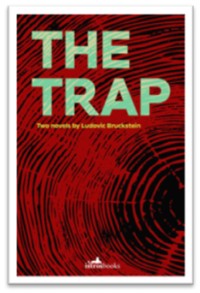
The Trap & The Rag Doll are two novellas by the Romanian writer Ludovic Bruckstein, that have remained undiscovered for many years. Both narratives are concerned with extraordinary stories of survival and struggle within the multicultural Transylvanian region during the time of Nazi occupation. The Trap is the story of Ernest, a young Jewish student from Sighet, who went into hiding in the mountains surrounding the town, when anti-Semitic persecutions began. From his hiding places he witnessed the fate of the Jewish population of the town until they are all sent away, in May 1944, in four long cattle-train transports to Auschwitz. Shortly thereafter, the Russian soldiers 'liberate' the town, and Ernest eagerly returns to his parent's house. However the Russians, suspicious of a young man that suddenly appears in town, out of nowhere, arrest him and exile him to a prisoner camp in Siberia! Critics saw in this last novel of his an allegorical rendering of the situation of many Jews, who, like himself, after World-War II, readily joined the "World-Wide Communist Revolution" to avenge the atrocities of Nazism, only to find themselves trapped in cruel, dictatorial regimes that became suspicious of them and refused to allow their assimilation and integration, quite like the regimes before the war.
Sie lesen das E-Book in den Legimi-Apps auf:
Seitenzahl: 323
Veröffentlichungsjahr: 2019
Das E-Book (TTS) können Sie hören im Abo „Legimi Premium” in Legimi-Apps auf:
Ähnliche



















Contents
Imprint
Foreword
THE TRAP
THE RAG DOLL
Ludovic Bruckstein: "Me: An Unabridged Autobiographical Novel"
The Author
The Translator
THE TRAP
Two novellas by Ludovic Bruckstein
Translated from the Romanian by Alistair Ian Blyth
First published in 2019 by Istros Books
London, United Kingdom www.istrosbooks.com
Copyright © Estate of Ludovic Bruckstein, 2019
First published as
Scorbura, Panopticum, Tel Aviv, 1989
Păpușa de cîrpă, Panopticum, Tel Aviv, 1973
The right of Ludovic Bruckstein, to be identified as the author of this work has been asserted in accordance with the Copyright, Designs and Patents Act, 1988
Translation © Alistair Ian Blyth
Typesetting: Davor Pukljak, www.frontispis.hr
Illustrations: Alfred M. Bruckstein
ISBN:
Print: 978-1-912545-31-5
Ebooks: 978-1-912545-32-2
The publishers would like to express their thanks for the financial support that made the publication of this book possible:
The Prodan Romanian Cultural Foundation
Arts Council England
Foreword
Ludovic Bruckstein’s The Trap and The Rag Doll are both set during the Holocaust, the first in Sighet, the second in a nameless town very much like it, both of them part of the unique Jewish and multi-ethnic milieu that developed over hundreds of years in the northern Carpathians and Transcarpathia, a geographic area encompassing Galicia, Ruthenia, Maramuresch and Bukowina, regions that lie within present-day Romania, Ukraine, Poland and Slovakia. The history of Sighet (Marmaroschsiget), situated on the border with the Ukraine in present-day Romania’s Maramureș region, encapsulates both this lost multi-ethnic world and the twentieth-century catastrophes that were to destroy it: fascism and the Holocaust, followed by Red Army occupation and decades of totalitarian rule. Although it was once home to a thriving Jewish community, no more than a dozen Jews now live in Sighet, a town famous today for its prison, where, in the Stalinist period, inter-war democratic political leaders and other ‘enemies of the people’ met a brutal end and were buried in unmarked graves, and which is now a museum and Memorial to the Victims of Communism. At the turn of the twentieth century, the town, then part of the Austro-Hungarian Empire, was home to sizeable Hungarian, Romanian, German and Jewish communities. In 1920, following the Treaty of Trianon, the southern part of the Maramuresch region became part of Greater Romania, and twenty years later it was annexed to Hungary consequent to the Second Vienna Diktat. After the commencement of Operation Barbarossa and Germany’s invasion of the Ukraine, the Horthy regime rounded up a part of Sighet’s Jewish population in August 1941 and sent them in freight cars over the border to Kamienets-Podilskyi, where they were massacred along with Jews from the local ghetto and deportees from elsewhere in Hungary. In 1944, German forces occupied Hungary and, with the collaboration of local fascists, herded the Jews into ghettos. Over the course of a week in May 1944, the around thirteen thousand Jews who had been confined to the Sighet ghetto, under armed guard and enduring squalid, overcrowded conditions, were deported to Auschwitz on four trains of freight cars. The deportees included Elie Wiesel (1928–2016), who was to win the Nobel Peace Prize in 1986, and Yiddish and Romanian-language writer Ludovic Bruckstein (1920–1988).
Ludovic (Joseph-Leib) Bruckstein was born in Munkatsch (Mukachevo), a town in Ruthenia with a large Jewish population, some eighty miles north-west of Sighet, which during the disintegration of the Austro-Hungarian Empire became part of the newly established Czechoslovakia and then part of the Ukrainian Soviet Socialist Republic at the end of the Second World War. Like the Jewish population of Sighet, where the Bruckstein family moved after Ludovic was born, and of so many other similar towns across the region, the Jews of Munkatsch perished during the Holocaust, massacred by Einsatzgruppen or transported to the gas chambers of Auschwitz.
In Sighet, Mordechai Bruckstein, Ludovic’s father, established a business, exporting locally picked medicinal herbs and producing walking canes in a small factory. Ludovic Bruckstein began to write fiction at an early age, thereby continuing a long family tradition of Hassidic storytelling, which he was later to describe in the short story ‘The Destiny of Yaakov Maggid’ (1973). A maggid is a traditional Jewish storyteller, who narrates stories from the Torah and, in the case of the Hassidic maggidim, hagiographic tales of the movement’s founder, Israel ben Eliezer (1698–1760), or the Baal Shem Tov, which means “Master of the Good Name.” Chaim-Josef Bruckstein, Ludovic’s great-grandfather, was an early Hassid, a follower of the Baal Shem Tov, and the author of a book titled Tosafot Chaim (Life Glosses). His grandfather, Israel Nathan Alter Bruckstein, was a Hassidic rabbi in Pystin’, a town in Galicia, ninety miles north-east of Sighet, and wrote two books, Emunat Israel (Faith in Israel) and Minchat Israel (Gift of Israel).
As a young man, Ludovic Bruckstein was to experience at first-hand the increasing atmosphere of anti-Semitism in Greater Romania and the hostile environment for Jews systematically created by Romanian officialdom, which he evokes in the novella The Rag Doll (1973). Even before the outbreak of the Second World War and the implementation of the “Final Solution,” Romania’s Jews were subject to harsh persecution, including the kind of senseless, soul-destroying, draconian bureaucratic requirements described in The Rag Doll, whose calculated, malicious purpose was to make everyday life all but impossible for Jews. In 1937–38, the government of nationalist poet and anti-Semite Octavian Goga (1881–1938) passed race laws rivalled in their severity only by those of Nazi Germany, whose measures included stripping a quarter of a million Jews of their Romanian citizenship, making them citizens of nowhere. After war broke out and Romania, under the dictatorship of Marshal Ion Antonescu, allied itself with Nazi Germany, the hostile environment for Jews further degenerated into the open violence of organised pogroms, including the Jassy Pogrom of 29 June-6 July 1941, in which more than thirteen thousand were murdered—shot, beaten and hacked to death, crammed into sealed freight cars and left to die of thirst and suffocation. By this time, Maramureș, and with it Ludovic Bruckstein’s home town of Sighet, was under the control of another Nazi ally and fascist regime, having been ceded to Admiral Horthy’s Hungary by the Second Vienna Diktat.
Ludovic Bruckstein’s novella The Trap (1988), which he completed shortly before his death from cancer, describes the reactions of the protagonist, Ernst, to the anti-Semitic measures introduced by the Nazis and the Horthy regime, such as the compulsory wearing of the yellow star. Ernst, a university student, is shocked by the utter absurdity of it: Ultimately, it is ridiculous to reduce an individual human being to a yellow patch emblazoned with a letter of the alphabet, in this case, the letter J. Why not make Catholics and Lutherans wear the letter C or L? Or, to push the absurdity to its limit, why not have doctors and barbers wear an armband bearing the letter D or B? It will turn out that the absurdity of labelling people, the language of hatred that reduces the individual to a type, is the first step toward dehumanising them, an inexorable process whose final step is necessarily their annihilation; official denial of the right to human individuality is preliminary to physical extermination.
After Sighet’s Jewish men are rounded up on the night before the Sabbath and subjected to collective humiliation by the commanding officer of a newly arrived detachment of the SS, Ernst decides to escape the oppressive absurdity that now reigns in the town, taking refuge with a family of Romanian peasants in the hills. And it is from the hills above the town that he witnesses the progression from absurd humiliation to extermination, when Sighet’s Jewish population is first confined to a ghetto and then transported by train to a destination unknown. At the end of the war, when Ernst comes out of hiding and descends once more to the town, he is promptly arrested by an officer of the Red Army – the representative of another regime that reduces individuals to labels and types: enemy of the people, kulak, bourgeois, rootless cosmopolitan, etc. – on the absurd grounds that an arrest quota has to be met, regardless of who is arrested. In other words, another dehumanising denial of human individuality. Ernst is herded into a freight car with the other prisoners who make up the quota and transported to the labour camps of Siberia.
Unlike Ernst and Hannah, the protagonist of The Rag Doll, Ludovic Bruckstein did not manage to elude the train to Auschwitz, but like them both, he was to lose almost his entire family to the gas chambers. Prisoner A37013, Ludovic Bruckstein escaped the gas chamber only because, as an able-bodied young man, he was transferred to forced-labour camps in Hildesheim, Hanover, Gross-Rosen, Wolfsberg and Wüstegiersdorff, where he was made to repair the damage to railway tracks caused by nightly Allied bombing. Liberated by the Red Army in May 1945, he made his way back to Sighet, where he edited a Yiddish newspaper, Unzer Lebn (Our Life) and wrote a highly successful play, Nacht-Shicht (Night Shift), which was performed in Yiddish theatres in Bucharest and Jassy from 1948 to 1958. The play tells the true story of the Sonderkommando revolt at Crematorium IV in the Auschwitz-Birkenau concentration camp, which took place in October 1944.
Ludovic Bruckstein went on to write twenty plays in both Yiddish and Romanian, including The Grinvald Family (1953), The Return of Christopher Columbus (1957), An Unexpected Guest (1959), Land and Brothers (1960), for which he was awarded the Prize of the Union of Writers and the Order of Labour, An Unfinished Trial (1962), and As in Heaven, So on Earth (1968). At the same time, he wrote short stories for the literary press, which were collected in the volume Panopticum (The Wax Museum) in 1969. The following year, he applied for an exit visa to emigrate to Israel, where his younger brother, the only other member of his family to survive the camps, had emigrated in 1947. In the year and a half before he was finally allowed to leave the Romanian Socialist Republic with his wife and son, he was forced to resign his job and found himself ostracised as a traitor to the communist regime.
Settling in Tel Aviv, Ludovic Bruckstein continued to write fiction, mostly in Romanian and sometimes in Yiddish, which, rather than Hebrew, were the first languages of émigrés from Romania. His short fiction, collected in the volumes The Destiny of Yaakov Maggid (1975), Three Histories (1977), The Tinfoil Halo (1979), As in Heaven, So on Earth (1981), Perhaps Even Happiness (1985), The Murmur of the Waters (1987), include both timeless parables, full of humour and Hassidic wisdom, and stories of the concentration camps, which, no matter how harrowing, always convey an abiding love of humanity, of the unique human individual that cannot be reduced to a label or type.
In communist Romania, however, the name Ludovic Bruckstein was erased from the official history of literature. Even after the fall of communism, his novels and short stories, written in Romanian, but published in Israel, are almost entirely unknown to readers in his native country. It is a paradoxical situation for so important a twentieth-century Romanian writer, but to read the powerful, symbolically charged novellas The Trap and The Rag Doll is to understand how it could not have been otherwise.
Alistair Ian Blyth
THE TRAP
1
The train crawled eastward, snaking along, black and sleepy. Inside the crowded goods wagon, with his knees to his mouth, Ernst listened to the monotonous clack-clack-clacking of the wheel beneath him. ‘Halt! Stoi! – Halt! Stoi! – Halt! Stoi!’ the wheel seemed to say. And the steel of the other wheels in the other three corners of the wagon made muffled reply: ‘Halt! Stoi!’ Stop! Stop! Stop!…
The train did not stop. Except rarely, on sidings, in deserted stations. And the doors did not open.
The war was over. ‘What joy!’ said Ernst to himself, sardonically. His anger had since evaporated. What else could he do except be angry, or not be angry? He could change nothing. Absolutely nothing… The lump in his throat had dissolved and now he felt like laughing. Yes, he felt like laughing, nothing less!… The wheels of the train clacked. He sank into a torpor. Inside the crowded goods wagon: the monotonous breathing of some sixty people, sitting like parcels on the plank floor, with their knees to their mouths. And a sour, stale stench of sweat. Among them was that very same young man in black uniform, a uniform now shabby, without epaulettes, without tabs. Or was he mistaken?… Nonetheless, the slicked chestnut hair was the same, the delicate profile was the same, the razor sharp nose, the greenish eyes were the same. He was yet to utter a word, but if he had opened his mouth, Ernst would have recognised that strident voice of his:
‘Halt! Stop!’
At the time Ernst had worn a yellow star sewn on his back. And on his chest. At first he had been furious, outraged. And then depressed. Why that stigma? Merely because a man was of a different nation? Of different ethnic origins, as they put it… When timid, frightened creatures began to appear on the street, with yellow stars on their chests and backs, it became somehow comical.
From above, from the crests of the surrounding mountains, you could see the town in the valley, like an island between the waters of the Tisza and the Iza: the town of Sighet, not a very large town, but an important one, the county administrative seat; indeed, it had a courthouse and a large prison, five Christian churches: Catholic, Uniat, Orthodox, Reformed and Russian Orthodox; a few Protestant prayer and meeting houses; five synagogues and around thirty Jewish prayer houses; a large hospital with many wards; a mental asylum; six primary schools; four lyceums; a large café that served Turkish coffee and tea in the front salon and which had rooms for billiards and cards at the back; a hotel with twenty rooms on the upper storey, pretentiously named The Crown; two small cake shops on the Corso, which was the main street; a brothel at the edge of town, which was named the Jardin for some unknown reason, since there was no garden nearby, but only a yard at the back, rank with weeds; and a Palace of Culture in the select district, which, with its four turrets and massive wrought iron gate, imitated a mediaeval castle, in the late, grandiloquent style of the Austro-Hungarian Empire… It was from in front of the wrought iron gate that the strident command had rung out:
‘Halt! Stop!’
The train came to a sudden stop, its brakes screeching. Through the bars of the small window could be seen a patch of bluish sky. Inside, in the semi-darkness, the crowded, monotonously breathing bodies were barely distinguishable. From up ahead the locomotive gave a protracted whistle, and then the train set in motion, its metal creaking once more…
It had been Saturday and Ernst was hurrying to get home in time for lunch. He was determined to avoid tedious reproaches. All week he would eat sporadically, where and when he could, as his time allowed or his stomach demanded, but on Saturdays all the members of the family had to take their turn washing their hands in fresh water drawn from the well in the yard, they had to sit around the table, festively laid with a white damask cloth and gleaming crockery of glass and porcelain, all of them had to sit down together. His parents and the family tradition allowed no one to be late. And so Ernst was hurrying to get home in time for lunch, when all of a sudden he heard behind him a strident voice, like a military order:
‘Halt!’
Ernst stopped. It was as if he could feel eyes boring into his back, into the spot where his yellow star was sewn. He turned around. The greenish eyes now lingered on the yellow star fixed to his chest, on the left, above his heart. In front of the wide-open wrought iron gate of the Palace of Culture, which Ernst had been passing, there stood a tall, brown-haired young man with a thin, razor-sharp nose, with small, greenish eyes, wearing a clean, immaculately tailored black uniform and highly polished boots.
‘Komm’her! Komm’her! Come here!’
And since Ernst gazed at him rooted to the spot, bewildered by that rigid black apparition, by that cold, cutting voice – nobody had ever spoken to him in such a voice – and because he was in doubt as to whether he was really the person being spoken to, the officer yelled: ‘Ja, ja! Du, herein! Yes, yes! I’m talking to you! In here! In here!’ And he pointed his arm at the vaulted entrance of the palace.
In that moment of surprise and confusion, Ernst did not realise that with that curt, cutting shout, that ‘Halt!’, that gesture inviting him inside the tall vaulted entrance of the Palace of Culture, the war had finally arrived in that quiet, peaceful little town hidden away in a valley of the Maramureș Mountains. He did not realise his life had entered a strange circle, a hallucinatory ring dance, which no sooner did it end but it would begin again in the same place and with the same curt, cutting shout, but spoken in a different tongue…
Indeed, till that shouted ‘Halt!’ the wind of war had blown but lightly, over the radio airwaves that brought news of battles and advances and retreats in faraway, unfamiliar places, news of the unknown dead and wounded; some men, young and very young, were conscripted and forced to meet the war somewhere faraway, at the front or behind the front; but in the little town life went on in the time-honoured fashion, monotonously, with the minor bustle of working days, with the stagnant tranquillity of holidays, as if nothing at all were happening in the world…
‘Ja, ja! Du, herein! In here!’
Bewildered by this tone of voice, without it even crossing his mind to ask a question or to object, Ernst went through the massive wrought iron gate of the palace. Inside the spacious entrance, a soldier in a green-grey uniform took him and showed him where he was to stand ‘to attention’ and then ‘at ease.’
Outside the strident orders of the young officer in the black uniform could still be heard: ‘Halt! Herein!’ and other people from the town now appeared, whom the solider made stand next to Ernst in a perfectly straight line.
For example, in the cool, vaulted lobby of the Palace of Culture there now appeared Yehiel Pasternak, the grocer from the corner of Slatina Street, a thin, gangly man, whose hair and beard were as yellow as straw, a man of around fifty years, whose fat wife and four children, also as blond as straw, were waiting for him at home for the Sabbath meal. The soldier in the greenish-grey uniform pointed the muzzle of his carbine at the place next to Ernst and ordered:
‘Attention! At ease!’
‘Yes, yes, Herr Offitzeer, I understand!’ said Yehiel Pasternak to the soldier in a very civil voice, elevating him in rank out of fear, and stood on the precise spot indicated, as rigid as stone pillar.
‘Halt! Herein!’ came the officer’s voice from outside. And a lad of around fifteen appeared, wearing a round black felt hat, from which poked two long curly sideburns. The lad looked around with curious blue eyes, evidently amused at what was happening to him on the holy Sabbath.
‘Halt! Herein!’
And Josef Birnberg made his appearance, the owner of Forestiera L.L.C., which is to say, Limited Liability Company. Birnberg had a timber factory, forests, warehouses for firewood, lumber and railway ties, and a barrel factory. He was said to be the richest man in the town, but you could never know with those big timber merchants, because today they were as rich as a Korah and tomorrow they would suffer a resounding krach1, going from boom to bust, and the whole business would come toppling down like a house of cards… A tall, imposing man with a pointy black goatee chased with strands of silver, Josef Birnberg took his place in the line, next to the cheder2 boy with the curly sideburns and the round felt hat, answering the soldier’s order in perfect German and with a perfect knowledge of German military ranks, from when he had been a sub-lieutenant in the Austro-Hungarian Army, K.u.K. Regiment, which is to say Kaiserliche und Königliche Infanterie-Regiment Nummer 77, which had earned renown in the world war of 1914-18:
‘Jawohl, Gefreite! Yes, corporal!’
‘Ich bin SS-Unterscharführer,’ the soldier disdainfully corrected him.
Josef Birnberg looked at him in silent fear. Yes, it seemed that things had changed since then… And not only the names of the ranks, but also the tone of voice, the bearing, and who knows what else…
‘Halt! Herein!’ came the harsh voice from outside.
And Rahmil-Melamed appeared, the cheder teacher from the school for small children, who ate on weekdays at the parents’ houses and on the Sabbath ate lunch at the house of Mr Josef Birnberg himself; the teacher appeared in his Sabbath kaftan, which was black, clean, patched in numerous places by his wife Sara, but so neatly worked that you could barely see where the patches were.
‘Halt! Enter!’
And in the lobby of the Palace of Culture appeared Simon Meirovici, the poor tailor, ginger, stooped, short-sighted, who sat on the bench at the back in synagogue and rather than praying cavilled about the ‘respectables’ who sat by the east wall of the synagogue. After him came Zainvel, the porter in the fruit and vegetable market; then Meilach, the carter from the hay mart; then Natan Eisenguss, who owned the haberdashery and ‘modes’ shop in the centre of town. And so, around thirty souls of every kind had been rounded up: schoolboys, students on holiday, like Ernst, elderly men, thin and fat, fathers whose wives and children were waiting for them at home, not suspecting a thing. All these men found themselves herded into the lobby of the Palace of Culture, beneath the tall vaulted ceiling, which was painted with an ordinary blue sky, at whose edges hovered white, innocent cherubs. They were all wearing their Sabbath best, they were all Jews, all pale and frightened, and all wore the yellow star stitched to their chests and backs…
Some two weeks previously, when the order came for the Jews to stitch the yellow star to their clothes, a wave of indignation and anger washed over the community. Some said that the star should not be worn: ‘We shouldn’t let ourselves be humiliated.’ Others said that the yellow star should be worn ‘dafka’, deliberately, with pride even: ‘We should show them that they can’t humiliate us… ’ But life had to go on, you had to go outside, for a loaf of bread, about your daily business, for a breath of air, and the order was categorical: ‘Those who disobey will be arrested on the spot and prosecuted with the full severity of the law.’ And so the second opinion prevailed and the town’s Jews began to wear the yellow star, with greater or lesser pride… Moreover, the oldest and wisest of the community, with a wisdom probably springing from the ages, even found words of consolation. If a gezeirah had to come – an evil commandment against the Jews – then let Him Above prevent the worst, they said. In any case, many Jews, particularly the religious ones, themselves wore clothes that set them apart – caftans, round felt hats, or a kind of hat with fur in the corners, called a streiml – or cropped their hair short and had long curly side whiskers and untrimmed beards, to distinguish them from the other nations: ‘One more distinguishing mark hardly matters, we openly declare ourselves Jews, after all, from father to son, and nobody wishes to hide… ’ How easily a man accustoms himself to everything! Even to his own humiliation…
To Ernst, a student who had been abroad, the law seemed not only humiliating, not only insulting, but also stupid and ridiculous. It was a small town and everybody knew everybody else, and for a fact, everybody knew who was a Jew. And who was a Romanian. And who was a Hungarian. And who was a Ukrainian. And who was a Zipser German3. And who was a Gypsy. Nobody tried to hide what he was. The law was quite simply idiotic. If a person knows you, what is the point of his making you wear a sign to say you are who you are? And if a person doesn’t know you, what is it to him what race you are? Ernst also put these questions to his friend, Dr Klaus Daoben, the judge, who was descended from the Zipser Germans that settled in Maramureș centuries ago: a tall, muscular, suntanned man, with a round, smoothly shaven face, large head and cropped pate, a mountaineer, with whom Ernst went hiking in the Maramureș Carpathians. He put the questions to him in a bitterly joking way, but his friend did not catch the joke and answered very seriously that his duty was to judge not the laws, but only people who broke the laws, or to preside over cases filed by plaintiffs… But if the law demanded a distinguishing mark for Jews, why should it not demand a different mark for all the other races? Each with his own star or cross… Ernst even put this to Judge Daoben, as a bitter joke, for if that was how things stood, and the Jews were marked with a yellow star, then it would be only right for Hungarians to wear a green star, their favourite colour, on their chests and backs, and for Romanians to wear a blue star, and for Zipser Germans – Dr Daoben’s ethnic group – to wear a black star on their chests and backs, and Ukrainians a pink star, the colour of the ribbons in their maidens’ hair, and so on and so forth… And why shouldn’t people also be marked according to their religion? They should wear armbands, since armbands were then very fashionable, each with a sign or symbol. Christians, a cross. Jews, the Star of David. Atheists, nothing. Which is to say, a zero… But in fact there were lots of Christian denominations and sects without a cross. The Reformed Church, for example. There were no crosses in their churches. So, let each have a letter on his armband. Catholics would have a C. Reformists an R. Baptists a B. Lutherans an L. Anabaptists an A. The Seventh-Day Adventists, who observe the Sabbath rather than Sunday, would wear an S. Jehovah’s Witnesses a W, Pentecostalists a P, and so on. Every letter of the alphabet could be employed… Maybe people should also be marked according to their occupation? Barbers would have a B, for example, Merchants an M, teachers a T, doctors a D, pickpockets a PP, and so on. That way, we would know who we were dealing with at once glance. And we would treat everybody the way he deserves. Let justice be imparted equally to all… But Dr Daoben, the judge, did not laugh. He did not even smile. Probably he did not get the joke, because he replied very gravely, very seriously, that he, Judge Daoben, was required to impart justice only to those who came to court to demand it, that is, only to those who filed an official complaint, through the legal channels and with all the necessary rubber stamps…
A rigid, honest, humourless German, that judge… Yes, yes, let each bear the stigma… But in fact, it seemed that was the way things were headed. Europe was in the midst of the age of distinguishing marks, of insignia and armbands. In Germany, swastika armbands; in Italy armbands with the fasces; armbands for youths inscribed with ‘Youth’; armbands for women inscribed ‘Women’… Before long, there would even be a demand for armbands that simply said ‘Human’ – how many people would wear such an armband?
2
All of a sudden, on their way home from synagogue or after a stroll around town, the thirty men with yellow stars on their chests and backs had found themselves in the lobby of the Palace of Culture, prisoners of the SS soldiers. What did they want from them? Why had they rounded them up? Where were they going to take them? This was what they were asking themselves in their minds.
‘How can I get out of this trap?’ wondered Ernst, looking around him. At every door and window in the lobby was stationed a soldier in grey, holding carbines at the ready. So, there he was, a prisoner of the SS, all of a sudden, without having done anything.
The shouts of ‘Halt! Herein!’ had ceased outside. The young officer in the black uniform entered the lobby and looked over that strange troop, that assembly of individuals tall and short, young and old, fat and thin, wearing elegant German suits or comical Ost-Europeische caftans. He paced up and down the line two or three times, visibly amused, with an ironic smile on his lips. He then came to a stop in front of the line, with his hands on his hips and his sharp elbows jutting outwards, and said in a voice unusually gentle, almost honeyed:
‘Meine Herrschaften! Gentlemen! I have invited you here on important business for our empire, our German Reich. The quicker and the better you finish the task, the quicker you will be free. For, work alone makes man free… ’
He gave a signal, two guards holding rifles stationed themselves in front of them, and the officer left.
The men in the line began to wait. What important task would they have to perform? And for the German Reich no less… And how long would it take? They asked themselves fearfully. Then, they began to calm down. In the end, the officer had not spoken rudely. On the contrary, he might even be said to have spoken politely to them. ‘Meine Herrschaften,’ he had said. My gentlemen! Very höflich, very polite… And he had said they would be free.
They waited there, each in the same place, each standing on one of the thirty-by-thirty-centimetre, square, grey and white flagstones that covered the hall like a huge chessboard, they waited an hour, they waited two hours, three hours, the guards were changed a number of times in the meantime, men in uniform went up and down the stairs, nobody told them anything.
Ernst lost his cool:
‘Why are you keeping us here pointlessly like this?’ he asked one of the soldiers, addressing him in perfect German with a slight Viennese accent.
The soldier said nothing.
‘What is the task we have to perform? Why doesn’t anybody tell us anything?’ he asked the other soldier.
He might as well have been talking to the wall.
The soldiers on guard, wearing grey-green uniforms, were changed every hour, while the men stood and waited in the same place, in a perfect line, shifting their weight from one leg to another or to both legs. The soles of their feet ached. Their bodies had become heavy, unbearably heavy. They were burning with the desire to flex their joints, to stretch out on the cold hard flagstones of the palace lobby. Their faces, which had been pale and frightened at first, had turned red with impotent fury, and then yellow, puffy from pointless waiting.
In the afternoon, at around four, they suddenly heard the rumble of large engines. Heavily laden trucks came to a stop in front of the gates of the Palace of Culture. In that instant the SS officer in the black uniform also appeared, screaming as if out of his mind:
‘Los! Los! Move! Unload the trucks!’
There was not a trace of meine Herrschaften or Höfligkeit4 in his screams! His reedy, strident voice was like a whip cracking over the backs of beasts of burden. The thirty, in their best clothes, exhausted from waiting, set about unloading iron bedsteads and straw mattresses from the trucks and then carried them up the stairs to the first floor. A billet for Waffen-SS soldiers in transit through the town was being readied there. A long line of heavy trucks, hundreds of iron bedsteads, and as many straw mattresses…
‘Quickly! Quickly! Schneller! Verflucht noch einmal! Get a move on! The sooner you finish, the sooner you will be free!’ yelled the officer.
And the men ran down the stairs, and then laboured back up, hauling the iron bedsteads and straw mattresses.
Up, down! Up, down! Their legs were breaking, their shoulders were aching, their clothes were tearing. They no longer felt how heavy were the iron bedsteads, they no longer felt how light and baggy were the straw mattresses, they felt only exhaustion and humiliation.
‘Quickly! Quickly!’
They did not even notice when it grew dark. The lights came on. The large windows of the Palace of Culture were lit as if for a celebration, like when the town hall or a sports club or a benevolent society held a festive concert or a tea dance or a masked ball. Now, however, a strange ball indeed was being held in that fussy provincial palace, the windows were lit up festively, in stark contrast to the surrounding streets, which were plunged in darkness, and behind whose fences and dark windows waited pale folk with tearful eyes.
The news had quickly spread through the town. The streets around the building were empty. Nobody dared to set foot there. But in the nearby lanes and streets, behind the windows and fences from which it was possible to see the palace, people had gathered to wait. The parents, wives, children of those ambushed stood and waited. They watched anxiously: perhaps some familiar outline might appear at a window, perhaps somebody might manage to give a sign, perhaps some news as to what was happening within might arrive.
That day, many people in town did not eat their Sabbath lunch, nor their third, shaleshudes5 meal, nor the supper to bid Queen Sabbath farewell. Imperceptibly, the Sabbath, when fasting is strictly forbidden, unless it coincides with Yom Kippur, the Day of Atonement, became a long, silent, sad, fearful fast…
It was long after nightfall when the men finished furnishing the billet for the troops due to pass through the town. One by one they emerged through the wrought iron gates of the Palace of Culture, their heads bowed, their best clothes torn and dusty, humiliated and exhausted. The first to emerge was Rahmil-Melamed, the teacher to small children, his Sabbath caftan, so beautifully patched by the hand of his wife Sara, now in tatters. All the people from the dark side streets rushed up to him, asking what had been going on and what had happened to the others. Then Yehiel Pasternak appeared, the grocer whose hair and beard were as yellow as straw, and he was bent in two at the hips. Then came Mr Iosef Birnberg, the proprietor of Forestiera Ltd., his clothes and dignity as a former officer of a Kaiserliche und Königliche Infantry Regiment now completely rumpled. Next to slip through the palace gates were Zainvel, who worked as a porter in the fruit and vegetable market, and the cheder boy with his curly side whiskers, sucking his bleeding finger, and Natan Eisenguss, who owned a shop for ladies’ modes, and Simon Meirovici, the poor tailor and patcher. They slipped through the gates without a word of complaint, they hurried away, without looking back, heading for their homes, along with those who had been waiting for them outside, all of them breathing sighs of relief and thanking the Lord Above that they had got off so lightly.
At the time, they thought they had got off lightly…
3
But only twenty-nine of the thirty Jews emerged from the gates of the palace, heads bowed, humiliated and exhausted, and went home. One alone, Ernst, remained inside much longer. His father, mother, elder brothers and sisters-in-law waited despairingly on a dark side street, from where the wrought iron gate of the Palace of Culture and festively lit windows were visible. That light, which in days gone by used to be accompanied by orchestra music, the sounds of balls, parties, merriment, clinking glasses, the rhythms of the dance, now seemed cold and ironic. It poured from the building to the accompaniment of opaque silence and spread over the street in long swaths. Why didn’t Ernst come out already? Why didn’t they let him go? Might he have defied them? He was so disobedient. And irascible. And reckless. Being the youngest son, he had always been the most spoiled. Might he have believed that he could do what he liked there too? Or that he could refuse to do what he was ordered? What could they be doing to him in there, now that he was alone with them? His old father, with his white hair and side whiskers à la Franz Josef, trembling with annoyance, and next to him his tall mother, as thin as a plank, and behind them the two elder brothers and two docile daughters-in-law, stood in the dark alley, gazing fixedly at the illuminated building. It was as if they had turned to stone. They felt neither weariness nor the passing time.
Ernst’s parents’ concern was not unfounded. After the men had finished arranging the iron bedsteads and straw mattresses, and twenty-nine of them had been released, the SS officer, who from the very start had singled him out, perhaps because of his clenched jaw and the scowl of his green eyes as he worked, asked Ernst, without any reason, but from a certain intuition: ‘What is your name?’
The young officer, with his immaculate black uniform, had not asked anybody else that question, and his interest did not bode well.
‘Ernst… Ernst Blumenthal is my name.’
It was plain that the officer was unpleasantly surprised.
‘Ernst? Ernst?’ he muttered. Such first names when applied to ‘that lot’ quite simply infuriated him. Abraham, Isaak, Yakov, yes! Chaim, Shmil, even better! Israel, highly appropriate! But Ernst? Completely out of line! Barefaced cheek! And what was more, his surname was Blumenthal… Which is to say, ‘Flower Vale.’ Beautiful German surnames like that being used by Ost-Juden, by those non-Aryan Orientals, offended his aesthetic sense, nothing less. It was the same as calling a mangy, bearded billy-goat a thoroughbred stallion… The blood rose to his head, but he controlled himself and asked, almost politely:
‘What is your occupation?’
‘I’m a student.’
Quite simply exasperating. An Ernst. And a Blumenthal. And a student to boot.
‘What are you studying?’
‘Architecture.’
The officer in the black uniform was seething. His small green eyes were giving off sparks. His chiselled features looked even sharper.
‘Where are you a student?’
‘In Vienna. I have broken off my studies temporarily, because of the… the situation.’
He had been about to say ‘because of the Anschluss between Austria and the German Reich,’ but stopped himself in time.




