


9,99 €
Mehr erfahren.
- Herausgeber: Daniel Zaborowski
- Sprache: Englisch
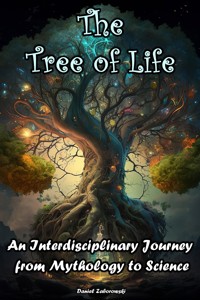
"The Tree of Life: An Interdisciplinary Journey from Mythology to Science" is a comprehensive exploration of the significance and evolution of the Tree of Life concept in human culture and scientific research. The book consists of 10 chapters, each with four sections that delve into various aspects of the Tree of Life, from its mythological origins to its current scientific understanding and its cultural significance in literature, art, film, and music.
The first chapter introduces the concept of the Tree of Life and its significance in mythology and science. Chapter two focuses on the Tree of Life in various cultures, exploring its symbolism and relevance in ancient myths and legends. Chapter three discusses the religious significance of the Tree of Life in different belief systems, including Abrahamic religions, Hinduism, Buddhism, and Indigenous religions.
The fourth chapter delves into the scientific foundations of the Tree of Life, including its history and evolution in biology and genetics. Chapter five focuses on the principles of phylogenetics and systematics, explaining how the Tree of Life is constructed and its applications in biology. Chapter six explores the evolution of life on Earth, including the origins of prokaryotes and eukaryotes, and the future of evolution and the Tree of Life.
Chapter seven delves into the role of the Tree of Life in astrobiology and astroecology, including the search for life beyond Earth and the impact of astrobiology on our understanding of the Tree of Life. Chapter eight explores the Tree of Life in environmental science, including biodiversity, conservation, and the effects of climate change.
Chapter nine examines the Tree of Life in popular culture, including its representations in literature, art, film, television, video games, and music. Finally, chapter ten concludes the book by summarizing the significance of the Tree of Life in interdisciplinary studies and its implications for our understanding of life, science, and culture.
Overall, "The Tree of Life: An Interdisciplinary Journey from Mythology to Science" provides a comprehensive and informative guide to the evolution and significance of the Tree of Life concept, highlighting its relevance to various fields of study and its cultural impact throughout history.
Das E-Book können Sie in Legimi-Apps oder einer beliebigen App lesen, die das folgende Format unterstützen:
Veröffentlichungsjahr: 2023
Ähnliche


















The Tree of Life: An Interdisciplinary Journey from Mythology to Science
Daniel Zaborowski
Published by Daniel Zaborowski, 2023.
While every precaution has been taken in the preparation of this book, the publisher assumes no responsibility for errors or omissions, or for damages resulting from the use of the information contained herein.
THE TREE OF LIFE: AN INTERDISCIPLINARY JOURNEY FROM MYTHOLOGY TO SCIENCE
First edition. February 26, 2023.
Copyright © 2023 Daniel Zaborowski.
Written by Daniel Zaborowski.
10 9 8 7 6 5 4 3 2 1
Table of Contents
Title Page
Copyright Page
Chapter I: Introduction
Chapter II: Mythological Perspectives
Chapter III: Religious Significance
Chapter IV: Scientific Foundations
Chapter V: Phylogenetics and Systematics
Chapter VI: Evolutionary Biology
Chapter VII: Astrobiology and Astroecology
Chapter VIII: Environmental Science
Chapter IX: The Tree of Life in Popular Culture
Chapter X: Conclusion
Chapter I: Introduction
The Tree of Life is a concept that has fascinated humans for thousands of years, appearing in mythologies and cultures across the globe. It is a symbol of life's interconnectedness and the complexity of the natural world. From its roots in ancient mythology, the Tree of Life has evolved into a scientific concept that helps us understand the relationships between all living organisms on Earth. "The Tree of Life: An Interdisciplinary Journey from Mythology to Science" offers a comprehensive exploration of the Tree of Life concept and its evolution, covering its cultural, religious, and scientific significance.
Throughout history, the Tree of Life has been represented in various forms of art and media, from paintings and sculptures to music and literature. It has been used as a metaphor for personal growth, the cycle of life and death, and the interdependence of all living beings. In modern times, the Tree of Life has become a subject of scientific study, revealing the evolutionary relationships between all living organisms on Earth.
This interdisciplinary book offers a comprehensive examination of the Tree of Life concept, combining insights from mythology, religion, literature, and science. It aims to provide readers with a deeper understanding of the history and significance of the Tree of Life concept and its impact on our understanding of the natural world.
In this book, we explore the origins and evolution of the Tree of Life, from its ancient mythological roots to its modern scientific understanding. We delve into the cultural and religious significance of the Tree of Life, examining its symbolism and relevance in various belief systems. We also explore the scientific principles behind the Tree of Life concept, including the fields of biology, genetics, and systematics.
The book is organized into 10 chapters, each with four sections that explore different aspects of the Tree of Life concept. Chapter One provides an introduction to the Tree of Life concept and its significance in mythology and science. Chapter Two focuses on the Tree of Life in various cultures and explores its symbolism and relevance in ancient myths and legends. Chapter Three examines the religious significance of the Tree of Life in different belief systems, while Chapter Four delves into the scientific foundations of the Tree of Life concept.
In Chapter Five, we explore the principles of phylogenetics and systematics and how they are used to construct the Tree of Life. Chapter Six examines the evolution of life on Earth and the role of the Tree of Life in our understanding of the natural world. Chapter Seven explores the implications of the Tree of Life concept for astrobiology and astroecology, including the search for life beyond Earth.
Chapter Eight examines the impact of the Tree of Life concept on environmental science, including biodiversity conservation and ecosystem management. Chapter Nine explores the cultural significance of the Tree of Life in literature, art, film, and music, while Chapter Ten offers a conclusion and reflection on the significance of the Tree of Life concept and its evolution over time.
Overall, "The Tree of Life: An Interdisciplinary Journey from Mythology to Science" is a comprehensive examination of the Tree of Life concept and its evolution, offering readers a deeper understanding of the cultural, religious, and scientific significance of this timeless symbol.
Defining the Tree of Life
The Tree of Life is a complex concept that has been explored by various cultures throughout history. In its most basic form, the Tree of Life represents the interconnectedness of all living organisms on Earth. It is a symbol of the complexity of the natural world and the unity of all life forms.
The Tree of Life has its roots in ancient mythology, appearing in various forms in cultures across the globe. For example, in Norse mythology, the world tree Yggdrasil connects the nine worlds, while in Hinduism, the cosmic tree Ashvattha represents the cycle of birth and rebirth. The concept of the Tree of Life has also been represented in other cultural forms such as the Mayan World Tree, the Kabbalistic Tree of Life, and the Egyptian Tree of Life.
While the Tree of Life has primarily been associated with mythological and religious traditions, it has also become a scientific concept. In modern times, the Tree of Life represents the evolutionary relationships between all living organisms on Earth. It is a crucial tool in the field of systematics, which involves the study of the diversity of life and its relationships.
In this section, we will examine the different ways the Tree of Life has been defined and represented throughout history. We will explore its cultural and religious significance and how it has evolved into a scientific concept.
The Tree of Life in Mythology
The concept of the Tree of Life has its roots in ancient mythology, appearing in various forms in cultures across the globe. In Norse mythology, the world tree Yggdrasil connects the nine worlds and is the center of the cosmos. It is said to be the source of life and death, with its branches extending into the heavens and its roots reaching into the underworld. Similarly, in Hinduism, the cosmic tree Ashvattha represents the cycle of birth and rebirth. It is believed to be the root of the universe, with its branches extending into the heavens and its roots reaching into the underworld.
In other cultures, the Tree of Life has taken on different meanings. For example, in the Mayan tradition, the World Tree represents the connection between the gods, humans, and the underworld. The tree is believed to be the source of life, with its branches extending into the heavens and its roots reaching into the underworld. The Kabbalistic Tree of Life in Jewish mysticism is a symbol of the path to enlightenment, with its ten sephirot representing different aspects of divinity.
In the Egyptian tradition, the Tree of Life is represented by the goddess Nut, who arches over the earth, with her feet on the ground and her hands reaching into the heavens. Her body represents the sky, and her arms and legs represent the four pillars of the earth. The Tree of Life was also significant in the Sumerian, Babylonian, and Assyrian cultures, where it represented the source of life and fertility.
The concept of the Tree of Life in mythology is diverse, with different cultures and traditions associating it with various meanings and symbolism. However, the common thread between them all is the representation of the interconnectedness of all living organisms.
The Tree of Life in Religion
The Tree of Life has also played a significant role in various religious traditions. In Christianity, the Tree of Life appears in the Book of Genesis, where it is described as the tree that grows in the center of the Garden of Eden, from which Adam and Eve ate and gained knowledge. The Tree of Life is also mentioned in the Book of Revelation, where it represents eternal life and is described as growing along the banks of the River of Life.
In Judaism, the Tree of Life is a central symbol in the Kabbalistic tradition. The Tree represents the path to enlightenment and spiritual ascension, with its ten sephirot representing different aspects of divinity.
In Islam, the Tree of Life is known as the Lote Tree, and it is mentioned in the Quran as being located in the seventh heaven. It is said to be the dividing point between the seen and unseen worlds and represents the knowledge and wisdom of God.
The Tree of Life has also been associated with Buddhism, where it is represented as the Bodhi tree, under which the Buddha achieved enlightenment. The tree is a symbol of spiritual awakening and the path to enlightenment.
The Tree of Life in Science
In modern times, the Tree of Life has become a scientific concept, representing the evolutionary relationships between all living organisms on Earth. The idea of the Tree of Life as a scientific concept was first proposed by Charles Darwin in his book "On the Origin of Species."
The Tree of Life is a crucial tool in the field of systematics, which involves the study of the diversity of life and its relationships. It allows scientists to understand the evolutionary history of different organisms, and how they are related to one another. The Tree of Life is also used in evolutionary biology, as it provides a framework for understanding the relationships between different species.
Advancements in DNA sequencing technology have allowed scientists to construct more accurate and detailed Tree of Life diagrams, which have revealed previously unknown relationships between different organisms. The Tree of Life has also been used to study the origins of life on Earth and the evolution of early organisms.
The Interconnectedness of the Tree of Life
Despite the different ways the Tree of Life has been defined and represented throughout history, there is a common thread between them all: the interconnectedness of all living organisms. Whether it is represented as a cosmic tree in Hinduism, a world tree in Norse mythology, or a scientific concept in modern times, the Tree of Life represents the unity and interconnectedness of all life forms.
The Tree of Life is a reminder that we are all connected, and that our actions have an impact on the natural world. By understanding the Tree of Life, we can gain a greater appreciation for the diversity of life on Earth, and the importance of preserving it for future generations.
In the following chapters, we will explore the Tree of Life in greater detail, examining its role in mythology, religion, and science. We will delve into the different methods used to construct Tree of Life diagrams, and how they are used to study the evolutionary relationships between different organisms. Ultimately, we will gain a deeper understanding of the Tree of Life and its significance in our world today.
––––––––
The significance of the Tree of Life in mythology
Mythology is the study of traditional stories or myths, often associated with a particular culture or religion. These myths typically involve gods, goddesses, heroes, and other supernatural beings, and are often used to explain the origins of the world, natural phenomena, and human behavior.
Myths have been an important part of human culture since ancient times, and have been passed down through generations in the form of oral stories, written texts, and other forms of art.
The Tree of Life in Mythology
The Tree of Life has played a significant role in many mythological traditions around the world, serving as a symbol of life, fertility, and immortality.
In Norse mythology, the World Tree, or Yggdrasil, was believed to connect the nine worlds and was seen as a symbol of the interconnectedness of all things. The tree was said to be protected by a dragon, and the god Odin was said to have hung himself from the tree for nine days in order to gain wisdom and knowledge.
In Hindu mythology, the cosmic tree known as the Ashvattha represents the cycle of life, death, and rebirth. The tree is believed to be home to various deities and represents the interconnectedness of all living beings.
In ancient Egyptian mythology, the goddess Isis was associated with the Tree of Life, which was said to have grown from the body of her husband Osiris after he was killed by his brother Set. The tree was believed to provide immortality to those who consumed its fruit.
In Christianity, the Tree of Life is mentioned in the Book of Genesis as being located in the Garden of Eden. It is described as being a source of eternal life, and was forbidden to Adam and Eve after they ate from the Tree of Knowledge of Good and Evil.




