


5,49 €
Mehr erfahren.
- Herausgeber: No Exit Press
- Kategorie: Krimi
- Sprache: Englisch
The Fifth Nick Sharman Thriller Disliked by Old Bill and villains alike, South London private eye Nick Sharman attracts trouble like the proverbial magnet. When businessman James Webb asks Sharman to find out who murdered his sister, her husband and two young children, the trail's been cold for over a year; the original police investigators had found nothing - no clues, no witnesses, no motive. There isn't much to go on. Besides, Sharman has other things to occupy him - his relationship with topless model Fiona is rapidly souring, his best friend Wanda is dying and his ex-wife leaves him to babysit their eleven-vear-old daughter, Judith. While Sharman's back is turned things start to hot up - he is followed, attacked and threatened with a shotgun on a busy road in broad daylight and the murder victims start to multiply. Then Judith is kidnaped by a gang of very nasty thugs. And Sharman finally loses his temper...
Das E-Book können Sie in Legimi-Apps oder einer beliebigen App lesen, die das folgende Format unterstützen:
Veröffentlichungsjahr: 2014
Ähnliche
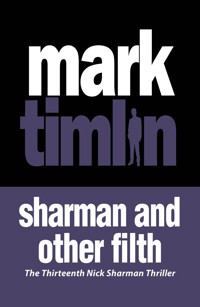
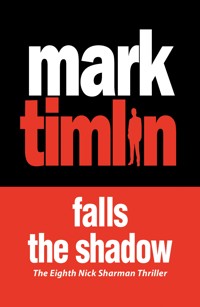
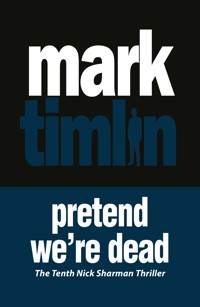
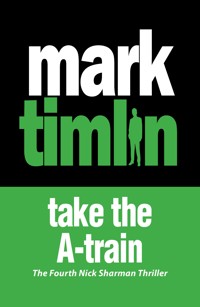





Disliked by the Old Bill and villains alike, South London private eye Nick Sharman attracts trouble like the proverbial magnet.
When businessman James Webb asks Sharman to find out who murdered his sister, her husband and two young children, the trail's been cold for over a year: the original police investigations had found nothing – no clues, no witnesses, no motive. There isn’t much to go on. Besides, Sharman has other things to occupy him – his relationship with topless model Fiona is rapidly souring, his best friend Wanda is dying and his ex-wife leaves him to babysit their eleven-year-old daughter, Judith.
While Sharman’s back is turned things start to hot up – he is followed, attacked and threatened with a shot gun on a busy road in broad daylight and the murder victims start to multiply. Then Judith is kidnapped by a gang of very nasty thugs. And Sharman finally loses his temper…
Mark Timlin has written some thirty novels under many different names, including best selling books as Lee Martin, innumerable short stories, an anthology and numerous articles for various newspapers and magazines. His serial hero, Nick Sharman, who appears in Take the A-Train, has featured in a Carlton TV series, starring Clive Owen, before he went on to become a Hollywood superstar. Mark lives in Newport, Wales.
‘The king of the British hard-boiled thriller’
– Times
‘Grips like a pair of regulation handcuffs’
–Guardian
‘Reverberates like a gunshot’
– Irish Times
‘Definitely one of the best’
– Time Out
‘The mean streets of South London need their heroes tough. Private eye Nick Sharman fits the bill’
– Telegraph
‘Full of cars, girls, guns, strung out along the high sierras of Brixton and Battersea, the Elephant and the North Peckham Estate, all those jewels in the crown they call Sarf London’
– Arena
Other books by Mark Timlin
A Good Year for the Roses 1988
Romeo’s Girl 1990
Gun Street Girl 1990
Take the A-Train 1991
The Turnaround 1991
Zip Gun Boogie 1992
Hearts of Stone 1992
Falls the Shadow 1993
Ashes by Now 1993
Pretend We’re Dead 1994
Paint It Black 1995
Find My Way Home 1996
Sharman and Other Filth (short stories) 1996
A Street That Rhymed with 3 AM 1997
Dead Flowers 1998
Quick Before They Catch Us 1999
All the Empty Places 2000
Stay Another Day 2010
OTHERS
I Spied a Pale Horse 1999
Answers from the Grave 2004
as TONY WILLIAMS
Valin’s Raiders 1994
Blue on Blue 1999
as JIM BALLANTYNE
The Torturer 1995
as MARTIN MILK
That Saturday 1996
as LEE MARTIN
Gangsters Wives 2007
The Lipstick Killers 2009
This book is for Patrick Timlin
Acknowledgement
Arms Consultant: Nigelle de Bar.
We live in a sad land,
where only the ghosts are good.
1
I was sitting in my office watching morning TV on a little black and white portable with a 3 screen and a speaker with about as much definition as a piece of string and a tin can. I had my heels up on the edge of the desk and was nibbling on a raisin Danish and drinking a cup of tea. I was tuned into one of those magazine programmes where well-intentioned people in the know tell us mere mortals how to run our lives and make the perfect Bolognese sauce. This particular expert was a narrow-faced individual with a flop of pale hair that tumbled over his forehead in casual disarray that probably took the hairdresser at the studio an hour to arrange. The expert was telling me, and half a million or so other housewives and unemployed, how to get the best out of our hormone replacement therapy. I was making mental notes.
After the minute or so allowed for the item, in case us daytime couch potatoes got bored and switched over to the school broadcast on BBC2, the disgustingly clean-cut and happily married couple who presented the show popped up to tell us that a fifty-year-old, self-proclaimed celibate, but reputedly gay, pop star who’d just married a sixteen-year-old ex-convent schoolgirl at a beach front ceremony in St Lucia, was joining us for coffee to explain his mid-life change. After the break. I never got the lowdown. During an ad for panty-shields, the door of my office opened. Standing on the threshold was a young middle-aged man with thinning brown hair, dark glasses, a boxer’s broken nose riding sidesaddle on his face, and an expensive trench coat. He looked at me. I looked at him, kept my heels on the desk and chewed on a raisin.
‘Busy?’ he asked.
‘So-so,’ I replied.
‘Nice work if you can get it.’ He had a South London accent. Sharp and hard.
I swallowed the raisin, brought my heels down on to the dusty rug behind my desk and hit the off button on the TV, brushed the cake crumbs off my jeans and said, ‘Can I help you or are you just passing through?’ These days I don’t even make a pretence of being polite to uninvited callers.
‘You’re Sharman?’
‘That’s me.’
‘Good. I’d like you to help me.’
Was this guy serious? I had difficulty helping myself at a buffet lunch. What did he think I could do for him? ‘Is that a fact?’ I said.
‘Yes.’
‘I don’t know,’ I said.
‘That’s what you do, isn’t it? Help people.’
‘Sometimes they don’t think so,’ I said. ‘Not when it’s all over.’
‘I’ll be the judge of that.’
I didn’t say anything.
‘Well?’ he said.
‘I don’t know,’ I said again, and looked longingly at the TV. ‘I’ve got a few things on.’
‘Yes,’ he replied. ‘I can see business is booming.’
‘You’re witnessing a quiet moment in a busy life.’
‘I bet.’ He took off his glasses. There was something in his eyes. Something I didn’t want to see. ‘Well?’ he asked.
I relented. It was the look in his eyes that did it. ‘Sit down.’
He took off his coat and hung it on a hook on the wall. He pulled up a chair and sat down. Close up he didn’t look so good. Underneath his expensive coat he was wearing an expensive suit, but it hung on him like he’d recently lost a lot of weight. And the collar of his shirt was wrinkled where he’d pulled his tie tight to hide the fact that it was at least half a size too big for him. His eyes were sunken with dark circles under them. His skin was grey and I could count the pores around his nose.
I lit a Silk Cut and finished my tea. I didn’t offer him a cup. If he was interesting the pub over the road had just opened. If he wasn’t, it was a waste of a tea bag. ‘What can I do for you?’ I asked.
‘Find out who murdered my sister.’
‘Your sister?’
‘And her family.’
I mulled over that for a moment. ‘You’d better tell me what happened,’ I said.
He closed his eyes and rubbed the top of his broken nose with the forefinger and thumb of his right hand. He sighed deeply and started. ‘Just over a year ago – March twenty-eighth last, to be exact – my sister, her husband and their two sons were murdered in their house in Crown Point. They were shot in cold blood.’
‘I remember that,’ I said. ‘The Hellermann family.’
‘Kellerman,’ he corrected me.
‘That’s it,’ I said. ‘Haven’t the police got anyone for it?’
‘The police!’ He almost spat. ‘After twelve months the team investigating the murder had been run down to a detective sergeant and a woman PC. Now the superintendent in charge has retired to Southern Ireland and the incident room’s closed. As of yesterday the investigation’s over.’
‘Murder investigations are never over.’
‘This one might just as well be. There were forty people on the case the week after it happened and now there’s no one.’
‘Manpower,’ I said.
‘Manpower, my arse.’
I felt that we were getting nowhere. ‘What can I do that the police can’t?’ I asked. It seemed like a reasonable question.
‘Find out who killed Sandy.’
‘Sandy?’
‘Sandra. That was my sister’s name.’
‘Mr…?’ I said with a query in my voice.
‘Webb. James Webb. Call me Jim or Jimmy.’
‘Mr Webb,’ I said. ‘There was a lot of publicity after the case, wasn’t there? It was on Crimewatch if I remember rightly.’
He nodded.
‘If the police couldn’t come up with anything with – what was it? – forty men, did you say?’ He nodded again. ‘And the BBC behind them, what can I hope to find? And it has been nearly fourteen months.’
‘Sharman,’ said James Webb, ‘you’re well known round here. You’ve done well. People say that if anyone can dig something up, it’s you.’
I was flattered. But not a lot. ‘Listen, Mr Webb,’ I said, ‘I don’t really think I can help you. Besides, it seems kind of dangerous to me.’
‘You scared?’
I nodded. ‘Every day of my life.’
‘Couldn’t you try?’ he asked.
‘I’m expensive.’
‘So am I, Mr Sharman. My sister was all the family I had. Apart from my wife, of course,’ He added her as an afterthought. ‘But we have no children. Sandra and David and the boys were my family. I’ve got a photo here.’ He pulled out his wallet, and from that a postcard-sized photograph. He handed it to me. It was a holiday snap. Unposed. Four people by a swimming pool. Two adults and two children. They were all perched on some kind of beach chair that seemed in danger of imminent collapse. The man looked tough. He was balding, but his body was covered in dark hair. The woman looked enough like James Webb to tell that they were related. But she was beautiful. Blonde and beautiful. Luckily the two children favoured her. Not that it mattered much now. They were light-haired and husky and both looked like they had just stopped or were just about to start laughing. It was one of the saddest things I’ve ever seen.
‘I’m sorry,’ I said.
‘Are you?’ He seemed surprised.
‘Yes. I have a daughter of my own, not much older than those two. I know how I’d feel.’
‘Then keep the photo and find out who killed them. I’m at my wit’s end. I don’t know which way to turn. I would have done anything for them. Now they’re gone I have nothing left but my business. It’s worth nothing to me now. I’m prepared to spend to find out who killed them.’
‘I could just take your money and do nothing.’
I won’t say he laughed. Whatever it was he did do, there was no humour in it. ‘That’s something else people say about you. You’re straight with your clients.’
‘I am,’ I said.
‘That’s good enough for me. How much?’
‘Two hundred a day plus expenses. And I might need to lay out some cash. It’s funny how some people won’t talk to the police but will get extremely vocal at the picture of the Queen on a fifty pound note or three.’
‘Do what you have to.’
‘No receipts, I’m afraid. Those same people can hardly remember their names most days.’
‘I don’t care about that.’
I put the photograph he’d given me carefully on the top of my desk. ‘All right, Mr Webb, I’ll give it a try. I’ll do what I can on one condition.’
‘Which is?’
‘If it’s pointless, I quit. I won’t waste your money and I won’t waste my time.’
‘That sounds fair enough.’
‘Good,’ I said. ‘You’d better fill me in on all the details. I don’t suppose you fancy a drink?’
2
He did as it happened, and we went over to the pub. He paid. I had a bottle of lager. He had an orange juice. We sat at a table in the corner out of the way. I lit a cigarette. He told me he’d given up years before. I told him I had too, several times.
He sipped at his juice and I said, ‘You were going to tell me what happened.’
‘Yes,’ he said in reply. He looked longingly at my cigarettes and started: ‘My brother-in-law owned a couple of carpet warehouses just outside London. One in Croydon, one near Gatwick. The Intercontinental Carpet Company it was called. You might have heard of it.’ I hadn’t, but I didn’t say. ‘He seemed to be doing well. He had plans to open another two or three on the coast. Then the recession started to bite, so he shelved the plans. But he still seemed to be doing fairly well. He was a good husband. He loved my sister and she loved him.
‘One night, the twenty-eighth of March last year, like I said, about ten o’clock as far as we can tell, somebody got into their house at Crown Point. It’s a big house, set in its own grounds. It’s called Oakfield. My sister and Dave were watching TV in the lounge at the back of the house. Whoever did it smashed one of the patio doors to get in. They shot the pair of them, and then went upstairs and shot my two nephews. One in the hall, one in bed. They had no chance. They were only babies. The bastards used shotguns on them.’ He clutched at his glass and his eyes were wet. ‘Then after they were killed, I found out that the business was in trouble.’
‘Did he owe money?’ I asked.
‘Some, but the Nat West don’t usually send gunmen to collect.’
‘How much?’
‘Half a million quid.’ Not bad, I thought. Even these days half a million is hardly chickenfeed.
‘Any private debts?’
‘Nothing’s turned up.’
‘So what exactly was wrong with the business at the end?’
He blew out softly between pursed lips. ‘What wasn’t? The usual. Cash flow. Interest on the bank loan. No sales. New stock ordered before the slump came, to replace stuff that wasn’t sold. No cancellation clause. The warehouse was full and the tills were empty. Too many overheads. Rent, wages… Christ, it never stopped.’
‘So what’s happened to it now?’
‘It’s gone. I put it into the hands of the receivers not long after he died. I didn’t want to do it, but I had no choice.’
I made a sympathetic noise. ‘To get back to that night,’ I said. ‘Didn’t the neighbours hear anything?’
He shook his head. ‘There’s not that many houses around. It’s an exclusive area. The back looks over the park. No one heard or saw a thing. Whoever it was vanished into thin air.’
‘Was there an alarm on the place?’
‘Alarms. Christ, the place was rotten with them. They even had panic buttons installed. There was one in the room where they were killed.’
‘But they didn’t use it?’
He shook his head.
‘So it looks like they could have known the people.’
‘It does. Or they were overpowered before they could get to them.’
‘But if they did know them,’ I said, ‘why did they bother to break in? The panic buttons were working?’
He nodded.
‘Where were the patio doors? In the same room as where they were killed?’
‘Yes.’
‘Seems a bit strange. Who found them?’
‘A neighbour. Mrs Godbold. Out with her dog. The front door was open.’
‘They came in the back and out the front. I wonder why they did that?’
‘That’s for you to find out.’
I ignored the comment. ‘And the police have still got no leads?’ I said.
‘None.’
‘It’s going to be bloody difficult.’
‘But you will do it?’
‘I’ll do my best,’ I said.
‘Thank you.’ He took a cheque book out of his pocket and started writing out a cheque. ‘A thousand do you?’
A thousand always does me. ‘Thanks,’ I said.
He finished writing out the cheque, folded it and put it next to my glass. ‘Where will you start?’
‘The police. What station handled it? Gipsy Hill?’
He nodded.
Gipsy Hill Street Blues, I thought. ‘What was the name of the officer in charge?’
‘Superintendent Meadows.’
I shook my head. ‘Don’t know him.’
‘He’s gone anyway,’ said Webb. ‘Retired to Ireland like I told you. There was an Inspector Robber I spoke to.’
‘Jack Robber,’ I said. ‘Christ, Robber by name…’
‘What does that mean?’
‘It means everybody else does the work and he steals the glory.’
‘You know him then?’
‘I know of him.’
‘There wasn’t much glory to be had in this case.’
‘That wouldn’t please him.’
‘So he won’t be friendly to you?’ asked Webb.
‘Not many coppers round here are.’
‘But I thought you used to be a copper yourself.’
‘All the more reason.’
‘Maybe you should move.’
‘To Mars?’
‘That bad?’
‘I’ll survive. But it doesn’t help you much. I warn you, I won’t get much cooperation. So if you want to leave it…’ I pushed the cheque back across the smeary top of the table.
He waved it away. ‘No. The coppers haven’t done much. Maybe you can.’
I shrugged.
‘What exactly will you do?’ he asked.
‘Ask questions. Nose and listen, Mr Webb.’
‘Jim.’
‘Jim.’ Now I had his cheque I supposed it was OK to call him that. We were war veterans by then. Buddies. ‘I’m going into a cold case. Very cold,’ I said. ‘I don’t know what I’m going to find. It might be nothing, it might be bad.’
‘Whatever.’
‘All right. Now what about the house?’
‘What about it?’
‘What have you done with it?’
‘It’s locked up.’
‘Empty?’
He nodded.
‘Who does it belong to?’
‘Me. Everything passed to me by default. There was no other family. I was going to put the house up for sale but the estate agent said we should leave it until people began to forget. It’s not exactly a selling point, and a bunch of ghouls would pretend to be interested just to get a look inside.’
‘Was it paid for?’
‘No. But there was insurance. You know, linked to the mortgage. That paid off the building society.’
‘No other insurance?’
‘No. David cashed those in.’
‘When?’
‘Not long before. When the business was first in trouble.’
‘And you didn’t need the proceeds from selling the house to pay off the bank loan on the business?’
‘I’m not short, I told you that.’
Obviously, I thought. ‘So you just left it?’
He nodded. ‘And then someone broke in.’
‘When?’
‘About two months after the murders.’
‘What did they get?’
‘Nothing.’
‘I see,’ I said. I didn’t, but maybe it was important, or maybe it was some of Webb’s ghouls looking for kicks.
‘What did they do?’
‘Turned the place over. Made a mess. I had to go and clear it up myself. My wife won’t go there.’
I wasn’t surprised. I wasn’t exactly looking forward to going myself. But I knew I’d have to. ‘Have you got a spare set of keys?’ I asked.
‘Of course.’
‘Can I borrow them?’
‘You want to go there?’
I nodded. ‘Visit the scene of the crime. Get some atmosphere.’
He didn’t look too happy about that.
‘I’m not going for fun,’ I said.
‘All right,’ he said. He took a large bunch of keys out of the pocket of his coat, split off a ring with four keys on it, and passed them to me. ‘The gates are padlocked. The front door’s got a Yale and a Chubb lock.’
‘Are the alarms on?’
He nodded.
‘What kind?’
‘Chubb.’
‘Were they on when the place got done?’
‘No.’
‘Why not?’
‘The police were in and out for weeks. I never bothered.’
‘But you do now?’
He nodded again. ‘Not that there’s anything worth stealing.’
‘But just in case.’
‘Yes. If the police want to go in now, they have to make an appointment. Not that they ever do,’ he added bitterly.
‘How do the alarms work?’
‘Simple. From the moment you turn the main key in the front door – the Chubb – a buzzer sounds. Then you’ve got thirty seconds to punch the number code on the key pad just inside the door. On the right,’ he added. ‘On the way out you push the “set” button, the buzzer sounds again and you’ve got thirty seconds to turn the key and lock the door.’
‘I’ll sort it out,’ I said. ‘Give me the numbers.’
‘I’ll come with you if you like.’
‘No,’ I said. ‘I’d rather go alone. I work better that way.’
He nodded and took a notebook out of his pocket and wrote down a series of numbers, tore out the page and gave it to me. I glanced at it and put it in my pocket. ‘I’ll go in the morning,’ I said.
‘Why not today?’
‘There’s one more condition to taking the case,’ I said.
‘What?’
‘I do it my way or not at all.’
‘Of course. I’m sorry, it’s just…’
‘I need to talk to people first,’ I said. ‘Get some idea of what’s happened in the past fourteen months, and if possible before. Besides, what’s another day matter?’
‘You’re right. Do you want another drink?’
I nodded and he went to the bar. When he got back I said, ‘What do you do, Jim?’
‘It says company director on my passport.’
‘What kind of company?’
‘Companies. All sorts. Import-export, buying and selling. Anything that’ll turn a profit. I’ve been successful. I was a boxer.’ He touched his nose self-consciously. ‘Not a very good one, but I had a good manager. He taught me to hold on to my money. It was him started me off. Sports gear. Then skateboards about fifteen years ago. We made a killing and got out before the bottom dropped out of the market. But I kept importing the clothes. I was one of the very first people to bring American trainers into this country. They became fashionable, I coined it.’
‘Nice,’ I said.
He shrugged. ‘Like I told you, it don’t mean nothing to me now.’
We sipped at our drinks for something to do apart from talk about death again. ‘What now?’ he asked.
‘I’m going to think. You get back to your life. Leave this to me, all right?’
‘All right.’
‘Give me your number before you go,’ I said. ‘I’ll be in touch.’
He gave me a pasteboard card with phone number and an address in Crystal Palace printed on it in discreet gold lettering. ‘I mostly work from home now,’ he said. ‘You’ll usually get me there.’
I had a feeling he didn’t do much but sit around the house all day thinking about his sister and her family. ‘Thanks,’ I said. ‘I’ll remember that.’
We drank up and left. He was driving a dark blue Daimler with a current registration. Not bad. He sounded the horn as he drove off. I went back to the office and made some more tea.
3
I put on the TV again. Then shook my head, switched it off and telephoned Gipsy Hill police station. ‘Police,’ said a voice.
‘Is Inspector Robber there?’
‘Who’s speaking?’
‘Nick Sharman.’
‘Concerning?’
‘Personal,’ I said.
I was put through. ‘Robber,’ said a gruff voice.
‘My name’s Sharman,’ I said. ‘Nick Sharman.’
‘The Nick Sharman?’
‘The only one I know.’
‘I am honoured,’ he said. ‘What’s up? Do you want a couple of tickets to the policeman’s ball?’ And he laughed an ugly laugh.
‘No,’ I said. ‘James Webb has hired me to look into the murder of his brother-in-law and his family.’
There was a long pause. He obviously wished I had. ‘You’re wasting your bloody time,’ said Robber. ‘And mine.’
‘Maybe so. But I wonder if we could meet?’
‘You’ve got a nerve, Sharman. I’ll say that for you.’ He paused again. ‘Well, maybe. I’ve always wanted to meet someone who can kill a copper and get away with it.’
I said nothing in reply.
‘Do you know The Three Hens at Crystal Palace?’ he asked.
‘The Bucket of Blood, you mean,’ I said.
‘You do know it. I’ll be in the back bar at eight.’
‘I’ll see you then,’ I said and put down the phone.
Oh Christ, I thought, The Three Hens. It was famous for being about the most horrible pub in an area where horrible pubs were the norm. A heavy metal and strippers pub that had closed down, changed hands, been refurbished and made more come-backs than Frank Sinatra.
I parked my car about three streets away from the pub at 7.45. I didn’t want the Jag anywhere near the place. Some of the punters at The Hens would have had it stripped down and in the Middle East by breakfast time.
I wore old jeans, an older leather jacket, a denim shirt and running shoes in case I had to beat a quick retreat. I took no wallet or ID, just a few fivers in the watch pocket of my jeans, a packet of cigarettes and a box of matches. I zipped my car keys into one of the pockets of my jacket and I was ready. The pub was at the end of a narrow street and the car park looked down Anerley Hill. Not that anyone used the car park. Not for parking cars anyway. The street was deserted and deathly quiet, and the sodium lamps sizzled audibly in the damp air. There were half a dozen big motor bikes lined up at the kerb outside the boozer like guards.
I went through the first door I came to, pushed aside a set of heavy velvet curtains and got hit over the head with a blast of Bohemian Rhapsody at top volume. The place was packed with leather jackets, jeans, Spandex leggings, boots and hair. Lots of hair. Flat tops, long curls, ponytails and bouffants. There was a drum kit with enough cymbals to ring in the second coming on a high stage in one corner. In front of the stage was a smaller one and on it was a hard-faced momma dressed in high-heeled red shoes, stockings, suspenders and half a basque. The rest of the basque was hanging down exposing spectacular, if rather droopy, breasts with big brown nipples. I imagined she was about the age of most of the average punters’ mothers. I felt sorry for her parading that tired old flesh for the umpteenth time. I knew how I’d feel.
There was a geezer with more barnet than enough in a leather suit spinning records to one side of the larger stage. He segued from Queen to Metallica with a flick of his wrist. The stripper threatened to expose more cellulite and I made for a sign that read BACK BAR followed by an arrow. It was a bit quieter in there, but not much. The bar contained a CD jukebox and Jon Bon Jovi was giving it plenty through speakers the size of small packing cases. I pushed through the crowd to where there was a clear gap of four feet or more in front of a round table and two chairs. One of the chairs was occupied by a big, grey-haired geezer in a dirty tan mac. He was drinking a pint and chewing on a pork pie as if he was alone in the snug of a quiet country pub and Bon Jovi was just a dream. I went over to him. ‘Mr Robber?’ I said.
‘Sharman?’
I nodded.
He pointed at his glass. ‘Pint of John Smith’s.’
I pushed back through the crowd to the bar. ‘A pint of Smith’s and what bottled beer you got?’ I’d seen the state of the pots in the pub before, but if you asked for a clean glass they thought you were a cissy.
‘Becks, Heineken,’ said the barman.
‘Becks,’ I said. ‘No glass.’
‘No glass, no beer, mate,’ he said with a sneer.
‘All right,’ I said, and watched him pour the liquid from the bottle into a cloudy glass. I took Robber’s and my drink back to the table. He’d finished his pie. There were crumbs and a cellophane wrapper on the table. He swept them to the floor with his hand and finished the drink in front of him with one swallow.
I sat down and lit a cigarette and he snapped his fingers at me until I offered him one. Endearing trait, that.
‘Your local?’ I asked.
‘What do you think?’
I looked at the backs of the people in the bar. ‘Friendly,’ I said.
‘They don’t want to come too close in case some of the policeman rubs off.’
‘I know the feeling,’ I said.
‘Do you fuck,’ he said back and pointed a dirty, fat finger at me. ‘Don’t talk about the job to me. You’ve given up the right.’ He was well pissed off and I could hardly blame him.
‘Fair enough,’ I said. ‘Can we talk about the Kellerman case then?’
‘I told you, you’re wasting your time.’
‘Why?’
‘Because, you stupid sod, if we couldn’t find out who killed the poor bastards, how the hell do you think you can?’
I shrugged. The collar on his shirt was rimed with black, and his tie was stringy and worn through to the lining where it had been tied too many times. I wondered what he did with his money. He was on a good screw as a DI. Booze, fags and pork pies, I supposed. He probably had to pay for sex though. I don’t know why that suddenly occurred to me.
‘I could use some help,’ I said.
It’s at that point, on TV, that the kind copper hands the handsome PI the police files and tells him, with a wink, not to get caught looking at them. Smiles are exchanged and you just know that it will all work out in the end. Some fat chance, I thought. He never said a word.




