


14,99 €
Mehr erfahren.
- Herausgeber: novum pro Verlag
- Kategorie: Gesellschafts- und Liebesromane
- Sprache: Englisch
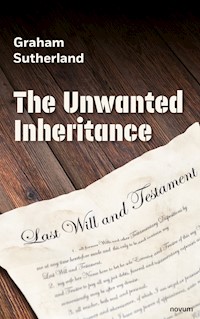
In 1999, Michael Packham a twenty-six-year-old doctor working in his local hospital's Accident and Emergency Department receives a letter from a distinguished London law firm, who are seeking to identify the beneficiary of the Last Will and Testament of a former German Panzer tank radio operator who fought against the Allied Forces in the Battle of Normandy in 1944. Otto Wagner, who's Will it is, has left a huge house and farm estate in Southern Bavaria to a British Army Surgeon who saved his life during the Battle of Falaise. The question is, how did a private soldier in the German army obtain such wealth? Why is an organisation of ex Nazis so keen to obtain this estate for themselves and will do everything they can in order for this to happen?
Das E-Book können Sie in Legimi-Apps oder einer beliebigen App lesen, die das folgende Format unterstützen:
Seitenzahl: 464
Veröffentlichungsjahr: 2022
Ähnliche



















Contents
Imprint 2
Author’s Note 3
Chapter 1 4
Chapter 2 14
Chapter 3 25
Chapter 4 43
Chapter 5 61
Chapter 6 90
Chapter 7 104
Chapter 8 117
Chapter 9 127
Chapter 10 134
Chapter 11 156
Chapter 12 168
Chapter 13 185
Chapter 14 196
Chapter 15 203
Chapter 16 209
Chapter 17 219
Chapter 18 225
Chapter 19 234
Chapter 20 242
Chapter 21 250
Imprint
All rights of distribution, also through movies, radio and television, photomechanical reproduction, sound carrier, electronic medium and reprinting in excerpts are reserved.
© 2022 novum publishing
ISBN print edition: 978-3-99131-222-2
ISBN e-book: 978-3-99131-223-9
Editor: Hugo Chandler
Cover images: Vrozhko, Photographyfirm | Dreamstime.com
Cover design, layout & typesetting:novum publishing
www.novum-publishing.co.uk
Author’s Note
In 1999, Michael Packham a twenty-six-year-old doctor working in his local hospital’s Accident and Emergency Department receives a letter from a distinguished London law firm, who are seeking to identify the beneficiary of the Last Will and Testament of a former German Panzer tank radio operator who fought against the Allied Forces in the Battle of Normandy in 1944.
Otto Wagner, who’s will it is, has left a huge house and farm estate in Southern Bavaria to a British Army Surgeon who saved his life during the Battle of Falaise. The question is, how did a private soldier in the German army obtain such wealth?
Why is an organisation of ex Nazis so keen to obtain this estate for themselves and will do everything they can in order for this to happen?
This is a work of fiction based around well-known German historical figures before World War Two. My characters are all purely imaginary.
Copyright Graham Sutherland 2021
Chapter 1
The time was 7.50 a.m. I was due to finish my shift as a doctor in A&E in just ten minutes at eight. It had been a routine Thursday night Friday morning in casualty. The first four or five to present themselves were all feeling unwell. One had stomach pains, another earache and another who was being very abusive towards everyone and to be fair was in much pain, was enduring a terrible boil in the lower middle of his back. Once lanced, his demeanour changed immediately from being aggressive to being apologetic and grateful.
After midnight patients attending A&E quite often change from those with natural causes of illness or unfortunate accidents to those of the more preventable type. The first of these to arrive was a man who had got into an argument over a girl in one of the town pubs. The argument had escalated, resulting in the man having a beer glass smashed into his face requiring stitches. He was lucky not to have lost the sight in his left eye!
Then there were two young women who quite clearly had had too many drinks and were puking up all over themselves shortly followed by a man in his late teens who was suffering from drug abuse. You might say a typical shift in A&E.
I was just finishing writing up the notes of one of the casualties before preparing to leave for home, when the doors swung open, revealing two paramedics pushing a man on a stretcher whose head was covered in blood. The paramedics advised me that he had crashed his Mercedes into a telegraph pole at speed. They speculated that the initial cause might have been, that he had fallen asleep at the wheel and had woken up when he realised that the car was leaving the road, because of the skid marks caused by severe braking which was too late to avoid the impact.
He was still very much alive but unconscious. Without the safety feature of air bags, I could well have been looking at a corpse. My next two hours were spent cleaning him up and determining what injuries had been sustained to his body. After the various x-rays and scans it was apparent that he had damaged his spinal cord. During this time, he regained consciousness although he had no recollection as to what had happened. One of my colleagues, then took over and I wearily left the hospital to make my way home.
Home for me was a two bedroomed flat in the middle of town that I shared with my partner Louise. I had first met Louise after moving into the area to start my job at the local hospital. She was working at the estate agents when I was looking to buy. I immediately found her attractive. She was witty, smart, confident, and vivacious. I deliberately prolonged my search for a suitable place, with her showing me several properties over the course of several weeks before I plucked up the courage to ask her out.
As a teenager, I had had truly little confidence with girls. I never quite knew what words to find to strike up a conversation. It was always the fear of being turned down and the feeling that followed of utter rejection and humiliation. It appeared to me that most of my male friends at that time did not share these inhibitions as they went from one girlfriend to another, sometimes dating two girls at the same time.
We had been dating for a couple of months before she showed me the two bedroomed flat in the middle of town. She was so enthused with it, it ticked all the boxes according to her, that she liked. Although now twenty-four years old, she was still living with her parents and had never left the area where she had been born.
I then agreed with her that I also loved it, and that I would love it even more if she moved in with me. It was marvellous, there was no hesitation whatsoever. She threw her arms around my neck and kissed me with such passion and laughed excitedly and said, ‘Yes, yes, yes.’ That all happened two years ago. Louise and I get on very well, mainly because of our sporting interest. We both enjoy playing tennis and golf when we can. She is a better golfer than I am playing off a handicap of 14 whereas I am 18. Our other love is to go off into the hills on our mountain bikes. It is so exhilarating.
I arrived home a little after eleven in the morning. Usually if I am on the night shift, I am just arriving home as Louise is leaving for work. We generally have a quick five-minute discussion. Me telling her what I have dealt with in A&E, her advising me of the latest developments in the TV series ‘Sex and the City’. A fleeting kiss ‘goodbye’ and she is gone. I normally make my way into the kitchen and make coffee and toast. I then scan the newspaper, after which I go upstairs to sleep.
I have found that the quality of sleep is never as good during the daytime as it is during the normal expected hours of night-time. Because I was late home this morning, Louise had long departed for work at the estate agents and would not return home until two in the afternoon. Feeling unusually tired, I skipped coffee, toast and the newspaper and instead crawled into bed.
After what seemed a noticeably short period of sleep, Louise woke me gently stroking the side of my face. I enquired as to the time and was advised that it was five forty in the afternoon. I was encouraged to get up out of bed by the promise of a cup of freshly ground coffee accompanied by two poached eggs on toast. First, I took a long, luxuriant shower and slowly shaved with the shower water pleasantly cascading over my head and shoulders and running down my body. The therapeutic benefits of a shower can never be understated.
After applying the aftershave that Louise most liked on me, I slipped into a nice crisp white short-sleeve shirt and summer slacks and made my way downstairs. The steaming mug of coffee was already sitting on the breakfast bar and Louise was just slipping the two poached eggs onto the toast. Louise was incredibly pleased with herself as she announced that she had sold two properties that day and together with the other sales that she had made during the previous couple of weeks, was now looking forward to a healthy end of the month bonus.
After consuming my poached eggs and toast, I noticed four or five letters from the morning’s postal delivery that Louise had picked up on her way in and had placed at the end of the breakfast bar. The first three were the usual household bills. The fourth was an invitation to attend an interview at a neighbouring hospital. I had applied for a more senior position which offered greater prospects and a substantial increase in salary. The last envelope that I inspected was of remarkably high quality. On the back was the embossed name of a City of London Law Firm, Hildreth and Watkins, established in 1906.
My heart immediately sunk. In this litigious age, so many health authorities are being taken to court for failures in medical care. Many are unjustified but are settled out of court because defending such claims usually is more costly than settling. A colleague of mine who had just returned from working in a hospital in California had been successfully sued for apparently misdiagnosing the condition of an 87-year-old lady who died a year later. I was wracking my brains to think if there had been any patient that I had diagnosed and treated that had made a complaint afterwards. I could think of none.
I opened the envelope and retrieved the letter inside which was typed also on an incredibly heavy bond paper with the watermark of ‘Hildreth and Watkins’ running through the middle from bottom to top. I then proceeded to read the contents.
Dear Mr Packham – We have been instructed by an overseas law firm to trace and establish the so far missing beneficiary of a large estate in Southern Germany of their deceased client. We have spent almost two years in researching military archives as well as engaging a firm of genealogists. With all the information that has been collated and drawn together, there is a distinct possibility that we may have concluded our search and that you are that beneficiary.
To establish if this is the case or not, we would be most grateful if you could arrange an appointment and travel to London and we will then explain all. If you and your partner Louise, I believe that that is her name, would require an overnight stay, then all your expenses will be taken care of.
Respectfully Yours,
Daniel Watkins
I sat there for a moment or two with what must have been a puzzled look before hearing Louise say, ‘Anything of interest?’
‘I’m not sure. This could be genuine, or it could be a scam. What do you think?’
Louise took the letter from me whilst at the same time dunking her plain digestive biscuit in her coffee and proceeding to eat the soggy biscuit at the same time.
‘Hmm,’ she muttered. ‘Could be interesting. There is no harm in giving them a phone call. An evening spent in a London hotel with my favourite man with all expenses paid, I find quite appealing.’
Before I had chance to reply, my mobile phone went off. I immediately recognised the number as the hospitals. It was Irene, one of our senior administrators. She explained that there had been a serious accident on the nearby motorway involving a coach full of German tourists that had rolled down the motorway embankment resulting in many serious casualties. All hands to the pump were required.
I looked at Louise, I knew that she would be disappointed as it was unlikely that I would be back home for several hours. We had booked a meal for two at our favourite Italian Restaurant and had tickets to the Theatre afterwards to see ‘The Buddy Holly Story’. We both loved the music of the late 50s and 60s.
‘I am so sorry my sweet,’ I said. ‘There has been a major incident involving a coach full of tourists. An emergency has been declared at the hospital, they are requesting as many doctors, medics and nurses as possible to help out.’
Ever since we moved in together, Louise has always been a pragmatist. We both share a deep love and understanding for one another and fully respect each other’s decisions. Louise concealed her disappointment, in the knowledge that I had to do what I had to do.
‘Well, you had better do what your duty and training demands. After all we would expect the same if it were us who were passengers on that coach.’
‘Thank you for your understanding, I will call you when I am able to. May I suggest that you don’t cancel this evening and instead invite your young sister? She has after all just broken up with her boyfriend and I am sure would enjoy an evening out with her older, wiser sibling.’
‘Yes. That is a good idea. I may just do that. Take care. Love you.’
‘I love you too.’ With that, a quick hug and a kiss that was all too short, I found myself exiting the front door and running towards my cars parking space.
I arrived at the hospital some ten minutes after the first casualties had arrived. Generally, they were the less serious cases. I was advised that the fire brigade was at that very moment cutting passengers out of the coach who were still trapped in their seats. Sadly, several passengers had been thrown through the side windows and had died at the scene despite the valiant efforts of the paramedics to save them.
A fleet of ambulances had been sent to the scene. One by one, they began to return, now carrying the more seriously injured patients. When such an emergency occurs, which fortunately is rare, whereby several casualties arrive at the same time. The scene can resemble that of a busy kitchen in a top London hotel. Everyone seems to be shouting instructions at once. It is the nearest that I know to organised chaos. But there is an order to it.
The first casualty that I am taking responsibility for is a young woman who I would judge to be in her late thirties. She has a serious head wound and her left arm appears to be badly broken. As we are wheeling her into the first available A&E bay, the senior paramedic is giving me a prognosis and advising me of the care that they have administered, including injections to relieve the pain.
As the attending physician it is my duty to carry out the investigations and procedures necessary to establish a diagnosis and then give advice and provide treatment where necessary and if necessary, calling the appropriate consultant should an urgent operation be deemed to be required. There were so many urgent things that needed to be done, and just for a fleeting moment I thought of my grandfather David McKay who was an army surgeon taking part in the Normandy Landings and the utter chaos and lack of facilities afforded to him to saving lives. It must have been as close to being in Hell as one could imagine.
In comparison, my situation was a good deal better. Lighting, medicines, nurses were all available. In these situations, it is always a question of limited time. The most pressing thing in this case was to discover if there was damage to the brain caused by the impact to her head. After cleaning and stitching the gaping head wound, I then authorised an MRI scan.
The scan revealed a burst cerebral aneurysm which was causing a haemorrhage. I realised immediately the implications for this and called for our neurosurgeon, who like me had responded to the appeal and returned to give help. After studying the scans together, he advised me that a craniotomy was urgently required. This I realised would mean removing part of the skull to access the brain.
I am always amazed how surgeons can issue instructions with authority, speed, and calmness. There never seems to be any panic. Everything is under control. We were lucky to have Mike Dean our neurosurgeon at our hospital. He rapidly instructed the operating theatre to be readied and commanded me to assist with the operation as well as requesting that the senior anaesthetist on duty be present. We then went through the scrubbing routine where our hands and forearms are decontaminated before donning our sterile surgical gown and gloves.
When in an operating theatre, time seems to stand still. This was the first time I had assisted in such an operation. It is not until it is over, and you remove your gloves and gowns and wash again, that you feel physically and mentally exhausted.
I returned to A&E. It was now a quarter past two, Saturday morning. I was advised that all the casualties from the coach accident had now been dealt with. The latest count read for solemn reading. Out of thirty-four occupants on the coach, seven had died, including the driver and his female tour guide who was leading the trip. Nine others were in intensive care, including the patient of mine, whilst the rest had escaped with just minor injuries.
I walked into the A&E waiting area to see if there was anyone that I could help. I discovered a middle-aged gentleman who was complaining loudly that he had arrived at A&E two and a half hours before the coach accident and yet no one had come to examine his ingrowing toenail that was keeping him awake. There are times, especially like now, when you are extremely tired, when you would like to shout loudly at someone for being so stupid and for wasting the hospital’s time. But you know you cannot do this. So, I invited him through, apologised for the delay, and explained the unusual emergency of the coach crash.
I examined the big toe on his right foot. I then got him a bowl of warm water for him to soak his foot and gave him some ibuprofen to ease the pain. I then advised him to wear some comfortable shoes or sandals. Mike Dean the neurosurgeon then popped his head around the curtain.
‘Just like to thank you Doctor Packham for your assistance in theatre this evening. I have every confidence that our patient will make a full recovery. I believe that you were working last night, is that correct?’
‘Yes, that is correct.’
‘Well then, I suggest that you go home now and get some rest. When are you next due to work?’
‘I am on days for the next two weeks, starting at eight on Monday morning.’
‘Well, that doesn’t give you much of a weekend to recover. Be sure before you leave at the end of your shift on Monday to look in on Tanya Wolfgang, the young German lady who we operated on just now. Take care.’
And with that, he was gone. At the same time one of the nurses appeared and advised me that she would take over and look after our ingrowing toenail casualty. I didn’t argue.
On the way out to the car park, I grabbed a quick coffee from the vending machine in the hope of a caffeine boost. I wearily opened the door to the car and climbed in, sinking into the driver’s seat for the fifteen-minute drive home.
I unlocked my front door, glancing at my wristwatch as I did so. It was just before four. I entered the kitchen and poured myself a glass of water, drinking it as I slowly crept up the stairs. I opened the bedroom door as quietly as I could, so as not to disturb Louise who I could sense was fast asleep. I undressed in the dark and slowly got inside and under the bedcovers.
I felt absolutely exhausted. However, I was amazed how snuggling up to the naked body of the woman that I loved could have such an immediate effect of arousal. Louise murmured and then slowly turned over to face me. In no time at all our two bodies were joined together as one. To my mind there is no greater pleasure in life.
The post reaction to our love making could not have been more in contrast between us. I was now totally zonked out and was fully asleep in just a couple of minutes. Louise on the other hand was now fully awake and unable to go back to sleep. I guess, that now feeling grumpy, she got up out of bed, went downstairs and made herself a coffee, before going into the office to catch up on some agency work.
I awoke at around eleven. Upon going downstairs, there was a note on the breakfast bar from Louise advising me that she had gone shopping and expected to be back at around noon. I then went and showered, got changed and made myself some coffee and toast. I was reading the daily paper when Louise returned.
We had a lovely weekend. On the Saturday afternoon we went and played tennis and, on the Sunday joined another couple for a competitive game of golf. It was during Sunday evening that Louise mentioned to me the letter from Hildreth and Watkins. As I was expecting a hectic workload on the Monday, Louise said that she would telephone Daniel Watkins and ascertain if it was genuine and if so, arrange for us to visit the following Friday when she knew we were both off work.
Louise was quite animated when I returned home on the Monday evening. She had spoken with Daniel Watkins himself. Although no additional information was gleaned to what was written in the letter, she said that he sounded very genuine.
‘He asked me if we would like to have overnight accommodation, I jokingly said, Yes, we would like to stay at the Savoy,’ to which he replied, ‘I will get Carol my P.A. to arrange it and she will be in touch.’
‘How about that? We could dine in the hotel and go to the theatre afterwards perhaps buy some tickets to seeBlood Brothers.I know that it is a show that we have seen twice before, but we both love it don’t we? Mr Watkins assured me that all expenses would be taken care of.’
Chapter 2
We arrived at the offices of Hildreth and Watkins shortly before two. They were part of the Gray’s Inn complex. We pressed the door buzzer and after advising who we were via the intercom, the door automatically released, and we were allowed in. To say that we were impressed by what we saw is an understatement. All the walls were of dark oak panelling. The furniture was regency style. It was all beautiful and lent an air of warm charm which seemed very comforting.
‘Hello, I’m Carol, Mr Watkins P.A. All the arrangements have been made for your stay at the Savoy. Can I offer you a tea or coffee?’
‘No to coffee or tea but thank you for arranging our stay,’ I replied.
‘That is a pleasure, would you please follow me?’
We followed Carol up one flight of very ornate looking stairs. At the top of the stairs immediately to the front of us was an impressive looking door with the name of Daniel Watkins painted in gold italic lettering. Carol lightly tapped on the door twice and without waiting for a reply opened the door and stood to one side to allow us to enter.
An elderly distinguished and one would have to say, a fine-looking man for his age, with a full head of silver-grey hair greeted us warmly.
‘Come in, come in, it is good of you to travel up and see me.’ Giving us both a firm handshake. ‘Please take a seat. Allow me to introduce myself. My name is Daniel Watkins, and I am the Senior Partner of this firm. Now you must be Louise Johnson and you sir, I believe to be Michael G. Packham, is that correct?’
‘You are indeed correct,’ I said. ‘But how is it that you know so much about us, particularly about Louise?’
‘My dear boy over two years has been spent endeavouring to trace the beneficiary of the Will in question. There were two or three occasions when we thought that we had found that person only to discover that we had not got the right man. And so, we continued investigating every avenue until we came to you. Once found we had to conduct as many background checks as possible to eliminate the possibility that you were not the right man that we were seeking. It was therefore straightforward to establish that this lovely lady, Louise has been your partner for just over two years now. Is that correct?’
‘You are spot on,’ I replied.
‘Now, I need to ask you a series of questions to confirm what we already believe to be the case. Would you please tell me what your mother’s maiden name was? Her date of birth? Where, and when did she and your father marry?
‘My mother’s maiden name was Anne-Marie McKay. She was born on 3rdSeptember 1939. A date that I and others will always remember as being the date when Neville Chamberlain declared at eleven fifteen a.m. that Britain was at War with Germany. They married in a small town called Frome in Somerset and this was in 1969.’
‘Do you know how they met?’
‘Yes, they were both keen runners and met as members of the local running club.’
‘What did your parents do to earn their living?’
‘They opened up a children’s book shop, called “Inquiring Minds” in the nearby town of Warminster.’
‘Do they still run that bookshop?’
‘No. Very sadly both of my parents were killed in a head on car collision just outside Ilminster on the A303. They were pronounced dead at the scene. This was in 1996. They were on their way to spend a week’s holiday in Cornwall. The car that hit them suffered a blow out and consequently skewed across the road. Not only were my parents killed but also a young couple in the other car. Their one-year-old son survived the accident and is now I believe being cared for by grandparents. It was a difficult time for both families.’
‘That must have been tough. My apologies for enquiring about them. It must still be very painful. Let us move on. Please tell me about yourself. Where you lived, where you were educated and your occupation?’
‘Well, I was born in Frome Hospital, I believe in Victoria Road, I am not sure if that is the correct road, I do know though that the hospital there is no more and has been replaced with a new one not far from the sports centre. My birthday was on 3rdAugust 1970. I attended Frome College from 1981 until 1987 before studying at University College London where I obtained my Degree in Medicine. I then worked as a Junior Doctor at Guys Hospital in London for a while until I qualified and took up my present position almost two and half years ago.’
‘Do you remember your grandparents from your mother’s side of the family?’
‘Yes, I do. Both of my grandparents died in the same year. Grandad passing away in July 1987 followed by grandma, two months later. I was not surprised that they died so shortly apart. They were devoted to one another. They are both buried together in the same plot in the Cemetery in Frome.’
‘What characteristics do you remember?’
‘Hmm. They were both incredibly, kind, thoughtful and encouraging. And loving. It was my grandad’s experience as an army surgeon, which convinced me to follow him into the field of medicine. It was shortly before he died. I remember him asking me had I given any thought to what sort of career I might like to have.
‘I was a twelve-year-old who was mad keen on football, I was an avid fan of Queens Park Rangers. That season they almost won the Old First Division, which has now morphed into today’s Premier League, unfortunately they were just pipped to the title by Liverpool. I was enthralled with the cavalier play of Stan Bowles, but my true inspiration was Gerry Francis. I wanted to be Gerry Francis. So, I announced to grandad, that I wish to be a professional footballer.
‘I remember, he didn’t respond immediately. He sat there for a long minute or two just gazing at the flames in the open log fire. He then took a sip of his whisky before returning and looking at me.’
‘It is certainly true Michael, that you are showing great promise as a footballer. I have been impressed whenever I and your grandmother have watched you play. You also though are playing a good game of tennis and I am pleased that your dad has recently introduced you to playing golf. Two excellent games.
‘There is nothing wrong with anyone having dreams of ambition. With all of us, reality is what ultimately decides who we are and what we become.
‘It is a fact that many really good footballers, just fall short of making the big time. And then there is a whole catalogue of players whose ambitions were cut short by career ending injuries many by horrendous tackles, with little thought of the consequence by the perpetrator. Most professional footballers leave school at sixteen or like you at seventeen. They are signed by professional clubs. Between sixteen and twenty-one can be, not always of course, so important in the gaining of qualifications that will set you up for life.
‘My advice to you Michael, you are our only cherished grandson, do something which is worthwhile and can make a difference to the lives of others. I became a general practitioner before the war and returned to my practice after I was demobbed in 1947. I carried on there until 1968 when I retired.
‘Serving my community and looking after their health was wonderful. In the end you know many people and they know you. When you go to the local supermarket, you are continually being greeted by patients and friends who respect you. It was not just medical advice I was dispensing; my patients would come to me with their tax return forms or if they had a problem with paying their rent to the Council or a myriad of problems. I felt like I was more than a doctor, I was their friend and someone in whom they could confide.
‘Of course, I realise that things are changing now and that the pace of living has increased and the demand for instant results and having less time with people seems to be becoming the norm. In many ways I am pleased that I belonged to a bygone era.’
‘My grandad never spoke voluntarily about his wartime experiences. I knew from my own dad that grandad had been some sort of medic during the D-Day landings. When I asked him what it was like, he would just reply that it was not nice. The scenes that he had to witness would be etched on his mind until he died.
‘I remember my mum saying to me that she thought that grandad had felt a condition I believe they now call ‘survivors’ guilt’. He was unable to help, assist and save as many as he would have like to have done, because of the appalling conditions that he found himself in. I guess, trying to attend a wounded comrade, when you yourself are under fire in the heat of battle, can never be easy?
‘I was successful with my school examines. My grades were high enough for me to enter university and to embark on a career which enabled me to follow in my grandad’s footsteps into medicine. Besides, deep down, I knew that I was not good enough to play professional football at a high level. Grandad was right, dreams do have to give way eventually to reality.’
There was a gentle knock on the door and Carol entered carrying a silver tray upon which was a china tea pot and three bone china teacups and saucers. Also, a plate of assorted biscuits.
‘Thank you, Carol,’ Daniel Watkins said. ‘I usually have tea at this time in the afternoon. Also, as you may have observed from my waistline, I enjoy indulging in my love for chocolate biscuits. Louise, would you like to be mum and do the pouring please?’
Louise gave a startled giggle, picked up the pot, and poured whilst Daniel Watkins offered me the plate of biscuits. I took two whilst he also took two. After Louise had poured the tea, and taken her own two biscuits, Daniel Watkins stood up taking his tea and biscuits and walked to the window and looked out upon the world below. Slowly sipping his tea and then disposing of one of his biscuits he stood there for some time appearing to be in deep thought. Louise and I shot questioning glances to each other, but not daring for some reason to speak.
After a minute or two when the only sound heard in the room was the loud ticking of the grandfather clock, which we had not previously noticed, Daniel Watkins returned whilst finishing off his second chocolate biscuit. He then took his seat again and with one of the napkins provided he wiped the crumbs from his lips and then coughed slightly to clear his throat.
‘Well Louise, Michael, I thank you again for taking the time to come along to see me. I suspect, as indeed I would have, after receiving such a letter out of the blue, to wonder if the contents of that invitation were genuine or merely some sort of scam. Unfortunately, we seem to be entering an age of sophisticated scams. No longer does a man enter a bank with a gun and a mask and demand money from the till, now he can sit at a desk in his home and hack bank accounts from his computer. It is a fascinating, intriguing world that we are now living in. Indeed, a changing world, with an entirely new set of standards.
‘I digress please forgive me. You have not travelled all this way to hear the musing of an old fool. From what you have told me Michael, I do believe that we have finally discovered the identity of the person that we are seeking. I now reveal to you the circumstances, albeit briefly as to why you are here.
‘As you no doubt already know, the D-Day landings in France took place on 6thJune 1944. A force exceeding 156,000 military personnel consisting of American, British, and Canadian troops were tasked with breaching and then securing a 50 mile stretch of heavily fortified coastline in Normandy. The British 50thInfantry Division had been allocated a section of coastline codenamed Gold Beach. Their objective was to capture the town of Bayeux famous for its Cathedral and Tapestry and proceed to capture the Caen-Bayeux Road and to link up with the Americans at Omaha.
‘As is often the case with any battle, things didn’t go according to schedule. Dislodging the German defenders took far longer than had been anticipated. Your grandfather, David McKay was a Major in the Royal Army Medical Corps. He was a surgeon. He arrived by sea six days later when the beach head had been firmly secured and the 50thInfantry Division had made significant inroads.
‘Our story really begins on 20thAugust in what was to be the decisive battle for Normandy. The Western Allies had encircled the German Army Group B, consisting amongst others of the Seventh Army and the Fifth Panzer Army around the town of Falaise. Your grandad was desperately working at a field hospital a few miles from the front line. There was a long stream of casualties constantly being ferried back by any means of transport available. Most had terrible wounds. Many had limbs missing or the injuries were so severe that amputation was the only answer.’
Clearing his throat, Daniel Watkins went on. ‘I received this letter just over two years ago from a very well established and indeed highly respected law firm from Munich. Their name is Muller and Schneider. In fact, they are remarkably similar to our own practice. Dieter Muller and Ernst Schneider are both sons of the founding fathers of their firm as I and my recently deceased partner of many years James Hildreth are and were.
‘You will understand, before responding and agreeing to this request from an overseas law firm, I did a little research of my own to establish the credentials of Messrs Muller and Schneider. It may be that they chose our firm because they also had done their relevant research. I believe that they had discovered that James my former partner had departed to another place and therefore addressed their letter to me. Here is what it said.
‘Dear Mr Watkins – We have been engaged to carry out the instructions in a Will and Last Testament of our client, one Otto Wagner. Herr Wagner leaves quite a substantial estate near Berchtesgaden which although in Germany is in fact just a few kilometres south of Salzburg in Austria. Our client sadly passed away in 1952 at the age of 63.
‘It is natural for you to ask, why it has taken this long for me to contact you? In December 1949, Mr Wagner engaged a young lady housekeeper cum cook and a male gardener. The house is large, and the grounds are extensive. The terms of the agreement were that they would both live in. Shortly before Mr Wagner died and drew up his last Will and Testament a clause was inserted that these two employees could remain living there rent free until their deaths. Only then after their deaths would his final wishes with regard as to who inherited his estate be carried out. Tanya van der Leyen, his housekeeper died in 1995 aged 71 and his gardener Frank Meyer died last year 1997 at the age of 74.
‘Our client, Otto Wagner was an Austrian national and was born in 1889 in the town of Eisenstadt which is south of Vienna, indeed not far from the border with Hungary. Eisenstadt is quite well known for its castle but in musical circles the main church is the resting place for the composer, Haydn. Otto married Hildegard Krause in 1921 and they had one son, Helmut who was born a year later in 1922. Tragically they endured the fate of many families during war time with the news that their son had been killed in 1943. He was a Luftwaffe pilot, and his Junker Ju87 Stuka dive bomber was shot down whilst on a mission during the failed assault on Stalingrad.
‘The news of losing her only son was too much to bear for his mother, who then sadly took her own life. We believe at this time that Otto was working for the Air Ministry in Berlin. He decided, we are not sure when, to resign and instead enlist and train as a tank radio operator. In August 1944 he was part of Field Marshal Walter Model’s army that was encircled by the Western Allies. It became known as the Battle of the Falaise Pocket.
‘Otto was part of the crew in a Panther tank which received a direct hit from a shell fired by a British Cromwell tank. He and his crew managed to evacuate their vehicle which by now was burning fiercely. They came under rifle fire in which two of his comrades were killed.
‘Apparently, Otto stumbled over the body of a dead British rifleman and had the presence of mind to discard his own headgear and tunic and put on the dead man’s greatcoat. He was hoping somehow to survive the immediate fire fight and pass-through British lines. Unfortunately for Otto, he was shot in the left shoulder which totally felled him.
‘He lay there in the mud aware of all of the noise and chaos that surrounded him. Then miraculously two British Army stretcher bearers appeared. They must have noticed his movement because they immediately ran over and attended to him. Fortunately for Otto, he spoke fluent English, which probably saved his life. They then lifted him onto a stretcher and carried him back about half a kilometre where he was then transferred onto the back of an army lorry with three other stretcher cases and driven to a field hospital further back from the fighting.
‘He was then taken to a tent which was being used as a makeshift operating theatre. It was here when the great coat was removed in order to inspect his injuries that it was discovered that he was not a British soldier, but instead the enemy. Apparently, a ruckus erupted involving the stretcher bearers who were shall we say, less than pleased that instead of saving one of their own, they had brought an enemy into the camp. Otto felt his life to be in danger and it would have been had it not been for the calm and authoritative intervention of the surgeon who would go on to remove the bullet from his shoulder.
‘The Surgeon immediately thanked and dismissed the two stretcher bearers advising them as they left that it was the duty of all to save lives wherever possible of both friends and foes. The surgeon successfully removed the bullet.
‘Otto remembers the kindness of this man and thought how could we be enemies? The surgeon during the procedure had spoken words of comfort and was very reassuring during the operation which was very painful. He seemed to be impressed that Otto spoke such good English.
‘Immediately after the operation and before Otto was transferred to another medic who would apply the field dressings, Otto thanked the surgeon and asked his name. The man was clearly in a hurry as another bloodied body had just been brought in with a badly shattered leg. All Otto remembers is the man calling out something that sounded like McKee. Otto never set eyes on this man ever again.
‘Otto Wagner, one week later was shipped across the English Chanel to Portland in Dorset before being transferred to Devizes in Wiltshire to be processed and the decision taken as to where to send him. After a week or so Otto was then transported to Yorkshire in the North of England and to a POW camp, Camp No. 83 better known as Eden Camp, Malton. Here he recuperated until he was well enough to be sent out to work on a farm. He was then repatriated back to Germany in 1948 and made his way back home to his estate in Southern Germany.
‘Now I come to the main part of the will. Regrettably like so many other German families who had survived the War, Otto had no living relatives. He then concluded that the one person who had given him the chance to live was the surgeon who he believed was called McKee. He was aware that the surgeon appeared to be a similar age to himself and might not still be alive. Therefore, Otto has stipulated in his will that he is leaving his entire estate to the surgeon or to the living descendants of the surgeon.
‘We trust that you will accept this commission and locate the descendants of the surgeon who we believe is called something like McKee. Assuring you that we have a substantial budget to ensure that this task is successfully concluded.
Yours faithfully,
Dieter Muller
‘Part of the reason why it has taken so long to trace you is because we had the wrong surname. We were checking up on over twenty McKees that were involved during the liberation of France. Not one of them it transpired was an army surgeon. We then pondered if Otto had misheard the name called back to him and started looking at alternatives. We then gained access to the names of all military personnel that had taken part in the D-Day landings. Still nothing, so we expanded our search to include those who were subsequent reinforcements and had arrived after D-Day. This is when we stumbled across four McKay’s.
‘Looking at army records we then established that only one, a Major David McKay was an army surgeon and that he had been in charge of the field hospital south of Falaise during August and September 1944. We then engaged a firm of genealogists who traced the Family Tree that has led us to you. From what you have told me today, it matches all of the known facts that we have about your grandad and therefore I am certain that our quest to find the beneficiary of Otto Wagner is now complete.’
Louise and I sat there in stunned silence for several moments trying to comprehend the significance of what we had just heard. Something to me, didn’t seem quite right. Finally, I found my voice to ask the question that was bothering me.
Looking back across the desk at Daniel Watkins, I asked, ‘Tell me Mr Watkins, how is it that a private soldier serving as a radio operator in a German Panzer tank unit could have amassed such a fortune in order to buy the estate that you have indicated is significant in size? And in which so much time, money and effort have been spent to pursue and establish the rightful beneficiary in order to satisfy the wishes of this Otto Wagner?’
‘They are very good questions, and ones that I also have asked myself. But no doubt you will appreciate that my role in all of this was just to find the right person and not to go beyond that. This is a question that you might like to ask of Dieter Muller when no doubt he contacts you. Now I believe that Carol has arranged for you to stay at the Savoy Hotel. All expenses have been taken care of. Please when you return home contact Carol with details of your travel and miscellaneous expenses, these will be reimbursed.’
With that Daniel Watkins stood up, came around the desk and ushered us to the door. Shaking our hands and remarking that it had been his pleasure he opened the door and lo and behold there was Carol already waiting to guide us down the stairs and out of the offices and once more onto the pavement of a busy London street.
I am not sure that Louise and I had fully grasped just what had happened. We went for a coffee where we tried to make sense of it all before checking into the Savoy Hotel. We concluded after much discussion just to let things run and to see what transpires. In the meantime, we were determined to enjoy an expenses paid weekend in London. Which we duly did.
Chapter 3
Louise and I returned to our respective jobs the following Monday after making the most of a very enjoyable weekend spent in London. We soon both became absorbed once more with work related issues that we completely forgot about being potential benefactors. It was four weeks to the day of our meeting with Daniel Watkins that a letter arrived with the stamp mark showing that it had been posted in Munich, Germany. Louise could hardly contain her excitement which was borne out of curiosity and intrigue.
Before slitting open the envelope, I suggested that we opened a bottle of our favourite red wine and read the letter together, which is what we did. It read as follows.
Dear Mr Packham – I was delighted to have received a letter of confirmation that you are the person we are seeking in order to execute the wishes of a deceased client of ours with respect to his final Will and Testament. Daniel Watkins of Hildreth and Watkins in London, sent through all the supporting documentary evidence which we thoroughly checked. This clearly establishes that you are the beneficiary. I would like to congratulate you. Your grandfather must have been a remarkable man?
It has taken over two years of exhaustive research to establish the facts that have now been arrived at. We on our part would like to conclude this matter as quickly as possible. I would be grateful if you are able to visit us in Munich at your earliest convenience. All expenses will be paid. We are happy for those expenses to include your partner Miss Louise Johnson. I await your instructions.
Yours faithfully,
Dieter Muller
‘How about we make it a bit of a holiday?’ I said to Louise. ‘We both have holiday owing to us. I could take a week off in around four weeks’ time, how about you?’
‘It is true, I do have some holiday owing. I will check with the boss. Giving four weeks’ notice shouldn’t be a problem I don’t expect.’
After Louise and I had obtained the permissions of our respective employers for our week’s leave, I telephoned the offices of Muller and Schneider to confirm our intended date of arrival. As with our trip to London for our meeting with Daniel Watkins, we were advised that all the arrangements would be taken care of. These would include return flights to Munich, travel, and hotel accommodation.
We were both amazed when the arrangements for our trip to Germany came through. A chauffeured limousine had been booked to pick us up from our home and to drop us off at Gatwick Airport. Upon our arrival at Munich’s Franz Josef Strauss International Airport, we would once again be collected by a chauffeured limousine and taken to the Mandarin Oriental Hotel in Neuturmistrasse, which is in the City Centre.
Louise and I were so excited. During our time of living together we had only taken two one-week holidays. The first was a golfing trip to Scotland where we played five different courses on consecutive days. The second, six days trekking in the Brecon Beacons in Wales. Both holidays, most enjoyable. However, this would be our first time abroad together.
On the day of our departure, we were duly picked up at eight a.m. sharp by our chauffeured limousine and driven to Gatwick Airport. As promised as soon as we had cleared customs and entered the arrivals hall at Munich Airport, there to greet us with a big, printed sign with our names on was our chauffeur.
‘Hello and Welcome,’ he said. ‘My name is Johann, and I will be your driver/guide during your stay with us in Germany. Please allow me to take your cases and follow me.’
We followed Johann to the short stay car park, and he led us to what appeared to be a spanking new BMW 3 series car. He remotely opened the doors and as I got into the front passenger seat and Louise got into the back Johann put our cases into the boot of the car.
‘Right,’ he said. ‘Let’s go to the hotel. Have you been to Munich before?’
‘No,’ I replied. ‘It is the first time in Germany for both of us.’
‘Ah, then that is good,’ Johann responded. ‘Bavaria is the most beautiful area in the whole of Germany.’
It took us around 40 minutes’ drive before we reached the Mandarin Oriental. Johann handed our cases over to the greeting doorman and then advised us that he would pick us up sharp at ten the following morning. He would then take us on a tour of Munich and after we would meet Dieter Muller over lunch.
After checking in we were then shown to our room, and what a room? It must have been the hotel’s best. It overlooked the city. Briefly glancing at the hotel’s information brochure, we discovered that there was a rooftop terrace with a pool and café. We were so happy that it was only a minute or two later before we found our two naked bodies on top of the bed making passionate love. It was wonderful. Afterwards, both feeling exhausted through our physical exertions we crawled under the covers and took a well-earned nap.
Upon waking, Louise then decided to run a bath. ‘Are you going to join me?’ she enquired.
‘I most certainly am,’ I replied. ‘How about a glass of Moet? I asked noticing the for the first time, the ice bucket with the bottle of Moet protruding.
We decided not to venture out as we would see Munich the following day. Instead, we would enjoy the facilities and the cuisine of the hotel. We concluded that they were top-notch.
Johann entered the hotel lobby at precisely ten a.m. the following morning.
‘Good morning Michael, Louise, was everything to your satisfaction?’
‘It most certainly was, and more,’ Louise replied whilst straining not to giggle at the same time.
‘That’s good to hear, let us explore Munich.’
It was a three-hour drive taking in most of the sights including the impressive football stadium home to FC Bayern Munich, then the BMW factory as well as the Olympic Park. At one p.m. we arrived outside a restaurant in the district of Maxvorstadt.
We must have been expected because we were greeted by the Maître-D at the door and escorted to the far end of the restaurant to a table clearly chosen with discretion in mind. Waiting for us was a distinguished looking man not unlike Daniel Watkins both in age and demeanour.
‘Louise, Michael, how lovely it is for me to meet you after all this time. I thought it would be good to have an informal lunch before going back to my office which is only a short walk from here to discuss what has brought us together.’
The lunch was an unhurried affair, lasting for just over two hours. The food was exquisite and was accompanied by an excellent bottle of Riesling followed by another. Dieter proved to be a charming host, gently prompting us into revealing more or less our life stories. One thing that I did notice, was that he revealed very little about himself.
When it was time to leave, we just got up and walked out with the Maître-D expressing the hope that we had enjoyed our meal and opening the door himself as we left. There was no presentation of a bill or any attempt to pay. I thought ‘How ideal is this?’
Dieter’s office was no more than a five-minute walk from the restaurant. Unlike the offices of Daniel Watkins, these were ultra-modern with the walls being adorned by equally modern art. The entire office seemed to be hi-tech. There were six employees that we could see. Four ladies and two men. Both men looked to be tall and were both fair haired and the ladies also were blue eyed blondes. I couldn’t help thinking that this was the perfect Aryan race that was so desired by Hitler. Amazing to think that Hitler looked nothing like what he was seeking for his nation. Dieter’s staff all looked like peas out of the same pod.
‘Please be seated both of you.’ Dieter’s demeanour changed from that of being a convivial host to now one of a serious professional with work to do. ‘Let us cut to the chase as you English speakers like to say.




