


Erhalten Sie Zugang zu diesem und mehr als 300000 Büchern ab EUR 5,99 monatlich.
- Herausgeber: Parthian Books
- Kategorie: Gesellschafts- und Liebesromane
- Sprache: Englisch
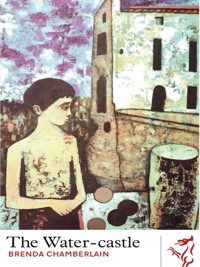
The Water-castle is a journal of love, romance and discord in 1950s Germany as a Welsh artist and poet, Elizabeth Greatorex, travels with her French husband to meet her former lover Klaus, a German count. Elizabeth maps a frost- and snow-bound landscape of desire against the hardening borders of a newly divided Germany. In her revealing diary, she records her struggle to bridge the distance between Wales and Germany, East and West while considering her own mythologised past and real diminished present. Brenda Chamberlain's writing pits creative idealism, emotional hunger and sexual longing against the brutal displacements of post-war Europe.
Sie lesen das E-Book in den Legimi-Apps auf:
Seitenzahl: 229
Veröffentlichungsjahr: 2012
Das E-Book (TTS) können Sie hören im Abo „Legimi Premium” in Legimi-Apps auf:
Ähnliche



















Contents
Title Page
About Brenda Chamberlain
INTRODUCTION
Introductory Paragraph
Letter to Clara Rilke
1. THE WATER-CASTLE
2. OBERHARZ
3. TIDAL WAVE
Translations
About Damian Walford Davies
Advertisement - Brenda Chamberlain
Advertisement - A Rope of Vines
Advertisement - The Protagonists
Library of Wales
Copyright
THE
WATER-CASTLE
BRENDA CHAMBERLAIN
LIBRARY OF WALES
Brenda Chamberlain was born in Bangor in 1912. In 1931 she went to train asa painter at the Royal Academy Schools in London and five years later, after marrying the artist-craftsman John Petts, settled near the village of Llanllechid, near Bethesda in Caernarfonshire. During the Second World War, while working as a guide searching Snowdonia for lost aircraft, she temporarily gave up painting in favour of poetry and worked, with her husband, on the production of the Caseg Broadsheets, a series of six which included poems by Dylan Thomas, Alun Lewis and Lynette Roberts. In 1947, her marriage ended, she went to live on Bardsey (Ynys Enlli), a small island off the tip of the Llyˆn Peninsula, where she remained until 1961. After six years on the Greek island of Ydra, she returned to Bangor. She died there in 1971.
She described the rigours and excitements of her life on Bardsey inTide-race(1962) and the island also inspired many of her paintings. Her book of poems,The Green Heart(1958), contains work that reflects her life in Llanllechid, on Bardsey and in Germany. Her German experiences are portrayed in her novelThe Water-Castle(1964).A Rope of Vineswas published in 1965;Poems with Drawingsin 1969; andAlun Lewis and the Making of the Caseg Broadsheetsin 1970.
INTRODUCTION
In a 1947 review of Gwyn Jones’s collection ofstories,The Buttercup Field, published inThe Dublin Magazine, Brenda Chamberlain confessed the need she felt to get ‘through the narrow archway of the enchanted castle that is Wales into the no less enchanted universe outside, of which the castle and its inhabitants are part’. Published in the year in which she left the hills above Llanllechid, Caernarfonshire, to establish a home on Bardsey Island (Ynys Enlli), this expression of a desire to experience and respond imaginatively to a world beyond the local may seem more than a little ironic. What kind of spirit counsels escape from a moated castle only to choose an island – in the specific case of Bardsey, one often made inaccessible by a hazardous tide-race – as home? Chamberlain’s friend Jonah Jones said that she arrived on Bardsey ‘part-wounded in some way’ after the breakdown of her marriage to the artist and engraver John Petts. Yet Chamberlain’s poetry, prose and paintings, while acutely attuned to the shapes of her native landscape and culture (as her masterpiece of fabling autobiography,Tide-race(1962) proves), had always gestured beyond the protection – and incarceration – of the Welsh castle. The major published works of her final, fraught decade form part of a complex emotional geography of Europe, extending from Bardsey through post-war Germany and down to Greece and the Aegean, where she saw ‘the Welsh sea’ joining ‘its fountain-head, the maternal middle ocean that hisses round promontories of pale-boned islands’ (as she would write inA Rope of Vines: Journal from a Greek Island(1965), also available in the Library of Wales series).
It was in 1932 in her native Bangor that the twenty-year-old Chamberlain met Karl von Laer, a young student on a visit from Thuringia, the ‘green heart’ of Germany. So began what Chamberlain referred to at the beginning of the title sequence of her poetry collection,The Green Heart(1958), as her ‘communication across “deep water”’ with von Laer, whose pre-war letters would condition the imagery and emotional tenor of so much of her poetry. She described the exchange as a ‘silent dialogue’ that brought her ‘so close to him’ that despite their geographical separation, ‘a similarity of temperament and nervous awareness caused the experience of one to become the property of both’. From the moment she met von Laer, Chamberlain’s work can be seen to chart lines of communication and response over dividing bodies of water, and across controlled fronts and borders. The Second World War, during which von Laer fought for Germany on the Russian front, temporarily broke that communication, but in late 1952, Chamberlain, accompanied by her partner Jean van der Bijl, travelled to Westphalia in north-west Germany to meet von Laer again.
Together withThe Green Heart,The Water-Castleis an imaginative mapping of that visit and the Chamberlain–von Laer relationship against the post-war hardening of Germany’s borders and the wider ‘zoning’ of Europe. The boundaries of genre are themselves redrawn as Chamberlain attempts a fictionalisation of the self, drawing on letters from von Laer, some of which actually formed part of an early draft of the novel. Tellingly, perhaps, the book was advertised as a novel on the dust-jacket, but not on the title-page.The Water-Castleboth verifies and contests Anthony Conran’s remark that Chamberlain’s work is an exercise in ‘invent[ing] her own life’. An inveterate mapper of autobiography onto fiction, she ‘steer[ed] her imagination between the real islands of a real outside’, to the extent that her ‘great act of fiction was herself’, as Conran puts it.
Chamberlain’s aspiration to move beyond the confines of the Welsh cultural castle leads her to explore two actual ‘castles’ in her novel – one imaginatively, the other literally. The first is the moated baroqueschlossof von Laer’s ancestral estate at Schlotheim, Thuringia, ‘lost’ now in the Russian eastern zone of Germany – a romanticised space belonging to a class-bound European past. The second is the moated manor-farm (theGutor ‘water-castle’ of the title) to which Karl von Laer fled as a refugee after the war, and where Chamberlain visited him in the dying days of 1952.
Begun in 1953 immediately after her return from Germany,The Water-Castleis an eerie, ironic Cold War romance and a ‘story of Europe’, as a contemporary reviewer described it. Both intensely personal and profoundly public, the novel lays bare a woman’s emotional hunger and creative energies in the context of the physical and emotional displacements of post-war Europe. Chamberlain emerges in this novel as a profoundly political writer, which gives the lie to the orthodox assessment of her work as untroubled by ideological debates. Mapped at the ‘Obernburg’ water-castle in the first section of the novel is the balkanisation of a continent. In the second section, Chamberlain’s persona skis the very frontiers of the Cold War. Thus the novel’s three units – ‘The Water-Castle’, ‘Oberharz’ and ‘Tidal Wave’ – bring the journal-writing author from the prison-sanctuary of Bardsey Island to post-war refugee-space in Westphalia; from there to the borders of a bitter Eastern bloc; then ‘home’ over the pitching ‘salt fathoms’ of the North Sea through Bardsey fantasies of death-by-water, familiar from that other (if differently) fictionalised autobiography,Tide-race.
‘Ordinarily, I keep no sort of journal, but during those weeks on the little farm, at the water-castle, and in the Harz mountains, I recorded the events as they happened’ (p. xi): Chamberlain castsThe Water-Castleas the (precisely dated) ‘journal’ of Elizabeth Greatorex, described by Klaus von Dorn (the fictionalised von Laer) as ‘the well-known English poet’. While a manuscript draft ofThe Water-Castleclearly presents Elizabeth as aWelshpoet and her poems as ‘pure creations of North Wales’, the published novel configures her as English, though the recalled first meeting with Klaus is ‘in Wales’ and her ‘preface’ identifies her as living ‘on a small half-forgotten island in the Irish sea’ (plainly Bardsey) where she and Antoine (the fictionalised van der Bijl) are ‘forced in upon [themselves] in an often painful proximity to tides and storm and seafowl’ (p. x). The novel reveals the extent to which the imagination of Elizabeth Greatorex has been conditioned by Klaus’s post-war letters; she inhabits a ‘literary’ construction of the world that is sorely tested when she is confronted by the material reality of Klaus’s exile and by the obscene violence of recent history. Chamberlain has created a persona that allows her to explore not only anxieties of cultural identity and belonging, but also her fretfulness as a female artist struggling to achieve an authentic, independent and principled purchase on a world both beautiful and brutal.
Chamberlain’s experimentation with the journal form,which tests the compatibility of the day-book’s brief impressions and the novel’s discursive expanse, points to her full acknowledgement of the extent to which her literary work is ‘parasitic’ (Conran’s term) on ‘her own biography’. Therefore, far from failing to achieve the necessary ‘distance’ from her subject that the novel form traditionally calls for, Chamberlain inThe Water-Castleoffers a complex autobiographical fiction, a study of a ‘fantasy-haunted’ and self-deluding female consciousness struggling to acknowledge unpalatable emotional truths and harsh socio-political realities.
In the first section of the novel, Elizabeth Greatorex encounters a frost-bound world of ‘sad Westphalian fields’ and displaced persons, identified by P. T. Hughes in a review in theSunday Independentas ‘postwar debris looking back in sorrow on their past glories and freedoms’. The various households to which Elizabeth is introduced are all constituted by loss. The once gracious, now damp, decaying and labyrinthine Obernburg itself – the gravitational centre of this first part – is owned by Klaus’s cousin, now a political prisoner of the Russians in Siberia, where ‘the former proud officer of cavalry had been put to house-painting and the digging of graves’. Chamberlain maps these Westphalian spaces in direct relation to the Siberian Gulags and the Nazi Death Camps. The Schäferhof – the ‘sordid’ and ‘ugly’ Westphalian farmstead where Klaus lives with his pregnant wife (and first cousin) Helga – is rendered sombre and oppressive by the haunting photograph of Klaus’s dead first wife, Brita. (In the ‘Green Heart’ sequence of poems, Chamberlain’s persona configures pictures of Brita as imprisoning, killing borders: ‘I stand windowed in the frame of your dead love’ – ‘windowed’ resonating here, uncannily, with ‘widowed’). There is also something profoundly funereal about the ‘white flowered’ cyclamen chosen by Elizabeth on the day of her arrival at the Schäferhof. Nearby, Schwarzenmoor, home to Klaus’s brother Johannes and his family, witnessed extreme violence when the previous inhabitants were shot dead by their Polish servants. In this deathly terrain, Klaus’s Schlotheim – that dreamy ancestral house from which he was driven by the advancing Soviets – survives for the exiles as a symbol of custom and ceremony with its ‘elegant proportions, its statues, its rose garden, its peacocks’ (p. 14).
The Westphalian households Elizabeth inhabits in late December 1952 are not so much homes as cultural and political asylums, offering refuge (but not amnesia) to extended families, friends and dependants who yearn after a multitude of ‘home[s] in the east’, from which they embarked on a six-month trek along broken roads strafed by Russian machine-gun fire. Elizabeth remarks that ‘They have no future such as they were born to expect’. At the Obernburg, these remnants of an anachronistic order ‘recreate a little of the old grandeur of their past lives… by their winter games and hare shoots’. Elizabeth is complicit in this rehearsal of the past in a diminished present, as she yields to fantasies of being the mistress of Schlotheim – the product of a curious mix of poetic reverie and sexual yearning (‘Schlotheim is part of my myth-inheritance’). Still hanging in Schlotheim, perhaps, is the self-portrait she gave Klaus all those years ago in Wales. At Schwarzenmoor, Elizabeth enquires after its fate:
Herr von Ravenstadt went round the table, ladling the hot punch into our glasses. He was gallant to me: “The drawing you made, the self-portrait when you were a student; the one you sent to Klaus, it was a good drawing.”
“Where is it now? He has not still got it, has he?”
“No, it was left behind in Schlotheim. The Russians have it now. Perhaps Herr Stalin put it on his bedroom wall.”
He laughed immoderately at his own joke. (p. 43)
It is at such moments that Chamberlain subjects her own romantic fantasies and those of her persona to ironic scrutiny. Fancies are always brought up short by cruel realities: ‘In the security of his cousin’s dining-room it must have been easy for Klaus to forget that next day he would have to get up in the raw darkness to pick frozen brussels sprouts for market’ (p. 35).
Wounds at the Obernburg and its satellite spaces are distressingly physical. History’s violence, and the division of Germany, are written on the body: Klaus himself was wounded on the Eastern front; his brother Johannes has a ‘sabre scar’; Kurt Hastfer, steward of the Obernburg, whom we first see wearing ‘cavalry breeches’, has ‘only one arm’, the ‘empty sleeve falling from his convulsively-twitching left shoulder’; Helga’s sister’s right hand has been ‘hideously mutilated’ by ‘machine-gun fire on the way westward’; and the same woman’s husband returned a ‘skeleton’ from another Siberian camp. The list goes on. This, then, is a landscape of fear, amputation and hurt, and it mirrors and conditions the emotional breaches of the Klaus–Elizabeth–Antoine/Karl–Brenda–Jean triangle.
The second part ofThe Water-Castle– ‘Oberharz’ – takes Elizabeth to the new borders that are the physical manifestations of freezing Cold War ideologies. The journal-narrative of a skiing trip to Sankt Andreasberg in the Harz Mountains, which in early 1953 was edgy frontierland divided between the British and Russian Zones, is also a nuanced analysis of the physical and psychological effects of Europe’s new militarized borders. Selma Hasfter warns Elizabeth that Klaus may well be tempted to ski over the border into the lost ‘green heart’ of Thuringia, in an attempt to reach his ancestral Schlotheim. 1952 – the very year Chamberlain visited Germany – was the defining moment in the creation of Europe’s Cold War borders. It was the year in which the ‘Inner German Border’ established at the end of the Second World War ceased being a relatively-easy-to-cross ‘green border’ and became a strict line of demarcation separating The Federal Republic of Germany in the west from the German Democratic Republic in the east. From Goslar – at this time a British garrison town – Elizabeth ascends to the Harz. The ski runs offer a sense of physical and emotional release, and yet the Harz is also a landscape of mental dislocation. One road into the village from the ski slopes, often taken by Elizabeth, leads past a ‘long grey’ sanatorium, gothicised by her fretful imagination until it becomes part of a ‘spectral’ landscape of ‘demons’ and ‘dinosauri’. Conditioning her deepening attachment to Klaus is her sensitivity to the tense borders on which she skis, accompanied by the ‘sound of firing from the Russian side of the Brocken’, ‘a succession of rifle shots’, the barking of a patrol dog and the roar of ‘Jet plane engines’ in a weirdly empty sky. The emotional drama partakes of the disturbing charge with which Chamberlain invests theverbotenspaces of these mountains. Intimate moments registered in the journal take place ‘within the small zone of safety’ near the border, next to ‘the area of no-man’s land cleared of timber’ – sites of desire where Klaus can ask her ‘Shall we go? We could cross the frontier at night’. ‘Each day we come a little nearer to the Russians, closer to the gunfire’, Elizabeth records – a statement that asks us to see emotional and physical danger as inextricably linked. She records her daily recreation and emotional unrest against the bitter geopolitical landscape, but the author’s control of tone and perspective reveals that Elizabeth is still content to disavow full knowledge, both of the emotional consequences of her trip, and of the political meanings of the natural and built environment. It is in this second section that Chamberlain explores most subtly the brutality that goes into the making of national borders.
The frost of Part One ofThe Water-Castlebecame snow in Part Two. In the final section as Elizabeth, now back in Westphalia, ‘safe in Klaus’s love for another few days’, prepares to leave Germany, it melts to engulfing water. Chamberlain’s pen drawing at the head of the final section suggests two tide-races running in heavy spate between objects now estranged (p. 117). Sidi, Klaus’s sister-in-law, is here given the most explicit political intervention in the whole novel, but the fears she articulates have been present throughout, reflecting Chamberlain’s personal anxieties regarding the effects of totalitarianism and aggressive nationalism on the freedoms a female artist seeks:
What we want is internationalism, not nationalism; and true freedom for women… It is terrible, always to be in fear. I am afraid, increasingly afraid, for Inser. She is only thirteen years of age, but already, she is very tall for her years. If the Russians came, she would be noticed at once, and taken to Siberia. Perhaps this year, or maybe next year, Russia will overrun the west zone as she overran the east. The whole of Europe will become her colony. (p. 126)
It is in this atmosphere that Elizabeth now professes her love for Klaus. His response is guarded, displaced into metaphor and analogy: ‘We loved one another for twenty years,’ he said softly, ‘but there is much water between us’; ‘The wind is rising. The sea will be rough tonight’; ‘Listen! the trees are roaring like the sea at high water’.The Water-Castlegathers to an ending that charts Elizabeth’s return ‘home’ (that concept now radically redefined) against the inundation of the ‘Big Flood’ of 31 January 1953 (‘the worst natural disaster to befall the British Isles during the twentieth century’) when a storm-surge hit the east coast, crossed the Channel and wreaked destruction on the low coasts of Holland. Ghosting the novel’s ending is Chamberlain’s short story of 1947, ‘The Return’ – another autobiographical fiction that dramatised the fantasy of a solo crossing of the perilous sound to Bardsey Island:
Klaus’s face was printed on the night at sea…. The vessel began to pitch and shudder; she rolled sideways. I lay awake, aware of silver schools of fish; and of limp-clawed lobsters killed and brought to the surface by the submarine cataclysm; of salt fathoms, of the meaning of sea-fathoms, of fathoms deep… (p. 155)
The idiom and imagery recallTide-race.In a draft ofThe Water-Castle, Elizabeth’s return ‘with her husband’ is rendered fatal: sensationally, she drowns in Bardsey Sound ‘on the crossing to their island home in a small motorboat’. The published novel ends less melodramatically, and more ambiguously, in ‘storm-tossed’ European waters between the Hook of Holland and Harwich. The ‘in-between’ geography of the ending is wholly appropriate: this is a work poised suggestively between a journal and a novel, autobiography and fiction, romance and political documentary, Welsh and European spaces, West and East, island and mainland selves. In this sense,The Water-Castleis both an ambitiously unconventional work and a paradigmatic ‘Anglo-Welsh’ text.
Damian Walford Davies
Page numbers refer to print edition
Duringthe greater part of the year my husband and I live on asmall half-forgotten island in the Irish Sea, forced in upon ourselves and a few neighbours for company, in an often painful proximity to tides and storm and seafowl.
So it is perhaps not unnatural that a visit to friends in the world outside should have assumed an exaggerated importance, or perhaps I was put to the temptation of enjoying too much sunshine. That simply is what Klaus thought, that I had been unduly impressed by ‘too much sunshine’, by snow and forest and high places.
Now it is all a long time over, but it seems likely to remain the most real part of my whole life.
Ordinarily, I keep no sort of journal, but during those weeks on the little farm, at the water-castle, and in the Harz mountains, I recorded the events as they happened.
Elizabeth Greatorex
AH, we count the years and make occasionalcuttings of them and stop and begin again and hesitate between both. But actually everything that befalls us is of one piece, in whose correlations one thing is kith and kin with another, fashions its own birth, grows and is educated to its own needs, and we have ultimately onlyto be there, simply, fervently, as the earth is there, in harmony with the seasons, dark and light and absolutely in space, not demanding to be cradled in anything but this web of influences and powers in which the very stars seem safeguarded.
Letter to Clara Rilke
Selected letters of Rainer Maria Rilke1902–1926 translated by R.F.C. Hull. Macmillan & Company, London 1946.
1.
THE WATER-CASTLE
DECEMBER 23
AT last we are on theSchäferhof. Outside the double windows of my friends’ bedroom, the year is dying over the snow-pocked Westphalian fields. A gaunt tree leans towards the raw brick house. As far as one can see, the land is flat and melancholy, with low hills forming the horizon. Farm dwellings stand apart from each other over the plain, like dolls’ houses put down at random. They have steep-pitched roofs, small windows and enormous doorways, and are variously painted; white, green, and chocolate-coloured.
It is our second day at the little farm. This is the first visit I have made to Germany in the flesh, and a strange sensation arises from being confronted with the reality after one has lived here for many years in imagination. Klaus says I have written more poetry about Germany than have her native poets.
We arrived in the afternoon, my husband Antoine and I; after a long comfortless journey, from our island to London, then from Liverpool Street by way of Harwich to the Hook of Holland. The sober Dutch landscape gave us no sense of excitement, no thrill of being in a foreign land.
We had crossed the North Sea at night: on deck, in a piercingly cold breeze, we lost sense of direction, as the ship eased her way out of the harbour. The lights of other vessels were reflected in the black water. Coloured harbour lights blinked and went out, and blinked again. Further out, a bell-buoy clanged mournfully. A few people stood at the rail watching the sea slip past. A young Dutch girl came out on deck. Already, I had noticed her in the boat train. She had a plain, fresh, undistinguished face, but her hair under the deck lamps was pure shining gold. Immediately, an admirer was at her side, drawn by the sheen of her hair.
At Hook of Holland, we saw her again, while we were awaiting our turn in the passport office. We had to stand for an hour and a half in a long queue, most of the time in the street (in the darkness of early morning) under a sign that said: ‘WELCOME TO HOLLAND’.
The blonde girl looked less confident now; she seemed to be having difficulty with the passport officer; and her cavalier of the boat had attached himself to two other Dutch girls. Some time later, she passed us as we stood in the corridor of the crowded train. She was smiling happily, and had a new escort. She must have been about the same age as I was when last I saw Klaus, twenty years ago.
Unlike the girl with the golden hair, I felt unsure of myself as the train ran out of Holland and into Germany.
“It is really madness,” I said to myself, “to expect a man you knew twenty years ago, to be the same sort of person, still.”
Klaus had written that he would be at Löhne station to meet the train, with the horse and wagon. But would he recognize me after half a lifetime of separation? Would I recognize him? All I had to go by were a few small snapshots taken the previous summer. One photograph showed his back: he was ploughing and had a powerful, still-young body. In another, he was holding his infant son in his arms. In this snapshot, he looked remarkably like my memory of him, though his face was much heavier now. He was holding his month-old son, looking down at the baby with the smile I remembered. The man’s strong arm held the young body, his huge hand lying protectively near the mole-like paws of the child. I had compared these snapshots with one taken of Klaus twenty years ago, when he was a law student at Königsberg. That year, he had come to spend the summer with the family of one of my school friends in my home town, where I was spending the long summer vacation.
The German landscape was flat and desolate; thin patches of snow lay on the fields; there were sparse clumps of trees at intervals. The nearer we came to Löhne, the more blanched and derelict was the landscape. We stepped down into icy mud and slush on the station platform. We had several pieces of luggage; suitcases, and small grips, and skis. Porters stood about; grey-clothed men, in peaked caps over grey faces. They refused to notice us or our belongings. There was no sign of Klaus. I thought he might be waiting beyond the ticket barrier; but he was not there, either. He might be outside in the station yard; perhaps, he could not leave the horse standing too long unattended. A wagon was coming slowly down the road. I searched the face of the wagoner as the cart drew near. His was a young face, not middle-aged, as I must expect. I was still looking for my past.
We waited in the cold booking-hall for a long time. My husband, Antoine, was moodily silent. A British officer, I suppose from the occupation forces in the caserne at Herford, was handing in suitcases at the counter of the left-luggage office. I went across and asked him if there was a possibility of our getting a taxi to take us to the Schäferhof. Schäferhof? He had never heard of the place, but it should be possible to get a taxi. In halting German he spoke to the man in the ticket hall. From behind a glass partition, the German eyed him with detachment; but he consented at last to ring for the station taxi. The driver told us there were two houses of the same name belonging to the family von Dorn; one, the larger, stood on the main Löhne-Herford road. The smaller Schäferhof was at the further side of a coppice.
“Yes, yes; that was it. You had to go through a wood to get there.”
We travelled along mean roads, deeply rutted and gleaming with mud. Beyond the town the land was open, with many small farmhouses in the hedgeless fields. The taxi left the road, and we bumped along a track towards a knot of bare trees. On one of the trees a board was nailed, bearing the words: Dr. Helga von Dorn, practising veterinary surgeon. The chauffeur sounded his horn.
A massive woman great with child, in a full-skirted blue dress, clogs, and ribbed woollen stockings, a red and white kerchief over her dark hair, came out of the house door. Her head was beautiful, with a fine hooked nose and dark eyes; but her body was gross and untidy. She had the haunches of a brood mare. This, I realized, must be Klaus’s second wife, of whom I knew nothing, except that she had been his wife for three years. Antoine was overcome by the vastness of the woman crossing the yard. He said aloud, “My God.”




