


9,99 €
Mehr erfahren.
- Herausgeber: Titan Books
- Kategorie: Fantasy und Science-Fiction
- Sprache: Englisch
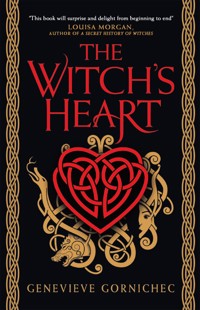
When a banished witch falls in love with the legendary trickster Loki, she risks the wrath of the gods in this fierce, subversive debut novel that reimagines Norse myth. Angrboda's story begins where most witch tales end: with being burnt. A punishment from Odin for sharing her visions of the future with the wrong people, the fire leaves Angrboda injured and powerless, and she flees into the furthest reaches of a remote forest. There she is found by a man who reveals himself to be the trickster god Loki, and her initial distrust of him—and any of his kind—grows reluctantly into a deep and abiding love. Their union produces the most important things in her long life: a trio of peculiar children, each with a secret destiny, whom she is keen to raise at the edge of the world, safely hidden from Odin's all-seeing eye. But as Angrboda slowly recovers her prophetic powers, she learns that her blissful life—and possibly all of existence—is in danger. Angrboda must choose whether she'll accept the fate that she's foreseen for her beloved family—or rise to remake it.
Das E-Book können Sie in Legimi-Apps oder einer beliebigen App lesen, die das folgende Format unterstützen:
Veröffentlichungsjahr: 2021
Ähnliche
















Contents
Cover
Praise for the Witch’s Heart
Title Page
Leave us a review
Copyright
Dedication
Part One
Chapter 1
Part Two
Chapter 2
Part Three
Chapter 3
Acknowledgments
Appendix
About the Author
Also Available from Titan Books
PRAISE FOR
THE WITCH’S HEART
“The Witch’s Heart is a unique novel that transforms the faceless names of an epic tale into living, breathing, sympathetic characters. With a witty and spirited protagonist, this book will surprise and delight from beginning to end.”—Louisa Morgan, author of A Secret History of Witches and The Age of Witches
“A deep journey into the mists of the ancient Norse world of gods, monsters and humans, who shape shift from one to another. But the heart of the story is a witch’s passage over many lifetimes and the ultimate sacrifice she makes for those she loves. A timeless tale of great power and artistry.”—Margaret George, New York Times bestselling author of The Splendor Before the Dark
“Ms. Gornichec subverts the mythology from inside, knowledgeably and provokingly. Whatever the Elder Edda may say, the heroines of The Witch’s Heart will not be a delight to ‘wicked women’ alone.” —Tom Shippey, The Wall Street Journal
“With prose as heady as any epic, Gornichec breathes incredible new life into an ancient saga, filling in the gaps with humor and passion and heart. A masterpiece.”—Emily A. Duncan, New York Times bestselling author of Wicked Saints and Ruthless Gods
“Rich and artfully woven, The Witch’s Heart takes the familiar tales of Norse mythology and tells them from a fresh, honest perspective… Angrboda is an unforgettable heroine, and The Witch’s Heart a debut to be reckoned with.”—H.M. Long, author of Hall of Smoke
“As epic as it is engrossing, The Witch’s Heart is a testament to the ferocity of one mother’s love and the lengths she’ll go to protect those she loves. Utterly unforgettable.”—Alexis Henderson, author of The Year of the Witching
“This fascinating novel approaches Norse mythology from a brand new perspective; here old villains are now heroes, and the motivations of gods, giants, and witches are rarely what they seem... Gornichec plumbs the depths of what we will endure for family, belonging, and meaning, and traces the limits of love, friendship, and vengeance.”—Linnea Hartsuyker, author of The Half-Drowned King
“The Witch’s Heart is a vivid and enjoyable journey across the vast wilderness of Nordic mythology. Angrboda's story is a delightfully nuanced, queer, and powerful reminder of love and survival on your own terms. Read this book when the world is ending; read this book when you are looking for the world that comes next—I'm so very glad I did.”—A.J. Hackwith, author of The Hell's Library series
“At once mythic and intimate, The Witch’s Heart is a story of fate and survival and all the ways love leaves thorns buried in your flesh. It will haunt you long after you close the covers.”—Leife Shallcross, author of The Beast’s Heart
LEAVE US A REVIEW
We hope you enjoy this book – if you did we would really appreciate it if you can write a short review. Your ratings really make a difference for the authors, helping the books you love reach more people.
You can rate this book, or leave a short review here:
Amazon.co.uk,
Waterstones,
or your preferred retailer.
The Witch’s Heart
Print edition ISBN: 9781789097061
E-book edition ISBN: 9781789097078
Published by Titan Books
A division of Titan Publishing Group Ltd
144 Southwark Street, London SE1 0UP
www.titanbooks.com
First Titan edition: May 2021
10 9 8 7 6 5 4 3 2 1
This is a work of fiction. All of the characters, organizations, and events portrayed in this novel are either products of the author’s imagination or are used fictitiously.
© Genevieve Gornichec 2021. All Rights Reserved.
Genevieve Gornichec asserts the moral right to be identified as the author of this work.
No part of this publication may be reproduced, stored in a retrieval system, or transmitted, in any form or by any means without the prior written permission of the publisher, nor be otherwise circulated in any form of binding or cover other than that in which it is published and without a similar condition being imposed on the subsequent purchaser.
A CIP catalogue record for this title is available from the British Library.
CPI Group (UK) Ltd, Croydon CR0 4YY.
For Poppy
PART ONE
Long ago, when the gods were young and Asgard was new, there came a witch from the edge of the worlds. She knew many ancient spells, but she was especially skilled with seid, a magic that allowed one to travel out of body and divine the future. This greatly appealed to Odin, the highest of the Aesir; when he learned of her abilities, he offered to impart upon the witch his knowledge of the runes in exchange for teaching him seid.
She was uncertain at first. She’d heard enough about Odin to make her hesitate. But she knew he did not share his secrets lightly, which meant her knowledge of seid must be of great value to him indeed. So she swallowed her suspicions about this grim one-eyed god and accepted his offer.
As they practiced seid together, the witch found herself drawn farther down than she’d ever traveled before, where she brushed against a place darker than the beginning of time itself. This place frightened her, and the secrets contained there were great and terrible, so she did not dare go deeper—much to Odin’s displeasure, for the knowledge he sought above all else was hidden there, and it seemed to him that only she could reach it.
The witch was also teaching her magic to the Aesir’s rivals, the Vanir, a sister race of gods whose home she had passed through on her way to Asgard. The Vanir could think of naught but gold with which to reward the witch for her services, though she cared little enough for it.
But when Odin realized she was traveling between Asgard and Vanaheim, he saw an opportunity. He turned the Aesir against the witch and called her Gullveig, “gold-lust.” They drove spears through her and burned her three times, and three times she was reborn—for she was very old, very hard to kill, and far more than she appeared. Each time she burned, Odin tried to force her down to the dark place to learn what he wanted to know, and each time she resisted. And when the Vanir heard of the Aesir’s treatment of her, they became furious, and thus was the first war in the cosmos declared.
The third time she was reborn, Gullveig fled, though she left something behind: her speared heart, still smoking on the pyre.
That was where he found it.
Some time later, he tracked her to the deepest, darkest forest at the farthest edge of Jotunheim: the land of the giants, the Aesir’s bitter enemies. This forest was called Ironwood, where the gnarled gray trees were so thick that there was no real path through them, and so tall that they blocked out the sun.
He did not have to venture into those woods, though, for by the bank of the river that divided Ironwood from the rest of Jotunheim he found the witch, staring across the water at the dense forest and mountains beyond. She sat upon a rough woolen blanket with a thick cloak about her shoulders and a hood pulled over her head. The sun was shining, but she sat in the shade, hands folded in her lap, leaning against a tree trunk.
He watched her for a time, shifting from foot to foot, scratching his nose, listening to the quaint gurgling of the river and the whistling of songbirds. Then he sauntered up to her, his hands clasped behind his back. He could see only the bottom half of her face, but her skin looked pink—tender, healing, new. When he got closer, he noticed the skin of her hands was the same. She seemed to be resting peacefully. Part of him didn’t want to disturb her.
Then again, he’d always found the idea of peace to be quite boring.
“How long are you going to stand there?” she rasped. She sounded like she hadn’t had anything to drink in an age and a half. He figured that breathing in the smoke from one’s own pyre three times would have that effect on a person.
“You’re a difficult woman to find,” he replied. Truth be told, he wasn’t sure how to proceed. He’d come to return what she’d left in Odin’s hall—and for something more, though he didn’t know exactly what.
Something had drawn him to Ironwood that day with her heart tucked into his haversack. And he had a feeling that whatever was pulling him down this path was important, was special, was interesting, for he was so very easily bored.
And now here he was, enticed by the possibility of some excitement and hoping the witch would not disappoint.
* * *
She didn’t reply at first, opting instead to study the strange man who’d approached her. The sun was shining behind him, so she couldn’t quite make out his features—just a deep green traveling cloak and hood, brown pants, brown leather shoes, and the silhouette of wild hair.
“I really admire your work,” he said conversationally. “You know—sowing chaos wherever you go. Making mighty beings fight over your talents. It’s impressive, really.”
A moment passed before she said, “That was not my intention.”
“What was it, then?”
She did not reply.
“Well, if you’re planning on doing it again,” he said, “I would love to watch and possibly participate, so long as I don’t get caught. But I’ll let you know up front that I shall not, under any circumstances, make you a promise I can’t talk my way out of. I’m not usually this straightforward about it, so consider yourself lucky. I’m letting you know as a friend.”
“A friend?” The word was foreign to her.
“Yes. I’ve decided it just now.” He cocked his head. “Am I your first friend? What an achievement for you.”
She ignored the question. “Seems a rather one-sided decision on your part.”
“Well, I see you’re not exactly surrounded by admirers.” He studied her. “You seem to me to be nothing more than a harmless witch from the backwoods—I haven’t heard anyone talk like you for a very long time. I’m surprised the Aesir could even understand your accent. Who are you? Where do you come from?”
“I don’t know,” she said after a moment. She inclined her head such that she could see him, but he couldn’t quite see her. “I could ask you the same question about yourself, and you probably wouldn’t know the answer, either.”
“Oh yes?” He settled down on his haunches and peered at her. She could see now that he had a pale, angular face, a sharp, slightly upturned nose that gave him an impish look, and shoulder-length dark blond hair that fell somewhere between wavy and curly. His eyes were grass green; his smile was mischievous.
The witch nodded once in reply.
His smile faltered a bit. “And how could you possibly know that?”
“I know things,” she said. “You may have heard.”
“I may have heard that your knowing of things was what got you stabbed and lit on fire, multiple times. Perhaps from now on you should just play dumb.”
“Well, that’s no fun,” she said, only half joking, her hand moving instinctively to the vertical slash between her breasts—the place where they’d stabbed out her heart.
“That’s the spirit!” He laughed as he rummaged around in his bag. After a moment he pulled out a wad of cloth and held it out to her.
She took it—and started when she felt the bundle pulsing rhythmically in her hands.
“Your heart,” he explained. “I was going to eat it, for some reason, but I decided that maybe you should have it back.”
“Eat it?” she asked, making a face. “Why?”
He shrugged. “I don’t know. To see what would happen.”
“You would’ve eaten the heart of a witch, and that cannot be good for your well-being,” she said dryly; she frowned as she unwrapped it. “It seems to have healed quite a bit from the fire. But . . .”
“But there’s still a hole in it,” he finished for her. “You got stabbed. Perhaps it shall heal completely if you put it back where it belongs. Do it now—I won’t look.”
“It can wait.” She replaced the cloth and looked at him. “Thank you.”
“You’re welcome.” He sat down now, stretched one leg out, and propped his elbow up on the other knee. “So, I take it you’re not going by Gullveig anymore. What do they call you now?”
“I’m not sure.” She looked at him sideways as he plucked a long piece of grass out of the ground, put it in his mouth, and let it dangle lazily there, and she noticed the splash of freckles across his nose and cheeks, and how the sun behind him turned the outline of his curls a violent orange.
She was still not sure what to make of this man. It was difficult to decide how much she should tell him.
“You don’t know your own name?” he asked, raising his eyebrows.
She shrugged. “I thought I would like to travel, in which case they would call me something depending on the nature of my wanderings.” She cast a glance across the river at the gray thickets of Ironwood. “Though I may yet decide to rest here for a time.”
“And what will you call yourself, then, if you stay?”
She considered this for a moment or two before she said, “Angrboda.”
His wrinkled his nose, and the blade of grass drooped. “What? ‘Proclaimer of sorrows’? That’s an odd name. Why would I want to be your friend if that’s all you’re going to do?”
“You’re the one who decided we were friends,” she said. “And besides, it’s not you to whom I’ll bring sorrow.”
“Are all witches as cryptic as you are?”
“I don’t know if I’ve met any other witches, though I think some used to live in these woods, too, long ago.” She looked to the other side of the river again and lowered her voice almost reverently. “They say there was one witch here who bore the wolves that chase the sun and moon, and raised many others still.”
“Right. I heard stories about them, growing up. The Old One and her wolf-children.”
“You heard those stories in Asgard?”
“Well, I’m not from Asgard. Anyway, everyone knows the stories out here.”
“You’re a giant,” she said. It was a guess on her part, but she did not make it sound like a question. “Giant” was a misnomer: a name, not a descriptor, for giants were often no larger than the average person. And while her visitor was certainly dressed like one of the Aesir, sometimes there was no physical way to tell a god from a giant.
But this man, traveling alone and undisguised . . . There was something wild about him, something about his eyes that spoke of deep forests and midsummer nights. Something untamed, unharnessed.
He cannot be a god, can he?
He shrugged a shoulder at her deduction. “Sort of. Anyway, it seems rather empty around here now. No wolves . . . no witch-mother . . .”
“Indeed.” She looked across the river again, feeling a pang in her empty chest. “But maybe it was me. Maybe I was their mother.”
“You don’t remember, though?”
She shook her head. “I don’t.”
Silence fell between them, and he shifted. She got the feeling he hated when conversations lulled; he had the air of one who enjoyed hearing his own voice.
“Well,” he said at last, “I’ll have you know that I’m going to make it my personal mission to ignore all your depressing prophecies and do whatever I feel like doing.”
“You can’t just ignore prophecies.”
“You can if you try hard enough.”
“I’m not quite sure that’s how it works.”
“Hmm.” He put his arms behind his head, leaned against the tree, and said haughtily, “Well, maybe you’re just not as clever as I am.”
She gave him a sidelong look, amused. “What do they call you, then, Sly One?”
“I’ll tell you if you show me your face.”
“I’ll show you my face if you promise not to recoil in horror.”
“I said I’d tell you my name. I can’t promise anything more. But trust me, I have a strong stomach—I was going to eat your heart, after all.”
“My heart is not so full of vile things, I promise you.” Nevertheless, she lifted the hood, revealing heavy-lidded blue-green eyes and the brown stubble of her burned hair. These had not been Gullveig’s colors, but Angrboda figured that she should leave that particular name and all its associations behind her and never mention it again.
This was a new phase in her existence. She was going to keep the witchery to herself from now on, thank you very much. No more seid, no more prophecies, no more getting into trouble. She’d already had enough of that for several lifetimes.
“And here I thought you were going to be some hideous ogress hiding under there.” He raised his hands and curled them into claws. “Angrboda Troll-woman, so ugly that men flinch away in terror to look upon her face.”
She rolled her eyes. “And what’s your name? Or do you intend to break your promise?”
“I intend no such thing. I am a man of my word, Angrboda. I’m the blood brother of Odin himself,” he said loftily, and put a hand to his chest.
Ah, there it is, she thought. She did not remember Odin taking a giant for a blood brother when she was in Asgard. But then again, that could have been centuries ago, for all she knew—she remembered very little of her time in Asgard and next to nothing from the time before that. Perhaps her strange visitor just hadn’t been present in the hall where she’d been burned.
Or maybe he was and was watching it, rapt. Like all the rest.
“And I can’t believe,” he went on, “that you would besmirch my good name by implying that I’m an oath-breaker—”
“I would have to know your name in order to besmirch it, would I not?”
“You’re besmirching the idea of my good name.”
“The idea of your name itself, or the idea that it’s a good name?”
He blinked at her and mouthed the word Oh.
“I shall make up a name for you if you don’t tell me what it is,” she said.
“Ooh, very interesting.” He wrapped his arms around his knees like an excited child. “What did you have in mind?”
“You won’t like it, that’s for sure. I’m going to call you the worst name I can think of, and use my witchy magic to make everyone else call you that, too.”
“‘Witchy magic’? Oh, I’m so frightened.”
“Don’t make me make you eat this,” Angrboda said warningly, holding up her cloth-wrapped heart.
“Hmm, maybe that’s what I should’ve done in the first place.” He sat up straighter and gave her a mock-predatory leer. “Maybe I’ll gain your power. Here, give it back.”
She held it away from him when he reached for it and said, in her most ominous voice, “Or maybe something much, much worse will happen.”
“How do you know?”
“I don’t. I’m only saying.”
“Well then, I suppose I can’t blame you for wanting to hang on to it after what happened.”
“I won’t be parting with it anytime soon—that’s for certain.” She put her heart back in her lap and looked down at it. Not ever again.
A few moments passed. When she looked up at him again, he was giving her a crooked smile. She returned it hesitantly—she didn’t know what her smile looked like now, if it was grotesque or unbecoming or just frightening.
But his smile only widened, betraying none or all of his thoughts.
“My name,” he said, “is Loki Laufeyjarson.”
“You use your mother’s name instead of your father’s?” she asked, for Laufey was a woman’s name.
“I do. And I honestly can’t believe you don’t know of me, for all the time you spent in Asgard. The gods are so very serious, and it gets quite boring sometimes, so I’m prone to amusing myself to keep things lively—mostly at the expense of others, but that’s neither here nor there. They can’t help that I’m rather the wittiest person around, after all.”
“And the most humble, too, no doubt,” Angrboda observed, with straight-faced sincerity.
Loki studied her for a moment as if trying to decide whether she was joking. When her expression didn’t change, his wry smile widened into an appreciative grin.
“You know, Angrboda,” he said, “I do think we’re going to be the best of friends.”
* * *
Angrboda made her home on the far eastern side of Ironwood, where the trees clung precariously to the steep mountains bordering Jotunheim. She stumbled upon a clearing near the base of one such mountain, where she found an outcropping of rocks that led into a cave quite large enough for her to stand in. Upon entering, she realized there was a hole carved into the rock above her, under which sat the remains of a hearth.
It was all eerily familiar. Like it had been waiting for her.
She rebuilt the hearth into a long fire with stones she gathered from the woods. The cave itself was as large as any modest hall in Jotunheim: spacious enough for furniture and with plenty of room for storage near the back, where the ceiling was lower. By day, the inside of the cave was illuminated by the sun coming in through its mouth; by night, she kept her hearth fire lit against the total darkness of her new home.
“A cave?” Loki said, blinking, the first time she showed him inside. “Why not build a hall?”
“I’m hiding. A hall would be too obvious.”
Loki just shrugged at that. She noted that he didn’t comment on whom she was hiding from—even though he was one of them. She knew she should’ve been worried as soon as he’d revealed his association with Odin, but something told her that he wasn’t what he seemed, and that instinct was what kept her from fleeing to find another cave every time he departed hers.
Angrboda saw him now and again after that first day, whenever he would come by Ironwood. He was a natural shape-changer, as she soon discovered, and he could make rather good time from Asgard to Ironwood when he took the form of a bird, and he didn’t just drop by for nice banter. Sometimes he stayed a night or two, comically snoring facedown on her floor using his balled-up cloak as a pillow.
She rarely slept.
She didn’t know how much time had passed since they’d met by the river, but her light ash brown hair had grown long and straight and fine; she often put it in a thin braid draped over her shoulder or pinned it back in a loose bun at the nape of her neck. Her cave-dweller-pale skin had healed quickly after her burning, giving her the look of a much younger woman, but the dark circles under her eyes were ever present.
She’d put her heart back where it belonged, too, by leaving her body enough to numb the pain but staying connected enough to move her hands. She’d opened the wound where they’d speared her, and so there remained a vertical raised scar between her breasts.
But it still felt like something was missing from her. Like that hole in her heart had not yet fully healed.
She got along fine regardless. There was a stream that branched off the river beside which she’d first met Loki, and it meandered near enough to her cave that it wasn’t a hassle to go back and forth to fetch water and wash what few articles of clothing she had. She’d accumulated a meager pile of furs on which to sleep, too, but not enough food to eat. Animals were scarce in Ironwood.
One day she was out checking the snares she’d placed among the trees, and when she saw that they’d yielded nothing, she wandered over to the stream to catch some fish. For hours she sat by the bank, bored out of her skull and with no bites on her line. She had nearly dozed off against a tree when suddenly an arrow whizzed past her head and planted itself in the bark three inches from her face.
After a shocked pause, Angrboda looked around, wide-eyed, for the source.
Another giant emerged from the trees across the stream: a woman, broad-shouldered and dressed in a short woolen tunic and pants, with a bow in her hands, a pack on her shoulder, an empty quiver at her hip, and a bunch of fat rabbits hanging from her belt.
“You’re not a rabbit,” said the woman. She seemed a little too disappointed.
“You nearly killed me,” Angrboda replied, blinking furiously.
“What are you doing here, anyway? Don’t you know this place is dead?” Although she appeared no older than Angrboda, the woman looked down on her as though the ancient witch were nothing more than a naughty child.
Angrboda did not appreciate this and stared right back at her in silence.
The woman appraised her for another moment before saying, “Why don’t you grab my arrow out of that tree and come share a meal with me? It’s the least I can do after almost shooting you.”
“Worse has been done to me,” Angrboda said, throwing her makeshift fishing rod aside. The stream was shallower than usual this season, and she needed only hop across a few rocks to get to the other side.
While Angrboda started the fire, the other giantess deftly skinned two of the rabbits and introduced herself as Skadi, daughter of Thjazi, and added with pride that she was known in Jotunheim as the Huntress for her skills with archery and trapping. She was pretty in her way, with thick pale hair in two braids under her fur-trimmed cap, and strong, skilled hands. Her eyes were a glacial blue.
Skadi just nodded when Angrboda introduced herself, only the slightest hint of confusion in her expression at the name.
“So, do you live near here?” Angrboda asked as Skadi started boiling the rabbit meat in a small iron pot she’d drawn from her pack.
Skadi shook her head. “I live in the mountains, but farther north and farther inland. Where are you from? I can barely understand your accent.”
“I’m very old,” Angrboda said truthfully. “Older than I look. If you’re from the mountains, where are your skis?”
“It’s not snowing here yet. I had to leave my skis along the way.”
“What brings you here, then? There’s naught but small game in these woods, and it’s scarce enough. Surely the mountains are better hunting grounds for you.”
Skadi used her knife to stir the contents of the pot and grinned across the fire at Angrboda. “It’s because of a story we tell here in Jotunheim. They say the witch who birthed the race of wolves is still here somewhere. She’s one of the ancient giantesses of the forest—supposedly they all lived here in Ironwood a long, long time ago. I come by sometimes when I’m out hunting, but I’ve never found anyone. Then I saw smoke rising from the foothills earlier today and couldn’t resist coming to take a look. I suppose it was just you, though. Right?”
“Aye, it was.” Angrboda paused to choose her next words carefully. “I am a witch, but surely not the one you seek.”
“A witch,” Skadi echoed. “What sort of witch?”
Angrboda shrugged.
“What can you do?”
“Nothing impressive, I suppose,” Angrboda mused. “My home isn’t even furnished.” She didn’t have so much as a pot to cook stew in. A witch she might be, but Angrboda was no craftswoman when it came to the tools and furniture she needed to be more comfortable in this new life of hers.
Skadi paused and stared at her—partly with suspicion and partly with the are-you-stupid look that Loki had given her when he’d first seen her new residence. Angrboda kept looking right back at her and pulled her cloak tighter around her shoulders. Night was falling.
“Huh,” Skadi said at last and resumed stirring the food with a look on her face that implied she wasn’t thinking about stirring the food. “You must be able to do something if you call yourself a witch. Some of the witches I’ve heard of can do seid. Like Freyja. Can you do that?”
“You know of Freyja?” Angrboda asked cautiously.
“I’ve heard talk. You hear things when you’re a trader. You know of the war?” Skadi prompted, mistaking Angrboda’s distant expression for confusion. “Between the Aesir and the Vanir?”
Angrboda nodded. During one of his visits, Loki had told her of what had transpired after she’d fled Asgard.
“I know of it,” she said, “but I hardly know the details. In fact, I’ve heard there was no war at all, just the declaration and then the truce. But how did the truce come to be?”
“An exchange of hostages,” said Skadi. “Njord of the Vanir and his son and daughter, Frey and Freyja, in exchange for two men from among the Aesir. One of whom was Mimir.”
Angrboda’s eyebrows shot up—another familiar name. “Mimir? Odin’s most valuable adviser? These Vanir hostages must be important indeed for him to suffer such a loss.”
“Oh, don’t worry,” Skadi said darkly. “The Aesir hardly play fair. Odin got him back in the end—his head, at least . . .”
Angrboda shuddered. “Still, even to make such a trade in the first place . . . what of these Vanir? What’s special about them?”
“Njord is a sea god of some sort, but his daughter, Freyja, is said to be the most beautiful of women, and they say she taught seid to Odin himself.”
“Is that so?” Good. Let them say that, Angrboda thought. Soon no one will remember a thing about the witch they burned thrice, and I’ll be left in peace.
“Yes,” Skadi continued, “and Freyja lives among the Aesir now. I’ve heard she has her own hall and everything.”
Angrboda shifted and pulled her cloak yet closer around her. Freyja—a young woman before the war—had been the first one in Vanaheim to beg Gullveig to teach her seid, and she remembered as much only because the girl had been both stunningly beautiful and astonishingly persuasive. Her face and Odin’s were the only two Angrboda remembered clearly from her time as Gullveig.
“So, can you do what Freyja can, then?” Skadi asked her.
“Yes and no,” Angrboda said slowly, hoping to steer the conversation away from seid. “But I do possess some other useful skills.”
Skadi seemed contemplative. She poured the stew into a small wooden bowl she had with her and handed it to Angrboda, as she herself ate right from the pot.
“I’m trying to think of how to help you,” said Skadi. “For I intend to do so. But I’m a trader. This is a business venture, and the nature of the business is that you have to produce something in exchange for something else. So what can you do?”
Angrboda paused and considered this. Besides seid, what could she do? She didn’t remember much from the time before . . . except for her magic. That was as much a part of her as her very soul and as clear in her mind as her breakfast this morning.
“I can make potions,” she said. “Though I don’t have access to the ingredients at the moment.” She gestured to the thick, barren trees surrounding them. “There’s not much to work with out here.”
Skadi grinned. “One of my kinswomen has a great garden. I could trade my game for whatever plants you desire. Then I could give the plants to you in exchange for the potions, which I can then turn and trade for whatever else you need . . . for a percentage, of course.”
“Of course,” Angrboda echoed, grateful that Skadi was amicable to the idea in the first place. “You’d be doing most of the work, after all. You may take what you wish from your trades—my needs are few.” She paused. “Though I have to wonder what you’d be getting out of all this. I’m very far removed from any trading paths. Or any paths at all, for that matter.”
Skadi shrugged. “You’re not wrong about that. But it all depends on whether or not your potions are any good. If they are, I can make better trades, so the trips will be worth my while. What sorts of things can you make, then?”
“Healing salves, for one, and charms to cure illness,” Angrboda said, and took a sip of her stew—it was delicious, especially since she’d been living off scrawny rabbits charred on sticks over her hearth fire for quite a long while. “And potions to stave off hunger—especially useful in the winter.”
Skadi was impressed. “Those will fetch a high price. Provided that they work.”
“Trust me,” Angrboda said with a hint of a smile. “They work.”
* * *
As it turned out, Angrboda was correct: Skadi bartered her potions around Jotunheim and received so much in exchange for them that she would often show up at Angrboda’s cave with household items—knives, spoons, linens, woolens, a cooking pot, an ax for woodcutting—and game, which she had either caught herself or traded for. Their arrangement was such that Skadi brought her large wooden boxes filled with small lidded clay pots, padded on all sides with unspun wool so they would not break in transit. Angrboda filled the pots with her potions and passed them back to Skadi, who gave her a new box of empty pots in return.
Some of the items Skadi brought back gave the witch cause to believe her potions were making their way beyond Jotunheim. Skadi said she did have a few contacts who traded with dwarfs in Nidavellir and dark elves in Svartalfheim, and even with humans in Midgard. The items from Midgard included such things as fine textiles Angrboda had never even heard of.
“This one is called silk,” Skadi had informed her when she’d arrived with a particularly beautiful, shiny length of fabric. “The humans traverse vast oceans in their longships for the sake of trading. This cloth has come quite a long way.”
“I have little use for such finery as this,” Angrboda said, awed as she ran her fingers over the smooth surface of the silk. She ended up trading it back to Skadi for something far more precious: a small pot of the finest honey Angrboda had ever tasted, and which she hoarded like a dragon.
In addition to teaching Angrboda how to set a proper snare to catch fresh game, Skadi eventually started towing logs down from the higher mountains on her sledge and leaving them outside Angrboda’s cave. When Skadi had a nice large pile of logs, she declared that they were going to build some furniture.
“I don’t know how to build furniture,” Angrboda said lamely. I’m certain I could figure out how to magic something together, though it wouldn’t be pretty.
“I’ll show you. I have the tools,” said Skadi, and produced them from her pack. “Trust me, we mountain women know how to do everything.”
And so Skadi built her a table and two benches, and a bed frame, which was then tucked against the wall and laden with blankets and furs atop the two swaths of linen Angrboda had sewn together and stuffed with straw for a mattress. Skadi made her a smaller table and cabinet for her potions soon after, but the Huntress’s best creation was her last: a sturdy chair to place near the fire. Angrboda carved it with patterns and swirls and placed furs on the seat to make it more comfortable.
Skadi also brought her ample candles to light her dark cave—and especially her worktable, as it was against the cave wall such that she had her back to the center fire as she mixed potions. The candles had come just in time, for the long dark of winter was on its way. Angrboda usually spent this time huddled in the back of her cave, surviving on one of her hunger potions, which she cobbled together with what small plants she could find in Ironwood. Those potions had worked well enough, but their taste had left much to be desired—the ingredients had never been quite right.
But now she had Skadi to provide the plants to make her concoctions palatable, and anyway, she didn’t need to take her own hunger potions any longer; thanks to Skadi, she also had a store of dried meat and some goats for milk. The goats arrived well-fed, for which Angrboda was grateful, as there was little greenery for them to graze on in the mountains and the forests at the edge of the world.
Maybe things will be different this year, Angrboda hoped. Every spring Ironwood seems a bit greener. But perhaps it’s just my imagination.
* * *
Loki still came to bother her at his leisure. She was fine with that, as she enjoyed his company, though she did find him to be a little much at times. Peace and quiet were the only companions she could rely on; Loki was interested in neither peace nor quiet, but then again, he didn’t seem to be all that reliable himself, and one of his favorite pastimes was complaining about how uninteresting she’d become since leaving her Gullveig roots behind.
He was, however, slightly taken aback when he barged into her cave one day to find it completely furnished, and she relished the look of surprise on his face as he took it all in.
“You’re just in time for dinner,” she said as she stirred the stew pot over the hearth.
“You even have a table now? You’re really moving up in the world, aren’t you?” he exclaimed. “Where did you get all these things, anyway? You even have a door! I thought you’d never get one.”
Angrboda shrugged. She hadn’t wanted anything too noticeable to mark the entrance of her cave—which looked more or less like a pile of moss-covered rocks jutting out of the mountain base, with smoke rising from the unseen chimney hole—but she’d decided she rather did need a door of some kind, so Skadi had nailed some wood together into a panel to cover the cave’s mouth.
Angrboda tried not to let it unsettle her that they’d found a set of ancient iron hinges already secured in the entryway when they’d measured it for the door. Skadi had seemed perturbed herself at the find, but had said nothing except to deem the hinges functional before securing the new panel to them.
“I’ve been trading,” Angrboda said presently. “Potions for possessions. It’s quite lucrative.”
“Trading with whom?” Loki asked, arching an eyebrow. “Don’t tell me you have other friends now, too? I’m impressed.”
“As you should be.”
“How are things here?” Loki poked a rabbit hanging from the ceiling. “Boring? Menial?”
“More or less.”
“I see you have a garden now,” he said, smirking.
“I do at that,” she replied with a smile and ignored his condescension. Earlier that year, Skadi had brought her some seeds, gardening tools, and even a simple straw hat with a wide brim, and Angrboda had gotten to work. She was quite proud of the garden, too; she grew just enough to feed herself with fresh root vegetables, cabbage, and herbs for seasoning.
“How wonderfully domestic,” Loki said dryly. “What are you cooking?”
“Rabbit stew.”
“Do you ever eat anything other than rabbit?”
“If you don’t want my rabbit stew, you can leave.”
“And to think, you were once a powerful witch who did interesting things.”
“I still am a powerful witch, and you would do well not to forget it.” She spooned the stew into bowls and passed one to him, and they sat down on opposite benches at her new table. “How are things with the gods?”
He prattled on, pausing only to eat. And as Angrboda listened, she tried not to wonder at the bitterness creeping into his voice as he told his tales of Asgard.
* * *
One rainy night a short time later, Angrboda was sitting in her chair by the fire when Loki appeared at the mouth of her cave, drenched and stumbling. He closed the door behind him, facing away from her, his shoulders hunched and shaking. His hood was up. She could not see his face.
“Loki?” she asked hesitantly, standing. “What brings you here so late?”
He shuffled over and sat on the bench, put his head down on the table. His breath came in ragged, wet gasps, and his fists were clenched so hard that his knuckles were white.
Alarmed, Angrboda went over and sat on the bench beside him, carefully placing a hand on his shoulder. He twitched away and lifted his head a bit to reveal a small puddle of blood on the table. Angrboda paled and made to rip his hood back, but he put his head down on his arms and would not move.
“What did you do?” she asked him.
“Nothing,” he said, his voice muffled and odd. “Why do you assume that I did something?”
“Because ‘things’ are generally what you do. It seems to me in the time we’ve known each other that you can’t keep your mouth shut to save your life.” Her scowl deepened as she took note of the blood now seeping onto his forearms. “What happened?”
“Nothing.”
She put her hand on his shoulder again. “Let me see your face.”
“No.” Loki sat up, his features still hidden by the hood, and at this point Angrboda could see the blood soaking the front of his tunic. “Leave me be.”
“You wouldn’t have come all the way here in the first place if you wanted me to do that.”
“I had nowhere else to go,” he said, very quietly.
Angrboda threw the hood off his head and he turned his face away. She could feel his shoulder shaking feverishly under her hand, and she moved closer to him and said, “I cannot help unless you show me.”
At last, he turned to her so she could see the source of the blood: His mouth was a mangled mess, crudely stitched shut with a thick cord and without much care for evenness. He’d clawed about half the stitches out, and the bloody cord was dangling free on one side.
The breath left her as she stared first at the wounds and then at his green eyes, which were bloodshot and glassy as he looked back at her helplessly.
Angrboda didn’t say anything more. She drew her knife—a recent gift from Skadi, a fine blade with an antler handle and a thick leather sheath that hung from her belt—and cut the dangling cord as close to his face as she could, and her nimble fingers began to gently pull the stitches out. Loki winced at her touch, his eyes watering, but he said nothing. When she was done, she had him hold a dry rag to his mouth to stanch the bleeding and told him she would be right back. He stared past her with glazed eyes and nodded.
The rain had let up a bit. She fetched two pails of water from the stream and poured one into her pot above the fire, and when it was hot, she wetted a clean linen scrap and dabbed silently at his mouth. This time, Loki did not so much as flinch.
“Shall I ask what they did to you,” she said at length, “or what you did to them to deserve it?”
“I made some mischief and fixed it, as I’m wont to do. But in the meantime, I simply could not stop myself from shooting my mouth off.” He rolled his eyes. “As you would say.”
She gave him a wan smile as she continued to dab his lips. “Shocking. What sort of mischief was this that you pulled?”
“You know of Thor’s wife, Sif? Well, while he was off drinking with the rest of the gods, I snuck into their chambers while she slept and cut her hair off. She didn’t so much as stir as I did it, but in the morning, you could hear her screaming all over Asgard. And then they heard me screaming as Thor chased me down and threatened to break every bone in my body if I didn’t fix it.”
Angrboda blinked and gestured for him to hold the rag to his mouth. “And why, exactly, would you do such a thing to her?”
“It was more a prank on Thor than a prank on her. He loved her hair.” Loki gave a shrug, but his voice sounded oddly pained as he added, “I thought it would be funny.”
“I question your sense of humor,” Angrboda said dryly. She crossed the room to her potions cabinet, where she got to work making a fresh healing salve. “Among other things. What happened next?”
“I lost a bet. I went to the dwarfs seeking new hair for Sif and got two more items out of the deal. Then I went to another pair of dwarfs and bet them they couldn’t make items as fine as the first set, but the gods liked the second set better. If it weren’t for my own boundless cleverness, I wouldn’t have a head right now.”
“How so?”
“I bet my head. They couldn’t have my neck, you see. So they settled on sewing my mouth shut with an awl.”
Angrboda said a quick chant over her salve in its tiny clay pot, then turned and gave him a sideways glance. “That’s a stupid deal, and the outcome was stupider yet.”
“Not completely. Now the Aesir have nice things, thanks to me.”
“What sort of nice things?”
“Well, Thor now has a hammer with a short handle—make of that what you will—and actual golden hair for Sif. Odin has a spear that won’t miss and a magical ring, and Frey has a golden boar and a ship that you can fold up and take with you, and which always has a fair wind.”
“Those seem like great gifts. You can put the rag down now.”
“Yes, well, it didn’t stop Thor and Frey from holding me down as the dwarfs sewed my mouth shut.” He watched Angrboda with the wariness of a child being presented with something new for dinner as she came back over to him and stuck her finger into the clay pot. When she smeared some of its pasty green contents across his mouth, he made a face at her. “Is this the stuff you sell to your friend Skadi? People trade her actual goods for this?”
“This will heal the wounds faster than they would heal on their own. But you’ll have scars. They’ll be worse on the side where you clawed your face like an animal. And this is fresh and more potent because I made it for your wounds, so it will work faster than the pots of stuff I trade to Skadi to distribute to just anyone.”
“That makes me feel loads better.”
“As well it should. You’re in good hands, if I do say so myself.”
“You mustn’t be so humble.”
She rolled her eyes. “I try. Very occasionally, I succeed.”
“I knew that knowing a witch would come in handy one day. When can I wipe this off my face?”
“When you stop bleeding.” Angrboda smeared the last of the pot’s contents on his mouth with more force than she intended, causing him to wince. “A little gratitude would be nice.”
“Gratitude? I can’t imagine where you’d get that from. Maybe you should trade some more of this smelly stuff to your friend Skadi and see if she can find you some.”
“Stop moving your mouth or you’ll undo all I’ve done.” She sighed, put the clay pot down on the table, and folded her arms. “I feel as though this won’t be the first time I’ll have to get you out of trouble.”
“You’re not getting me out of trouble. You’re fixing me. I got myself out of trouble.”
“And which is the more difficult task, I wonder?” Angrboda picked up a new rag and dabbed the beads of fresh blood that had formed on his lips and seeped through the layer of salve. “See? You’ve started bleeding again from talking so much. You should probably just keep your mouth shut for a while and let the damage heal.”
Loki reached up, took her wrist, and gave her a crooked smile. “Not likely.”
That smile, bloody and twisted though it was, gave her pause. Her hand stilled, the rag pressed against the corner of his mouth.
“Thank you,” he said, his eyes half-lidded and his expression uncharacteristically soft.
She shook herself and pulled away from him, and started collecting all her bloody or otherwise soiled rags into one of the buckets. “You are a wholly irritating man, Loki Laufeyjarson.”
He made a rather offended noise at that. “Wait, what?”
Angrboda picked up her bucket. “I’m going down to the river to wash these. There’s more water in the other bucket for you to clean yourself up.”
“I could just go stand out in the rain for a bit and save myself the trouble.” He tugged off his muddy leather shoes and soggy woolen socks and threw them in a heap at the cave’s entrance.
“I’d rather you didn’t,” she said, pursing her lips as she thought of all the dried mud she’d be sweeping out of her home tomorrow morning.
Loki got to work unwinding the long strips of cloth that wrapped each of his calves: a common garment for men. “I really am irritating you, aren’t I?”
Angrboda ignored his question, carried the bucket over to the door to her cave, and peered outside with a frown. The rain was coming down harder than before. “Perhaps I won’t bother with this until morning.” When she turned around, she immediately looked away, as Loki had just cast off his bloody tunic and had it between his thumb and forefinger as he dunked it in the other bucket.
“That’s not how you launder clothing.” She sighed and set her bucket down, then bustled over to him to snatch the tunic, sneaking a brief glance at him as she did. The small bit of muscle on his body was visible only because he was thin. She told herself not to look too closely, and directed her attention to the tunic; she spread it out on the table and started working at the bloodstains with a rag.
“My pants are dirty, too,” Loki said innocently as he reached for the drawstring on said garment.
Angrboda put a hand up to stop him. “You needn’t take them off just yet.”
“So you want my dirt in your bed?”
“When did my bed become a factor in this?”
“I could always wear one of your dresses to sleep in. I quite like dresses. Unless you only have the one. And it seems rather dirty to me. Do you sleep in that?”
Angrboda decided not to ask about the dress comments. “Why is it any concern of yours what I sleep in? And I don’t suppose you’re under the impression that you’re sleeping in my bed tonight, it being my bed and all.”
“Then I suppose we’ll have to share.” Loki shrugged a shoulder. Much to her relief, his pants were still on. “I’m wounded and I’ve crossed worlds today to get here. The least you can do is give me a decent place to sleep, Angrboda Iron-witch.”
Angrboda gave a small smile, for the name had a ring to it. “I suppose you’re calling me after my home, then?”
“No, I’m calling you after your steely disposition.”
“How kind of you.” She finished and hung his sopping tunic off the back of her chair to dry. “Your pants aren’t dirty enough to need washing, but I’ll try to get the spots out, and the pants needn’t come off your body for me to manage that.”
“Fine.” He flopped down on the bed. “I’m hungry.”
“Then get up and get your own food. Am I your mother?”
“No, and I’m grateful for that.” He sprawled out and put his hands behind his head, bent his knee, and propped the other ankle up on it. “If you were my mother, I’d have a rustic accent like yours. No, my mother was a piece of work.”
“It must run in the family,” said Angrboda as she sat beside him to scrub at a patch of blood on his pants. “Why do you use her name in Asgard, then? Why not call yourself after your father?”
“Well, she was more like the Aesir than my father was. Or at least I think she was.” He scowled. “I don’t know. Maybe she was one of them. He was a giant for sure, though. That much I remember.”
Angrboda paused. “You don’t know?”
Loki looked over at her, oddly serious. Her salve was doing its work; she could see the scabs starting to form beneath the green paste. “I don’t remember much before Asgard. Don’t tell me you remember much before you were Gullveig.”
“No, and it has long troubled me,” she said, finishing up the last spot on his pants. They weren’t pretty, but the stains were less noticeable than before. She handed him her last clean rag. “Here—you can wipe your mouth off now.”
“Maybe it’s not important, then,” he said. He obeyed and then tossed the green-smeared cloth into her now-overflowing bucket. “It doesn’t really matter where we came from, does it? We’re here now. We’re ourselves. What more can we be?”
Angrboda stood and deposited her own rag with the laundry, feeling suddenly drained. She put more wood on the fire, then grabbed her bone comb from the table, undid her braid, sat down in her chair, and started untangling her hair. As she did so, she heard Loki shifting on the bed, but neither of them said anything more.
“Do you ever stay still?” she asked when she was nearly done. When he didn’t reply, she turned around and saw him sprawled out on his stomach under a pile of furs, snoring unconvincingly.
Angrboda got up and went over to the bed, meaning to take one of the furs from him so that she might make herself comfortable on her chair for the night, for she still did not sleep much. But when she got closer, she saw he was shivering and was reluctant to take anything from him.
After hovering there for a moment, she removed her belt, the cloth square she’d tied about her waist as an apron, and her woolen overdress, leaving only a linen underdress she’d been meaning to wash. Had she been alone that night, she would not have changed it—but after a sideways look at the “sleeping” Loki, she pulled another linen gown out of a chest Skadi had made for her and discreetly changed into it.




