



6,99 €
Mehr erfahren.
- Herausgeber: Allen & Unwin
- Kategorie: Gesellschafts- und Liebesromane
- Sprache: Englisch
Longlisted for The Indie Book Awards 2016 Longlisted for The Voss Literary Prize 2016 This is the story of John Wonder, a man with three families, each one kept secret from the other, each one containing two children, a boy and a girl. As he travels from family to family in different cities, he works as an Authenticator, verifying world records, confirming facts, setting things straight, while his own life is a teetering tower of breathtaking lies and betrayals. 'Some books read as if they are touched by magic, so wondrous and astonishing is the experience of immersing yourself in them. That's how I feel about The Wonder Lover. It is written with confidence and daring, with a joyous freedom and a love for story and language that is only possible when an artist has truly mastered their craft. It is a compulsive and thrilling read, a dazzling achievement. There is a word that should be used very rarely but I believe is absolutely right for this book: The Wonder Lover is superb.' -- Christos Tsiolkas, author of The Slap
Das E-Book können Sie in Legimi-Apps oder einer beliebigen App lesen, die das folgende Format unterstützen:
Veröffentlichungsjahr: 2017
Ähnliche
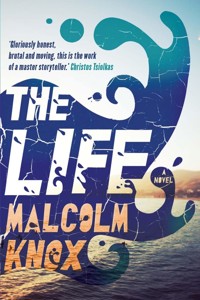



















Malcolm Knox is the author of fifteen books including the novels Summerland, A Private Man, winner of a Ned Kelly Award, Jamaica, winner of the Colin Roderick Award, and The Life. His non-fiction books include Secrets of the Jury Room and Scattered: The inside story of ice in Australia. Formerly literary editor of the Sydney Morning Herald, he has twice won Walkley awards for journalism and has been runner-up for the Australian Journalist of the Year Award. He lives in Sydney with his wife and their two children.
PRAISE FOR MALCOLM KNOX
‘Knox is, quite simply, a fabulous writer.’
Literary Review, UK
‘. . . clear-eyed wisdom and startling, depth-charged prose’
The Guardian
‘one of the most considerable of our novelists’
Peter Pierce, Sydney Morning Herald
‘Knox explores the inner life of men with both surgical insight and heartfelt compassion . . .’
Michael McGirr, The Age
‘Page after page is radiant with the energy he brings to bear . . .’
Geordie Williamson, Weekend Australian
‘Seductive, accomplished, intelligent and effortless to read.’
The Bookseller UK
‘. . . one of our most exciting novelists’
Delia Falconer, ALR
‘. . . there are not many men who can write like this, so poetically and with such immense complexity, about friendship, jealousy, insecurity, middle age and death wishes.’
Weekend Australian
‘Knox writes with revealing and compassionate insight.’
West Australian
‘. . . a knowing and satisfying craftsman with a deep, mimetic intelligence’
Peter Craven AFR
‘Knox’s great strength is his ability to get beneath the surface of his characters, into the dark, private recesses of their minds.’
Liam Davidson, Weekend Australian
‘A combination of intelligence and punching power not always evident in Australian fiction.’
Qantas Magazine
‘. . . a writer whose literary daring stamps him as one of Australia’s bravest and best.’
Gold Coast Bulletin
This is a work of fiction. Names, characters, places and incidents are products of the author’s imagination or are used fictitiously. Any resemblance to actual events, locales, or persons, living or dead, is entirely coincidental.
First published in 2015
Copyright © Malcolm Knox 2015
All rights reserved. No part of this book may be reproduced or transmitted in any form or by any means, electronic or mechanical, including photocopying, recording or by any information storage and retrieval system, without prior permission in writing from the publisher. The Australian Copyright Act 1968 (the Act) allows a maximum of one chapter or 10 per cent of this book, whichever is the greater, to be photocopied by any educational institution for its educational purposes provided that the educational institution (or body that administers it) has given a remuneration notice to the Copyright Agency (Australia) under the Act.
Allen & Unwin
83 Alexander Street
Crows Nest NSW 2065
Australia
Phone: (61 2) 8425 0100
Email:[email protected]
Web: www.allenandunwin.com/uk
Cataloguing-in-Publication details are available from the National Library of Australia
www.trove.nla.gov.au
Trade paperback ISBN 978 1 76029 112 9
E-book ISBN 978 1 92557 555 2
Text design by Design by Committee
Typeset by Bookhouse, Sydney
For Jane Palfreyman
ONE
First Love
TWO
Soul Mate
THREE
Redeemer
FOUR
Fall
ONE
First Love
1
When we were very young, our father sat on the end of our bed to unload his sack of stories.
He clicked out our light. He would not begin until we had shut our eyes. The darkness confirmed his lack of scent, either animal or cosmetic, an absence that seems odder to us now than then. Being unable to smell him in the dark never struck us as unusual. Fathers had no aroma.
‘I am waiting,’ he said.
Scent was not all he lacked. He had no outstanding peculiarity of voice or appearance, no distinguishing timbre or taste, no feel that might embed him, like a splinter, in a stranger’s memory. Neither coarse nor smooth, bitter nor honeyed, ugly nor handsome, a golden mean of averageness, he was, to the untrained eye, immaculately bland. Yet to us he was magnificently, simply, our father, as invisible and essential as the Equator, as vital and taken for granted as air.
‘I am waiting.’
We might not have been able to smell, touch, taste or hear him, but he would hold his silence until we could not see him.
Need he have waited? We might have turned on the light and opened our eyes, and still not seen him.
But he did exist. He had heft. When he sat on the mattress, we rose on the wave that his weight pushed from his end to ours. Another sign of existence: his crossgrain of distrust. Even in the darkness, if he suspected that so much as one letterbox-slot eyelid was cheating and one of his own children was deceiving him, he would repeat: ‘I am waiting.’
Or would he? Was he even speaking? He had no need to, and perhaps we were imagining the words. His silences were commanding, his absences unforgettable.
So, then: no voice, no odour, no mark on the senses, no feeling-tone, not even a trace of what might glibly be called personality. Why so many nos, nots, neithers and nors? Why remember him by what he wanted for? Perhaps, if you looked at it his way, these absences were not what nature had stripped away from him but what it had given. If he had exuded an odour, somebody might have asked him to change it, and if he changed it, somebody else might have noticed the change. And then a third other might have been able to track him down, sniff him out.
Now we are not so young, we are inclined to look at it his way. In his phantomness, there was no lack, no deprivation. Nature had set him free. By giving him nothing, it had granted him his licence.
•
Our father knew things from the outermost stars of the universe, from the unseen core of the earth, from so many places that there was no doubt in our minds that he would surely know if we, at the other end of the bed, snuck a peek. Once, out walking at night on a steep rocky path, we complained that we could not see and asked him to carry us. Our father pointed at the moon and said, How far away? We trilled: Three-hundred-and-eighty-four-thousand, four-hundred kilometres. He nodded and said, If you can see that far, you can see the steps under your feet.
‘I am waiting.’
He was warning us about time more than space. If we slitted one eye for the smallest instant he would stop his story and abandon us to the trials of falling asleep on our own.
‘Not for one second,’ he said of the disqualifying glimmer between our eyelashes.
‘A half-second!’ Evie cried, squeezing her eyes. Evie was the younger and considered herself very smart.
‘A millisecond,’ Adam cut in.
‘A finity-second!’ cried Evie, who had one desire in life, to exceed Adam. ‘I won’t open my eyes for a finity-second!’
Evie folded her arms smugly across her blanket and clenched her lips as tight as her eyes, wrinkling the blood out of them so that they puckered white.
Then, behind the curtain of one lash, a shining fissure.
He shook his head. ‘I will stop talking and go back out to your mother if I see one eye open for—’ he paused long enough for us to almost wet ourselves with excitement ‘—for an attosecond.’
‘Wow!’ said Adam.
‘Omigod!’ said Evie, who had heard the expression recently and used it whenever Adam said ‘wow’.
‘OMG.’ Adam, belying his belief that he was too old for sibling rivalry, tossed down a casual trump card.
‘An attosecond,’ our father continued, his tone matter-of-fact, ‘the shortest unit of time that has been measured. One quintillionth of a second. An attosecond is to one second—’ he paused again ‘—what one second is to the age of the universe.’
‘Is it like . . . this?’ said Evie, and clapped her hands before pulling them apart as quickly as if the clap had not happened.
‘Shorter,’ our father said.
‘Will you really know if our eyes open for a . . . what is it called again?’ said Adam, who had come recently to scepticism. Just the other day he had been overheard scorning Evie’s belief in the tooth fairy. It’s not a real fairy, he had said, tough with knowledge. It’s just this man who comes around collecting teeth and leaving money.
‘An attosecond, the time it takes for light to travel the length of three hydrogen atoms,’ our father said.
‘Three what?’ said Evie.
‘Close your eyes, Evie,’ our father said.
We closed our eyes. We never cheated for long and the stories always, eventually, came.
Because we considered ourselves quite grown up and had been talking, that night, of marriages, he told us of the woman who had taken to her wedding seventy-nine bridesmaids, aged from one to seventy-nine, because the number brought good luck; and of her groom, who had been flanked by forty-seven groomsmen aged sixteen to sixty-three.
Evie had only recently discovered what a wedding was, and believed we, boy and girl, could marry each other. Our father’s voice, the wondrous marriage ceremony, burst in the vividness beneath our eyelids. There were pulsing flowers, mushrooms, lattices, dancing supernovas, seventy-nine girls and forty-seven boys. Finity.
And then, because we were so still on our pillows, he told us of St Simeon the Stylite, who sat on a stone pillar at a place called the Hill of Wonders for thirty-nine years, only coming down once, so that his pillar could be extended in height. Just thinking of it (thirty-nine years—forever!) lulled us towards sleep.
His voice came flat and low, a monotone submarine cable. It could sound as if the back of his throat was covered by oilcloth and his words had to fight their way into the open. When our eyes were closed we had a strong sense of where he was, and where his voice was; yet marvellously they were not always in the same place. Sometimes his voice sounded as if it came from behind him, as if the man on our bed were a ventriloquist’s doll controlled from outside our room.
‘And, Dad,’ Adam asked, ‘who did you see today?’
‘What did you do today?’ our father, a reflective surface, replied.
‘We learnt chess!’ Evie said. ‘I’m better than Adam, I beat him! And I learnt the hula hoop!’
‘I played Lego,’ Adam said.
Our father told us of the two men who played chess continuously for fifty-three years, the woman who hula-hooped with ninety-nine hoops, and the twenty thousand children who together built a millipede made of Lego measuring one thousand four hundred metres . . .
He talked us all the way into sleep, his filtered voice ferrying us across the river into dreams. Not for an attosecond did we open our eyes.
•
It was not every night that this visitation happened, only every night he was with us. When we were babies, our mother told us, he had been with us every night, every week, and he had talked us into sleep with his stories. But we couldn’t have been able to understand him then, nor can we remember such a time. Telling his stories to babies, he must have felt he was talking to himself. Every night! We only remember him being an occasional visitor, like the man who comes to leave money for teeth. To have had him every night seems, like infancy itself, a marvel.
2
By daybreak, he was not the man we remembered from the night before. He was still the kindest and sweetest father a child could hope for, but he sat at breakfast with a stillness and such silence that sometimes we couldn’t help wondering if we had done something wrong. He wore his ironed white shirt, a grey tie, suit trousers and polished black shoes. His hair, so blond it was grey or so grey it was blond, lost in a house-painter’s colour chart between warm and cool whites, was combed and lacquered across his freckled pate. He was leaving.
Desperately, as if to hold him on a faint telephone line before it cut out, we tried to reach back to the magic from the night before. ‘I heard the last story,’ Adam said. ‘The boy of my age who walked to the South Pole.’
‘No,’ said Evie, ‘I heard that one, but there was another one after it, the hot-air balloonist who flew to the sun.’
The truth was that neither of us had heard these stories; instead we were pretending to have been the one who had stayed awake the longer. But these stories of ours were not false either, because even if they had not been spoken they grew from the truths he had sown and watered with his voice as we fell into a sleep that was not a blankness or an oblivion but a kind of fecundity.
He knew this, so he would not correct us or tell us we were making things up. He nodded along and spooned his Cornflakes from his bowl (servings of one hundred grams, levelled to the higher of two painted cornflower-blue circles at the rim of the bowl, milk poured precisely to the level of the lower circle). Thirty-three spoonsful per sitting. But while he accepted our enthusiasm for prolonging the game of the previous night, he wouldn’t indulge fiction-making. He felt a responsibility to reel us back to the real. Bound by facts, married to truth, he said, ‘What do you know about Cornflakes?’
‘Invented in 1898,’ Adam said.
‘No!’ said Evie. ‘The current recipe, with sugar, was invented in 1903. The sugar was to reduce spoilage!’ She beamed at our father, who issued a single nod.
‘And, Adam,’ he said to his now-sulking son, ‘do you remember their world-first sales slogan?’
Adam hesitated. Our father, without a smile or any other expression, winked at him. Adam’s face brightened.
‘Wink Day!’ he said. ‘“Wink at your grocer and see what you get!”’ He poked his tongue out at Evie.
‘And, Evie,’ said our father, to be even-handed, ‘you will remember the Cornflakes record authenticated last year.’
Evie was near to bursting with her facts. ‘World’s biggest breakfast cereal: one thousand three hundred and fifty-four people eating Cornflakes at the same time! Biggest cereal bowl ever: two point eight four metres long and four metres high!’
‘And one point one one metres deep,’ our father added for completeness.
Thus satisfied, he stood up, took his bowl to the sink, rinsed it, placed it in the dishwasher, and kissed each of us on the crown of our head. He shot his cuffs. He was a slim man and wiry. He ate terrible things: the most complex of carbohydrates and the most saturated of fats. He did no physical exercise, never ran or swam or even walked. He drove his car home and stayed home until he drove away. He did not spend any calories in superfluous conversation. But no matter what he ate, he never put on weight. Once he told us, ‘It is thinking that keeps my weight down.’ His thoughts used up more calories than a bee hummingbird, which we knew was the animal that burnt so much energy it was lighter, almost, than the air itself.
He joked that he might write a book one day: The Thinking Person’s Diet.
Our mother Sandra, who thought as actively as our father and went to swimming squads and Boxercise and Zumba classes four times a week, who ate garden salads in the evenings after she cooked our slim, trim father his fatty lamb chops and his cholesterol-packed eggs and his mushrooms drenched in butter, carried weight enough for two. She was not fat, but could give that impression due to the spread of her shoulders and hips: she was, as she preferred to say, broad in the beam. Yawning and rubbing the dullness out of her eyes, Sandy shuffled into the kitchen in her dressing gown and foraged in the drawer for paracetamol.
Perhaps the difference was drink more than metabolism. While admitting to a glass of wine here and there, our mother Sandy consumed, with a cumulative slyness that bordered on turning a blind eye to her own habits, a quantum close to the nationally accepted public health threshold for defining alcoholism. Our father seldom drank. He had quit, more or less, after a sequence of youthful misadventures involving raw spirits, stomach pumps, blackouts and motoring accidents, stories so old and era-ending that they would come down to us with something of the flavour of epic folktales, a mythology Sandy resented, quietly, as it lent him the glamour (as she supposed) of a severely alcoholic distant past without (in her view) the payment of sufficient dues. He was not teetotal, however; our mother teased him into joining her for ‘a glass with dinner’. He had the glass, of which he made much, to show he was still a drinking man; she had the bottle, of which she made discomfortingly little. To join her, even if in a token gesture, so she would not be stranded alone with the bottle, was one of his ways of showing marital love.
‘All right then?’ she said, and pushed her glasses back on the bridge of her nose. She wore glasses inside the house, so thick that they made her sky-blue eyes resemble scientific specimens, and tied her hair back into a thick ponytail. It was a source of constant surprise to us that she could transform herself from this into the perfumed, emblazered superwoman who would hustle us out the door an hour later. The glasses would be replaced by contact lenses, her eyes outlined and animated, and her hair would be tailored into a neat French roll. She dressed, to our eyes, with the elegance of high fashion, though she would later tell us that she ‘made a little go a long way and a lot turn into a little’. That is, she seemed expensively attired and was able to conceal the largeness of her figure in public. In private, though, she let it go, for his benefit as much as for her own relaxation. Seldom enough for us to remember it, he would creep up behind her in the kitchen or the dining room and throw his arms around her wide waist, making her squeal. When we saw them cuddling like this, our parents, it filled us with a warm joy that burst and flooded us from inside.
He waved us a general goodbye. While we stayed in the kitchen and fixed our breakfast, our mother escorted our father through the living room to the front door. We heard their brief murmur of conversation and the loud smack of lips. He kissed our mother on the mouth if she was not wearing lipstick, considerately on the cheek if she was. We would memorise their kisses. She would come out of them with her mouth slack, the shape of an inverted kidney bean, and her eyes momentarily dazzled, as if zapped by an electrical charge and transported to another time. Sometimes, when she was wearing lipstick, he would give her a fairy kiss on her lips, light as a brush and so tender it kept us going, like fuel.
The rotary cough of his car starting, the whine backing up the driveway. The intake of breath as his car paused on the street—has he changed his mind? is he coming back?—but no, just trouble with the gear stick as he wrenched it from reverse to go forth, to the world.
He would be gone for weeks, to his offices in other cities and other countries. This was what his work required. This was its ironclad magnetism. He was a man of significance to people in the four corners of the earth. He was needed in so many places, for such important duties, that we counted ourselves fortunate to have our slice of his life. Our mother never demurred about the extent of his travels, and we accepted it as we accepted all the mysteries that our parents wore as naturally—easily is not the right word—as their very skin. He was our father. He did large things. We were one compartment of his life, the most important certainly, the one without which all the others would be meaningless, but still one among many. We needed him, but so did the world, so did history. He was such a scarce resource, we treated every day and night he was with us as a lucky break.
Our mother reappeared at the kitchen door and said, to herself as much as to us, ‘Right, that’s it, he’s gone.’
3
At his office in the second city, the city which was his next stop after ours, a city thousands of miles away, he was just as important and respected and essential as he was in his office in our city. Some features of his work needed to follow a ruthless standardisation: everything in each office and in the application of his duties had to be reproducible elsewhere. Otherwise, the whole enterprise would have no meaning. Every last detail was regulated. Apples, he liked to say, must always be measured against apples. Laxton’s Superbs must never be compared with Blenheim Oranges! (What other children could boast of a father who could not only name the seven thousand five hundred cultivars of the apple, but make jokes with them?) As the Authenticator-in-Chief for humankind’s last word on extraordinary fact, the man who issued the final decision on what was fact and what was extraordinary, John Wonder oversaw this standardisation with an imperishable will.
Authentication (he practised but didn’t need to preach) starts at home.
And so it was, at home.
At the end of each day at his office in that second city, he went home to a woman. She was also our mother, although she looked different from our mother Sandra. This mother in the second city was a dark, rounded woman with clear skin and no waist. He would go home and give her a perfect reproduction of the warm, familiar, loving greeting that he gave Sandy, the mother of ours with her fairer skin and weaker eyes and squarer shoulders. This second house was smaller and dimmer than ours, and rented. For all the importance of his work, our father was never rich. Or never rich enough. We were always struggling to make ends meet, no matter where we were, or who; while he, you might infer, was always struggling to bring those ends together without quite allowing them to meet.
In this second home, in this second city, he sat at the end of the children’s bed each night and waited for us to shut our eyes and hauled out a swag of stories from his work.
The thirty-one thousand four hundred and twenty-four children who brushed their teeth in unison.
The two men who walked on the moon for seven hours and thirty-seven minutes.
The fifty-five elephants who danced together on a stage.
The train that ran as straight as a beam of light for nearly five hundred kilometres.
And in this other home he also had two children, a boy and a girl. They had our names, Adam and Evie. Adam Wonder and Evie Wonder. They attended, as we did, the free government school nearest the house. Our father and our mothers could not afford to be choosy. These children, Adam and Evie Wonder, are also us and we are they.
The morning he left, he ate his breakfast: Cornflakes levelled at one hundred grams, milk poured to where it was just visible beneath the float of the lowest Cornflake, thirty-three spoonsful. He kissed them, us, goodbye, and kissed his wife, her, the mother, our mother, goodbye, because his work demanded that he go off, as he must always go, to another city.
In this third base, he had an office that mirrored in every respect, down to the carpet and the wall paint and the furnishings, his offices in the first two cities. Apples with apples: he was the Authenticator-in-Chief. Once one detail varies, he liked to say to his staff, no matter how trivial-seeming, the whole edifice will fall. The enterprise is, he said, a house of cards. The principle of identicality is contained in every card. If you do not know which is crucial, you must treat them all as such.
Which reminded him of the man who built a house of cards twenty-five feet nine inches high, then added an entire city skyline comprising three thousand decks, one hundred and seventy-eight thousand cards in all, taking him a month of adding a dozen new decks a day. This man (invariably a man) called himself a ‘card-structure specialist’ . . .
The third city was thousands of miles and an ocean from the first and the second. Our father’s work was equally important there. Hopeful applicants wrote to beg him to come and inspect them. To those seekers, John Wonder was godlike. He was the Authenticator. His work was essential there, as it was everywhere.
In this third city, each day he went home to a third woman. This one was yellowish and elfin, with black hair, pitted skin and a sensuous mouth parenthesised by a dimple in one cheek, a white scar in the other. Our mothers bore few physical similarities. There was no one type for our father, although, in another sense, the identicality of the women was another of the standardised cards of his existence and what we may call his sanity. The third house was smaller still, and unkempt.
His children of the third city toddled into his arms when he arrived. He lifted both of them at once. They were tiny: a boy and a girl. They had the same names as we. They had the same names as the two children in the second city. They, we, are Adam and Evie Wonder.
But they were not quite we. This third Adam had been born with a cleft in his palate and a bifurcation in his upper lip; this Adam needed doctors. And the third Evie, the baby, was unable to hear. Evie could hear none of his stories. Evie needed more doctors.
But still, at night, he sat at the end of Adam’s bed while Evie squirmed in a cot. Our father waited until our eyes were closed so he could unload the sack of stories he brought home from his work.
And because we could not ask questions, he indulged himself, and talked us to sleep with the superlatives that he himself enjoyed the most.
The tallest mountain measured from its base in the bottom of the sea.
The planet’s largest liquid body.
The largest subglacial lake.
The oldest continuous ice core.
The highest clouds, the longest lightning flash, the thickest density of crabs, the fastest fish, the rarest primate, the smallest burrower, the most dangerous pinniped. The superlatives that lived whether humans were here to measure them or not: his favourites.
Evie could not hear him. Adam could not understand him. But we went to sleep to the sound of his stories.
We sailed away on the ebb tide of his stories, and when we think about it now, when we see it his way, there must have been something Scheherazade-like, something desperate, in his telling his stories in a panic against stopping and, in the naked pause of silence, the turn of the tide, being caught out.
And on the last morning, he ate his one hundred grams of Cornflakes, kissed his wife goodbye and hugged his children. He gave them an extra cuddle because they were so little.
He would be back soon, he told our mother, but he was a busy man, an important man, he had work in his other offices. His wife, our mother, she loved him. His children, us, we loved him. He loved the mother on the doorstep of their small and shabby house. She never questioned the obligations of his office. He had come into her life in his guise as Ultimate Authenticator; if she might have wished their life together to be different—to be more together—the time for seeking adjustment was long past by the time she met him. She had accepted him for what he was. He started, as she admiringly told us, in the manner that he intended to go on.
With this third wife, however, he made exceptions. She was the youngest and the freshest in his memory. Something about the tininess of the children touched him in his marrow. Something about the differences in the younger ones, the babies.
As he kissed her goodbye, he made a slip: he promised her that one day things would get better and, thanks to all of this important work he did, he would one day be able to move his family into a bigger house.
‘And spend more weeks with us?’ the small black-haired woman asked him.
‘And . . . yes,’ he said, in his guarded, still, flat, oilcloth-covered voice. Sometimes it sounded noncommittal, like the voice you make when you are in a car and trying to communicate to a pedestrian. You mouth, ‘You go first’, and a sound is coming out of you, but you’re not quite speaking either, because you know she can’t hear you. A voice is coming out in spite of yourself. That’s what our father’s voice could be like.
And then he left them, he left us, and crossed oceans and countries until he arrived back where he started. Now it would begin again. His boy Adam and his girl Evie. He would end his journey by sitting at the end of our bed. He would bring us the stories he had gathered in his work. Which we knew were true, because he had authenticated them.
•
And so, this was how he went. This is the portrait of our father: it is easy to draw because it is perfectly (ruthlessly!) standardised. No matter what the city, the same perimeters surrounded him. That was how he built it. We are we. With his three wives, all unknown to each other, he had fathered a boy, and then a girl. The son was Adam and the daughter Evie. Little wonder he believed he held the secret of life. Little wonder he believed he had put an end to mystery, had deployed enough facts to crowd out the unknowable as a gardener will plant so much ground cover in a garden bed that the weeds will have nowhere to grow. Little wonder he believed he could do anything, anything, and get away with it.
And then—here is where our story starts—then calamity befell our father.
You know him now. To such a man, what is the worst that can happen?
No. No. No. Worse than that.
He might have believed he had space for one more. One last.
Or perhaps such a man, the keeper of the last word, will always keep reaching for the last love. Perhaps he had always been searching for the one who would ruin him.
Calamity struck our father. He fell in love.
4
He was trusted around women: by women, by their husbands and fathers and mothers and sisters and brothers, by their sons and daughters and nieces and nephews, by the process of authentication itself. He had had to dismiss a junior Authenticator for an impropriety involving a female claimant, a moment of weakness during the measurement of an attempt to break the world record for the world’s longest kiss; three hours short of the record, this Authenticator had suffered an epiphany: after scrutinising the woman’s lips for twenty-seven hours, he had fallen for them. Or not her lips as such, for they were invisible; he became besotted by the space he could not see, the gap between the woman’s lips and her partner’s (a friend, not a boyfriend; no passionate relationship could possibly survive a twenty-seven-hour kiss). That Authenticator underwent an explosion of feeling akin to a religious conversion. In the twenty-eighth hour he lunged, seizing the girl in his arms. One contact of lips on lips, his on hers, would conquer twenty-seven hours, conquer the world. In front of millions on live television and several hundred in the shopping centre where the attempt was taking place, the Authenticator was left without any excuse. Our father sacked him not for sexual assault (far from having charges laid, the woman pitied him and became his Platonic friend), but the more serious offence of interrupting a live world record attempt. Later in life, the erstwhile junior Authenticator attempted a comeback of sorts, jumping the fence from gamekeeper to poacher, or Authenticator to aspirant, by essaying the world record for the longest sequence of postcards (three thousand one hundred and twenty-seven) addressed to a cat (belonging to his Platonic friend, who still resisted his advances).
John Wonder, by contrast, was known to be as trustworthy around women as the day is long (which length increases, he would inform us, due to a slowing in the earth’s angular velocity and rotational energy, by some 1.7 milliseconds each century). There was something transparent in his blandness of manner, depthless in the watery blue of his eyes, a void in the intelligence of his smile. No sooner had women met him than they forgot him. He exuded not an atom of sexual need, or appeal, or innuendo, or carnality—whatever it was that made a woman stop and look at a man twice. In his life, women had seldom even stopped to look at him once. That profusion of facts, which he exuded in lieu of tone or affect or scent or voice or personality, was to most women’s senses an inoculation against sexual appeal. He lived on an aseptic plane, too ridiculously and boyishly trivial, too unapproachably earnest. He had none of the vulnerability or gameness that commonly attracted women or, for that matter, anyone seeking friendship.
There were times when the organisation needed an Authenticator who had no sexual weakness, who was, in that sense, something less, or more, than a man. If the task was to authenticate the number of sexual partners in a day (six hundred and twenty, set by the adult film actress Jasmine St Clair) or in a lifetime (one hundred and seventy-seven thousand five hundred, claimed by twin Amsterdam prostitutes Louise and Martine Fokkens); the most semen swallowed in one ‘sitting’ (1.7 pints, set by the adult performer Michelle Monahan); the biggest orgy (two hundred and fifty couples in an episode recorded, enigmatically, as having taken place ‘in Tokyo’); the most garter belts removed with the teeth inside two minutes (twenty-six, by Ivo Grosche of Germany); or the numerous other records relating to the dimensions and singular attributes of sexual organs, John Wonder was the trusted Authenticator. It was our father’s hands that ran the tape measure around the 177.8 centimetres encompassing the naturally-endowed chest and back of Annie Hawkins-Turner in New York City; it was our father’s hands that poured the twelve hundred cubic centimetres (more capacity than a small car) of water into a plaster of Paris bust moulded by the adult stage performer ‘Chelsea Charms’. Neither Ms Charms nor Ms Hawkins-Turner could later recall anything of the man who had immortalised them. The Fokkens twins would as soon remember him as they would any of the one hundred and seventy-seven thousand five hundred who came before him. The hands, eyes and pen of our father verified records with the same unmemorable blandness as he brought to his authentication of, say, the most gloves on one hand (twenty-four, set by a serial record-chaser, the New Zealander Alastair Galpin, who described John Wonder as his ‘old sparring partner’ yet invariably greeted him as if for the first time) or the tallest working windmill (33.33 metres, De Noord Molen at Schiedam in the Netherlands). Our father would have made a brilliant cardplayer, except that he had worked out the odds and rejected the pastime on mathematical grounds.
Our father did not take being forgotten personally. What world-record aspirants held in common, aside from their ambition, was their world-erasing self-absorption, which rendered them, in the heat of the moment of authentication, incapable of registering the existence of another human being. Just as John was perhaps the most unmemorable man on earth, he was in daily contact with the planet’s most unrememberingindividuals. He and they, he had long concluded, were a perfect fit.
When he was with those world-beaters, he caught a glimpse of why he was a watcher, rather than a doer. He could not help thinking of the three times in his life he had fallen in love, and how none of those events had any connection with measurements or numbers. It was not that the record setters believed their dimensions made them, or their breasts, more beautiful than anyone else, or else’s. It was that they had excised the intangible. For them there was no concept of beauty that could not be measured, just as, when our father met the fastest runner in the world, Usain Bolt, and asked him about style in athletics, Bolt said, ‘There ain’t no style; style is nine-five-eight for the hundred.’ If our father had been able to engage Chelsea Charms in such conversation, he felt sure that she would have said there is no beauty—beauty is size 164XXX.
Over time, he had grown troubled by this missing sub-item in his line of work. Never had anyone been able to measure or authenticate what was said by the poets to be the sine qua non of the sexual sphere. His eyes, his instruments of authentication, could behold beauty and love, but he did not have the slightest idea how to measure them. He could record the duration of an unrequited serenade or the number of love-letters sent, but he would not fool himself that these results told him the first thing about love.




