


113,99 €
Mehr erfahren.
- Herausgeber: John Wiley & Sons
- Kategorie: Wissenschaft und neue Technologien
- Sprache: Englisch
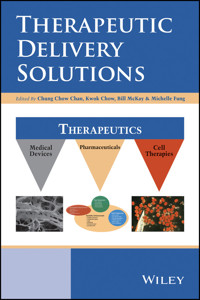
Provides a comprehensive review of all types of medical therapeutic delivery solutions from traditional pharmaceutical therapy development to innovative medical device therapy treatment to the recent advances in cellular and stem cell therapy development
• Provides information to potentially allow future development of treatments with greater therapeutic potential and creativity
• Includes associated regulatory requirements for the development of these therapies
• Provides a comprehensive developmental overview on therapeutic delivery solutions
• Provides overview information for both the general reader as well as more detailed references for professionals and specialists in the field
Sie lesen das E-Book in den Legimi-Apps auf:
Seitenzahl: 775
Veröffentlichungsjahr: 2014
Ähnliche



















CONTENTS
Cover
Title page
Copyright page
Preface
Contributors
Acknowledgment
Section 1: Requirements and Issues encountered in Regulatory Submissions in the Pharmaceutical, Cell Therapy and Medical Device Industries
1 Challenges to Quality and Regulatory Requirement in the United States—Drugs, Medical Device, and Cell Therapy
1.1 Overview of Regulatory Requirements for Pharmaceutical, Medical Device, and Cell Therapies
1.2 Regulatory Requirements and Challenges for Pharmaceutical, Medical Device, and Cell Therapies
1.3 Initiatives in the Pharmaceutical, Medical Device, and Cell Therapy Regulatory Requirements
1.4 Current Good Manufacturing Practice Requirements for Combination Products
1.5 Conclusion
References
Section 2: Traditional Pharmaceutical Drug Therapy Development
2 Development of Tablets
2.1 Introduction
2.2 Development Plan and Milestones in TPP
2.3 Clinical Target Profile
2.4 Drug Substance Characteristics in TPP
2.5 Drug Product Characteristics in TPP
2.6 Drug Substance and Drug Product Specifications in TPP
2.7 Product Composition in TPP
2.8 Product Manufacturing in TPP
2.9 Conclusion
References
3 Formulation of Poorly Soluble Drugs for Oral Administration
3.1 Introduction
3.2 Upfront Assessments
3.3 Particle Engineering of Drug Substance
3.4 Animal Formulations and Screening of Delivery Technologies
3.5 Parallel Technology Screening Program for Human Formulations
3.6 Animal Pharmacokinetic Studies and Clinical Formulation Development
3.7 Decision Tree for Commercially Viable Delivery Systems and Formulations
3.8 Conclusion
References
Section 3: Overview, Current Trends and Strategies of Special Medical Device Development
4 Overview of Drug Delivery Devices
4.1 Introduction
4.2 Trends and Drivers for Drug Delivery Devices
4.3 Regulation of Medical Devices
4.4 The Development of Drug/Device Combination Products
4.5 Common Therapeutic Routes of Administration that Require a Medical Device
4.6 Future Direction for Drug Delivery Devices
References
5 Local Delivery of Bone Growth Factors
5.1 Applications for Local Delivery of Bone Growth Factors
5.2 Types of Bone Growth Factors
5.3 Delivery Systems
5.4 Current Status of Bone Growth Factor-Containing Products
5.5 Future Research Areas
5.6 Conclusions
References
6 Delivery of Insulin:
6.1 Introduction
6.2 The Physiology of Insulin Delivery in the Normal Human
6.3 The Early Days
6.4 Better Syringes and, for the First Time, a Meter
6.5 The DCCT Study and Why Control Matters
6.6 Implantable Insulin Pumps: The Beginning of Continuous Insulin Delivery
6.7 External Insulin Pumps: The Early Days
6.8 What to Deliver?
6.9 How to Deliver the New Insulin: Pens and Pumps
6.10 The Future: Next 10 Years
6.11 Other Uses
6.12 Conclusions
References
Section 4: Advances and Innovations in Cellular and Stem Cell Therapeutic Delivery
7 Endocrine Therapeutic Delivery
7.1 Introduction
7.2 History
7.3 Indications
7.4 Human Pancreatic Islet Processing and Transplantation
7.5 Potential Complications of Islet Transplantation
7.6 Current Outcomes
7.7 Challenges and Areas of Ongoing Research
7.8 Conclusion
7.9 Current Status of Research
References
8 Cell-Based Biologic Therapy for the Treatment of Medical Diseases
8.1 Introduction
8.2 Engineered or Processed Human Cells as Treatment Modalities
8.3 Cell-Based Immunotherapy
8.4 Conclusion
References
9 Development of Stem Cell Therapy for Medical Uses
9.1 Introduction
9.2 History of Stem Cell Development
9.3 Sources of Nonembryonic Stem Cells
9.4 Stem Cell Technology and Preparation
9.5 Regulatory Considerations and Product Testing
9.6 Application for Medical Practice
9.7 Conclusions and Outlook for the Future
References
Section 5: Analytical Support Needed For the Research and Development
10 Specification Setting and Stability Studies in the Development of Therapeutic Delivery Solution
10.1 Introduction
10.2 Specifications for Test Procedures and Acceptance Criteria for Drug Substances and Drug Products
10.3 Stability Testing for New Drug Substances and Drug Products
10.4 Initiation of Stability Studies
10.5 Photostability Testing of New Drug Substances and Drug Products
References
11 LC-MS for Pharmaceutical Analysis
11.1 Introduction
11.2 LC-MS Instrumentation
11.3 Examples of Qualitative and Quantitative Applications
11.4 Summary
References
12 Biorelevant Dissolution Testing
12.1 Background
12.2 Dissolution Apparatus
12.3 Media Used in Dissolution Testing
12.4
In Vitro
/
In Vivo
Correlation (IVIVC)
12.5 Summary
References
13 ICH Quality Guidelines
13.1 Introduction
13.2 Global Harmonization Forums
13.3 ICH Process
13.4 Impact of ICH Guidelines
13.5 Conclusion
Further Reading
14 Out of Specification/Atypical RESULT Investigation
14.1 Background
14.2 Identifying and Assessing OOS Test Results—Phase I: Laboratory Investigation
14.3 Expanded Investigating OOS/Atypical Test Results
14.4 Concluding the Investigation
14.5 Corrective and Preventive Action
Appendix i
Appendix ii Suggested OOS Investigation Flowchart
Appendix iii Example of initial assessment form
Appendix iv Example of reanalysis plan form
Appendix v Example of retest plan I form
Appendix vi Example of retest plan II form
Appendix vii Example of retest plan III form
Appendix Viii Example of final reporting for atypical/OOS result investigation form
References
Index
End User License Agreement
List of Tables
Chapter 01
Table 1.1 Regulatory sections of Part 211—current good manufacturing practice for finished pharmaceuticals
Table 1.2 Regulatory sections of Part 820—quality system regulation
Table 1.3 Regulatory sections of Part 600—biological products: general
Table 1.4 Regulatory sections of Part 601—biologic license application
Table 1.5 Regulatory sections of Part 610—general biological product standards
Table 1.6 Summary of application type and designated regulating center
Table 1.7 Compliance programs of CBER
Table 1.8 Compliance program in BIMO
Table 1.9 Compliance program in CDRH
Table 1.10 CDER compliance program
Chapter 02
Table 2.1 Content of a typical target product profile for an immediate-release tablet
Table 2.2 Typical target product profile: project plan and milestones for an immediate-release tablet
Table 2.3 Typical target product profile: clinical targets
Table 2.4 Typical target product profile: drug substance characteristics for an immediate-release tablet
Table 2.5 Typical target product profile: drug product characteristics of an immediate-release tablet
Table 2.6 Typical target product profile: drug substance specifications of an immediate-release tablet
Table 2.7 Typical target product profile: drug product specifications of an immediate-release tablet
Table 2.8 Typical target product profile: formulation composition of an immediate-release tablet
Table 2.9 Example of a checklist to select excipients for an immediate-release tablet
Table 2.10 Typical target product profile: manufacturing process of an immediate-release tablet
Chapter 03
Table3.1 Common polymers used in amorphous solid dispersions and their glass transition temperature
Chapter 04
Table 4.1 Classes of medical instruments in the United States, Europe, and Canada
Table 4.2 Summary of the main routes of administration that require a medical device to facilitate drug delivery
Table 4.3 Examples of inhalers for topical delivery to the lung
Table 4.4 Examples of inhalers for systemic delivery via the lung
Table 4.5 Examples of sl dosage forms
Table 4.6 ATMP types and key characteristics
a
Chapter 05
Table 5.1 ISO 10993 recommended testing and evaluation
Table 5.2 Summary of bone growth factor technologies commercially available and in development
Chapter 07
Table 7.1 Human islet transplantation studies currently recruiting
Chapter 08
Table 8.1 Cytotoxic T-cell (CTL) studies conducted by a commercial sponsor
Table 8.2 TCR gene therapy studies conducted by a commercial sponsor
Table 8.3 Car gene therapy studies conducted by an academic sponsor
Table 8.4 NK cell studies conducted by a commercial sponsor
Table 8.5 Antigen-presenting cell types and characteristics
Table 8.6 DC-based vaccine trials conducted by a commercial sponsor
Chapter 09
Table 9.1 Key chronological events of stem cell development
Table 9.2 Major ongoing randomized stem cell trials conducted by a commercial sponsor
Chapter 10
Table 10.1 Example specification of ABC DS
Table 10.2 Example specification of ABC capsule
Table 10.3 Example changes during development of XYZ capsule
Table 10.4 Test methods used in DSs
Table 10.5 Test methods used in DPs
Table 10.6 Example stability protocol template for ABC capsules
Table10.6.1
Example table summary of ABC capsule formulations
Table 10.6.2 Pull points for ABC capsules
Table10.6.3 Testing guidelines
Table 10.7 Usual storage conditions used in stability studies
Chapter 11
Table 11.1 LC-MS applications in different stages of drug development
Table 11.2 Common 1iquid chromatographic systems, ionization interfaces, and mass detectors for LC-MS and LC-MS/MS systems
Table 11.3 Performance of mass detectors
Chapter 12
Table 12.1 Apparatus typically used for special dosage forms
Table 12.2 Simple media used in dissolution testing
Table 12.3 SGF composition
Table 12.4 FaSSIF composition
Table 12.5 FeSSIF composition
Table 12.6 Simulated colonic fluid 1 (SCoF1)
Table 12.7 Simulated colonic fluid 2 (SCoF2)
Table 12.8 Properties of FaSSCoF and FeSSCoF
Table 12.9 Parameters used in IVIVC corresponding to the level
Chapter 13
Table 13.1 ICH Harmonization Activities
List of Illustrations
Chapter 02
Figure 2.1 High-level product development stages/phases, activities, and milestones.
Figure 2.2 Elements defining a pharmaceutical dosage form design.
Figure 2.3 Relationship between clinical, solid-state, and formulation development.
Figure 2.4 Example of a decision tree to develop drug substance specifications for an immediate-release tablet.
Figure 2.5 Process development steps for a typical immediate-release tablet.
Figure 2.6 Decision tree of selecting a manufacturing process for an immediately-release tablet.
Figure 2.7 Risk assessment and experimental design of a wet granulation process for a tablet formulation using a fishbone diagram.
Figure 2.8 Process optimization of MCC and lactose granulates by statistical design of experiment.
Chapter 03
Figure 3.1 Typical approach of formulation screening to improve the bioavailability of poorly soluble compounds.
Figure 3.2 An example of an uncertain path to improve bioavailability. Reproduced from Ref. 2, with permission of Patheon, Inc.
Figure 3.3 Biopharmaceutical classification system.
Figure 3.4 From dosing to systematic circulation—factors affecting bioavailability of poorly soluble compounds.
Figure 3.5 Summary of bioavailability enhancement technologies available in both development and commercial settings. Courtesy of Patheon Inc., with modification.
Figure 3.6 Particle engineering of drug candidate for formulation development.
Figure 3.7 An example of parallel technology screening program using a decision tree approach for human formulation. .
Figure 3.8 Excipient screening for solid dispersions using DSC—
in situ
formation and analysis of griseofulvin and PVP K 30 (10% (w/w)) solid dispersion. Courtesy of Patheon Inc.
Figure 3.9 Optical microscopy of (a) crystalline—PEG 3350 and (b) amorphous—SoluPlus® materials under cross-polarized light. Courtesy of Patheon Inc.
Figure 3.10 Decision tree for selection of technology and formulation to improve the bioavailability of poorly soluble drugs.
Chapter 04
Figure 4.1 Verification and validation of medical devices.
Figure 4.2 EpiPen® injector device. Reproduced with permission of Mylan Specialty L.P.
Figure 4.3 Turbuhaler® inhaler. Reproduction of Pulmicort® device provided courtesy of AstraZeneca Canada Inc.
Figure 4.4 Afrezza® inhaler (palm size). Reproduction of Afrezza device provided courtesy of MannKind Corporation.
Chapter 05
Figure 5.1 Systemic detection of a growth factor injection versus local retention of the growth factor by a carrier.
Figure 5.2 Local retention of a growth factor by different carriers that utilize both absorption (CaP granules, composite material, and collagen) and incorporation (both CaP cements).
Figure 5.3 An SEM image of a fibrous collagen scaffold with interconnected porosity.
Figure 5.4 Collagen (a), a natural polymer; biphasic calcium phosphate (b), a synthetic ceramic; and collagen and ceramic scaffold (c), a composite.
Chapter 06
Figure 6.1 Healthy volunteer insulin and glucose profiles. Reproduced from Ref. 2, with permission of McStroher, Creative Commons.
Figure 6.2 Glass syringes. © Bill Van Antwerp.
Figure 6.3 DCCT data. © Bill Van Antwerp.
Figure 6.4 Backpack pump. © Bill Van Antwerp.
Figure 6.5 Early insulin pump. Courtesy of Squidonius, Creative Commons.
Figure 6.6 Early insulin pump AutoSyringe. © Bill Van Antwerp.
Chapter 08
Figure 8.1 Structure of a typical CAR. 4-1BB or OX-40, costimulatory molecules belonging to the TNF/nerve growth factor super family of receptors; CD28, cluster of differentiation 28, provides costimulatory signal; CD3ζ, cluster of differentiation 3ζ, generates an activation signal in T lymphocytes; CD8, cluster of differentiation 8, a transmembrane glycoprotein that serves as a coreceptor for the TCR; C
H
, constant region of heavy chain; C
L
, constant region of light chain; scFv, single-chain variable fragment; V
H
, variable region of heavy chain; V
L
, variable region of light chain.
Chapter 10
Figure 10.1 Drug development cycle.
Chapter 11
Figure 11.1 Schematic of an ESI interface.
Figure 11.2 Schematic of an APCI interface.
Figure 11.3 Schematic diagram showing the different operation ranges for APCI and ESI in terms of relative polarity, mass range, and target analytes.
Figure 11.4 Schematic of the configuration of a quadrupole mass analyzer.
Figure 11.5 Schematic of the configuration of the electrodes in a 3D IT mass analyzer.
Figure 11.6 Schematic diagram showing the basic operation principle of TOF mass analyzer.
Figure 11.7 Scan mode for LC-MS/MS applications.
Figure 11.8 Mometasone furoate and its related impurities.
Figure 11.9 (a) MS spectrum of nonlabeled melamine. (b) MS spectrum of nonlabeled and labeled melamine. (c) Extracted ion chromatograms of the transitions of nonlabeled and labeled melamine and a calibration curve constructed based on the area ratio of ion nonlabeled and labeled melamine ion fragments.
Figure 11.10 Work for shotgun proteomics.
Figure 11.11 Chemical structure of the iTRAQ reagents and the stable isotope combinations.
Figure 11.12 Workflow of an iTRAQ experiment for protein quantitation.
Chapter 12
Figure 12.1 Factors that might impact drug dissolution. Reproduced from Ref. 7
Figure 12.2 Apparatus 1 and 2 dissolution test.
Figure 12.3 Franz cells as described in
Pharmacopeial Forum
. Reproduced from
Pharmacopeial Forum
, May-June 2009, with permission of the US Pharmocopeial Convention
Figure 12.4 Comparison of the solubility of montelukast (a) and glyburide (b) between high and low purity grades of taurocholate and lecithin.
Figure 12.5 (a) pH, surface tension, protein content, and total carbohydrate concentration of FaSSCoF and FeSSCoF compared to human colonic fluids. (b) Osmolarity, total bile, long-chain fatty acids, phosphatidylcholine, and cholesterol of FaSSCoF and FeSSCoF compared to human colonic fluids. Reproduced from Refs. 41 and 50.
Figure 12.6 A schematic of a PBPK model. Adopted simulation plus workshop. Reproduced from Ref. 68, with permission of Simulations Plus, Inc.
Figure 12.7 Biopharmaceutical parameters used to assess IVIVCs. If dissolution is faster than absorption, then the process is permeability controlled. If dissolution controls drug absorption, the dissolution testing might be a surrogate for
in vivo
dissolution. Reproduced from Ref. 7.
Figure 12.8 Dissolution specifications for Class I/III (a) and dissolution specifications for Class II/IV bioequivalence (BE) is expected in case (a) if a minimum required dissolution is achieved, in case (b) a minimum and maximum dissolution is required for BE.
Figure 12.9 Level B correlation between the
in vitro
MDT and
in vivo
MRT. Reproduced from Ref. 80, with permission of Springer Science and Business Media.
Figure 12.10 Left: mean
in vitro
dissolution data (a) and
in vivo
plasma concentration data (b) for metformin. Right: level C IVIVC for metformin. Mean observed AUC as a function of
in vitro
dissolution at 0.5, 2, and 4 h (a). AUC plotted versus the
in vitro
MDT (b). Reproduced from Ref. 62, with permission of Wiley-Liss, Inc. and the American Pharmaceutical Association.
Figure 12.11 pH-dependent calculated Do for 80 mg gliclazide dose. Dotted lines represent the critical Do for GLK (conservative upper limit of Do = 1 and the calculated value of Do = 14.5).Reproduced from Ref. 82, with permission of Springer Science and Business Media
Figure 12.12 Dissolution of montelukast sodium in different dissolution media using USP apparatus 2 and a flow-through cell. The profiles were used in GastroPlus to simulate the
in vivo
performance. Reproduced from Ref. 45, with permission of Elsevier.
Guide
Cover
Table of Contents
Begin Reading
Pages
iii
iv
vii
viii
ix
x
xi
3
4
5
6
7
8
9
10
11
12
13
14
15
16
17
18
19
20
21
22
23
24
25
26
27
28
29
30
31
32
33
34
37
38
39
40
41
42
43
44
45
46
47
48
49
50
51
52
53
54
55
56
57
58
59
60
61
62
63
64
65
67
68
69
70
71
72
73
74
75
76
77
78
79
80
81
82
83
84
85
86
87
88
89
90
91
92
93
94
95
96
97
98
99
100
101
102
103
104
107
108
109
110
111
112
113
114
115
117
118
119
120
121
122
123
124
125
126
127
128
129
130
131
132
133
134
135
136
137
138
139
140
141
142
143
144
145
146
147
148
149
150
151
152
153
154
155
156
157
158
159
160
161
162
163
164
165
166
167
168
169
170
171
172
173
174
175
176
177
181
182
183
184
185
186
187
188
189
190
191
192
193
198
199
200
201
202
203
204
205
207
208
209
210
211
212
213
214
215
216
217
218
219
220
221
222
223
224
225
226
227
228
229
230
231
232
233
234
235
236
237
239
240
241
242
243
244
245
246
247
248
249
250
251
252
253
254
255
256
257
258
259
260
261
262
263
264
265
266
267
271
272
273
274
275
276
277
278
279
280
281
282
283
284
285
286
287
288
289
290
291
292
293
294
295
296
297
298
299
300
301
302
303
304
305
306
307
308
309
310
311
312
313
315
317
318
319
320
321
322
323
324
325
326
327
328
329
330
331
333
334
335
336
337
338
339
340
341
342
343
345
346
347
348
349
350
351
352
353
354
355
356
357
358
359
360
361
362
363
364
365
367
368
369
370
371
372
373
374
375
376
377
378
379
380
381
382
383
384
385
386
387
388
389
390
391
392
393
394
395
396
397
398
399
400
401
402
403
405
406
407
408
409
410
Therapeutic Delivery Solutions
Edited by
Chung Chow Chan
CCC Consulting
Mississauga, Ontario, Canada
Kwok Chow
Covar, Inc.
Mississauga, Ontario, Canada
Bill McKay
Medtronic, Inc.
Memphis, TN, USA
Michelle Fung
Gordon and Leslie Diamond Health Care Centre
University of British Columbia
Vancouver, British Columbia, Canada
Copyright © 2014 by John Wiley & Sons, Inc. All rights reserved
Published by John Wiley & Sons, Inc., Hoboken, New JerseyPublished simultaneously in Canada
No part of this publication may be reproduced, stored in a retrieval system, or transmitted in any form or by any means, electronic, mechanical, photocopying, recording, scanning, or otherwise, except as permitted under Section 107 or 108 of the 1976 United States Copyright Act, without either the prior written permission of the Publisher, or authorization through payment of the appropriate per-copy fee to the Copyright Clearance Center, Inc., 222 Rosewood Drive, Danvers, MA 01923, (978) 750-8400, fax (978) 750-4470, or on the web at www.copyright.com. Requests to the Publisher for permission should be addressed to the Permissions Department, John Wiley & Sons, Inc., 111 River Street, Hoboken, NJ 07030, (201) 748-6011, fax (201) 748-6008, or online at http://www.wiley.com/go/permissions.
Limit of Liability/Disclaimer of Warranty: While the publisher and author have used their best efforts in preparing this book, they make no representations or warranties with respect to the accuracy or completeness of the contents of this book and specifically disclaim any implied warranties of merchantability or fitness for a particular purpose. No warranty may be created or extended by sales representatives or written sales materials. The advice and strategies contained herein may not be suitable for your situation. You should consult with a professional where appropriate. Neither the publisher nor author shall be liable for any loss of profit or any other commercial damages, including but not limited to special, incidental, consequential, or other damages.
For general information on our other products and services or for technical support, please contact our Customer Care Department within the United States at (800) 762-2974, outside the United States at (317) 572-3993 or fax (317) 572-4002.
Wiley also publishes its books in a variety of electronic formats. Some content that appears in print may not be available in electronic formats. For more information about Wiley products, visit our web site at www.wiley.com.
Library of Congress Cataloging-in-Publication Data:
Therapeutic delivery solutions / edited by Chung Chow Chan, Kwok Chow, Bill McKay, Michelle Fung. p. ; cm. Includes index.
ISBN 978-1-118-11126-0 (cloth)I. Chan, Chung Chow, editor. II. Chow, Kwok, 1956– editor. III. McKay, Bill, 1956– editor. IV. Fung, Michelle, editor.[DNLM: 1. Drug Delivery Systems–United States. 2. Cell- and Tissue-Based Therapy–methods–United States. QV 785] RS199.5 615′.6–dc23
2014007293
Preface
The technologies for the administration of therapeutic agents have been traditionally led by the pharmaceutical industry that develops drug molecules (both small and large molecules) in various dosage forms. The medical device industry has also evolved to apply its technologies to deliver drugs to various target sites.
Cellular therapy is now rapidly emerging as a new therapeutic solution platform, analogous to dosage form design and device development, in the last few decades. Under the Executive Order 13505 of March 9, 2009, in the United States, President Obama’s Administration is committed to supporting and conducting ethically responsible, scientifically worthy human stem cell research, including human embryonic stem cell research. “National Institutes of Health Guidelines for Human Stem Cell Research” (Guidelines), effective July 7, 2009, applies to research using human embryonic stem cells and certain uses of human-induced pluripotent stem cells that have the potential to improve our understanding of human biology and aid in the discovery of new ways to prevent and treat illness. Researches in cellular therapy, for example, stem cells, have had very promising results as therapeutic solutions to diseased states and organ transplants.
This textbook provides a convergent link between traditional dosage form design, medical device development, and cellular therapeutics. It attempts to bring these three platforms of therapeutic delivery solution development together in one place to show the potential idiosyncrasies and common and dissimilar challenges that each platform faces to provide the best therapeutic delivery solution to the patient. Contemporary scientific and medical information as well as the newly emerging regulatory scientific information are discussed. This textbook will provide development scientists and medical professionals more options to develop a therapeutic agent to its fullest potential and create better and more creative therapeutic solutions.
The content of the book is grouped into five sections. Section 1 (consisting of Chapter 1) introduces the requirements and issues encountered in regulatory submissions in the pharmaceutical, cellular/gene products, and medical device industries. Section 2 (consisting of Chapters 2 and 3) explains in detail the traditional pharmaceutical drug therapy development. Section 3 (consisting of Chapters 4–6) provides an overview, current trends, and strategies of special medical device development. Section 4 (consisting of Chapters 7–9) introduces the reader to the latest advances and innovations in cellular and stem cell therapeutic delivery. Section 5 (consisting of Chapters 10–14) provides information on the analytical support needed for the research and development in Sections 2–4.
Chapter 1 provides an overview of the current regulatory requirements for the development of the three platforms of therapeutic solution and new FDA initiatives to ensure that innovative products reach the patients who need them and when they need them.
An overview of the approach and strategies for development of immediate release tablets after a drug candidate is selected is provided in Chapter 2. Chapter 3 discusses the strategies (with examples) for the development of low aqueous solubility drug products.
Chapter 4 starts with an overview, key trends, and drivers for drug delivery medical devices. Chapter 5 focuses on the local growth factor delivery to address metabolic bone disorders. “From glass syringes to feedback-controlled patch pumps”, Chapter 6 discusses the amazing accomplishment for the pharmaceutical and medical device industries with the insulin pump to continuously deliver precise amounts of insulin 24 h a day.
Cell-based biologic therapies have a long history. Simple blood transfusions and tissue transplants are commonly utilized in medical practice. Chapter 7 reviews the history of islet transplantation, procedural issues, current outcomes, and future directions. Chapter 8 provides an overview of the latest developments of cell-based biologic therapies and discusses the future outlook for these novel treatment modalities, for example, cancer, infection, and autoimmune disorders. Chapter 9 reviews the history of stem cell research and development, sources of various stem cells (e.g., neonatal, adult, reprogrammed), technical and regulatory issues of stem cell therapy, and the prospect of industrialization of stem cell technology into future medical therapy.
Chapters 10 to 14 provide the analytical support needed in the development of the three platforms of therapeutic solution delivery. Chapter 10 summarizes the specifications setting and stability studies requirements for development work. Chapter 11 shows how LC–MS techniques have been used in all stages of the drug development process including discovery, preclinical, clinical, and manufacturing. Chapter 12 discusses the importance of biorelevant methods and how to achieve them. Chapter 13 provides information and importance of ICH guidelines for development and global harmonization. In the development of therapeutic solution, there will be situations when out of specification (OOS) or aberrant data are obtained. Chapter 14 looks at how the use of sound scientific judgment and good documentation can lead to a successful OOS/atypical result investigation in a case study according to current guidance.
CCC ConsultingCovar Inc.Medtronic Inc.University of British Columbia
Chung Chow Chan, PhDKwok Chow, PhDBill McKay, MEMichelle Fung, MD
Contributors
May Almukainzi, PhD, Faculty of Pharmacy and Pharmaceutical Sciences, University of Alberta, Edmonton, Alberta, Canada; Faculty of Pharmacy, Princess Nora Bint AbdulRahman University, Riyadh, Saudi Arabia
Ziliang Ao, MD, MSc, Ike Barber Human Islet Transplant Laboratory Surgery, Faculty of Medicine, University of British Columbia, Vancouver, British Columbia, Canada
James Blakemore, PhD, Cambridge Consultants Ltd., Science Park, Cambridge, UK
Nádia Araci Bou-Chacra, PhD, Faculty of Pharmaceutical Sciences, University of São Paulo, São Paulo, Brazil
Debra L. Bowen, MD, FACAAI, Pharma Science Consulting, Inc., Milford, NH, USA
Chung Chow Chan, PhD, CCC Consulting, Mississauga, Ontario, Canada
Kwok Chow, PhD, Covar, Inc., Mississauga, Ontario, Canada
Jared Diegmueller, MS, Medtronic Spinal and Biologics, Memphis, TN, USA
Man C. Fung, MD, MBA, MHCM, FACP, Janssen Pharmaceutical R&D (JNJ), Janssen Oncology, Raritan, NJ, USA
Michelle Fung, BASc, MD, MHSc, Department of Medicine, Faculty of Medicine, University of British Columbia,
Vancouver, British Columbia, Canada
Sultan Ghani, BSc, BPharm, MS, Quality Management & Regulatory Affairs (QMRA), Getz Pharma Pvt. Limited, Karachi, Pakistan
Stephen G.F. Ho, MD, FRCPC, Department of Radiology, Faculty of Medicine, University of British Columbia, Vancouver, British Columbia, Canada
Klaudyne Hong, PhD, Temasek Bioscience Partners, NY, USA
James D. Johnson, PhD, Department of Surgery, Faculty of Medicine, University of British Columbia, Vancouver, British Columbia, Canada
Paul Keown, MD, Department of Medicine, Faculty of Medicine, University of British Columbia, Vancouver, British Columbia, Canada
Herman Lam, PhD, Wild Crane Horizon, Scarborough, Ontario, Canada
Raimar Löbenberg, PhD, Faculty of Pharmacy and Pharmaceutical Sciences, University of Alberta, Edmonton, Alberta, Canada
Bill McKay, ME, Medtronic Spinal and Biologics, Memphis, TN, USA
Mark Meloche, MD, Department of Surgery, Faculty of Medicine, University of British Columbia, Vancouver, British Columbia, Canada
Graydon Meneilly, MD, Department of Medicine, Faculty of Medicine, University of British Columbia, Vancouver, British Columbia, Canada
Breay W. Paty, MD, Department of Medicine, Faculty of Medicine, University of British Columbia,
Vancouver, British Columbia, Canada
Steven Peckham, PhD, Medtronic Spinal and Biologics, Memphis, TN, USA
R. Jean Shapiro, MD, Department of Medicine, Faculty of Medicine, University of British Columbia, Vancouver, British Columbia, Canada
Iain Simpson, PhD, Cambridge Consultants Ltd., Science Park, Cambridge, UK
David Thompson, MD, Department of Medicine, Faculty of Medicine, University of British Columbia, Vancouver, British Columbia, Canada
Yu-Hong Tse, PhD, YH & MJ Consulting, Brampton, Ontario, Canada
Bill Van Antwerp, Zyomed Corp., Valencia, CA, USA
Bruce Vechere, PhD, Pathology & Laboratory Medicine and Surgery, Faculty of Medicine, University of British Columbia, Vancouver, British Columbia, Canada
Roderick B. Walker, Faculty of Pharmacy, Rhodes University, Grahamstown, South Africa
Garth Warnock, MD, MSc, Department of Surgery, Faculty of Medicine, University of British Columbia, Vancouver, British Columbia, Canada
Acknowledgment
We would like to thank all the authors and contributors who are leading scientists and physicians in the respective areas for their contributions to the chapters in this book.
Section 1Requirements and Issues encountered in Regulatory Submissions in the Pharmaceutical, Cell Therapy and Medical Device Industries
1Challenges to Quality and Regulatory Requirement in the United States—Drugs, Medical Device, and Cell Therapy
Chung Chow Chan, Sultan Ghani, Iain Simpson and James Blakemore
1.1 Overview of Regulatory Requirements for Pharmaceutical, Medical Device, and Cell Therapies
The technologies for the administration of therapeutic agents had been traditionally led by the pharmaceutical industry, which develops small drug molecules into various dosage forms. These developments have been followed by large-molecule pharmaceutical development (proteins, etc.), device development, and the new emerging cellular therapy. Recent breakthroughs in science and technology (ranging from sequencing of the human genome to advances in the application of nanotechnology to new medical products) are transforming the ability to treat diseases and bring with it new challenges in regulatory approval.
Lesen Sie weiter in der vollständigen Ausgabe!
Lesen Sie weiter in der vollständigen Ausgabe!
Lesen Sie weiter in der vollständigen Ausgabe!
Lesen Sie weiter in der vollständigen Ausgabe!
Lesen Sie weiter in der vollständigen Ausgabe!
Lesen Sie weiter in der vollständigen Ausgabe!
Lesen Sie weiter in der vollständigen Ausgabe!
Lesen Sie weiter in der vollständigen Ausgabe!
Lesen Sie weiter in der vollständigen Ausgabe!
Lesen Sie weiter in der vollständigen Ausgabe!
Lesen Sie weiter in der vollständigen Ausgabe!
Lesen Sie weiter in der vollständigen Ausgabe!
Lesen Sie weiter in der vollständigen Ausgabe!
Lesen Sie weiter in der vollständigen Ausgabe!
Lesen Sie weiter in der vollständigen Ausgabe!
Lesen Sie weiter in der vollständigen Ausgabe!
Lesen Sie weiter in der vollständigen Ausgabe!
Lesen Sie weiter in der vollständigen Ausgabe!
Lesen Sie weiter in der vollständigen Ausgabe!




