


14,99 €
Mehr erfahren.
- Herausgeber: novum pro Verlag
- Kategorie: Gesellschafts- und Liebesromane
- Sprache: Englisch
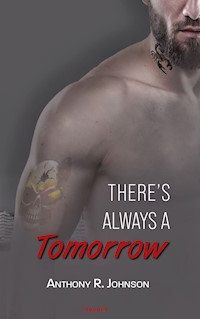
It will send shivers down the spines of all who fear what will happen if greed and power dominate society where the common people no longer have control over their destiny. It's thirty years into the future; the United Kingdom is controlled by a ruthless group of people pursuing total domination over everyone. They control the news; the citizens are constantly bombarded with government propaganda and those who dare oppose the ruling elite's policies are ruthlessly persecuted; killed or sent to a penal colony where they are fed poisoned flesh that causes cancer and ultimately death; thus controlling population growth. However, Nick Kaydon a medical doctor and some fellow conspirators lead growing opposition against the ruling elite and manage to foil a dastardly plot to wipe out two cities.
Das E-Book können Sie in Legimi-Apps oder einer beliebigen App lesen, die das folgende Format unterstützen:
Seitenzahl: 424
Veröffentlichungsjahr: 2022
Ähnliche




















CONTENTS
Imprint4
Citation5
Novel Characters6
Novel Organisations, Places and Abbreviations10
Quotations modified to use in President Valentine’s Speech13
Quotations modified to use in Vice-President Sykes’ Speech15
Chapter 1.
YESTERDAY, TODAY AND TOMORROW 16
Chapter 2.
THIRTY MINUTES TO BETRAY GRANDAD 18
Chapter 3.
SAINT JUDE’S 29
Chapter 4.
THE BIRTHDAY PARTY 40
Chapter 5.
NEW JUSTICE 44
Chapter 6.
ON THE RUN 53
Chapter 7.
REVELATIONS 62
Chapter 8.
BETRAYAL AT J.J. MACDONALD’S 70
Chapter 9.
SUSPICION AND CONFESSION 80
Chapter 10.
THE DAILY PARTY NEWS 87
Chapter 11.
BROOKSLADE AIRFIELD 94
Chapter 12.
CHARLEY, MADDY AND THE SEARCH FOR JENNY 100
Chapter 13.
NICK LEARNS MORE 108
Chapter 14.
OPERATION ARMAGEDDON 113
Chapter 15.
OPERATION TAKEAWAY 124
Chapter 16.
GEORGE HAS A WOBBLE 132
Chapter 17.
THE END OF THE BEGINNING OR THE BEGINNING OF THE END? 141
Chapter 18.
GERMINATION 150
Chapter 19.
A VOICE FROM THE PAST 156
Chapter 20.
DEMONSTRATION AND REVOLUTION 167
Chapter 21.
DRONE ATTACK 173
Chapter 22.
SPECIAL RELATIONSHIP 180
Chapter 23.
AN OLD FLAME 190
Chapter 24.
ASSAULT ON THATCHER SQUARE 196
Chapter 25.
PROMISE TO THE NATION 204
Chapter 26.
DALLAS DONALDSON’S DEMANDS 207
Chapter 27.
RETURN FROM SAINT KILDA 215
Chapter 28.
TRIAL AND RETRIBUTION 236
Chapter 29.
A FAMILY DESTROYED 252
Chapter 30.
FAMILIES REBUILT 256
Chapter 31.
THE DAY AFTER TOMORROW 265
Imprint
All rights of distribution, also through movies, radio and television, photomechanical reproduction, sound carrier, electronic medium and reprinting in excerpts are reserved.
© 2022 novum publishing
ISBN print edition: 978-3-99131-557-5
ISBN e-book: 978-3-99131-558-2
Editor: Hugo Chandler, BA
Cover images: Sven Hansche, Christos Georghiou, Yuri Snow, Carafoto | Dreamstime.com
Cover design, layout & typesetting:novum publishing
www.novum-publishing.co.uk
Citation
All the girls and boys would sing
Come tomorrow we get everything.
So as long as we survive today,
Come tomorrow we’re gonna find a way.
Yeah, as far as I can see
We gotta let the children lead the way.
Come Tomorrow
Song by Dave Matthews Band
Novel Characters
Joshua Kerley, member of the PYM, (Party Youth Movement).
Tom Chadwick, Joshua Kerley’s grandfather.
Edward Kerley, father of Joshua Kerley and son-in-law of Tom Chadwick.
Adam Mollison, Chief Officer (CO) of the Party Enforcement Office (PEO).
Powell, Officer of the PEO.
Willford, Officer of the PEO.
Norma Weedall, dead victim of a heart attack.
Frank Weedall, husband of Norma Weedall.
Sister Mary-Beth, an old nun now helping out at Saint Jude’s.
Nick Kaydon, doctor at Saint Jude’s, member of People’s Democratic Movement (PDM).
Jenny Oakwood, nurse at Saint Jude’s and Nick Kaydon’s girlfriend.
Glyn Quinlan, Chief Commanding Officer (CCO) of the Anti-Terrorist Squad (ATS), who later became Commander-In-Chief (CIC) of Security Forces.
Tim Beardmore, 90-year-old.
Elsie Beardmore, 86-year-old wife of Tim.
Edward Beardmore, Tim and Elsie Beardmore’s grandson.
Janet Beardmore, Edward Beardmore’s wife.
James Beardmore, Edward and Janet Beardmore’s son, Tim and Elsie’s great grandson.
George Grisedale, Justice of The Party.
Peter Denning, Clerk of the Court.
Gerard Tizard, Chief Officer (CO) of the Party Enforcement Office (PEO).
David Andrew Broadbent, a vagrant.
Dan Bridgewood, member of PDM and an old friend of Nick Kaydon.
Ken Townsend, member of PDM and psychic medium.
Jack Kingsbury, double agent. Chief Officer of the DDPU and member of the PDM.
Jonathan Patterson, boy running from ATS.
Phillip Patterson, Jonathan Patterson’s father, previously called Dilip Patel.
Idris (Taffy) Llewellyn, member of PDM and ex-sergeant in Welsh Guards.
Derek (Del) McCarthy, member of PDM.
Graham Tucker, member of PDM, former police officer.
Dominic (Dom) Welland, PDM investigator.
Jim Donlon, PDM investigator.
Charlotte (Charley) McCarthy, Del McCarthy’s wife.
Madison (Maddy) McCarthy, Del and Charley McCarthy’s daughter.
Mr. Rhodes, maths teacher at Hoddington Brook School.
Stuart Woodleigh, friend of Joshua Kerley and pupil at Hoddington Brook School.
Nigel Valentine, President of the United Kingdom, Leader of The Party.
President Grosvenor, former President of the United Kingdom
Edwina Sykes, Vice-President of the United Kingdom, Deputy Leader of The Party
Commander George Richmond, Leader of the P.D.M. Later became President of the U.K.
Deputy Commander Mark Grigson, Deputy Leader of the P.D.M.
Alex (Jock) Munroe, P.D.M. agent.
Sam Jarvis, owner of Brookslade Wood Farm.
Jacob Jarvis, son of Sam Jarvis and brother of Michael Jarvis.
Michael Jarvis, son of Sam Jarvis and brother of Jacob Jarvis.
Agnes Llewellyn, Idris Llewellyn’s estranged wife.
Aled Llewellyn, Idris Llewellyn’s son.
Dennis Wheatington, P.D.M. agent, explosives expert.
Pete Trattley, P.D.M. agent, engineer.
Fred Whitlow, P.D.M. agent.
Jordan Lorder, P.D.M. agent.
Tim Collinson, P.D.M. agent.
Joe Snark, delivery driver of body truck.
Jason Gibling, delivery co-driver of body truck.
Dewi Griffice, P.D.M. agent.
Ted, security guard for Williamson Meat Corporation.
Harry, security guard for Williamson Meat Corporation.
Declan (Dec) Dunleavy, P.D.M. agent and former Royal Air Force (RAF) Squadron Leader.
Max Nedwell, P.D.M. agent and former RAF Flying Officer.
Tim Sharnwood, commercial pilot.
Dante Pigden, leader of The Collectors, a gang on Hirta.
Bartholemew Grainger, second in command of The Collectors, a gang on Hirta.
Phillip (Pip) Holgrave, P.D.M. boffin. Electronics expert.
Mike Riches, P.D.M. Electronics expert.
Shane Whiteliff, a school friend of Joshua Kerley and Stuart Woodleigh and pupil at Hoddington Brook School.
Hugo Woodwill, Chief Commanding Officer (CCO) in the A.T.S. Newly promoted replacement for Glyn Quinlan.
Lorna Duncan, Joshua Kerley’s girlfriend and pupil at Hoddington Brook School.
Dave Bridlane, pupil at Hoddington Brook School.
Paul Bridlane, brother of Dave and Ryan Bridlane. Pupil at Saint Erasmus High School.
Ryan Bridlane, brother of Dave and Paul Bridlane. Pupil at Saint Erasmus High School.
Hadrian Lubeck, Commander-in-Chief (CIC) of the Party Enforcement Officers (PEO).
Ed Gilfedder, Deputy Commander-In-Chief of the PEO.
Freddie Carlysle, volunteer civilian doctor with the United Revolutionary Army (URA).
Dallas Donaldson, President of the United States.
Henry (Hank) Sigmeyer, Executive Secretary to Dallas Donaldson.
Naomi Donaldson, wife of the President of the U.S.A.
Joyce Gilfedder, mother of Ed Gilfedder.
Elizabeth Valentine, wife of President Valentine.
Oliver Valentine, son of Nigel and Elizabeth Valentine.
Esme Valentine, daughter of Nigel and Elizabeth Valentine.
Harry Harefield, Vice-President of U.K. replacing Edwina Sykes.
Sandra Harefield, wife of Harry Harefield.
Jacob Harefield, baby son of Harry and Sandra Harefield.
Arthur Forswick, civilian member of the cabinet in the new U.K. government.
James Radburn, civilian member of the cabinet in the new U.K. government.
Ethan Summervale, Vice-President of the U.S.A.
John Flitnell, Secretary of State for the U.S.A.
Sally Pallette, a nurse at Oban Hospital.
Bill Kempson, a doctor at Oban Hospital.
Ernest Oakdean, Justice presiding over the trials of Dante Pigden and Bartholemew Grainger.
John Trenchard, a survivor from Hirta.
Selwyn Tyneward, Justice presiding over the trials of Glyn Quinlan and Nigel Valentine.
Je Dong Woo, President of North Korea.
Clive Carter, partner of Agnes Llewellyn after she left Idris.
Megan Llewellyn, Aled Llewellyn’s wife and Idris Llewellyn’s daughter-in-law.
Bryn Llewellyn, Aled Llewellyn’s son and Idris Llewellyn’s grandson.
Novel Organisations, Places and Abbreviations
U.C.N.P. United Conservative and Nationalist Party or The Party, The government.
P.Y.M. The Party Youth Movement. Teenage police cadets.
S.H.S. State Health Service.
P.E.O. Party Enforcement Officers. Police. “Brownshirts”.
D.D.P.U. Dissident Discovery and Pursuit Unit. Undercover police.
A.T.S. Anti-Terrorist Squad. Paramilitary police. “Blackshirts”.
P.D.M. People’s Democratic Movement. Illegal opposition to the government.
N.C.A. National Climate Agency.
C.C.O. Chief Commanding Officer. Senior ranked officer in the Anti-Terrorist Squad.
C.P.E.O. Chief Party Enforcement Officer. Senior ranked officer in the P.E.O.
K.O.S. Legend Kill or Stun 12 millimeter. Commonly used hand gun.
Saint Jude’s Hospital. Charity hospital at which Nick Kaydon and Jenny Oakwood worked.
Williamson Meat Corporation. Manufacturers of Human Carcass Reconstruction.
J.J.Macdonald’s. Wholesale pharmaceutical warehouse.
D.I.R.C. Deleted Identity Radio Communicator. Type of radiotelephone used by the People’s Democratic Movement.
Circuit Repeater SB2. Gadget to cause repeated playback on CCTV.
H.C.R. Human Carcass Reconstitution - Food made from human bodies.
GDN93. Carcinogenic, hepatotoxic preservative used in Human Carcass Reconstruction.
The Collectors. A gang on Hirta.
M.U.B.2. Mobile Untraceable Broadcasting 2. Transmitter used by People’s Democratic Movement for TV broadcasts.
Covid-29RS. Coronavirus Disease 2029 Respiratory Syndrome.
Hoddington Brook School. School attended by Joshua Kerley, Stuart Woodleigh, Shane Whiteliff, Lorna Duncan and Dave Bridlane.
Saint Erasmus High School. School near to Hoddington Brook School, attended by Paul Bridlane and Ryan Bridlane.
Saint Erasmus Primary School. Primary school next to Saint Erasmus High School.
U.R.A. United Revolutionary Army.
D.A.F. Drone Air Force.
Grescott Air Base. Home of Number Two Squadron of D.A.F.
Kings Langton Air Base, Home of Number One Squadron of D.A.F.
U.A.C.P. Unmanned Air Combat Plane, Cougar FX.
U.R.P. Unmanned Reconnaissance Plane, Vulture OX.
M.P.A.D.S. Man-Portable Air Defence System. Shoulder launched Surface to Air Missile.
S.A.M. Surface-to-Air Missile, Hornet.
P.O.T.U.S. President of the United States.
I.C.B.M. Intercontinental Ballistic Missile.
Golden Arrows. Short range nuclear missiles.
Knappers End Missile Base. Nuclear missile base housing the Golden Arrows.
Hop Bridge United States Intercontinental Ballistic Missile base. Nuclear missile base housing I.C.B.M.s belonging to the United States of America.
Thatcher Square. Home of the government buildings.
Britannic Empire Building. Headquarters of leading business and financial organizations based in Thatcher Square.
Judge Jeffreys Citadel and Law Courts. Headquarters of the security forces, the law courts and cells based in Thatcher Square.
The House of the Nation. Parliament building and home to the President of the United Kingdom based in Thatcher Square.
G.M.T. Greenwich mean time. Standard time in the United Kingdom.
The Liberty Party. The main political party after the revolution, formed by the United Revolutionary Army.
The Reform Party. The main opposition party after the revolution.
Quotations modified to use in President Valentine’s Speech
We shall judge what British interests are and
we shall be resolute in defending them.
MARGARET THATCHER
This is the road I am resolved to follow.
This is the path I must go. I ask all who have the spirit …
the bold, the steadfast and the young in heart …
to stand and join with me as we go forward.
MARGARET THATCHER
The wind of change is blowing through this continent.
HAROLD MACMILLAN
This didn’t come about because of consensus.
It happened because we said;
this we believe, this we will do.
It’s called leadership.
MARGARET THATCHER
Where there is discord may we bring harmony.
Where there is error may we bring truth.
Where there is doubt may we bring faith.
And where there is despair may we bring hope.
MARGARET THATCHER
Strong and stable government
THERESA MAY
Most of our people have never had it so good.
HAROLD MACMILLAN
I was the future once.
DAVID CAMERON
I would rather be dead in a ditch
(than ask the EU to delay Brexit).
BORIS JOHNSON
The rule of law must prevail over the rule of the mob.
MARGARET THATCHER
We will strive to make Britain
a country that works for everyone.
THERESA MAY
Quotations modified to use in Vice-President Sykes’ Speech
The root cause of the threat we face is
the extremist ideology itself.
DAVID CAMERON
The extremist world view is the gateway
and violence is the ultimate destination.
DAVID CAMERON
Chapter 1.
YESTERDAY, TODAY AND TOMORROW
Yesterday the United Kingdom was a democracy with a reasonably fair and competent government and a judicial system as good as almost any in the world. People went about their daily lives taking freedom, justice and safety for granted. I use the word “yesterday” metaphorically as changes had actually taken place very gradually over the last thirty years. Thirty years of change which had gone undocumented in the history books. Thirty years of change which was never taught in school. Thirty years of change which was never recorded on TV or in newsprint. Thirty years of change which people were no longer even allowed to talk about. Thirty years of change which apparently did not exist.
At first the government began to appear incompetent. Changes occurred which threatened people’s freedom, but the danger was ignored. The government were believed to be too incompetent to be dangerous. Almost unchallenged, the government began to find excuses to take emergency powers; emergency powers which were said to be temporary but rapidly became permanent. Still there was little complaint about the erosion of civil liberty. The justice system was changed so that a trial became a formality, a chance for the judiciary to rubber stamp the wishes of the security forces. An arrest was automatically assumed to be proof of guilt. The system was not only designed to be harsh, give greater power to the security officers, save time and money but also to rid society of those who might be considered to be a drain on its resources: the elderly, the sick and infirm, the poor, the homeless, the non-conformists, the criminals, the immigrants and anyone who dared to disagree with The Party.
Today people live in fear. I should say people survive in fear as it cannot really be classed as living. People are unable to talk about reality, living a life of denial with a total lack of trust. Only the elite are able to live a reasonably normal life: prominent Party members, those with important skills, trade or vocation and those able to make a lot of money; people who were considered beneficial to society.
“Yesterday” life had been reasonably good and people were content. “Today” life is full of dread and fear, but for every yesterday and today there is always a “Tomorrow”! It could be days, months or years away but tomorrow always comes and, when it comes, who knows what it might bring.
Come tomorrow change will happen, maybe for good, maybe for evil but it will come!
Come tomorrow the lamb could become the lion or the mouse!
Come tomorrow we could be facing freedom or devastation! Who knows? But come tomorrow change must inevitably come!
Chapter 2.
THIRTY MINUTES TO BETRAY GRANDAD
The grandfather clock in the living room struck the half hour. That meant it was half past four and it also meant that Tom could expect his grandson any time now. Josh always called in on his way home from school on Thursdays to have a drink, some cake and a natter with his grandad. Tom was making himself busy in the kitchen while he waited. The back door was always left unlocked, for easy access when Tom was expecting visitors. It made things easier as Tom wasn’t too quick on his feet these days. The clock had hardly stopped chiming when Josh walked in, right on cue.
“Hi grandad. How are you?” the boy asked.
“Arthritis is playing up a bit but I mustn’t grumble,” said the old man. “All part of getting old. Anyway, how are you and your dad? Not seen your dad in … oh … must be three weeks at least.”
“We’re both fine grandad.”
“The kettle’s just boiled. Do you want a cup of tea, Josh, or would you rather have a cold drink? I’ve got some carrot cake as well if you want a piece.”
“Yes, I’ll have a piece of cake please grandad. Actually, have you got any cola?”
“As it happens Josh, I have. It’s a bit hard to come by these days, with the shortages and all, but I managed to get a bottle yesterday. It’s a bit expensive but I know how much you like it. I’m having a cup of tea anyway but you can have a glass of cola with pleasure.”
Tom continued to make the tea, cut the cake and pour Josh’s glass of cola. Josh pulled up a chair and made himself comfortable at the table.
“Everything OK at school Josh?” the old man asked.
“Yes! They’ve been teaching us how to be good Party members.”
“That says everything about The Party,” said the old man. “If you have to be taught how to be a good Party member. If you believe in something, you don’t need to be taught how to believe in it.”
“Actually grandad,” said the boy, “it’s very strange that we are taught history and politics up to the early twenty twenties, just after we left Europe and we are taught modern history and politics, over the last couple of years, but there’s a thirty-year gap in between which we are told nothing about; absolutely nothing. It’s almost like those thirty years didn’t exist. Perhaps you can tell me about it. I’ve heard you mention things to dad occasionally but he usually just tells you to shut up.”
“Your dad has always been afraid of getting into trouble with The Party. Many years ago, The Party made it illegal to talk about the events of that period. I do discuss them occasionally with a few of my old mates, in private, but you have to be very careful about who you are talking to. The Party takes a very dim view of it. You can get into all sorts of trouble by saying the wrong thing to the wrong person.”
Joshua Kerley, Tom Chadwick’s grandson, was a bright and inquisitive fourteen-year-old. He was usually very happy and outgoing but somehow, he had seemed different over the past few weeks. He seemed a bit broody and introspective as though there was something on his mind. Tom was a bit unsure whether to tell the boy what he wanted to know or not. It could be dangerous if others got to hear about it; dangerous for Tom and for Josh himself, but he knew he could trust Josh. Josh was his grandson after all and they had always got on really well. If he couldn’t trust Josh, then who could he trust. Of course, he could trust him. He just had to make sure that Josh kept his mouth shut and didn’t inadvertently say anything about their conversation to anyone else.
Tom looked very serious and concerned. “Josh, if we talk about this, you have to promise me that you won’t speak to anyone else about it. If you do, we could both be in very serious trouble. I mean it Josh!”
“Of course, I won’t say anything grandad. My lips are sealed,” Josh replied.
“So, what exactly do you want to know about?” asked the old man.
“Well, I’d really like to know just what happened in those missing years of history and why it has been covered up and buried.”
The old man began cautiously at first. “Do you know about Brexit?”
“Yes, we are taught about that,” replied Josh. “It was when we left the European Union. I think it might have been in 2020.”
“That’s spot-on Josh. Well done. It was 2020 and when we left the European Union there were problems, particularly regarding trade, which the government failed to get to grips with. Things were made worse by failure to deal with climate change, a series of avoidable “natural” disasters, fragmentation of political parties, disunity of the people and a lack of accountability by the government of the time.
Things really started to deteriorate from 2021 onwards. Trade started to unravel completely. European markets and suppliers were lost. Instead of trying to rebuild that trade, the government turned its back on Europe altogether. We pinned our hopes on favourable trade deals with the U.S.A. and when they failed to materialise the economy started to collapse. There were shortages of imported foods and essential supplies. Fortunately for the government of the day, the Conservative Party, the opposition had become so badly fragmented, with leftist and moderate factions only interested in fighting each other, that they were unable to successfully oppose the government. In an attempt to increase its strength and ensure that they continued in government, the Conservative Party combined with a host of smaller right-wing parties. Many of the parties such as The Brexit Party, UKIP, BNP, the National Front and Britain First were more extreme right wing, nationalistic and in some cases even fascist. They formed a new party, The United Conservative and Nationalist Party or U.C.N.P., which we now just refer to as The Party. To accommodate the more extreme parties, the UCNP itself became more and more aligned to the extreme right wing.
Many businesses collapsed but we became the most successful in the world at three pretty despicable things,” continued the old man, “arms production, waste disposal and providing a tax haven for the rest of the world.
We supplied almost the whole of the world with weapons, including chemical weapons, biological weapons, weapons of mass destruction and nuclear weapons, regardless of who was buying them or what they would be used for. We supplied weapons which enabled other countries to kill hundreds of thousands of people, some soldiers but many civilians. They fought wars, revolutions, carried out atrocities, murder and genocide all using weapons manufactured and supplied by Britain. We supplied weapons which were, in some cases, used against our own friends and allies. We even happily supplied weapons which were so lethal, so powerful and so uncontrollable that they were totally forbidden under international law. We didn’t care. It was business.
We imported waste from all over the world. It was brought in by the shipload and large areas of the land and sea were used for waste disposal, no matter how toxic that waste was. We became known as The World’s Trash Can.
Ridiculous tax laws enabled mega rich foreign companies and gangsters to make massive tax savings and launder their money while British citizens were taxed to the hilt.
Desperate for a cheap supply of power, but not prepared to put money or resources into renewable energy, the government backed fracking on a massive scale. At one point it looked like fracking would be stopped, but then the government made a U-turn. Fracking was never successful in providing cheap power but it did help to cause several large earthquakes. Three particularly bad ones happened in Bradford, Sheffield and Preston.
In 2028 there was a huge explosion at the nuclear power plant in Torness. More than two hundred and fifty people were killed outright by the explosion. Many more died later due to the effects of radiation exposure. Thousands of people had to be evacuated and moved into refugee camps. In fact, the explosion made it necessary to evacuate an area with a radius of thirty miles around the power station. That is an area of more than two and a half thousand square miles. The evacuated, contaminated area was used for storing much of the imported rubbish. Initially, it was put into landfill but later, as quantities increased and it became more difficult to keep up with the demand, it was just dumped on the ground. The country which got rid of its coal tips in the nineteen seventies was now building huge open rubbish tips, vast waste mountains, in the east of Scotland. These tips included both harmless and toxic waste. The authorities did not care as the circle of land around Torness would never be inhabited again. Some of the rubbish was also deposited in huge trenches dug in the sea bed near to Torness. However, that was proving too expensive so much of the waste was just dumped into that area of the North Sea. People who had been evacuated after the Torness explosion were moved into refugee camps and so-called temporary accommodation in a twenty square mile area to the south of the evacuation zone. As far as I’m aware, they have still never been properly rehomed as The Party didn’t want them mixing with the general population.
There were many demonstrations and some rioting in protest at what was happening. People were calling for an election.” Tom continued. “That caused The Party to take emergency powers. First, they abolished all elections until all unrest had settled down. Later, they passed a bill stating that a general election would only take place when it was deemed necessary by the government. That was soon followed by a ban on all other political parties. All opposition parties were deemed to be subversive and, as such, membership was made illegal. To avoid any further demonstrations, it was made illegal to have a gathering of more than twelve people under any circumstances, except for government members, security officers, hospitals, places of work and schools. Even weddings were restricted to very close family only, as the twelve-person rule was applied. Funerals had already been stopped as the state took possession of any bodies. No-one was allowed to be buried or cremated privately. That could only be done by the state. Even transport was hit by the new law. Trains were abolished as it was impossible for them to operate with no more than twelve passengers. In some places, new metro links were set up with single carriage computer driven rail vehicles carrying a maximum of twelve passengers. The old buses and coaches were scrapped and replaced with a network of minibuses carrying a maximum of eleven passengers plus the driver.
The government stopped referring to itself as The Government. It was only referred to as the UCNP or more commonly just The Party.
When the old king died, King Charles the Third, the monarchy was abolished and the Royal Family were given a large cash settlement to become commoners.
The press had fallen more and more under the control of The Party. Any independent newspapers were closed down and the reporters were arrested. By 2027 the only news left was Party propaganda. There were always rumours and some underground news reports that got through. That is when The Party made it illegal to discuss any events that occurred between 2023 and 2053. That’s why you’re not taught anything in school from that period and that’s why this conversation has to stay strictly between us. I mean it Josh. If you repeat any of this, we are both in deep shit.”
“You can trust me grandad! What about climate change? What problems did that cause over those years?”
“Well, I’ve told you about the big earthquakes in Bradford, Sheffield and Preston. There were lots of minor ones as well but we heard that around fifteen hundred people were killed in those three alone. We were pretty sure that they had been triggered by fracking although the frackers and The Party tried to whitewash them all as just freak phenomena. Global warming was pretty well ignored, although to be fair that was pretty much the situation worldwide. Too many people buried their heads in the sand and ignored it. When the sea rose, large areas of land were flooded permanently. It was estimated that twenty per cent of the U.K. land mass was lost under water. Most of London and much of the Thames Valley was permanently flooded. That was why the government and the trading centres were relocated to just outside Birmingham, where they are now. Birmingham was believed to be very unlikely to suffer severe flooding and it was safely away from the areas that had suffered earthquakes. They stayed clear of the city centre to avoid the air pollution.”
“You can’t blame The Party for the floods grandad.”
“OK. Climate change was an international problem, but we never tried to do our bit or to persuade the rest of the world what we all knew needed to be done. When the floods came, as they were obviously going to do, The Party did nothing to try to control the situation. There was no new flood barrier schemes or pre-emptive relocation of vulnerable communities; nothing except moving the government from London to Birmingham.
They ignored warnings about air pollution and now so many inner-city areas are virtually no-go areas without face masks and sometimes even breathing apparatus. Your grandmother died of pneumonia caused by air pollution. Of course, the authorities denied that pollution was the cause. She couldn’t get any proper medical treatment either due to The Party having destroyed the NHS.”
“What was the NHS?”
“The NHS was the National Health Service. It provided free health care for everybody and was funded by the government but The Party decided that it couldn’t afford to keep it going any longer. That’s why we ended up with the system we have today. The privileged get free treatment and the rest of us have to rely on charity medical centres, run by volunteers, with few or no resources.
Anyway, as I was saying, we couldn’t get any proper care for your grandmother so she was just left to die, just like your mother.”
“My mum?” Josh asked, quite shocked at the mention of his mother’s death. His father had never talked about how his mother had died.
“You were just two years old,” continued the old man. “That’s why you can’t remember it. You would have had a little brother but there were problems with the birth. We couldn’t get any proper medical help. Your mum and your brother both died because those bastards who were supposed to be running the country had destroyed the NHS. I lost my wife, my daughter and a grandson. Of course, everything was covered up. The death certificates just said they had died from natural causes.” Although not a man given easily to tears, Tom found his eyes getting very moist and his vision cloudy as he thought about what he had lost.
“Sorry grandad,” said Josh. “I didn’t mean to upset you.”
“It’s alright Josh,” said Tom, drying his eyes and blowing his nose. “It’s still a bit raw, but after all these years I just feel so angry about it.”
Having pulled himself together, the old man continued. “It became more and more difficult to get genuine news and information and now all we get is Party propaganda. All social media was closed down in2025.”
“What was social media, grandad?” asked Josh.
“It was a way of contacting people online,” continued the old man. “Facebook, Twitter, WhatsApp and several others. It was a way of sending messages to a lot of people in one go. You could contact a small group, dozens, hundreds, even thousands depending on how many people you had connections with. Letters were banned as it took up too much time for the authorities to open them and read them. I believe all e-mails and text messages are checked by The Party and sometimes edited or even deleted. Now people are even afraid to talk in case what they have said gets back to The Party. That’s why your dad tells me to shut up if I start talking about the past.”
Suddenly Tom was startled by the sound of an alarm signal which seemed to be coming from inside Josh’s jacket. Josh pulled a radio transmitter from his inside pocket.
“That’s fine Joshua. We’ve heard enough,” came a voice from the phone. “We are coming in.”
“I don’t understand,” said Tom in a state of confusion and more than a little fear. “What’s going on Josh?”
“It’s simple enough. I have become a member of The Party Youth Movement. We are expected to help to seek out dissidents and inform on them. Your unfounded rants against The Party have all been heard and recorded by my superiors. I’m sorry grandad.”
“Josh, you’ve been brainwashed,” said the old man disappointedly. “Do you know what you’ve done, not just to me but probably to your dad as well?”
At that moment three men burst in through the back door. All three were wearing the brown uniforms of the Government Enforcement Officers.
“Allow me to introduce myself,” said the leader of the three. He was a small, dark haired man with piercing eyes, who’s gaze locked on to Tom and would not release him again. In fact, it felt like those eyes were penetrating Tom’s brain and reading his innermost thoughts. He tried to look away but was trapped by those eyes. “I am Chief Officer Adam Mollison of the Party Enforcement Office. My two colleagues are officers Powell and Willford. Are you Tom Chadwick?”
“You know I am,” replied Tom, slightly defiant but still feeling violated by those penetrating eyes.
“Then I must arrest you for spreading dissident libel against The Party. Powell, Willford, take him to the car.”
“Josh, I hope you know what you’re getting into boy,” said the old man as the officers took hold of him. “You’ve killed me Josh, just as surely as if you’d put a gun to my head and pulled the trigger yourself.”
“You’re being over dramatic grandad. You’ll just be sent for Civil Correction. They just need to make sure you follow Party rules in the future.”
“No Josh. Don’t be so bloody naive. I’ll be one of the old people who get arrested and disappear, never to be seen again. Your dad’s not safe either.” The grandfather clock struck five o’clock. “It’s thirty minutes since you arrived Josh, thirty minutes to blow your whole family apart and for what? For the approval of the fucking Party and this arrogant bastard,” said Tom, looking Mollison straight in the eyes with hatred and defiance.
“Enough you old fool!” yelled Mollison. “You’re only making things worse for yourself. Powell! Willford! Get him out of my sight. Get him into the car. Now! If he gives you any more trouble you know what to do.”
The officers frog marched the old man out, still protesting. “Josh! Don’t be taken in by them! They’ll kill me but don’t let them ruin your life. Josh, you have to stand up to them!”
As Tom was taken out Mollison continued. “You have done well Corporal Kerley.”
“Corporal sir?” asked Joshua in surprise.
“Yes of course! You deserve promotion for today’s action. You should have a great career ahead of you in the force and a great future in The Party.”
“My grandad will be sent for Civil Correction, won’t he sir?” asked Josh, suddenly feeling very worried about his grandfather. Civil Correction was a form of brainwashing used for crimes which were not thought to be too serious.
“Most likely,” replied Mollison, “although it will depend on the court. You had better go home now Joshua. I would advise you not to say too much about this to your father. You can tell him that your grandfather has been arrested but don’t say anything about your part in it. You have done The Party a great service but your father may not understand.”
As the boy was leaving, Willford appeared in the doorway to tell Mollison that Tom Chadwick was safely incarcerated in the car and ready to go.
“You don’t really think he will get Civil Correction do you sir?” Willford enquired when Josh was out of earshot.
“Of course not!” exclaimed the Chief Officer. “The man is seventy-two years old. The only sentence he is likely to get is Age Acceleration.”
This is a term used for the death penalty performed by lethal injection.
“I only agreed with the boy to make him feel better. After all, it is his grandfather. There’s no point in Joshua feeling guilty about the outcome even if the silly old fool ends up dead. He brought it on himself! He should have known better and kept his mouth shut. Of course, we will need to arrest the boy’s father as well and see if we can find out who the old man’s friends are. They’ll all need to be investigated. They may all be guilty of spreading dissident or seditious libel against The Party.”
Chapter 3.
SAINT JUDE’S
The front door of Saint Jude’s Medical Centre crashed open as a man rushed in carrying his wife who had collapsed. “Help me! Please help me! She’s dying!”
The speed with which Sister Mary-Beth moved belied her considerable age as she pressed the alarm button to alert the emergency room and helped Frank Weedall to get his wife, Norma, onto a trolley near the door.
“I think she’s having a heart attack. She had terrible pains in her chest and passed out in the car on the way here. I thought she’d died at one point.”
The woman certainly did look as though she was doing her best to die. There was no movement or acknowledgement. Her face was blue-grey with large beads of sweat on her forehead despite her skin feeling cold and clammy. She was still breathing but only just and very erratically.
Within seconds, doctor Nick Kaydon and nurse Jenny Oakwood appeared and quickly pushed the woman through to the emergency room. Her husband attempted to follow but was stopped by the old nun.
“I’m sorry,” said Sister Mary-Beth. “I’m sorry but you can’t go through there.”
“I want to be with my wife.”
“I know,” said the nun, “but you can’t go in there while they are working on her. Believe me she’s in the best possible hands. Let them do their job. As soon as they can, they’ll let you know how she is. In the meantime, take a seat here. I need to get some details if you are up to it.”
Sister Mary-Beth’s calming voice and serene manner was beginning to help Frank Weedall to calm down a little.
“I’m sorry Sister. I know I can’t go into the emergency room but I’m just so frightened that she’s going to die and I won’t be there with her.”
“We’ll do everything we possibly can to make sure that doesn’t happen. Is it alright if I ask you a few questions?”
“Yes, please carry on Sister. I’m sorry.”
“What is your wife’s full name?”
“Norma Weedall.”
“How old is she?”
“She’s only forty-two. How can this happen at forty-two? She’s always been so fit and healthy. She always looked after herself. She never smoked, hardly ever drank, exercised regularly and was always careful about what she ate. It doesn’t make sense.”
“What is your full name?” continued the nun.
“I am Frank Weedall.”
“You are her husband and next of kin?” queried Sister Mary-Beth.
“Yes, that’s right. We’ve been married for fifteen years. Fifteen years! She can’t leave me now! We were supposed to grow old together. I don’t think I can carry on without her.”
“So, can you tell me what happened exactly?”
“She had been getting pains in her chest at times over the last couple of days. I tried to persuade her to come and get checked out but she wouldn’t. She insisted it was nothing. Then just over an hour ago the pain got worse and became continuous. She was struggling to get her breath. I didn’t give her any choice in the matter. I just bundled her into the car and came here. On the way here, her breathing got much worse and she passed out. I wasn’t even sure if she was breathing at all at one point. Then we got here and you saw the rest.”
“That’s fine for now. If you wait here, I’ll take your wife’s notes through to Doctor Kaydon and I’ll see what’s going on.”
Sister Mary-Beth took the notes into the emergency room where she could see that Norma Weedall was still only just clinging on to life.
“Is there anything I can do to help Doctor?” she asked.
“You can pray for her, Sister and look after her husband,” was Nick’s reply.
She told Frank Weedall that they were still working on his wife and she did her best to keep him calm and tried to keep his spirits up, at least as much as possible.
In the emergency room, Norma Weedall had initially stopped breathing, although at that point her heart was still beating. Nick and Jenny managed to get her breathing again fairly quickly. They had set up and attached a heart monitor.
BEEP-----, BEEP-----, BEEP-----, BEEP-----, BEEP-----,
The heart seemed fairly steady.
BEEP-----, BEEP-----, BEEP, BEEP, BEEP, BEEP, BEEEEEEEEEEEEEEEEEEEEEEEEEEEEEEEEEEEEEEEEEEEEEEEEEEEEEEEEEEEEEEEEEEEEEEEEP.
The monitor screamed to warn that she had flat lined and her heart had stopped. CPR was started immediately.
“Charging, stand clear!” yelled Nick as CPR stopped and he applied the defibrillator paddles to the woman’s chest.
DUFF.
The patient’s body bounced with the shock as the paddles spat their charge into her chest and CPR began again immediately.
BEEEEEEEEEEEEEEEEEEEEEEEEEEEEEEEEEEEEEEEEEEEEEEEEEEEEEEEEEEEP.
“OK. Charging again. Stand clear!” came the instructions.
DUFF.
There was no response so the procedure was repeated again.
DUFF.
BEEP-----, BEEP-----, BEEP-----, BEEP-----, BEEP-----,
The heart monitor indicated that a heartbeat had returned as the heart lurched back into life.
“OK, she’s back with us!” shouted Nick as he began to relax just a little. “Let’s get an IV line set up as fast as possible.”
The trolley with the necessary equipment was rushed over to the patient but before Nick could start placing the IV line: -----,
BEEP-----, BEEP-----, BEEP, BEEP, BEEP, BEEP, BEEP,
BEEEEEEEEEEEEEEEEEEEEEEEEEEEEEEEEEEEEEEEEEEEEEEEEEEEEEEEEEEEP.
“She’s crashing! Let’s start again!” yelled Nick. CPR was started again immediately and the defibrillator again prepared for use. “Charging! Stand clear!”
Once again Nick applied the paddles to the patient’s chest and fired in the electric charge. Again, the body bounced dramatically, but there was no other response.
DUFF.
BEEEEEEEEEEEEEEEEEEEEEEEEEEEEEEEEEEEEEEEEEEEEEEEEEEEEEEEEEEEP.
The sequence of CPR and shocking with the defibrillator was repeated and repeated, over and over again, with doctor and nurse both getting more and more exhausted, more and more frustrated and more and more desperate. Whatever they tried, nothing would induce any response from the patient. The constant screaming of the monitor told them that they were failing, failing badly and gave no indication of recovery.
BEEEEEEEEEEEEEEEEEEEEEEEEEEEEEEEEEEEEEEEEEEEEEEEEEEEEEEEEEEP.
Despite every fibre of his body desperately wanting to give the woman every possible chance, Nick finally gave in to the realisation that it was impossible to save her.
“It’s been at least thirty minutes. I’m calling it. Time of death one thirty-five p.m.”
Nick turned away from the lifeless body, only just managing to hold everything together as the emotion and exhaustion of the last forty-five minutes finally hit him. She had been rushed to Saint Jude’s by her husband and now, despite the heroic efforts of Nick and Jenny, she lay dead on the emergency room table.
“You did everything you possibly could, Nick,” said Jenny, trying to comfort him. As well as being a nurse, Jenny was Nick’s girlfriend and she knew just how badly losing a patient affected him.
“We might have had a chance Jen, with a modern resuscitator and up to date drugs instead of having to use a crap, forty-year-old, second-hand defibrillator. How the hell are we supposed to save lives under these fucking conditions? Sometimes I feel like we might as well give up.”
“You don’t mean that Nick. You’re feeling frustrated. So am I, but it’s just a knee-jerk reaction,” she said, putting a consoling arm around him. “You’re a damn good doctor. You know you are. Think of the people that we’ve saved, people who would have died if you hadn’t been here doing the best you could, even under these conditions.”
“Things have to change somehow Jen. We can’t carry on like this.”
****
Saint Jude’s was one of many charity-funded medical centres trying to provide treatment for ordinary people who failed to qualify for treatment under the so-called State Health Service. Many years previously, the National Health Service had provided good quality health care, which was free for everyone, but The Party had decided it was too expensive. The NHS was replaced by the State Health Service. The SHS ran a small number of highly equipped, highly staffed, state of the art hospitals, providing first class treatment for the senior members of The Party, the wealthy, large business owners and those who were considered important to society. Everybody else, around seventy-five per cent of the population, had to rely on health centres like Saint Jude’s which relied completely on charity for their funding. Times were hard. People and businesses had little or no money to donate. The hospitals were forced to run on a shoestring. Drugs were scarce and generally old fashioned. Equipment was usually second-hand and out of date or obsolete. Nick and Jenny, like all the other doctors and nurses in the charity medical centres, worked for four days a week in the SHS hospitals to make a living. They spent the rest of the week working long hours in the charity medical centres as unpaid volunteers. Days off were generally non-existent.
Back in 2020, while the NHS still existed, the world suffered a pandemic due to a virus known as Covid-19. More than forty million people were infected and several million were killed worldwide. Many countries, including the United Kingdom, were in a state of lockdown for many months. Here in the UK the NHS struggled to cope. It was stretched to breaking point. That was the trigger for the government to decide to scrap the NHS and to develop the elitist SHS.
Worse was to come. Just nine years later in 2029 a new virus, related to Covid-19, known as Covid-29RS (Coronavirus disease 2029 Respiratory Syndrome) hit the country and much of Europe. The Party were afraid that the volunteer doctors and nurses would carry the Coronavirus from the charity hospitals to the SHS hospitals. To prevent that, they banned all SHS staff from doing any voluntary work. The charity hospitals were left with no trained staff and most were forced to close completely. The Party released no official figures but it was rumoured that more than a million people died from Covid-29RS in the UK alone, most of those because they received no treatment whatsoever. In that same period a further two and a half million people were believed to have died from non-covid related illnesses, due to lack of treatment. Eventually Covid-29RS subsided and volunteer doctors and nurses were allowed to return to the charity hospitals.
Saint Jude’s had previously been a convent but was converted to a medical centre in 2031. A handful of the nuns, The Sisters of Saint Jude the Apostle, had stayed when the convent closed, to help nurse the sick. Sister Mary-Beth was the last of those nuns remaining at Saint Jude’s. She still soldiered on despite her age and her own poor health.
The name of the hospital could not have been more appropriate. Saint Jude, the apostle Judas Thaddaeus, was the patron saint of lost causes and desperate situations. Trying to provide medical care at Saint Jude’s was certainly a desperate situation and often a lost cause. Conditions at all of the charity hospitals were so bad that the International Red Cross and the World Health Organisation had both offered assistance. Although assistance was badly needed, The Party would not even consider it. The offer of help was treated as an insult.
“How dare they imply that the United Kingdom could not look after its own sick?”
****
“Nick, the woman’s husband is still waiting in the corridor. Do you want me to come with you to break the bad news?”
“No, it’s alright Jen. It’s best that I tell him on my own. Can you ask Sister Mary-Beth to ring the authorities to get them to collect the body. Right! I’ll go and see Mr Weedall. It won’t get any easier by delaying things.”
Jenny went off to find Sister Mary-Beth while Nick went to talk to Frank Weedall who was still sitting and waiting desperately for news about his wife.
“Mr Weedall?” Nick asked.
“Yes. How is my wife, Doctor? Is she alright? Did you get her settled down? Can I see her yet?” Questions tumbled from his mouth in rapid succession as he looked for news but did not really want to hear the answers, his eyes pleading for a glimmer of hope but his mind already expecting the worst and his heart breaking.
“I’m really sorry. We did everything that we could but I’m afraid that we couldn’t save her. Her heart gave out and we couldn’t resuscitate her.” Nick had to look down at the floor to avoid the imploring look in Frank Weedall’s eyes. It was at times like this that Nick hated his job and felt such a failure, no matter how hard he’d tried or how poor the odds of success. He was there to save Norma Weedall’s life and yet she was dead.
Despite having tried to prepare himself for the worst, Nick’s words hit Frank Weedall like a blow from a sledgehammer. He collapsed in a battered, blubbering heap in his chair. He was a broken man, destroyed by his wife’s death and confused by the events of the past hour. Gradually, he began to regain a modicum of composure,
“Thank you for trying doctor. I’m sure you did everything that you could,” he sobbed.
“Would you like to spend a little time with her before they come to collect her body?” Nick asked gently.
Nick guided the weeping man to his wife’s bedside. He stared in shock and disbelief at his wife lying there before burying his face on her breast, tears flowing in an uncontrollable torrent of grief and love. He remained there, motionless, for what seemed like an eternity, man and wife temporarily reunited.
Eventually Sister Mary-Beth and Jenny both entered the room.
“I’m so sorry to disturb you but I’m afraid they have come to collect Mrs Weedall’s body. I have asked them to wait,” said the nun.
“Thank you, Sister,” said Nick. “Can you ask them to give us a few more minutes?”
As Sister Mary-Beth left the room, Frank Weedall said, “I don’t want them to take her. I want to bury her myself.”
“I’m sorry,” said Nick gently but firmly. “It’s the law. All bodies have to be taken by the authorities.”
“She’s not a body! She’s my wife!” he yelled, becoming angry. “I should be able to decide what to do with her! What will they do with her anyway? Where will they take her?”
“I’m sorry,” Nick repeated. “It’s the law. I know how you feel but we can’t do anything about it.”
Two body collectors were waiting in the corridor with a collection trolley. They were always accompanied by an officer of the ATS, the Anti-Terrorist Squad, a paramilitary unit, dressed in their characteristic black uniform. There was one other man lurking in the corridor. This man wore a plain grey suit and could often be seen in and around Saint Jude’s. He was not a patient, not a member of the hospital staff nor was he a member of the collection party.
Upon hearing raised voices, the body collectors started to enter the emergency room. Realising what they were coming for, Frank Weedall slammed the door as hard as he could into the face of the first man, sending him crashing to the floor holding his bloodied nose. He rammed the trolley hard into the groin of the second man, leaving him crumpled with pain. A shot rang out, not from the ATS officer but from the man in the grey suit. Frank Weedall dropped like a stone and started to convulse violently before lying absolutely still. By the time he had regained consciousness he had already been handcuffed and arrested by the grey suited man and the body men were wheeling his wife, on the trolley, to the collection vehicle.




