


Erhalten Sie Zugang zu diesem und mehr als 300000 Büchern ab EUR 5,99 monatlich.
- Herausgeber: Nick Hern Books
- Kategorie: Poesie und Drama
- Serie: Platform Plays
- Sprache: Englisch
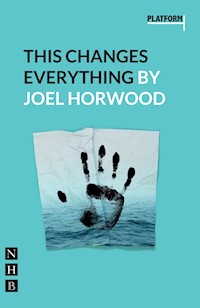
'We can't change things here, that's the whole point, no one listens to us or cares, the only way we're gonna change things is by going somewhere else, starting afresh.' A group of disillusioned young women have disappeared. On a platform out at sea, they have formed The Community – a new type of society and a better way of living. But how can you change the world if you've taken yourself out of it? This Changes Everything by Joel Horwood is part of Platform, an initiative from Tonic Theatre in partnership with Nick Hern Books aimed at addressing gender imbalance and inequality in theatre. Platform comprises big-cast plays with predominantly or all-female casts, written specifically for performance by school, college and youth-theatre groups. 'Drama is an important tool for building confidence and empowering young people. Platform will give girls opportunity to access these benefits as much as their male counterparts.' - Moira Buffini
Sie lesen das E-Book in den Legimi-Apps auf:
Seitenzahl: 88
Veröffentlichungsjahr: 2015
Das E-Book (TTS) können Sie hören im Abo „Legimi Premium” in Legimi-Apps auf:
Ähnliche




















Joel Horwood
THIS CHANGESEVERYTHING
Contents
Title Page
Platform
Tonic Theatre
Nick Hern Books
Introduction
Production Note
Epigraph
Characters and Setting
This Changes Everything
About the Author
Copyright and Performing Rights Information
Commissioning and publishing a range of new plays for young actors which put girls and their stories centre stage is something I have wanted to do for a long time and, since Tonic Theatre was formed in 2011, it is an idea I have been looking to get off the ground. Tonic exists to support UK theatre to achieve greater gender equality in its workforces and its repertoires; essentially our mission is to catalyse a culture-shift in how theatre thinks and works, so that talented women are given the same levels of support and opportunity as talented men.
While it has pretty big aspirations, Tonic is a tiny organisation; we have one-and-a-bit members of staff, no core funding, and a very modest financial turnover. Because we have such limited funds and capacity, we have to use these wisely and consequently are extremely strategic about where we target our efforts. I spend much time looking to identify ‘pressure points’ – places where, with a bit of work, a far bigger ripple effect can be achieved. For this reason, much of our work to date has been focused on partnerships with some of the largest organisations in the country, because if they change, others will follow. But youth drama has always been clear to me as one of the greatest pressure points of all. It is the engine room of the theatre industry; tomorrow’s theatre-makers (not to mention audience members) are to be found today in youth-theatre groups, university drama societies and school drama clubs all over the country.
If we can challenge their assumptions about the role of women’s stories, voices, and ideas in drama, then change in the profession – in time – will be immeasurably easier to achieve.
Beyond this strategic interest in youth drama, I was convinced that girls were getting a raw deal and I found that troubling. Having worked previously as a youth-theatre director, I was familiar with the regular challenge of trying to find scripts that had adequate numbers of female roles for all the committed and talented girls that wanted to take part. In nearly all the various youth-drama groups I worked in across a five-year period, there were significantly more girls than boys. However, when it came to finding big-cast, age-appropriate plays for them to work on, I was constantly frustrated by how few there seemed to be that provided enough opportunity for the girls, its most loyal and committed participants. When looking at contemporary new writing for young actors to perform, one could be mistaken for thinking that youth drama was a predominantly male pursuit, rather than the other way round.
Aside from the practicalities of matching the number of roles to the number of girls in any one drama group, the nature of writing for female characters was something I struggled to get excited about. While there were some notable examples, often the writing for female characters seemed somewhat lacklustre. They tended to be characters at the periphery of the action rather than its heart, with far less to say and do than their male counterparts, and with a tendency towards being one-dimensional, rather than complex or vibrant, funny or surprising. Why was it that in the twenty-first century the quality as well as the quantity of roles being written for girls still seemed to lag behind those for boys so demonstrably?
Keen to check I wasn’t just imagining this imbalance, Tonic conducted a nationwide research study looking into opportunities for girls in youth drama, focusing on the quantity and quality of roles available to them. The research was written up into a report, Swimming in the shallow end, and is published on the Tonic Theatre website. Not only did the research confirm my worst fears – more depressingly, it exceeded them. While many of the research participants were vocal about the social, artistic and emotional benefits that participation in youth-drama productions can have on a young person’s life, so too were they – to quote the report – on ‘the erosion to self-esteem, confidence and aspiration when these opportunities are repeatedly held out of reach… [and] for too many girls, this is the case’.
But despite the doom and gloom of the research findings, there remained an exciting proposition; to write stories that weren’t currently being put on stage, and to foreground – rather than ignore – the experiences, achievements and world-view of young women, perhaps the group above all others in British society whose situation has altered so dramatically and excitingly over the past hundred or so years. Tonic commissioned writers I was most fascinated to see respond to the brief set to them: a large-cast play written specifically for performance by young actors, with mainly or entirely female casts and in which the female characters should be no less complex or challenging than the male characters. I asked them to write in such a way that these plays could be performed by young people anywhere in the country, and that there should be scope for every school, college and youth-theatre group performing the play to make a production their own.
At Tonic our hope is that the first Platform plays, of which this is one, will be just the beginning of a longer trajectory of work for us. Although it entails further fundraising mountains to climb, we plan to commission and publish more plays over future years. Our aspiration is that over time Platform will become a new canon of writing for young actors and one that puts girls and their lives centre stage. I dearly hope that they will be taken up by groups all over the country and performed for many years to come.
Lucy KerbelDirector, Tonic Theatre
Acknowledgements
Tonic would like to extend its sincere thanks to:
Matt Applewhite, Tamara von Werthern, Jon Barton and all at Nick Hern Books. Moira Buffini, Kendall Masson, Matthew Poxon, Racheli Sternberg, Steph Weller. Arts Council England. The Austin and Hope Pilkington Trust. Anna Niland and the National Youth Theatre of Great Britain. Jennifer Tuckett and Central Saint Martins, Richard Williams and Drama Centre. The National Theatre Studio. English Touring Theatre.
To all the generous donors who have enabled Platform to happen. Above all to Joan Carr, who loved books, delighted in live performance, and who believed girls should never have anything less than boys.
Tonic Theatre was created in 2011 as a way of supporting the theatre industry to achieve greater gender equality in its workforces and repertoires. Today, Tonic partners with leading theatre companies around the UK on a range of projects, schemes, and creative works. Our groundbreaking Advance programme (www.tonictheatre-advance.co.uk) saw us work with the artistic directors and senior creative staff of a cohort of England’s most influential theatres to bring about concrete change within their own organisations and the wider industry. It is a process the Guardian commented ‘could transform the theatrical landscape forever’. 100 Great Plays for Women, our previous collaboration with Nick Hern Books, was published in 2013 to wide acclaim and was subsequently the inspiration for a series of lectures at the National Theatre. We are now delighted to be launching Platform, our range of new plays commissioned to increase opportunity and aspiration among girls and young women who take part in youth drama.
Tonic’s approach involves getting to grips with the principles that lie beneath how our industry functions – our working methods, decision-making processes, and organisational structures – and identifying how, in their current form, these can create barriers. Once we have done that, we devise practical yet imaginative alternative approaches and work with our partners to trial and deliver them. Essentially, our goal is to equip our colleagues in UK theatre with the tools they need to ensure a greater level of female talent is able to rise to the top.
Tonic is Affiliate Company at the National Theatre Studio.
www.tonictheatre.co.uk
Here at the Performing Rights Department at Nick Hern Books, we’re often asked ‘Are there any plays for young people?’… ‘Have you got anything for a large cast?’… and ‘Is there anything with strong female roles?’
Whilst the answer to these questions is, in each case, a resounding ‘Yes!’ (and in fact the majority of plays we’ve published in the last five years have been by women), the number of plays that fulfil all three of these criteria – strong roles for a large, predominantly or all-female cast of young actors – is less plentiful. Yet that’s where there’s so much demand! Nearly every teacher and youth-theatre director in the country knows that it’s girls who make up the majority of their casts, and yet the plays available are often dominated by men. Because we can generally only publish what is being produced on the professional stages of the UK, until the theatre industry starts staging more plays with these qualities, the numbers will remain low. It’s a vicious circle.
So with Platform, we are delighted to publish and license three plays that give young women good, strong roles to get their teeth into, and that will help them build their self-esteem and confidence in their own skills.
Nick Hern Books look after the amateur performing rights to over a thousand plays, and we know from experience that when it comes to choosing the right play it can be confusing (and pricey) to read enough of what’s out there until you know which play is right for you. This is why we send out approval copies: up to three plays at a time, for thirty days, after which they have to be paid for, or returned to us in mint condition and you just need to pay the postage. So there is no reason not to read all three Platform plays to see if they will suit your school, college or youth-theatre group. We’re very hopeful that one of them will.
Performing rights to the three plays will be available at a specially reduced rate to enable even those on a very tight budget to perform them. Discounts are also available on cast sets of scripts; and the cover images on these books can be supplied, free of charge, for you to use on your poster.




