


Erhalten Sie Zugang zu diesem und mehr als 300000 Büchern ab EUR 5,99 monatlich.
- Herausgeber: Independent Thinking Press
- Kategorie: Bildung
- Sprache: Englisch
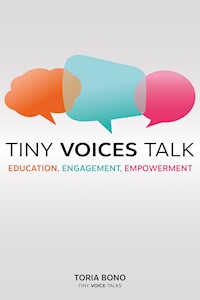
When tiny voices talk, three amazing things happen: they share surprising ideas and insights; they realise they are not so tiny; and they empower other tiny voices to talk too.Drawing on the winning formula of her Tiny Voice Talks podcasts, Toria Bono has compiled a great resource full of top tips and actionable advice from a range of tiny voices across the educational spectrum. The assembled voices speak on a broad range of topics relating to education and learner development - from mentoring, metacognitive skills and period education, to trauma-informed practice, nurturing curious learners and finding flow in the classroom.But above all, this book is a call to action for all those in our schools who have yet to find their voice to find it - and use it. There are big people with big voices (and big egos) in education, yet they are the minority. The majority consists of great people just getting on with doing great things - more often than not with people, not data, at the heart of their practice. This book inspires such people to find and use their voice; and when tiny voices talk to tiny voices, everyone wins. Suitable for teachers, teaching assistants and school leaders in all phases.
Sie lesen das E-Book in den Legimi-Apps auf:
Seitenzahl: 317
Veröffentlichungsjahr: 2022
Das E-Book (TTS) können Sie hören im Abo „Legimi Premium” in Legimi-Apps auf:
Ähnliche










A
Praise for Tiny Voices Talk
Toria talks about being ‘that teacher’ and reading through these pages, one realises ‘that teacher’ has a multitude of guises, quirks and styles, but a commonality of belief to put children and colleagues first. Here is a whole year’s worth of staff-meeting reading with pieces short but detailed enough to generate debate around the role of the SENCO, the ‘why’ in EYFS, mentoring, challenging issues around diversity and how we can all grow as leaders. There are stories to cause the reader to reflect, to laugh, to cry and to realise what they have been saying for years has been right all along.
Andrew Cowley, author of The Wellbeing Toolkit and The Wellbeing Curriculum
I absolutely loved this book. The teacher voice that shines through every story is one of dedication, compassion, gentle self-deprecating humour and authenticity. Tired of the predictable positioning of so-called ‘edu-celebrities’, this group of colleagues write honestly and they write from the heart. Our profession is full of teachers who care and who have so much wisdom to offer. I am so proud to be a teacher; reading this book made my heart sing. Thank you to everyone who reads this and allows their tiny voice to become a little louder. I applaud you.
Dame Alison Peacock, Chief Executive, Chartered College of Teaching
Tiny Voices Talk is as much about kindness as it is about education. I suspect that many of the teachers in the book would agree that the main aim of education is to develop kindness – towards others and ourselves. We work in a profession where the job is never finished and is often unsatisfactory. We have to be sufficiently resilient to care for ourselves, our colleagues and the children. I found the experience of reading the book rather like opening up a little treasure box, packed with intriguing stories of teachers’ lives and what they have learned. There are gems to be found in sharing the reality of our professional lives.
Dr Pie Corbett, writer, educational consultant and leader of Talk for WritingB
Professionals from across the educational sector have contributed towards this compelling book, empowering others to use their voices – their passion being the golden thread running throughout.
Anoara Mughal, teacher and author of Think! Metacognition-Powered Primary Teaching
There is nothing tiny about this book, which provides a platform for educators with ‘quieter voices’ – those we would not usually know about. We all have educational experiences and insights to share, given half a chance. And there are powerful points within this book that deserve to be shared with a wider audience. Bravo, Toria, for making this possible.
Bukky Yusuf, Senior Leader, leadership coach and co-editor of The Big Book of Whole School Wellbeing
The #TinyVoiceTalks concept is about connecting, engaging and empowering educators. Tiny Voices Talk is full of wisdom and practical support that informs and challenges thinking. Whether you are starting your teaching journey, leading a large setting or have decades of experience, this book should be part of every school’s professional development library. With topics ranging from transition to schemata, this is a book I will revisit again and again.Toria Bono has expertly curated a diverse and informed range of voices and I highly recommend this book.
Simon Kidwell, School Principal and Vice President of the NAHT School Leaders’ Union
Bono has created inspiring, readable and relatable chapters – the voices are diverse and the messages run deep. Each pacey, quick read digs into an aspect of education which encourages you, the reader, to question, empathise and reflect.
Chris Dyson, Head Teacher, Parklands Primary School, National Leader of EducationC
Lots of tiny voices can often make a powerful collective roar. In this book, Toria Bono does just that. The opinion, expertise, experience and insight of committed professionals come together from all corners of education. The tiny voices that are often not heard are both compelling and authoritative.
David Whitaker, Director of Learning, Wellspring Academy Trust
If you are looking for a book that will inspire and motivate you and one that you can’t put down, this book is for you; it will grab you from the first to the last page.
John Magee, author of Kindness Matters, founder of Kindness Matters Educational Online Courses
Tiny Voices Talk: how this is needed in the current educational landscape. Education discourse played out on social media and in books is dominated by behemoth voices often detached from the realities and joys of the classroom. The lethal mutations of once prescient, powerful pedagogies and practices have been debased and reduced to tribute band status, repeated ad infinitum in talks, books and magazines. Toria Bono and her quiet army of tiny voices have begun to redress the balance in this seminal book. Each contributor speaks with authenticity about the power of the tiny voice and the joy of teaching. The book is divided into sections covering topics that are universally applicable to any teacher in any classroom. The empathy engendered by the tiny voices stirs the reader, takes them on a journey of discovery of the real voices of teachers and brings to the fore issues hitherto hidden in plain sight. There are also real and actionable tips and advice for teachers at whatever stage of their journey. This book will inspire, invigorate and identify the tiny voice in all who read it.
Phil Naylor, author of Naylor’s NatterD
This is a brilliant set of anecdotes and advice from such a range of people and places that you won’t fail to recognise yourself in some of the chapters or gain some new knowledge or information that will help you in your role, whatever that may be! What’s so good about this is that these aren’t all ‘superstar’ or ‘celebrity’ voices either – they’re tiny voices that have been brave enough to speak to Toria to tell their tale and to show, in doing so, that you could do the same! It’s inspirational.
Rich Simpson, founder of #kindnessripple on Twitter, Teacher Hug Radio presenter, book reviewer for whatiread.co.uk
I ‘met’ Toria at the start of the pandemic as part of a virtual network of like-minded educators who became firm friends. It was obvious from the start that we shared the same values, dedication to education and passion for equality. Moreover, we are both committed in empowering educators to use and share their knowledge with others so that all our children are served well. Every voice matters, even if it starts out tiny. This book should be on an essential reading list for anyone who is trying to find their feet in, and out of, the classroom. A treasure trove of wisdom from a myriad of voices in education, every single contribution has at least one thing that you can take away to ponder, reflect, use and share with others.
Sharifah Lee, Head Teacher, Dorney School
E
G
This book is dedicated:
To the memory of my father, Thomas George Miskelly. He always wanted the best for me and, while he was never enamoured with me going into teaching, I am pretty sure he would have loved to read a book with my name on the front.To the person I would have loved to teach me – my mum. I remember watching her teach and hoping that one day I could be just like her in the classroom. She inspired me more than she will ever know.H
I
In life, finding a voice is speaking and living the truth. Each of you is an original. Each of you has a distinctive voice. When you find it, your story will be told. You will be heard.
John GrishamJ
Tiny Voices Foreword
We live in a loud world. Make a fuss. Make some noise. Make a scene. Be heard. Be loud. Get followed. Give a monkey a megaphone and it becomes the loudest animal in the jungle. It doesn’t make it the smartest though. Build a following, be controversial and turn online bullying into a spectator sport – that’s the way to make people listen. You’ll get a book deal out of it too, if you’re quick.
Loud is good. Louder is better. Want to be heard? Speak up. What’s wrong with you?
Of course, as with everything in the beautiful world of education, there is always another way. And Toria Bono’s Tiny Voices platform is one such way.
Quietly, carefully, without a fuss, she has created an online space where people – lovely, caring people who also happen to be wonderful educators – can meet, talk and share. Through her Twitter community – #TinyVoiceTalks – she has made it possible for over 30,000 educators to have their voices heard. Quiet voices. Tiny voices. Voices with something to say, not shout.
I had the pleasure of being interviewed by Toria during the second lockdown, for Teacher Hug Radio. We talked education, childhood, grief, well-being, bird watching with your ears in magical woodlands. She has her own Tiny Voice Talks podcast too. Many of the contributors to this book have had the pleasure of being interviewed by her. Follow the QR code link on the following page or visit tinyvoicetalks.com to have a listen. In these podcasts, she has also interviewed many ‘names’ from the world of education. But even big voices use their ‘inside voice’ when they are talking to Toria.
From a fabulous hashtag and an ongoing series of podcasts that never cease to inspire and inform, we now have this book. Tiny voices talking through the page. Surprising voices and helpful ones. Informative voices and supportive ones. Voices that sound like yours. Voices that sound nothing like it. Voices that make you laugh. Voices that move you. Voices that sometimes rise up in a challenge, but never a shout.ii
Once you have found a quiet moment to read this book, I then recommend you take time to listen. There are tiny voices all around you. In our loud world, they are easy to miss. You might be in the staffroom. Or in a classroom. You might be in an assembly or among parents. You might be in a large meeting. You might be in a small one. When you stop listening just to the loud ones, you hear what the tiny ones have to say. You’ll be amazed.
You might even hear your own tiny voice in that way too.
Ian Gilbert, founder, Independent Thinking, Rotterdam
Acknowledgements
This book would have been in no way possible without certain people’s belief in my tiny voice. Thank you, firstly, to everyone who shows up every Tuesday on the #TinyVoiceTalks thread on Twitter. You were there when I felt unheard. Together we have found our voices and continue to grow. Thank you to all my podcast guests – thank you for trusting that I will help you to find your voice and be heard by others. Thank you also to those of you who listen and support the quieter voices in education – it means a lot.
I want to thank all of those voices who sent in their submissions for this book in July 2021. Some of them lie among the pages of this book, but others couldn’t be included this time as I was inundated with submissions. In truth, I never expected so many and am grateful to everyone who put finger to keyboard.
I don’t think there would be a book without Ian Gilbert. He appears in so many authors’ acknowledgements because he is truly fabulous. He believed in my ability to create the Tiny Voices Talk book long before I did. He patiently talked me through the process and was there each time I had a crisis of confidence (and there were a few times). He knew what I wanted to create and respected my opinions, and understood that preserving the unique voice of each contributor was so important to me; for that, I will be forever grateful. Thank you, Ian.
Thank you to all the amazing people at Crown House who, alongside Ian, guided me through creating a book from all the submissions. This wasn’t as easy as I thought it would be (I have always been a tad naive), but with their help I have found my way.
Finally, I want to acknowledge the love and support of my family. Without my sister Caroline’s input, I would never have been a teacher. She was the person who suggested it initially, and I will be forever grateful to her for setting me off on this journey. My husband, Delmar, is never surprised when I start a new project and always quietly cheers me on from the sidelines. He listens when I tell him that I am worried I have taken on a little too much and reassures me that everything will be fine – he’s always right. My daughter Claudia is also never surprised when I start something new ivand she has feigned interest from time to time when I have talked to her about the book – I have hugely appreciated this. My mum and step-dad, Simon, stopped being surprised with my endeavours a very long time ago and have also been wonderfully supportive. They have read many a version of this book and my mum’s feedback (as a retired teacher) has been invaluable. I truly don’t know what I would do without any of them. Thank you, family!
Contents
Introduction
Toria Bono
Possunt quia posse videntur (They can because they think they can)
Virgil
Have you ever heard of the butterfly effect? The idea was conceived over 45 years ago by Edward Lorenz, a meteorology professor, who wanted to demonstrate that small, insignificant events can lead to much larger significant events over time. Lorenz proposed that the simple act of a butterfly flapping its wings in Tokyo could lead to a tornado in Tennessee. He didn’t mean it quite as literally as some have taken it, but the idea is nonetheless a powerful one. The simple act of a butterfly flapping its wings could lead to a small change that eventually could create a significant event. Butterflies, therefore, have more power than at first supposed. All they need to do is start flapping their wings!
Related, in a tenable way, is my fascination with creatures that fly. When I was growing up, my dad had a picture in his office. The picture was of two seagulls and it said ‘They can because they think they can.’ That picture fascinated me but it wasn’t until much later that the quote (from Virgil) made much sense to me. Birds, like butterflies, don’t wonder if they can fly. They don’t sit on a branch, cogitating about whether they are going to successfully fly or, indeed, look as good as their peers in doing so; they just do it.2
How many times have you sat in a meeting with a good idea developing inside your mind? How many times have you considered sharing the idea but found yourself silent instead? If you are like me, it will be many, many times. I have wanted to share my ideas but have found myself overthinking about how others would respond and ultimately have decided that the best thing to do is remain silent.
This happened on Twitter too when I started my journey on there in January 2020. Every word that I considered tweeting I deleted, for fear of failure or judgement. I wanted to join in, but was scared that my 280 characters would be the wrong ones. In February 2020, I started #TinyVoiceTuesdayUnites on Twitter (now #TinyVoiceTalks) as a way for the quieter voices in education to have their say. I flapped my wings and others joined in. The #TinyVoiceTalks community continues to meet on Twitter every Tuesday and it is wonderful to see people finding their voice and the courage to be heard. What is even more wonderful is the power of the community that is listening.
That community led me to start the Tiny Voice Talks podcast in August 2020. The podcast is devoted to hearing the quieter voices – giving them a platform and letting them know that their voice matters. What I discovered, as I spoke to more and more people from the world of education, is that so many of us have things that we want to say but are fearful of expressing for a myriad of reasons. Instead, we just keep quiet and nod agreeably with the bigger voices – even when we disagree. What became clear to me, though, was that when tiny voices talk, three amazing things happen:
They share surprising insights and ideas.They realise they are not so tiny.They empower other tiny voices to talk too.I think the Tiny Voice Talks effect is very similar to the butterfly effect. When we find our voices and use them, even if we are only whispering, change happens. I have received so many messages from people who have spoken up and instigated change in their classroom, school and professional lives. Spurred on by Tiny Voice Talks, they found their voices and started using them.3
The power of our voice is incredible and that is why we now have this book. When I asked for submissions, I wrote this:
This book is going to be a great resource full of practical ideas and little wins from tiny voices across the educational spectrum. Where tiny voices talk to tiny voices. Although we will have many tiny voices covering many different topics, the Golden Thread that holds it all together – and what will make this book truly special – is what it also reveals about the power we have when we find our voice and use it.
And that is what you have – a great resource, full of practical ideas and little wins; my hope is that it will help you to find your voice too. I have given you space for your voice at the end of the book. For those of you just finding your voice, here are my top tips – write down things that resonate with you, consider why they do so and then think if you need to make changes because of this. It may be that you want to make changes to your approach to teaching and learning. It may be that you want to make changes to your leadership style or it may be that you want to make changes to your life. Whatever it is, write it down and then (and this is important) start flapping your wings and finding your voice. Voice what you are thinking and change will happen. If you doubt yourself, remember that birds never wonder if they can fly; they just do.4
Part I
Tiny Voices Talk About Being That Teacher
At the tender age of 12, I was in an art lesson and my work was held up. Now, I wasn’t a confident artist and I was so proud that the teacher had chosen to show my piece to the class. I sat there filled with a mix of anxiety and excitement. ‘This is what not to do,’ she said. I was crushed.
Not all my teachers were like this. I was lucky enough, on occasions, to have ‘that teacher’. You know the one. The one who saw you and who heard you. The one who really understood you.
When I was 8, I was taught by Mrs S. She knew that I was a chatterbox (not a lot changes there) but she also knew that I wanted to try hard and do my best. In her class, for the first time in my school life, I felt seen, heard and understood.
When I was 10, we moved to California for a brief period and I went to school in Santa Monica. This all sounds very glamorous, but it wasn’t really. I was away from my friends, my school and everything familiar. My fourth-grade teacher was Mrs D and she believed in me. This completely changed my experience. By the time I left that school, I was confident and happy to be me.
Then, back in the UK and doing my GCSEs, I went to the chemistry teacher and asked for some extra support. ‘Frankly Victoria,’ she replied, ‘you are beyond help.’6
This memory, alongside many others I could share with you, erased my confidence. By the time I finished school, I ended up with very little self-belief. I had learned by then that teachers can help children stand tall or crush them to the ground.
I wish I could tell you about more teachers who touched my life in a positive way, but I can’t. To most of the teachers who taught me, I was invisible. I tried hard but I was a B-grade student. I behaved well (once I learned to stop chatting) so I went unnoticed. I was beige. I needed teachers like Mrs S and Mrs D who made me feel all the colours of the rainbow, not teachers who were content with me being beige.
Are you ‘that teacher’, like Mrs S and Mrs D? I really hope that I am. In my classroom I have a sign by my desk and it says ‘Believe’. I keep it there to remind the children that I believe in them. And that they should believe in themselves too.
The chapters in this section are devoted to being ‘that teacher’ and the difference we can make when we are. At the end, take time to find your voice and write down what you do for the young people in your care. I know you care because you are reading this book. How do they know you do?
Chapter 1
Be That Teacher
Leanne Herring
Be that teacher: the one who is not afraid to veer from the plan; the one who gets excited to be directing an end-of-term show; the one whose enthusiasm gets the eye rolls in the staffroom. Be the teacher who discovers an old rusty key on the pavement and pounces on it to use as writing inspiration later. The teacher who dresses up in whatever it takes to get the class talking about the best flavour of ice cream – and knows how to stop them talking too.
Be the teacher who questions the things that don’t make sense, who asks for the reasons behind a new incentive, who points out – when faced with yet another (purchased) scheme of work – that anyone can read from a script, but a teacher inspires beyond a text. Be the one who goes above and beyond to learn the skills to reach those children who may feel lost or overwhelmed in a bustling classroom, who brings into line the disruptive children seeking the attention they might not receive anywhere else, and who shows how far a love of learning can take us all. The one who sings, dances and performs, telling stories that make children laugh and jokes that don’t; who runs around the playground in the rain – take that ‘wet playtime’!
Children do not need another carbon copy of a previous teacher, delivering lessons that anyone could deliver. They need role models who encourage creativity and change and who express individuality.8
Being that teacher is hard. At times during your career, it will feel like all you can do is jump through the right hoops at the right time, fall in line with the tick-box clip-chart culture and nod along to the things that most dishearten you. But within the walls of your classroom, you’re the boss and those hoops can be whatever size and shape you need them to be to match the needs of those who matter most to a teacher.
Never be afraid to venture (back) into a child’s world and embrace imagination and fun. What other job is there where you get paid to build a den, skip across a playground or make cakes out of mud? And how much more engaging is that than asking 30 inert children to turn to page 23 of a textbook with a forgettable title? Think about your own memories of school. Everyone remembers their favourite worksheet? I don’t think so. We do remember that time Mrs Strong threw caution to the wind, the unexpected happened and we became truly excited not only about learning but about ourselves.
Never underestimate the power you have as a teacher, armed with your special weapons of awe and wonder. Always remember how you can build confidence in a wary child that no generic curriculum can ever do. Data, bar charts and statistics have their place, but they are not what counts. They just guide us to do what counts. Creating moments that matter is what being a great teacher is all about. And teachers who create those moments live forever.
Be that teacher.
Leanne Herring is a primary school teacher and writer based in Essex who has been teaching in the early years foundation stage and Key Stage 1 for the last 10 years. She has completed a master’s in psycholinguistics and now works as an educational content creator specialising in phonics.
Chapter 2
Self-Esteem Is (Still) the Key to Learning
Dr Clare Campbell
In my very first essay as a primary teaching student over 22 years ago, I wrote ‘Self-esteem is the key to learning.’ I believed it then but I know it now.
Self-esteem is perhaps best defined as feeling both capable and lovable, and a child with low self-esteem is not in a good place to learn. How could they be? Learning involves having the courage to be open to new possibilities and take risks on the way. It exposes you. If you feel you are going to fail and people will like you even less when you do, you are not going to want to put yourself on the line to even try.
This is why it is vital that so much of an educator’s job is about developing great relationships with their pupils, backed up by the quality of the pastoral care they give them. After all, children’s mental health and well-being is paramount – even more so during a pandemic that has taken its emotional toll on us all.
Your job, then, is to do everything in your power to build up a child’s self-esteem each day. And keep at it day after day. After all, self-esteem can be a very fragile as well as a fluttering thing. It can appear in one part of the curriculum only to disappear in another. The child who feels 10 feet tall in drama may feel tiny in a numeracy lesson.
That is why I love the creative subjects so much. Art, dance, drama, music, poetry and creative writing are areas of the curriculum where there are no 10wrong answers. Through the creative arts, children can express themselves without the fear of getting it ‘wrong’.
In my school we use art therapy for the children who need additional support and we employ an art psychotherapist part time to work with our children. Art therapy is all about making art while building positive relationships with the therapist as you do. The end product is not important. What counts is the process the children go through to get there: one they enjoy and through which they can really express themselves in a way they have been unable to with the written or spoken word.
Often our children discover an otherwise hidden natural talent in art and go on to pursue it as a hobby – something which gives them great joy and a sense of peace and mindfulness, and helps raise their self-esteem. When you are good at something, you see yourself developing new skills and unlocking your creative potential. It feels good. You feel good. And all children are good at something. As teachers, our job is to find out what that is rather than spending all our time focusing on what they can’t do.1
Linked to that, I think one of the most damaging things we can do for a child’s self-esteem is to underestimate them. To have low expectations of them and impose a ceiling on their natural gifts and talents is the opposite of what teaching should be about. That is why, in my school, we are not driven by the data. Children are so much more than a SAT score, a phonics screening test outcome or a GCSE result.
Remember too that the education system sets one child against another. It’s all about the achievements of the individual, not the group. For some children to do well, we need others to do less well. Yet, we have all seen the outcome when children work creatively together to produce incredible things.
During the early stages of the pandemic, our head girl, Emily, was diagnosed with leukaemia at the age of 11. What followed was a punishing schedule of chemotherapy, yet she was still attending online lessons from her hospital bed and completing schoolwork to her usual high standards.
Even though the lockdown rules meant we were all at our most alone, this little girl and her family brought our community together. We focused 11on a range of whole-school projects that could be completed in school bubbles, or at home by our ‘stay-at-home heroes’, and we made lockdown love hearts which they decorated beautifully for Emily, with messages and prayers for her recovery. We also made butterflies of kindness which we sent to her hospital ward to cheer her up. For those children who needed them, we sent art materials home, and we also sent supplies to Emily’s ward so that her new friends who were also having cancer treatment could join in too. Children and families even sent in jokes and we complied a huge joke book for her with the help of teachers on Twitter.
We also created beautiful artwork for her and then encouraged celebrities from all over the country to join in with a ‘Thumbs up for Emily’ campaign on social media. Stars from Emily’s favourite soaps, Hollyoaks, Emmerdale and Coronation Street became involved, as did the likes of Gary Lineker, Lord Alan Sugar, Craig Revel Horwood and Joe Wicks. She is a Salford Reds rugby fan and her favourite player, Jackson Hastings, wore special rugby boots dedicated to her in one match and then gave them to her in person afterwards. We also created a whole-school art exhibition dedicated to Emily in the hall. Working with a local artist, Emma Evans, we decorated the glass entrance to the school with rainbow love hearts, each one representing a prayer said for Emily by our school family.
But it wasn’t all about helping Emily. Together we spread the support and positivity even further with Emily’s classmates going on sponsored bike rides, shaving their heads, making and selling little bead angels and more. With the support of Emily’s amazing family too, we raised over £4,500 for Royal Manchester Children’s Hospital and Emily managed to buy every single toy on the children’s ward wish list. Her legacy will live on in Ward 84.
It would have been easy to underestimate the resilience of a young girl who was diagnosed with a terrible illness. And that of her classmates. Yet Emily and the whole school did things that I never expected or dreamed they could do. But why wait to be faced with terrible adversity to discover what children are really capable of? We can all learn so much from our children about dignity, integrity, compassion and kindness. When we recognise this, and celebrate it each day, we can really make a positive difference to their self-esteem.12
I am typing this after watching our Year 6 leavers’ show, The Greatest Showman. It was a truly wonderful event with all children taking part. Emily, back at school and healthy now, sang a solo in her starring role and, of course, there wasn’t a dry eye in the house.
Emily in Manchester Children’s Hospital with posters from her classmates
Butterflies for Emily from children at St Charles RC Primary School
Emily after chemotherapy for childhood cancer
Dr Clare Campbell has been a head teacher since 2009 and a teacher since 1999. She has lectured in education at the University of Manchester, Manchester Metropolitan University, Liverpool Hope and Tangaza University in Nairobi. She is the mother of two teenage boys. Her publications include A Year of Mindfulness, Drawn to the Word, Be the Change and What Is Beauty? She has written and illustrated children’s books including The Q and Mousa the Homeless Mouse.
1 Something to bear in mind at parent consultation events.
Chapter 3
Children Deserve Better Period Education
Gemma Clark
Period education is part of my job. I’m an upper-school primary teacher in Scotland and it’s a part of that role I really enjoy. I get the feeling I may be in the minority though, and I would like to use my ‘tiny voice’ to put forward some suggestions, based on my experience, for making period education better.
First things first. However it may be approached in your school, period education is not sex education. Yet so often the former is turned into a subsection of the latter and, in doing so, falls foul of the strict policies that teachers must adhere to when talking about sex.
Not that long ago, Scotland became one of the first countries in the world to make period products available for free. We also enjoy a more progressive approach to period education that differs from what you perhaps received (or did not receive) when you were at school. That traditional and still widely practised approach will have involved you at around 10 years old finding yourself either included in or excluded from a special assembly, depending on your gender. The origins of this approach are shrouded in the mists of time but probably relate to a combination of a need-to-know mentality and an attempt to avoid any sense of embarrassment on the part of the girls (or the female PE teacher who ended up with the job of delivering the talk). Such an approach is problematic for three primary reasons:14
Firstly, boys should also understand how the human body works, even bodies different from their own. Othering girls is also not helpful for all sorts of reasons and an awareness of one’s own body and what it might do of its own accord is a lesson boys need too, especially given the adult male’s infamous reticence about getting help when it is needed.Secondly, age 10 can be too late for period education anyway, as some girls may have started their periods as young as 8.




