


Erhalten Sie Zugang zu diesem und mehr als 300000 Büchern ab EUR 5,99 monatlich.
- Herausgeber: Nick Hern Books
- Kategorie: Poesie und Drama
- Serie: NHB Modern Plays
- Sprache: Englisch
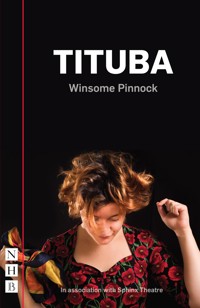
Tituba by Winsome Pinnock is a one-woman show about Tituba Indian, the enslaved woman who played a central role in the seventeenth-century Salem Witch Trials. It was first performed at Hampstead Theatre, London, in November 2016, as part of the Women Centre Stage Festival produced by Sphinx Theatre, demonstrating the range, depth and richness of women's writing for the stage.
Sie lesen das E-Book in den Legimi-Apps auf:
Seitenzahl: 34
Veröffentlichungsjahr: 2018
Das E-Book (TTS) können Sie hören im Abo „Legimi Premium” in Legimi-Apps auf:
Ähnliche






Winsome Pinnock
TITUBA
Taken from the collection
WOMEN CENTRE STAGE
Eight Short Plays By and About Women
www.nickhernbooks.co.uk www.sphinxtheatre.co.ukContents
Dedication
Introduction
Original Production Details
Tituba
The Sphinx Test
Biography
Copyright and Performing Rights Information
For My Comrades-in-ArmsDame Rosemary Squire DBE and Jules Wright
And for Louisa, Tiffany, Helen, Ros,Isabel, Lisa, Ben and Joanna.
IntroductionSue Parrish
‘Women can’t be artists, women are mothers’Sian Ede, Arts Council officer, 1991
The eight plays in this volume first saw the light of day in the Women Centre Stage Festival. They were chosen to show the range, depth and richness of the work that can be created in a celebration of women artists. The Women Centre Stage Festival is an exciting cultural project designed to address and combat women’s exclusion from UK theatre. Sphinx Theatre, founded as the Women’s Theatre Group in 1973 and renamed in 1990, has been in the vanguard of advocating and inspiring women in the arts through productions, conferences and research for four decades. As a kind of feminist-theatre think tank, we initiated the breakthrough Glass Ceiling conferences in the 1990s at the National Theatre, and more recently from 2009, four Vamps, Vixens and Feminists conferences; while landmark productions include Pam Gems’ The Snow Palace and April De Angelis’ modern classic, Playhouse Creatures.
The conferences were a forum for gathering a UK-wide network and forming a sense of solidarity among women in the arts who are often isolated. Leading women artists, academics and journalists shared their professional experiences with packed audiences. For ten years running we hired the NT’s Cottesloe Theatre for the day for the Glass Ceilings, and in 2009, thanks to the good offices of the Literary Manager Sebastian Born, we took over the Olivier Theatre for Vamps, Vixens and Feminists, a sign of dawning consciousness. Many women recount moments of inspiration from these talkshops, and the latest spin-off, Nottingham’s The Party Somewhere Else, took its name from a passing reference of mine to the feeling of exclusion women feel.
However, by 2012 I was haunted by a feeling of extreme Groundhog Day, bearing in mind that I had been involved in campaigning for equality for women in the theatre for over thirty-five years without feeling we’d made much progress. Yes, there had been some improvement since then for women directors and writers, but the figures for female actors remained stubbornly at around 35%. The most recent figures show women writers with work produced at 28%, directors at 36%, and actors at 39%, but nowhere approaching parity for the 51% of the population who are the only majority with the status of a minority. The data shows that out of one hundred and sixty-eight Artistic Directors of Arts Council England’s National Portfolio clients, only thirty-three are women, and they control only 13% of the total ACE theatre budget. Women Centre Stage was created to address this exclusion, at a time when the murmuring for quotas is ever louder.
Sphinx Theatre has always had a feminist vision committed to changing the cultural landscape. We were convinced that if women artists were given space and support they could develop and expand the range of representation of women onstage beyond the endemic cultural stereotypes of wife, mother, mistress, daughter, sister or girlfriend to the male protagonist. We were confident that women could write ‘state of the nation’ plays, away from the domestic arena. We were fired by the passion and the quality of artists we met through our discussions. Finally, in 2014, after several rejections, the Arts Council made an award for the project.




