



2,99 €
Niedrigster Preis in 30 Tagen: 2,49 €
Niedrigster Preis in 30 Tagen: 2,49 €
Mehr erfahren.
- Herausgeber: Booksell-Verlag
- Kategorie: Lebensstil
- Sprache: Englisch
In "To Cuba and Back," Richard Henry Dana presents an evocative travel narrative that invites readers into the vibrant and tumultuous world of 19th-century Cuba. Written in a richly descriptive style, Dana's account weaves together personal experience with keen observations, capturing the island's natural beauty, cultural richness, and complex socio-political landscape. Contextually situated in a period when American interest in Cuba was burgeoning, Dana's prose reflects a blend of romanticism and realism, providing a nuanced portrayal of an era shaped by colonial influence and burgeoning nationalism. This work serves as a critical lens through which we can examine the intersections of travel, imperialism, and identity during a formative time in American literature. Richard Henry Dana, an influential American writer, lawyer, and social reformer, drew upon his maritime experience and deep commitment to social justice in crafting this narrative. His earlier work, "Two Years Before the Mast," had already established him as a prominent figure in American literature. Dana's voyage to Cuba was not just an adventure, but a culmination of his intellectual pursuits, illustrating his fascination with the cultural and human dimensions of the lands he visited, while remaining sensitive to the moral imperatives of his time. Readers seeking a vibrant exploration of Cuba through the eyes of a keen observer will find "To Cuba and Back" irresistible. Dana's masterful storytelling appeals not only to those with an interest in travel literature but also to anyone intrigued by the complexities of cultural encounters. This book is a significant contribution to the canon of American literature and offers timeless insights into the interplay of travel, identity, and social consciousness. In this enriched edition, we have carefully created added value for your reading experience: - A succinct Introduction situates the work's timeless appeal and themes. - The Synopsis outlines the central plot, highlighting key developments without spoiling critical twists. - A detailed Historical Context immerses you in the era's events and influences that shaped the writing. - A thorough Analysis dissects symbols, motifs, and character arcs to unearth underlying meanings. - Reflection questions prompt you to engage personally with the work's messages, connecting them to modern life. - Hand‐picked Memorable Quotes shine a spotlight on moments of literary brilliance. - Interactive footnotes clarify unusual references, historical allusions, and archaic phrases for an effortless, more informed read.
Das E-Book können Sie in Legimi-Apps oder einer beliebigen App lesen, die das folgende Format unterstützen:
Veröffentlichungsjahr: 2019
Ähnliche




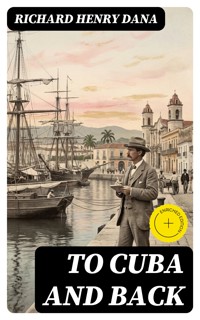















To Cuba and Back
Table of Contents
Introduction
A voyage becomes a mirror that reflects both the allure of a landscape and the moral questions it compels a traveler to face. Richard Henry Dana Jr.’s To Cuba and Back offers a measured, first-person account of a brief journey from the United States to the Caribbean and home again, inviting readers to observe rather than to rush. As a writer already known for disciplined, humane attention to seafaring life, Dana turns his eye toward an island under European colonial rule in the nineteenth century. The result is a narrative interested less in spectacle than in the texture of daily scenes and the principles they reveal.
This book is a work of travel writing set in Cuba during the nineteenth century and published in the late 1850s. Its author, an American lawyer and the widely read writer of Two Years Before the Mast, situates his voyage within a moment when the United States and the Caribbean were bound by commerce, politics, and debate. The setting encompasses ports, streets, and rural districts, framed by the routines of ships and the rhythms of island life. Dana’s focus is observational and reflective, shaped by the conventions of antebellum travel narratives yet attentive to the particularities of a place governed by Spanish colonial authority.
The premise is straightforward: a vacation passage south, a period of touring on shore, and a return across familiar waters. Dana records what he sees and hears on the way—how a city meets the sea, how work and leisure present themselves, how laws and customs appear to a visitor balancing curiosity with conscience. The voice is calm, exact, and occasionally indignant, preferring patient description to flourish. Readers encounter sketches of people in public spaces, glimpses of estates and countryside, and the procedures that structure everyday life. The mood is reflective, with moments of quiet wonder tempered by an ethical attention to human relations.
Several themes organize the journey. There is the encounter between traveler and host society: the limits of a visitor’s understanding, the temptation to generalize, and the responsibility to notice what convenience might obscure. There is the pressure of empire and the visibility of bondage, legible in labor, discipline, and hierarchy. There is the commerce of an island economy and the changing Atlantic world that binds distant ports. And there is the question of law—how rules and institutions define freedom, property, and personhood—viewed by a narrator trained to weigh evidence and argument. The sea becomes a corridor linking observation to judgment, mobility to memory.
Historically, the narrative unfolds under Spanish colonial rule and during an era when slavery shaped Cuban society and intensified debate in the United States. Dana’s account registers how governance, church, and marketplace interact, and how international currents are felt in local routines. Without sensationalism, he notes the ways power operates in streets and households and how plantation systems structure land and labor. The book thus doubles as a document of hemispheric entanglement: trade routes crossing borders, legal ideas crossing languages, and travelers crossing moral thresholds. Its restraint heightens its clarity, offering a contemporary reader a grounded view of a world on the brink of upheaval.
Stylistically, To Cuba and Back blends journalistic precision with the steadiness of a diary. Dana favors close observation—of architecture, ceremony, and work—followed by concise analysis that resists conjecture. He often juxtaposes shipboard routine with urban bustle, then widens his lens to consider institutions and habits. The prose is lucid and unadorned, with an eye for telling detail rather than ornament. Chapters move episodically, yet the through-line is the traveler’s ethical stance: to look carefully, to compare fairly, and to record faithfully. This approach gives the book an air of reliability that invites trust while leaving space for readers to draw their own conclusions.
For readers today, the book matters as more than a period curiosity. It raises enduring questions about the ethics of travel, the responsibilities of witnessing, and the ways comfort can coexist with coercion. It illuminates how plantation economies and colonial administrations shaped everyday life, and how transnational ties complicate national debates. It also models a thoughtful practice of looking—slow, comparative, and accountable—that remains valuable in an age of quick impressions. To Cuba and Back offers a sober, humane lens for considering power, culture, and commerce, and it invites renewed attention to how narratives of place can sharpen conscience as well as curiosity.
Synopsis
To Cuba and Back: A Vacation Voyage (1859) presents Richard Henry Dana Jr.’s brief journey from the United States to Havana and nearby districts, arranged in the order of travel. As a lawyer and observer, Dana records landscapes, city life, commerce, labor, and government under Spanish colonial rule. The narrative begins with embarkation on a coastal steamer, outlines shipboard routines, and traces the approach to Cuba’s coast and harbor. He states a practical aim: to replace rumor with direct observation for American readers. This framing sets an even, documentary tone that guides the subsequent chapters of arrival, excursions, reflections, and return.
Upon entering Havana, Dana describes the fortified harbor, the customhouse, and health formalities that govern entry in a tropical port. He sketches the city’s layout, plazas, shaded arcades, and narrow streets, noting traffic by volante carriages and the mixed presence of civilians, soldiers, and mariners. Early passages introduce lodging arrangements, food, public markets, and water supply, as well as the rhythms imposed by heat and afternoon rest. He records the diversity of the population and languages heard on the wharves. The bustling exchange of sugar, tobacco, and imported manufactures signals Havana’s role as a Caribbean entrepôt under Spanish authority.
The narrative turns to urban institutions and daily life. Dana attends public promenades, musical evenings, and theatrical performances, using them to characterize social conventions. He visits churches and observes religious processions as elements of civic order and calendar. Descriptions of police, street lighting, and night patrols illustrate the city’s regulated environment. He notes leisure pursuits, lotteries, and cafés, while detailing prices, coinage, and the frequent handling of small change. Ports, warehouses, and countinghouses are portrayed in operation, emphasizing how shipping schedules and customs procedures shape business. These chapters build a concrete picture of Havana’s social fabric before any long inland travel.
Dana makes excursions beyond the capital by road and early railway, which connect Havana to fertile districts. He describes the ride through plantations and rural villages, the distinctive rolling countryside, and the arrangement of fields, canals, and windbreaks. Visits to Matanzas and the celebrated Yumuri valley foreground scenery and cultivation on a larger scale. Practical notes on fares, stations, and conveyances accompany sketches of roadside inns and wayside police posts. By following the actual routes a traveler would take, the book shows how infrastructure, distance, and climate condition movement and trade between city and countryside in mid-nineteenth-century Cuba.
On estates, Dana outlines the sugar-making cycle from cane cutting to grinding, boiling, and crystallization. He describes mills, clarifiers, bagasse used as fuel, and the organization of night-and-day shifts during the harvest. He presents the classification of sugars and the packing of hogsheads for export, while also noting differences between sugar and coffee estates in layout, shade, and labor rhythm. Ancillary operations—rum distillation, cooperage, transport to railheads or ports—receive brief, factual treatment. These passages explain how capital, machinery, and land are combined to produce export staples, grounding later discussions of law and labor in concrete processes and schedules.
A central portion surveys labor systems. Dana records the legal status and daily regimen of enslaved Africans on plantations, including housing, supervision, and disciplinary practices as described by managers and observed in part on site. He notes demographics and the presence of free people of color in trades and service. The narrative also treats the Chinese contract labor (coolie) system, outlining terms of indenture, duration, and enforcement, and comparing roles in field and mill work. References to the lingering illicit slave trade and barracoons appear as reported facts. This section establishes the workforce on which agricultural exports depend, without departing from a descriptive register.
Government and law are presented through sketches of the captain-general’s authority, administrative councils, and the judiciary. Dana summarizes passport requirements, press control, and the absence of jury trial, illustrating how executive power shapes public order. Municipal institutions, taxes, customs tariffs, and monopolies are noted insofar as they bear on commerce and daily life. He observes the visible military presence, garrisons, and fortifications, along with the church’s roles in education and social services. These chapters connect official structures to practical effects—licenses, inspections, and fees—showing how colonial regulations frame movement, trade, assembly, and expression throughout the island.
The book situates Cuba in an international context. Dana recounts American and British mercantile activity, consular services, and maritime patrols related to suppression of the transatlantic slave trade under treaty obligations. He summarizes recent filibustering attempts and the American annexation debate to explain diplomatic sensitivities. From his observations, he concludes that Cuban society and production are closely tied to slavery, making annexation imprudent and likely to import serious conflict into U.S. affairs. He emphasizes the priority of definitively ending the slave trade and promoting lawful, regulated commerce. These conclusions are presented as practical findings derived from travel, documents, and conversations on the island.
The closing chapters narrate Dana’s departure from Havana and return across the Florida Straits, then recapitulate principal observations on city life, agriculture, labor, and governance. He restates the book’s purpose: to provide an accurate, on-the-spot portrait of Cuba under Spanish rule for American readers. The overall message is informational rather than polemical, stressing the interdependence of economy, law, and social order. By following the route of a short vacation voyage, To Cuba and Back offers a sequential, compact account that links scenes and statistics to travel, concluding with cautious assessments of Cuba’s prospects and its relations with the United States.
Historical Context
Richard Henry Dana Jr.’s To Cuba and Back (1859) is set in colonial Cuba in the late 1850s, when the island was Spain’s richest American possession and a critical node in Atlantic commerce. Havana and Matanzas formed the urban-commercial hinge of a plantation society powered by enslaved labor and linked to the United States by steamship routes, sugar and tobacco trade, and finance. Spanish authority, concentrated in the Captain-General, maintained order through censorship, a militarized police, and special tribunals. Railways (the Havana–Gfcines line opened in 1837) and steam technology signaled modernity, yet social life remained structured by race, caste, and bondage. Dana writes from a U.S. vantage on the eve of the Civil War, observing Cuba’s contradictions first-hand.
The sugar plantation complex defined nineteenth-century Cuba. By the 1850s–1860s, ingenios clustered especially around Matanzas and Havana produced hundreds of thousands of tons of sugar annually (around 447,000 metric tons by 1860), driven by enslaved African labor organized in large gangs, regulated by overseers, and powered increasingly by steam mills and rail spurs to ports. The 1861 census counted approximately 370,000 enslaved people on the island, alongside substantial free populations of color and whites. Dana travels this landscape, riding the early Cuban railways and visiting estates, where he carefully notes work regimens, housing, branding practices, and the integration of technology into coercive labor. His narrative links plantation efficiency to violence, showing how industrial methods intensified, rather than mitigated, bondage.
Despite treaties with Britain (notably the 1817 Anglo-Spanish agreement and later conventions) to suppress the transatlantic slave trade, illegal shipments of Africans continued to reach Cuba well into the 1860s, facilitated by bribery, weak enforcement, and planter demand. British cruisers patrolled Caribbean routes, and Mixed Commission Courts in Havana adjudicated captured slavers, yet clandestine landings and false papers remained common. Tens of thousands of Africans arrived illegally after 1820 alone. Dana’s 1859 voyage unfolds against this contested maritime backdrop: he records harbor talk of seizures, observes the symbolic presence of anti-slavery patrols, and details local ambivalence toward the law. The book situates Havana as a staging ground where imperial diplomacy and planter interests collided on the waterfront.
Beginning in 1847, Spanish-Cuban recruiters imported indentured workers from China under eight-year contracts, creating a parallel labor stream to slavery; by 1874, roughly 125,000 Chinese coolies had been brought to Cuba, many via Macao, under conditions widely condemned as coercive. Mortality rates were high, contracts were frequently violated, and punishment regimes often mirrored those imposed on enslaved Africans. Major planters and merchants, including figures like Julie1n Zulueta in Matanzas, profited from the system. Dana confronts this phenomenon directly, noting Chinese laborers in fields and barracks and comparing contractual rhetoric to lived compulsion. His observations integrate the coolie trade into a global history of coerced labor, exposing how Cuban sugar’s profitability depended on multiple, overlapping forms of unfree work.
Cuban public life in the 1850s was framed by an authoritarian colonial state. The Captain-General wielded near-plenary powers: censorship restricted print culture, passports and police checks regulated movement, and political dissent could be met with detention or exile. Military presence at fortifications like El Morro in Havana underwrote this order. After the failed 1851 invasion by U.S.-based filibusters, the colonial government made public examples of conspirators, signaling zero tolerance for sedition. Dana records passport formalities, the ubiquity of guards, and conversational self-censorship among residents. The travelogue thus documents governance by surveillance and decree, connecting everyday routinestickets, inspections, permitsto a broader imperial architecture of control.
U.S. expansionist designs on Cuba peaked earlier in the decade. The filibustering expeditions of Narciso Lf3pez (1849, 1850, 1851) sought to detach the island from Spain; Lf3pez was captured and executed by garrote in Havana on September 1, 1851. In 1854, the Ostend Manifesto by American ministers James Buchanan, John Y. Mason, and Pierre Soule9 argued that the United States should purchase Cuba from Spain, or seize it if necessary, to protect strategic and domestic interests, including slavery. Dana evokes these episodes through conversations with Americans and Creoles and by recalling the memory of Lf3pez’s fate in Havana. He weighs annexationist rhetoric against his observations of colonial rule and enslavement, critiquing romanticized visions of U.S. intervention.
Dana’s perspective is inseparable from the U.S. sectional crisis. The Fugitive Slave Act of 1850, which he challenged as counsel in high-profile Boston cases such as Anthony Burns (1854), and Dred Scott v. Sandford (1857), which denied Black citizenship and limited congressional power over slavery, polarized national politics. Northern commerce nonetheless depended on Cuban sugar and tobacco, tying antislavery regions to slave economies. Dana’s 1859 voyage, undertaken for health and reflection, becomes an inquiry into slavery’s international political economy: he contrasts Cuban bondage (including manumission practices like coartacif3n) with U.S. law, and records candid exchanges with U.S. merchants in Havana about trade volumes and credit. The book thus refracts American debates through a concrete Caribbean scene.
As social and political critique, the book exposes the moral and institutional scaffolding of a plantation empire entwined with U.S. markets and ambitions. By juxtaposing engineering triumphsrailways, steam mills, port infrastructurewith the coercion sustaining them, Dana indicts prosperity built on bondage. He dissects colonial absolutism in daily procedures, linking censorship and police power to the protection of slave property, and he challenges annexationist fantasies by foregrounding Cuban realities rather than ideology. His measured, legalistic attention to labor systems, contracts, and jurisdiction highlights shared culpability across nations and classes, turning a vacation voyage into a case study in imperial economics, racial hierarchy, and the politics of human freedom.




