


104,99 €
Mehr erfahren.
- Herausgeber: John Wiley & Sons
- Kategorie: Wissenschaft und neue Technologien
- Sprache: Englisch
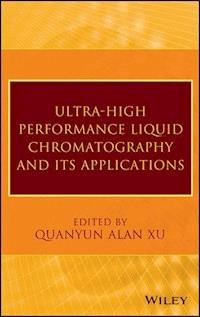
Explores both the benefits and limitations of new UHPLC technology High performance liquid chromatography (HPLC) has been widely used in analytical chemistry and biochemistry to separate, identify, and quantify compounds for decades. The science of liquid chromatography, however, was revolutionized a few years ago with the advent of ultra-high performance liquid chromatography (UHPLC), which made it possible for researchers to analyze sample compounds with greater speed, resolution, and sensitivity. Ultra-High Performance Liquid Chromatography and Its Applications enables readers to maximize the performance of UHPLC as well as develop UHPLC methods tailored to their particular research needs. Readers familiar with HPLC methods will learn how to transfer these methods to a UHPLC platform and vice versa. In addition, the book explores a variety of UHPLC applications designed to support research in such fields as pharmaceuticals, food safety, clinical medicine, and environmental science. The book begins with discussions of UHPLC method development and method transfer between HPLC and UHPLC platforms. It then examines practical aspects of UHPLC. Next, the book covers: * Coupling UHPLC with mass spectrometry * Potential of shell particles in fast liquid chromatography * Determination of abused drugs in human biological matrices * Analyses of isoflavones and flavonoids * Therapeutic protein characterization * Analysis of illicit drugs The final chapter of the book explores the use of UHPLC in drug metabolism and pharmacokinetics studies for traditional Chinese medicine. With its frank discussions of UHPLC's benefits and limitations, Ultra-High Performance Liquid Chromatography and Its Applications equips analytical scientists with the skills and knowledge needed to take full advantage of this new separation technology.
Sie lesen das E-Book in den Legimi-Apps auf:
Seitenzahl: 460
Veröffentlichungsjahr: 2013
Ähnliche


















Contents
Cover
Title Page
Copyright
Preface
Contributors
Chapter 1: UHPLC Method Development
1.1 INTRODUCTION
1.2 METHOD DEVELOPMENT
1.3 CONVERSION OF AN HPLC METHOD TO UHPLC
1.4 CONVERSION OF A UHPLC METHOD TO HPLC
1.5 SUMMARY
REFERENCES
Chapter 2: Method Transfer Between HPLC and UHPLC Platforms
2.1 INTRODUCTION
2.2 TRANSFERRING HPLC METHODS TO UHPLC
2.3 TRANSFERRING UHPLC METHODS TO HPLC PLATFORMS
2.4 TRANSFERRING LC METHODS TO OTHER LABS
REFERENCES
Chapter 3: Practical Aspects of Ultrahigh Performance Liquid Chromatography
3.1 INTRODUCTION
3.2 EFFECT OF EXTRA-COLUMN VOLUME ON PERFORMANCE OF SUB-2 μM PARTICLE-PACKED COLUMNS IN UHPLC
3.3 COLUMN PRESSURE AND FRICTIONAL HEATING
3.4 METHOD TRANSFER BETWEEN UHPLC AND HPLC AND OTHER TIPS
3.5 CONCLUDING REMARKS
REFERENCES
Chapter 4: Coupling UHPLC with MS: The Needs, Challenges, and Applications
4.1 INTRODUCTION
4.2 TECHNICAL REQUIREMENTS FOR THE COUPLING OF UHPLC WITH MS
4.3 UHPLC-MS FOR BIOANALYTICAL ASSAYS
4.4 DRUG METABOLISM STUDIES USING UHPLC-MS
4.5 MULTI-ANALYTE SCREENING WITH UHPLC-MS
4.6 UHPLC-MS IN METABOLOMICS
4.7 ANALYSIS OF PROTEINS WITH UHPLC-MS
4.8 CONCLUSIONS
REFERENCES
Chapter 5: The Potential of Shell Particles in Fast Liquid Chromatography
5.1 INTRODUCTION
5.2 COLUMN EFFICIENCY
5.3 FAST LIQUID CHROMATOGRAPHY
5.4 THE IMPACT OF EXTRA-COLUMN BAND-BROADENING IN FAST LIQUID CHROMATOGRAPHY
5.5 SHELL PARTICLES, THE INFLUENCE OF SHELL THICKNESS
5.6 THE EFFICIENCY OF COLUMNS PACKED WITH SHELL PARTICLES
5.7 FAST SEPARATIONS BY APPLYING THE NEW GENERATION OF SHELL PARTICLES
5.8 APPLICATIONS OF COLUMNS PACKED WITH THE LATEST GENERATION OF SHELL PARTICLES
5.9 CONCLUSION
REFERENCES
Chapter 6: UHPLC Determination of Drugs of Abuse in Human Biological Matrices
6.1 INTRODUCTION
6.2 CLASSES OF DRUGS AND ILLICIT SUBSTANCES
6.3 DRUG METABOLIZATION IN THE HUMAN BODY
6.4 HUMAN MATRICES ANALYZED
6.5 PRETREATMENT AND ANALYSIS
REFERENCES
Chapter 7: UHPLC in the Analyses of Isoflavones and Flavonoids
7.1 INTRODUCTION
7.2 UHPLC IN POLYPHENOLIC COMPOUNDS DETERMINATION
7.3 SUMMARY
REFERENCES
Chapter 8: UHPLC for Characterization of Protein Therapeutics
8.1 INTRODUCTION
8.2 PROTEIN CHARACTERIZATION AND LOT RELEASE TESTING
8.3 HPLC AND UHPLC
8.4 REVERSED-PHASE UHPLC FOR PROTEIN ANALYSIS
8.5 REVERSED-PHASE UHPLC FOR PEPTIDE MAP ANALYSIS
8.6 UHPLC FOR LC-MS AND LC-MS/MS APPLICATIONS
8.7 HYDROPHILIC INTERACTION CHROMATOGRAPHY (HILIC) FOR GLYCAN PROFILING
8.8 HYDROPHOBIC INTERACTION CHROMATOGRAPHY FOR HYDROPHOBICITY ANALYSIS
8.9 ION EXCHANGE CHROMATOGRAPHY FOR CHARGE VARIANT ANALYSIS
8.10 SIZE EXCLUSION CHROMATOGRAPHY FOR SIZE HETEROGENEITY ANALYSIS
8.11 CONCLUSION
ACKNOWLEDGMENT
REFERENCES
Chapter 9: UHPLC/MS Analysis of Illicit Drugs
9.1 INTRODUCTION
9.2 APPLICATIONS OF UHPLC/MS IN ILLICIT DRUG ANALYSIS
9.3 CONCLUSIONS
REFERENCES
Chapter 10: Ultra-High Performance Liquid Chromatography – Mass Spectrometry and Its Application
10.1 INTRODUCTION
10.2 INSTRUMENTATION OF UHPLC-MS
10.3 UHPLC-MS APPLICATIONS
10.4 CONCLUSIONS
REFERENCES
Index
Copyright © 2013 by John Wiley & Sons, Inc. All rights reserved.
Published by John Wiley & Sons, Inc., Hoboken, New Jersey. Published simultaneously in Canada.
No part of this publication may be reproduced, stored in a retrieval system, or transmitted in any form or by any means, electronic, mechanical, photocopying, recording, scanning, or otherwise, except as permitted under Section 107 or 108 of the 1976 United States Copyright Act, without either the prior written permission of the Publisher, or authorization through payment of the appropriate per-copy fee to the Copyright Clearance Center, Inc., 222 Rosewood Drive, Danvers, MA 01923, (978) 750-8400, fax (978) 750-4470, or on the web at www.copyright.com. Requests to the Publisher for permission should be addressed to the Permissions Department, John Wiley & Sons, Inc., 111 River Street, Hoboken, NJ 07030, (201) 748-6011, fax (201) 748-6008, or online at http://www.wiley.com/go/permission.
Limit of Liability/Disclaimer of Warranty: While the publisher and author have used their best efforts in preparing this book, they make no representations or warranties with respect to the accuracy or completeness of the contents of this book and specifically disclaim any implied warranties of merchantability or fitness for a particular purpose. No warranty may be created or extended by sales representatives or written sales materials. The advice and strategies contained herein may not be suitable for your situation. You should consult with a professional where appropriate. Neither the publisher nor author shall be liable for any loss of profit or any other commercial damages, including but not limited to special, incidental, consequential, or other damages.
For general information on our other products and services or for technical support, please contact our Customer Care Department within the United States at (800) 762-2974, outside the United States at (317) 572-3993 or fax (317) 572-4002.
Wiley also publishes its books in a variety of electronic formats. Some content that appears in print may not be available in electronic books. For more information about Wiley products, visit our web site at www.wiley.com.
Library of Congress Cataloging-in-Publication Data:
Ultra-high performance liquid chromatography and its applications / edited by Quanyun Alan Xu. pages cm Includes bibliographical references and index. ISBN 978-0-470-93842-3 (hardback) 1. Liquid chromatography. I. Xu, Quanyun A., 1961– QD79.C454U48 2013 543′.84–dc23 2012035740
Preface
High performance liquid chromatography (HPLC) is widely used in analytical chemistry and biochemistry to separate, identify, and quantify compounds. For decades, it has been the method of choice in drug discovery and development both in the pharmaceutical and biopharmaceutical industries and also in academia. With the advent of ultra-high performance liquid chromatograph (UHPLC) a few years ago, the science of liquid chromatography (LC) has come to a new era. UHPLC provides the separation science with high speed, high resolution, high sensitivity, and short runtime. The ultra-high performance of liquid chromatography is achieved either by ultra-high pressure liquid chromatographic instrumentation which couples with sub-2 μm particle column packing or by conventional high performance liquid chromatography which capitalizes on core-shell (or fused-core) particle column packing. Ultra-high pressure liquid chromatographic system can withstand extremely high pressures, up to 1, 000 bars, which a sub-2 μm particle column generates. On the other hand, a core-shell particle-packing column usually produces column back pressure up to 400 bars. Two different packing materials, one goal.
Ultra-High Performance Liquid Chromatography and Its Applications will help readers develop skills in UHPLC method development; transfer methods from HPLC to UHPLC and from UHPLC to HPLC; maximize the performance of their UHPLC; understand benefits and limitations of UHPLC; and apply UHPLC in pharmaceutical research, clinical research, food safety, and environmental services. The first half of this book describes method development procedure that includes defining method goals, scouting columns and mobile phases, selecting separation conditions, optimizing and validating the method, presents the approaches of method transfer between HPLC and UHPLC platforms that include selecting the right column and properly scaling flow rate, injection volume, and gradient conditions (if applicable), and discusses practical aspects of UHPLC, including its benefits and limitations. It reviews the recent development of the coupling of UHPLC with mass spectrometry (UHPLC-MS) in terms of its advantages and challenges.
As an alternative to sub-2 μm particles in ultra-high pressure liquid chromatography, core-shell particle column packing balances column efficiency and back pressure and is used on conventional high performance liquid chromatography. Chapter 5 presents an insight into the theory (van Deemter equation) behind the success of core-shell particle packing and reviews advantages and applications in the fields of bioanalysis and environmental analysis.
The second half of this book provides examples of applications of UHPLC in bioanalysis, including analysis of drugs of abuse in human biological matrices, analysis of isoflavones and flavonoids in natural products and biological samples, characterization and analysis of therapeutic proteins, and studies of pharmacokinetics, drug metabolism, and metabonomics of Tranditional Chinese Medicine.
I would like to acknowledge all of the authors who found time in their busy schedules to write these exceptional chapters and who made this book possible. My thanks also go to Mr. Bob Esposito and Michael Leventhal at John Wiley & Sons for their much valued assistance throughout the preparation of this book.
Quanyun Alan Xu
Contributors
Irena Barnowska, Professor, Department of Analytical Chemistry, Silesian University of Technology, Gliwice, Poland
Tilak Chandrasekaran, MS, Merck & Co., Inc., Rahway, NJ
Ray Chen, PhD, Thermo Fisher Scientific, San Jose, CA
Shujun Chen, PhD, API Chemistry and Analysis, Product Development, Platform Technology and Science, GlaxoSmithKline, King of Prussia, PA
Thomas F. Cullen, PhD, Abbvie, North Chicago, Illinois
Ying Deng, MS, Department of Analytical Chemistry, School of Pharmacy, Shenyang Pharmaceutical University, Shenyang, Liaoning, China
Diab Elmashni, Marketing Communications, Thermo Fisher Scientific, Sunnyvale, CA
Szabolcs Fekete, PhD, School of Pharmaceutical Sciences, University of Geneva, Geneva, Switzerland
Jeno Fekete, Professor, Department of Inorganic and Analytical Chemistry, Budapest University of Technology and Economics, Budapest, Hungary
Hong Gao, PhD, Merck & Co., Inc., Rahway, NJ
Maria Carla Gennaro, Department of Science and Technological Innovation, University of Piemonte Orientale, Alessandria, Italy
Fabio Gosetti, PhD, Department of Science and Technological Innovation, University of Piemonte Orientale, Alessandria, Italy
Davy Guillarme, PhD, School of Pharmaceutical Sciences, University of Geneva, Geneva, Switzerland
Guifeng Jiang, PhD, Applied Market, Thermo Fisher Scientific, San Jose, CA
Alireza Kord, PhD, API Chemistry and Analysis, Product Development, Platform Technology and Science, GlaxoSmithKline, King of Prussia, PA
Laila Kott, PhD, Analytical Development Small Molecules, Millennium (The Takeda Oncology Company), Cambridge, MA
Famei Li, PhD, Department of Analytical Chemistry, School of Pharmacy, Shenyang Pharmaceutical University, Shenyang, Liaoning, China
Sylwia Magiera, PhD, Department of Analytical Chemistry, Silesian University of Technology, Gliwice, Poland
Eleonora Mazzucco, PhD, Department of Science and Technological Innovation, University of Piemonte Orientale, Alessandria, Italy
Theresa K. Natishan, MS, Merck & Co., Inc., Rahway, NJ
Jennifer C. Rea, PhD, Protein Analytical Chemistry, Genentech, Inc., South San Francisco, CA
Serge Rudaz, PhD, School of Pharmaceutical Sciences, University of Geneva, Geneva, Switzerland
Julie Schappler, PhD, School of Pharmaceutical Sciences, University of Geneva, Geneva, Switzerland
Jason R. Stenzel, PhD, Crime Laboratory, Washington State Patrol, Cheney, WA
Jean-Luc Veuthey, PhD, Professor, School of Pharmaceutical Sciences, University of Geneva, Geneva, Switzerland
Yajun Jennifer Wang, PhD, Protein Analytical Chemistry, Genentech, Inc., South San Francisco, CA
Gregory K. Webster, PhD., MBA, Abbvie, North Chicago, IL
Christopher J. Welch, PhD, Merck & Co., Inc., Rahway, NJ
Naijun Wu, PhD, Analytical R&D, Celgene Corporation, Summit, NJ
Zhili Xiong, PhD, Department of Analytical Chemistry, School of Pharmacy, Shenyang Pharmaceutical University, Shenyang, Liaoning, China
Quanyun Alan Xu, PhD, Pharmaceutical Development Center, Department of Experimental Therapeutics, Division of Cancer Medicine, UT MD Anderson Cancer Center, Houston, TX
Li Zhang, MS, Merck & Co., Inc., Rahway, NJ
Taylor Zhang, PhD, Protein Analytical Chemistry, Genentech, Inc., South San Francisco, CA




