


Erhalten Sie Zugang zu diesem und mehr als 300000 Büchern ab EUR 5,99 monatlich.
- Herausgeber: Cinnamon Press
- Kategorie: Gesellschafts- und Liebesromane
- Sprache: Englisch
In this prize-winning collection (2024 Rubery Book Award for Short Fiction), told with intelligent and textured prose, we travel far and wide to disparate places and distinctive cultures. Whether the protagonists are dealing with migration or climate change, acts of terrorism or the intricacies of family relationships, each story turns on a moment that touches the human condition, connecting us to a single encounter. With a finger on the political and cultural pulse, Ultramarine is a generous, finely-tuned collection for the times we live in.
Sie lesen das E-Book in den Legimi-Apps auf:
Seitenzahl: 280
Veröffentlichungsjahr: 2023
Das E-Book (TTS) können Sie hören im Abo „Legimi Premium” in Legimi-Apps auf:
Ähnliche



















Contents
Praise for Ultramarine
Dedication
Foreword
A thousand paper cranes
The sea between the lands
Ultramarine
Dear Mr President
Slå katten af tønden
Omma’s piano
Light of my eye
Que tengas suerte
Jacaranda tree
Busy being free
Heavenly phoenix on earth
Author Biography
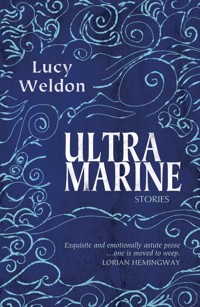
Ultramarine
stories
Lucy Weldon
Published by Leaf by Leaf an imprint of Cinnamon Press,
Office 49019, PO Box 92, Cardiff, CF11 1NB
www.cinnamonpress.com
The right of Lucy Weldon to be identified as author of this work has been asserted by her in accordance with the Copyright, Designs and Patent Act, 1988. © 2023 Lucy Weldon.
Print Edition ISBN 978-1-78864-964-3
Ebook Edition ISBN 978-1-78864-975-9
British Library Cataloguing in Publication Data. A CIP record for this book can be obtained from the British Library.
All rights reserved. No part of this publication may be reproduced, stored in a retrieval system, or transmitted in any form or by any means, electronic, mechanical, photocopying, recording or otherwise without the prior written permission of the publishers. This book may not be lent, hired out, resold or otherwise disposed of by way of trade in any form of binding or cover other than that in which it is published, without the prior consent of the publishers.
Designed and typeset by Cinnamon Press.
Cover design by Adam Craig © Adam Craig
Cinnamon Press is represented by Inpress.
This is a work of fiction. Names, places, events and incidents are either the products of the author’s imagination or used fictitiously. Any resemblance to actual persons living or dead, or actual events is purely coincidental.
Lucy Weldon’s stories are always sparky, witty, precisely detailed and urgently topical, just as her characters are courageously passionate and curious about the contemporary world in all its glorious and ominous complexity. Like a seismograph Ultramarine slyly registers rumblings along international fault lines—without ever forgetting to acknowledge the primacy of love…
— Alan Mahar, author and short story writer
Weldon uses the backdrop of several nations to tell the stories of multiple characters facing challenges that are as intricate as the countries she finds them in.
— Akeem Balogun, author of The Storm, a winner of the Somerset Maugham Award
Weldon’s collection amazes with the range of places to which it takes us. From story to story, we are moving fast over great global distances but ultimately each piece pulls us to that single place common to them all, the heart. Weldon writes with great care and respect for her diverse characters. There is intimacy across vast spaces as well as those inevitable human distances and disconnections … a transnational collection.
— Adnan Mahmutovic, author of At the Feet of Mothers and Thinner than a Hair
For my parents
AHW and BGWW
Foreword
It is rare that a story collection weaves its threads through so many varied corners of the world—Jakarta, Tel Aviv, Hong Kong, Denmark, Arizona, East Africa—and leaves the reader with an overarching sense of the vulnerability of humanity in all its mutable forms.
Lucy Weldon tackles the immensely difficult task of addressing a veteran’s PTSD, the ever-pervasive threat of war in Israel, women’s rights, the plight of immigrants—with an especially moving portrait of an Arizonian outlier who defies the system and finds a poetically heroic way to touch the lives of the immigrants he meets—and the deep and abiding grief of a woman drowning in an unfulfilling marriage who has just lost her mother.
There is the stark brutality of rape that renders an immigrant woman mute. There is love lost and love found within these stories. When it is found the magic of discovery is transcendent. And when it is lost there grows within the reader an acute mourning that Weldon brings forth with her exquisite and emotionally astute prose.
So staggering is the breadth and scope of Weldon’s focus that the reader is moved by the author’s own humanity in having taken on so much, given so much with prose that is almost defiantly unique in its rhythm, timbre and cadence, and its very clearly beating heart. The works of Nobel laureate, Kazuo Ishiguro, come to mind in the reading of this collection. As to why, one must look again to the humanity in each of the stories, to the empathy elicited in the reader by one who understands the power of human kindness.
The collection’s title story—Ultramarine—gives us, arguably, one of the most sympathetic male characters in contemporary prose: the nerdy husband John whose wit and subsequent heroism in the face of near-certain death endears the reader for all time. There is frequently the fresh and unexpected phrase, an especially keen insight given with a quick brushstroke, and all of it achieved so deftly that one is moved to give a standing ovation when the final story is done. And, yes, to weep.
Lorian Hemingway, February 2023.
Lorian Hemingway is the critically acclaimed author of Walking Into the River, Walk on Water, and A World Turned Over. Ms. Hemingway is the director and final judge of the Lorian Hemingway Short Story Competition.
Ultramarine
stories
A thousand paper cranes
The Lazy Susan is turning. Anneka watches. Guests’ fingertips spin it clockwise then anticlockwise, slowly, politely, waiting for each serving spoon to be placed back. The chicken satay Madura on thin bamboo skewers shines with caramelised palm sugar. The white rice waits like perfectly wrapped parcels. The aromas of garlic, galangal and chilli from the beef rendang hover. Candles on the round teak table flicker under the cool of the air conditioning.
It’s yet another dinner party in Jakarta, Anneka thinks. There’s been no let up. Tonight, she’s been caught by the invisible tripwire of grief. She’s on the outside looking in. That’s what grief does, it turns you inside out. It pushes and pulls you. Anneka scans the guests. She counts. Eight is the perfect number. Snippets of lively conversation reach her. The dinner party is going well. Across the table is Alexander. Their age difference has crept up on them. Life has crept up on them. Who is he? She’s been wondering that for a while now. Who are they? Once a couple, now strangers. It has nothing to do with her mother’s death. Grief’s making things clearer. Not cloudier. She’s sure of that.
Everyone laughs at something Alexander says. Something about the rain that will come soon. Typical. It’s always Alexander in the spotlight. Always right, always master and commander. But not of her. She still feels marooned after her mother’s unexpected death three months ago. It’s not about moving on. She keeps telling him that. And he keeps giving her books, sending her links to articles on grief. Podcasts!
The Lazy Susan has stopped. Alexander moves it with short staccato movements to get her attention. It’s a hint. No, an instruction. Eat! Anneka refuses to meet his gaze. She’s not hungry. All she wants is to curl up on the sofa with something comforting like soto ayam, chicken soup. She told him she’s finding it hard to talk to new people at the moment. Don’t sit me by anyone I don’t know, she had said when he’d come home and told her about the dinner party. So many things she doesn’t want to get into like how are you enjoying Jakarta, Anneka? A bit different from your last posting in Brussels! Alexander thinks it will be good for her to meet new people. If only he knew what was good for me.
She turns and looks at her neighbour. He’s someone Alexander has met through Lili. What’s his name? Pedro? Pietro? No. It’s a much older sounding name. Piotr. That’s it. Alexander introduced him when he arrived. Across the table, Anneka sees Rania, her Egyptian friend, no longer fresh from the Arab Spring. Rania’s stabbing the air with her fork, just above her plate filled with food. She’s talking about the importance of educating women. A few of Rania’s words drift across the table. Then the birth rate would drop. Look at Italy, for goodness’ sake!
There’s a thud. Otto has smacked his hand down to make a point to Lili. The silver cutlery jangles, forks jostling with knives. Anneka watches the beer as it moves up the side of Otto’s glass. It happens in slow motion like a wave hitting a sea wall, like travelling liquid gold. She watches as it reaches the lip of the glass and then falls back. Otto’s hand steadies it with an apologetic glance at the others. He can’t keep off the topic of zoonotic diseases. It’s his hobby horse. It’s the discussion these days since the global pandemic.
Alexander says something about hoping that Otto has stamina. It’ll be a long race. The fine balance between economic growth and the protection of the natural world. Ah, the pragmatic Alexander. Anneka glances at her husband. He’s chatting to Lili. At home, in the security of his own house, away from the demands of diplomatic work, he can say exactly, almost exactly, what he likes. Lucky him, Anneka thinks. If she says what she’s really thinking, she might bring the dinner party shebang to an embarrassing end. She checks herself. Shifts her position in her chair, trying to shake off these thoughts. Beside her, Andres is half out of his seat. He reminds her of Hugo, her younger brother, when he was a small boy and had a bug in a matchbox. Look at me! Look at me! Andres has the attention of the whole table.
‘Did anyone know that there have been four earthquakes this month? Four, here in Jakarta! Did anyone notice?’ he says.
Everyone shrugs. No one’s noticed or even felt the tremors. Like most people living with the constant threat of natural disaster, they’re a mixture of fatalism, optimism and naivety. In other words, they carry on as normal.
‘When my time’s up, it’s up!’ Lili says.
Everyone agrees with Lili, but Anneka doesn’t. She notices the tremors. They usually come in the middle of the night from somewhere deep down in the Earth’s crust. Somehow, they reach her. She’s never mentioned this to Alexander. He’s always been too busy, caught up in the latest diplomatic crisis. But the tremors find her, lying in her bed when she can’t sleep. And sleep has eluded her these past months. There are times when she doesn’t feel sane. In the dark, it’s worse.
‘And what if Gunung Tambora does its thing again? The biggest volcanic eruption in history. We’re sitting on the Ring of Fire. Here in this dining room. It’s a time bomb ticking away,’ Andres says, enacting the explosion with arms flaying in the air.
At the mention of volcanoes, Anneka pictures the view outside the aeroplane window when she flies over Java. It’s a dreamy fairy-tale illustration with perfect conical volcanic tops that poke through white cotton-wool clouds, vents that release twirling and trailing plumes of smoke. Is the smoke a signal, a message about our world, in a mysterious unspoken language?
Anneka notices Mitsuko and Piotr are having their own conversation. She sits back and listens in. She picks up the threads. Mitsuko is talking about fundamentalist Islam and whether it’s a brake on progress, whatever that means. Mitsuko puts air quotes around those last few words. Piotr is folding a piece of paper in front of him. Anneka watches his hands and fingers as they neatly make creases. She wonders what he’s making. It’s been a long time since she’s done origami. It was a childhood favourite. He folds the paper, each corner meeting at the centre of the square.
‘But what about in Japan? Why does your country only allow male heirs to accede to the Chrysanthemum throne?’ Piotr says. ‘Isn’t that a brake on progress?’
Piotr puts the last three words in air quotes. He’s grinning. Anneka smiles. She likes his playful way. He obviously isn’t a fan of air quotes and knows that an argument is rarely binary. Piotr turns the paper over and repeats the folds, taking the corners again back to the centre.
Ah, says Anneka to herself. She knows what he’s making. Her mother taught it to her. She remembers its Dutch name, zoutvaatje. Salt cellar is the translation in English. Piotr finishes and takes out a pen. He covers what he’s writing with his left arm, blocking Anneka’s view. She can only see the top of his pen moving. Mitsuko tells him the latest on the Japanese royal family and how there’s no sign of modernisation.
Piotr clicks his pen closed, picks up the origami game and slips his thumbs and index fingers into the corner pockets. He says something to Mitsuko and slowly turns his body to face Anneka. ‘Would you like your fortune told?’
Ah, the fortune telling game, Anneka says to herself. That’s its other name in English.
Piotr asks the question again. She shakes her head.
‘I’m sure Mitsuko wants to play,’ she says.
‘But I want to tell your fortune, Annie,’ Piotr says.
Annie? He’s changed her name already! Her mother always called her Annie. There’s a split second when Anneka feels tempted but she shakes her head again. Piotr glances at her. He puts the fortune telling game on the table. He places his finger to his lips. There’s a dance of lights in his pale blue eyes, more than the normal catchlights. A conspiracy is building between them that only they are part of. She can feel it. He takes another piece of paper. He starts to make folds.
Piotr has drawn her into the evening. It’s as if he’s dropped down a thick sturdy rope and is pulling her out of a dark hole. He nudges her with his elbow. Accidentally but gently. It’s the slightest of touches. She’s raw. She can feel his skin through the layers of her skin, right down to the bone. She slides the fortune telling game into her pocket. Piotr’s arm is alongside hers on the table. There’s a wafer-thin gap between them. She feels warmth radiating from his arm, through his shirt. Everything she hears and feels has been amplified. It’s what life is like these days.
Anneka looks at what he’s now making. It’s full of folds and creases, nothing like the fortune telling game.
‘Almost there,’ Piotr says.
But he doesn’t look up as he continues to make more and more tiny folds, running his fingers along the minute creases. Anneka watches.
Finally, Piotr stops and holds his creation up. ‘There!’
Anneka stares at the paper object in the palm of his hand.
‘It’s a Japanese crane, a red crane that lives on the island of Hokkaido. They’re very rare,’ he says. ‘They mate for life and dance for each other. So magical, don’t you think?’ The origami crane wobbles on Piotr’s extended hand. ‘The saying goes that if I make you a thousand of these, the Gods will look down favourably and grant you happiness and prosperity.’
Piotr picks the crane up and holds it by the wing with his fingertips. Anneka’s hand goes out towards the paper bird. There’s a split second when they’re both holding the crane.
‘So, here’s the first,’ Piotr says.
Anneka is lost for words. She’s usually the host that can segue into any conversation, any topic, with any person. She can hear Alexander. His voice is above everyone else’s. The paper crane is still in her hand. She places it carefully onto her lap. She thinks of the fortune telling game in her pocket. She thinks about the questions and the answers Piotr has written. She knows they’re only ever to do with love, money and chance. Funny how even as children, we all write the same questions, she says to herself. It’s as if we’ve always known what matters.
Piotr turns and joins Mitsuko’s conversation with Otto. They’re talking about how Jakarta is one of the fastest sinking cities in the world. How the flimsy sea walls can’t hold back the rising Java Sea. Anneka leans forwards. She spins the Lazy Susan slowly. Across the table, Alexander stops talking. She can sense him looking at her. She picks up a spoon and starts to fill her plate. All of a sudden, she’s hungry. She must eat. Out of the corner of her eye, she spots something on the tablecloth beside her. Another paper crane! Piotr’s hand slides it closer to her.
‘Here’s your second one,’ he whispers.
Anneka rests the spoon. This time, she picks up the crane and cups it in both hands. She can feel its edges and corners, its sharp beak, neck, its wings, its long tail. She can feel it nestling there like a fragile injured bird. She sits back in her chair.
‘Eat! Eat! And let’s have a coffee and dessert before the rain comes,’ Alexander says.
The next day, Anneka leaves the house. She’s running late. She’s skipped breakfast to try and make up the time. She gets into the back of the waiting car. Andres’s words were going round and round in her head about the Ring of Fire and volcanoes; then Otto and Mitsuko talking about Jakarta sinking. When she finally got to sleep, it was the early hours of the morning. She didn’t hear the alarm. Alexander is long gone.
She needs to decide about her mother’s legacy and then talk to Hugo. She’ll call him soon. He’s waiting. So’s Lili. She messages Lili to say she’s running late. Lili responds immediately telling her not to come. We can meet another day. There’s always another day. Boleh, Anneka messages back in Bahasa. Can. She needs to get out of the house and away from all the preparations for tonight. She works out how long it will take to get to Kedoya and then back again. There’s never a quiet time of day or night in Jakarta.
Anneka glances up to the sky out of the car window. There was a lot of talk about rain last night. Rainy season, it can change the day completely. It can ruin a day too. If it rains today, when it rains, Anneka knows she mustn’t get caught out. She checks the time on her watch. It’s risky, given how late she’s left it now. She’s regretting her decision, as the car pulls away from the house and joins the steady crawl of traffic on the main road. She thinks back to last night. They were standing at the front door, Lili, herself and Alexander. Lili said to come and see what she does with her charity. They could talk about it. Then she and Alexander had another argument over her mother’s legacy. Watch out for the slumlords, he’d said, before saying, well, go if you want, as long as you’re back in time. You know what’s in the diary. Alexander has put the dinner party in red ink in her diary. Another dinner party. A work one, full of officials and protocols. Don’t be late, Anneka, very important. Very important is underlined three times. He’s put a smiley emoji by it. That means please in Alexander speak.
Travelling through the city to Kedoya, Anneka gazes at the passing street scenes. The putting on a brave face last night has tired her. The façade of cheerfulness, the show must go on, the avoidance and the busyness that masks the inner reality have taken their toll. But Piotr and his conversation have lingered. She thinks of him, the teasing origami game and the paper cranes he made for her. Her mother’s legacy has been weighing on her mind too. She hopes she can sort it out today when she meets Lili. Alexander’s made his view clear. As always. She gets her book out. She’s still got at least another half an hour to go, if she’s lucky.
The car finally comes to a standstill. Anneka checks her watch. She calculates again how much time she has before she has to be home, to keep the peace. Three hours. Anneka searches through the busy street for Lili. She spots her and gets out of the car. She walks to where her friend is standing by the railway line that runs past the slum.
‘You made it, Anneka! Let’s go,’ Lili says. ‘Let’s cross over. Quick before the train comes.’
Lili skips across the first pair of tracks, then walks through the gravel middle that separates it from the next pair. Anneka notices Lili does this without looking. But Anneka pauses. She’s listening for the suburban trains that come in and out of Jakarta. They pass right where she’s standing. Tentatively, Anneka follows Lili across the double set of tracks. She reads the large signs in red and white, Dilarang! Dilarang! She knows what the word means. It’s an unheeded message. A warning. Be careful! People cross the tracks. Children are even playing on them. There’s hustle and bustle.
She catches up with Lili on the other side. A young girl on a pink bicycle comes riding alongside them, sounding her bell. The bike has coloured pennants hanging from the handlebars. They’re droopy with the slow pace of the peddling. Lili greets the child.
‘This is Dewi,’ Lili says. ‘You can tell it’s been her birthday, can’t you? Her brother is sick. He’s one of the children we’re helping through the charity.’
The two women watch Dewi cycle away.
‘You see, Anneka,’ Lili says. ‘It’s normal life. People are getting up to work, having a shit, washing from a bucket, going to school, heading to work, coming home, cooking, doing homework, eating and sleeping. Just like you and me.’
No one looks at Anneka. They’re used to foreigners, tourists, coming to their community. Slum tourism they call it these days. Anneka’s not sure what she thinks of it. It’s yet another dinner party conversation in Jakarta she’s had and heard. Is it voyeurism? Exploitation? Cultural exchange? A fast way to earn a rupiah. Actually, earn a US dollar, that’s the currency that matters. Anneka glances at the low sky. It’s dark grey. Today, the humidity’s extreme. She follows Lili, walking parallel to the tracks. Men on motorbikes carve carefully around her. A popsicle seller catches Anneka’s eye.
‘That means the rain will come. The women always know,’ Lili says, pointing to the empty washing lines that link the houses. ‘And the women always know who needs help. They know what’s going on. We call them the gossip women. They’re key to the charity.’
Their conversation’s interrupted. Anneka feels the ground rumble. She thinks of Andres and his talk about tremors and earthquakes. There’s a blast of a horn. Nobody looks up except her. She and Lili are still standing on the side of the railway track. There’s nowhere for her to go except against the side of the corrugated iron housing. The train comes like a steel monster. Up close, it’s bigger, more lethal than she could ever imagine. The train hurtles pass. She counts the carriages. It’s a passenger train, not a freight train, as if that matters.
‘It’s okay, it’s okay, Anneka. The trains come all the time. There’s no need to be frightened. You just get used to it,’ Lili says, putting an arm around Anneka. ‘Come on, I’ll show you around before you have to leave. It won’t take too long.’
Anneka hears her phone ringing. She takes it out. It’s Alexander.
‘Where are you?’ he says.
‘You know where I am. I’m in Kedoya,’ Anneka says, turning away from Lili.
‘You were fast asleep so I left you a message. On the hall table. To say don’t go to Kedoya,’ he says. ‘The rain’s coming for sure.’
Alexander must have called the house to speak to her. They’d have told him when she had left. And now he’s worried about the rain and traffic and whether she’ll be home in time. She doesn’t want to row in front of Lili. She doesn’t want a row at all. She looks at the scene in front of her and remembers Lili’s words about how life just goes on here. She’s made a decision. She thinks back to the fortune telling game. How the questions are always about love, chance and money. Well, she’s answered this one about money. She has. She’ll talk to Hugo. She’ll talk more to Lili. They can all do a video call and if Hugo really wants a virtual slum tour, she can ask Lili to do that.
‘Sorry, Lili. You know what it’s like,’ Anneka says as she ends the call.
She wants to say, you know what Alexander is like. She points to the sky. Lili hugs her.
‘I’ll call you tomorrow. And all this,’ Lili waves her arm in the direction of the railway tracks, ‘isn’t going anywhere. But you need to go home, I can tell.’
Anneka gets back into the waiting car. She shivers with the blast of icy air conditioning. There’s another message from Alexander. The number of messages correlates to how anxious he’s feeling about tonight’s dinner. The car engine starts. She waves at Lili who is already walking away, talking on the phone. And sends a message to Alexander.
On my way. Hope you get the pawang hujan to sort the rain out.
The pawang hujan is the rain master. Business is brisk in the rainy season. It’s another dinner party staple, discussing whether these practitioners of magic actually work. Are they just quackery, their fasting, their prayers and meditating, their offerings to the spirits? Anneka doesn’t think so. Alexander is more sceptical but he’ll pull out all the stops for tonight. The sky’s threatening. The single sheet of grey air above is waiting to download. When it rains, the rain will be heavy. The roads will become impassable in minutes. She should have listened to Alexander. The Ciliwung River will swell. She asks the weather Gods to be kind and benevolent. But it’s like the volcanoes and earthquakes. There’s nothing she can do about it.
A motorbike passes by the car, along the inside. It’s one of dozens and dozens that swarm and cluster around her. She sees a large polystyrene box strapped to the seat behind the driver. It’s got black lettering on it. Norway Salmon Trondheim, it says. Ah, just arrived. Farmed salmon, shipped across the world, ready for the six-star hotels and European tourists who want to feel at home. Economic equations start to form in Anneka’s head, how much each airfreighted piece of Norwegian farmed salmon would cost in an international restaurant. She hopes salmon isn’t on the menu tonight. What the hell is wrong with pecel lele? She salivates at the thought of spicy catfish with a heaty sambal.
The rain starts. It’s only a sputter. Large drops tap the glass. The car wipers go on. Traffic slows. Motorbikes pull over. Riders cover up with poncho-style waterproofs. Everyone knows what’s coming. Anneka catches the eye of her driver in the mirror. He shrugs. There’s nothing he can do. His phone rings.
‘Boleh. Boleh,’ he says. Can. Can.
She listens. She knows enough Bahasa to understand he’s now giving directions to the caller. Opening her book, she reads. It’s going to be a crawl home. Should she warn Alexander she’s going to be late? It’s now mid-afternoon. If she’s not back by five, he’ll be panicking. But things could turn on a dime. She shakes her head. They won’t. Not with the rain that’s about to unleash itself. She leans her head against the window, exhausted by the heat and her visit to Kedoya. That train! She closes her eyes. She can’t concentrate enough to read.
The car comes to a standstill. A knock on the car window, right by her ear, makes her jump. Through the tinted glass, she sees a man with a crash helmet covering his face. It’s the Norwegian Salmon rider, she says to herself. Maybe he thinks she’s been chasing him like a cat after a mouse through Jakarta. She looks away. The man knocks again. He gives her the signal to wind down the window. She opens it. He says something. His words are muffled by the helmet. Then she hears what he’s saying. He’s saying her friend’s name.
‘Lili called. She said you had to get home on time. She said with the rain you might be late.’
The man lifts his visor. She sees his eyes, crinkling at the corners. Somewhere in his helmet, he’s smiling at her. His eyes are the palest of blue. He lifts up another helmet and offers it to her.
‘Annie! Let’s go. You can’t sit in this traffic all day. Come with me. Quickly before the rain really comes.’
She knows who it is. His voice. She remembers his eyes from the night before, the catchlights and the extra lightness of them. Piotr opens her door. Anneka gets out of the car. She stands facing him. The traffic swarms and slides around them. They’re like an island with streams of water rushing past. She takes the helmet from him quickly and puts it on, tying the strap tightly beneath her chin. The only way to cut through the traffic is on a motorbike.
‘Take this. Put it on.’ Piotr gives her a leather jacket.
The coolness and heaviness of the leather on her shoulders make her feel safe. Piotr is now back on the motorbike. He’s manoeuvred it to the side of the road under a large ficus tree.
‘Hurry, Annie. Quick. The rain’s coming. Hold on to me. Tight.’
His voice is insistent, firm. On the bike, she closes her eyes. She feels it move left and right as Piotr carves his way through the traffic. She relaxes. There’s nothing she can do. She just wants to leave, to escape, to stop suffocating in her gilded cage and to breathe, to breathe air, air that doesn’t cloy and stick to her. And to sleep.
Anneka walks towards the house. Piotr has gone. The last few hours have been like a dream. The bike ride, the downpour forcing them to stop. They found a warung, a roadside food stall. They sat on tall red plastic stools as water pooled around their feet, eating her favourite pecel lele. And she talked. They both talked. Sometimes they had to shout above the rain. A rare leukaemia, she’d said when Piotr asked her how her mother had died. She talked about her mother as if she’d been bottled up and gagged for the past three months.
Piotr told her about his brother, Tomasz, his twin, who had died in a motorbike accident. ‘Yeh, I know,’ he’d said, reading her expression. ‘But that’s what makes me feel close to him. Riding on a motorbike. That’s when I talk to him. You see, I never got the chance to say goodbye.’
That word. Chance, Anneka thinks to herself as she waits for the tall gates of the house to swing open for her. She checks the time. It’s coming up for six o’clock. She knew she was going to be late. In the air, she can smell the citronella of the candles already lit along the paths. She lets her hand brush against plants that hang heavy with the afternoon rain. Her fingers trail over petals, strong and robust to withstand tropical downpours. She gives the front door a push and slips inside. The house is cool. Sounds and smells of cooking escape the kitchen. She quickly takes her shoes off and goes up the stairs two at a time feeling the smooth polished gleaming teak wood beneath her. She’s been heard, seen. Invisible ears and eyes have registered her return. They’ll tell Alexander.
As she enters the bedroom, Anneka sees her tangerine coloured dress already laid out on the bed. It’s as long as the bed, stretching from the pillows to the foot end. Alexander calls it her lucky dress. It slips on and off easily, dropping to her ankles like a waterfall, in a single silky movement. But doing it up is another matter. She frowns. Why did he pick that dress tonight? Why did he pick a dress at all?
She checks her phone for messages. Her heart skips a beat. She tells herself to stop being silly. Piotr was only giving her a lift home. He just feels sorry for her. He’s been in the same boat. And, in any case, Lili asked him to go and get her. That’s what he’d said. Lili had called him from Kedoya as Anneka was leaving. She remembers that now. Anneka quickly types a message to Alexander. He’ll be in his study. I’m home. Come upstairs. She undresses and jumps in the shower. She needs to clear her mind. She puts her head under the jet of water.
Running the palm of her hand down her arms and legs, she cleans the sticky gritty coating of the city off her skin. The bedroom door opens. She finishes showering and dries. She goes back into the bedroom. Out of the window, the sun is sinking like a stone in the sky. It’ll be dark soon.
‘It’s the buttons,’ she says to Alexander, as she picks up the dress. ‘I can never do them up.’
Alexander’s sitting on the edge of the bed. He watches her get ready.‘Where’ve you been all afternoon? You didn’t answer my messages.’
‘Oh, I was with Lili. You know that.’
‘I was worried about you. I got your text. I just thought you would be home much earlier. Rain in the afternoon messes up everything.’
‘Ik ben niet van suiker!’ Anneka says.
That’s what her mother would always say to her about the rain. I’m not made of sugar! The rain doesn’t do any harm. The dress is on her now, open and gaping around her shoulders, her back exposed. Alexander stands behind her. He kisses her neck. She can feel his warm breath. She shivers. She wants him to stop. He starts to do up the small silk-covered buttons on the dress, beginning at the base of her spine.
‘Have you ever counted the buttons?’
‘I have,’ he says. ‘Twenty-three.’
Anneka’s surprised he knows.
‘So, where else did you go?’ Alexander asks again.




