


Erhalten Sie Zugang zu diesem und mehr als 300000 Büchern ab EUR 5,99 monatlich.
- Herausgeber: The Lilliput Press
- Kategorie: Gesellschafts- und Liebesromane
- Sprache: Englisch
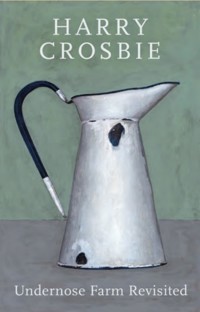
In this slim, attractive collection of short stories, Harry Crosbie colourfully describes life in Dublin in the 1960s. These funny and poignant pieces are told from the perspective of a teenage boy working in Dublin's docklands and illuminate an older Dublin that will be familiar to many readers. Written during the lockdown of 2020, writes from the heart and will charm and delight with tales of docklands life.
Sie lesen das E-Book in den Legimi-Apps auf:
Seitenzahl: 239
Veröffentlichungsjahr: 2021
Das E-Book (TTS) können Sie hören im Abo „Legimi Premium” in Legimi-Apps auf:
Ähnliche




















UNDERNOSE FARM REVISITED
HARRY CROSBIE OBE is best known as the developer who transformed Dublin and its music scene during the late 1980s and 1990s with the Point and Bord Gáis theatres, Vicar Street and the docklands. His voice will leave an equal mark on cultural memory.
FOR RITA, CLAIRE, ALISON, SIMON
UNDERNOSE FARM REVISITED
Harry Crosbie
THE LILLIPUT PRESS
DUBLIN
First published 2021 by
THE LILLIPUT PRESS LTD
62-63 Sitric Road, Arbour Hill, Dublin 7, Ireland
www.lilliputpress.ie
Copyright © Harry Crosbie, 2021
ISBN 978 1 84351 815 0
All rights reserved. No part of this publication may be reproduced in any form or by any means without the prior permission of the publisher.
A CIP record is available from the British Library.
1 3 5 7 9 10 8 6 4 2
Set in 12pt on 17pt Scala by Niall McCormack
Printed in County Kerry
CONTENTS
I
1 Eighteen and a Half
2 Walking on Water
3 Why Do Bees Dance?
4 Dipstick Day
5 Smoko
6 Not Only Pigeons Fly
7 Rustling at Undernose Farm
8 Widows’ Memories
9 Sure, a Bird Never Flew on One Wing
10 Give Us Barabbas
11 Rattle
12 Tug
I I
13 Bitch Diesel
14 Posh Tottie
15 Wedding Tackle
16 B.S.A.
17 Pan
18 Boot
19 Sid
20 Hi Ho
21 Dodge
22 Flo
23 Swiss
24 Ha-Ha
25 Dutchy
26 Tinkle
27 Queenie
28 Archie
UNDERNOSE FARM REVISITED
I
1
EIGHTEEN AND A HALF
Adventure. You want adventure? I’ll give you adventure.
I was eighteen and a half, my mother told me I was gorgeous. Long black hair down my back, stiff-legged walk like Gene Pitney on the telly. Could not care less: cool – no, I mean totally cool; cool as the Lone Ranger.
It was 1965, I had left school, burnt the books, it was a long summer. I was ready, man!
I had been in a skiffle group with Fran O’Toole from Bray. I was a Bengal – chancer to you – but he was a naturally gifted musician, bastard. I went to see him in my uncle’s Morris Minor van. His father owned a bingo hall. At that time, English mill workers still came to Bray for their holidays. Mad or what?
Girls, girls, girls everywhere. One quiet afternoon the manager was sick (i.e. drunk) and I got to call out the bingo. Totally cool.
I did it real slow. Smouldering. My bird was up the front: cheeky, cowboy hat, fringes, factory girl – classy. Boy heaven. See you later, alligator, I said with my eyes.
There was a phone outside Fran’s house. Press button B, sickly green. I had promised to call a new friend, a hippy head from bray, otherwise known as The Bray Head. Fur coat, beads, no socks: cool.
‘Hey, man,’ he said.
‘Hey, man,’ I said.
‘Have you got £65?’ he asked.
‘No bother,’ I said.
I had £12, my communion money. My granny was minding it, but my sisters were loaded and an easy touch.
‘I’m gonna hitch to the Middle East,’ he said.
‘Cool,’ I said, ‘Good weed there, man.’
‘Wanna come?’ he asked.
‘Does Dolly Parton sleep on her back?’ Boys of eighteen should be chained to a radiator until their brains switch on.
‘The mail boat is Friday, 7 pm,’ The Head said.
‘Bring it on.’
‘We travel light,’ he said. ‘One rucksack only.’
‘I don’t have a rucksack.’
‘Capel Street, Cheeky Charlie’s,’ he said.
I told my mother I was going to see a friend for a few days. She packed a little case for me with beautifully ironed pyjamas, hankies, socks, all tied in bows with green silk ribbons. She gave me a box of chocs for my friend’s mother. Silk bows – what’s that about?
It was a rough crossing. We drank eight pints with a crowd of Irish tinkers/horse dealers ... don’t ask.
I threw the little case with its bows into an angry sea and gave the chocs to a couple of drunken girls. Cruel, cruel youth.
After a rain-sodden week of misery we got to a small German town. We stayed in the local dosshouse. ‘Keep your hand on your halfpenny,’ my granny told me.
We put the two end-legs of the bed into our boots and our money under the legs nearest the wall. There was a long row of beds, all with boots on. It was a funny, sad sight.
In the Munich beer halls we heard that Dachau was just outside the city. A group of us went next day. It really does say ‘Arbeit Macht Frei’ on the gate. Then a strange and frightening thing happened. I could not go through the gate and into the camp – some sense of evil or force of remembered suffering stopped me like a blow in the chest. I waited outside for two hours. They laughed at me as they went in. There was no laughing coming out.
We were on the road to Istanbul, hippie head office for we alternative folk – property is theft. We hitched a big trailer truck heading for Syria. My war-comic German stood me in good stead. ‘Wann ist der nächte Lastwagen, bitte?’ I asked. I told the Arab driver, my new friend, that my father was a capitalist and had trucks, and that I could drive heavy machinery.
Night fell, an empty moon hung over an empty desert road. He asked me to drive. The Bray Head was asleep in the bunk. The driver was impressed, up and down the gearbox, no bother. Dancing!
He rolled a spliff and then it happened: talking sweet and low, he put his hand on my leg (upper). I pushed it away and told him to stop. Nothing more for an hour. He was drinking whiskey, didn’t offer me any. The mood darkened. Driving a big truck with blazing headlights on a moonlit desert road is a calm and beautiful thing. Eating up the miles, Arab music softly on the radio. Quiet. Then the hand again, upper upper, this time no sweet talk. I braked hard and pulled in with squealing tyres and a dust cloud. I cut the big diesel, sudden silence except the ticking of a cooling engine in the cold desert night air. I turned towards the bunk and shouted at The Bray Head to scarper.
We jumped down from the cab and rolled in between the trailer axles: I told you I was good with trucks. The driver stood out in the headlamp beams casting a long shadow into the desert. He had a heavy wrench in his hand and was looking for us. Not a happy camper. I put a finger to my lips to tell The Bray Head to keep shtumm. It turned out he did not believe in fighting or war. Spare me – pacifism has its time and place. More likely he was a cowardy, cowardy custard.
I crawled along the chassis to the sow-belly box – again, don’t ask – and got a steel pin. The driver had no night vision due to the blazing lamps. I ran out of the darkness and hit him hard. He went down like the proverbial. Lights out. ‘Not tonight, Josephine,’ I said. Good line under the circs, I thought.
I switched off the truck’s lights and we walked all night, hiding from any traffic. We stayed for a week to ‘rest up’, as the cowboys say. Thessaloniki. Nice town, you should try it.
We stayed in the youth hostel. I met a beautiful blonde English girl. I know she fancied me as she completely ignored me and never looked at me. Girls and their little tricks, eh? One night we were all sitting out in the yard rolling our ‘Soviet’ spliff. Everyone puts in their gear, a forty-Rizla paper job, eighteen inches long. My new bird was kissing another bloke in front of me so I knew I was in. Oh, the games we play.
People don’t give blood in Thessaloniki, they sell it. We sold our blood every day for five local dollars a litre. More money than God. I sent flip-flops to my mother. They would be handy for her around the house, I thought.
Then we heard there was a big dope dealer paying twenty dollars for European blood. Four Germans from our hostel said they would go and check it out. They did not turn up for our ‘Soviet’ that evening.
Early next morning I was in my Schlafsack (German again) up on the roof of the hostel. I woke to a heavy kick of a boot. Four policemen stood around me. Not a good start to one’s day.
‘Do you smoke dope?’ one asked.
‘Never,’ I said.
‘Have you got any dope now?’ another asked.
‘Definitely not,’ I said. I gently moved my stash to the end of my Schlafsack with my foot.
‘Do you know the four persons who left here last night?’
‘Yes,’ I said, ‘they were Herman the German and his gang . I mean group. We were expecting them home for our evening sing-song.’
‘They are not coming back,’ one said.
‘Oh?’ I said.
‘Yes,’ said another, ‘they went to an illegal blood dealer. We found them lying on the beds still hooked up to the tubes. They had all the blood in their bodies drained completely.’
‘Drained?’ I said.
‘Yes,’ they said. ‘Completely.’
‘Are they all right?’ I said.
‘No, they are not all right, they are all dead. All four. Dead.’
My brain froze. I saw only my mother’s beautifully ironed pyjamas with the little green bows.
I began to cry. I wanted to go home to her right then and beg her forgiveness. I wanted to fold her in my arms and touch her hair and tell her I had left as a stupid, stupid boy but now I was a man. I wanted to tell her I would do something every day of my life from now on to make her happy. I wanted to sit and eat buttery toast with her in the mornings. I wanted to tell her that now I understood her love and cherished it. I wanted to tell her I would bring her in our Morris Minor van to her favourite place in the world, a little seaside hotel in Wexford where she and my father got married. We would go for a paddle in the patient, gentle sea as we had always done on our summer holidays, before I grew up and became a man.
2
WALKING ON WATER
Mattie was a small man, a really small man, less than five feet tall. He had a big flat head and the local joke was that it would be a handy place to set down your pint when the pub was busy. Mattie was an inventor, artist, mechanic, designer, welder, carpenter, fitter, and he played the fiddle.
He walked on water: repeat, walked on water.
He was from a small village on the Shannon. He craved adventure as a young man and declared to the village that he would walk across the Shannon. He invented a pair of floating boots. These were five feet long, the same as himself. They were bright red with laces neatly tied and bowed. Long laces. Mattie explained that red was a navigational aid to ensure safety to other river traffic. Each boot had a rod standing up roughly where the big toe was located. This was connected to a flat board below, which led across the sole of the boot. When a step forward was taken the rod was pushed down so that the board dropped and bit into the water. Traction, you see. In this fashion, he stood as if he had two walking sticks as well as being slightly drunk and/or crippled. He moved forward with slow, giant moonwalker steps.
The first three attempts failed. The starboard boot filled with water and Mattie developed a list. The support vessel, his cousin in a rowing boat, took the boot on board and towed Mattie ashore. Running repairs. Push on, his mantra; push on.
By this time word had spread far and wide. The next Sunday there was another attempt – think the conquest of Everest. Clear weather, no wind. Perfect conditions. A small crowd gathered. The local paper took Mattie’s picture. The priest blessed the boots. Prayers.
This time the boots did him proud. He set off to a ragged cheer. Giant step forward, push rod down. Repeat. He worked up a rhythm. Step, push down. Step, push down. Step, push down. Repeat. Repeat. Repeat. The crowd sensed he was going to make it, or die trying. They surged across the bridge to form a welcoming committee on the other bank.
A few tense moments mid-stream on the mighty river. The crowd held its breath. Our hero struggled. Drown or win. Do or die. What drama, what a day out for a little village. Women remembered what they wore on that outing.
He stepped on to dry land and into history. His own small girlfriend rushed forward, the soldier she’d left him for forgotten – but that ship had sailed. Women.What is it with women and heroes? The world was now his lobster. Form an orderly queue.
Mattie drove a Morris Minor van with a large roof rack and many toolboxes. He always carried a collapsible canvas canoe, securely lashed down. He canoed during his lunch hour, winter and summer, no matter where he was. He was a flask-and-sandwiches man. His canoe design was an advance on the wartime Cockleshell Heroes special commando force, his heroes. He constantly refined his design for a four- bladed paddle to improve efficiency. He also rode a 5oocc Triumph motorbike at full speed. His joke was that his bike was mentioned in the Bible: ‘Jesus rode in his Triumph across the desert.’
His business was the operation of a low-loader. He took on only difficult and wide loads. This involved much measuring and rough sketching. He liked things that were complicated and difficult. HEAVY HAULAGE, it said on his gate. He carried a tape at all times and measured the things around him constantly.
My father used to go for a quiet pint with him. They were pals. My father knew how wise he was. They were banished to the yard of the pub as he smoked a huge, curved pipe. This required an array of small knives and tools to keep it lit, sometimes even pliers. Clouds of smoke signalled success like the announcement of the election of a new pope in the Vatican. He drank only sherry. No one knew why. He swore by it. ‘Mother’s milk,’ he called it.
He told my father he was unlucky in love and spoke of his lady friend, one of the few women west of the Shannon smaller than himself. His broken heart told him it was the soldier’s uniform she’d left him for. Because he could love no other, he gave his life to inventing.
One day my father came home full of news. Mattie was working on a new challenge, navigating the Royal Canal from the Liffey west to the Shannon. This was long before pleasure boating had begun. The canals were decayed and derelict. The basin at Grand Canal quay was known locally as the Forgotten Pond.
I was offered a position as a ‘nipper’ on what was to be an ‘epic attempt’. History called. Think Sherpa Tenzing. My mother said, ‘No son of mine is going to sea with that half-mad midget,’ and downed tools.
The plan was to buy a lifeboat from a dredger that was being scrapped in the Liffey dockyards. My father knew the man. It was the Dublin way. We’d take it to Mattie’s yard and build accommodation and a wheelhouse. The work was to take one month. I would be paid £1 per week as a junior rating. Royal Navy terms were now standard.
The voyage was to take two weeks. On Mattie’s arrival at the Shannon, ladies would be invited for pleasure- cruising on the lakes for a short time. Then the vessel was to be burnt, Viking-style, in the middle of the river, as an offering to the gods.
Words turned into action. An ancient lifeboat, 26ft long, clinker-built, timber, was bought for £50 with a £10 bung for the lads. It was transported on Mattie’s low- loader to the yard. We fell to work. I found salt tablets and hard biscuits from the war under the seat. Exciting. The biscuits were tough as rocks but lovely dunked into a nice cup of tea. We were eating history. The vessel was named Loretta, after a lady friend.
During the day, when Mattie was out working, I scraped down the hull. The party wall with the old cinema next door allowed me to share intimate moments of ecstasy with a woman loudly confirming approval of her lover’s efforts following a shoot-out in which he had saved her from certain death. By the time the boat – sorry - vessel was ready I knew every line and every moan of pleasure in the picture. The old yard man thought she was faking it. It sounded good to me.
By the time I was putting the kettle on for our afternoon tea and cake the soundtrack through the wall had turned into flying crockery and screams of ‘The bitch, I’ll scratch her eyes out!’ My mother said, when I was quizzed, ‘So unlike the home life of our own dear Queen.’ She and her sister went to see the film, to confirm it was filth and the woman was a hussy.
The little engine was stripped down and lovingly rebuilt. It was started to test on the bench, and all agreed it was as sweet as a nut and ran like a sewing machine. No higher praise. Mattie worked on the superstructure (plywood cabin) far into the night, listening to the romance and strife next door during the evening show. We never asked him if he felt she was faking it.
Because of the gossip, the yard attracted attention. We had a break-in. Heavies. The usual: tyres, copper, brass, next week’s wages. I discovered this when I opened the warehouse and found the two yard Alsatians, Winston and Margaret, hanging dead from ropes twenty-five feet up in the air under broken skylights. The heavies had dropped rope lassoes onto the ground and put meat in the centre. As the dogs ate, they pulled the noose tight and hanged them high. We buried them under a bed of nettles. Mattie, me and the yardman cried.
To get to the yard I had to pass a gang of Teddy boys standing outside the cinema. By this time word had leaked of the attempt and my role in it.
‘Is Mattie bringing the other six?’ I was asked.
‘Will you have women in every town?’
‘Are you out or on a message?’
I walked past with my Marmite sandwiches and shouted back, ‘I have two big brothers!’ It was my mother they should be afraid of. But real Teddy boys at that time were hard men, with razorblades in their lapels.
The big day dawned. Sunday morning. Empty streets. A small convoy set out from the yard to the canal lock for the launch. Mattie, of course, had his own crane. The truck was marked DANGEROUS LOAD.
We arrived at the launch site. The crane and slings were set up. The low-loader was backed into position. The lift began. My job was to remain on board to catch a rope mid-steam to secure the vessel. Our provisions (sandwiches) had been laid out: biscuit tins lined up, rubber bands holding the lids shut. Each was marked Lock I, Lock 2, Lock 3 etc. I realized I was eating the Mullingar sandwiches. Should I tell Mattie? Would we be able to get food down the country?
When I looked out, we were above the trailer and swinging out over the lock. Much shouting and pointing. The vessel slowly, slowly sank below the wall and gently settled on the water. We were afloat. The slings went slack. A wonderful, light-as-air sensation. Mattie beamed with excitement. I was rearranging the Mullingar sandwiches with the Ashtown sandwiches when I felt water lapping at my ankles. I was wondering what this meant when I heard shouts from the quayside.
‘You’re sinking, you’re sinking! Jump for your life!’
I froze. The Ashtown sandwiches fell into the water. The vessel was going down fast. I climbed out onto the roof of the superstructure. The boat settled on the bottom of the canal at an angle. I was left in the middle of the canal on one square foot of plywood, surrounded by water. I could feel the boat still moving. Tricky. Time for a cool head.
Mattie, ashen-faced, shouted: ‘Keep calm, do not move a muscle! I have a plan.’
He jumped into the crane and swung the hook out over me. I grabbed a hold and was hoisted through the air and landed ashore. It was like something in a war movie. My finest hour. If only my pals could see me. Bravest of the brave.
We regrouped.
My mother had heard what was going on and there she was. I tried to explain to her that this was no place or time for a woman and got a clip round the ear in front of my fellow crew members. The shame, the shame.
She pulled Mattie’s cap off and threw it into the canal. ‘Mad old bastard!’ she shouted.
She caught me by the ear, like in the Beano, and dragged me home.
‘I’m a man,’ I said.
‘You’re a brat,’ she said.
Back at home I was put to bed. The doctor was called. ‘There’s nothing wrong with me!’ I shouted down the stairs.
‘You’re in shock,’ she shouted back. ‘You may have fleas.’
‘My crew need me, I want to stay with my men!’ I shouted again.
My father had gone into hiding. This meant he was drinking in a strange pub and might as well be on the moon.
The rest of my story can only be told second-hand. Me and my father were barred from Mattie’s yard. For ever.
‘Mad dwarf bastard!’ she said over and over. ‘My beautiful son, left stranded on the sea.’
I tried to explain that the canal was not the sea, and got another clip on the ear.
Poor Mattie salvaged his failed boat alone. He could explain: it was a rotten plank, squeezed by the hoist. Push on. Fail again, fail better. But there was no push on. No girls in every town.
‘Remember the Titanic!’ the Teddy boys shouted. ‘Can Grumpy swim?’
He retired to his yard a broken man. He went back to inventing. He built a huge radio mast and learnt Morse code. He made many new friends around the world. His call sign, or handle, was ‘Walk on water’. His new friends would never know from the dot-dash-dotstreaming across the night skies of the world’s oceans that they were dealing with a hero. But I knew, and Mattie knew I knew.
3
WHY DO BEES DANCE?
Hibo was a casual day-labourer who stood waiting for work every morning at the dock gates. if there was no work, a large crowd of men went home with nothing, or went to the dockside pub to drink on the slate. Truckers picked up men to land cargo ‘under the hook’ from working ships.
I was a boy on school holidays: my job was to drive a pick-up and hire men for our loading. Hibo was a regular and we became unlikely friends. He had a strangeness and sadness in him. He stood apart from the group. He was born into the savage poverty of a 1930s Dublin tenement. He lived on the street, tough and hard as nails. He sang softly or whistled. He rarely spoke.
At sixteen he joined the British army to get away from a violent, murderous father. He went to war and was captured by the Japanese at the fall of Singapore. He spent the war working on the Burma death railway. His job was to bury the dead. If the track was building over stony ground and it was too hard to dig, they burnt a pile of corpses each morning with petrol.
He received many brutal beatings, which happened when a prisoner caught the eye of a guard. All prisoners had to look down when a guard was present. He survived the war, but was damaged physically and hurt spiritually.
When he came home, he lived in the Iveagh lodgings if he had work and the price of a bed. If not, he slept rough winter and summer.
Before the coming of containers, dockside work was hard labour. Cranes landed heavy hoists of sacks and cargo onto trailer beds, to be laid out as a safe load. ‘Let the weight do the work,’ was the advice. Swing the sack loosely. Lift gently, move slowly, keep a rhythm, keep legs soft and bend. Steady. Never stand under a swinging hoist. Work, watch, wait.
Some Saturday mornings after pay-out I went for a walk with Hibo and his friend John; a ramble, they called it. It was always the same. First port of call – the stones market in Cumberland Street. Second-hand coats and boots sold off the cobblestones. Women fitted and fussed over the men like mothers with small boys. Much coarse laughing. You would not want to be shy or easily shocked. I was asked, was I a virgin? Mary could soften my cough. Have you dropped yet, son. Scarlet.
Next up – the Flying Angel sailors’ rest. White- pudding sandwiches and a big mug of hot, sweet tea. Crews from every nation, every colour, every creed. Broken English, sometimes singing, even in the morning. Photos passed around of much-missed families; crowds of children and small, unsmiling women. The odd tear, brown faces twisted in loneliness. Years away at sea, wages sent home to distant villages.
Always, the Liffey ferry across the river to Sir John Rogerson’s Quay. The ferryman was a local hero. ‘Good- looking women free,’ he shouted up, ‘pregnant woman down the back.’ A good sob story always worked. ‘I’ll pay you next week.’
‘No bother. We know where you live.’
As the ferry set out: ‘Bring us back a parrot.’
The steel hull banged hard against the towering granite blocks. Greasy, dangerous, steep steps. It was good to get up to dry land and the warm sun. The river was not to be trusted.
Then a walk to the Iveagh Baths in Tara Street where the Irish Times building is now. My friends showed me one of Dublin’s secret places. Up and over the pool and its squealing kids, a quiet corridor was lined on each side with doors of dimpled, frosted glass. Each opened into a clean, bare room with a large, deep white bath with heavy brass taps. The man handed out a rough towel and a bar of carbolic soap. He filled the bath to the top with scalding water. There was no chat here. Men sat on wooden benches in the hall, reading in silence. It was a peaceful and private place, the noise of the main pool muffled and far away.
I was too young to be let in so I waited across the street in a cafe. My friends came out transformed. They were relaxed and happy. It was the high point of their week. I learned many years later that not only poor people used the baths – many professional men went to that calm and secret place.
In the cafe, before we parted, Hibo and John would tell stories of the war. A British officer, much liked, gave English lessons to Indian troops based on the story of ‘Why Bees Dance’. It is because they have done their work well, collected their pollen, and dance and wiggle with happiness and delight. ‘A lesson for us all,’ the officer would say, ‘a lesson for us all.’ The whole class did the wiggle dance and never forgot.
Another secret, which shames me to this day. Hibo and John had nowhere to go as the hostel did not open until six o’clock. They would walk to Dalkey or Howth to stay out of the pub and keep their money for the hostel. Meanwhile I went home to my mother for my tea and a warm fire.
School started up again and I did not see Hibo for nearly a year. At Christmas he had failed in health and looked thin and worn.




